
Key takeaways
- Medlars are fully hardy all over the UK and need very little fuss
- Nottingham is the go-to variety for most gardens
- Plant bare-root trees between November and March in well-drained soil
- Pick the fruit hard in late October or November, then let it soften for two to four weeks
- Medlar jelly, medlar cheese and medlar gin are the classic ways to use the crop
A medlar is a beautiful, easy small tree with lovely blossom, great autumn colour and an unusual fruit. It’s fully hardy, rarely gets ill and needs only a light prune.
The one quirk is that you don’t eat medlars straight off the tree. They need bletting first, which just means leaving the picked fruit somewhere cool until it goes soft and brown. Rock-hard, sour fruit turns into sweet, spicy flesh that makes some of the best jellies in the British kitchen. It sounds odd, but it’s really easy and mostly involves waiting.
A short history of the medlar in Britain
Medlars have been grown in Britain for centuries. They were a common sight in medieval monastery gardens and big country house orchards. Chaucer and Shakespeare both mention them, Shakespeare rather cheekily. Bletted medlars were once served after dinner with a glass of port.
They fell out of fashion as other fruit became easier to buy, so today they feel like a bit of a forgotten treasure. That’s a shame, because the tree is gorgeous and the preserves are wonderful. The RHS plant page for medlar is a good place for more background.
Which medlar variety should I choose?
For most UK gardens, pick Nottingham. It’s reliable, crops well and has the best flavour. The others are worth a look if you want bigger fruit or have more space.
 Medlar fruit with its open, crown-shaped “eye” at the end. No other UK fruit looks quite like it.
Variety comparison table
| Variety | Fruit size | Flavour | Tree size | Best for |
|---|---|---|---|---|
| Nottingham | Small to medium | Rich, spicy | Small to medium | Most gardens |
| Royal | Medium | Mild, sweet | Medium | Medium to large gardens |
| Dutch | Large | Mild | Larger, vigorous | Big fruit for preserves |
| Breda Giant | Large | Sweet, aromatic | Medium | Fruit plus good looks |
| Iranian | Medium | Tangy | Compact | Warmer, sheltered gardens |
Nottingham
Nottingham is the classic British medlar. The fruit is on the small side but packed with rich, spicy flavour, and it crops heavily and reliably. It’s a neat, manageable size for most gardens.
Royal
Royal has slightly bigger fruit with a milder, sweeter taste. The tree grows a bit larger, so it suits medium and large gardens.
Dutch
Dutch (sometimes sold as ‘Dutch Giant’ or ‘Monstrous’) has the biggest fruit of all. The flavour is milder than Nottingham. It’s a vigorous tree that makes a real feature, and the big fruit is handy for preserves.
Breda Giant
Breda Giant has large, sweet, aromatic fruit and especially good autumn colour. A nice choice if you want the tree to look good as well as crop.
Iranian
Iranian medlars are newer to UK nurseries. They have a tangier flavour and a more compact shape. They do best in warmer southern and eastern gardens rather than cold, exposed spots.
Where to plant a medlar tree
Medlars are easy-going, but the right spot gives you a better crop.
Sun. Full sun gives the most fruit and the best autumn colour. Light shade is fine, but you’ll get less fruit. Avoid deep shade.
Soil. Medlars grow in most UK soils, from clay to sandy loam. They cope with clay better than many fruit trees. On light, sandy soil, dig in plenty of garden compost to hold moisture. The one thing they can’t stand is ground that stays waterlogged.
Shelter. The trees are fully hardy, but a late frost can nip the flowers. Avoid frost pockets, those low spots where cold air settles. A sheltered spot facing south or west is ideal, especially further north.
Space. A standard tree needs around 5m of space all round. On a dwarfing Quince C rootstock, allow about 3-4m. Medlars look great as a single tree on a lawn or at the back of a cottage border.
How to plant a medlar tree
Plant bare-root trees between November and March while they’re dormant. They settle in quickly and are cheaper than potted trees. Specialist fruit nurseries sell grafted medlars on Quince A or Quince C rootstock.
Step-by-step planting
- Soak the roots in a bucket of water for a couple of hours.
- Dig a hole about twice as wide as the roots and deep enough to fit them.
- Knock in a stake on the windy side before you put the tree in.
- Set the tree so the graft, the knobbly bump on the stem, sits well above the soil.
- Backfill with the soil you dug out.
- Firm it in with your boot as you go, so there are no air pockets.
- Tie it to the stake with a proper tree tie, and loosen it as the trunk thickens.
- Water well and spread a mulch of bark or compost, keeping it clear of the trunk.
Try not to plant where an apple, pear, cherry or plum tree has recently died or been removed. Young trees often struggle in old fruit-tree soil.
New to bare-root planting? Our guide to planting bare-root trees goes through it step by step.
 Medlar blossom in late spring. The big white flowers are popular with bees and hoverflies.
How to care for a medlar tree
Once settled, medlars need much less attention than apple trees or pear trees.
Watering
Water new trees well once a week in dry weather for their first two summers. After that, they only need a drink in long dry spells. A good soak now and then is better than a little often, as it sends roots deeper.
Feeding
In late winter or early spring, sprinkle a general fertiliser around the tree, following the pack. Or just mulch with well-rotted manure. Skip high-nitrogen feeds, which give you leaves instead of fruit.
Mulching
Keep a layer of bark, leaf mould or compost in a circle about 1m round the trunk. It keeps weeds down and moisture in. Leave a small gap around the trunk itself.
How to prune a medlar tree
Medlars fruit on short stubby shoots called spurs, a bit like apples and pears. The good news is they need much less pruning.
Formative pruning (years 1-4)
For the first few winters, aim for an open goblet shape. This lets light and air into the middle.
- Pick four or five strong, well-spaced branches to be the main framework.
- Remove branches that compete with them.
- Each winter, shorten the main branches by about a third, cutting just above an outward-facing bud.
- Take out crossing branches, dead wood and shoots growing into the centre.
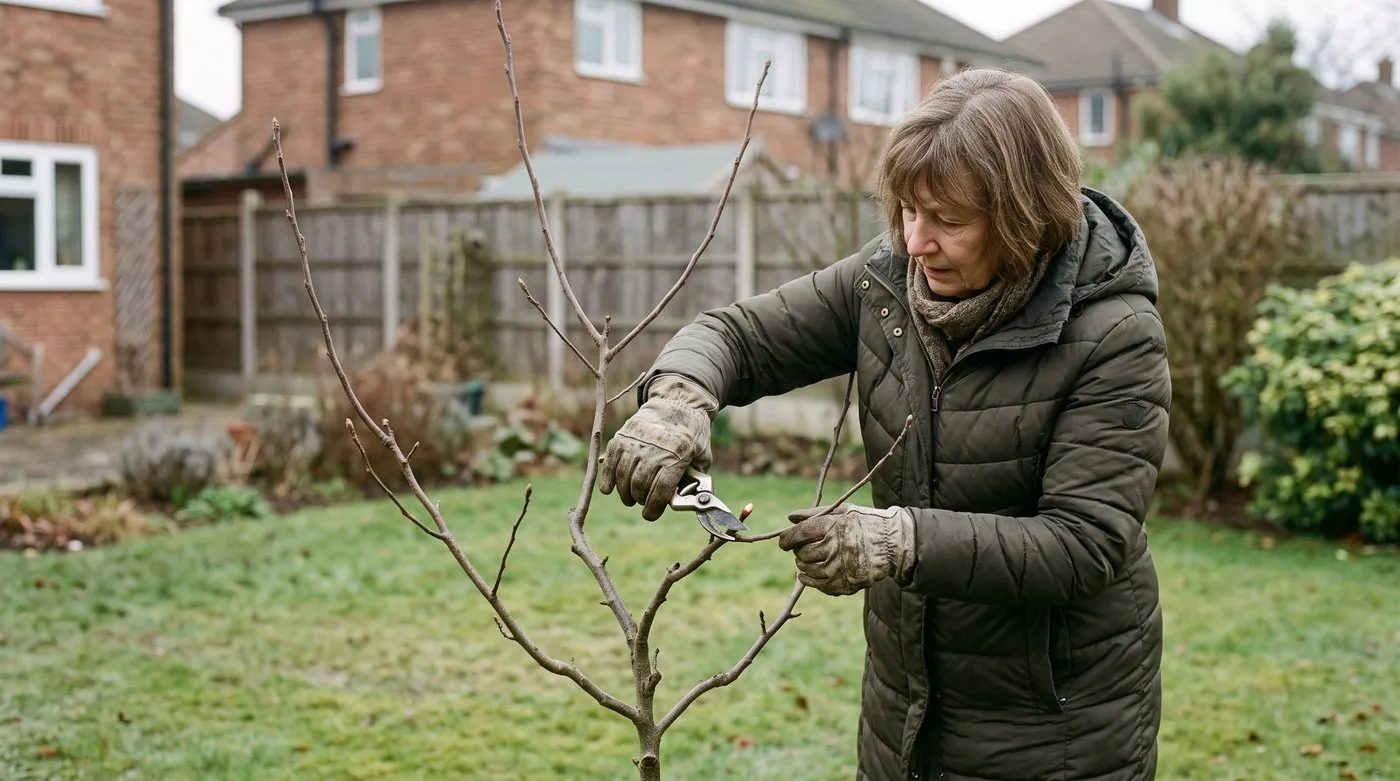
Aim for four or five well-spaced main branches with an open middle. Once the shape is set, a light winter tidy is all it needs.
Maintenance pruning (year 5 onwards)
After that, a light tidy each winter (November to February) is all it needs.
- Cut out dead, diseased and crossing branches.
- Thin crowded clusters of spurs.
- Remove strong upright shoots from the trunk and main branches.
- Keep the middle open.
- Medlars naturally grow wide and slightly droopy. Let them, it’s part of their charm.
What is bletting and why do medlars need it?
Bletting is how medlars become edible. It isn’t rotting. The fruit simply softens and sweetens after picking, and the sour taste fades. Straight off the tree, medlars are hard and make your mouth pucker.
 Medlars at three stages. Left: just picked and hard. Centre: starting to soften. Right: fully bletted and ready.
What happens as medlars blet
Over a few weeks the skin darkens and the pale flesh turns soft and brown. It’s ready when it feels like a ripe avocado. Go too far and it starts to ferment and smell of vinegar.
Keep it cool. A cool shed, unheated garage or cold porch is perfect in a British autumn. In a warm kitchen, medlars tend to go mouldy instead of bletting nicely.
How to blet medlar fruit
- Pick the fruit in late October or November while it’s still hard.
- Lay it eye down in a single layer on newspaper or cardboard in a tray, with the fruit not touching.
- Store it somewhere cool, dark and airy, like a shed or garage.
- Check every few days and remove any mouldy fruit.
- It’s ready when the flesh is brown all through and gives to gentle pressure. This takes two to four weeks.
- Use it straight away, or keep it in the fridge for a few days.
Once the fruit starts to soften, check it more often. It can go from perfect to too far quite quickly.
Harvesting and storing medlar fruit
Pick in late October or November, while the fruit is still hard. You don’t need to wait for frost. Get the fruit in before hard frosts or strong winds damage it, and aim to have it all picked before December, as fruit left too long can rot on the tree.
A young tree gives you a handful of fruit at first, and the crop builds up nicely as it matures. For tips on storing other tree fruit, see our guide to storing apples and pears.
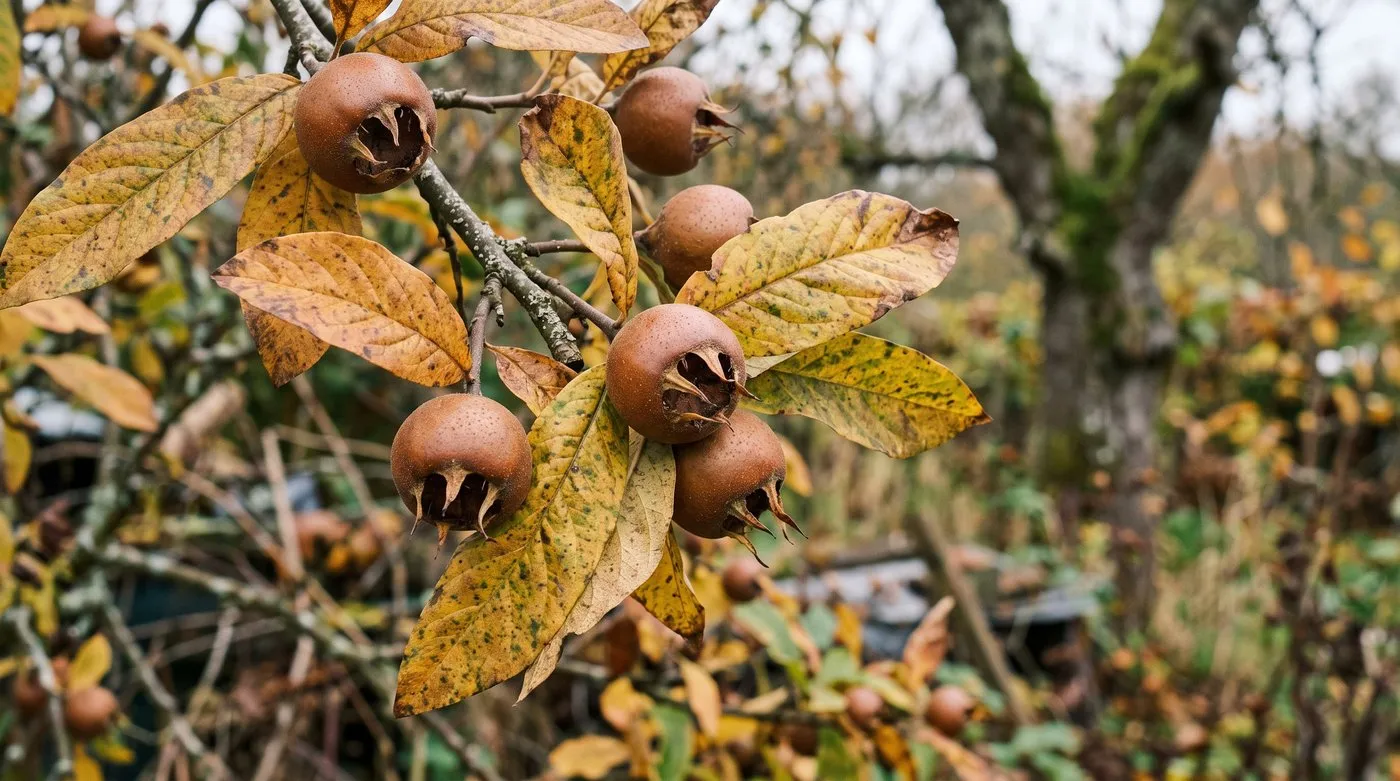
Pick while the fruit is still hard, in late October or November. Get it all in before hard frosts or gales.
Making medlar jelly, cheese, and gin
You can scoop bletted medlars out of their skins and eat them with a spoon, but most people turn them into jelly, cheese or gin.
Medlar jelly
A clear, amber jelly with a rich, spicy taste. Lovely with game, roast pork and strong cheese.
Ingredients: 1kg bletted medlars, 500ml water, juice of 1 lemon, and 350g granulated sugar for every 500ml of strained juice.
Method:
- Roughly chop the fruit (skins and seeds too) and simmer in the water for 40-50 minutes until pulpy.
- Strain through a jelly bag overnight. Don’t squeeze the bag or the jelly goes cloudy.
- Measure the juice and add 350g sugar per 500ml, plus the lemon juice.
- Boil hard until it reaches setting point (105C on a jam thermometer, or it wrinkles on a cold saucer).
- Pour into sterilised jars.
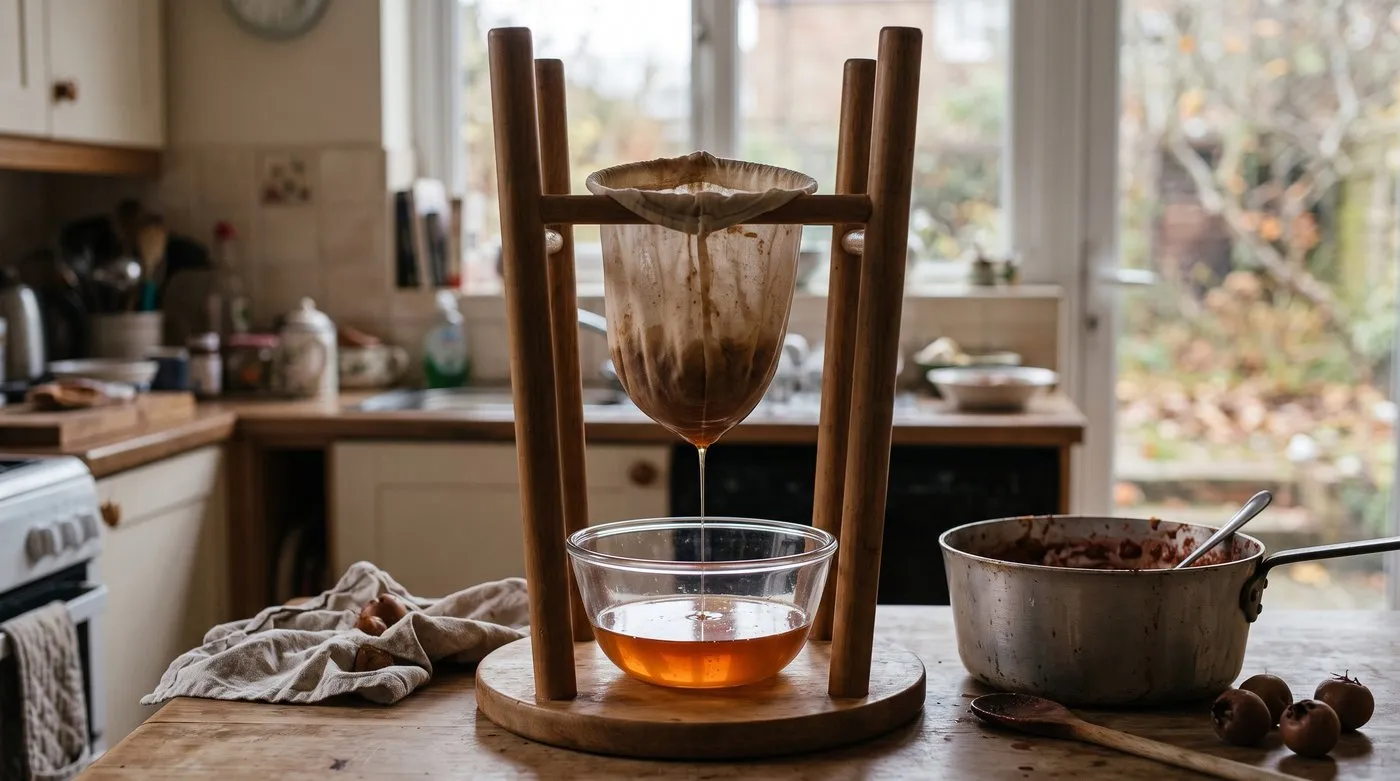
Let the juice drip through overnight and don’t squeeze the bag. That’s the secret to a clear, glowing jelly.
Medlar cheese
Medlar cheese is a thick, sliceable fruit paste, like Spanish quince paste. Serve it with a strong Cheddar or Stilton.
Cook the bletted fruit to a pulp and push it through a sieve to remove seeds and skin. Cook the purée gently with an equal weight of sugar, stirring all the time, until really thick. Pour into oiled moulds and leave to set. Keep it in the fridge.
Medlar gin
Add 500g of bletted medlar flesh to 700ml of gin with 150g of caster sugar and a cinnamon stick. Seal and leave somewhere cool and dark for 6-8 weeks, giving it a shake every few days. Strain and bottle. You’ll get a rich, amber, warming drink that’s lovely neat or with tonic.
Why medlars look good all year
Medlars are some of the prettiest small trees you can grow, fruit or no fruit.
Spring blossom. Big single white flowers open in late spring, after most other fruit trees have finished.
Summer leaves. Large, dark green leaves make a dense, shady canopy.
Autumn colour. The leaves turn gold, amber, bronze and russet in autumn. A real show-stopper.
Winter shape. Older trees grow gnarled and spreading, with a lovely silhouette in winter.
Wildlife. Bees and hoverflies love the flowers, blackbirds and thrushes eat fallen fruit, and birds nest in the canopy.
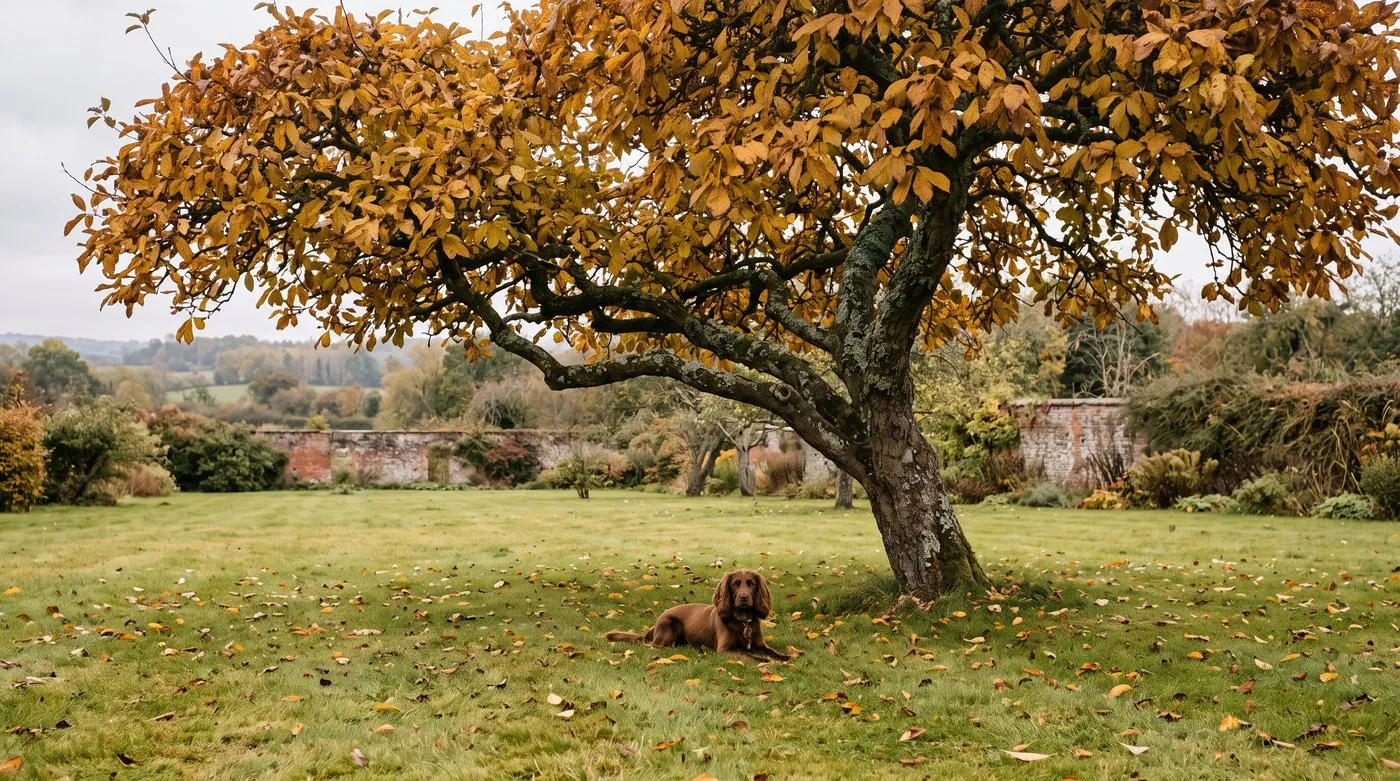
Medlars earn their space even without the fruit. The leaves turn gold, amber and russet before they fall.
Common pests and diseases
Medlars are much tougher than apples, pears and plums. Most gardeners never need to spray one.
Brown rot
Brown rot is the most common problem. Fruit turns brown with rings of pale mouldy spots, on the tree or while bletting. Remove affected fruit straight away. When bletting, keep fruit apart and the space airy.
Caterpillars
Winter moth caterpillars sometimes nibble the leaves of young trees in spring. On a small tree, just pick them off. Grease bands around the trunk in October stop the wingless female moths climbing up to lay eggs.
Aphids
Aphids sometimes gather on new shoots in spring. Ladybirds, hoverflies and lacewings usually sort them out within a few weeks. A jet of water knocks off heavy clusters.
Leaf spot
Brown spots on the leaves can appear in wet summers. They rarely harm the tree or the fruit. Clear up fallen leaves in autumn.
Honey fungus
Honey fungus is the one serious threat, attacking the roots. Signs are white fungal sheets under the bark at the base and black bootlace-like strands in the soil. There’s no cure. Remove the tree and don’t plant a fruit tree in the same spot again.
Month-by-month medlar care calendar
| Month | What to do |
|---|---|
| January | Prune on a dry day. Remove dead, diseased and crossing branches |
| February | Sprinkle general fertiliser around the tree |
| March | Check ties and stakes. Mulch with well-rotted compost |
| April | Look for aphids on new shoots. Let ladybirds deal with them |
| May | Enjoy the blossom |
| June | Water young trees weekly in dry spells |
| July | Keep watering young trees in dry weather |
| August | Nothing to do but watch the fruit grow |
| September | Fruit is growing but not ready yet |
| October | Put grease bands on trunks. Start picking hard fruit late in the month |
| November | Pick the rest of the fruit and start bletting. Plant bare-root trees |
| December | Plant bare-root trees. Check bletting fruit every few days |
Common mistakes when growing medlars
Picking too early
Fruit picked much before late October has less flavour. Leave it on as late as you can, but pick before hard frosts or gales.
Planting in a frost pocket
A late spring frost can kill the blossom, which means no fruit. Avoid low spots where cold air collects. A gentle slope or a spot by a sunny wall is better.
Over-pruning
Medlars fruit on older wood. Heavy pruning cuts off the fruiting spurs and delays your crop. Once the shape is set, just remove dead wood, crossing branches and strong upright shoots.
Ignoring drainage
Medlars cope with heavy soil, but not with ground that stays wet. If water sits on your soil after rain, plant on a low mound or improve the drainage first.
Bletting somewhere warm
A warm kitchen is too warm for bletting, and the fruit tends to rot or ferment. A cool shed or garage is ideal.
Now you know how to grow, blet and cook medlars, read our guide on growing fruit trees for more varieties that suit UK gardens.
Frequently asked questions
What does medlar fruit taste like?
Ripe, bletted medlar tastes rich and sweet, a bit like spiced apple sauce. The soft brown flesh has hints of dates, cinnamon and caramel. Before bletting the fruit is hard and sour, so nobody eats it fresh off the tree.
How long do medlar trees take to fruit?
Grafted medlar trees usually start fruiting within three or four years. Nursery trees are often already two or three years old, so the wait can be shorter. Trees on their own roots or grown from seed take longer. A sunny spot, good soil and watering in the early years all help.
Are medlar trees self-fertile?
Yes, a single medlar tree will fruit on its own. You don’t need a partner tree. Bees and hoverflies visit the big white flowers in late spring, and because medlars flower late, the blossom often misses the worst of the frosts.
When should I pick medlar fruit?
Pick medlars in late October or November while they’re still hard. You don’t need to wait for frost, but leaving them on as long as you can helps the flavour. Twist each one off gently with the stalk on, and get them in before hard frosts or gales.
What is bletting and how do I do it?
Bletting means letting picked medlars soften until they’re ready to eat. Lay the hard fruit in a single layer, eye down, on trays somewhere cool, dry and airy. Over two to four weeks the flesh turns brown and soft. They’re ready when they give under gentle pressure. Check often and throw out any mouldy ones.
Can I grow a medlar tree in a small garden?
Yes, medlars are lovely small-garden trees. They stay fairly compact with a pretty, spreading shape. Choose one grafted on a dwarfing rootstock such as Quince C to keep it smaller. A light prune in winter keeps it tidy, and you can even grow one in a large pot of loam-based compost.
Do medlar trees have any pests or diseases?
Very few, and far fewer than apples and pears. The main one is brown rot on the fruit, so remove any rotten ones quickly. Caterpillars and aphids sometimes turn up in spring but rarely do lasting harm. You won’t need to spray.
Our team produces practical UK gardening guidance from source research, contributor records and established horticultural practice. Editorial standards are overseen by Matt W.


