
Key takeaways
- October to November is the main planting window across most of the UK
- Garlic needs a cold spell below 10°C to divide into cloves, so autumn planting gives the best bulbs
- Plant in early October in the north and Scotland, and up to late November in the mild south-west
- February or early March is a backup, using a variety sold for spring planting
- Avoid very wet soil whatever the date; on heavy clay, plant in pots and move them out in spring
- Buy certified seed garlic, not supermarket bulbs
The best time to plant garlic in the UK is October to November. Garlic needs a good spell of winter cold to split into fat, separate cloves, and planting in autumn gives it just that. Get the cloves in on a dry day, leave them to it through winter, and lift full bulbs the next summer.
This guide is all about timing: the right window for your part of the UK, how late you can leave it, and what to do if you miss autumn altogether. For soil, feeding and aftercare, our guide on how to grow garlic covers the whole season.
Why is autumn the best time to plant garlic?
Garlic needs cold to form a proper bulb. A month or two below about 10°C tells the clove to divide into the familiar ring of cloves. UK winters provide this almost everywhere, even in the mild south.
Without enough cold, a clove may swell into a single round bulb called a round.
Autumn planting has a second benefit. The clove grows roots while the soil is still a little warm. A well-rooted clove sits through winter happily and is ready to race away when spring arrives. That longer season is why autumn garlic usually beats spring garlic for size.
When to plant garlic in your part of the UK
Plant earlier where winter arrives sooner, and later where it’s mild. Use this as a rough guide and adjust for your own garden.
| Area | Best planting window | Notes |
|---|---|---|
| South-west England and coastal Wales | Mid-October to late November | Mild winters, so no rush |
| Southern and eastern England | Mid-October to mid-November | Suits all types |
| Midlands and inland Wales | October to early November | Add grit on heavy clay |
| Northern England | Early to late October | Get cloves rooted before hard frosts |
| Scotland | Late September to mid-October | Hardneck types do well in the cold |
A sheltered town garden or a raised bed against a sunny wall can stretch the window by a week or two. On cold, heavy clay, good drainage matters more than the exact date.
Gardener’s tip: Pick a dry spell to plant. Cloves pushed into sticky, waterlogged soil are more likely to rot than ones planted a week later into crumbly ground.

Push each clove in pointed end up, with the tip just below the surface. October is the sweet spot in most gardens.
How late can you plant garlic?
You can keep planting into December if the ground isn’t frozen or soggy. The later you leave it, the smaller the bulbs tend to be, but late garlic is still worth having.
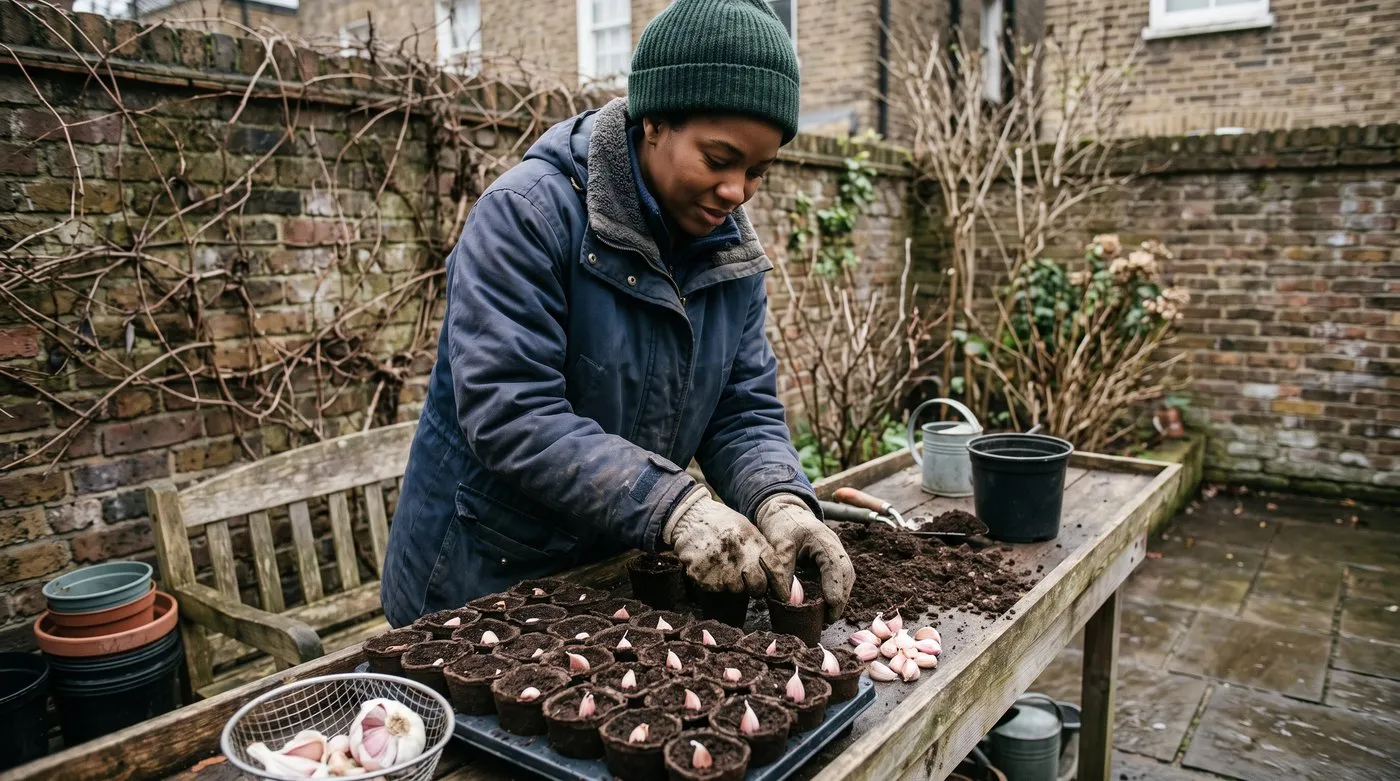
On cold, wet soil, start late cloves in small pots outside and plant them out in late winter.
If your soil is cold and wet by then, don’t force cloves into it. Plant each clove in a small pot or module of peat-free compost instead. Keep the pots outside in a sheltered spot so they still get the cold. Plant them out in late winter or early spring once the soil is workable. This is also a handy trick on heavy clay in any year.
Very early planting has its own risk. Cloves planted in warm September soil in the south can put on soft leafy growth that winter weather knocks back. In most of England, wait until October.
Can you plant garlic in spring?
Yes. February or early March is the backup window if autumn slipped by. Spring-planted garlic has a shorter season, so bulbs are usually smaller, but you’ll still get a crop.
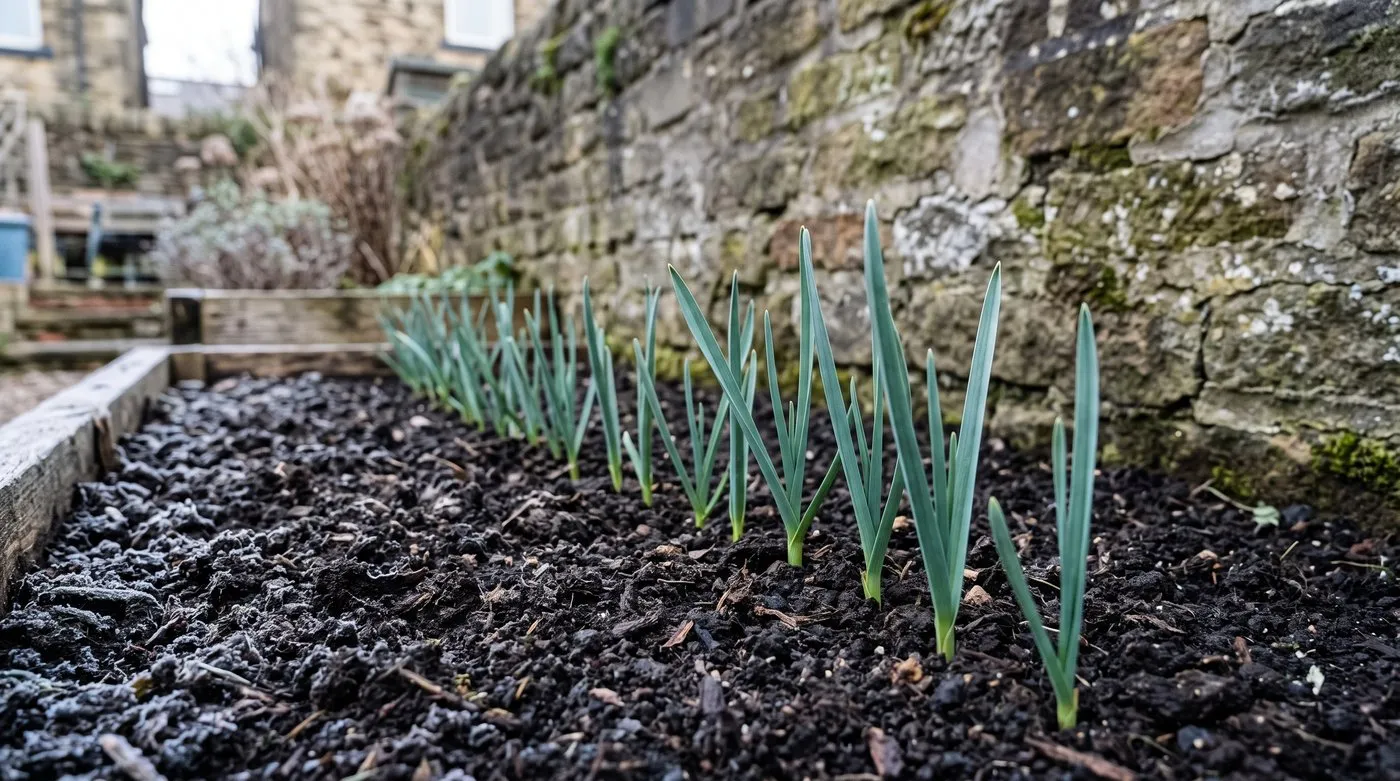
Spring-planted garlic has a shorter season, so get it in as early in February or March as the soil allows.
Choose a variety sold as suitable for spring planting, and plant as early as the soil allows.
Don’t push it past March. Cloves planted late in spring may not get enough cold, and you’re more likely to end up with rounds.
Softneck or hardneck: does it change when you plant?
Both types go in at the same time, from October to November. The difference is in how they grow and keep.
- Softneck garlic, such as Solent Wight, doesn’t usually send up a flower stalk. Bulbs have lots of cloves and keep the longest, often well into the next spring.
- Hardneck garlic, such as Lautrec Wight or Music, sends up a curly flower stalk called a scape in early summer. It has fewer, bigger cloves and a stronger flavour. It keeps for a shorter time but copes well with cold northern winters.
If you garden in Scotland or a cold, exposed spot, hardneck types are a good bet planted in early October. In the south, either type works. Our guide to the best garlic varieties to grow in the UK compares them in more detail.
How to plant garlic cloves
Planting takes minutes. Choose a sunny spot with free-draining soil that hasn’t grown onions, leeks or garlic for a few years.
- Split the bulb into cloves just before planting. Use the biggest, plumpest ones.
- Leave the papery skin on.
- Push each clove in pointed end up, so the tip sits just below the surface, about 2.5cm deep.
- Space cloves 15cm apart in rows 30cm apart.
- Firm the soil gently and label the row.
Always plant certified seed garlic from a garden centre or seed supplier. Supermarket garlic may carry virus and may not suit our climate. Rotating your allium bed also matters, because allium white rot can stay in the soil for many years.
Protecting newly planted garlic
Newly planted cloves need a little looking after in the first few weeks. Birds love to tug them out of the ground.
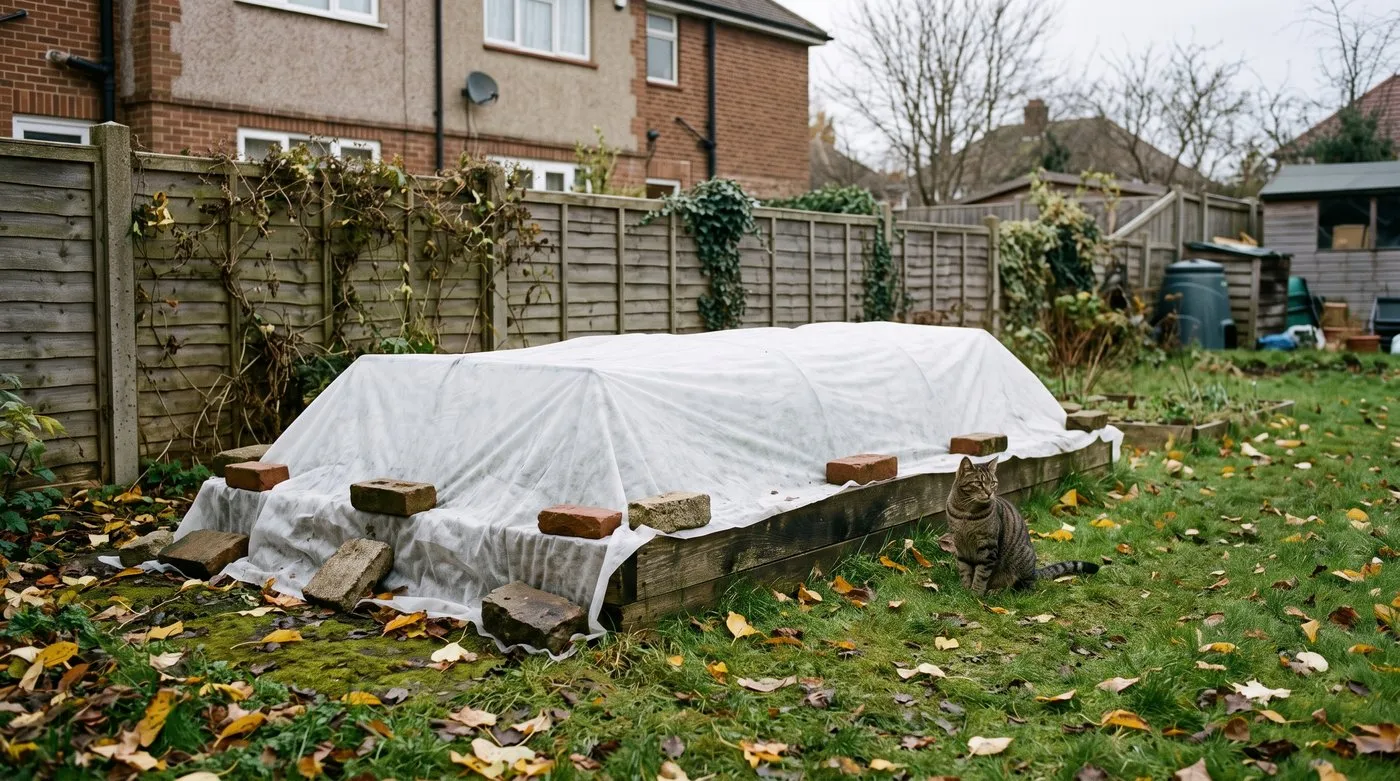
A sheet of fleece stops birds tugging out new cloves, and keeps curious cats from digging the bed too.
Cover the bed with fleece or netting until the cloves have rooted. If any get pulled up, simply push them back in. In areas with allium leaf miner, fine insect mesh over the bed in autumn and again in spring keeps the flies off. Our allium leaf miner guide explains the timing.
Garlic in pots needs to stay outdoors through winter, as it still needs the cold. Water pots only enough to stop the compost drying out until spring.
Garlic planting and harvest calendar
This calendar shows what to do each month, from ordering seed garlic to lifting bulbs.
| Month | What to do |
|---|---|
| September | Order seed garlic. Prepare a sunny, well-drained bed. Plant in Scotland late in the month |
| October | Main planting month for most of the UK |
| November | Finish planting in the south and south-west |
| December | Late planting is fine if the soil isn’t frozen or waterlogged. Start cloves in pots on heavy soil |
| January | Check for cloves pulled up by birds. Keep beds weeded |
| February | Plant spring garlic. Plant out pot-grown cloves |
| March | Last chance for spring planting. Feed overwintered garlic |
| April to May | Weed and water in dry spells. Snap off hardneck scapes and eat them |
| June | Early types ready to lift in the south |
| July to August | Main harvest. Dry the bulbs before storing |

When the lower leaves turn yellow but the tops are still green, your autumn-planted garlic is nearly ready.
When is garlic ready to harvest?
Autumn-planted garlic is usually ready from June to August, depending on the variety and where you live. Lift it when the lower leaves have turned yellow but the top leaves are still green.
Dig up one bulb first to check. The cloves should be plump and well formed inside the skin. Don’t wait until all the leaves are brown, as the outer skins start to break down and the bulbs won’t keep as well.
Ease bulbs out with a fork rather than pulling. Then dry them somewhere airy and out of strong sun for a couple of weeks. Our guide to storing onions, garlic and shallots covers drying, plaiting and keeping them through winter.

Once dry, softneck garlic can be plaited and hung somewhere cool and airy. Hardneck bulbs keep best loose in a net.
Common garlic planting mistakes
Most garlic problems come down to when and where it went in. These are the ones to dodge.
- Planting into waterlogged soil. Garlic takes cold in its stride but rots in wet ground. Add grit, use a raised bed or start cloves in pots.
- Leaving it too late in spring. After March the cloves may not get enough cold to divide.
- Using supermarket garlic. It may carry disease and often isn’t suited to UK conditions.
- Planting tiny cloves. Small cloves make small bulbs. Cook with those instead.
- Forgetting the birds. A sheet of fleece for the first few weeks saves a lot of replanting.
If you’re planting garlic in October, it’s a good time to get autumn onions in too. See our guide to overwintering autumn onion sets, or browse what to plant in October for other jobs that month. The RHS garlic guide is also handy. Find more seasonal sowing guides on our growing hub.
Frequently asked questions
When is the best month to plant garlic in the UK?
October is the best month for most UK gardens. In the north and Scotland, aim for early to mid-October. In the south and south-west, anywhere from mid-October to late November works well.
Is it too late to plant garlic in December?
You can still plant in December if the ground isn’t frozen or waterlogged. Bulbs may be a bit smaller. If your soil is cold and wet, start cloves in small pots and plant them out in late winter.
Can I plant garlic in spring instead of autumn?
Yes, in February or early March, but expect smaller bulbs. Choose a variety sold as suitable for spring planting, and get it in as early as the soil allows.
Why does garlic need to be planted in autumn?
Garlic needs a cold spell to split into separate cloves. Without enough cold, a clove can grow into a single round bulb instead. Autumn planting also gives it time to root before winter.
Can I plant supermarket garlic?
It’s best not to. Supermarket garlic may carry virus and may not suit UK weather. Certified seed garlic from a garden centre or seed supplier gives far more reliable bulbs.
When is garlic ready to harvest?
Autumn-planted garlic is usually ready from June to August. Lift it when the lower leaves have yellowed but the top leaves are still green.
Now your garlic is in, read our guide on when to plant broad beans to get another autumn crop in the ground at the same time.
Our team produces practical UK gardening guidance from source research, contributor records and established horticultural practice. Editorial standards are overseen by Matt W.


