
Key takeaways
- Crab apples give blossom, fruit, wildlife food and help nearby apple trees set fruit
- John Downie is the classic choice for crab apple jelly
- Evereste flowers over a long spell, so it's a great pollination partner
- Plant bare-root trees from November to March
- Prune lightly in late winter, removing dead and crossing branches only
- Red Sentinel and Golden Hornet hold their fruit well into winter for the birds
A crab apple earns its place three times over. In spring it’s covered in blossom. In autumn it’s hung with bright red, orange or yellow fruit. And all the while it helps nearby apple trees set fruit. Not bad for one small tree.
Why grow a crab apple tree?
Crab apples are some of the most useful small trees you can grow. Blossom in spring, leaves in summer, colourful fruit in autumn and, on some, fruit that hangs on into winter.
As a pollination partner, a crab apple is a real help. Most eating and cooking apples need another apple flowering at the same time nearby. Crab apples flower over a long spell, so they overlap with lots of apple varieties. Plant one near your apple trees and it’ll do a lot of the matching for you.
For wildlife, they’re brilliant. Bees and hoverflies feed on the blossom. Blackbirds, fieldfares and sometimes waxwings eat the fruit in autumn and winter. A crab apple is a great tree for a wildlife garden.
The wild crab apple (Malus sylvestris) is one of our native trees. Garden varieties are selections and hybrids, and they’re still great for wildlife.
Best crab apple varieties
Pick by what you want most: jelly, pollination, looks or wildlife. You can always grow more than one.
Varieties at a glance
| Variety | Size | Fruit | Best for |
|---|---|---|---|
| John Downie | Medium to large | Orange-red, large | Jelly |
| Evereste | Medium | Red-orange, small | Blossom and pollination |
| Royal Beauty | Small, weeping | Dark red, small | Small gardens |
| Golden Hornet | Medium | Yellow | Autumn display, milder jelly |
| Red Sentinel | Medium | Deep red, lasts into winter | Winter birds |

Crab apples ripening in October. John Downie is the favourite for jelly.
John Downie, best for jelly
John Downie is the classic jelly crab apple. Its cone-shaped fruit ripens from orange to red in September. The flesh is firm, sharp and full of pectin, so the jelly sets well and tastes wonderful.
It’s a vigorous tree with white blossom in spring. On a dwarfing rootstock it stays smaller. If you only have room for one crab and you want jelly, choose this one.
Evereste, best pollination partner
Evereste is a great all-rounder. It’s covered in white blossom from pink buds over a long spell, which makes it a handy partner for many popular apples. The small red-orange fruit looks great in autumn too.
Royal Beauty, best for small gardens
Royal Beauty is a weeping crab that stays under about 3m. Its long, hanging branches carry deep pink blossom in spring, then small dark red fruit. The purple-bronze leaves look good all summer. It’s perfect for small gardens and courtyards.
Golden Hornet, best for ornamental display
Golden Hornet has bright yellow fruit that hangs in clusters from October, often into December. Golden fruit on bare branches is a cheerful winter sight. It makes a milder jelly than John Downie.
Red Sentinel, best for persistent winter fruit
Red Sentinel holds its small, dark red fruit well into winter. It hangs on through frost and snow, so it’s a great winter food source for birds like fieldfares and blackbirds.
How to plant a crab apple tree
When to plant
Plant bare-root trees from November to March while they’re dormant. November and early December are ideal. Potted trees can go in at any time. See our guide to planting bare-root trees for the step-by-step.
Choosing a site
Crab apples are easy-going. They grow in full sun or part shade, though you’ll get more blossom and fruit in sun. Most soils are fine, including heavy clay, as long as it drains. On wet ground, plant on a low mound.
Avoid frost pockets, where late frosts can spoil the blossom. A sheltered sunny spot is ideal.
Crab apple blossom in early May, lasting a few weeks.
Planting method
- Dig a hole twice as wide as the roots and the same depth as the soil mark on the trunk.
- Knock in a stake before you put the tree in, so you don’t damage the roots.
- Set the tree so the graft union (the knobbly joint near the base) sits well above the soil.
- Spread the roots out evenly.
- Fill in with the soil you dug out.
- Firm the soil with your heel.
- Tie the trunk to the stake with a proper tree tie.
- Water in well.
- Mulch with compost, keeping it clear of the trunk.
Keep the stake for two or three years. Trees on very dwarfing rootstocks need one for life.
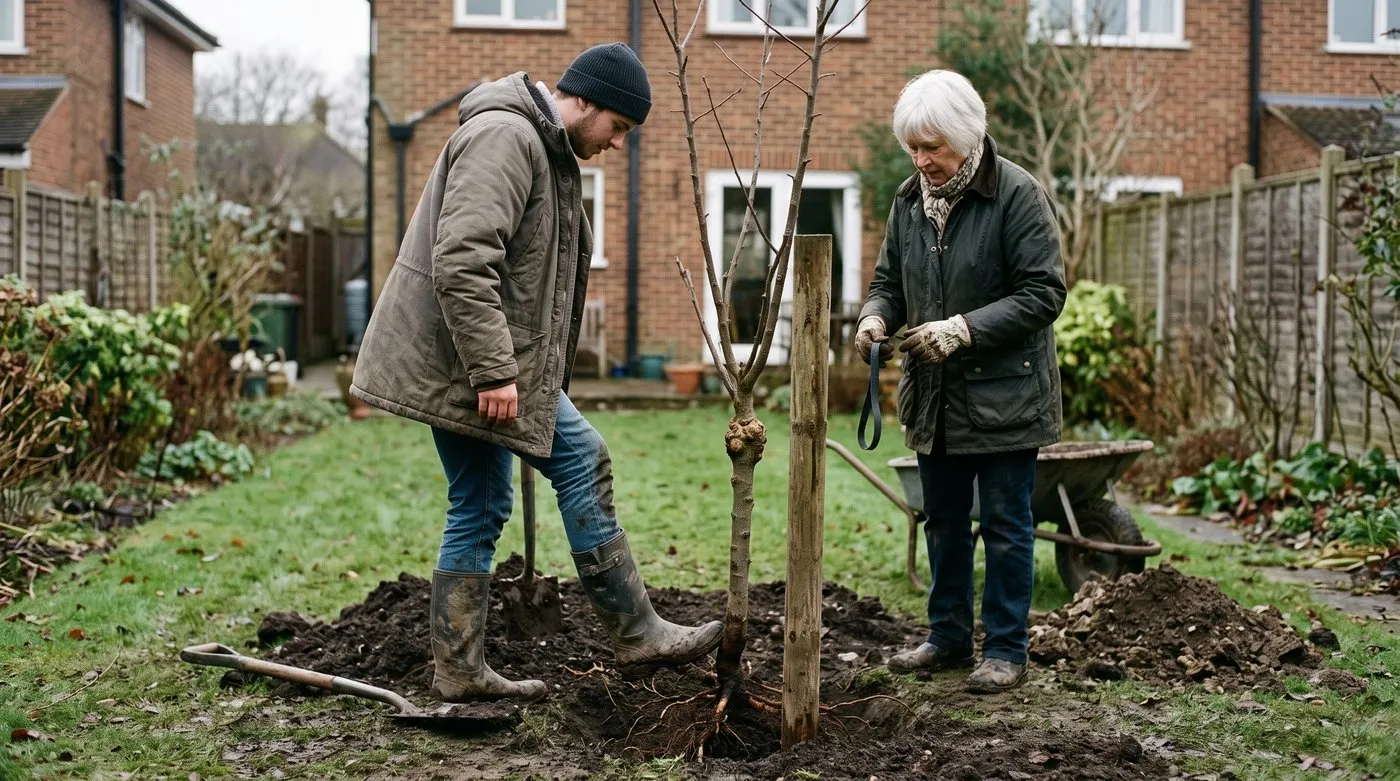
Knock the stake in before the tree so you don’t spear the roots, and keep the knobbly graft well above the soil.
Rootstock and size
The rootstock decides how big the tree grows. Most garden centre crab apples are on MM106, which gives a medium tree. For a smaller space, ask for M26 or M9, which keep it more compact. A small tree pollinates just as well as a big one.
How to prune a crab apple tree
Crab apples need very little pruning. You just want a healthy, open shape.
Prune in late winter or early spring, before the blossom opens. Remove:
- Dead, diseased or damaged branches
- Branches that cross or rub
- Shoots growing into the middle
- Strong upright shoots from the main branches
Don’t shorten lots of last year’s growth, as that means less blossom and fruit. Think tidying, not cutting back.
For weeping Royal Beauty, just remove crossing branches and any strong upright shoots that would spoil the weeping shape.
A quick look and a light tidy each winter is usually all it needs. Our guide to pruning fruit trees has more on timing and technique.
How to make crab apple jelly
Crab apple jelly is a real treat, and it’s easy. The fruit is full of natural pectin, so it sets without any extra. It’s lovely with roast lamb, cheese, or as a glaze for pork.
Red and orange crab apples ready to pick.
What you need
- 1.5-2kg crab apples (John Downie or Golden Hornet are ideal)
- Granulated sugar (the amount depends on how much juice you get)
- Water
- Juice of 1 lemon per kg of fruit
- A large preserving pan
- A jelly bag or muslin
- Sterilised jars with lids
Method
Step 1: Prepare the fruit. Wash the crab apples and cut out any bad bits. Don’t peel or core them, as that’s where most of the pectin is. Quarter big fruit and leave small ones whole.
Step 2: Simmer until soft. Put the fruit in the pan with just enough water to cover. Simmer gently for 30-40 minutes until soft and pulpy.
Step 3: Strain overnight. Tip the pulp into a jelly bag hung over a bowl. Leave it overnight and don’t squeeze, or the jelly goes cloudy. Measure the juice in the morning.
Step 4: Add sugar and lemon. For every 600ml of juice, add 450g of sugar and the lemon juice. Stir over a gentle heat until the sugar dissolves.
Step 5: Boil to setting point. Bring to a rolling boil until it reaches setting point, about 104.5°C on a sugar thermometer. No thermometer? Drop a little on a cold saucer. If it wrinkles when you push it, it’s ready. Pour into warm sterilised jars and seal.
Clear amber jelly in the jar. Crab apples set easily with no added pectin.
Crab apples as pollination partners
This is the crab apple’s secret talent. Most eating and cooking apples need another apple flowering at the same time nearby. Working that out usually means looking up pollination groups and finding a matching tree.
A crab apple makes it much simpler. Because many crab apples flower over a long spell, they overlap with lots of apple varieties. Bramley needs two partners, so a crab apple plus one other apple is a good combination.
Plant your crab apple reasonably close to your apple trees so bees can easily travel between them. One crab apple can help several apple trees at once.
For more on pollination groups, see the RHS apple growing guide. Our guide to growing fruit trees covers pollination for other fruit too.
Crab apple autumn colour and ornamental value
Crab apples are some of the best trees for autumn colour, thanks to their fruit as much as their leaves.
John Downie has golden autumn leaves and loads of orange-red fruit. Blackbirds love it, so the show doesn’t last long.
Golden Hornet keeps its yellow fruit on bare branches into December. A real winter cheer-up.
Red Sentinel is the winter star. Its small red fruit hangs on through frost into the new year, feeding fieldfares, redwings and sometimes waxwings.
In town and suburban gardens, crab apples make great trees for year-round interest without getting too big.
Pests and diseases
Crab apples can get the same problems as eating apples, but they’re usually less bothered.
Apple scab
Scab causes dark, crusty patches on fruit and olive spots on leaves, especially in wet springs. Prune for an open shape so air can move. Rake up fallen leaves in autumn. Scabby crab apples are still fine for jelly. Evereste and Red Sentinel are usually little troubled. The RHS Malus page has more on choosing healthy varieties.
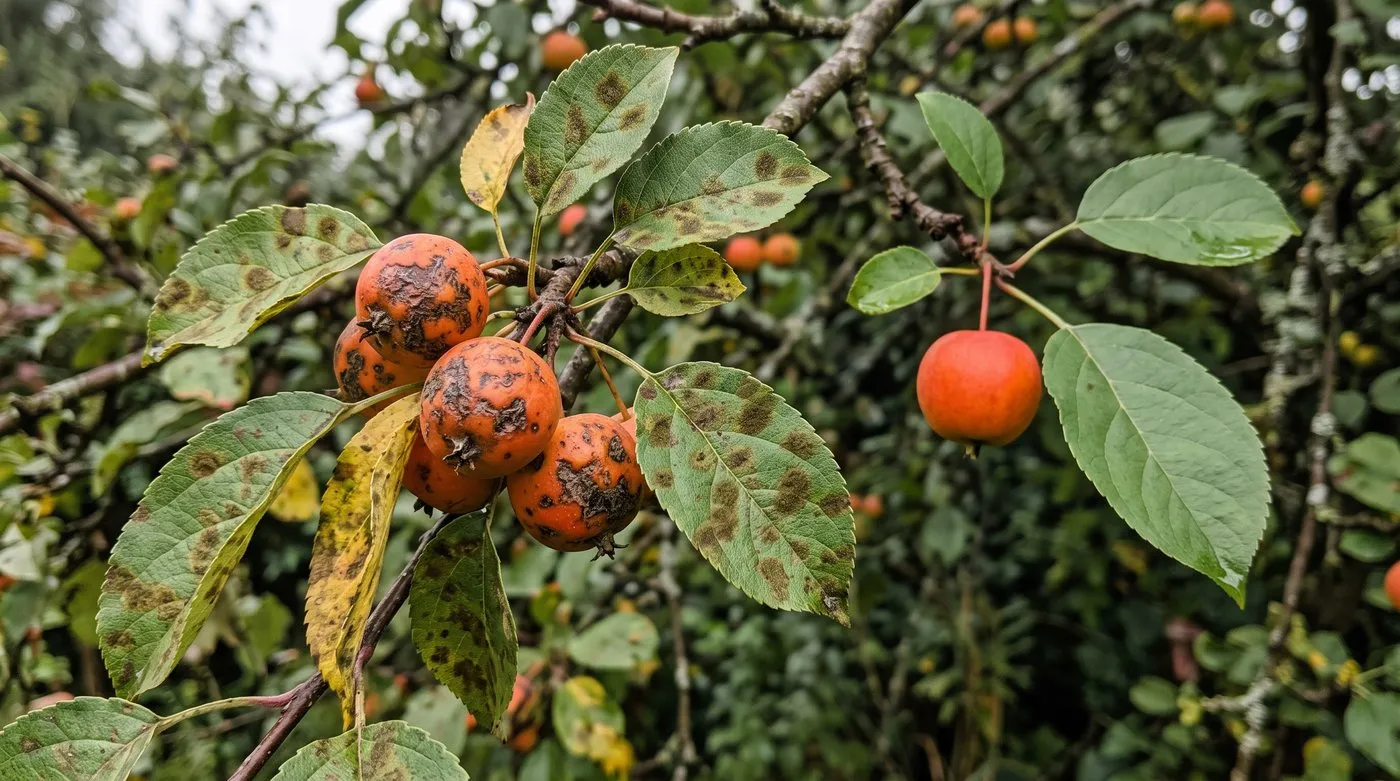
Scab shows as crusty patches on the fruit and olive spots on the leaves after a wet spring. Scabby crab apples are still fine for jelly.
Codling moth
These caterpillars tunnel into apples. It’s mainly a problem on eating apples. If you grow those nearby, hang pheromone traps in spring and clear up fallen fruit.
Fireblight
Fireblight is the most serious disease. Shoots and blossom turn brown and wither as if scorched. Cut out affected growth well below the damage, cleaning your tools between cuts. Bin or burn the prunings rather than composting them. Don’t overfeed with nitrogen, which makes soft growth that catches it more easily.
Winter moth and aphids
Winter moth caterpillars eat young leaves and buds in spring. Wrap a grease band around the trunk in October to catch the wingless females as they climb up.
Rosy apple aphid can curl young leaves in spring. Ladybirds, hoverflies and blue tits usually sort them out, so grow plenty of flowers to bring them in.
Crab apple trees and wildlife
Few small trees do as much for wildlife. In spring the blossom feeds bumblebees and solitary bees. That also helps any apple, pear or plum trees nearby.
In summer, the leaves and bark are home to lots of insects. Those feed blue tits, great tits and other birds while they raise their chicks.
In autumn and winter the fruit is a lifeline. Blackbirds tuck in as soon as it softens. Fieldfares arrive from October and love long-lasting fruit like Red Sentinel. In a hard winter, waxwings may turn up and strip a tree in no time. For a wildlife garden, it’s an easy win.
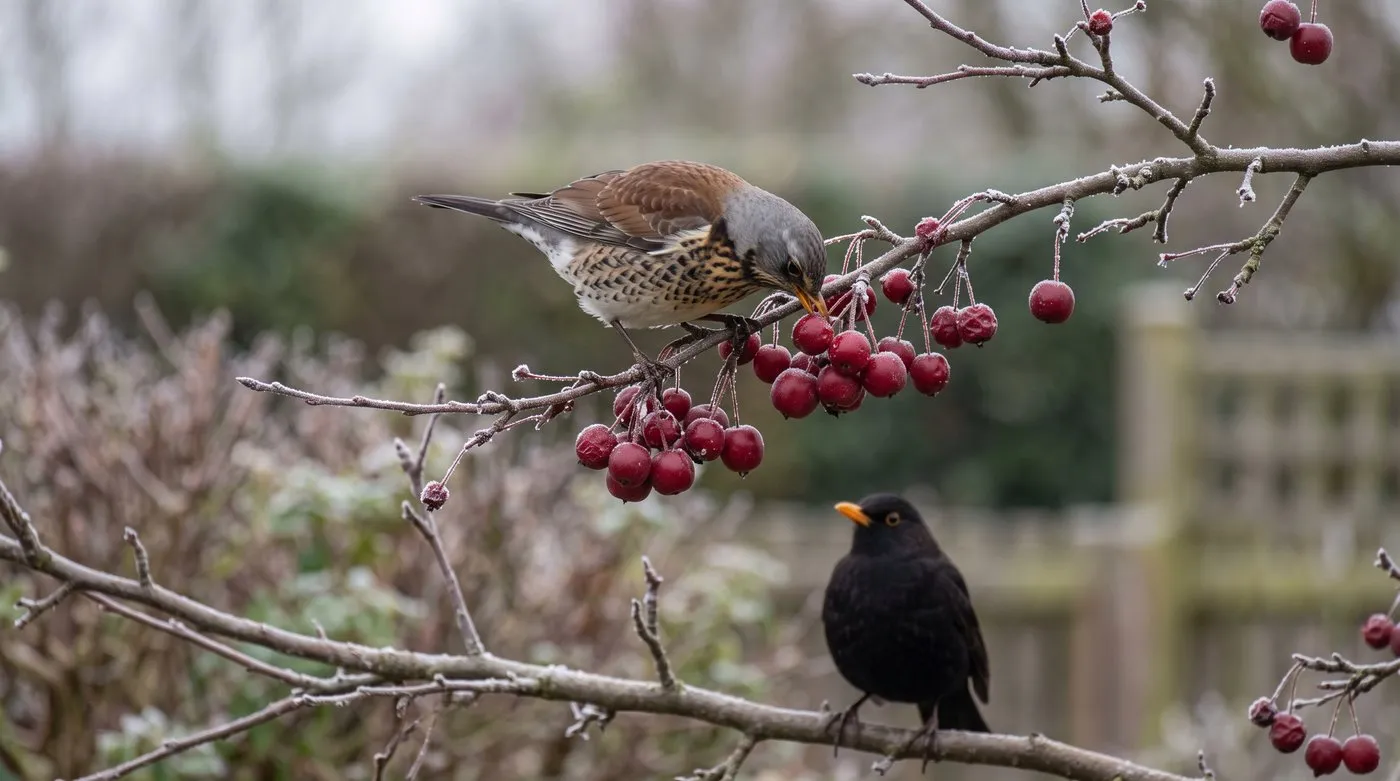
Long-lasting fruit like Red Sentinel is a lifeline for winter thrushes. Fieldfares arrive from October and will happily strip a tree.
Common mistakes growing crab apples
Choosing a purely ornamental variety
Some crab apples are bred mainly for blossom and leaves, with little fruit. If you want jelly, pick a fruiting type like John Downie, Golden Hornet or Red Sentinel.
Planting too far from apple trees to pollinate effectively
Bees work best between trees that are fairly close together. A crab apple at the far end of a big garden may not help much. Plant it near your apple trees.
Pruning at the wrong time
Heavy pruning removes next year’s blossom and fruit. Prune lightly in late winter or early spring, taking out dead and crossing wood only.
Not harvesting for jelly
Pick John Downie fruit in September once it’s fully coloured. Fruit left to rot on the ground makes poorer jelly.
Want to try something new? Our guide to grafting fruit trees shows how crab apples are propagated, and how to add a new variety to an existing tree.
Frequently asked questions
Do crab apple trees need a pollination partner?
It’s usually the other way round. Crab apples are grown as partners for other apple trees. Bees carry pollen between them, and crab apples flower over a long spell. If your apple tree sets little fruit, a crab apple nearby often helps.
What is the best crab apple variety for jelly?
John Downie is the classic jelly crab. It gives good crops of orange-red fruit that are full of pectin, so the jelly sets well. Golden Hornet is a nice second choice for a milder flavour.
How big do crab apple trees grow?
Most reach about 5-8m, depending on variety and rootstock. Evereste stays fairly compact. Weeping Royal Beauty only grows to about 2.5-3m. On a dwarfing rootstock, most can be kept to around 3-4m.
When do crab apple trees flower in the UK?
Late April to mid-May in most UK gardens. Exact timing depends on the variety. Most flower for a couple of weeks or more, which is longer than many eating apples.
Can I make jelly from any crab apple?
Yes, crab apples are generally fine for jelly. Some just give much better crops and flavour than others. Varieties grown mainly for blossom may give very little fruit, so for jelly stick to John Downie, Golden Hornet or Red Sentinel.
Are crab apple trees good for wildlife?
Yes, they’re one of the best small trees for wildlife. Bees love the spring blossom. Lots of insects live on the tree, which feeds garden birds. In winter, blackbirds, fieldfares and sometimes waxwings eat the fruit.
When is the best time to plant a crab apple tree?
Plant bare-root trees from November to March while they’re dormant. November and December are ideal, as the soil is still a little warm. Potted trees can go in any time. Avoid frozen or waterlogged ground.

Crab apple blossom in spring. Bees love it, and so do your apple trees.

Homemade crab apple jelly. The fruit’s natural pectin means it sets easily.
Related reading
- How to Grow Apple Trees in the UK: rootstocks, pollination groups and favourite varieties
- How to Grow Fruit Trees in the UK: an easy guide to all UK tree fruit
- How to Prune Fruit Trees: timing, tools and technique
- How to Plant a Bare-Root Tree: step-by-step planting
- Best Trees for Small Gardens: compact trees for smaller spaces
Our team produces practical UK gardening guidance from source research, contributor records and established horticultural practice. Editorial standards are overseen by Matt W.


