Key takeaways
- Twin-wall polycarbonate holds heat better than single panes of glass
- Glass lets in more light, but ordinary horticultural glass breaks into sharp shards
- Toughened glass is much stronger and breaks into blunt pieces, so it's best for family gardens
- Polycarbonate spreads light evenly, which stops tender seedlings scorching
- Glass suits tomatoes and peppers, while polycarbonate suits seedlings and overwintering
- Whichever you choose, fit plenty of roof vents for hot summer days
Polycarbonate or glass is one of the first choices you’ll make when buying a greenhouse. The good news is both work, and both grow great crops in the UK. It comes down to how warm you need it, how much light your plants want, your budget and whether safety matters in your garden.
Here’s how the three main types compare: horticultural glass, toughened glass and twin-wall polycarbonate. Still choosing a greenhouse? Our guide to the best greenhouse for UK gardens compares frames and sizes too. New to growing food? Our guide to growing your own vegetables will get you started.
What are the three greenhouse glazing types?
They’re horticultural glass, toughened glass and twin-wall polycarbonate.
Horticultural glass is thin 3mm glass, the cheapest and most traditional choice. It lets in lots of light, which is why the RHS rates glass as the best glazing. The catch is it’s fragile. A stray football, falling branch or big hailstone can crack it into sharp shards. The Elite High Eave 6x10 is a popular horticultural glass greenhouse with plenty of headroom.
Toughened glass is usually 4mm glass that’s been heat-treated to make it much stronger. If it does break, it crumbles into small, blunt pieces rather than sharp splinters, so it’s the safest glass for gardens with children or pets. The Vitavia Venus 5000 range is a good-value toughened option, while the Elite Thyme 6x8 is a premium toughened greenhouse with a 25-year frame guarantee.
Twin-wall polycarbonate is two thin plastic sheets with little air channels in between. That trapped air keeps warmth in, a bit like double glazing. It lets in slightly less light than glass but spreads it evenly round the greenhouse. The Palram Hybrid 6x8 is an affordable polycarbonate model to start with.
Light transmission and plant growth
Glass lets in the most light. That matters most for sun-loving fruiting crops. Tomatoes, peppers and aubergines all ripen beautifully under glass, so if tomatoes are your main crop, glass is a great pick. Our guide to growing tomatoes in the UK covers greenhouse growing in detail.
Polycarbonate’s slightly lower light can hold back seedlings and cuttings in the dull months, though in summer it hardly matters. It also scatters the light, so it reaches plants from all sides rather than making bright patches and deep shadows.
That soft, even light is lovely for leafy crops, seedlings and young plants. Lettuce, herbs and brassica seedlings grow more evenly with no scorching hot spots. For summer sowing and growing herbs, polycarbonate works really well.
Handy tip: If you mostly grow salads, herbs and seedlings, polycarbonate’s soft light is a plus, not a minus. Save glass for a dedicated tomato and pepper house.
Heat retention and insulation
Twin-wall polycarbonate keeps heat in better than single panes of glass. The air channels work like double glazing, so the greenhouse cools down more slowly at night.
That really helps at three times of year:
- Early spring (February to April): warmer nights protect seedlings from late frosts
- Late autumn (October to November): a longer season for winter salads and tender plants
- Winter: lower bills if you run an electric heater
Single glass loses heat quickly after sunset, while polycarbonate holds on to it for longer. A low brick or timber base wall cuts heat loss for either type. If you start seeds indoors and then move them out for hardening off, a polycarbonate greenhouse makes the move a little gentler.
The Palram Glory 6x8 is a sturdier polycarbonate model with a reinforced frame.

Glass gives bright, direct light, and toughened panes break into blunt pieces rather than shards.
Shop the Palram Glory 8x8 at Greenhouse Stores →
Do polycarbonate greenhouses get too hot in summer?
Yes, they can. The same insulation that helps in spring traps heat on sunny days. Aim for roof vents on both sides of the ridge, adding up to about 15-20% of the floor area, as the RHS greenhouse advice suggests. Try to keep it below about 25-27C, as plants struggle above that. Few small greenhouses come with that much venting, so add extra vents or prop the door open on hot days. Shading paint suits glass but is hard to get off polycarbonate, so use shade netting or blinds instead.
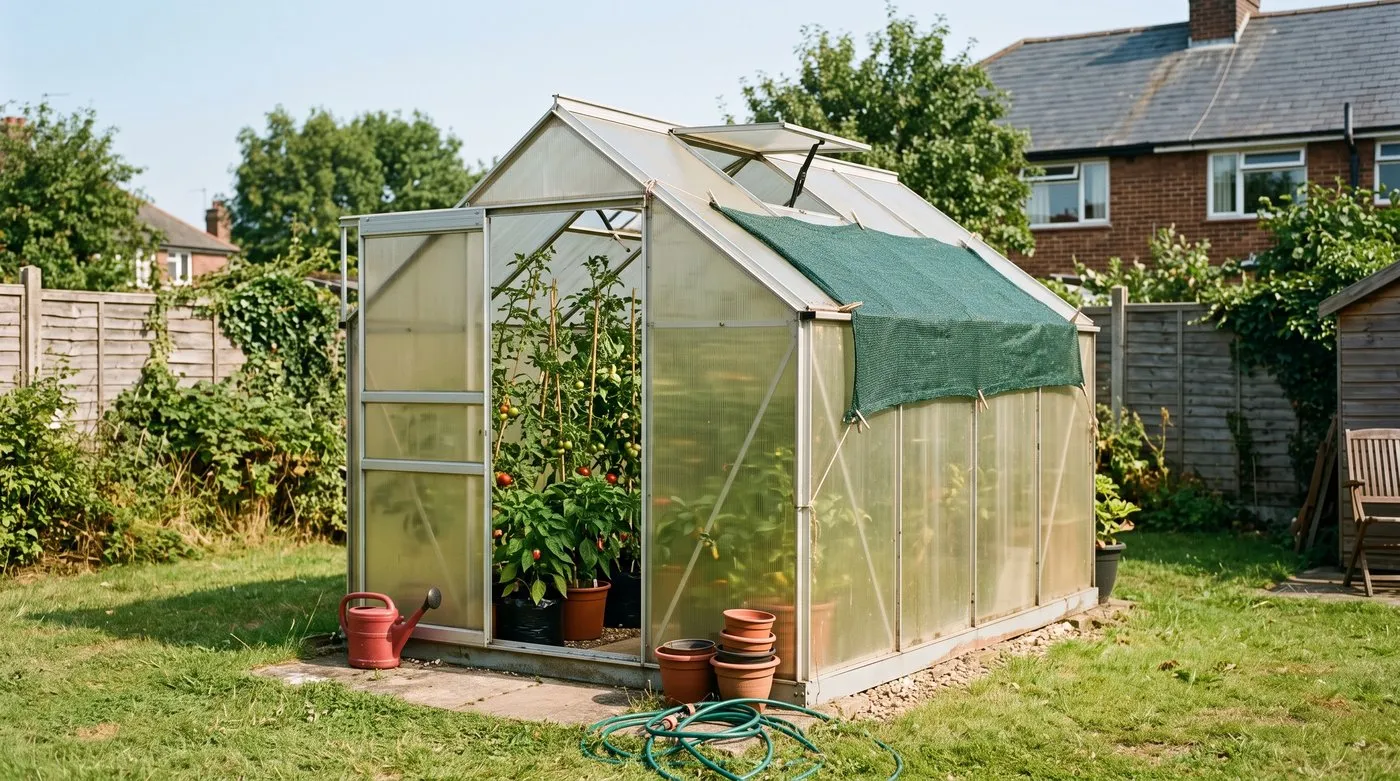
Polycarbonate holds heat well, which is lovely in spring and a problem in July. Open every vent, prop the door and use netting rather than shading paint.
Durability and safety
Polycarbonate is the toughest and horticultural glass the most fragile. A 3mm pane cracks with a moderate knock and leaves long, razor-sharp shards. Replacement panes are cheap but fiddly to fit. Gardens with children, pets or overhanging trees are more likely to see breakages. For doors, and anywhere someone might fall against the glazing, toughened glass is the sensible choice.
Toughened glass copes with knocks far better. If it does fail, the whole pane crumbles into small, blunt pieces, like a car side window. It can’t be cut or drilled after it’s made, so each pane has to be the right size.
Polycarbonate is almost unbreakable in a garden. It flexes when hit instead of cracking, and it’s much lighter than glass, so it’s easier and safer to put up. Over the years sunlight can turn it a little yellow and cloudy, though UV-protected panels last longer.
| Feature | Horticultural glass (3mm) | Toughened glass (4mm) | Twin-wall polycarbonate |
|---|---|---|---|
| Light | Lots | Lots | A little less |
| Keeps warm | Poor | Poor | Good |
| Strength | Low | High | Very high |
| If it breaks | Sharp shards | Blunt pieces | Doesn’t shatter |
| Weight | Heavy | Heavy | Very light |
| Lifespan | Decades | Decades | Shorter, can yellow with age |
| Light quality | Bright and direct | Bright and direct | Soft and even |
| Replacement cost | Low | Medium | Low |
| Best for | Tight budgets, maximum light | Family gardens, windy sites | Warmth, seedlings, safety |
Do polycarbonate panels blow out in the wind?
They can on cheap frames, as the light sheets catch the wind like sails if a clip fails. The panels rarely break; they pop out of the frame instead. Fix the frame to a solid base, use every clip supplied and add extras along windy sides. Check the fixings before winter storms. Our guide to securing a greenhouse in wind covers anchoring and bracing.
How do you clean polycarbonate glazing?
Gently, with warm water, a little mild washing-up liquid and a soft cloth or sponge. Scourers, scrapers and solvents scratch the surface or damage the UV coating, which makes it go cloudy faster. Skip the pressure washer too, as it can push water and dirt into the channels. Glass is easier: a stiff brush is fine, and a plastic plant label slid between overlapping panes lifts out algae. Give both a clean in autumn so they let in as much winter light as possible.
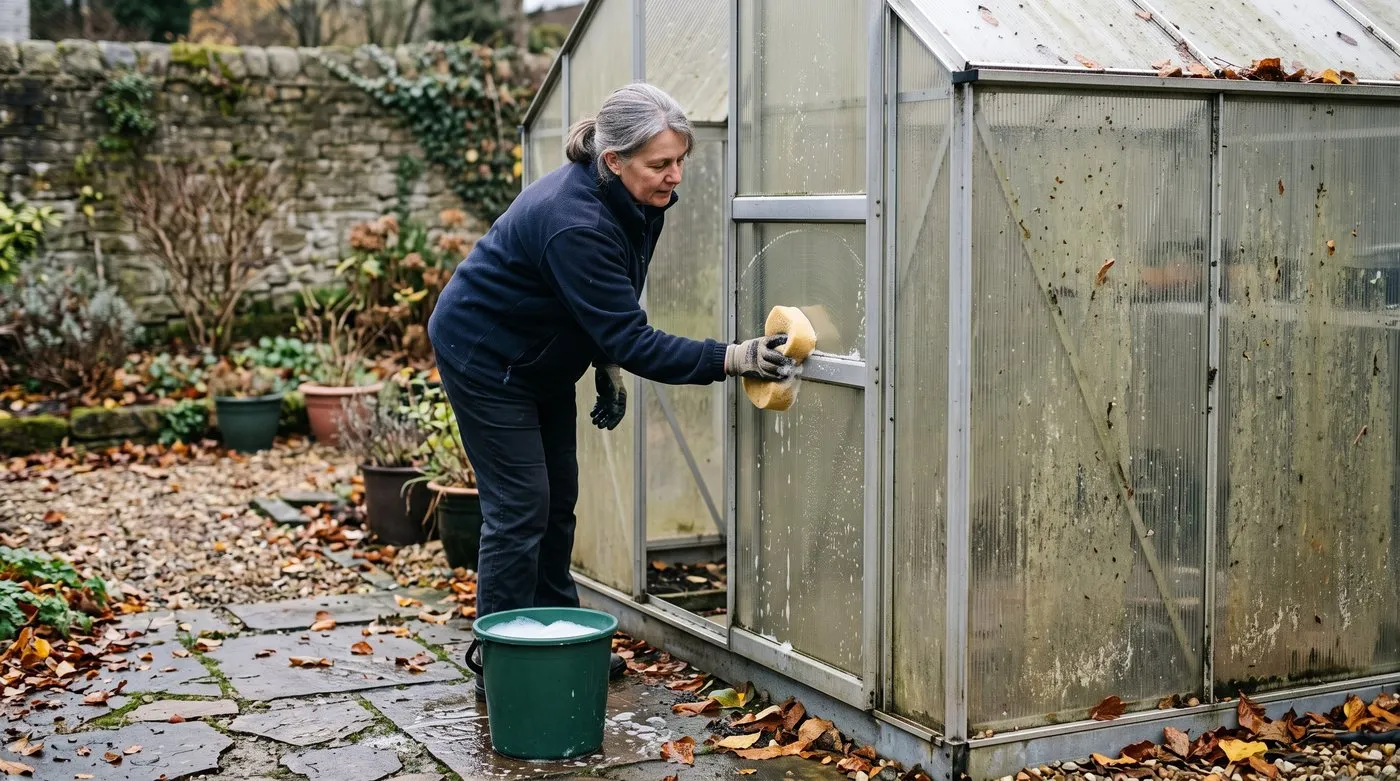
A soft sponge and warm, mildly soapy water is all polycarbonate needs. An autumn clean lets in as much winter light as possible.
Cost comparison
Polycarbonate is usually the cheapest for a given size, horticultural glass sits in the middle and toughened glass costs the most. Prices change often, so check before you buy.
| Greenhouse | Glazing | Size |
|---|---|---|
| Palram Hybrid 6x8 | Twin-wall polycarbonate | 6ft x 8ft |
| Palram Glory 6x8 | Twin-wall polycarbonate | 6ft x 8ft |
| Vitavia Venus 5000 | Toughened glass | 6ft x 8ft |
| Elite High Eave 6x10 | Horticultural glass | 6ft x 10ft |
| Elite Thyme 6x8 | Toughened glass | 6ft x 8ft |
Running costs differ too. Twin-wall polycarbonate needs less heating in winter and spring than single glass. Glass costs more to heat but rarely needs panes replacing. Our greenhouse heating guide compares electric, gas and paraffin heaters for both.

The Elite Thyme 6x8 comes with toughened glazing as standard, so you get safety and lots of light.
Shop the Elite Thyme 6x8 at Greenhouse Stores →
Which glazing suits which plants?
Glass suits sun-loving fruiting crops. Polycarbonate suits seedlings, overwintering and cool-season crops.
Glass greenhouses (horticultural or toughened)
Glass is best for fruiting crops that want lots of light and warmth in summer:
- Tomatoes love strong, direct light for the best flavour. See our tomato growing guide.
- Chilli peppers want as much sun and warmth as they can get. Our chilli growing guide covers greenhouse growing.
- Cucumbers thrive in the humid warmth of a glass greenhouse. See our cucumber growing guide.
- Aubergines and peppers need every hour of UK sunshine to ripen fully
Polycarbonate greenhouses
Polycarbonate is best for seedlings, overwintering and cool-season crops:
- Seed sowing: the extra warmth helps seeds come up in spring. Keep trays near the glazing so seedlings don’t stretch.
- Lettuce and salad leaves: even light and no scorching
- Herbs: basil, coriander and parsley all enjoy soft light. Our herb growing guide has variety ideas.
- Overwintering tender plants: the insulation helps geraniums, fuchsias and citrus through winter
- Container vegetables: a warmer greenhouse stretches the season for pots and grow bags

Soft light through twin-wall polycarbonate spreads evenly over seed trays and herbs, with no scorching hot spots.
Handy tip: Some growers have both: a glass greenhouse for summer crops and a small polycarbonate one for seedlings and overwintering. If you’ve only room for one, choose by what you’ll use it for most.
Common mistakes when choosing greenhouse glazing
Choosing horticultural glass near trees
Falling branches and conkers crack horticultural glass easily. If your greenhouse is near trees, go for toughened glass or polycarbonate. Replacing broken panes soon adds up.
Ignoring ventilation needs
Polycarbonate keeps more heat in, which is great in spring but a problem in summer. Without enough roof vents, it gets very hot on sunny days. Many budget models only have one roof vent, so plan for extra vents or an automatic opener.
Buying cheap polycarbonate without UV stabilisation
Cheap panels without a UV coating go yellow and brittle much sooner. Check the panels are UV-protected on both sides. Named brands like Palram use UV-protected sheets as standard.
Assuming glass is always better for plants
Glass lets in more light, but more isn’t always better. Seedlings can scorch in strong sun, and lettuce bolts in the heat. For lots of crops, polycarbonate’s soft light is actually better.
Forgetting about weight during assembly
Glass panes are heavy and awkward. A typical 6ft x 2ft pane of horticultural glass weighs around 8kg, while the same size of twin-wall polycarbonate is about 1kg. If you’re putting a greenhouse up on your own, polycarbonate is far easier and safer to handle.
Frequently asked questions
Is polycarbonate or glass better for a greenhouse?
Neither wins every time. Polycarbonate is great for raising seedlings in a cold spring and for families with children, as it keeps warmth in and doesn’t shatter. Glass lets in more direct light, which tomatoes and peppers love. Choose by what you’ll mostly grow and your budget.
How long does polycarbonate greenhouse glazing last?
Good twin-wall panels last many years before they start to yellow. UV-protected panels last longest, while cheap ones without UV protection can go cloudy much sooner. Replacement panels are cheap and easier to fit than glass.
Does polycarbonate block light in a greenhouse?
A little, yes. Clear polycarbonate lets in a bit less light than glass, which matters most for seedlings in winter. It also spreads light evenly, so there are fewer hot spots that scorch leaves.
Is toughened glass worth the extra cost?
Yes, especially for safety. Toughened glass is much stronger than horticultural glass. If it does break, it crumbles into small blunt pieces instead of sharp shards. It costs more at first but saves on replacing broken panes.
Can I replace glass greenhouse panels with polycarbonate?
Yes, lots of people do. Twin-wall panels are lighter, so the existing clips and glazing bars usually cope. Check the panel thickness fits your frame’s glazing channel before you order.
Which greenhouse glazing is best for tomatoes?
Glass is the classic choice for tomatoes, as it lets in more light. A well-ventilated glass greenhouse is perfect for cordon tomatoes. Polycarbonate grows good tomatoes too, as long as it has enough roof vents to stop it overheating.
Our team produces practical UK gardening guidance from source research, contributor records and established horticultural practice. Editorial standards are overseen by Matt W.