Key takeaways
- Only snip out dead or damaged stems now, cutting back to green growth
- Save the main prune for August, after the flowers fade
- Mulch with gravel, not compost or bark, to keep the crown dry
- Established lavender in the ground rarely needs watering or feeding
- Late spring is a great time to plant new lavender
- Pick off rosemary beetles and their grey larvae when you see them
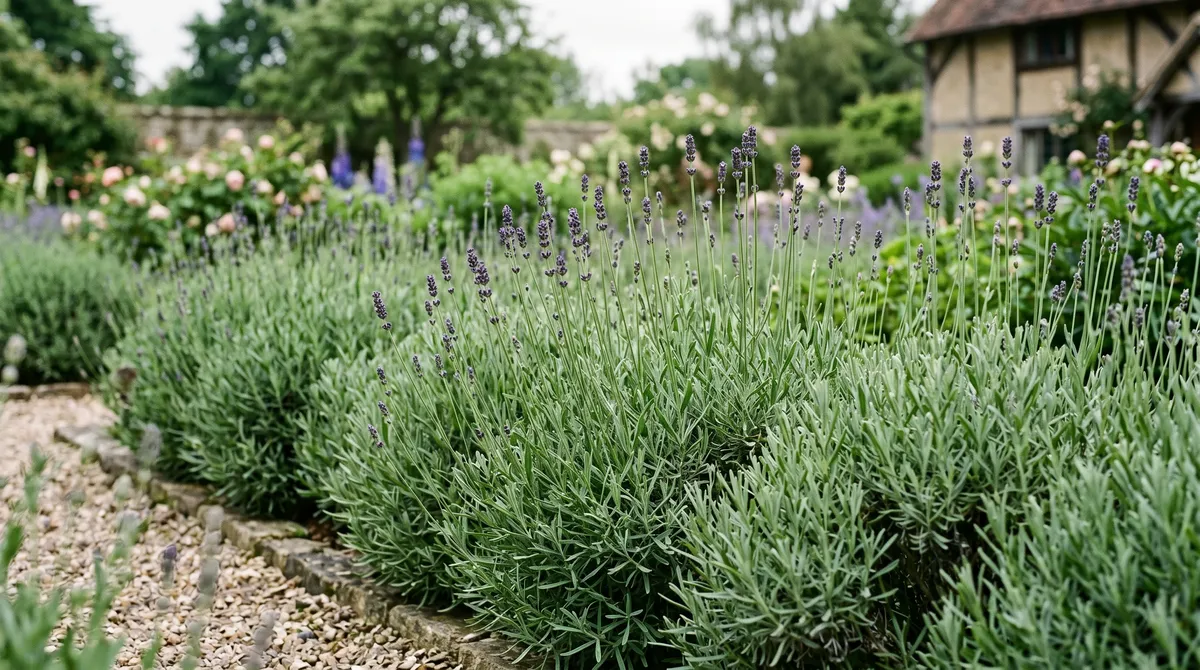
May and June are the build-up months for lavender. The plants are filling out with fresh grey-green shoots and the flower buds are forming on tall stems. This isn’t the time for a big prune. Instead, a few light jobs now set it up for a summer full of flowers and bees.
Here’s what to do, what to leave well alone, and how to spot problems early. For year-round care, see our full guide on how to grow lavender.
What should you do with lavender in May and June?
Five quick jobs, in order:
- Snip out dead winter stems. Cut back to green, leafy growth.
- Weed around the base. Keep a clear patch about 20-30cm round each plant.
- Top up the gravel mulch. Aim for 2-4cm of grit or gravel.
- Water new and potted plants only. Established lavender in the ground rarely needs it.
- Check for rosemary beetle. Look on the shoot tips for shiny striped beetles and grey larvae.
That’s it. Lavender is happiest when it’s left alone in sun and well-drained soil.
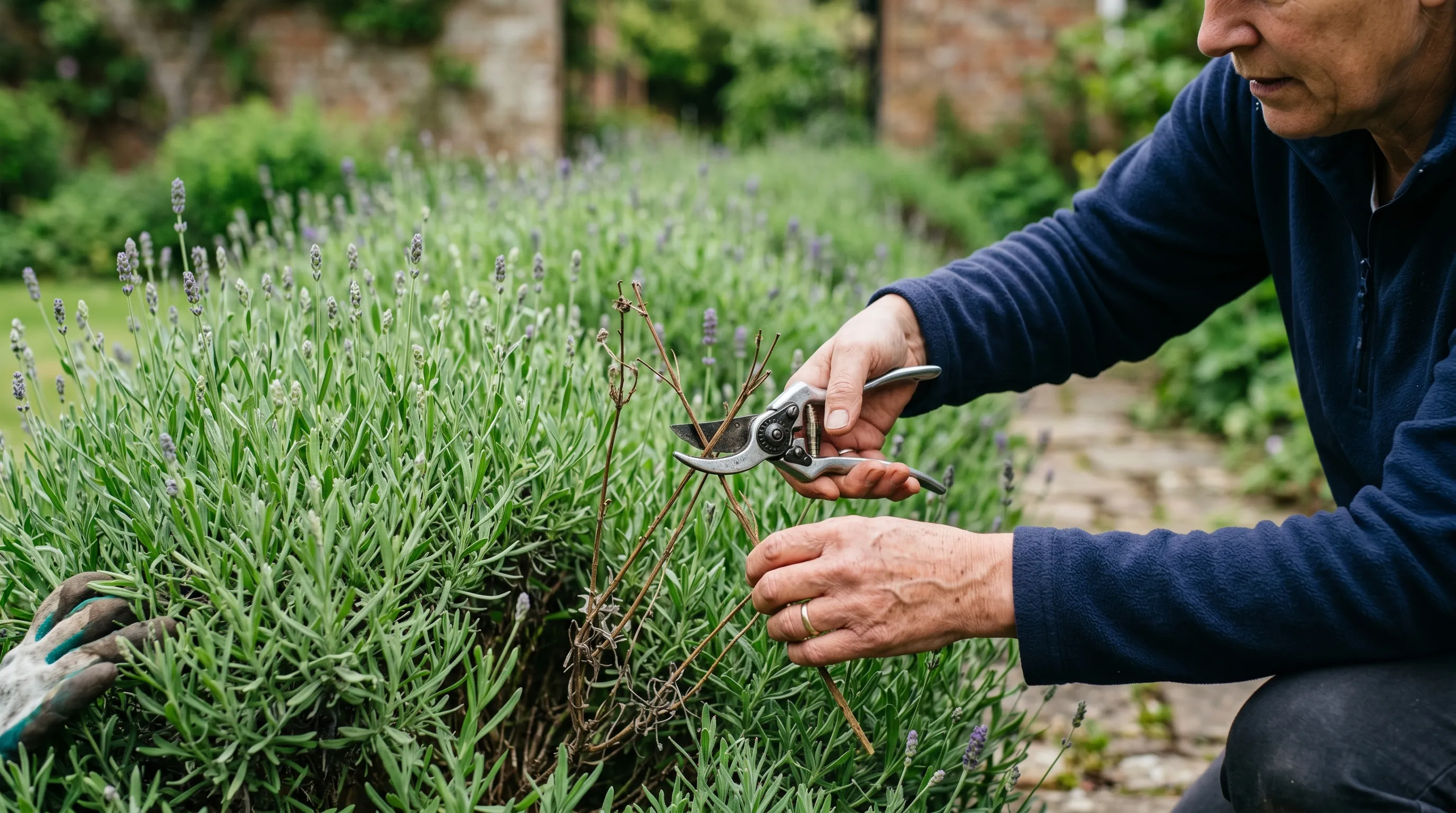
In May, just snip out the dead winter stems. Leave the rest of the plant alone so it can flower.
Should you prune lavender in May?
Only lightly. The flower buds for this summer are forming on the new shoots right now. A hard trim in May or June cuts them off.
Save the main prune for August, once the flowers have faded. Then you can trim the whole plant into a neat mound, leaving a little green growth on each stem. Our guide on how to prune lavender shows how far to go.
Whatever the month, never cut into bare brown wood. Lavender rarely shoots again from old wood, so a hard cut there can leave a bald patch for good.
French lavender (Lavandula stoechas), the one with “rabbit ear” tufts on top of the flowers, is different. It often flowers from May. Trim off the faded flower heads after the first flush and it may flower again later in summer.
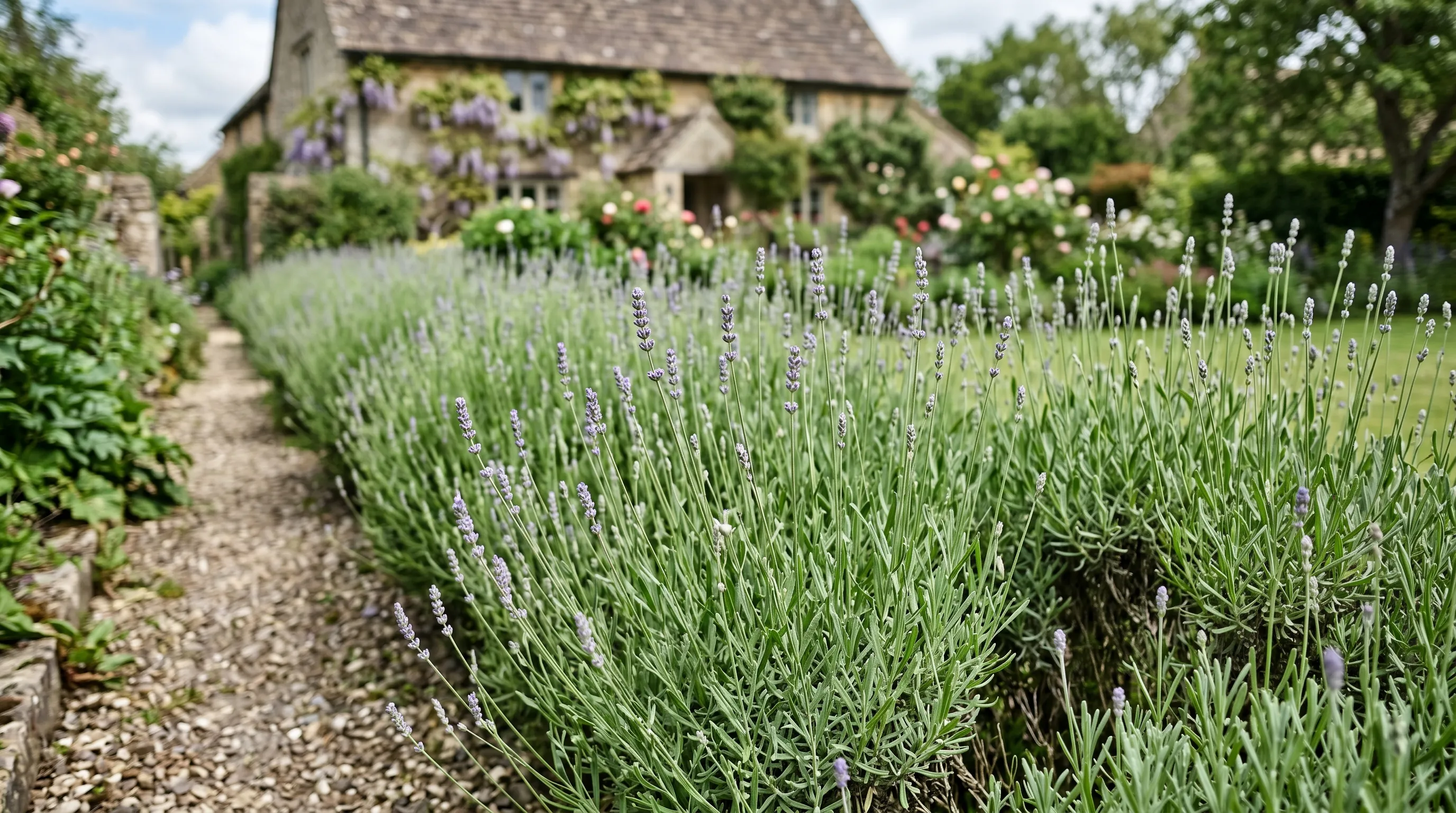
The buds you can see rising now are this summer’s flowers. Leave them be and they’ll open within a few weeks.
Why does lavender need a gravel mulch, not compost?
Lavender comes from dry, stony hillsides and likes poor, free-draining soil. A gravel mulch suits it. It keeps the crown dry, reflects warmth and smothers weed seedlings.
Organic mulches like compost, bark, leaf mould or manure hold moisture round the base. That can encourage rot, especially on heavy soil in a wet UK winter. They also feed the plant, which makes it soft and floppy.
Good mulches for lavender:
- Horticultural grit
- Pea gravel
- Crushed stone or slate
Spread 2-4cm around each plant, out to the edge of the foliage. Top it up every few years as it settles into the soil. If you’re planning a whole dry bed, our guide to creating a gravel garden has plant ideas that enjoy the same conditions.
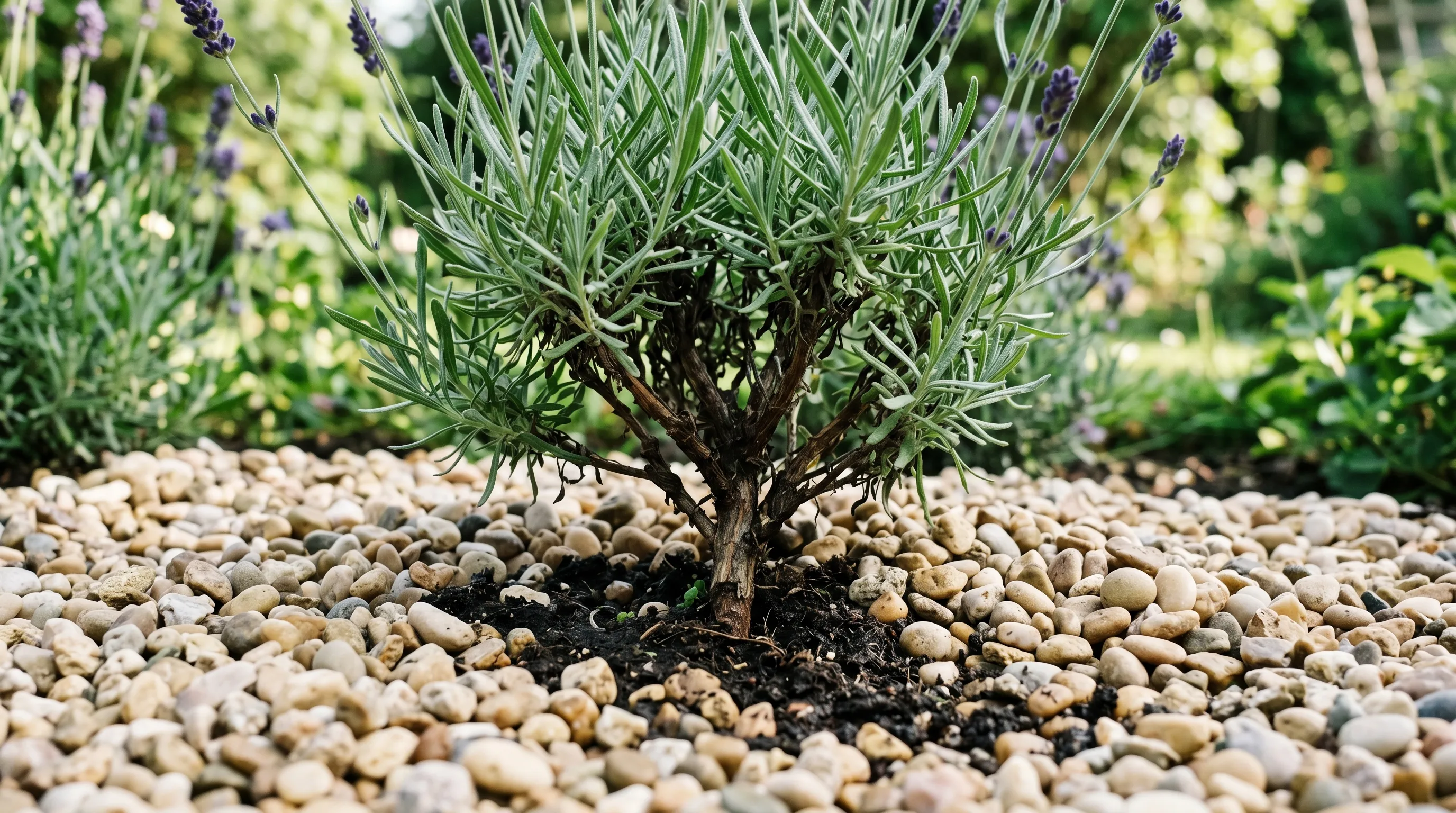
A gravel mulch keeps the base of lavender dry and the weeds down. Compost does the opposite.
Does lavender need watering or feeding in May?
Established lavender in the ground almost never needs watering or feeding. Too much of either does far more harm than a dry spell.
Watering:
- Established plants in beds: leave them to it, except in a long, severe drought
- New plants: water every week or so in dry weather during their first summer
- Pots: water when the top few centimetres of compost are dry, then let the excess drain away
Feeding:
- In the ground: no feed needed
- In pots: an occasional liquid feed in summer is plenty
Rich, wet soil gives soft, leggy growth and fewer flowers. Lavender does best on a bit of neglect.
Is May a good time to plant lavender?
Yes, late spring is one of the best times to plant lavender. The soil is warming up, so new plants root quickly before summer.
Choose the sunniest spot you have, with soil that drains well. On heavy clay, plant into a raised bed or a mound and mix in plenty of grit. Space English lavender about 30-45cm apart for a low hedge, depending on the variety.
Water new plants in well and keep them watered in dry spells through their first summer. After that, they should look after themselves. Lavender sits well alongside thyme, rosemary and cistus in Mediterranean-style planting.
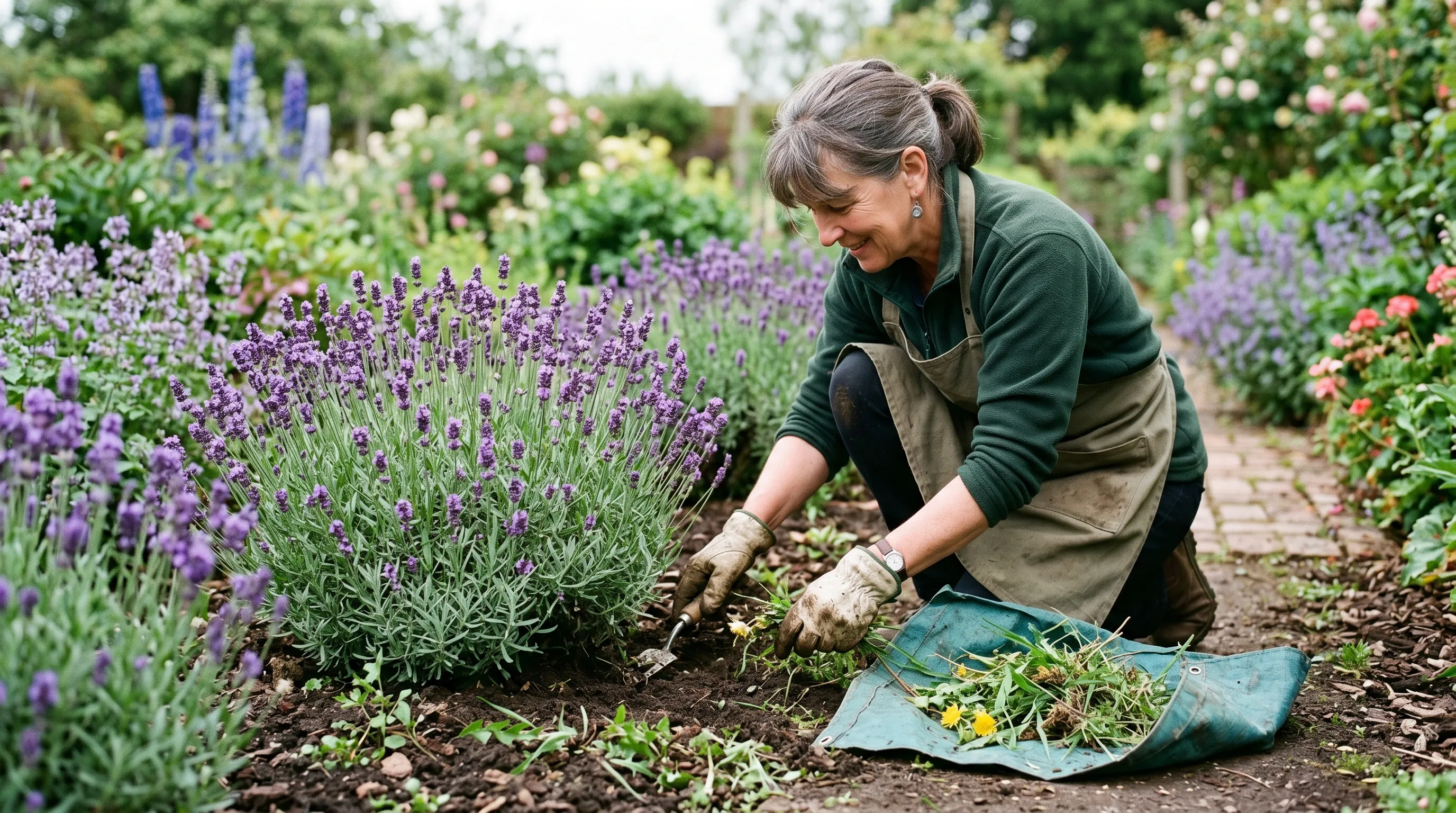
Weeding by hand around the base keeps lavender airy and stops weeds stealing water.
How do you spot and deal with rosemary beetle?
Rosemary beetle is the main pest to look for on lavender. It also feeds on rosemary, thyme and sage.
How to spot it:
- Shiny adult beetles under 1cm long, with metallic green and purple stripes
- Small, soft, greyish larvae on the shoot tips
- Chewed leaves and shoot tips
Adults can be found all year but are most active from late summer through to spring. So it’s worth checking in May, and again in autumn.
What to do:
- Pick off adults and larvae by hand and squash them, or drop them into a tub
- Hold a sheet of paper or a tray under the plant and tap the stems, as the beetles drop when disturbed
- Check every few days while you’re seeing them
Most plants cope with a few beetles. If numbers are high, keep hand-picking, or use an approved product for that use, following the label. Our guide to rosemary leaf beetle has more on spotting and controlling it.
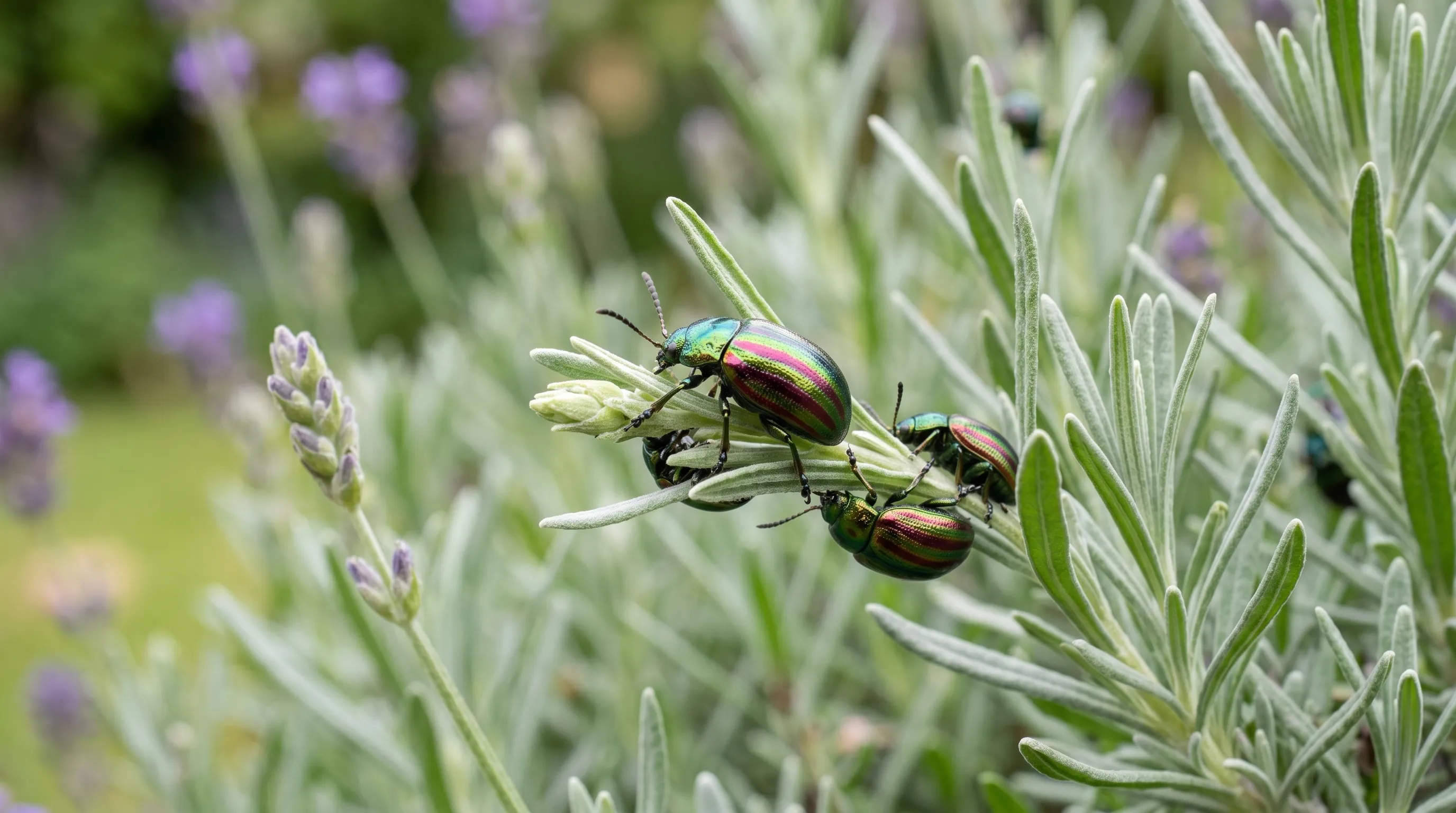
Rosemary beetles are easy to spot thanks to their shiny stripes. Pick them off when you see them.
When should you replace old lavender?
When it’s mostly bare, brown wood with little green growth. Lavender usually gets woody and gappy after several years, especially if it wasn’t pruned each August.
Signs it’s time to replace:
- Bare, woody stems with green growth only at the tips
- A dead centre, with the plant splayed open
- Very few flower stems, even after regular pruning
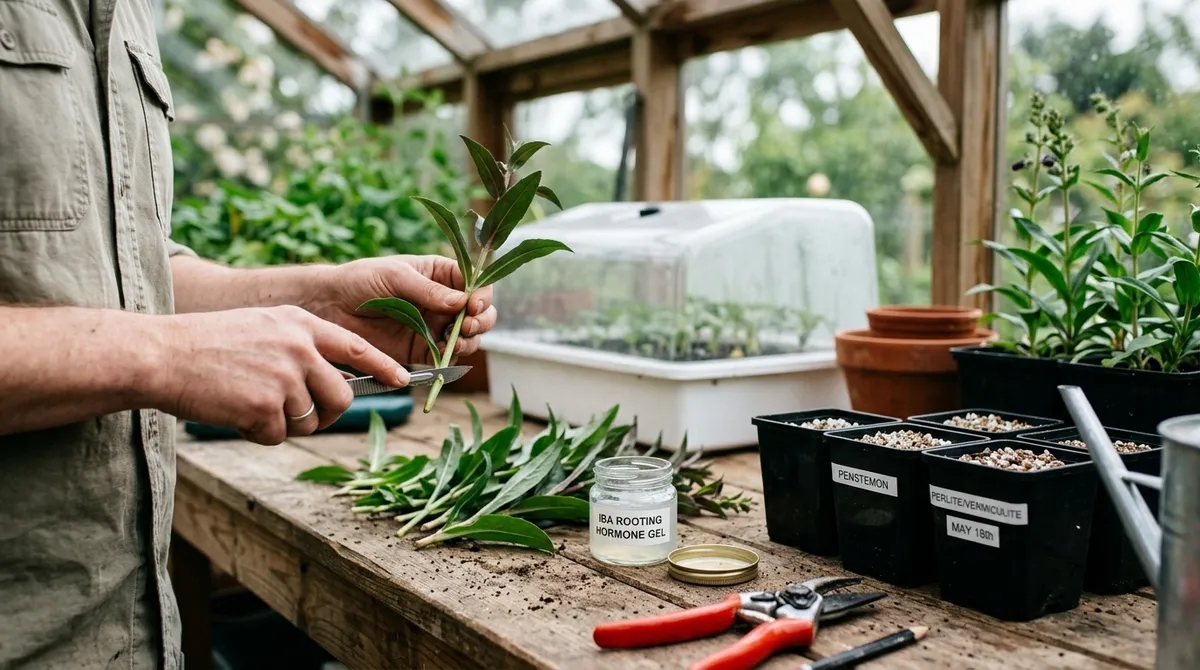
Rather than hard-pruning into old wood, take cuttings and replace it. Short, non-flowering side shoots root well in late spring and summer. Pot them into gritty compost and you’ll have free plants for next year. Replant in spring for the best start.
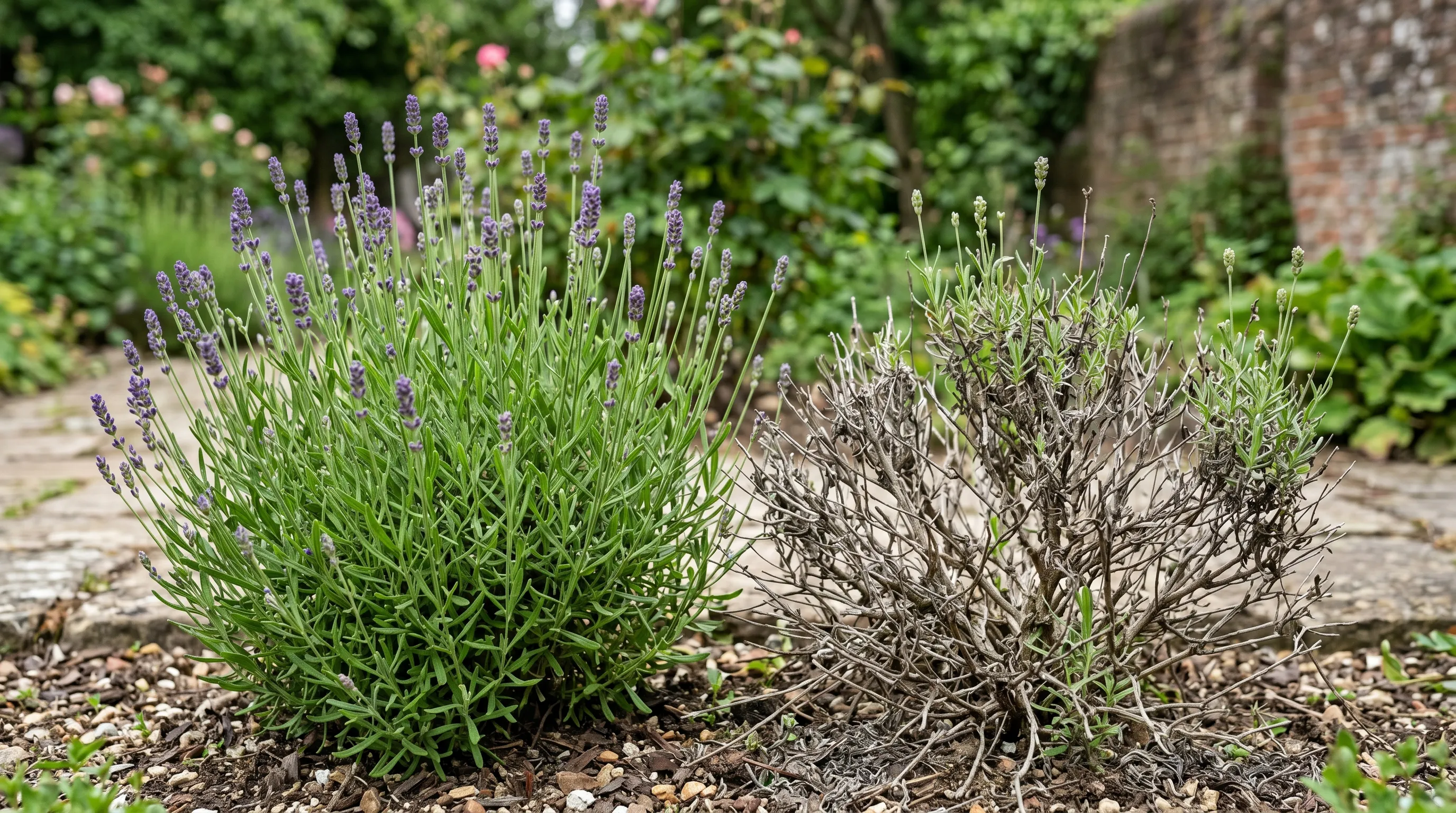
A healthy plant on the left and a tired, woody one on the right. Once it looks like the one on the right, it’s time to replace it.
Lavender calendar: month by month
| Month | Lavender task |
|---|---|
| January | Leave alone. Check it’s not sitting in wet soil |
| February | Order new plants if you need them |
| March | Look for winter damage, but don’t cut yet |
| April | Plant new lavender. Snip out dead stems once new growth shows |
| May | Light tidy, weed, top up gravel. Check for rosemary beetle |
| June | Water new plants in dry spells. English lavender starts to flower |
| July | Peak flowering. Cut stems for drying as the first flowers open |
| August | Main prune once flowering finishes |
| September | Finish pruning early in the month. Take cuttings |
| October | Check for rosemary beetle. Make sure drainage is good |
| November | Leave alone over winter |
| December | Leave alone over winter |
Common mistakes with lavender in May and June
Pruning hard too early. It cuts off this summer’s flower buds. Just remove dead stems.
Mulching with compost. It holds water round the crown and makes growth soft. Use gravel.
Overwatering. Lavender copes far better with drought than with wet roots.
Feeding. It gives soft, floppy growth and fewer flowers.
Cutting into bare wood. It rarely regrows. Replace old plants instead.
For more plant care guides, browse our plants section. For everything else to do as summer gets going, read our July garden jobs checklist.
Frequently asked questions
When should I prune lavender in the UK?
Give English lavender its main prune in August, straight after flowering. In May and June, only snip out dead or damaged stems. Cutting hard now removes this summer’s flower buds, and never cut into bare brown wood.
What should I do with lavender in May?
Tidy, weed and check it over. Snip out any stems killed over winter, pull weeds from around the base and top up the gravel mulch. Don’t feed it. Look for rosemary beetles on the new shoots.
Should I mulch lavender in May?
Yes, but use gravel rather than compost or bark. Lavender likes dry, poor soil. Gravel keeps the crown dry and weeds down, while a damp organic mulch round the base can encourage rot.
How do I tell if my lavender is dying?
Look for bare brown stems with no green shoots by late spring. If the base is woody and the centre has opened up, the plant is past its best. Lavender rarely regrows from old wood, so replace it.
Does lavender attract bees in May?
French lavender does, as it often flowers from May. English lavender usually starts in June or July and is a bee favourite all summer. Plant both for a longer season of bee food.
Is lavender safe for cats and dogs?
No, lavender isn’t classed as pet-safe. It can upset a cat’s or dog’s stomach if eaten in quantity. Most pets leave it alone, but don’t plant it where a pet likes to chew.
Our team produces practical UK gardening guidance from source research, contributor records and established horticultural practice. Editorial standards are overseen by Matt W.