Key takeaways
- Water established beds deeply twice a week, not lightly every day; aim for 10-15 litres per square metre after 7pm.
- Deadhead sweet peas, roses and bedding every 3-4 days to keep flowers coming until October.
- Summer-prune lavender after flowering and wisteria side-shoots back to 5-6 leaves.
- Feed tomatoes and containers weekly with high-potash feed at 5ml per litre once fruit sets.
- Tomato blight strikes after two warm humid days; check plants twice a week from mid-July.
- Set up holiday cover before you go: group containers, mulch, and fit a £15 timer to a drip line.
What jobs matter most in the July garden?
Watering, deadheading, feeding and harvesting are the four jobs that decide your July. Skip any one and the garden slides backwards within a week. Heat speeds up flowering, fruiting and wilting all at once. The table below shows the full month at a glance, split by garden area.
| Garden area | Key July job | How often | Quick note |
|---|---|---|---|
| Borders | Deadhead and water deeply | Every 3-4 days | Keeps colour going to October |
| Kitchen garden | Harvest and feed | Pick every 2-3 days | Courgettes double in size overnight |
| Containers | Water and high-potash feed | Daily water, weekly feed | Compost dries out in hours in heat |
| Lawn | Raise mower, leave clippings | Mow weekly | Let it brown in drought, it recovers |
| Greenhouse | Damp down and shade | Daily in heat | Aim under 30°C inside |
| Tomatoes | Feed, remove sideshoots, blight watch | Twice weekly | Check leaves for brown patches |
Work in the cool of early morning or after 7pm. The middle of a July day is for sitting in the shade, not bending over a hot border.
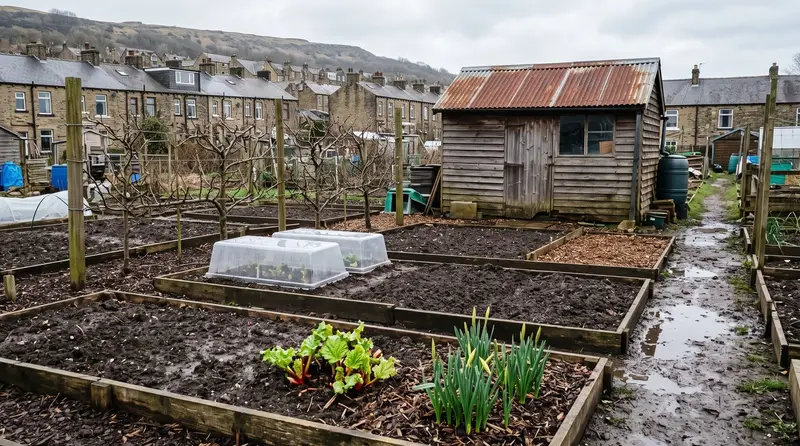
 A suburban Midlands plot at the July peak: full borders, growbag tomatoes and a lawn already tinting brown in the heat.
How should you water the garden in July heat?
Water deeply twice a week, not lightly every day. Shallow daily splashes keep roots near the surface, where they bake. A deep soak twice a week drives roots down, where the soil stays cool and damp. Aim for 10-15 litres per square metre each time. That is roughly two full watering cans over a square metre of border.
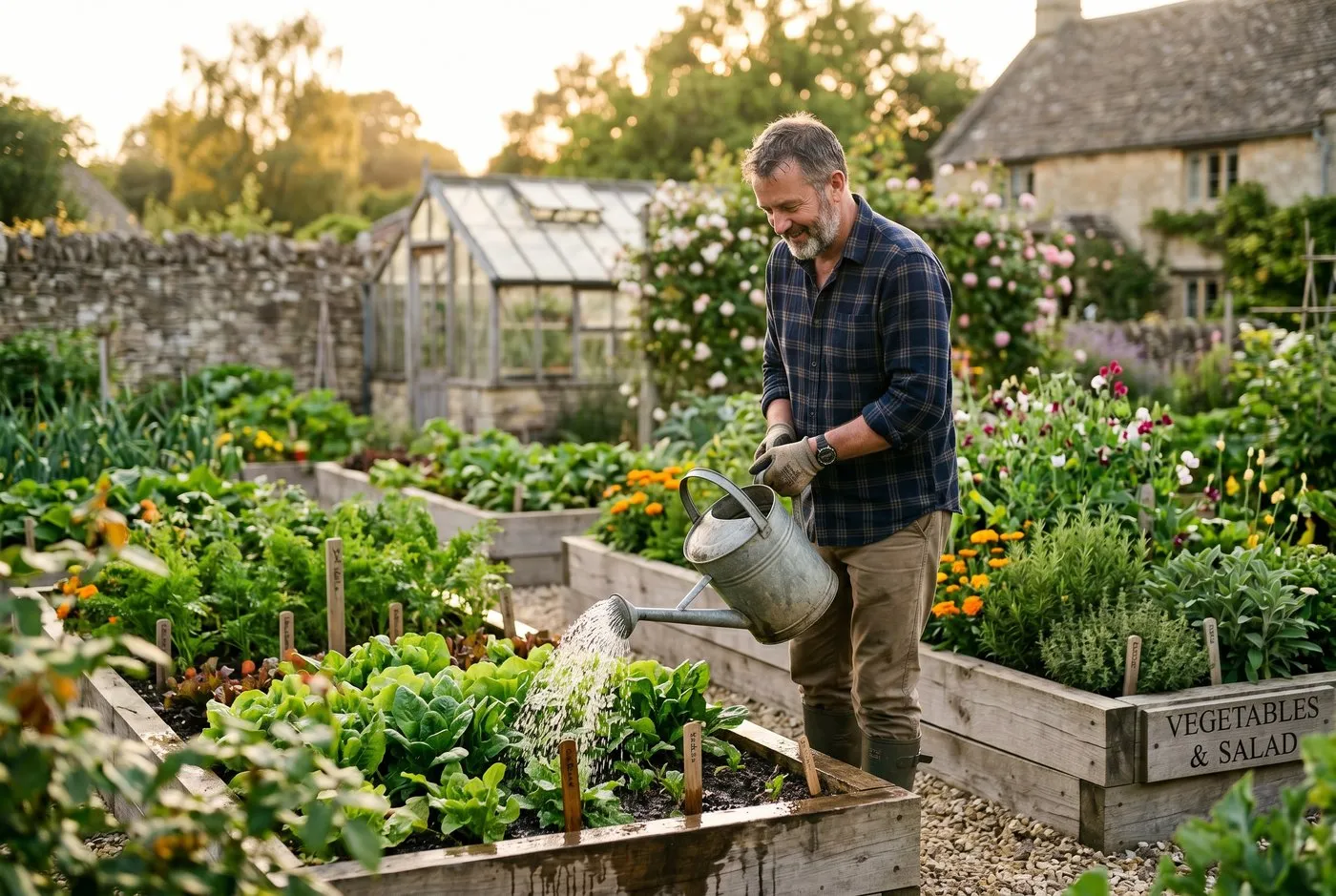 Evening watering in a Welsh valley plot: targeting the soil at the base, not the foliage, cuts evaporation and disease.
What about a hosepipe ban?
When and how do you deadhead in July?
Deadhead repeat-flowering plants every 3-4 days through July. Removing spent blooms stops the plant setting seed, which tricks it into flowering again. Roses, sweet peas, dahlias, cosmos and bedding all respond within a week. Pinch or snip just above the next leaf or bud.
The order to work through:
- Sweet peas: pick every 2-3 days, before pods form
- Roses: cut back to the first five-leaflet leaf
- Dahlias: remove cone-shaped spent buds, not round fat ones
- Bedding (petunias, marigolds): pinch off faded heads weekly
- Lupins and delphiniums: cut spent spikes for a smaller second flush
For the full method on different flower types, see how to deadhead flowers without harming next year’s buds.
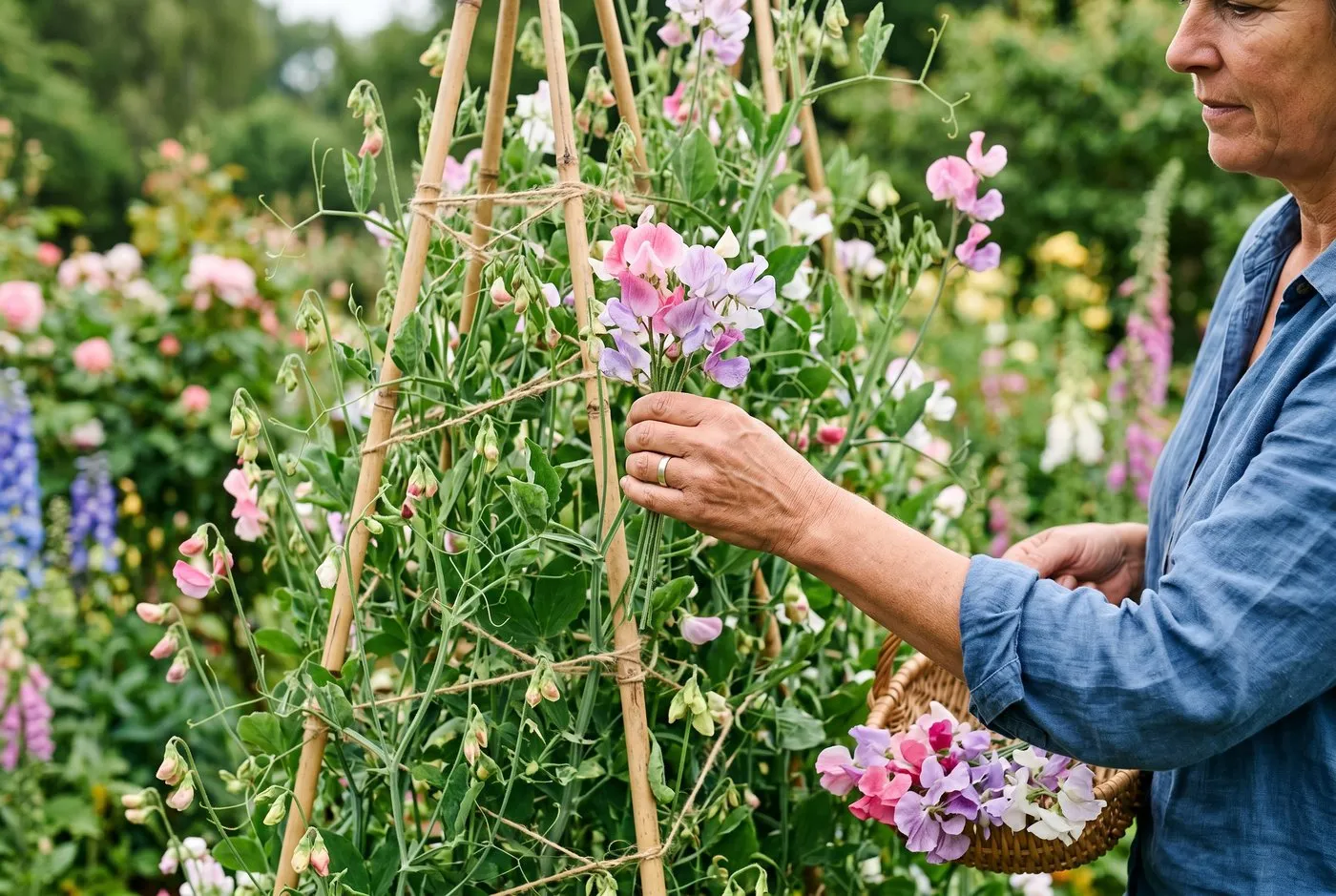 Picking sweet peas every few days in a Scottish garden keeps the plants productive right through to September.
Which shrubs need summer pruning now?
Lavender and wisteria both want pruning in July, but in very different ways. Lavender gets a light all-over trim once the flowers fade. Wisteria gets its long whippy side-shoots cut back hard.
July is also the time to summer-prune trained apples and pears. Shorten the new leafy growth to encourage fruit buds. See how to summer-prune fruit trees for the cuts that build cropping wood.
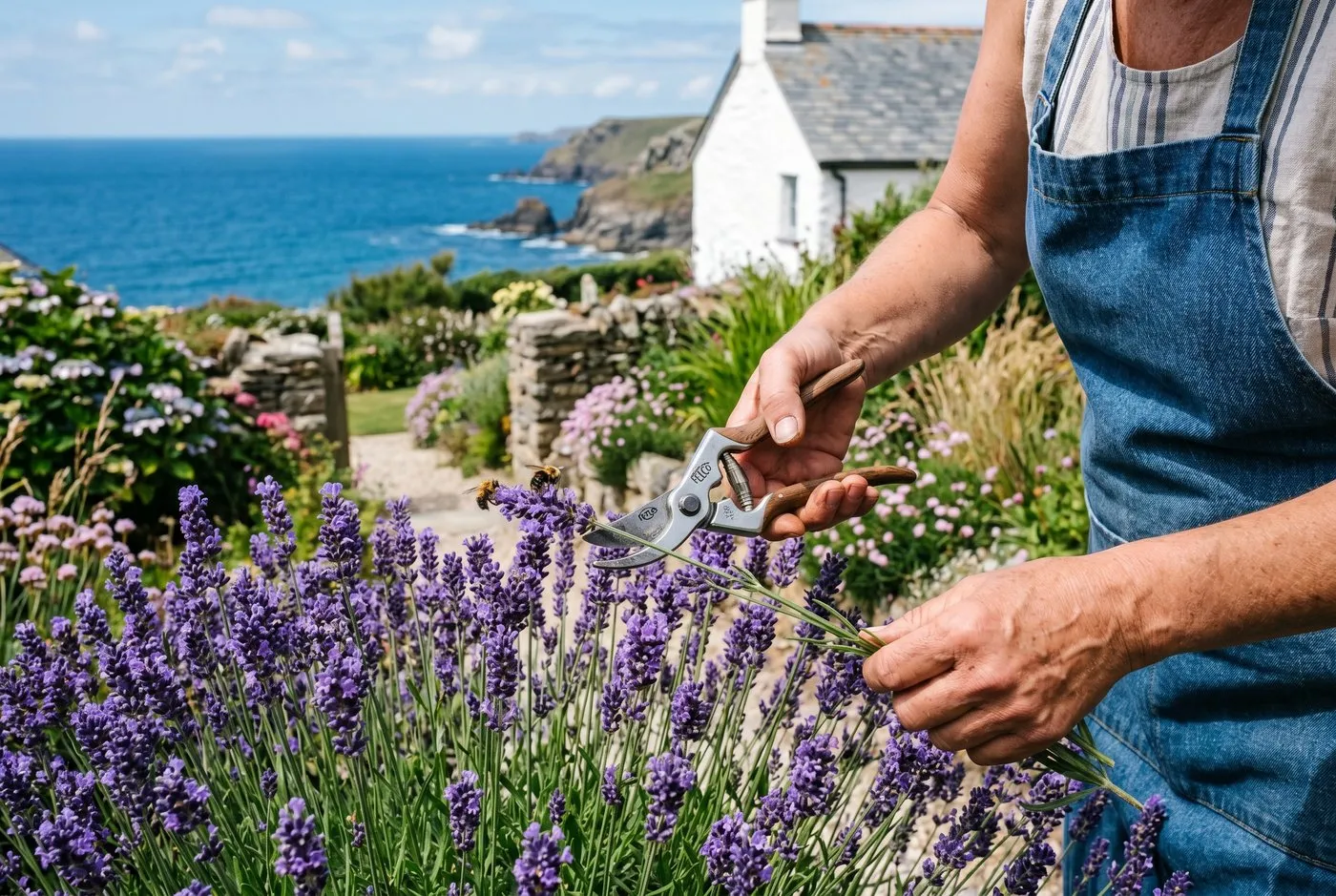 Trimming lavender in a Cornish coastal garden, just into the green growth and never the bare wood below.
How do you feed plants in July?
Feed tomatoes and containers weekly with a high-potash feed once fruit sets. Potash drives flowers and fruit rather than leaf. Tomato feed, diluted to about 5ml per litre, suits tomatoes, peppers, courgettes and most flowering pots. Apply it to damp compost, never dry, or you risk scorching roots.
Containers run out of food fast. The compost holds only a few weeks of nutrients, and constant watering washes them out. From July, a weekly liquid feed keeps bedding, hanging baskets and patio pots flowering hard. Hungry crops like courgettes and pumpkins also appreciate it.
| Plant | Feed type | How often | Dose guide |
|---|---|---|---|
| Tomatoes | High-potash liquid | Weekly once fruiting | 5ml per litre |
| Hanging baskets | Balanced liquid feed | Twice weekly | Follow pack rate |
| Roses | Granular rose feed | Once mid-month | Sprinkle and water in |
| Sweet peas | Liquid tomato feed | Weekly | Boosts flower count |
| Leafy veg | High-nitrogen feed | Every 2 weeks | For salad and brassicas |
What pests and diseases hit in July?
Tomato blight, aphids and powdery mildew are the big three July problems. Warm, humid weather after rain triggers all of them. Check vulnerable plants twice a week from mid-July onwards.
Aphids cluster on soft new shoots, roses and broad beans. Squash them by hand, blast with a hose, or wait for ladybirds and lacewings to arrive. Powdery mildew, a white dust on courgette and rose leaves, thrives in dry soil with humid air. Water the roots well and improve airflow to slow it.
| Problem | Warning sign | First action |
|---|---|---|
| Tomato blight | Brown leaf blotches, dark stems | Remove affected leaves, keep dry |
| Aphids | Sticky shoots, curled leaves | Hose off or squash by hand |
| Powdery mildew | White dust on leaves | Water roots, thin congested growth |
| Slugs (after rain) | Holed leaves, silvery trails | Evening hunts, beer traps |
| Vine weevil | Notched leaf edges | Check pot roots, apply nematodes |
The RHS keeps a useful month-by-month list of seasonal pests and jobs in its July advice, worth a quick read alongside this checklist.
What can you harvest in July?
July is when the kitchen garden starts paying you back. Courgettes, beans, peas, early potatoes, salad leaves and the first soft fruit all come ready. Pick little and often. Crops left too long turn woody, bolt, or stop the plant producing more.
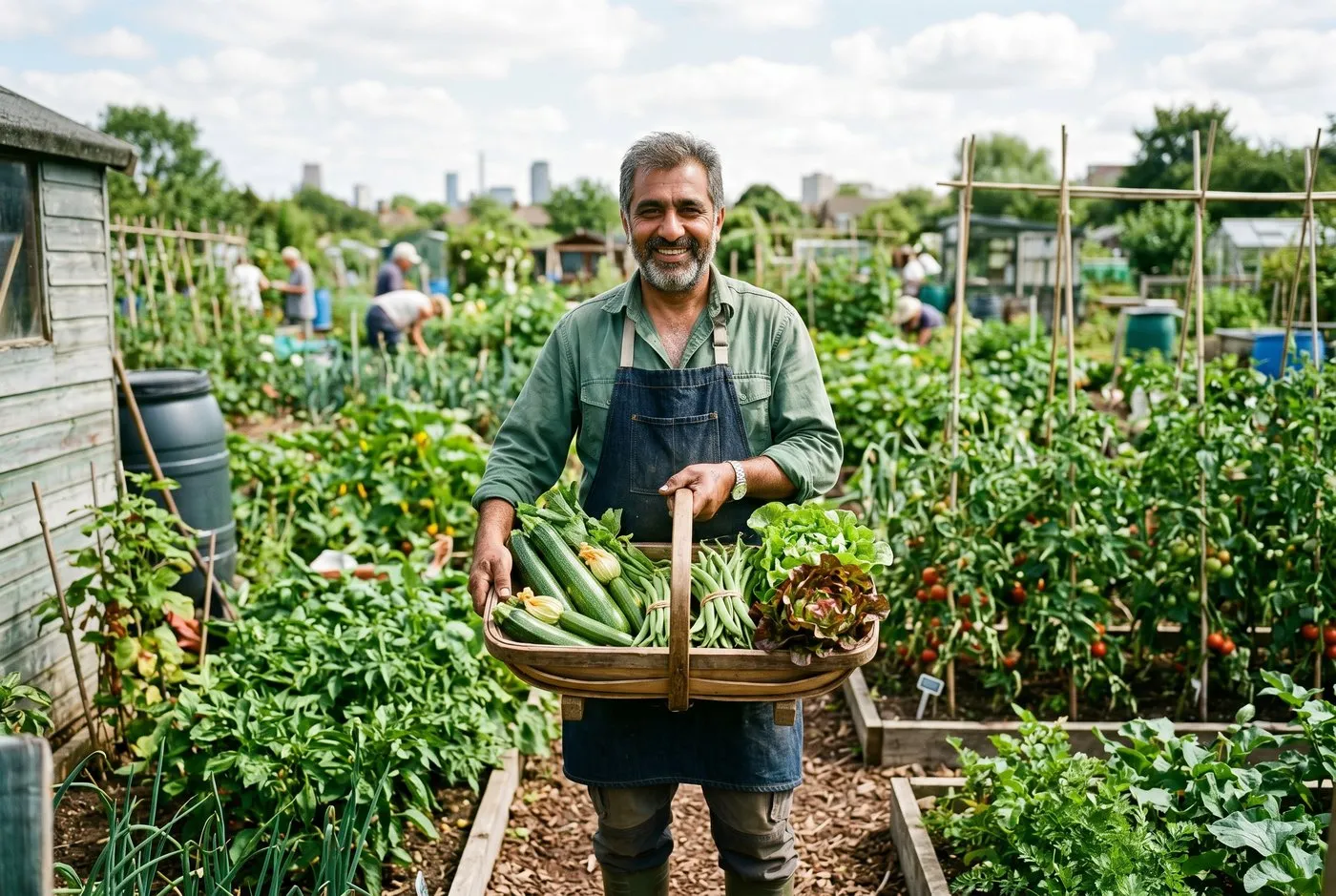 A July harvest from a London allotment: courgettes, runner beans, raspberries and salad, all best picked young and often.
Pick courgettes at 10-15cm, before they swell into marrows. Cut runner and French beans while slim and snappy. Pull early potatoes once the flowers fade. Pick peas every couple of days, as they sweeten less the bigger they get. Strawberries, raspberries and currants ripen now, so net them before the blackbirds do.
- Courgettes: cut at 10-15cm, check every 2 days
- Runner beans: pick while slim, before beans bulge the pod
- Peas: harvest from the bottom of the plant up
- Salad leaves: cut and come again, never strip a plant bare
- Soft fruit: pick fully ripe, in the cool of morning
A garden left unpicked over a hot July week can look productive but stops cropping. Bolted lettuce, marrow-sized courgettes and stringy beans all tell the same story.
How do you keep the garden going while on holiday?
Set up holiday cover before you leave, not as you walk out the door. Group all containers together in light shade. Pots dry slower in a huddle, and shade halves their water loss. Stand them on old towels or capillary matting soaked in a tray of water.
For beds, a £15 battery timer fitted to a soaker hose covers most borders. Set it to run for 30 minutes every other evening. Mulch first with 5cm of bark or compost to lock the moisture in. Ask a neighbour to pick ripe courgettes, beans and tomatoes, otherwise the plants stop cropping while you are away.
- Move all pots into one shaded group
- Mulch beds 5cm deep after a heavy water
- Fit a timer to a drip or soaker line
- Pick or share out every nearly-ripe crop
- Cut the lawn slightly long so it survives a dry spell
Should you mow and water the lawn in drought?
Raise the mower height and stop watering an established lawn. A lawn cut at 4-5cm holds moisture far better than a close-shaved one. Longer grass shades its own roots and the soil below. Leave the clippings on in dry spells; they act as a thin mulch.
What should you sow in July for autumn?
July is the last big sowing window before autumn. Sow spring cabbage, oriental greens, chard, spinach, salad leaves and turnips now. They germinate fast in warm soil and crop from September into winter. Sow into moist ground in the evening, then keep it damp until seedlings show.
Next step
Our team produces practical UK gardening guidance from source research, contributor records and established horticultural practice. Editorial standards are overseen by Matt W.