
Key takeaways
- July is your last good chance for many repeat sowings, so keep going until mid-month
- Sow spring cabbage, kale and chard now for winter and spring pickings
- Sow wallflowers, foxgloves and hollyhocks for flowers next year
- Order tulips, daffodils and alliums now for the best choice
- Pick courgettes, beans and soft fruit every few days
- Raise the mower blades in dry spells so the lawn copes better
July is the peak of the UK growing year. The garden is giving you more than you can eat, and the borders are full of flowers. It’s tempting to sit back, but what you sow now decides what you’ll pick in autumn and winter.
This is the last good month for many repeat sowings. After mid-July, shorter days slow things down too much. At the same time, courgettes, beans and soft fruit need picking every few days. This guide follows on from our June planting guide, and the full vegetable planting calendar shows the whole year. For jobs beyond sowing, see our summer gardening jobs and what to do in the garden in July.
Vegetables to sow and plant in July
Spring cabbage, kale, chard, turnips, beetroot, dwarf French beans, lettuce and spring onions can all be sown in July. For many of them it’s the last chance, so make it count.
Spring cabbage
Sow spring cabbage in early to mid-July and move the plants to their final spot in August or September. They sit through winter as small plants and give you tight heads from March to May. Durham Early and April are good, hardy varieties.
Sow in modules or a seedbed outdoors. Plant out when they have 4-6 proper leaves, 30cm apart in rows 45cm apart. Firm them in well. Pigeons are the big threat over winter, so keep them netted until you pick.
Kale
Kale sown now still has time to settle in before winter. It’s one of the toughest veg you can grow and gets through most UK winters, giving you leaves from late autumn into spring.
Sow in modules and plant out in August, 45cm apart. Good choices include:
- Cavolo Nero (also sold as Nero di Toscana): dark, strappy leaves, lovely in soups and pasta
- Dwarf Green Curled: compact, good for small plots
- Red Russian: flat, tender leaves that are nice raw when young
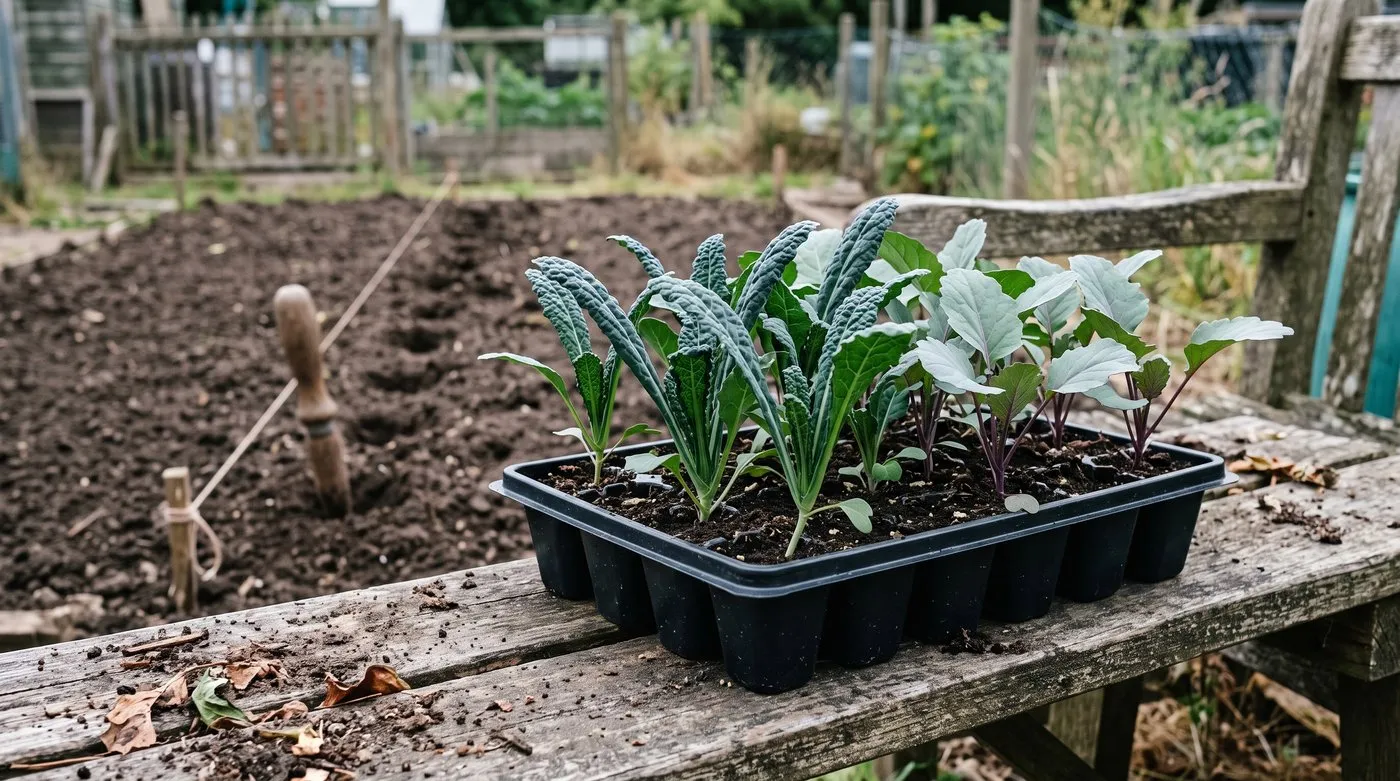
Kale sown in July still has time to settle in before winter. Plant it out in August, 45cm apart, and you’ll be picking into spring.
Beetroot succession
Keep sowing beetroot every 3 weeks until mid-July for roots from September to November. Quick varieties like Boltardy or Pablo are best now.
Sow 2cm deep in rows 30cm apart. Thin to 10cm apart once you can handle the seedlings. Water regularly in dry spells, as stop-start watering makes the roots woody.
French beans
Sow dwarf French beans straight outdoors until mid-July. Bush types like Safari and Tendergreen will give you pods from September into October. Sow 5cm deep and 15cm apart in double rows.
Climbing French beans are too slow this late, so stick to dwarf ones. Once they start, pick every 2-3 days. If you leave pods to get big, the plant stops flowering.
Turnips
Turnips are one of the quickest roots going. July sowings give golf-ball-sized roots in 6-8 weeks. Try Atlantic or Snowball.
Sow thinly in rows 25cm apart and thin to 15cm. Pull them young. Big turnips go woody and strong, while little ones are sweet and lovely roasted.
Chard
Swiss chard sown in July gives colourful stems and leaves from autumn into spring. It’s tough for a leafy crop and copes with most UK frosts.
Sow 2cm deep, 15cm apart. Bright Lights gives a cheerful mix of red, yellow, orange and white stems. Pick the outer leaves and leave the middle to keep growing.
Gardener’s tip: Water the seed drill well before you sow, then cover the seed with dry soil. The seed sits in moisture and the top stays loose. In July heat, sowings into dry soil often don’t come up.
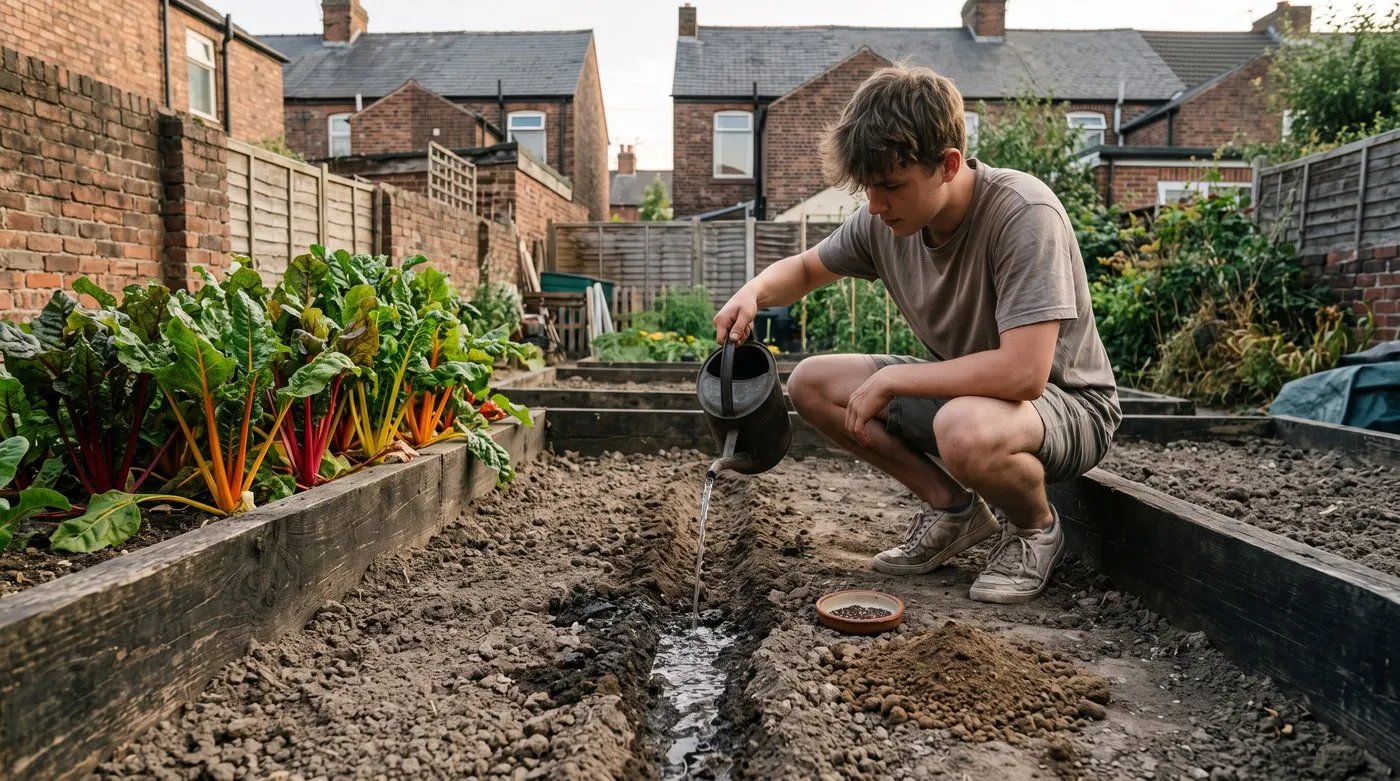
In July heat, water the drill well before sowing, then cover the seed with dry soil. The seed sits in moisture and the top stays loose.
Lettuce for autumn
Sow lettuce every two weeks through July for picking from September into October. Choose types that are slow to bolt, like Little Gem or Winter Density. Hardy winter lettuces such as Arctic King go in later, in August and September.
In hot weather, sow in light shade, ideally in the evening. Lettuce seed doesn’t like sprouting in hot soil, and full sun makes young plants bolt. A spot between taller crops or on the shady side of a fence is ideal.
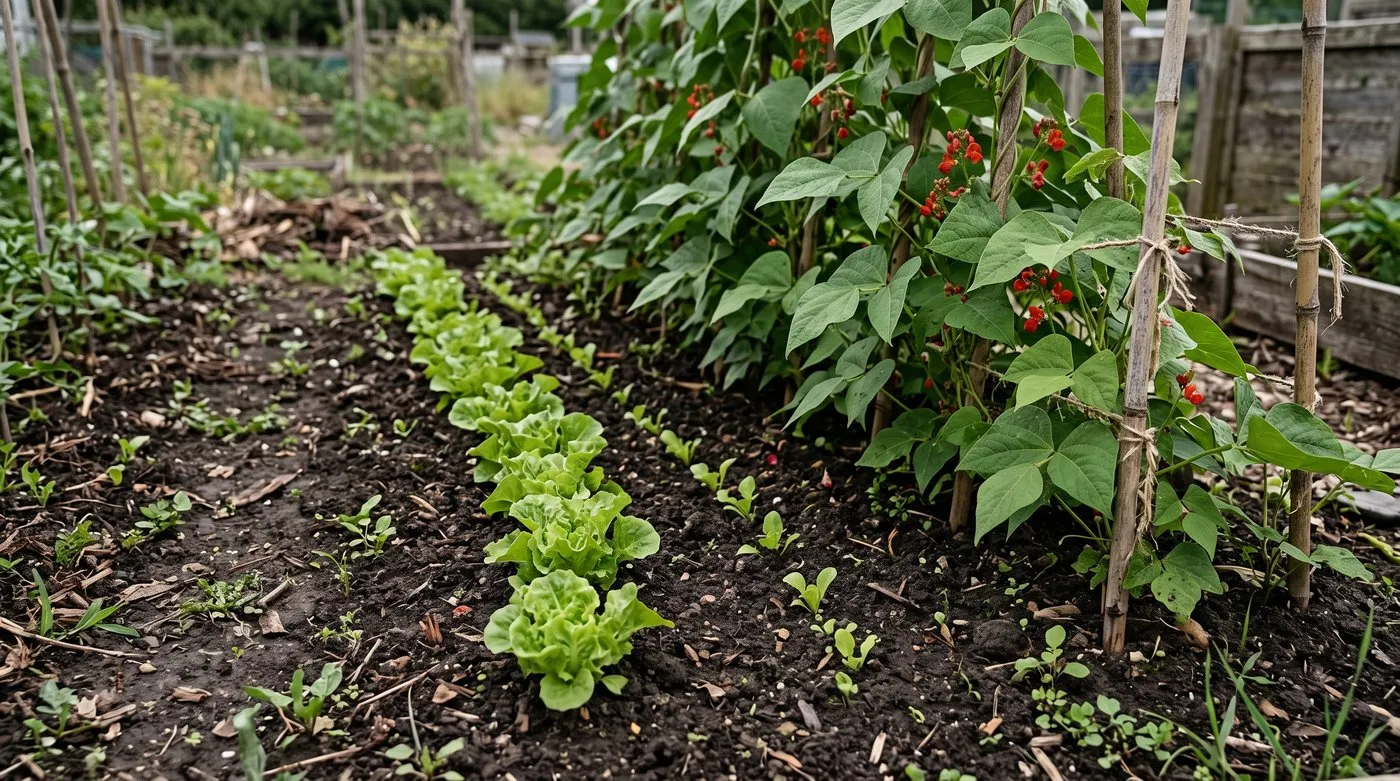
Sow July lettuce in light shade, between taller crops or on the shady side of a fence. Hot soil and full sun make it bolt.
Spring onions
Spring onions sown now are ready from September. White Lisbon is the classic. Sow thinly in rows 15cm apart, and there’s no need to thin. They grow fast in warm soil and shrug off light frosts.
Is it too late to sow carrots in July?
No, if you sow early in the month and pick a quick, short variety. Amsterdam Forcing, Nantes or round Paris Market will be a good size by autumn. Sow thinly 1cm deep in rows 15cm apart, and keep the drill moist until they come up.
Carrot fly is about in summer, so cover the rows with fine insect mesh or fleece from the day you sow. Thinning releases a smell that draws the fly in, so sow thinly to avoid it. On heavy clay, grow short varieties in big pots instead.
For a month-by-month sowing plan, see the seed sowing calendar.
Flowers to plant in July
July is the month to sow biennials (plants that grow this year and flower next), like wallflowers, foxgloves and hollyhocks. You can also plant pot-grown perennials and order spring bulbs.
Order autumn-planting bulbs
Order spring bulbs in July. Catalogues open in summer and popular varieties can sell out. Here’s when each one goes in:
- Tulips: plant October to November for April flowers
- Daffodils: plant September to October for March flowers
- Alliums: plant September to October for May flowers
- Crocuses: plant September for February flowers
- Snowdrops: best bought “in the green” in February, but you can order dry bulbs now
Wallflowers
Sow wallflowers in a seedbed outdoors in July. Move them to where you want them to flower in September or October. They bloom from March to May, with a gorgeous scent.
Blood Red, Cloth of Gold and Fire King are among the most fragrant. Space them 25-30cm apart in full sun. They like chalky or lime-rich soil.
Foxgloves
Foxgloves sown now flower next June. Scatter the seed on top of moist compost in a tray and don’t cover it, as the seed needs light to sprout. Pot them up when big enough to handle, and plant out in autumn.
Foxgloves are perfect for shady borders, and bumblebees love them. For more bee-friendly planting, pair them with lavender and hardy geraniums.
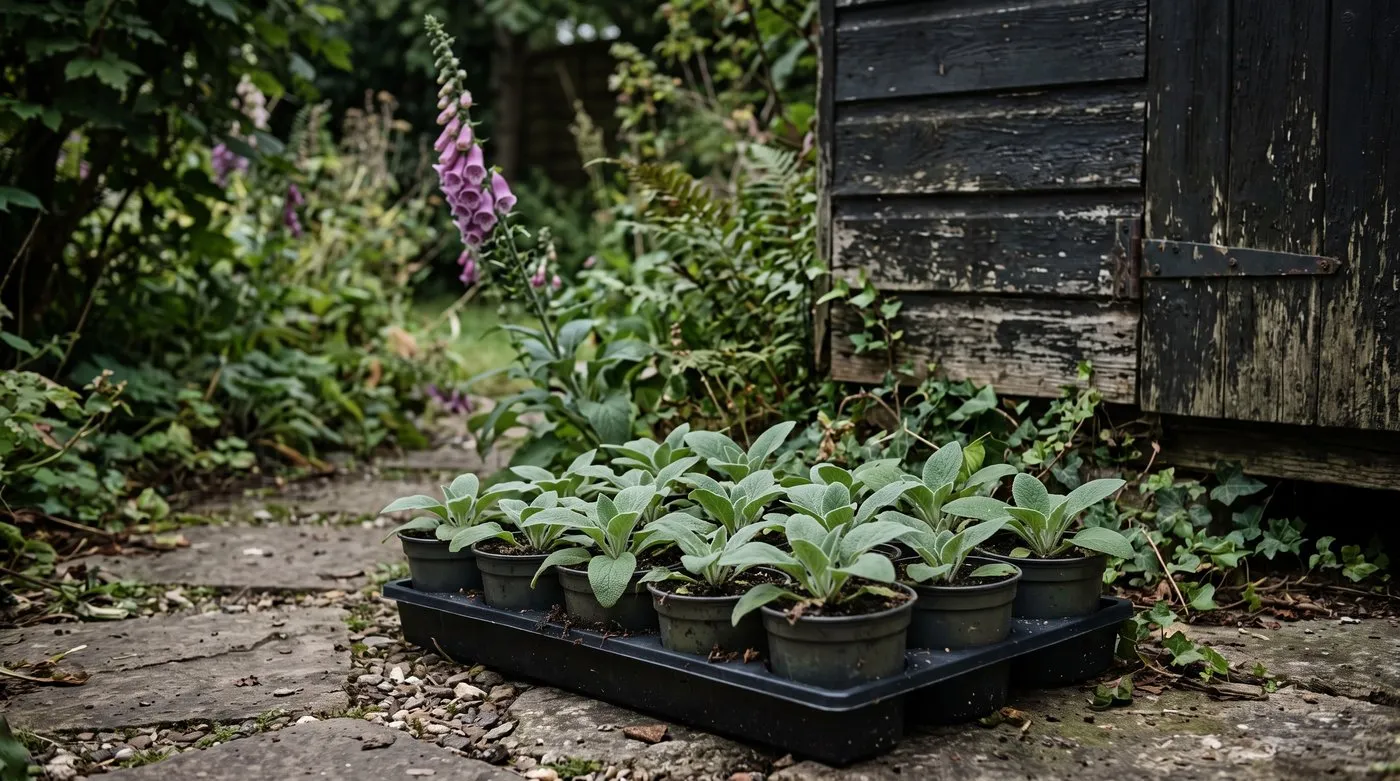
Foxgloves sown in July grow into leafy rosettes like these by autumn. Plant them out then and they’ll flower next June.
Hollyhocks
Hollyhocks sown in July flower next summer. Sow in 9cm pots and keep them in a cold frame over winter. Plant out in March, 45cm apart, against a sunny wall or fence. They grow 1.5-2m tall and need a stake in windy gardens.
Hollyhock rust (orange spots under the leaves) is common. Pick off affected leaves and water at the base, not over the top. Sowing fresh plants every year helps keep rust down.
Can you plant perennials and shrubs in July?
Yes, if they’re pot-grown and you can keep them watered. In July the problem is dry weather, not cold.
Plant in the evening or on a cloudy day. Soak the rootball in a bucket for an hour first, and water the hole before you fill it. Water every few days in dry weather for the first month, and add a mulch. Leave moving established plants until autumn. July is a great time to fill gaps with late flowerers like rudbeckia, salvias and asters.
Fruit care in July
July fruit jobs are picking soft fruit often, tying in new raspberry canes and rooting strawberry runners.
Summer-fruiting raspberries
Summer raspberries give their main crop in July. Pick every 2-3 days when the berries are deep red and slip off easily. After the last pick, cut the canes that fruited down to the ground, as they won’t fruit again.
Tie in this year’s new green canes, which carry next summer’s crop. Keep the strongest and spread them along the wires about 10cm apart. Cut out the weak ones.
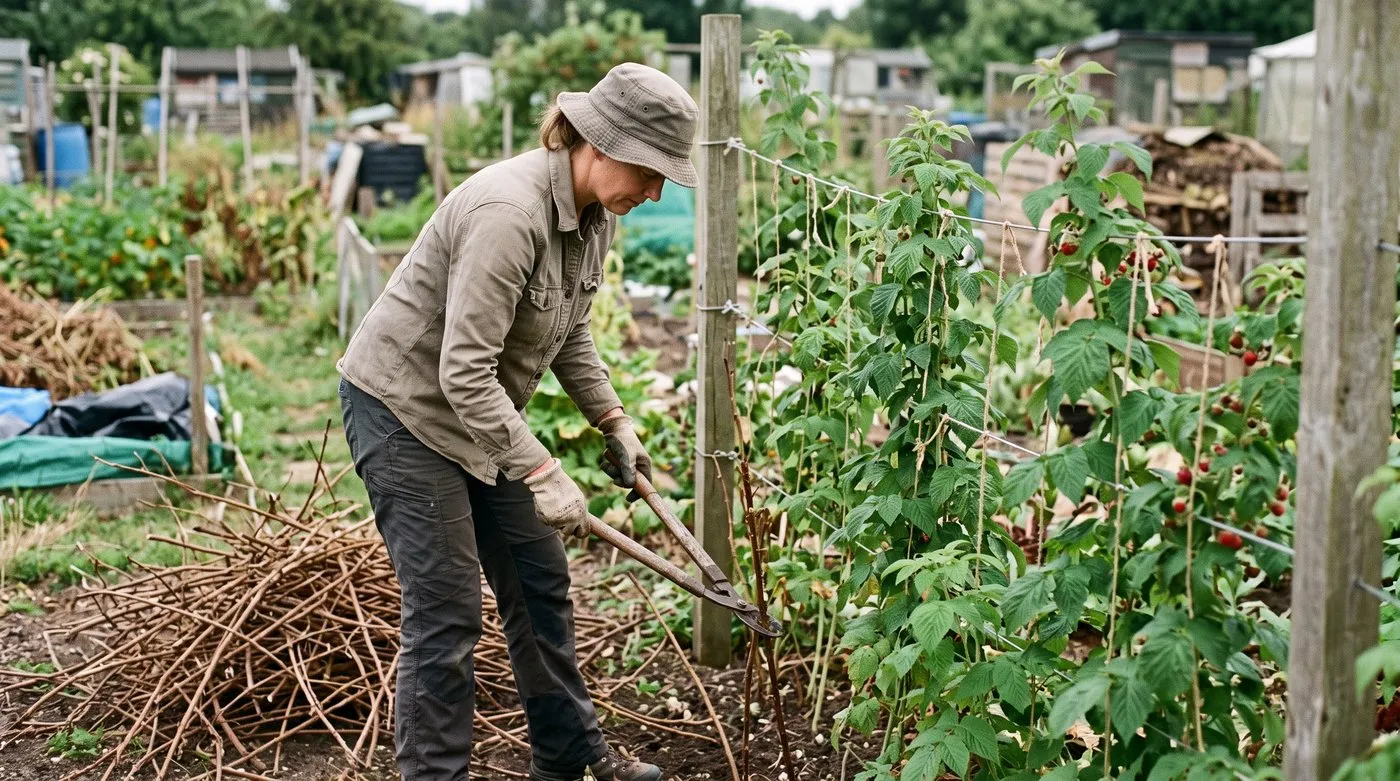
Once summer raspberries finish, cut the fruited canes to the ground. Tie this year’s green canes along the wires, as they carry next summer’s crop.
Strawberry runners
Strawberry runners pop up all through July. For new plants, peg the strongest runner from each plant into a 9cm pot of compost sunk in the soil next to it. It roots in about 4-6 weeks. Then snip it free and plant it in its new home.
Pull off the other runners so the plant puts its energy into fruit.
Soft fruit harvesting
Blackcurrants, redcurrants and gooseberries all crop in July. Pick currants as whole strings once the bottom berries are fully coloured. Gooseberries are ready when they give a little when squeezed.
Prune established blackcurrant bushes in winter by cutting up to a third of the oldest, darkest stems to the ground. The RHS blackcurrant guide has more. This keeps fresh young stems coming, which carry the best fruit.
Lawn care in July
In July, mow higher and less often, and don’t worry about a bit of browning.
Raise the cutting height
Raise your mower blades in dry spells. Cut at 3-4cm instead of the usual 2.5cm. Longer grass shades the soil and keeps it moister. A short lawn goes brown much faster than a slightly longer one.
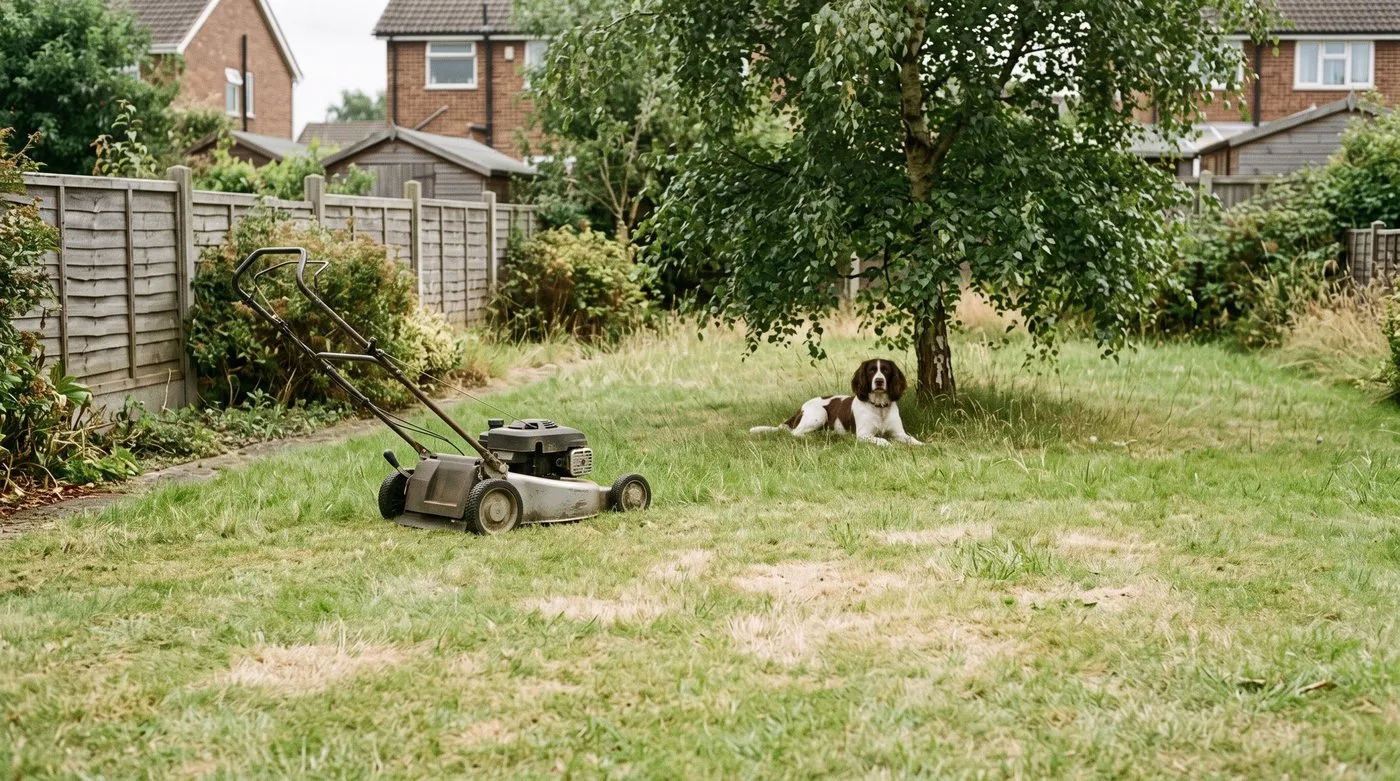
Raise the mower blades in a dry spell. Slightly longer grass shades the soil and stays green for longer than a short lawn.
Watering lawns
A brown lawn in summer is resting, not dead. It greens up again when the autumn rain comes. Established lawns rarely need watering. If you do water, give it a really good soak once a week rather than a sprinkle every day.
Mowing in dry weather
Mow less often in a drought. Once a fortnight is fine if the grass isn’t growing much. Leave the clippings on as a mulch. Never take off more than a third of the grass height in one go.
Can you plant potatoes in July for Christmas?
Not usually in July itself. Christmas potatoes are grown from cold-stored seed potatoes, which the RHS says go on sale in August. Use July to order them and get your containers ready.
Plant them in August in big tubs or potato bags, two or three per bag. Keep them in a greenhouse, porch or sheltered spot, as frost kills the leaves in autumn. Top up with compost as the shoots grow, and water steadily. Choose a second early or salad variety. Tip them out just before Christmas.
Other essential July jobs
Beyond sowing, July is all about deadheading, watering the right things, picking and summer pruning.
Deadheading
Deadhead roses, dahlias and bedding plants every week. Taking off old flowers stops the plant setting seed and keeps it blooming. Cut roses back to a healthy outward-facing bud. With dahlias, take the whole flower stem back to the next bud or side shoot.
Watering priorities
Put your water where it matters most:
- Tomatoes: daily in pots, every 2-3 days in the ground. Stop-start watering causes blossom end rot (black patches on the bottom of the fruit).
- Courgettes and cucumbers: thirsty plants. Water at the base, not over the leaves, to help keep mildew away.
- Runner beans: water the roots well once flowers appear. Dry roots make the flowers drop without setting beans.
- New plantings: anything planted in the last 4 weeks needs a daily drink until it settles in.
Gardener’s tip: Water in the evening or early morning, not in the midday sun. Evening watering gives plants all night to drink. If slugs are a problem, water in the morning so the surface is dry by nightfall.
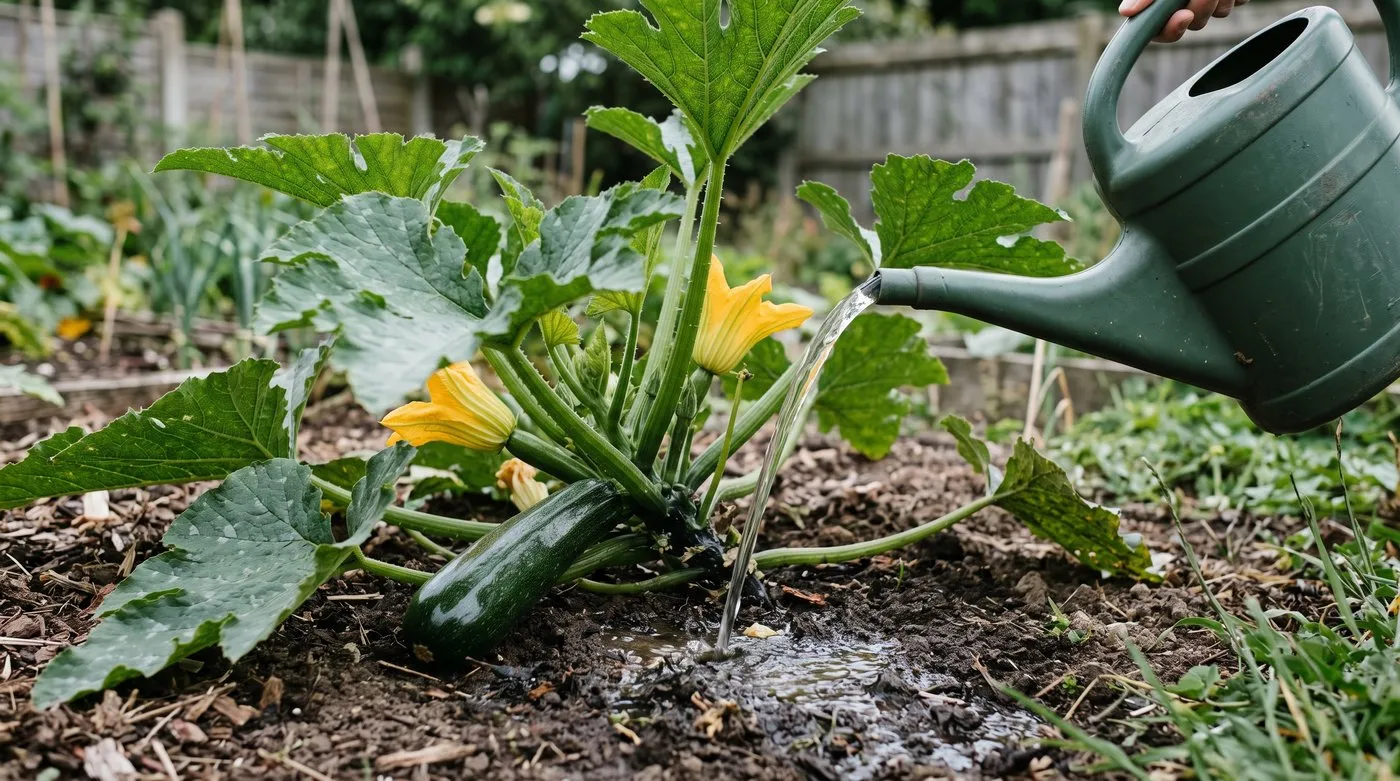
Water thirsty courgettes at the base, not over the leaves, to help keep mildew away. Morning watering also helps if slugs are a problem.
Harvesting
Pick little and often. Courgettes left a few days in warm weather turn into marrows. French beans left too long go stringy, and runner beans go tough once the beans swell inside. Regular picking keeps the plants cropping for weeks longer.
Summer pruning wisteria
Prune wisteria in July. Cut the long, whippy side shoots back to 5-6 leaves from the main stems. This keeps it tidy and helps it form flower buds for next spring. In February, cut the same shoots back again to 2-3 buds.
Composting
July makes loads of garden waste. Add spent crops, grass clippings and weeds (without seed heads) to the compost heap. Mix soft green stuff, like clippings and veg peelings, with dry brown stuff, like cardboard and straw, in roughly equal amounts. Turn it every couple of weeks in warm weather.
What to harvest in July
July brings courgettes, beans, new potatoes, salads and most soft fruit. Here’s how to tell when each is ready.
| Crop | How often to check | How to tell |
|---|---|---|
| Courgettes | Daily | 15-20cm long, firm and glossy |
| French beans | Every 2-3 days | Pods snap cleanly, beans not bulging |
| Runner beans | Every 2-3 days | 15-20cm long, before the beans swell |
| Broad beans | Weekly | Pods plump, beans showing through |
| New potatoes | From early July | Plants flowering, potatoes golf-ball size |
| Beetroot | From early July | Roots 5-7cm across |
| Carrots | From mid-July | Orange shoulders showing at the soil |
| Lettuce | Ongoing | Firm hearts, or outer leaves big enough to pick |
| Tomatoes | From late July | Fully coloured, a little give when squeezed |
| Cucumbers | From mid-July | 15-20cm for outdoor types, longer for greenhouse ones |
| Peas | Ongoing | Pods well filled, peas sweet and tender |
| Raspberries | All month | Deep red, slip off easily |
| Strawberries | Until mid-July | Red all over and smelling sweet |
| Blackcurrants | Mid to late July | Bottom berries on the string fully black |
| Redcurrants | Mid-July | Strings fully red and shiny |
| Gooseberries | Early to mid-July | Give a little when squeezed |
Common mistakes with July planting
The usual July slip-ups are forgetting winter crops, missing the picking and watering at the wrong time.
Neglecting autumn and winter crops
With so much to pick, it’s easy to forget about winter. But if you don’t sow spring cabbage, kale and chard now, there’s no second chance. Set aside one session in early July just for winter sowings.
Letting courgettes become marrows
Courgettes swell really fast in warm weather, so check them daily. Once one becomes a marrow, the plant slows down. Cut big ones off straight away and it’ll start flowering again.
Watering at the wrong time
Watering in the midday sun wastes a lot to evaporation. Evening is good, but damp soil overnight helps slugs. Water slug-prone crops in the early morning instead.
Forgetting to feed container plants
Tomatoes, peppers and herbs in pots use up the food in their compost in about six weeks. From July, feed weekly with a tomato feed. Hungry plants give fewer flowers and smaller fruit.
Stopping successional sowings too early
Keep sowing short rows of lettuce, beetroot, spring onions and radish every 2-3 weeks until mid-July. Stop in June and you’ll have a gap in September and October.
New to growing veg? Our guide to starting a vegetable garden covers soil, planning your plot and crop rotation.
July planting calendar
| Week | Sow indoors | Sow outdoors | Plant out | Harvest |
|---|---|---|---|---|
| Week 1 | Spring cabbage, kale | French beans, beetroot, lettuce | Late brassica plants | Broad beans, peas, new potatoes |
| Week 2 | Chard, Chinese cabbage | Turnips, spring onions, radish | Wallflower seedlings | Courgettes, French beans, raspberries |
| Week 3 | Pak choi | Lettuce (last main sowing), spinach | Pot-grown perennials | Runner beans, tomatoes, strawberries |
| Week 4 | - | Spring onions (last), beetroot (last) | - | Blackcurrants, redcurrants, gooseberries |
Next up, see what to plant in August, when the harvest peaks and the last winter sowings go in.
Frequently asked questions
What vegetables can I sow in July UK?
Quite a lot, still. Sow spring cabbage, kale, chard, lettuce, beetroot, spring onions, turnips and dwarf French beans. Chinese cabbage and pak choi are good for autumn salads.
Is July too late to sow beetroot?
No, you can sow until mid-July. Pick a quick variety like Boltardy and you’ll be pulling roots from September. Water regularly in dry weather so the roots don’t go woody.
What flowers should I plant in July?
Sow biennials now for flowers next year. Foxgloves, wallflowers, hollyhocks and sweet William all go in now. It’s also a good time to plant autumn-flowering bulbs like colchicums and nerines, and to order spring bulbs.
Can I still sow French beans in July?
Yes, dwarf French beans until mid-July. Sow them outdoors 5cm deep and 15cm apart, and they’ll crop from September. Climbing types are too slow this late.
What should I harvest in July UK?
Loads, it’s one of the busiest months. Courgettes, beans, new potatoes, beetroot, lettuce, peas, the first tomatoes and most soft fruit are ready. Pick courgettes at 15-20cm, before they turn into marrows.
How often should I water the garden in July?
Give established plants a good soak twice a week. That’s better than a light sprinkle every day. Water new plants daily until they settle in, and check pots every day in hot weather. A mulch of compost or bark keeps the soil moist for longer.
When should I order spring bulbs?
Now, in July, for the best choice. Popular tulips and big alliums can sell out before planting time. Plant daffodils from September and tulips in October or November.
Our team produces practical UK gardening guidance from source research, contributor records and established horticultural practice. Editorial standards are overseen by Matt W.


