Key takeaways
- The adult is a shiny beetle about 7-8mm long with metallic green and purple stripes
- Larvae are greyish with darker stripes and feed mostly from autumn to spring
- It feeds on rosemary, lavender, sage, thyme and other aromatic herbs in the same family
- Pick off beetles by hand or shake them onto a sheet or upturned umbrella
- Home-made soap and neem sprays are not legal to use as pesticides in the UK
- Healthy, established plants usually cope with light damage
Rosemary leaf beetle is a pretty, shiny green-and-purple beetle that chews the leaves of rosemary, lavender, sage and thyme. It looks like a little jewel, but adults and larvae together can leave shoots looking ragged and bare. The easiest fix is low-tech: pick them off by hand.
This guide shows you how to spot the beetle and its larvae, when to look, and how to keep numbers down without any sprays. For general care of the plant, see the guide on how to grow rosemary.
What does rosemary leaf beetle look like?
The adult is a rounded beetle about 7-8mm long, with shiny metallic green and purple stripes down its back. It catches the light, so it is easy to see once you know to look.
The larvae are soft, greyish grubs with darker stripes, growing to about 8mm. They hide among the leaves and are harder to spot than the adults.
Damage often gives the game away first. Look for chewed, ragged leaves and shoot tips that look nibbled or browned. Bad attacks leave bare stems. You may also find small dark droppings on the leaves.

Shiny metallic green and purple stripes make the adult easy to spot on rosemary once you know what you’re looking for.
Which plants does rosemary leaf beetle eat?
It feeds on aromatic plants in the mint family. The main targets are:
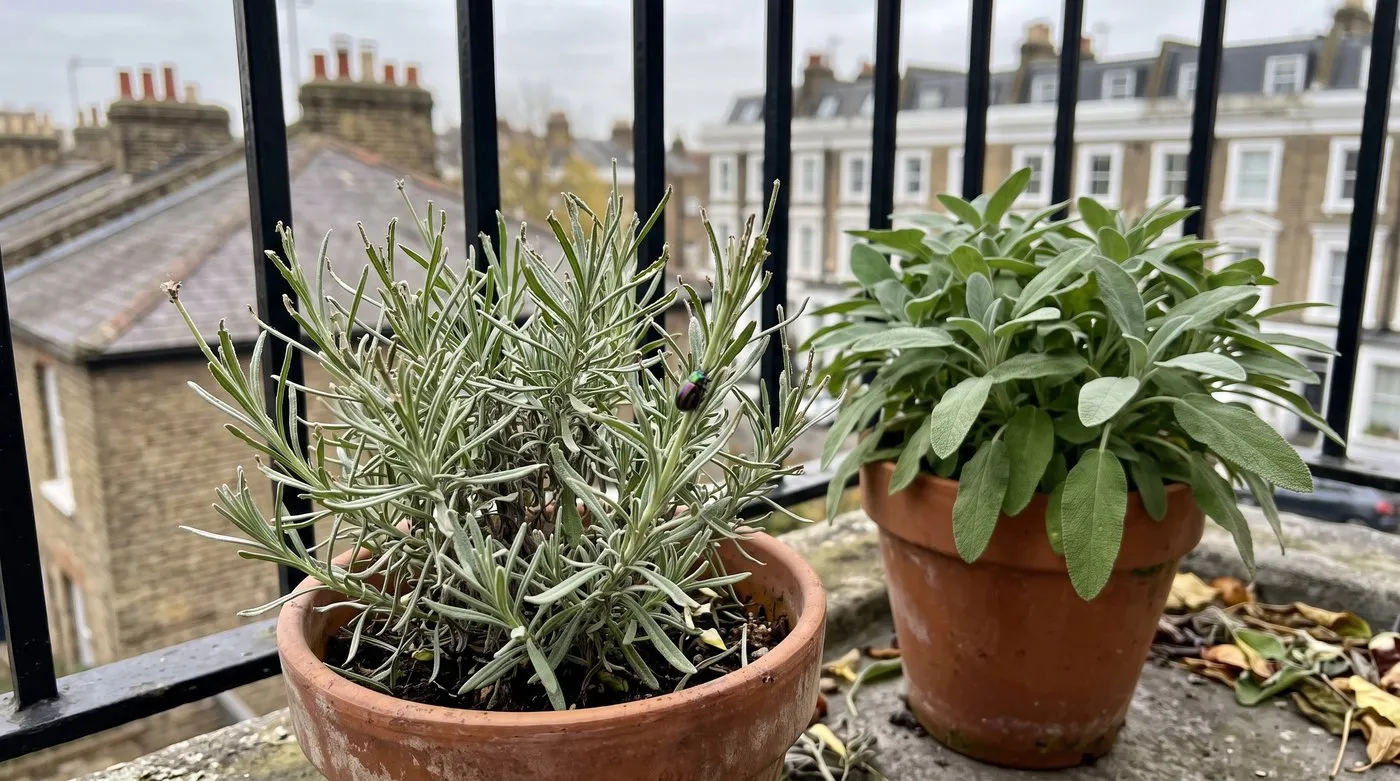
A shiny beetle on your lavender is a sign to look closely for more beetles and their grubs on the shoot tips.
- rosemary
- lavender
- sage
- thyme
- Russian sage (perovskia) and some related herbs
If you grow several of these together, check them all. The guides to growing lavender and growing sage cover keeping those plants healthy so they bounce back from damage.
When is rosemary leaf beetle active?
You can find adults all year round. Feeding is heaviest from late summer to spring, when most eggs are laid and the larvae hatch.
The larvae feed through autumn, in mild spells in winter, and again in spring. When fully grown they drop into the soil to pupate. New adults appear in early summer and are often fairly quiet in midsummer.
This means autumn and spring are the most useful times to check. Many people only look in summer and miss the busy larvae season.
| Season | What you’ll find | What to do |
|---|---|---|
| Spring | Adults and larvae feeding | Pick off weekly |
| Summer | New adults, little feeding | Check now and then |
| Late summer to autumn | Adults laying eggs, larvae hatching | Pick off weekly |
| Winter | Larvae feeding in mild spells | Check on mild days |

The greyish larvae feed from autumn to spring and are easy to miss. Turn the leaves to look.
How to get rid of rosemary leaf beetle by hand
Hand-picking is the simplest and best control. The beetles don’t fly away readily, so they are easy to catch.

Tapping the branches over a pale sheet brings the beetles and grubs down where you can see them.
- Pick a cool, still morning, when the beetles are slow.
- Hold a sheet of newspaper, a tray or an upturned umbrella under the plant.
- Shake or tap the branches. Beetles and larvae drop onto the sheet.
- Pick off any that stay on the plant by hand.
- Squash them, or tip them into a bag for the bin.
Repeat every week or two, especially in autumn and spring. Wear gloves if you prefer. Numbers drop steadily once you keep at it.
Gardener’s tip: A pale sheet makes the dark beetles and grey grubs much easier to see when they fall.
Should you spray for rosemary leaf beetle?
Usually not. Hand-picking deals with most attacks, and healthy plants recover from light nibbling.
Home-made soap, garlic and neem sprays are not legal to use as pesticides in the UK, so leave those out. If a prized ornamental plant is badly hit, you can use an insecticide labelled for this pest, following the label exactly.
Many insecticides are not approved for herbs you plan to eat. Check the label says it is safe for edible herbs, and wait the stated time before picking. Never spray plants in flower, as bees love rosemary and lavender blooms.
Helping your herbs recover
Rosemary leaf beetle rarely kills an established plant. Once you have numbers under control, the plant regrows from its stems.
- Trim off badly damaged tips in spring to encourage fresh growth.
- Keep plants in good health in a sunny, well-drained spot. Strong plants shrug off damage more easily.
- Encourage birds and other wildlife into the garden, as a varied garden has more natural predators.
- Check new plants before you plant them, as beetles and larvae can arrive on them.
If an old rosemary has become bare and woody, the guide to reviving a woody rosemary shows how to bring it back. You can also take rosemary cuttings for young replacement plants.

Rosemary, lavender and sage often grow side by side, so check them all when you find the beetle on one.
Common mistakes with rosemary leaf beetle
Only looking in summer. The larvae do most of their feeding from autumn to spring. Check then too.
Reaching for kitchen sprays. Soap, garlic and neem mixes are not legal pesticides. Hand-picking works better anyway.
Spraying herbs you eat. Many insecticides aren’t approved for edible herbs. Read the label or skip the spray.
Digging out the plant. Removing one rosemary just moves the beetles onto your lavender or sage. Pick them off and let the plant regrow.
Bringing in new beetles. Check new herbs from the garden centre before they go in the ground.
Frequently asked questions
What does rosemary leaf beetle look like?
A shiny beetle about 7-8mm long with metallic green and purple stripes. The larvae are soft, greyish grubs with darker stripes, up to about 8mm long. Both feed on the leaves of rosemary and lavender.
How do I get rid of rosemary leaf beetle?
Pick the beetles and larvae off by hand, or shake the plant over a sheet. Check every week or two, especially in autumn and spring when larvae are feeding. On ornamental plants you can use an insecticide labelled for this pest, following the label.
What plants does rosemary leaf beetle attack?
Mainly rosemary, lavender, sage and thyme. It also feeds on other aromatic herbs in the mint family, such as Russian sage. Several plants growing close together can all be affected.
Is the rosemary leaf beetle a UK native?
No, it comes from southern Europe. It became established in southern England in the 1990s and has since spread across much of the UK.
When are rosemary leaf beetles most active?
Adults can be found all year, but feeding is heaviest from late summer to spring. Most eggs are laid from late summer onwards. The larvae feed through autumn, mild spells in winter and spring.
Can I still eat rosemary with beetle damage?
Yes, nibbled leaves are safe to eat once washed. Pick off any beetles and grubs first. If you have used any insecticide, check the label says it is approved for edible herbs and wait the stated time before harvesting.
Now you can spot and stop rosemary leaf beetle, read the organic pest control guide for more spray-free ways to protect your plants, or browse the garden problems section for other pests.
Our team produces practical UK gardening guidance from source research, contributor records and established horticultural practice. Editorial standards are overseen by Matt W.