Key takeaways
- Escallonia copes with salt spray and coastal wind better than most flowering hedges
- It flowers through summer and bees love it
- Plant in spring, 45-60cm apart, in full sun and soil that drains well
- Trim straight after flowering, as it flowers on last year's stems
- In cold inland gardens, pick a tough variety and a sheltered spot
- Leaf spot is the most common problem, but it rarely kills a healthy plant
Escallonia is one of the toughest flowering hedges you can plant in the UK. It shrugs off salt spray and coastal wind, and still covers itself in pink, red or white flowers through summer. Not many hedges give you both.
It comes from South America and has long been a favourite for seaside gardens in Cornwall, Devon, Wales and western Scotland. It does well inland too, as long as you pick a tough variety and give it a sunny spot. Here’s how to choose, plant and look after it.
Which escallonia varieties grow best in the UK?
Some escallonias are tougher than others, so the variety matters, especially inland.
| Variety | Size | Flowers | Toughness | Best for |
|---|---|---|---|---|
| ’Apple Blossom’ | Medium | Pink and white | Very tough | Hedges, borders, exposed spots |
| ’Crimson Spire’ | Tall | Deep red | Average | Tall hedges, screening |
| ’Red Dream’ | Short | Rose red | Average | Low hedges, pots |
| ’Donard Seedling’ | Medium | Pale pink to white | Very tough | Hedges, seaside windbreaks |
| ’Iveyi’ | Tall | White | Average | Single shrub, against a wall |
| ’Gold Brian’ | Short | Pink | Average | Golden leaves, borders, pots |
‘Apple Blossom’ is the best all-rounder. It’s tough, neat and bushy, and has lovely pink and white flowers. If you want a tall screen quickly, ‘Crimson Spire’ grows faster, but it’s less happy in cold inland gardens.
‘Donard Seedling’ is just as tough, with arching sprays of pale pink flowers. It makes a soft, relaxed informal hedge. ‘Gold Brian’ is grown for its bright golden leaves.
For a low hedge, ‘Red Dream’ stays compact and flowers well. It’s nice in a pot on a sheltered patio too. ‘Iveyi’ is the one for white flowers, and suits milder gardens or a spot against a warm wall.
Looking for flowering shrubs with a long season? Escallonia fills the summer gap that many hedges leave.
How to plant escallonia hedging
 Escallonia in full flower. Bees love it.
Spring is the best time to plant, from March to May. The roots then have all summer to settle in before winter. Autumn planting works by the coast, but inland it’s safer to wait for spring.
Where. Full sun and soil that drains well. It’s happy on sandy, loamy and chalky soil. On heavy clay, dig in grit and compost first, as soggy roots rot. Avoid frost pockets and cold, north-facing spots.
Spacing. Plant hedging 45-60cm apart in a single row. For a windbreak on the coast, plant two staggered rows about 50cm apart.
Planting. Dig a hole twice as wide as the root ball and just as deep. Set the plant at the same level it was in its pot. Fill in, firm gently and water well. Mulch around the base, keeping the mulch away from the stems.
Aftercare. Water weekly in dry spells through the first year. After that it copes with dry weather well. A sprinkle of general feed in April helps it along.
Our hedge planting guide has more on preparing the ground and caring for a new hedge.
When and how to prune escallonia
 Trim escallonia straight after flowering so you keep next year’s flowers.
The golden rule: prune straight after flowering. Escallonia flowers on stems that grew the previous year. If you trim too late, you cut off next year’s flowers. Before you trim, check for nesting birds, as it’s against the law to disturb an active nest. Our guide on when to cut hedges explains the rules.
Hedges. Clip to shape with shears or a hedge trimmer once flowering is over. Keep the sides sloping slightly, wider at the bottom, so light reaches the lower branches.
Single shrubs. Use secateurs. Cut one in three of the oldest, woodiest stems down to the base every year or two. This keeps the plant open and full of young, flowering stems.
Overgrown plants. If it’s become leggy, cut the whole plant back hard in spring. Most escallonias shoot back from old wood and flower again within a couple of years. Water and feed well afterwards.
Frost damage. Wait until late April before cutting anything off. Stems that look dead in March often sprout in April. Then cut back to healthy green wood. Our guide on pruning shrubs shows you how.
Can escallonia survive cold winters?
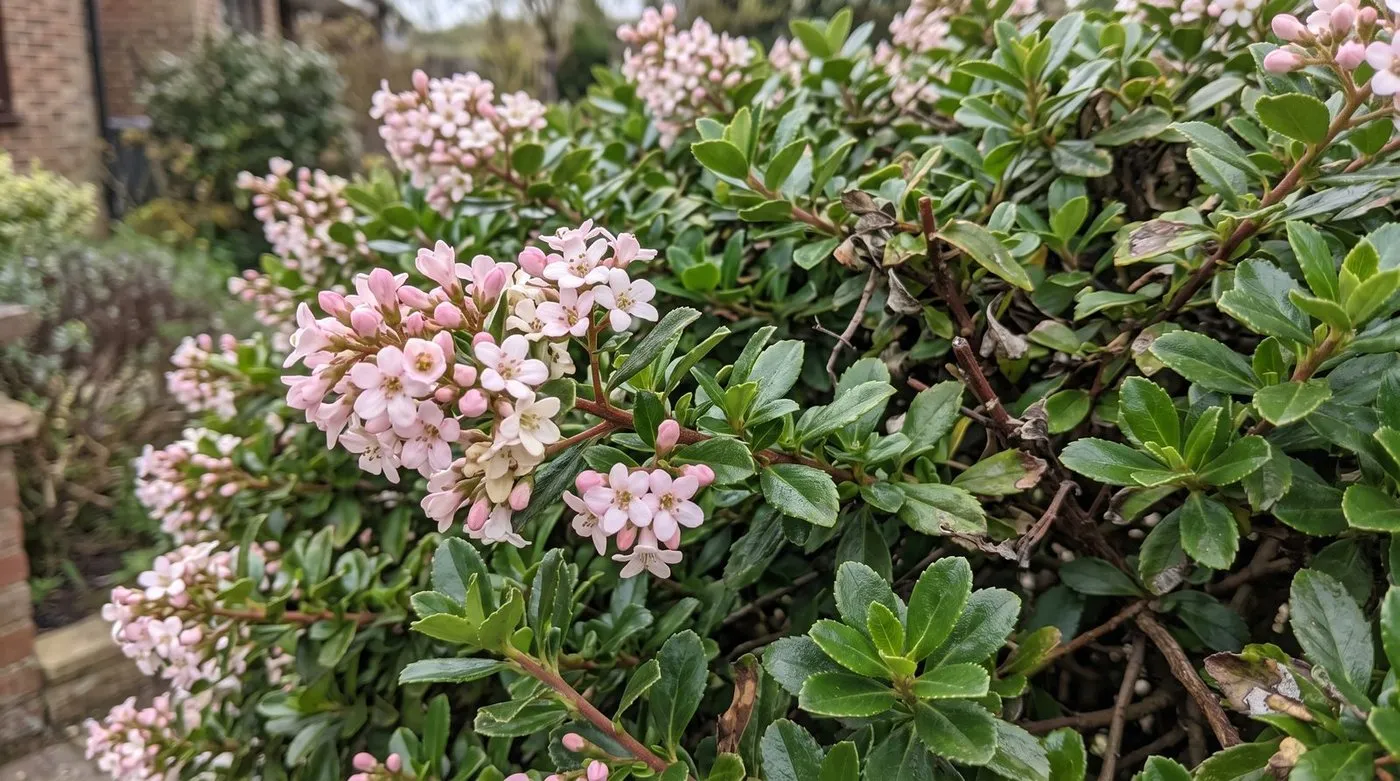 ‘Apple Blossom’ is one of the toughest varieties for colder gardens.
Most escallonias cope well with UK winters, especially by the sea and in milder areas. ‘Apple Blossom’ and ‘Donard Seedling’ are among the toughest. ‘Crimson Spire’ and ‘Iveyi’ prefer milder gardens.
Late spring frosts can nip soft new shoots, even on tough varieties. Where you plant it matters as much as which variety you choose. A sunny, sheltered wall is much kinder than a frost pocket at the bottom of a slope.
In cold gardens, mulch the roots with a thick layer of bark or compost in November. Cover young plants with fleece in very cold spells for their first couple of winters.
Is escallonia good for coastal gardens?
Yes, it’s one of the best seaside hedges. It copes with salt spray, constant wind and sandy soil. Along the coasts of Cornwall, Devon, Pembrokeshire and western Scotland, you’ll see escallonia hedges thriving where little else flowers.
Its tough, glossy leaves stand up to salt, and its twiggy growth filters the wind rather than blocking it. That creates a calmer, more sheltered patch of garden behind it.
Plant it as a front line, with softer shrubs behind. Hebe, choisya and pittosporum all enjoy the shelter. Our guide to coastal garden design explains how to layer tough plants at the edge and gentler ones further in.
The RHS escallonia page is a handy place to browse more varieties.
Inland, escallonia does well across southern England, the Midlands and sheltered parts of the north. Pick ‘Apple Blossom’ or ‘Donard Seedling’ for colder spots.
Common escallonia problems and solutions
 ‘Crimson Spire’ makes a tall, dense screen with bright red flowers.
Leaf spot. The most common problem. Dark spots appear on the leaves, which then drop, leaving bare patches. It’s worst in wet summers and crowded plants. Rake up fallen leaves and thin out congested growth. It looks untidy but rarely kills an established plant.
Frost damage. Blackened tips and brown leaves in spring. Wait until late April, then cut back to healthy green wood. Badly hit plants usually shoot again from the base.
Bare at the bottom. This happens when a hedge is only clipped on top. Trim the sides too, keeping the hedge a little wider at the base than the top.
Scale insects. Small brown bumps on the stems that suck sap. Scrub small patches off with an old toothbrush.
Best companion plants for escallonia
 Escallonia looks great with other sun-loving shrubs.
Escallonia gets on well with plants that like sun, good drainage and a bit of wind.
Hebe is the perfect partner. Both are evergreen, flower in summer, love bees and cope with the seaside. Plant compact hebes in front of an escallonia hedge.
Lavender at the foot of the hedge looks lovely in July when both are in flower. The silver leaves contrast nicely with the dark green escallonia. See our guide to drought-tolerant plants for more ideas.
Choisya (Mexican orange blossom) adds glossy leaves and scented white flowers in late spring.
Euonymus fortunei varieties such as ‘Emerald Gaiety’ and ‘Silver Queen’ make good ground cover beneath the hedge.
Grasses and perennials. On the sunny side, try Stipa tenuissima, erigeron, nepeta and salvia to soften the base of the hedge. In a mixed border with evergreen trees, escallonia makes a great middle layer between tall trees and low plants.
 Bumblebees, honeybees and hoverflies love escallonia flowers all summer.
Frequently asked questions
Is escallonia an evergreen?
Yes, it keeps its glossy leaves all year. That makes it great for year-round screening. In a really hard winter, some plants may drop leaves on exposed branches, but they usually grow back in spring.
How fast does escallonia grow in the UK?
Fairly quickly, so a hedge fills in within a few years. It grows fastest in mild coastal gardens with sun and soil that drains well. In colder inland gardens it’s a little slower. Watering in the first summer helps it settle in.
When should I prune escallonia?
Trim it straight after it finishes flowering. Escallonia flowers on stems that grew the year before, so a late trim cuts off next year’s flowers. Clip hedges to shape with shears. For a single shrub, cut out one in three of the oldest stems at the base every year or two. Check for nesting birds before you start.
Can escallonia survive frost in the UK?
Most do, especially by the sea and in milder areas. Apple Blossom and Donard Seedling are among the toughest. In a cold inland garden, plant it against a sunny, sheltered wall and mulch the roots in autumn. Frost-damaged plants often shoot again in spring.
How far apart should I plant escallonia hedging?
Plant hedging 45-60cm apart. Closer planting fills in faster but needs more plants. Wider spacing suits a looser, informal hedge. For a windbreak, plant two staggered rows about 50cm apart.
Does escallonia grow well in shade?
It does best in full sun. It will cope with a little light shade, but flowers less. For a shady hedge, yew, hornbeam or laurel are better choices. Against a shady wall, try pyracantha or cotoneaster.
What is escallonia leaf spot?
It’s a fungal disease that causes dark spots on the leaves. Spotty leaves often drop, leaving bare patches. It’s worst in wet summers and on crowded plants. Rake up fallen leaves and thin out congested growth so air can move. It looks untidy but rarely kills an established plant.
Our team produces practical UK gardening guidance from source research, contributor records and established horticultural practice. Editorial standards are overseen by Matt W.