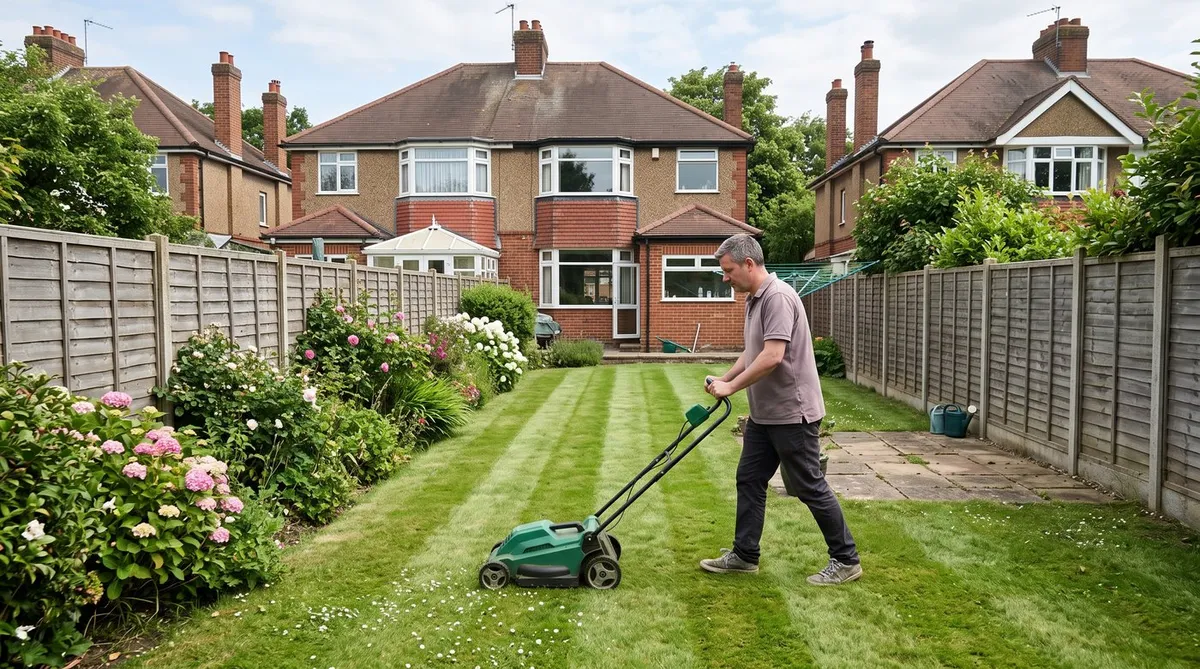
Key takeaways
- There are no legal mowing hours in the UK, including on Sundays and bank holidays
- Mowing only breaks the law if the council decides it is a statutory nuisance
- Councils look at the time, how long, how often and the area, not a single cut
- Night noise between 11pm and 7am is treated most seriously
- Some leases, estates and housing associations set their own quiet hours
- A friendly word with the neighbours sorts out almost every mowing dispute
There is no legal time to mow your lawn in the UK. No law sets fixed mowing hours, and that includes Sundays and bank holidays. You can mow at any sensible time without breaking a rule.
What can land you in trouble is noise that becomes a statutory nuisance. That is a judgement your council makes about the whole pattern of noise, not one Saturday cut. Here is how it works, plus the times that keep the neighbours happy.
For the gardening side of timing, such as how often to cut through the year, see the guide to when to mow your lawn in the UK. This page sticks to the law and the neighbours.
Is there a law on mowing hours in the UK?
No. There is no national “mowing curfew” in England, Wales, Scotland or Northern Ireland. Nothing says “no mowing after 8pm” or “no mowing on Sundays”.
Noise from gardens falls under general noise nuisance rules instead. In England and Wales these come from the Environmental Protection Act 1990. Scotland and Northern Ireland have similar powers. They do not mention lawn mowers or set any hours. They let the council act when noise unreasonably spoils someone’s use of their home.
So the honest answer is: mowing is legal, and how and when you do it can occasionally make it a problem.
What makes mowing a statutory nuisance?
A council weighs up the whole pattern of noise, not a single event. An officer will usually think about these things together.
| What the council looks at | What pushes it towards a nuisance |
|---|---|
| Time of day | Early morning, late evening or night |
| How long | Sessions that run for hours |
| How often | Every day, or repeated bursts |
| The area | A quiet residential street rather than a busy road |
| Whether it is avoidable | Noise that could easily happen at a better time |
A Sunday cut at 11am will not be a statutory nuisance. A petrol mower running every night at 10pm might be. The GOV.UK guide to how councils deal with noise complaints explains the process.

A low fence does very little to stop sound. That’s why timing and a quick chat matter more than the law.
What are the best times to mow without upsetting anyone?
Mid-morning to early evening is the safe window. A good rule of thumb:

On a close-packed terrace, sound carries further, so a short daytime cut is the kindest choice.
- Weekdays: about 8am to 8pm
- Saturdays: about 9am to 7pm
- Sundays and bank holidays: late morning to late afternoon
These are courtesy times, not legal limits. Some councils publish similar “considerate hours” for DIY and garden tools. Check your council’s noise pages for local advice.
Keep the noisy part short. A 30-minute cut is very different from a two-hour session with a strimmer and leaf blower. On a terraced or close-packed street, sound carries more, so a weekday daytime slot is kindest.
The night is different. Between 11pm and 7am councils treat noise most seriously. There is never a good reason to mow then.
Do leases and estate rules set mowing hours?
They can. Some leases, new-build estate covenants and housing association tenancy agreements include quiet hours or rules on noisy tools.
These are private agreements, not national law. Breaking them is a matter between you and the landlord, management company or association. If you rent or live on a managed estate, read your paperwork before arguing with anyone about Sunday mowing.
When weather pushes you into an awkward slot
British weather often leaves a narrow dry window at an odd hour. Resist the urge to rush a late-evening cut on soggy grass. The guide on whether you can mow a wet lawn explains why waiting a day is usually better for the grass.
Heatwaves cause the opposite problem. People mow at dawn to dodge the sun, which is exactly when neighbours are trying to sleep. Raising the blade and cutting less often is gentler on the lawn, as the guide to cutting grass in hot weather explains.
How to mow more quietly and less often
The easiest way to avoid complaints is to make less noise.

A push mower and a patch of longer grass mean less noise and fewer cuts, and the bees get a snack too.
- Switch to battery or a push mower. Cordless and manual cylinder mowers are much quieter than petrol ones.
- Cut a little higher. Taller grass needs fewer cuts. The guide on how low to mow a lawn has the right heights for each season.
- Leave some grass long. Joining in with No Mow May and longer grass cuts the noise and feeds pollinators.
- Think about a robot mower. They are quiet, but they run often, so set them to daytime hours. The robot mower guide covers scheduling and keeping hedgehogs safe.
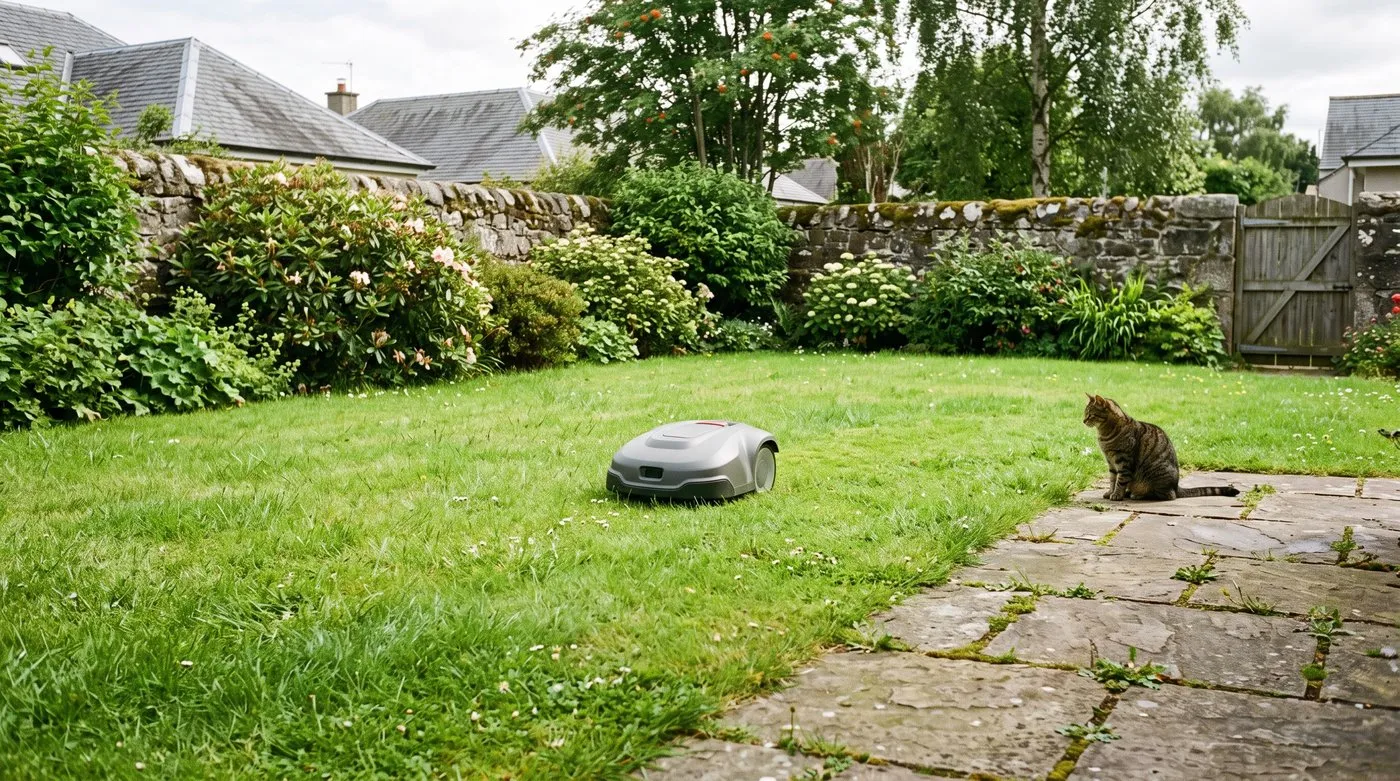
Robot mowers are quiet, but set them to daytime hours so they don’t run when hedgehogs are about.
What happens if a mowing dispute escalates?
Most mowing grumbles never reach the council. If one does, the steps are predictable.

A quick chat over the fence sorts out most mowing grumbles long before the council gets involved.
- A neighbour complains to the council’s environmental health team.
- An officer looks into it, often asking the neighbour to keep a noise diary.
- If the officer decides there is a statutory nuisance, the council serves an abatement notice telling you to stop or limit the noise.
- Ignoring the notice is a criminal offence and can lead to a fine.
It is very rare for normal daytime mowing to get anywhere near step three. The better route is to talk first. Agree a regular slot and most neighbours will happily work around it.
Common mistakes with mowing times
- Mowing at dawn in a heatwave. It feels sensible for the grass, but it is the most likely time to annoy someone.
- Stacking every noisy job together. Mowing, strimming, hedge trimming and leaf blowing in one long session feels endless next door. Spread them out.
- Leaving a robot mower on a night schedule. It is quiet, but it is also a risk to hedgehogs after dark.
- Assuming “no law” means “no rules”. Leases and estate covenants can still apply.
Frequently asked questions
Is there a law on what time you can mow your lawn in the UK?
No, there is no law setting fixed mowing hours. You can mow at any sensible time. It only becomes a legal issue if the council decides the noise is a statutory nuisance, judged on time, length, frequency and area.
Can I mow my lawn on a Sunday in the UK?
Yes, mowing on a Sunday is legal. No law bans Sunday or bank holiday lawn work. As a courtesy, avoid early starts and keep it to a single cut in the late morning or afternoon.
What time is too early or too late to mow?
Before about 8am and after about 8pm is when complaints start. Neither is illegal on its own. Night-time noise between 11pm and 7am is what councils take most seriously, so never mow then.
Can my neighbour report me for mowing the lawn?
Yes, they can complain to the council’s environmental health team. An officer then decides whether the noise is a statutory nuisance. One weekend cut will not qualify. Mowing late at night, again and again, might.
What happens if the council serves a noise abatement notice?
You must stop or limit the noise as the notice says. Ignoring an abatement notice is a criminal offence and can lead to a fine. It is very rare for ordinary daytime mowing to get this far.
Can my lease or estate rules stop me mowing at certain times?
Yes, some can. Leases, new-build estate covenants and housing association tenancies sometimes set quiet hours. These are private rules, not national law, so check your own paperwork.
Now you know when you can mow, plan the rest of the year with our month-by-month lawn care calendar, or browse more lawn care guides.
Our team produces practical UK gardening guidance from source research, contributor records and established horticultural practice. Editorial standards are overseen by Matt W.