Key takeaways
- Mow a green lawn in hot weather, but raise the blade to 5-6cm
- Never remove more than a third of the grass height in one cut
- Mow in the cool of early morning or evening, on dry grass
- Mow less often, as growth slows right down in heat
- Leave short clippings on the lawn to shade the soil
- Don't mow a lawn that has gone brown and stopped growing
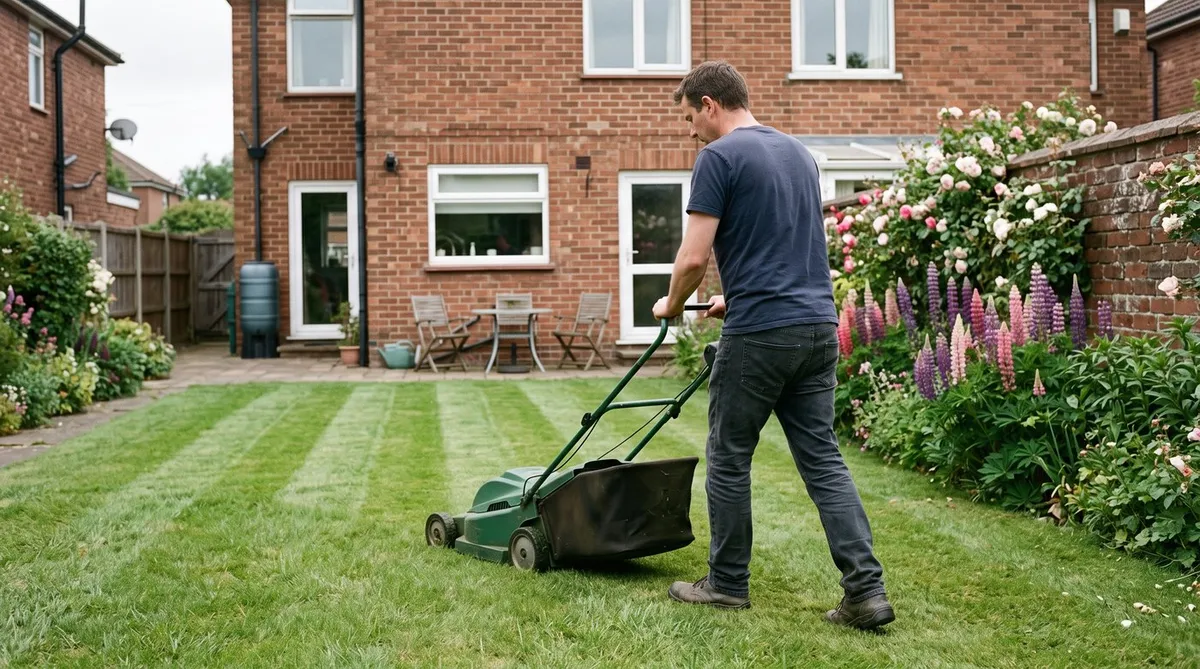
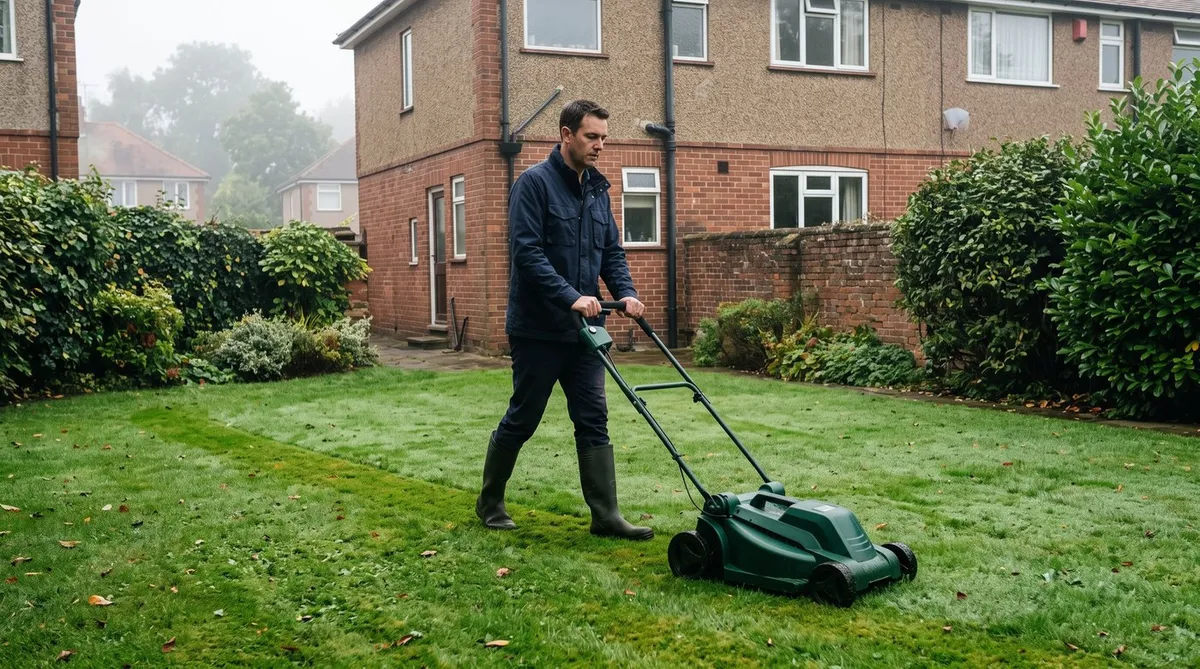
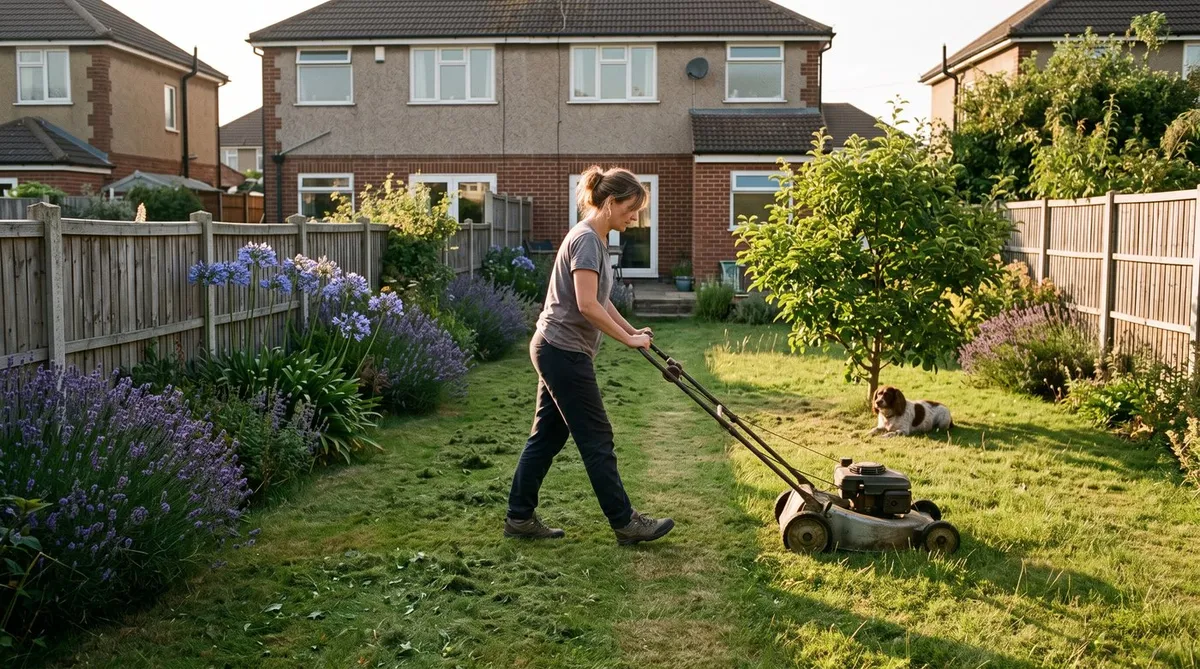
Yes, you can cut grass in hot weather, as long as the lawn is still green and growing. Raise the blade to 5-6cm, mow in the cool of the day and leave the clippings where they fall. If the lawn has turned straw-brown and stopped growing, leave the mower in the shed.
This guide is all about mowing through a heatwave or dry spell. For timing and mowing through the rest of the year, see when to mow your lawn.
Can you mow the lawn in a heatwave?
Yes, if it’s still green. The danger isn’t mowing itself but cutting too short. Each cut wounds the grass, and in hot, dry weather a hard cut can push a stressed lawn over the edge.
Check the lawn first. Walk across it. If the grass springs back and is still green, it’s fine to mow on a high setting. If it’s turned straw-brown and crunchy, and your footprints stay flat, it has gone dormant. Leave it alone.

What cutting too short does in a dry spell. The scalped strip has browned while the longer grass beside it stays green.
Why longer grass copes better with heat
Long grass shades its own roots and the soil. That keeps the ground cooler and slows down drying out.
When it’s hot and dry, grass saves water by slowing down and, eventually, going brown. This is dormancy, a resting state, not death. Most established UK lawns green up again after a good spell of rain.
The growing point at the base of each grass plant is what needs protecting. Taller blades shade it. Cut short, and the sun bakes it, just when the lawn can least cope.
Warning: Don’t mow a lawn that has already gone brown and dormant. The dry blades are shading the living base of the grass. Cutting them away in a drought can turn patches that would have recovered into bare ground.
What height to cut grass in hot weather
Raise the mower to 5-6cm for the whole hot, dry spell. That’s usually the top notch or the one below it on most domestic mowers. The guide to how low to mow a lawn covers the right heights for the rest of the year.
Follow the one-third rule: never take off more than a third of the grass height in one cut. If the grass is 8cm tall, cut it to about 5-6cm, not 3cm.
| Lawn condition | Cutting height | How often |
|---|---|---|
| Normal summer growth | Your usual height | Weekly |
| Hot, dry spell, still green | 5-6cm | Only when it has grown |
| Brown and dormant | Don’t mow | Wait for rain |
| Greening up after rain | Lower gradually over a few cuts | As growth picks up |

Move the height lever up a notch or two before a heatwave and leave it there until the rain returns.
Best time of day to mow in hot weather
Mow in the cool of the day. Early morning once the dew has dried, or the evening as the heat fades. The midday sun is hard on both the grass and you.
Evening often works best. The freshly cut grass has the cool night to recover before the next hot day.
Only mow dry grass. Wet grass tears rather than cuts and clogs the mower. If you’re unsure, the guide on whether you can mow a wet lawn explains the risks.
Keep the blade sharp too. A blunt blade shreds the tips, and torn tips brown faster in the heat.

Early morning is cool, but wait until the dew has dried before you mow.
Should you leave clippings on the lawn in summer?
Yes. Short clippings left on the surface act as a light mulch. They shade the soil and break down within days, feeding the lawn as they go.
Short clippings don’t cause problems on a lawn that’s mown regularly. Only rake them up if they’re long and lying in clumps, as heaps can smother the grass. The guide to leaving grass clippings on the lawn has more detail.

Short clippings like these disappear into the lawn within days, shading the soil as they go.
Common hot-weather mowing mistakes
- Scalping to mow less often. Cutting extra short to put off the next mow bakes the grass. It browns within days.
- Mowing a dormant lawn. A straw-brown lawn is resting. Leave it until rain brings back new growth.
- Mowing at midday. The freshly cut grass loses water fastest in the afternoon sun.
- Bagging every clipping. You’re throwing away free mulch. Leave short clippings in dry weather.
- Watering little and often. A daily sprinkle only wets the surface. If you water, water deeply and less often. The guide on how often to water a lawn explains how.

A lawn like this is resting, not dead. Put the mower away and let the rain bring it back.
How to help a lawn recover after a heatwave
Be patient. A brown lawn usually greens up within a few weeks once proper rain arrives.
Don’t feed a dry, stressed lawn. Fertiliser can scorch it and pushes soft growth the roots can’t support. Wait for cooler, wetter weather.
When it’s growing again, lower the mower gradually over a few cuts rather than all at once. Then patch any thin or bare areas in early autumn. The guide to lawn drought recovery sets out the steps, and the RHS lawn care advice covers year-round maintenance.
For more on looking after grass, browse the lawn care guides. Once the heat breaks, the lawn care calendar shows you what to do next, month by month.
Frequently asked questions
Should you cut grass in hot weather?
Yes, if the lawn is still green, but raise the mower. Set it to 5-6cm, mow in the cool of the morning or evening, and cut less often. Don’t mow a lawn that has gone brown and dormant.
How short should I cut grass in summer?
Keep it at 5-6cm in hot, dry spells. That’s higher than you’d cut in spring or a mild summer. Longer grass shades the soil and copes much better with drought.
Is it bad to mow a lawn in a heatwave?
Not if the lawn is green and you mow high. It does harm when you scalp the grass or mow a lawn that has already gone brown. That strips away the shade the grass needs.
Should I water the lawn before or after mowing in hot weather?
After, if you water at all. Mowing wet grass tears it and clogs the mower. Most established lawns survive drought without watering and green up again once it rains.
Why does my lawn turn brown after mowing in summer?
Usually because it was cut too short. Scalping exposes the base of the grass and the soil to the sun, so it dries and browns. Raise the cutting height and it should recover once it rains.
Should I leave grass clippings on the lawn in hot weather?
Yes, leave short clippings where they fall. They shade the soil and break down quickly, feeding the lawn. Only rake them up if they’re long and lying in clumps.
Our team produces practical UK gardening guidance from source research, contributor records and established horticultural practice. Editorial standards are overseen by Matt W.