Key takeaways
- Short, dry clippings rot down quickly and feed the lawn for free
- Clippings don't cause thatch, which is a layer of dead stems and roots
- Mow little and often, taking off no more than a third of the height each time
- Collect clippings when the grass is wet, long, weedy or diseased
- A mulching mower chops clippings finer, but any rotary mower with the box off works
- Collected clippings are great for the compost heap, mixed with cardboard or dry leaves
Yes, you can usually leave grass clippings on the lawn. It’s sometimes called grasscycling. Short, dry clippings drop down between the blades, rot away within a week or two and feed the grass as they go. It saves you emptying the box, too.
The catch is timing. Leave long or wet clippings and they clump, smother the grass and leave yellow stripes. Here’s when to leave them, when to collect them, and how to use the ones you rake up.
Do grass clippings cause thatch?
No. It’s a common worry, but clippings aren’t what makes thatch.
Thatch is a spongy layer of dead stems, creeping runners and old roots that builds up just above the soil. These parts are tough and woody, so they rot slowly. A thin layer is normal and even helps the lawn. It only becomes a problem when it gets thick enough to stop water and air reaching the roots.
Grass clippings are soft leaf blades. They shrivel within a day or two and break down quickly. The real causes of heavy thatch are too much high-nitrogen feed, compacted soil and too few worms to clear dead material. If your lawn feels spongy underfoot, our guide on how to scarify and aerate the lawn will sort it.

Thatch is the brown, spongy layer of dead stems and roots below the green. Clippings on top aren’t part of it.
Why is it good to leave grass clippings on the lawn?
They feed the lawn for free. Clippings contain the nutrients the grass took from the soil, mostly nitrogen. As they rot down, those nutrients go back where they came from. Box them off every time and you have to replace them with feed.
Leaving clippings has other perks:
- Less work. No stopping to empty the grass box or carry clippings away
- Moisture. A light scatter shades the soil surface and helps in dry spells
- Happy worms. Clippings feed worms, which help keep the soil open and thatch down
You may find you need to feed a little less often. Our guide on how to feed a lawn covers what to use and when.

Short clippings shrivel fast and slip down between the blades, where worms and soil life finish them off.
When should you collect grass clippings instead?
Leave them when the grass is dry and the clippings are short. Collect them in most other cases. Here’s a quick guide.
| Condition | Leave or collect? | Why |
|---|---|---|
| Dry grass, regular cut | Leave | Short clippings fall in and rot fast |
| Wet grass | Collect | Wet clippings clump and smother the lawn |
| Long, overgrown grass | Collect | Long clippings lie on top in rows |
| Weeds in flower or seed | Collect | Leaving them spreads the seed |
| Lawn disease, such as red thread | Collect | Leaving them can spread the disease |
| First cut of spring | Collect | Growth is long and usually damp |
| Heavy autumn leaf fall | Collect | Leaves and clippings mat together |
The golden rule is little and often. Never take off more than a third of the grass height in one cut. Short clippings drop out of sight, while long ones sit on top. Mowing a wet lawn is best avoided anyway. Our guide on whether you can mow a wet lawn explains why.
Do you need a mulching mower?
No, but it does the job better. A mulching mower has a closed deck and a special blade. It keeps the grass under the deck and chops it several times, so the pieces are tiny. Tiny pieces drop straight down and vanish within days.
Many rotary mowers come with a mulching plug, which blocks the chute and turns the mower into a mulcher. Check your manual.
You don’t need any special kit, though. Any rotary mower with the box taken off will drop clippings. Just mow more often so they stay short. A robot mower is the ultimate grasscycler, as it trims a tiny bit every day and never collects. Our robot mower guide explains how they work.

Mowing little and often keeps clippings short enough to leave, and the lawn stays thick and green.
Grass clippings through the year
How often you can leave clippings changes with the seasons and the weather.
| Month | Leave or collect? | Notes |
|---|---|---|
| January-February | Collect | Mow only on dry, mild days if at all |
| March | Collect | The first cut is usually long and damp |
| April | Leave when dry | Growth speeds up, so mow weekly |
| May-June | Leave | Peak growth. Mow once or twice a week |
| July-August | Leave | Raise the blades in dry weather. Clippings help hold moisture |
| September | Leave when dry | A last burst of growth |
| October | Collect if leafy | Wet grass and fallen leaves clump |
| November-December | Collect | Growth slows and the ground is often wet |
In a hot, dry spell, raise the mower and cut less often. Our guide on whether you should cut grass in hot weather has more on summer mowing.
Common mistakes when leaving grass clippings
Leaving wet clippings. This is the big one. Wet clippings stick together in heavy clumps. The grass underneath turns yellow within days and can die. Wait until it’s dry, or collect them.
Letting the grass get too long. Cut a lot off an overgrown lawn and the clippings lie on top in rows. Bring it down gradually over a few cuts, collecting as you go.
Leaving seeding weeds. If dandelions or plantains have gone to seed, leaving the clippings spreads them. Collect until the weeds are under control.
Leaving diseased clippings. Clippings from patches of red thread or fusarium can spread the disease. Collect them and put them in the green waste bin.

What to avoid. Wet, long clippings left in clumps block the light and turn the grass beneath yellow.
Warning: If you’ve used a lawn weedkiller, check the label before putting the clippings on the compost heap or using them as mulch. Some weedkillers stay active in the clippings for several cuts and can damage veg and flowers.
What can you do with collected grass clippings?
Compost them or use them as a thin mulch. They’re too useful to throw away.
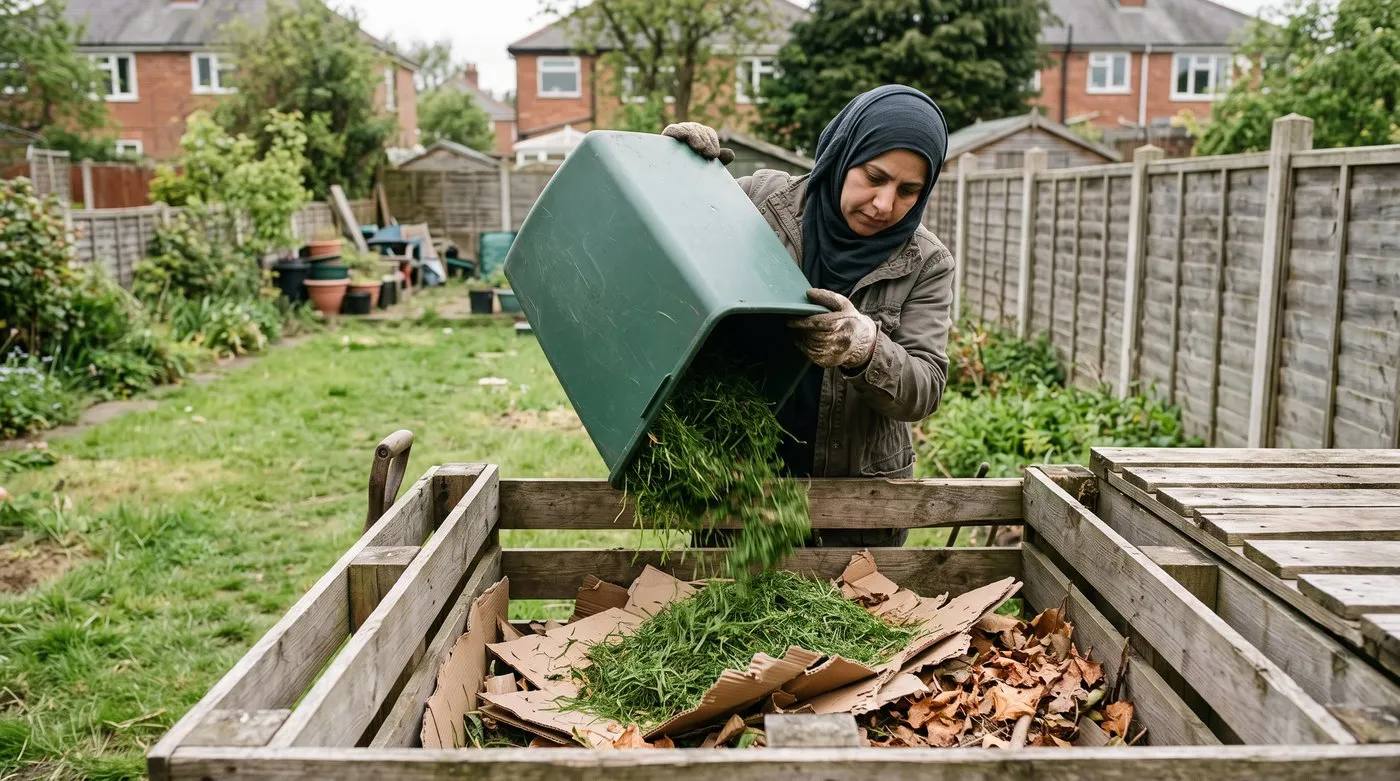
Mix clippings with cardboard or dry leaves as they go in. The heap stays airy and rots down instead of turning slimy.
On the compost heap, clippings are a “green” material, rich in nitrogen. Added in a thick layer, they turn into a slimy, smelly mat. Mix them with about the same amount of “brown” material, such as torn cardboard, dry leaves or shredded prunings. Our guide to cold, fast and hot composting explains the mix.
As a mulch, spread them no more than 2-3cm thick around veg and shrubs, and let them dry a little first. Over cardboard, they make a quick weed-smothering layer. Our guide to cardboard and grass clippings mulch shows how.
Gardener’s tip: Keep a bag of torn cardboard or dry leaves by the compost bin. Every time you tip in a box of clippings, add the same amount of brown stuff and give it a stir.
For more help with mowing and feeding, browse our lawn care guides. For the full year of lawn jobs in one place, read our lawn care calendar.
Frequently asked questions
Do grass clippings cause thatch on a lawn?
No, grass clippings don’t cause thatch. Thatch is a spongy layer of dead stems, runners and roots below the green blades. Soft clippings rot down far faster. Thatch builds up from heavy feeding, compaction and too few worms.
Is it good to leave grass clippings on the lawn?
Yes, as long as they’re short and dry. They return nutrients to the soil and help the lawn hold moisture in dry spells, so you may need to feed less often.
How long do grass clippings take to break down?
Usually a week or two in warm summer weather. They shrivel within a day or two, then soil life and worms pull them down. In cool spring or autumn weather it takes longer.
When should you collect grass clippings instead of leaving them?
Collect them when the grass is wet, very long, full of seeding weeds or diseased. Wet or long clippings clump and smother the grass. Weed seeds and disease spread if you leave them.
Can you leave clippings on a wet lawn?
No, collect them on a wet lawn. Wet clippings stick together in heavy clumps that block light and air. The grass underneath can turn yellow within days. Mow when the grass is dry if you can.
Do you need a mulching mower to leave clippings?
No, but it helps. A mulching mower chops clippings into tiny pieces that drop out of sight. Any rotary mower with the box off works if you mow often, so the clippings stay short.
Our team produces practical UK gardening guidance from source research, contributor records and established horticultural practice. Editorial standards are overseen by Matt W.