Key takeaways
- Pieris must have acid soil, or a pot of ericaceous compost
- The big show is the spring leaf colour: red, pink or cream depending on variety
- 'Forest Flame' is the easiest and most reliable choice
- Shelter it from cold east winds and early morning sun to protect spring growth
- Feed with ericaceous plant food monthly from April to August
- All parts are toxic to pets and people if eaten
Pieris is one of the best evergreen shrubs for a UK garden. In spring the new leaves come through bright red, salmon pink or creamy white, as showy as any flower, before turning glossy green. Chains of little white bells hang from the branches from March to May, giving bees an early feed.

Pieris ‘Forest Flame’ in spring, with bright red new leaves and hanging white flowers.
Why grow pieris in a UK garden?
You get two shows from one plant: colourful spring leaves and white spring flowers. The leaf colour lasts several weeks, moving from red through pink and cream to green. The flowers overlap with it. For the rest of the year, the dense evergreen leaves give your garden shape and screening.
Pieris is a cousin of rhododendrons, camellias and heathers, and like them it needs acid soil. It’s at home in cool, damp weather, which suits the British climate nicely.
It’s hardy in most of the UK, though very exposed upland gardens are a stretch. The RHS plant page has more detail on size and care. Over many years it grows into a dense, rounded shrub of 2-4m. It grows slowly, so there’s very little pruning to do.
Best pieris varieties for UK gardens
Pieris japonica ‘Forest Flame’ (AGM)
‘Forest Flame’ is the classic. New leaves open bright scarlet, then fade through pink and cream to dark green. White flowers come in April. It grows to about 3m tall and 2m wide. You’ll find it in almost every garden centre.
Pieris japonica ‘Mountain Fire’
‘Mountain Fire’ has some of the deepest red new growth of any pieris. It’s a little more compact at 2-2.5m, with white flowers from March to April. Great in a pot, where you can enjoy the colour up close. It’s a bit harder to find, so try a specialist nursery.
Pieris japonica ‘Flaming Silver’
This one has white-edged leaves all year, with pink-red new growth. It’s slower and smaller, at about 1.5-2m. The pale edges brighten a shady corner. It needs a bit more shelter from cold winds than the green-leaved types.
Pieris japonica ‘Little Heath’
A dwarf, just 60-80cm tall, which makes it perfect for pots and small gardens. New growth is cream and pink rather than red, and the leaves are edged white all year. It doesn’t flower much. Lovely at the front of an acid border or in a patio pot.
Pieris japonica ‘Valley Valentine’
The one to pick if you want coloured flowers. It has deep rose-pink bells instead of white, often from February. New leaves are bronze-red. It grows to about 2m.
Pieris varieties at a glance
| Variety | New leaf colour | Size | Flowers |
|---|---|---|---|
| ’Forest Flame’ | Scarlet | Large (3m) | White, April |
| ’Mountain Fire’ | Deep red | Medium (2-2.5m) | White, March to April |
| ’Flaming Silver’ | Pink-red | Medium (1.5-2m) | White, April |
| ’Little Heath’ | Cream and pink | Small (60-80cm) | Few |
| ’Valley Valentine’ | Bronze-red | Medium (2m) | Rose-pink, February to April |
| ’Debutante’ | Bronze | Small (1m) | White, March to April |
| ’Purity’ | Pale green | Medium (1.5m) | Large white, March to May |

Three pieris side by side, showing spring colours from red through pink to cream.
How to plant pieris
Soil requirements
Pieris must have acid soil. There’s no getting round this. In neutral or chalky soil the plant can’t take up iron, so the leaves turn yellow with green veins and it slowly fades away. Test your soil with a cheap kit from a garden centre before you buy.
Much of Scotland, Wales and the Lake District has naturally acid soil. Chalk downs, the Cotswolds and limestone areas are too alkaline for pieris in the ground. Our UK soil types identification guide helps you work out what you’ve got.
Choosing a position
Pieris likes dappled shade or a west-facing spot, with a few hours of filtered light and shelter from cold east winds. Avoid:
- Hot, full sun, which scorches new leaves and fades the colour
- East-facing spots that catch early sun, because frozen new leaves that thaw too fast turn brown
- Deep shade, which means fewer flowers and duller spring colour
- Frost pockets, where late frosts burn the red new growth
Pieris looks great with rhododendrons and camellias in an acid border, as they all like the same soil and shade.
Planting step by step
- Dig a hole twice as wide as the root ball and the same depth
- Mix the soil you dug out with an equal amount of ericaceous compost
- Set the plant so the top of the root ball is level with the soil, never deeper
- Fill in with the mix and firm gently
- Water well with rainwater, about a full watering can
- Mulch with 5-7cm of composted pine bark, keeping it clear of the stems
Plant between October and March. Autumn is best, as the roots settle over winter, as long as the soil isn’t waterlogged. Spring works well in cold or wet gardens, but keep an eye on watering as it warms up. Pot-grown plants can go in any time, though summer planting means watering every day.
Growing pieris in containers
A pot is the answer if your soil is neutral, chalky or alkaline. You choose the compost, so the soil problem disappears.

In a big pot of ericaceous compost, pieris will grow happily whatever your garden soil.
Container essentials
- Pot size: At least 40 litres, with drainage holes. Pieris roots spread outwards rather than down
- Compost: Ericaceous compost only. Don’t mix in multipurpose compost or garden soil
- Watering: Use rainwater. In hard water areas, tap water slowly makes the compost less acid. A water butt makes this easy
- Feeding: Ericaceous liquid feed monthly from April to August, at the rate on the pack
- Repotting: Every 3-4 years, into a slightly bigger pot with fresh ericaceous compost
- Winter: Move pots against a sheltered wall from November. In a hard winter, wrap the pot (not the plant) in bubble wrap so the roots don’t freeze
For more ideas, including mixing pieris with other acid-lovers, see our best plants for pots year-round guide.
Seasonal care calendar
| Month | Job | What to do |
|---|---|---|
| January | Check | Look for storm damage and remove broken branches |
| February | Mulch | Add 5cm of pine bark around the base |
| March | Protect | Cover with fleece if frost is forecast, as new growth is tender |
| April | Feed | Start monthly ericaceous feed and water regularly |
| May | Prune | Snip off faded flowers and shape lightly if needed |
| June | Water | Water deeply in dry spells, especially pots |
| July | Check | Look under leaves for lacebug |
| August | Feed | Last ericaceous feed of the year |
| September | Mulch | Top up the bark mulch before winter |
| October | Plant | A great month for planting new pieris |
| November | Shelter | Move pots against a sheltered wall |
| December | Rest | Nothing to do. Enjoy the evergreen leaves |
Pruning pieris
Pieris hardly needs pruning. It grows slowly and keeps a neat dome shape on its own. When you do prune, timing matters.
When to prune: Straight after flowering, in May or June. It then has the whole season to grow the shoots that carry next year’s flowers. Never prune in autumn or winter, or you’ll cut off the buds.
How to prune:
- Take out dead, damaged or crossing branches
- Cut leggy stems back to a pair of healthy buds
- Shape lightly, removing no more than a third of the plant
- For a very overgrown plant, cut back to 30-40cm in April. It will regrow, but you’ll miss the flowers for a year or two
For more on timing and technique, see our spring pruning guide.
Common problems and solutions
Yellow leaves (lime-induced chlorosis)
Yellow leaves with green veins are the most common pieris problem. The soil isn’t acid enough, so the plant can’t get the iron it needs. Water on sequestered iron, following the pack, for a quick fix. In the ground, it’s hard to make chalky soil acid for good, so a pot of ericaceous compost is often the better answer. For pot plants, switch to rainwater and repot in fresh ericaceous compost. Our soil testing and pH adjustment guide explains more.
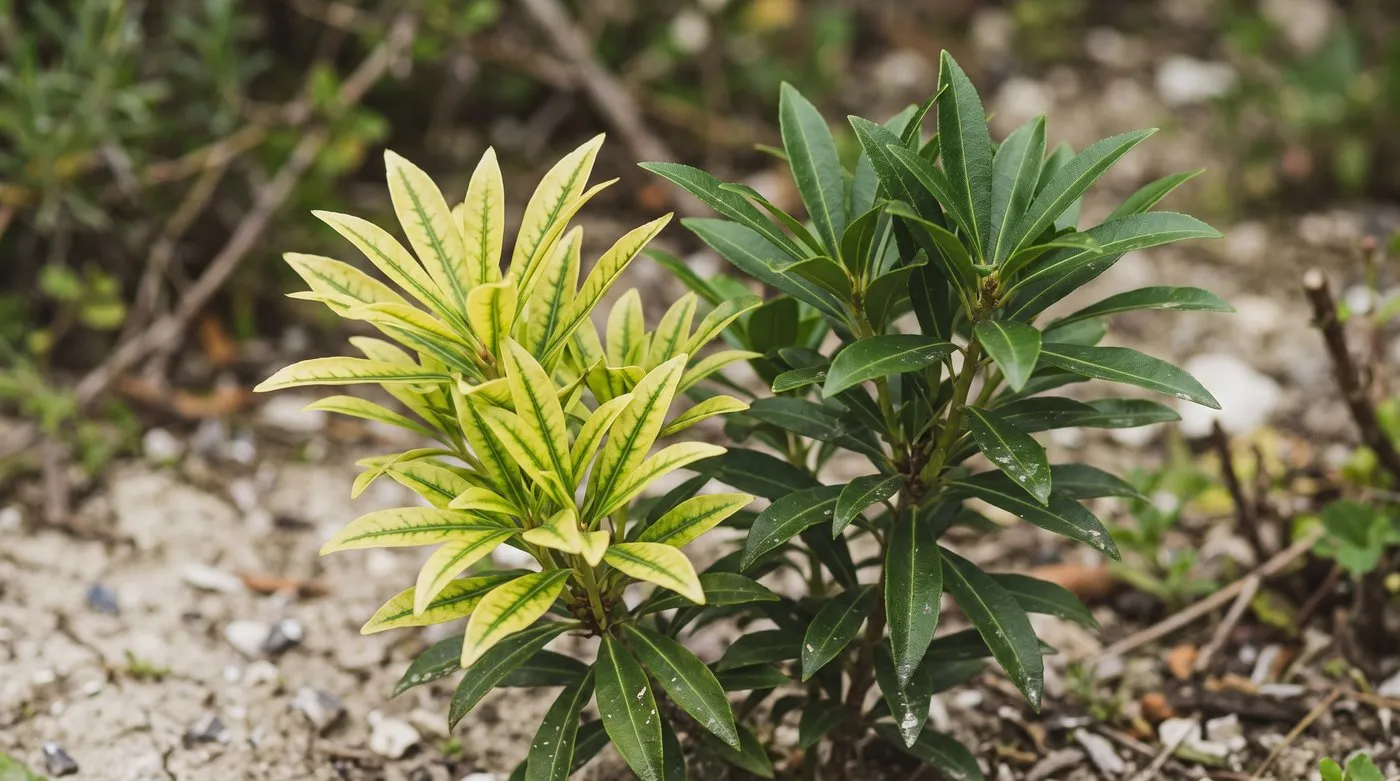
Yellow leaves with green veins mean the soil isn’t acid enough for pieris. On chalky ground, a big pot of ericaceous compost is often the easier fix.
Lacebug (Stephanitis takeyai)
Pieris lacebug is a small sap-sucker that’s becoming more common in southern England. It feeds under the leaves, leaving the tops mottled pale or silvery. Check under leaves from May. Pick off badly affected leaves. If you choose to spray, use an approved insecticide in early June while the young are small, and follow the label. Keeping the plant well watered helps.
Frost damage to new growth
Late frosts in April and May can turn new leaf tips brown and papery. Throw fleece over the plant when frost is forecast. The damage looks sad but isn’t fatal, as fresh shoots grow from buds lower down. A sheltered, west-facing spot cuts the risk.
Phytophthora root rot
Soggy soil can rot pieris roots. The plant wilts even though the soil is wet, and stems brown from the base up. Improve drainage before planting by mixing in bark or grit, and avoid heavy, wet clay. There’s no cure once it takes hold, so remove and bin affected plants.
A note on safety: all parts of pieris are toxic to cats, dogs, horses and people if eaten. Keep pets away from fallen leaves and flowers, and call your vet if you think they’ve eaten some.
What to plant with pieris

Spring bulbs planted underneath make the most of the pieris flowers.
Pieris fits nicely into an acid-loving planting scheme. The best partners like the same soil and light:
- Rhododendrons, flowering at the same time and filling the back of the border with colour
- Camellias, flowering earlier to stretch out the season
- Japanese maples, for autumn colour against the evergreen pieris
- Ferns, for soft texture in the same dappled shade
- Bluebells and cyclamen, woodland bulbs for planting underneath
- Heathers, low ground cover that loves acid soil and flowers in winter
For more ideas on mixing shrubs and perennials, see our guide to the best plant combinations for UK borders.
Where to buy pieris in the UK
Garden centres and online nurseries sell pieris in 3-5 litre pots, and larger plants cost more. Autumn is a good time to buy, as there’s plenty of choice and you can plant straight away.
Specialist nurseries such as Burncoose Nurseries in Cornwall, Millais Nurseries in Surrey and Hillier Nurseries stock the rarer varieties and deliver nationwide. Your local garden centre will usually have ‘Forest Flame’ and ‘Little Heath’.
Next step: if you’re building up an acid-loving collection, read our guide to the best flowering shrubs for UK gardens for more colour ideas.
Frequently asked questions
What soil does pieris need?
Pieris needs acid soil, just like rhododendrons and camellias. In chalky or neutral soil it can’t take up iron, and the leaves turn yellow with green veins. A cheap soil test kit tells you what you have. If your soil isn’t acid, grow pieris in a pot of ericaceous compost.
Can I grow pieris in a pot?
Yes, pieris grows really well in a pot. Choose one of at least 40 litres with drainage holes and fill it with ericaceous compost. Water with rainwater, not tap water, and feed monthly with ericaceous plant food from April to August. Repot every 3-4 years.
Why is my pieris not turning red?
Usually it’s too little light or not enough food. Pieris needs a few hours of light a day for bright new growth, so very deep shade dulls it. Feed with ericaceous food monthly from April. Check the variety too, as some, such as ‘Little Heath’, have cream or pink new growth rather than red.
When should I prune pieris?
Prune straight after flowering, in May or June. That gives it a whole season to make next year’s flower buds. Take out dead or damaged branches, shape lightly and cut leggy stems back to healthy buds. Don’t prune in autumn or winter, or you cut off next spring’s flowers.
Is pieris toxic to pets?
Yes, all parts of pieris are toxic if eaten. That goes for cats, dogs, horses and people. Signs include sickness, drooling and weakness. Keep pets away from fallen leaves and flowers, and call your vet straight away if you think they’ve eaten some.
How fast does pieris grow?
Pieris is slow, growing about 10-15cm a year. A 60cm plant takes many years to reach 2m. The good news is it rarely needs pruning and keeps a neat shape on its own.
What can I plant with pieris?
Plant it with other acid-lovers like rhododendrons, camellias and Japanese maples. Underplant with woodland bulbs such as bluebells, cyclamen and snowdrops. Heathers and ferns look good around the base and enjoy the same dappled shade.
Our team produces practical UK gardening guidance from source research, contributor records and established horticultural practice. Editorial standards are overseen by Matt W.