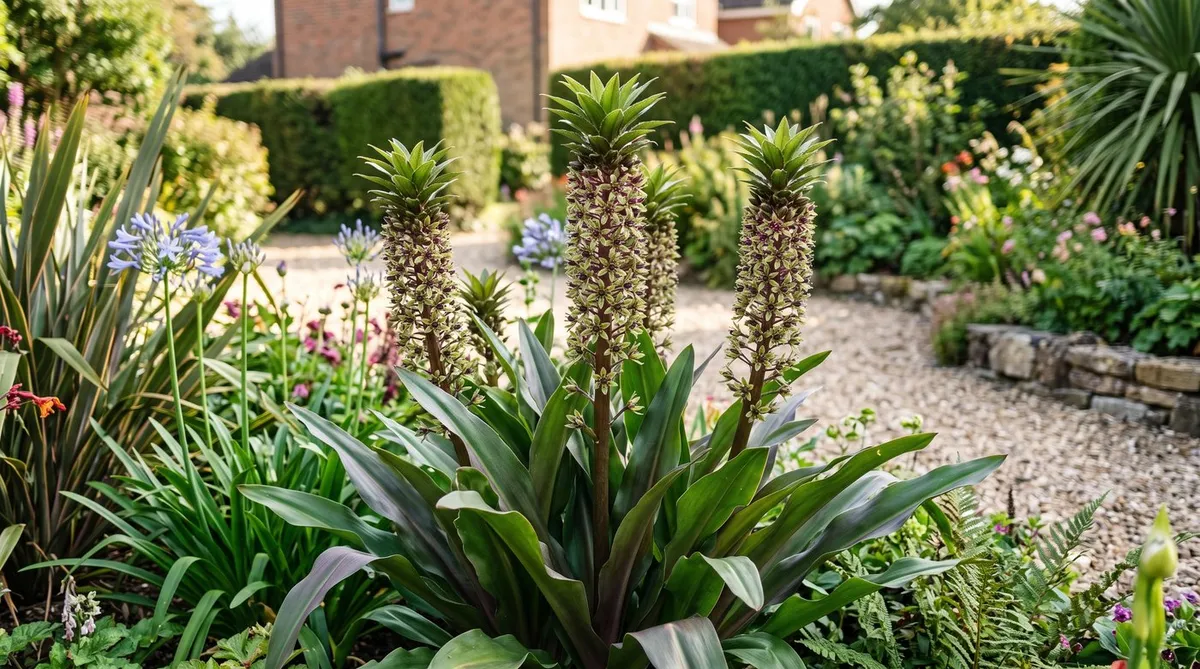
Key takeaways
- Acidanthera is a scented, late-flowering gladiolus, also sold as Gladiolus murielae or callianthus
- Plant corms 10cm deep and about 12cm apart in May, once the soil has warmed
- Starting corms in pots under glass in March or April gives earlier flowers in cool areas
- The scent is strongest in the evening, so plant it near a patio or doorway
- Lift and store corms frost-free in autumn on cold or heavy soil
Acidanthera is a late-summer gladiolus with a lovely trick: scent. Its white star-shaped flowers have a deep maroon centre and nod on tall, arching stems. They open from late summer into early autumn and smell sweetest in the evening.
You’ll find it sold as acidanthera, Gladiolus murielae, Gladiolus callianthus or Abyssinian gladiolus. They’re all the same tender corm (a bulb-like storage stem). Get the planting time and the winter decision right and it will come back for years.
How acidanthera differs from garden gladioli
Acidanthera is a true gladiolus, but it behaves quite differently from the big spike gladioli grown for cutting. The guide to growing gladioli covers those hybrid types in full.
Here’s what sets acidanthera apart:
- Later flowers. It usually starts in late August, when many garden gladioli are finishing.
- Looser stems. It carries a few nodding white flowers per stem, not a dense one-sided spike.
- Scent. Most hybrid gladioli have little or none. Acidanthera perfumes the evening air.
- More tender. It comes from East Africa, so it needs a warm spot to flower and protection in winter.
Plant it where you’ll catch the scent: beside a patio, along a path or near a back door. It also suits a moon garden, where white flowers glow at dusk.
Pet safety: Gladiolus corms are toxic to cats and dogs if eaten. Store lifted corms where pets can’t reach them.
When and how to plant acidanthera corms
Plant acidanthera outside in May, once the soil has warmed and frosts have finished. Planting earlier gains nothing, as the corms sit in cold, wet soil and may rot. In the north and Scotland, wait until late May.
Choose full sun and shelter from strong wind. A border in front of a sunny wall is ideal. The stems grow to about 90cm and can flop in exposed spots.
- Plant corms 10cm deep and about 12cm apart.
- Group at least seven together for a good show.
- On heavy soil, sit each corm on a little horticultural grit to help drainage.
- Water in, then leave them. Shoots appear a few weeks later.
If you’re unsure which way up a corm goes, the flat, rooty side goes down. The guide to bulbs, corms, tubers and rhizomes explains the difference.

Plant corms about 10cm deep with the pointed tip up. A little grit underneath helps on heavy soil.
Starting acidanthera under glass for earlier flowers
In cool or northern gardens, starting corms in pots gives you flowers sooner. Corms planted straight outside can flower very late and get caught by autumn weather.
Pot corms one per 9cm pot, or three to a 1-litre pot, about 8cm deep in peat-free compost. Keep them frost-free on a greenhouse bench, in a cold frame or on a bright windowsill in March or April. Harden them off in May, then plant them out once frosts are over.

The clump started under glass (left) is already in flower, while the direct-planted one is still in leaf.
Growing acidanthera in pots
Pots are a great way to grow acidanthera. You can stand the scent right by a seat, then move the whole pot under cover for winter.
Use a pot at least 30cm across. Fill it with peat-free compost mixed with a few handfuls of grit. Plant 7-9 corms, about 8cm deep. Water regularly, as pots dry out quickly in summer.
Feed every fortnight from June with a high-potash tomato feed. This helps flowering and builds up next year’s corm. The tall stems can make a pot top-heavy, so use a heavy container or add a few short canes.
After flowering, move the pot somewhere frost-free and dry. Let the compost dry out. You can leave the corms in the dry pot, or lift and store them. Replant in fresh compost in spring.

A big pot by the back door puts the evening scent right where you’ll enjoy it.
Feeding and watering for good flowers
Acidanthera needs steady moisture through summer to flower well. Water in dry spells, especially in pots. Aim for soil that stays moist but never waterlogged.
Start feeding when the flower stems appear, usually from late June. A high-potash liquid feed every two weeks helps flowering and fattens the corm for next year. Avoid high-nitrogen feeds, which give soft leaf instead of flowers.
Planting partners for late summer
Acidanthera flowers when many borders are tiring, so it’s a useful late-season plant. Its white stars and dark eyes look good with hot colours and fine grasses.
It mixes well with dahlias, which bring the colour while acidanthera adds height and scent. It also suits cannas, whose big leaves contrast with its slim stems. As it finishes, nerines take over with pink autumn flowers.

Acidanthera threads through dahlias and grasses, adding scent and airy height to a late border.
Should you lift acidanthera for winter?
On cold or heavy soil, lift and store your corms in autumn. Acidanthera is tender, and wet winter soil rots dormant corms even when frost doesn’t reach them. Drainage matters as much as temperature.
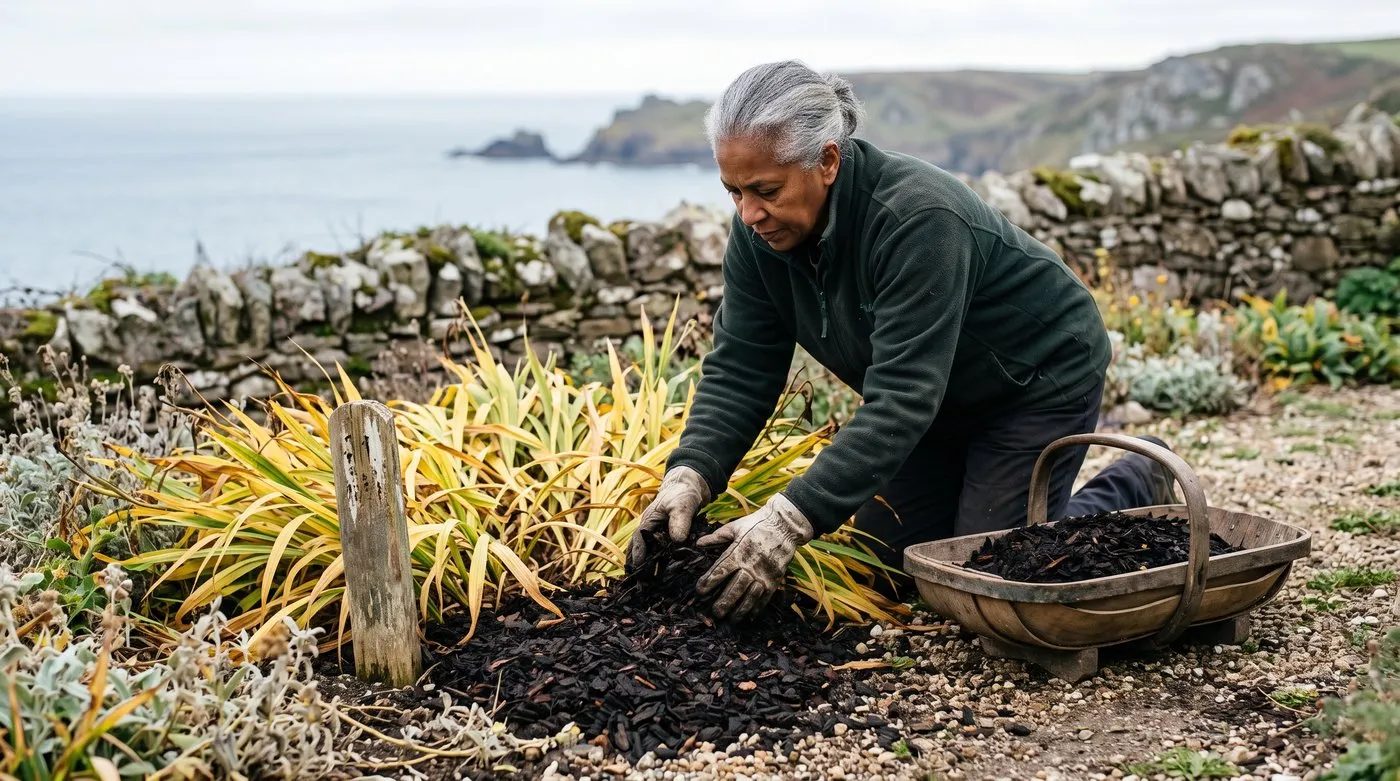
In a mild garden with free-draining soil, a thick mulch and a marker stake may see corms through winter in the ground.
In mild gardens with free-draining soil, such as parts of the south-west and coastal areas, you can try leaving them in. Cover the spot with a thick mulch of bark or leaf mould once the leaves die back. Mark where they are so you don’t dig into them in spring. Lifting is still the safer choice anywhere you’re unsure.
How to lift and store acidanthera corms
Lift corms in October, once the leaves start to yellow or a light frost blackens them, before the ground gets sodden.
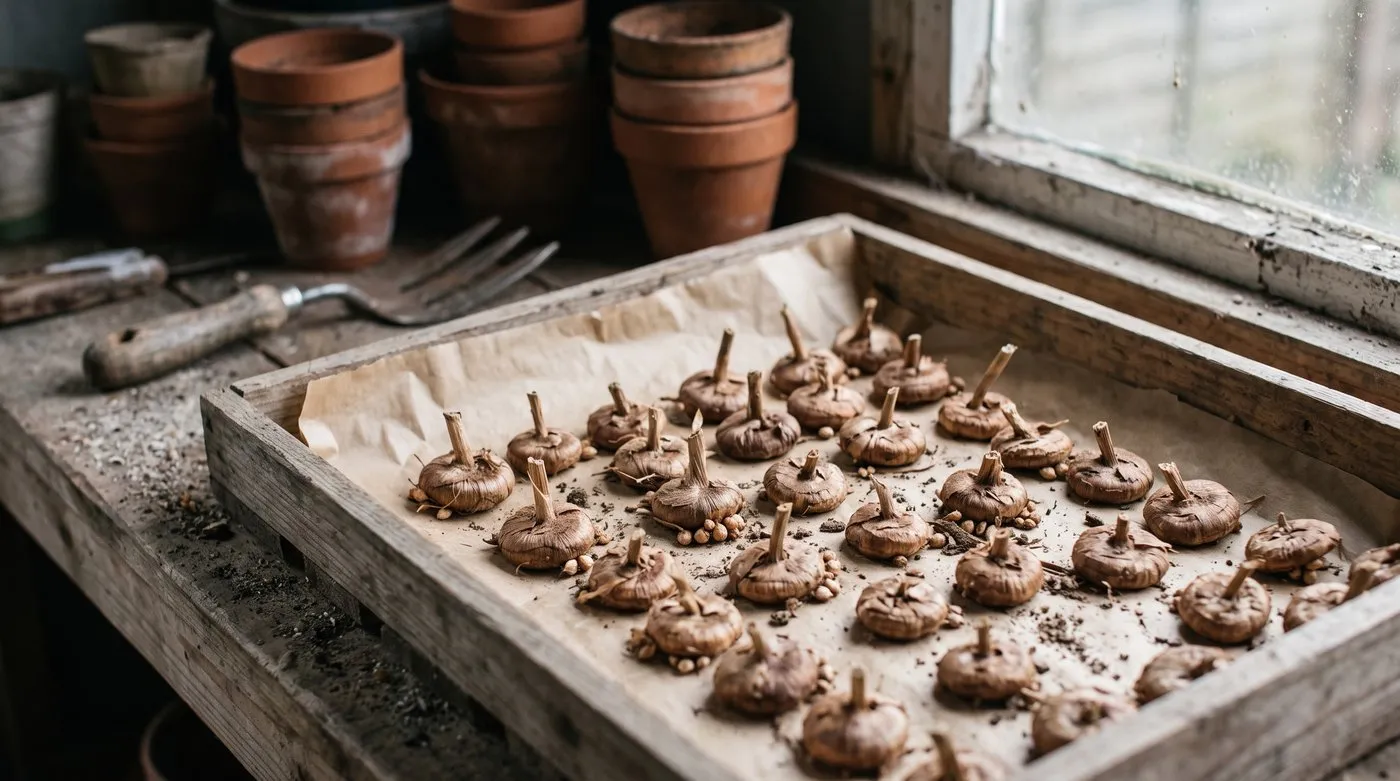
Dry lifted corms in a single layer for a couple of weeks, then clean them and store them somewhere frost-free.
- Ease the clump up with a fork, working well away from the corms.
- Shake off loose soil and cut the stems back to about 2cm.
- Dry the corms in a single layer in a frost-free shed for two to three weeks.
- Once the skins are papery, rub off the old shrivelled corm, soil and roots.
- Store them in paper bags or trays somewhere cool, dry and frost-free.
You’ll often find small cormlets around the base. Grow these on in pots and they’ll reach flowering size in a year or two. The guide to storing flower bulbs has more on keeping corms sound over winter.
Acidanthera calendar
| Month | What to do |
|---|---|
| January to February | Check stored corms. Throw out any soft or mouldy ones |
| March to April | Start corms in pots under glass for earlier flowers |
| May | Harden off potted plants. Plant corms outside once the soil is warm |
| June to July | Water in dry spells. Feed fortnightly with tomato feed. Stake in exposed spots |
| August to September | Flowers open. Enjoy the evening scent. Keep pots watered |
| October | Lift corms on cold or wet soil. Mulch any left in mild gardens. Move pots under cover |
| November to December | Finish drying lifted corms, clean them and store frost-free |
Common mistakes with acidanthera
- Planting too early. Corms in cold April soil sulk or rot. Wait until May.
- No head start in cool areas. In the north, direct-planted corms can flower too late. Start them under glass.
- A shady spot. Without full sun, acidanthera often fails to flower.
- Leaving corms in wet ground. It’s the wet weeks after Christmas, not the first frost, that usually rot them.
- Hiding it at the back of a border. You’ll miss the scent. Grow it where you sit.

Six pointed white petals and a dark maroon centre make acidanthera easy to recognise.
For more fragrant ideas, see the guide to the best scented plants for UK gardens. Or browse more bulbs in the plants section.
Frequently asked questions
Is acidanthera the same as gladiolus?
Yes, acidanthera is now classed as Gladiolus murielae. It’s still sold as Acidanthera bicolor or Gladiolus callianthus. It grows from a corm like garden gladioli, but flowers later, is scented and is more tender.
When should I plant acidanthera corms in the UK?
Plant outside in May, once the soil has warmed. Cold, wet soil makes the corms sit and sulk or rot. In the north, wait until late May. For earlier flowers, start them in pots under glass in March or April.
Do I need to lift acidanthera over winter?
On cold or heavy soil, yes. The corms are tender and rot in wet winter ground. In mild gardens with free-draining soil you can leave them in under a thick mulch, but lifting is the safer choice.
Why has my acidanthera not flowered?
Usually it went in too late or got too little sun. Acidanthera needs a long, warm season. Start corms under glass in cool areas, plant in full sun and feed with tomato feed once stems appear.
Does acidanthera come back every year?
Yes, if the corms survive winter. It’s a perennial corm, not an annual. Corms that are lifted, dried and stored frost-free can be replanted each spring, and they make small cormlets you can grow on.
Is acidanthera scented?
Yes, it has a sweet scent that is strongest in the evening. Plant it beside a patio, doorway or bench where you sit out on late-summer evenings. That way you get the full benefit.
Can you grow acidanthera in pots?
Yes, it does very well in pots. Plant 7-9 corms about 8cm deep in a 30cm pot of peat-free compost with added grit. Feed with tomato feed from June and move the pot under cover for winter.
Our team produces practical UK gardening guidance from source research, contributor records and established horticultural practice. Editorial standards are overseen by Matt W.