Key takeaways
- There are two kinds: scented perennial nemesias bought as plants, and annual nemesia grown from seed
- Plant out after the last frost, usually mid to late May, in full sun
- Pinch out the tips when planting to get bushy, flower-packed plants
- Cut back by about half when flowering slows in midsummer for a second flush
- Perennial types can survive a mild winter in a sheltered, well-drained spot, but take cuttings as back-up
Nemesias are small, bushy plants that smother themselves in little lipped flowers from late spring to autumn. Plant them in a sunny pot or at the front of a border after the last frost, pinch out the tips, and give them a trim in midsummer. Some kinds also smell gorgeously of vanilla.
This guide covers both kinds you’ll find: the scented perennial nemesias sold as plants in garden centres, and the bright annual nemesia you grow from seed. For more summer pot plants to mix in, see our guide to the best half-hardy annuals.
Perennial or annual nemesia: which to grow?
Perennial nemesias are bought as young plants in spring. They’re compact, flower for months and many are scented. With luck and a sheltered spot, they live through a mild winter.
Annual nemesia is grown from seed. It comes in bright, cheerful colours and suits bedding schemes and children’s gardens. It flowers for one summer, then it’s done.
| Variety | Kind | Flowers | Good for |
|---|---|---|---|
| ’Wisley Vanilla’ | Perennial | White, vanilla scent | Pots near a seat or door |
| ’Confetti’ | Perennial | Soft pink, scented | Pots and border edges |
| ’Myrtille’ | Perennial | Lilac-blue, scented | Mixed containers |
| ’Berries and Cream’ | Perennial | Pink and white | Hanging baskets |
| Sunsatia range | Perennial | Bright reds, yellows and oranges | Hot colour schemes |
| ’KLM’ | Annual from seed | Blue and white | Bedding, cottage pots |
| Carnival mixed | Annual from seed | Mixed bright colours | Bedding, children’s gardens |
If you want just one, go for ‘Wisley Vanilla’. It’s easy, flowers for ages and the scent is lovely on a warm evening.

Bright perennial types make a cushion of colour in a single pot. Put them in the sunniest spot you have.
How to grow nemesia from seed
Sow annual nemesia under cover in March or April. Scatter the fine seed thinly on the surface of moist seed compost and barely cover it. Keep it somewhere bright and warm, such as a windowsill or heated propagator.
Prick the seedlings out into small pots or cell trays once they’re big enough to handle. Grow them on somewhere frost-free and bright, then harden them off over a week or two before planting out. Seedlings are prone to rotting off if kept too wet, so water from below and keep air moving. The guide to damping off explains how to avoid it.
Planting nemesias in pots and baskets
Nemesias are at their best in containers, where you can give them the sharp drainage they like.
- Wait until the last frost has passed, usually mid to late May
- Use peat-free multipurpose compost with a few handfuls of grit or perlite
- Plant three to five plants in a 30cm pot for a quick, full display
- Pinch out the tip of each plant just above a pair of leaves
- Water in and stand the pot in full sun
Pinching makes each plant branch out, so you get a bushy mound with far more flowers. They mix well with trailing plants in baskets and window boxes. For more ideas, see container planting combinations.

Nipping out the tip at planting time makes the plant branch out into a bushy mound.
Using nemesias in borders
In the ground, nemesias are best at the front of a sunny border, as edging or in gaps between taller plants. Space them about 20-25cm apart.
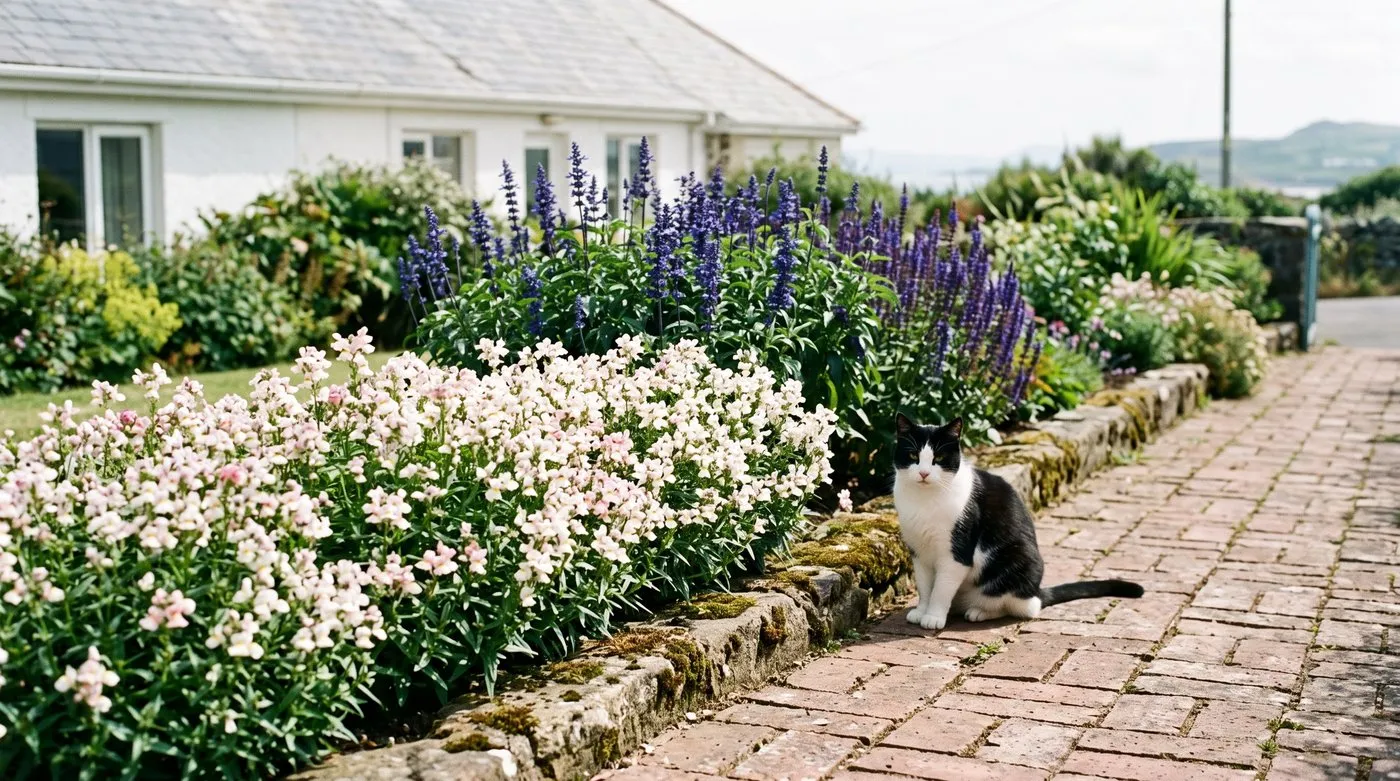
At the front of a sunny, well-drained border, nemesias make a neat, flowery edge all summer.
They need free-draining soil. On heavy clay they sulk and rot, so grow them in pots or a raised bed instead. They don’t do well in shade. For other low, sunny edging plants, see the best annual bedding plants.
Watering and feeding
Pots in full sun dry out quickly, so check them daily in summer. Water when the top of the compost feels dry, and make sure the pot drains freely. Soggy compost is a common way to lose them.
Feed pots every two weeks with a high-potash liquid feed, such as tomato feed at half strength. Too much feed gives lots of leaves and fewer flowers. Plants in the ground usually need no feed at all.

Pots in full sun can need water every day in summer. Let any excess drain away.
Deadheading and the midsummer cut-back
Deadhead often by pinching off faded flower spikes just below the spent flowers. That stops the plant setting seed and keeps new buds coming.
Most nemesias slow down after their first big flush, often in July. When that happens, cut the whole plant back by about half with scissors. Water, give a liquid feed and wait. Within a few weeks, fresh shoots appear and a second flush of flowers follows, often lasting into autumn.

Pinch faded spikes off regularly and the plant keeps pushing out fresh buds.
Can nemesias survive winter?
Annual nemesia dies off in autumn, so just compost it.
Perennial types cope with light frost if they’re dry. It’s winter wet that usually kills them. To give them the best chance:
- Move pots against a sunny house wall, or into a porch, cold frame or greenhouse
- Raise pots on feet so they drain freely
- Water only very lightly in winter
- Trim off straggly growth in spring once new shoots appear
The safest back-up is cuttings. In late summer, take short non-flowering shoots, remove the lower leaves and push them into pots of gritty compost. Keep them somewhere frost-free and bright over winter, ready to plant out next May. The guide to overwintering plants covers more options.
Nemesia month by month
| Month | What to do |
|---|---|
| January to February | Keep overwintering cuttings frost-free and on the dry side |
| March | Sow annual nemesia under cover |
| April | Sow more seed. Prick out seedlings. Buy plug plants |
| May | Harden off. Plant out after the last frost. Pinch out tips |
| June | Deadhead. Water pots daily in warm spells. Feed every two weeks |
| July | Cut back by half when flowering slows. Feed |
| August | Second flush begins. Take cuttings of perennial types |
| September | Keep deadheading. Stop feeding late in the month |
| October | Compost annuals. Move perennial pots to shelter |
| November to December | Keep sheltered pots barely moist |
Common nemesia mistakes
Planting too early. A late frost can kill young plants. Wait until mid to late May.
Skipping the pinch. Unpinched plants grow tall and leggy with fewer flowers.
Giving up in July. Plants that stop flowering are usually just resting. Cut them back by half rather than pulling them out.
Heavy, wet soil. Nemesias rot in soggy ground or compost. Add grit and use pots on heavy clay.
Too much shade. They need sun to flower well. Give them the brightest spot you have.
Frequently asked questions
Are nemesias annuals or perennials in the UK?
Both kinds are sold. Annual nemesia is grown from seed and lasts one summer. Perennial types, such as ‘Wisley Vanilla’, can live for a few years if they get through winter. Many gardeners still treat them as summer plants and replace them each spring.
What is the best nemesia variety for UK gardens?
For scent, ‘Wisley Vanilla’ is hard to beat. ‘Confetti’ gives soft pink flowers, and ‘Myrtille’ is a lovely lilac-blue. For bright colours in a sunny pot, try the Sunsatia range. For seed, ‘KLM’ and Carnival mixes are easy.
How do I keep nemesias flowering all summer?
Deadhead often and cut them back in midsummer. Pinch out the tips at planting time. When flowering slows in July, trim plants back by about half, water and feed. Fresh shoots and a new flush of flowers follow in a few weeks.
Can nemesias survive UK winters outdoors?
Perennial types sometimes can, in mild areas. They cope with light frost in a sheltered, sunny spot with free-draining soil, but winter wet kills them. Move pots against a house wall or under cover, and take cuttings in late summer as back-up.
Do nemesias attract bees?
Yes, bees visit nemesias regularly. The open, lipped flowers give them easy access. Plants that are deadheaded keep flowering for months, which means a long supply of food for bees through summer.
Why has my nemesia stopped flowering?
Usually it has gone over after its first flush, or it’s too dry or shady. Cut the plant back by about half, water well and give a liquid feed. Make sure it gets several hours of sun a day.
For more fragrant plants to put by a seat or doorway, read our guide to the best scented plants for UK gardens, or browse all our plant guides.
Our team produces practical UK gardening guidance from source research, contributor records and established horticultural practice. Editorial standards are overseen by Matt W.