Key takeaways
- Cobaea can climb 3-5m in a single summer, so it covers a fence or arch fast
- Sow early, in February or March at 18-21°C, or it may not flower before frost
- Push the flat seeds into the compost on their edge so they don't rot
- Plant out after the last frost, in full sun, against 2-3m of trellis or netting
- Feed with a high-potash tomato feed from July for flowers rather than leaves
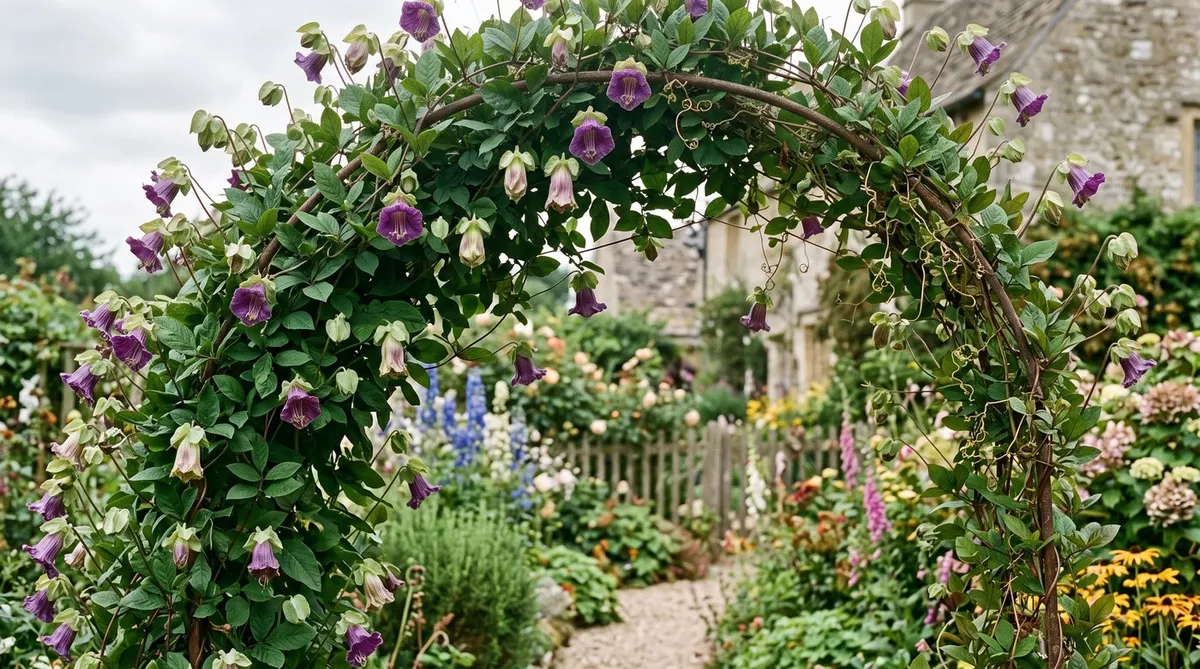
Cobaea, the cup-and-saucer vine, is one of the quickest climbers you can grow from seed. Sow it indoors early in spring, plant it out after the last frost, and it can scramble 3-5m up a fence or arch by autumn. The flowers are the joy: bells that open creamy-green and turn rich purple, each sitting on a frilly green “saucer”.
Cobaea scandens comes from Mexico, so frost kills it. In the UK it’s grown like a half-hardy annual and sown fresh each year. The one thing to get right is an early start. Sown late, it makes plenty of leaf but may not flower before the frosts. Unlike the permanent climbers in our guide to fast-growing climbers for fences and walls, cobaea gives quick cover for one summer, then you start again.
What does cobaea need to grow well?
Cobaea needs sun, warmth, shelter and a long season. Give it those and it romps away.
- Sun: Full sun, ideally a south- or west-facing fence or wall.
- Warmth: It sulks in cold weather and any frost kills it. Plant out only once nights are reliably frost-free.
- Soil: Fertile soil that drains well but doesn’t dry out. Dig in some garden compost before planting.
- Shelter: Strong wind tears the soft growth. A wall or fence gives shelter as well as support.
- Pots: It grows in a large pot, at least 30cm across, with a tall support. Pots need watering often in summer.
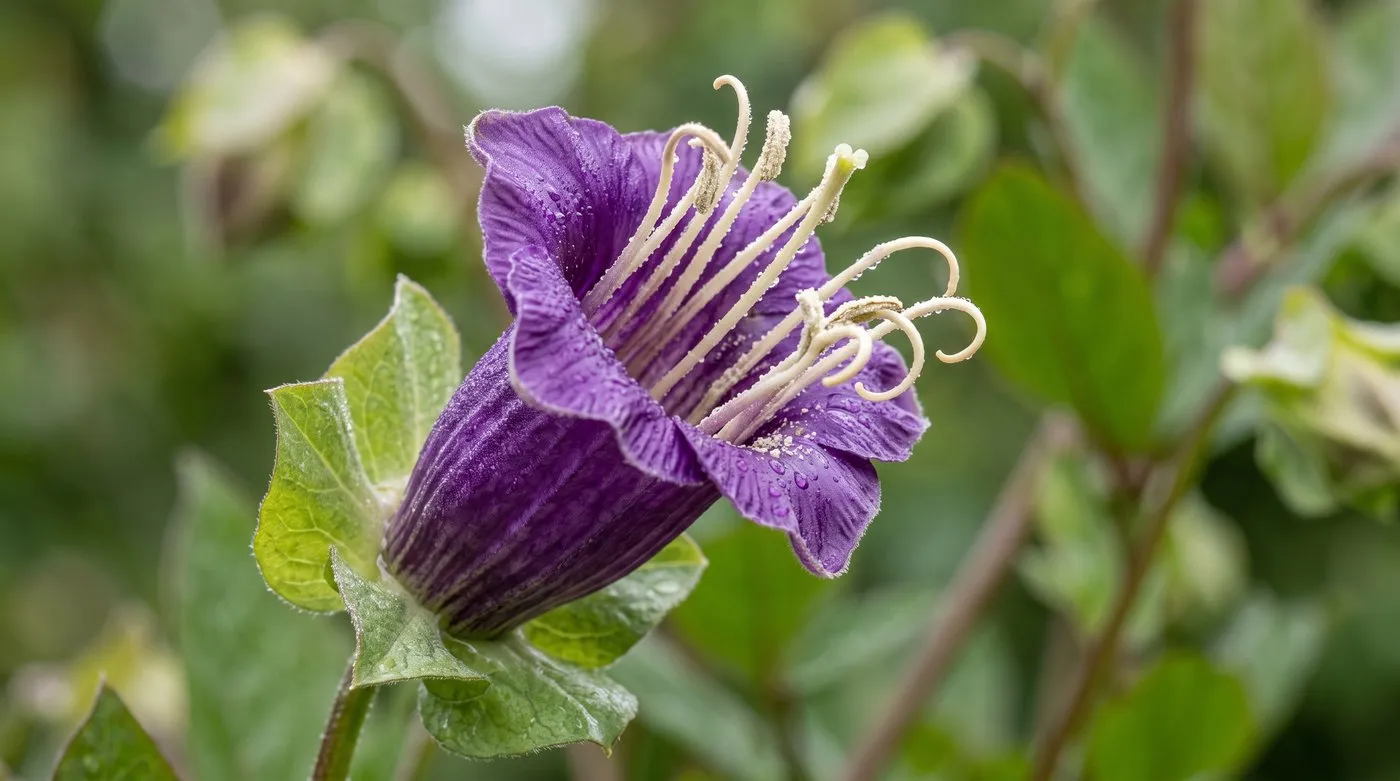
The leafy green “saucer” under each bell gives the cup-and-saucer vine its name.
How to sow cobaea seed
Sow cobaea indoors in February or March, at about 18-21°C. January sowings work if you have a heated greenhouse or grow light. Anything sown much after March may run out of season before it flowers.
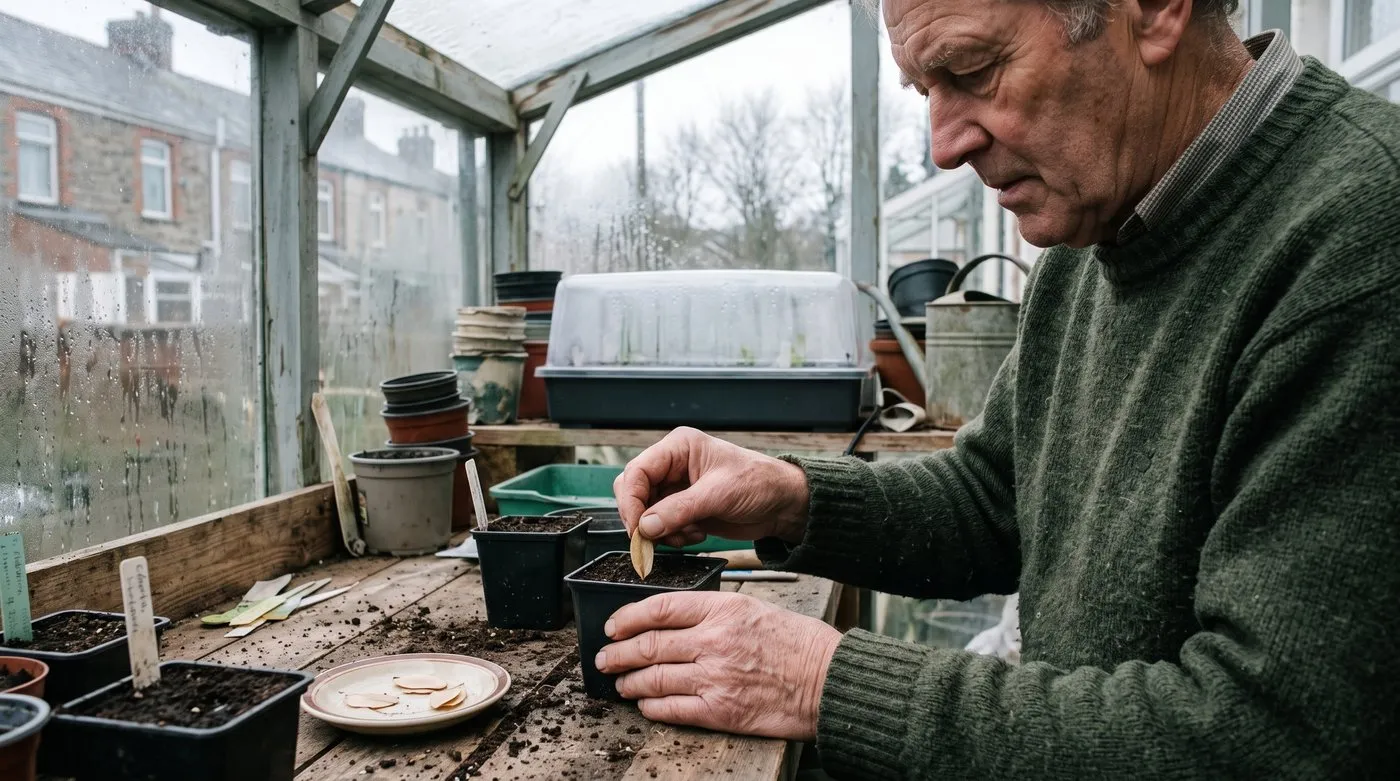
Standing the flat seeds on their edge stops water sitting on them, so they’re far less likely to rot.
The seeds are large, flat and papery. Laid flat on wet compost, they tend to rot. Sowing them on their edge fixes this.
- Fill small individual pots with seed compost and water them first.
- Push each seed into the compost on its edge, so the top edge is just covered.
- Put the pots in a propagator or on a warm windowsill at 18-21°C.
- Keep the compost just moist, not wet.
- Expect seedlings in two to three weeks. Germination is often patchy, so sow a few extra.
- Pot on into bigger pots as soon as roots fill the first ones.
- Give each plant a small cane to climb and pinch out the tip at about 20cm to make it bushier.
Our guide to sowing seeds indoors covers propagators, light and watering in more detail.
Gardener’s tip: Sow two or three seeds more than you need. Cobaea germination is unpredictable, and spare plants are easy to give away.
Planting out and support
Plant cobaea out in late May or early June, once the last frost has passed. Wait until early June in the north and in cold gardens. Harden plants off for 10-14 days first, putting them outside by day and bringing them in at night. Our guide to hardening off seedlings has a simple routine.
Cobaea climbs with branched tendrils with hooked tips. They need something thin to grab, such as trellis, netting, wires or the slim uprights of an obelisk. Give it a support at least 2-3m tall. On a smooth wall or a thick post, add wires or netting first.
- Plant at the foot of the support, 45-60cm apart if you’re growing more than one.
- Water in well.
- Tie the first shoots in loosely with soft twine.
- Once the tendrils get a grip, the plant climbs on its own.
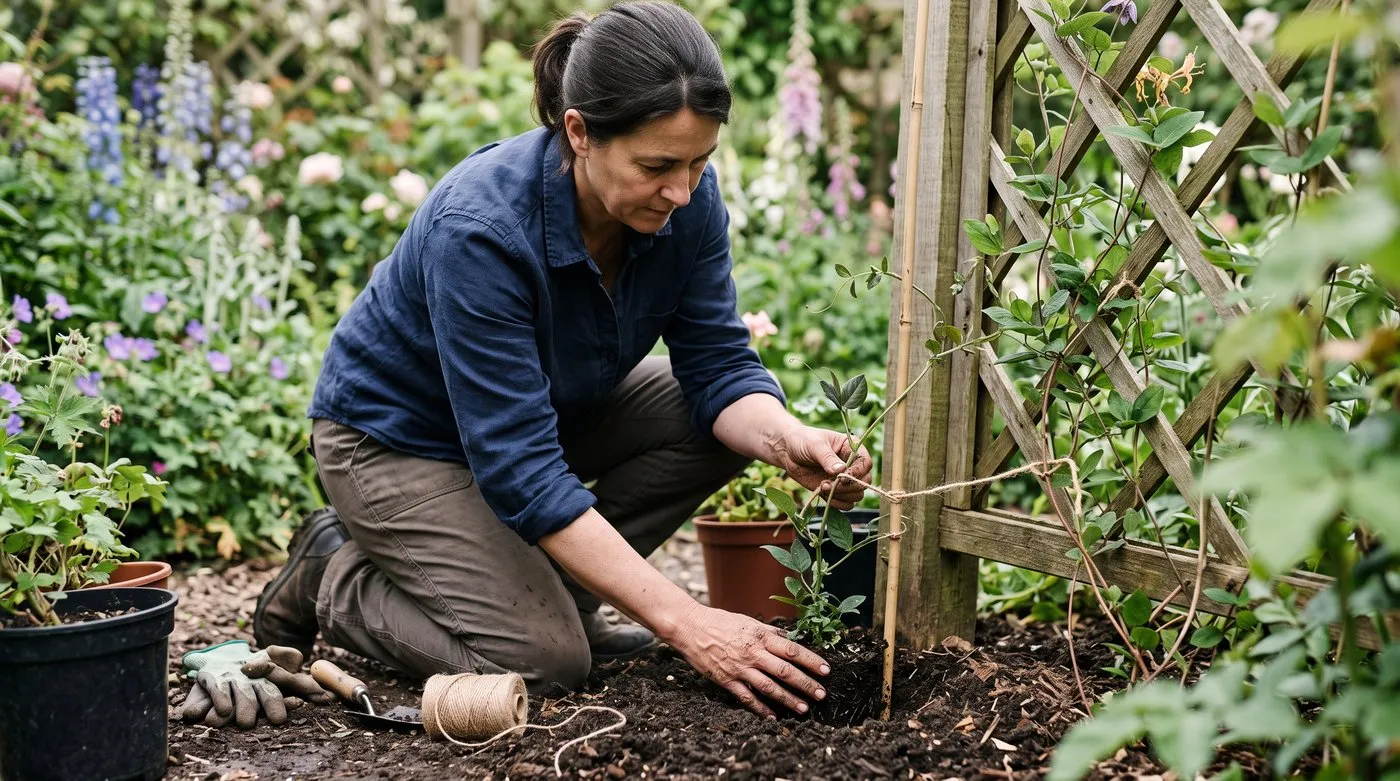
Tie the first shoots in loosely. Once the tendrils catch hold, cobaea does the rest.
One plant covers a lot of ground. It can smother a small wigwam or a neighbouring shrub by late summer, so give it its own support. An obelisk in a border is a great way to grow it, and our guide to garden obelisk ideas has designs that suit.
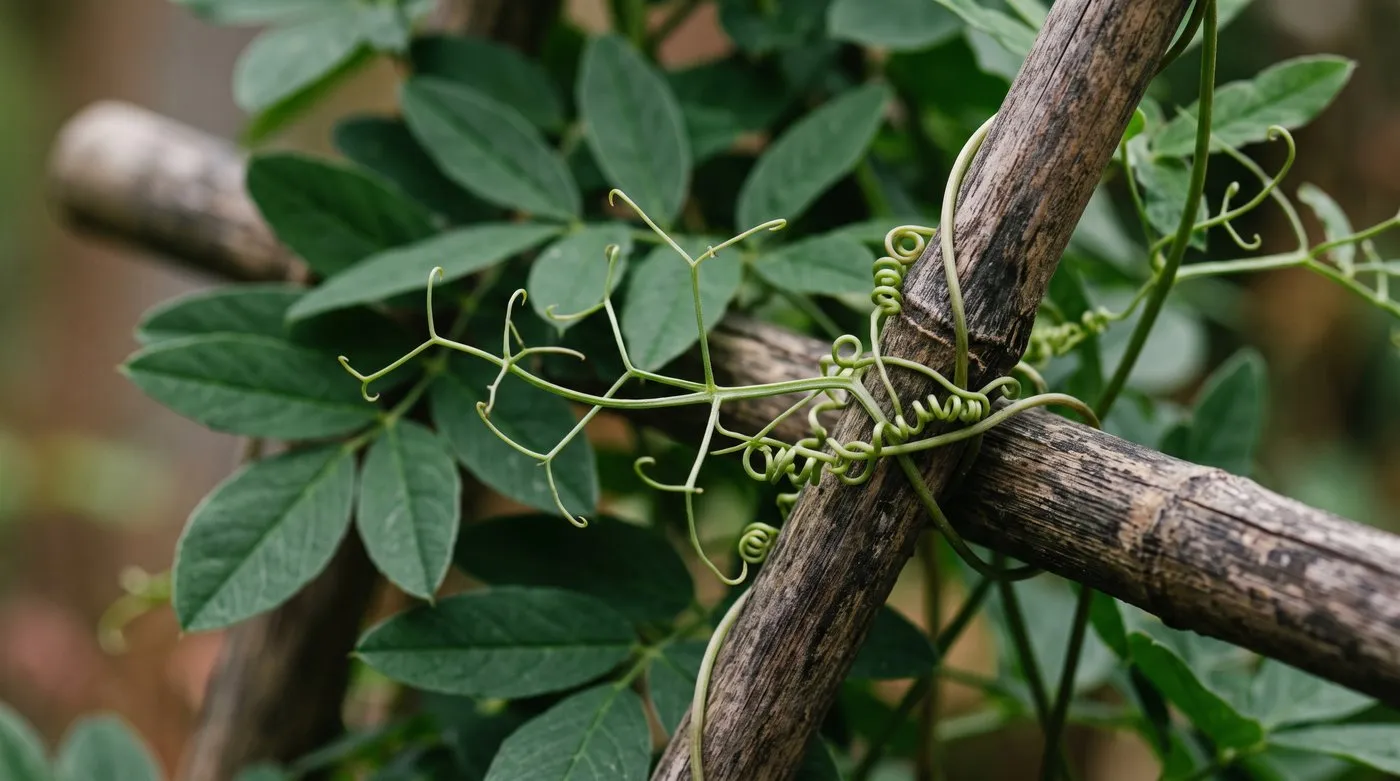
The hooked tendrils grip thin supports, so wires, netting and trellis work far better than a flat wall.
Watering and feeding for flowers
Cobaea is hungry and thirsty once it gets going in July. Water deeply in dry spells, especially against a warm wall or in a pot. Dry roots slow it down and cut flowering.
Feed for flowers, not leaves. A high-nitrogen feed gives you a wall of leaves and very few flowers. From July, use a high-potash feed, such as tomato feed, every 10-14 days. Potash encourages flowering.
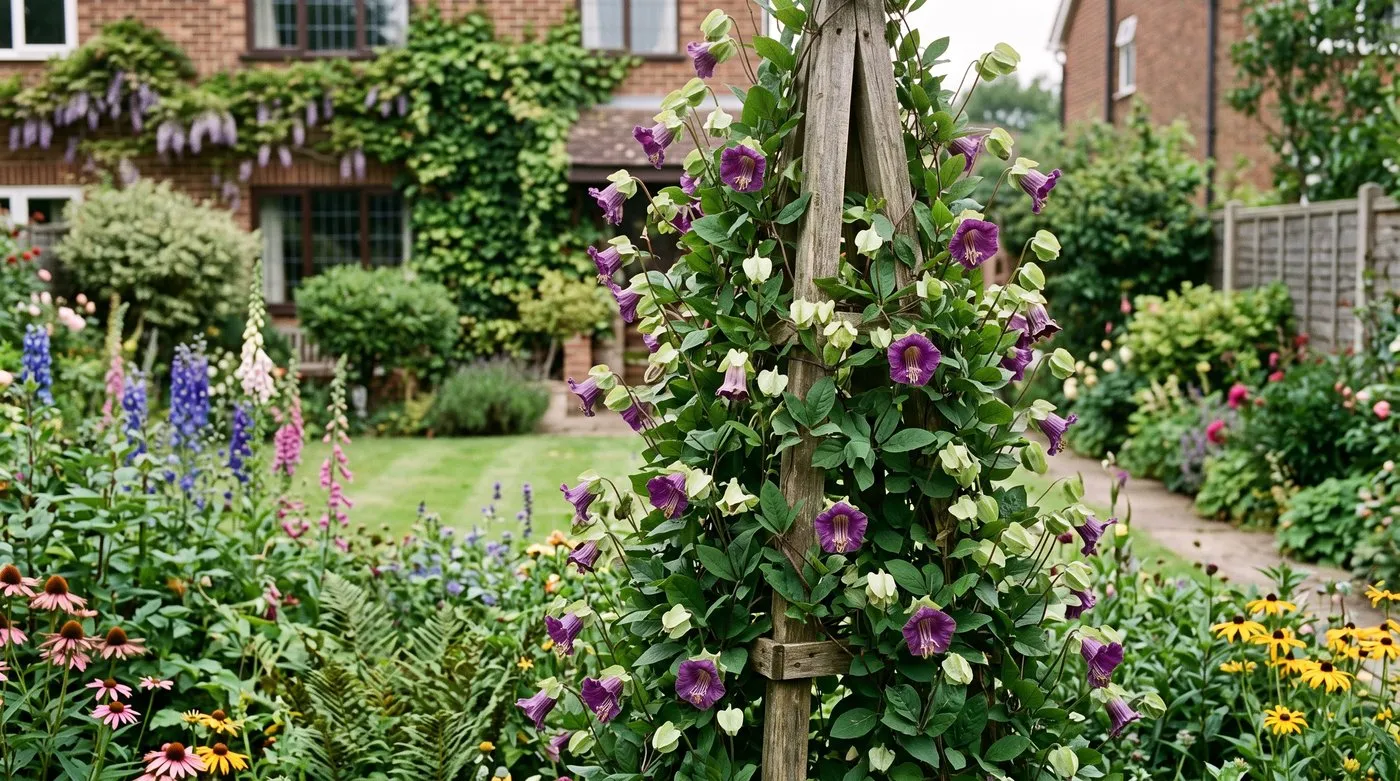
Regular tomato feed from July keeps the flowers coming until the first frost.
Cobaea flowers through the season
Cobaea usually starts flowering in late summer and keeps going until the first frost. Each flower opens a pale creamy-green, then slowly turns deep violet-purple over a few days. You’ll see both colours on the vine at once.
There’s also a white form, Cobaea scandens f. alba, whose flowers stay greenish-white. It suits pale colour schemes where purple would clash. Bees visit the open bells in late summer.
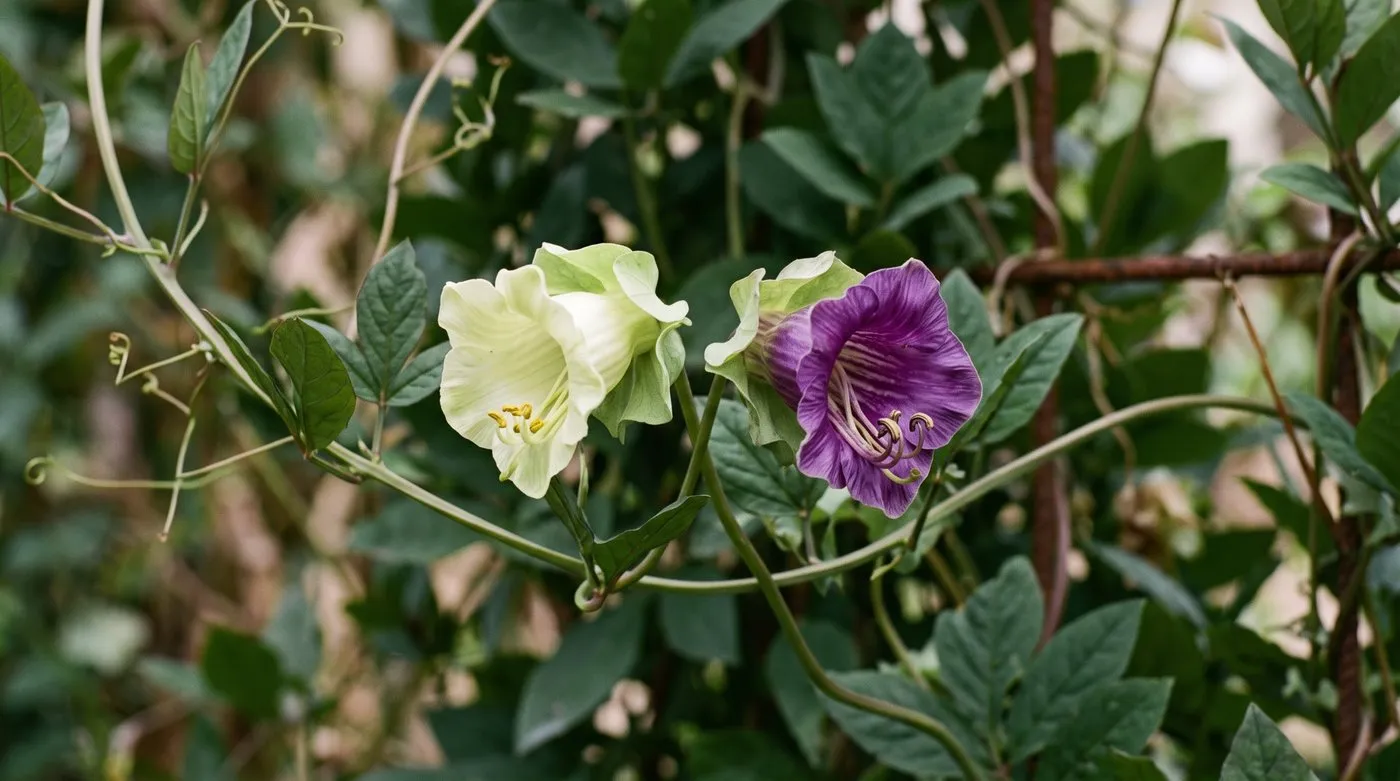
Flowers open creamy-green and turn purple as they age, so the vine shows both colours together.
Cobaea compared with other annual climbers
Cobaea is the tallest and latest-flowering of the common annual climbers. If you want scent or an earlier show, one of the others may suit better.
| Climber | Height in one season | Flowers | Hardiness | Good for |
|---|---|---|---|---|
| Cobaea | 3-5m | Late summer to frost | Half-hardy | Fast, tall cover |
| Sweet pea | About 2m | Early to late summer | Hardy annual | Scent and cutting |
| Morning glory | 2-3m | Summer to autumn | Tender | Bright trumpets on a sunny fence |
| Canary creeper | 2-3m | Summer to autumn | Half-hardy | Light cover, frilly yellow flowers |
| Black-eyed Susan vine | 1.5-2m | Summer to autumn | Tender | Pots and small trellis |
For scent, grow some sweet peas alongside. Our guide to growing morning glory covers another quick summer climber for a sunny fence.
Common problems with cobaea
- No flowers: usually a late sowing. Sow in February or March next year and switch to a high-potash feed.
- Slugs and snails: they love the soft young growth just after planting out. Protect plants for the first few weeks. Our guide to getting rid of slugs has options that work.
- Wind damage: soft growth tears on exposed sites. Plant against a sheltered fence or wall.
- Aphids and red spider mite: mainly a problem under glass in warm, dry air. Rinse aphids off with water and damp down greenhouse paths in hot weather.
Common mistakes with cobaea
- Sowing too late. Seed sown in April or May often doesn’t flower before frost. Sow in February or March.
- Laying the seeds flat. They rot on wet compost. Push them in on their edge.
- Feeding high-nitrogen fertiliser. Lots of leaf, few flowers. Use tomato feed from July.
- Planting out too early. One frost kills it. Wait until late May or June and harden off first.
- A weak or smooth support. The tendrils need something thin to grip, and a big plant needs 2-3m of height.
Cobaea calendar
| Month | What to do |
|---|---|
| January | Sow only with a heated greenhouse or grow light |
| February to March | Main sowing time. Seeds on their edge at 18-21°C |
| April | Pot on. Pinch out tips at about 20cm. Keep frost-free |
| May | Harden off. Plant out after the last frost in mild areas |
| June | Plant out in colder areas. Tie in shoots |
| July | Fast growth. Water well. Start a high-potash feed |
| August to September | Flowering starts. Keep feeding and watering |
| October | Flowers until frost. Collect any ripe seed pods |
| November | Frost kills the plant. Pull it out and compost it |
| December | Order seed for next year |
Frequently asked questions
How fast does cobaea grow?
Very fast once summer warmth arrives. From an early indoor sowing it can reach 3-5m by autumn. That makes it one of the quickest climbers for covering a fence, arch or trellis in a single season.
Is cobaea an annual or a perennial?
It’s a tender perennial, usually grown as an annual in the UK. Frost kills it, so most gardeners sow fresh seed each spring. You can try keeping a potted plant in a frost-free greenhouse over winter.
Why is my cobaea not flowering?
Usually because it was sown too late. Cobaea needs a long season before it flowers, so sow in February or March. Too much nitrogen feed, shade or a cool summer also hold flowering back.
When should I sow cobaea seeds?
Sow indoors in February or March at 18-21°C. Push each large, flat seed into the compost on its edge. Germination can take two to three weeks and is often patchy, so sow a few spares.
What support does cobaea need?
A sturdy support 2-3m tall, such as trellis, netting, wires or an obelisk. It climbs with branched, hooked tendrils that need something thin to grip. A smooth wall or thick post needs wires or netting added first.
Does cobaea come back every year?
Not usually in the UK. Frost kills it each winter, so treat it as an annual and sow fresh seed every spring. Collect seed in autumn if any pods ripen before the frost.
Need a screen that lasts longer than one summer? Our pick of climbers to cover an ugly fence fast includes permanent options, and the plants hub has many more growing guides.
Our team produces practical UK gardening guidance from source research, contributor records and established horticultural practice. Editorial standards are overseen by Matt W.