
Key takeaways
- Soak or nick the hard seeds, then sow indoors in April at about 20°C
- Plant out after the last frost, from late May in the south and early June further north
- Give it the warmest, sunniest, most sheltered spot you have
- Use thin canes, strings or netting, as the stems can't grip thick posts
- Feed with tomato food, not a high-nitrogen feed, for flowers rather than leaves
- The seeds are poisonous, so keep packets away from children and pets
Morning glory is a fast annual climber with trumpet flowers that open each morning and fade by the afternoon. Grow it from seed sown indoors in April, plant it out after the last frost, and give it the warmest, sunniest wall you have. In a good summer it covers a fence or wigwam with flowers from midsummer until the first frost.
The trick in the UK is warmth. A sunny, sheltered spot makes all the difference. This guide covers the best varieties, how to sow, what to grow it up, and why it sometimes refuses to flower.
What is morning glory?
Morning glory is the common name for several climbing Ipomoea species. They are tender plants from warm parts of the Americas, so in the UK they are grown as half-hardy annuals: sown each spring and killed by the first frost.
It belongs to the same family as bindweed, and the flowers look similar. Unlike bindweed, garden morning glory doesn’t survive our winters or spread by roots. If you have trumpet flowers you didn’t plant creeping through a hedge, see the guide to getting rid of bindweed.
Which morning glory varieties grow best in the UK?
Heavenly Blue is the classic choice. For cooler gardens, Grandpa Ott is often easier to flower. Here’s how the popular varieties compare:
| Variety | Species | Flowers | Good to know |
|---|---|---|---|
| Heavenly Blue | Ipomoea tricolor | Large, sky-blue, pale throat | Needs a warm, sheltered wall |
| Flying Saucers | Ipomoea tricolor | Blue streaked with white | Same warmth as Heavenly Blue |
| Grandpa Ott | Ipomoea purpurea | Deep purple, red star in the centre | Copes better with cooler summers |
| Carnevale di Venezia | Ipomoea purpurea | White streaked with pink and purple | Every flower different |
| Scarlett O’Hara | Ipomoea nil | Bright red | Wants the warmest spot or a conservatory |
| Moonflower | Ipomoea alba | Large, white, scented, opens at dusk | Needs a long, warm season |
Ipomoea purpurea types are generally the most forgiving in a so-so British summer.

Grandpa Ott covers a cane wigwam on an allotment. Purple types like this cope better with a cooler summer than sky-blue ones.
How to prepare morning glory seeds
Morning glory seeds have a hard coat that keeps water out, so they can be slow and patchy to come up. A little preparation helps.
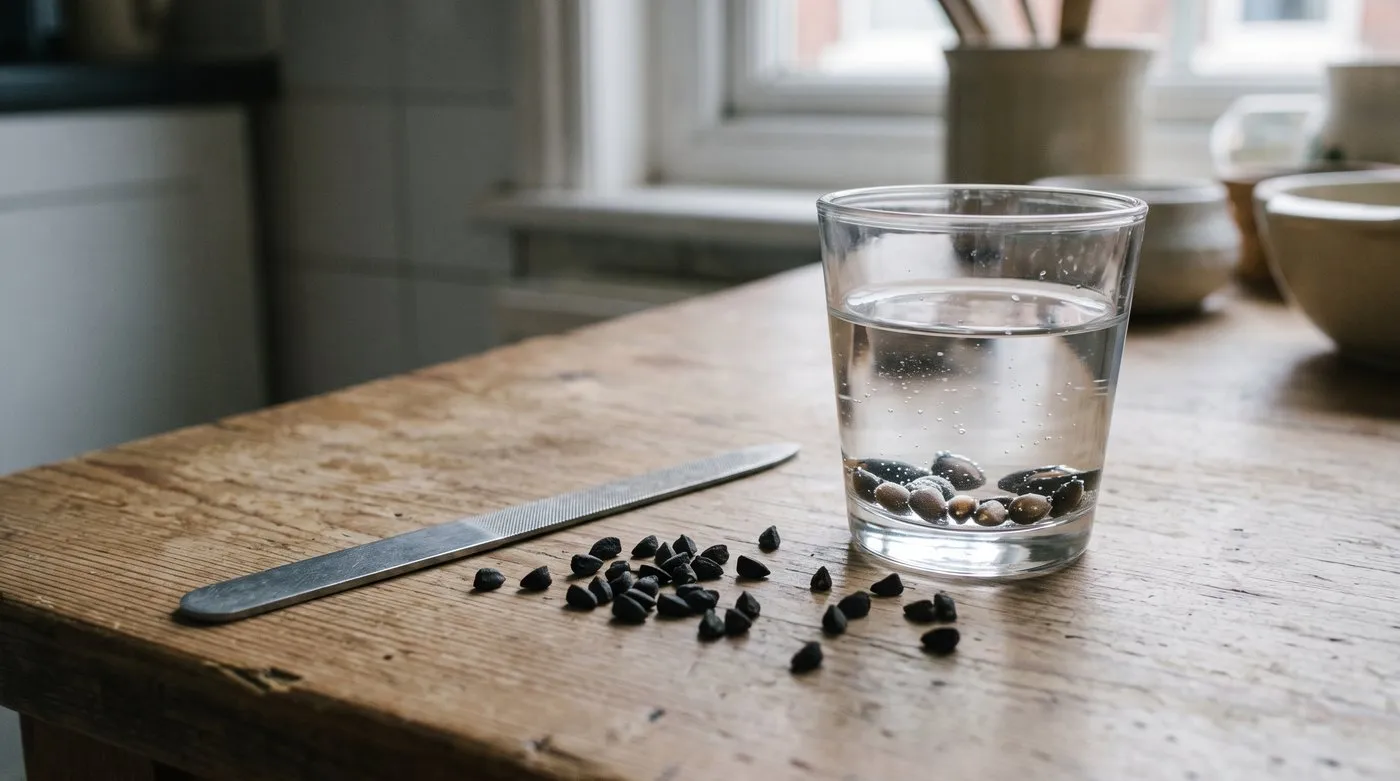
Seeds that have soaked overnight swell up. Those are the ones ready to sow.
- Soak: leave seeds in a cup of warm water overnight. Sow the ones that have swollen. Soak any that haven’t for a few more hours.
- Nick: for stubborn seeds, carefully scratch the coat with a nail file or rub them between two sheets of sandpaper first. Then soak.
Only soak what you’ll sow straight away.
Warning: Morning glory seeds are poisonous if swallowed, to people, dogs and cats. Keep packets and soaking dishes out of reach, and wash your hands after handling them.
Sowing morning glory indoors
Sow indoors in April. That gives sturdy plants ready to go out once frosts are over. Sowing much earlier gives leggy plants that sulk on the windowsill.
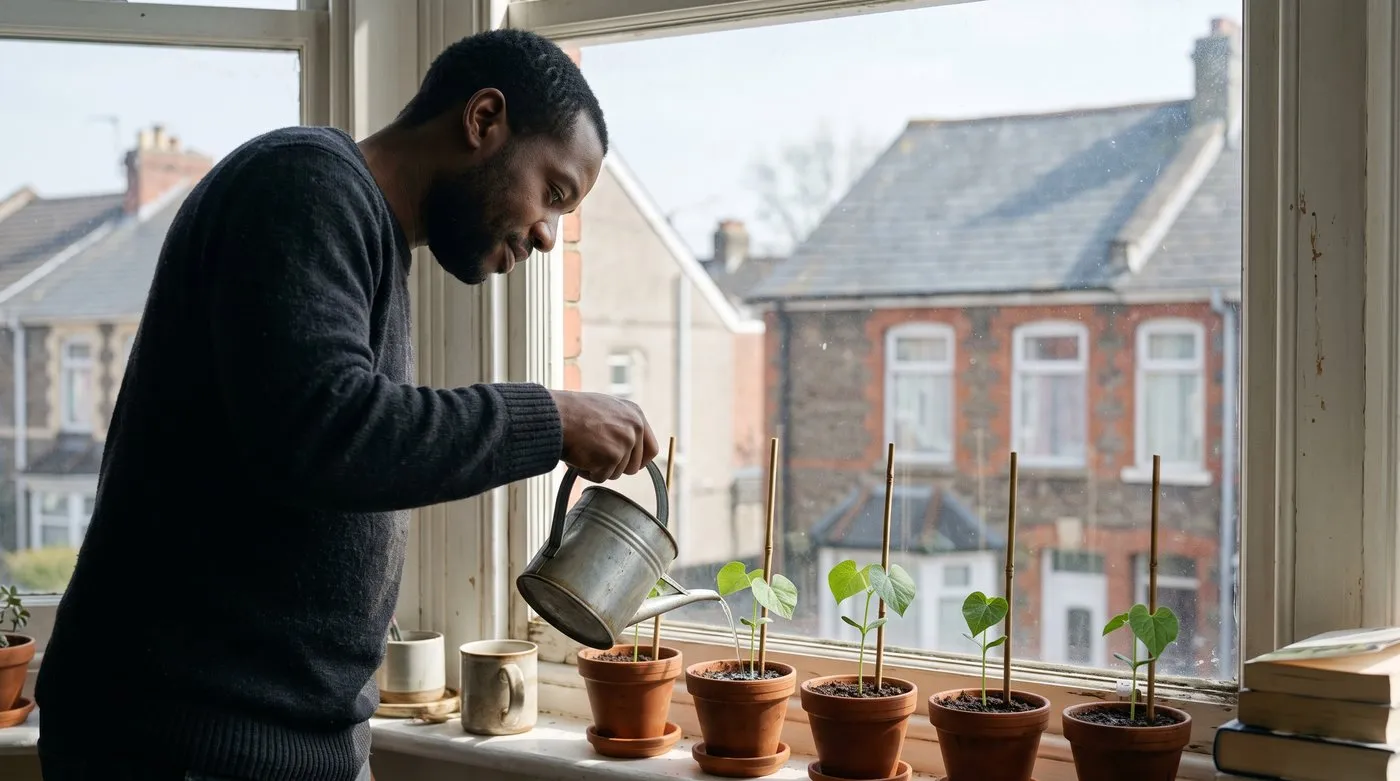
One seed per pot means no fiddly pricking out. A short cane gives the first tendrils something to grab.
- Fill small pots with peat-free seed or multipurpose compost.
- Sow one prepared seed per pot, about 1-2cm deep.
- Keep them warm, at about 20°C, in a propagator or on a warm windowsill.
- Seedlings usually appear within one to two weeks.
- Once up, keep them in good light but a little cooler, so they don’t stretch.
- Push a short cane into each pot, as they start twining early.
Morning glory dislikes root disturbance, so sowing straight into its own pot saves potting on. The guide to growing annuals from seed covers the basics if you’re new to sowing.
When to plant out morning glory
Plant out after the last frost: late May in the south, early June in colder and northern areas. Harden plants off first by putting them outside during the day for a week or two. The guide to hardening off half-hardy plants explains how.
A cold snap after planting can stall morning glory for weeks. If the weather turns chilly, wait. A late planting into warm soil soon catches up with an early one that got a chill.
Space plants about 30cm apart at the foot of their support. Water them in well.
Where to plant morning glory and what to grow it up
Position matters more than anything else. Choose a south or south-west-facing wall or fence, or a sheltered, sunny spot in the border. Courtyards and walled gardens hold warmth and give far more flowers than open, windy sites. North-facing spots rarely flower well.
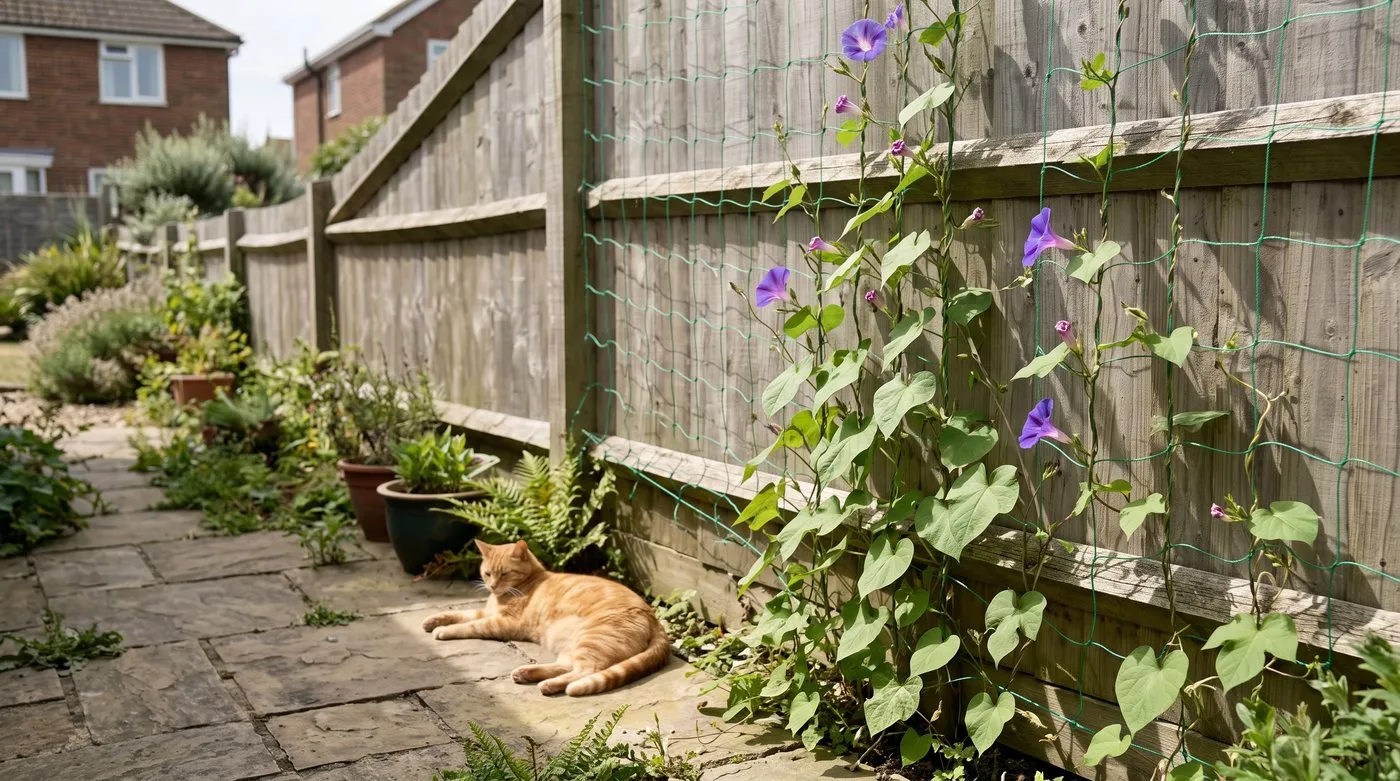
Netting on a sunny fence gives the thin stems plenty to twine around. Cats love a warm spot too.
Morning glory twines: the stems wind around thin supports. Give it:
- A wigwam of bamboo canes in a border or large pot. A garden obelisk works well too.
- Netting or strings fixed to a wall or fence.
- Trellis, with a few strings added if the slats are wide.
It can’t twine around thick, smooth posts. Guide young shoots onto their support, and tie in any that wander.
Pinching out and caring for morning glory
Pinch out the tip once, when the young plant has a few pairs of leaves. This gives a bushier plant with more stems to flower. Don’t pinch again once buds appear, as it delays flowering.
Water well in dry spells, at the base rather than over the leaves. Plants in pots may need watering every day in hot weather.
Feed with tomato food every week or two once the plant is growing strongly. Avoid high-nitrogen feeds, fresh manure and very rich soil. They give a mass of leaves and few flowers.

Nip out the tip just above a pair of leaves. New shoots soon grow from below, giving more stems to flower.
Growing morning glory in pots
Morning glory grows well in a pot on a sunny patio or balcony. Use a pot at least 30cm across with a cane wigwam or obelisk. A bigger pot holds two or three plants.
Fill it with peat-free multipurpose compost. Water often in summer, as pots dry quickly, and feed with tomato food once buds form. Stand the pot against a warm, sheltered wall. In a cold area, an unheated greenhouse, conservatory or polytunnel gives the best chance of a good show.

A big pot and a warm, sheltered balcony can give a fine display, even in a city flat.
Moonflower: morning glory for evenings
Moonflower (Ipomoea alba) is a cousin with large, white, scented flowers that open at dusk and stay open through the night. Moths visit them after dark.
It needs a longer, warmer season than morning glory, so sow it a little earlier, in March or early April, somewhere warm. Grow it on the sunniest wall you have, near a seat you use on summer evenings. Grow it on the same support as a day-flowering variety and you’ll have flowers morning and night.

Moonflowers open as the light fades. Plant them near a patio seat so you can enjoy the scent.
Why your morning glory isn’t flowering
- Not warm enough. A cool, wet summer is the most common cause. Next year, choose a warmer, more sheltered spot.
- Too much shade. It needs several hours of direct sun a day.
- Too much nitrogen. Rich soil, fresh manure and general feeds give leaves instead of flowers. Switch to tomato food.
- Planted out too early. A chilly spell after planting checks growth for weeks.
- Pinched too late. Pinching after buds form delays flowers.
Common mistakes with morning glory
- Sowing too early without enough warmth or light, giving weak, leggy plants.
- Skipping the soak, so seeds come up slowly and unevenly.
- Planting in a cool, shady spot, where it grows but barely flowers.
- Thick supports that the stems can’t twine around.
- Expecting it to come back. It is an annual, so sow fresh each spring.
Morning glory growing calendar
| Month | What to do |
|---|---|
| March | Sow moonflower indoors somewhere warm |
| April | Soak and sow morning glory indoors, one seed per pot |
| May | Pinch out tips once. Harden off. Plant out from late May in the south |
| June | Plant out in colder areas. Tie young shoots onto supports |
| July | Flowers begin in a warm summer. Feed with tomato food. Water well |
| August | Main flowering. Keep watering and feeding |
| September | Flowering continues. Leave a few pods to ripen for seed |
| October | Collect dry pods. Pull out plants after the first frost |
Saving morning glory seed
Leave a few flowers to form pods in late summer. Pick the pods when they are brown, papery and dry. Let them finish drying indoors, then shell the seeds and store them in a labelled paper envelope somewhere cool and dry. Keep them well out of reach of children and pets.
If you grew several varieties close together, saved seed may give mixed colours. That can be part of the fun.
Frequently asked questions
When should I sow morning glory seeds in the UK?
Sow morning glory seeds indoors in April. Soak or nick the hard seeds first so they take up water. Sow one seed per small pot and keep it warm, around 20°C. Plant out after the last frost, from late May. Direct sowing outdoors is hit and miss because the soil stays cool for too long.
Why is my morning glory not flowering?
Usually because it isn’t warm or sunny enough. Morning glory needs heat and full sun to flower well, so a cool, wet summer delays it. Too much nitrogen gives leaves instead of flowers. Feed with tomato food and grow it against a warm, sheltered, sunny wall.
Are morning glory seeds toxic?
Yes, morning glory seeds are poisonous if swallowed. They can cause sickness and hallucinations in people and pets. Keep seed packets and soaking dishes out of reach of children, dogs and cats. Get medical or vet advice straight away if any are eaten.
Does morning glory come back every year in the UK?
No, it is grown as an annual and dies with the first frost. It won’t survive a UK winter outdoors. Sow fresh seed each spring, or save seed from ripe, dry pods in autumn.
What support does morning glory need?
It needs thin canes, strings or netting to twine around. A wigwam of bamboo canes works well in a border or big pot. On walls and fences, use netting or trellis with vertical strings. The stems slip on thick, smooth posts, so guide young shoots on until they take hold.
Can I grow morning glory in pots?
Yes, use a pot at least 30cm across with a cane wigwam or obelisk. Fill it with peat-free multipurpose compost. Water often in summer and feed with tomato food once buds form. Stand the pot in a warm, sheltered, sunny spot.
Should I pinch out morning glory?
Yes, pinch out the tip once, when the plant has a few pairs of leaves. This gives side shoots and a bushier plant with more flowering stems. One early pinch is enough. Don’t pinch once flower buds start to form.
What is the difference between morning glory and moonflower?
Morning glory flowers open in the morning; moonflower opens at dusk. Moonflower (Ipomoea alba) has large, scented white flowers that stay open through the night. Both are tender climbers in the same family and need the same warm, sunny spot. Moonflower needs a longer, warmer season to flower well.
Want another annual climber that copes with cooler summers? Read the guide to growing cup-and-saucer vine (cobaea), see more climbers to cover an ugly fence fast, or browse more how-to guides.
Our team produces practical UK gardening guidance from source research, contributor records and established horticultural practice. Editorial standards are overseen by Matt W.


