
Key takeaways
- Plant out after the last frost, from late May in the south and early June in the north
- Give it full sun and free-draining compost; it sulks in shade and wet roots
- It drops its own dead flowers, so you never need to deadhead
- Feed weekly with high-potash tomato feed from June and water daily in summer
- Yellow leaves with green veins mean iron shortage; treat with sequestered iron and use rainwater
- Pinch young plants once and trim leggy ones in midsummer to keep them bushy
Calibrachoa, sold as Million Bells, is the trailing basket plant that flowers from early summer to the first frost without any deadheading. It looks like a tiny petunia and spills over the edges of baskets and window boxes in a sheet of small trumpets.
There’s a catch: it’s a hungry, thirsty plant that sulks if you forget it. Get the planting time, feeding and watering right and it’s some of the best-value summer colour you can grow. This guide also covers the yellow leaves that catch out many growers.
What is calibrachoa?
Calibrachoa is a tender trailing plant from South America and a close relative of the petunia. In the UK it’s grown as summer bedding because frost kills it.
Two things make it a basket favourite. It’s free-flowering, and it’s self-cleaning, meaning dead flowers drop off on their own. Its stems trail down over the edge of baskets, window boxes and mixed pots.
You’ll see several series in garden centres. Million Bells was the first, and Superbells, Cabaret, Aloha and Can-Can are other common ones. They all grow in much the same way, so choose on colour.

Calibrachoa flowers (left) are much smaller than a petunia’s. They drop cleanly when they fade, so there’s no deadheading.
When to plant calibrachoa outside
Plant out only after the last frost. In the south of England, that’s usually from the end of May. In northern England, Wales and Scotland, wait until early June.
If you buy small plug plants in spring, grow them on under cover first. Pot them into 9cm pots and keep them on a bright windowsill or in a frost-free greenhouse. When they have four or five leaves, pinch out the growing tip to make them branch. This gives a fuller basket with more trailing stems.
Before planting out, harden off for a week or so. Put plants outside by day and bring them in at night, then leave them out once frosts are over. The guide to hardening off bedding plants explains the routine.
Warning: Don’t be tempted by the calibrachoa on sale in April. Those plants have been kept under glass. One cold night outside can kill them.
Best position and compost for calibrachoa
Calibrachoa needs full sun to flower well. In shade it grows leggy and flowers thinly. A south or west-facing spot gives the best display.
The compost must drain freely. Calibrachoa hates wet roots. Use a peat-free multipurpose or container compost with a few handfuls of perlite mixed in. Always use pots and baskets with drainage holes.
It also prefers slightly acidic compost. In hard-water areas, using rainwater or mixing in some ericaceous compost helps prevent yellow leaves. The guide to peat-free compost helps you choose a good mix.

A sunny window box suits calibrachoa perfectly. Full sun and free-draining compost give the most flowers.
Watering and feeding for non-stop flowers
This is where most calibrachoa go wrong. It’s hungry and thirsty, and flowering slows quickly if you forget either.
- Water daily in summer, and twice on hot days for baskets in full sun. Keep the compost moist but never soggy.
- Feed weekly from June with a high-potash tomato feed at half strength, or full strength every two weeks.
- Stop feeding in late September as growth slows.
High-potash feed encourages flowers rather than leaves. A high-nitrogen feed gives lots of leaf and fewer blooms. If you’re away a lot, water-retaining crystals in the compost and a self-watering basket help.

Weekly feeding and daily watering give a basket packed with flowers right through the summer.
Why calibrachoa leaves turn yellow
Yellow leaves are the most common calibrachoa problem. If the leaf goes yellow while the veins stay green, it’s almost always iron shortage (iron chlorosis). It shows first on the youngest leaves at the tips.
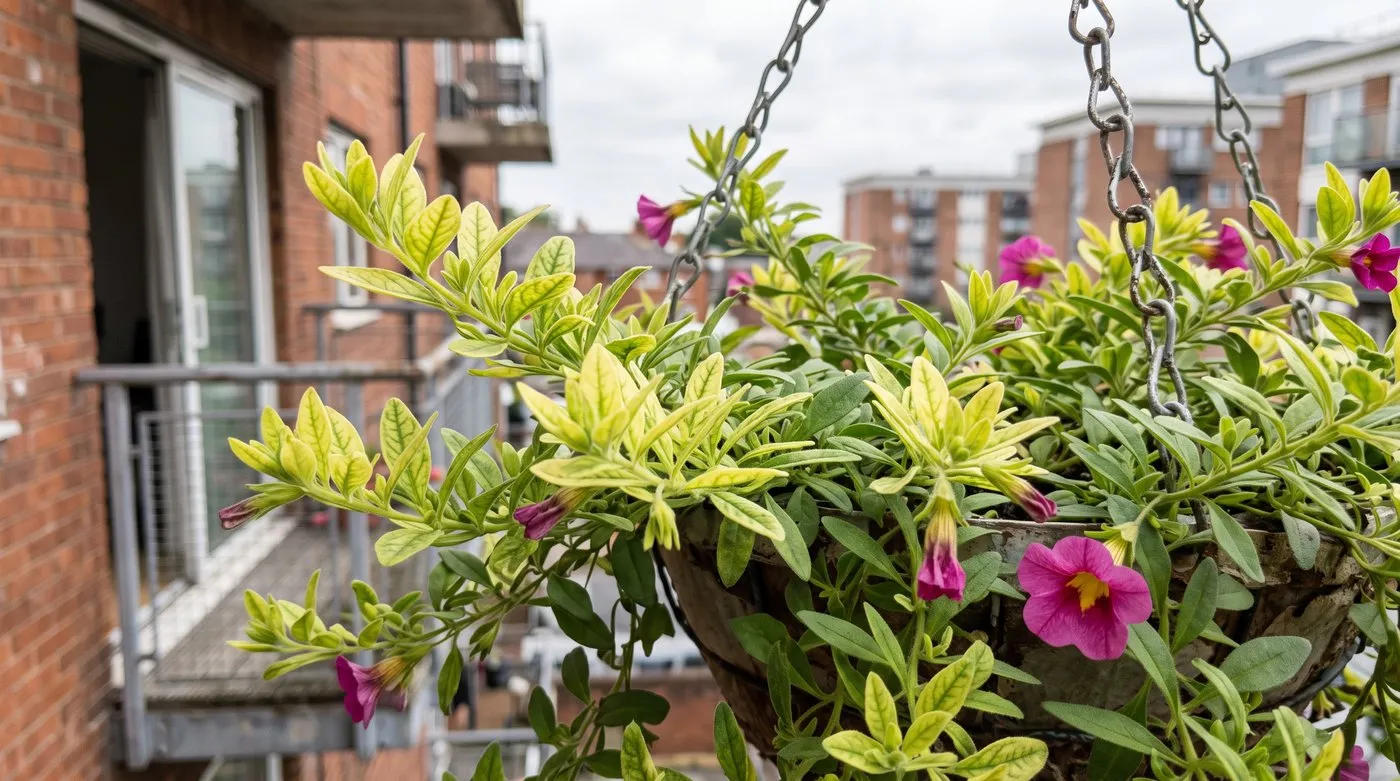
Yellow young leaves with green veins point to iron shortage. Rainwater and sequestered iron usually green them up.
Usually there’s iron in the compost, but the plant can’t take it up. Hard, limy tap water makes the compost more alkaline over the summer, and that locks the iron away. That’s why it’s worst in hard-water areas, and why extra tomato feed doesn’t fix it.
To fix it:
- Water with rainwater where you can.
- Feed with sequestered (chelated) iron, following the label.
- Use an ericaceous feed now and then in hard-water areas.
New growth should green up within a couple of weeks. The guide to chlorosis and yellow leaves covers other causes of yellowing.
Calibrachoa compared with other basket trailers
Calibrachoa isn’t the only trailing basket plant. Here’s how it compares with other popular choices.
| Plant | Flower size | Deadheading | Feeding | Best for |
|---|---|---|---|---|
| Calibrachoa | Small | None | Heavy | Lots of colour with no deadheading |
| Trailing petunia | Large | Some | Heavy | Big flowers and long trails |
| Bacopa | Tiny | None | Moderate | Fine-textured filler, white or lilac |
| Trailing lobelia | Tiny | None | Moderate | Filler, copes with a little shade |
| Ivy-leaved pelargonium | Medium | Some | Light | Copes better if you forget to water |
For bigger flowers, see the guide to growing petunias. Bacopa is a lovely partner that softens the edges of a calibrachoa basket.
Keeping calibrachoa bushy
Two simple cuts keep calibrachoa full rather than straggly.
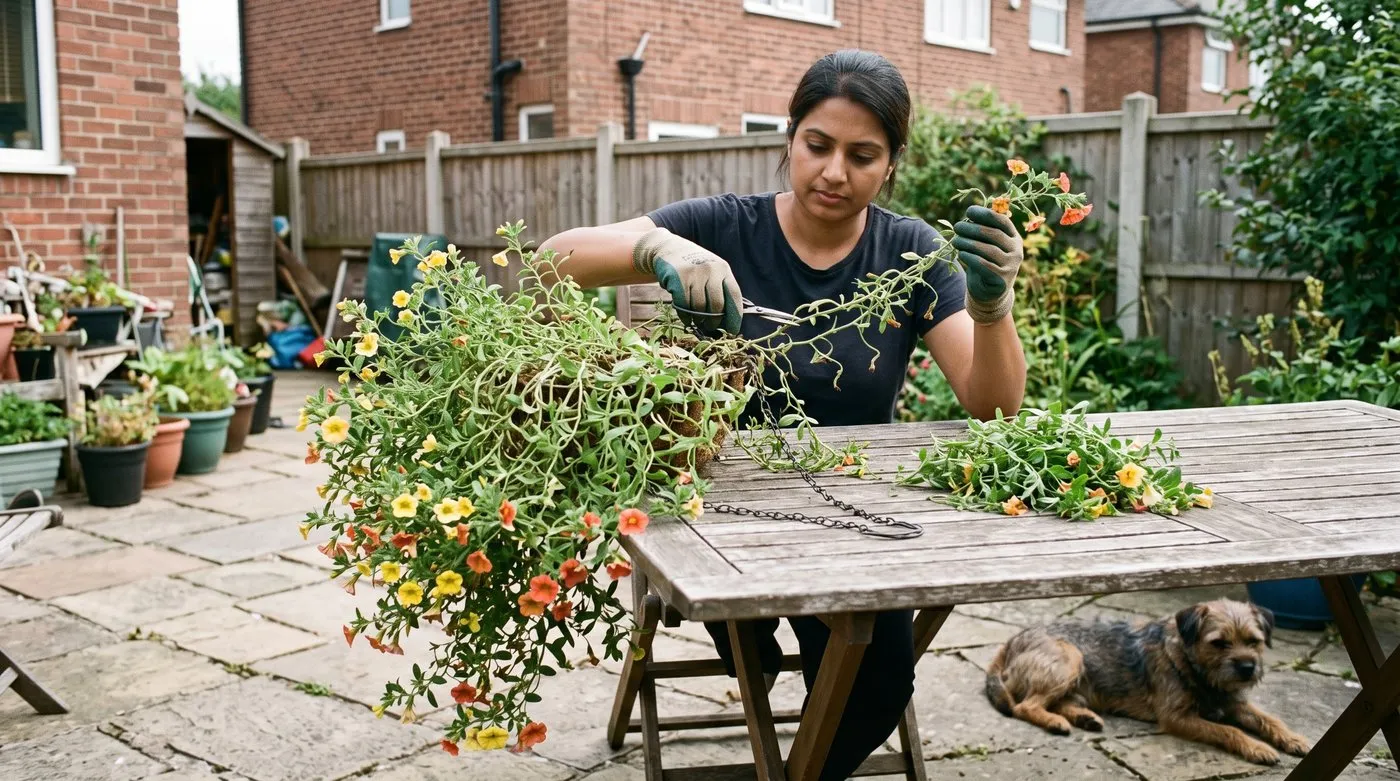
A midsummer trim by about a third, followed by a feed, brings a fresh flush of bushy growth and flowers.
- The early pinch. Nip out the growing tip of young plants when they have four or five leaves. This makes them branch from the base.
- The midsummer trim. By late July, plants can get leggy and flower only at the tips. Trim the whole plant back by about a third. Feed straight afterwards and it soon flushes with new shoots and flowers.
Don’t be timid. Calibrachoa bounces back well from a trim.
Pests and problems to watch for
Calibrachoa is mostly trouble-free, but watch for these:
- Aphids cluster on soft new tips. Squash small colonies or wash them off with a jet of water. The guide to getting rid of aphids has more options.
- Whitefly fly up in a cloud when you brush the plant, especially in sheltered spots. Yellow sticky traps catch the adults. If you need a spray, use an approved product for that use, following the label.
- Root rot from waterlogging is the most serious. Roots turn black and the plant collapses. Prevent it with free-draining compost, drainage holes and no standing water in saucers.

Aphids gather on the softest new shoots first. Squash or wash them off early and they rarely become a problem.
Calibrachoa calendar
| Month | Task |
|---|---|
| March to April | Pot up plug plants and grow on under cover. Pinch tips at four or five leaves |
| May | Harden off. Plant out in the south from the end of the month |
| June | Plant out in the north. Start weekly high-potash feeds. Water daily |
| July | Keep feeding and watering. Trim leggy plants by a third |
| August | Peak flowering. Watch for yellow leaves and treat early |
| September | Stop feeding late in the month. Take cuttings if you want to keep plants |
| October | Move any plants you’re keeping somewhere bright and frost-free |
Common mistakes with calibrachoa
- Planting out too early. One frost can kill it. Wait until late May or June.
- Forgetting to feed. Flowering slows within weeks. Feed weekly from June.
- Ignoring yellow leaves. It’s usually iron lock-up, not hunger. Use sequestered iron and rainwater.
- Letting baskets dry out. A wilted plant loses flowers even after it recovers. Water daily in summer.
- Standing baskets in water. Wet roots rot. Make sure water drains away.
Can you keep calibrachoa over winter?
Yes, if you have a bright, frost-free place. Bring plants in before the first frost, usually in October.
You can lift a plant, cut it back hard and pot it into fresh compost. Keep it in a bright, frost-free greenhouse, conservatory or porch, and water sparingly over winter.
Or take cuttings in late August or early September. Snip 5-7cm non-flowering shoots, strip the lower leaves and root them in gritty compost on a warm, bright windowsill. Small rooted cuttings take up less space than a whole plant.
Ready to plan your baskets? The summer hanging basket recipes show calibrachoa with good partners. Or browse more ideas in the plants section.
Frequently asked questions
When can I plant calibrachoa outside in the UK?
After the last frost, from late May to early June. In the south, plant out from the end of May. In northern England and Scotland, wait until early June. Harden plants off for a week or so first.
Do you need to deadhead calibrachoa?
No, calibrachoa drops its own dead flowers. Unlike petunias, the small flowers fall away cleanly. A light trim in midsummer keeps plants bushy, but that’s for shape, not flowers.
Why are my calibrachoa leaves turning yellow?
Yellow leaves with green veins usually mean iron shortage. Hard, limy tap water makes it hard for the plant to take up iron. Feed with sequestered iron or an ericaceous feed, and water with rainwater where you can.
How often should I feed calibrachoa?
Every week from June, with a high-potash tomato feed. Calibrachoa is hungry, and flowering soon slows without food. Use half strength weekly or full strength every two weeks. Stop feeding in late September.
What is the difference between calibrachoa and petunia?
Calibrachoa has much smaller flowers and drops its own dead blooms. Petunias have bigger flowers that need deadheading. The two are close relatives, and calibrachoa often copes better with rain.
Can calibrachoa survive winter in the UK?
Not outdoors, as frost kills it. You can lift a plant or take cuttings in late summer and keep them in a bright, frost-free place. Most gardeners simply buy new plants each spring.
Our team produces practical UK gardening guidance from source research, contributor records and established horticultural practice. Editorial standards are overseen by Matt W.


