
Key takeaways
- Plant bacopa outside in late May or early June, after the last frost
- Never let the compost dry out, or it drops its flowers and buds
- Feed weekly with a high-potash liquid feed from midsummer
- It sheds its own spent flowers, so there's no deadheading
- Grow it in sun or part shade; morning sun is ideal
- White forms are the most popular and mix with any colour
Bacopa is the little trailing plant that makes a hanging basket look full and finished. Its fine stems spill over the edge, covered in small white, blue or pink flowers from early summer until the frosts. It is easy to grow, as long as you remember one thing: it hates drying out.
This guide covers what bacopa is, when to plant it, how to keep it flowering, and which spots suit it best.
What is bacopa?
Bacopa is the garden name for Chaenostoma cordatum, often still sold as Sutera cordata. It comes from South Africa and has small, five-petalled flowers on thin trailing stems. The stems trail about 30-45cm by late summer.
It is a tender perennial, so frost kills it. In the UK most people grow it as a summer annual and buy fresh plants each spring.
Don’t confuse it with Bacopa monnieri, a water plant sold for aquariums and as a herbal supplement. They share a name, but the basket plant is purely ornamental.

Each bacopa flower is tiny, but a happy plant carries masses of them at once.
When and how to plant bacopa
Plant bacopa outside in late May or early June, once there’s no more risk of frost. Garden centres sell it as small plug plants in spring and as larger pots from May.
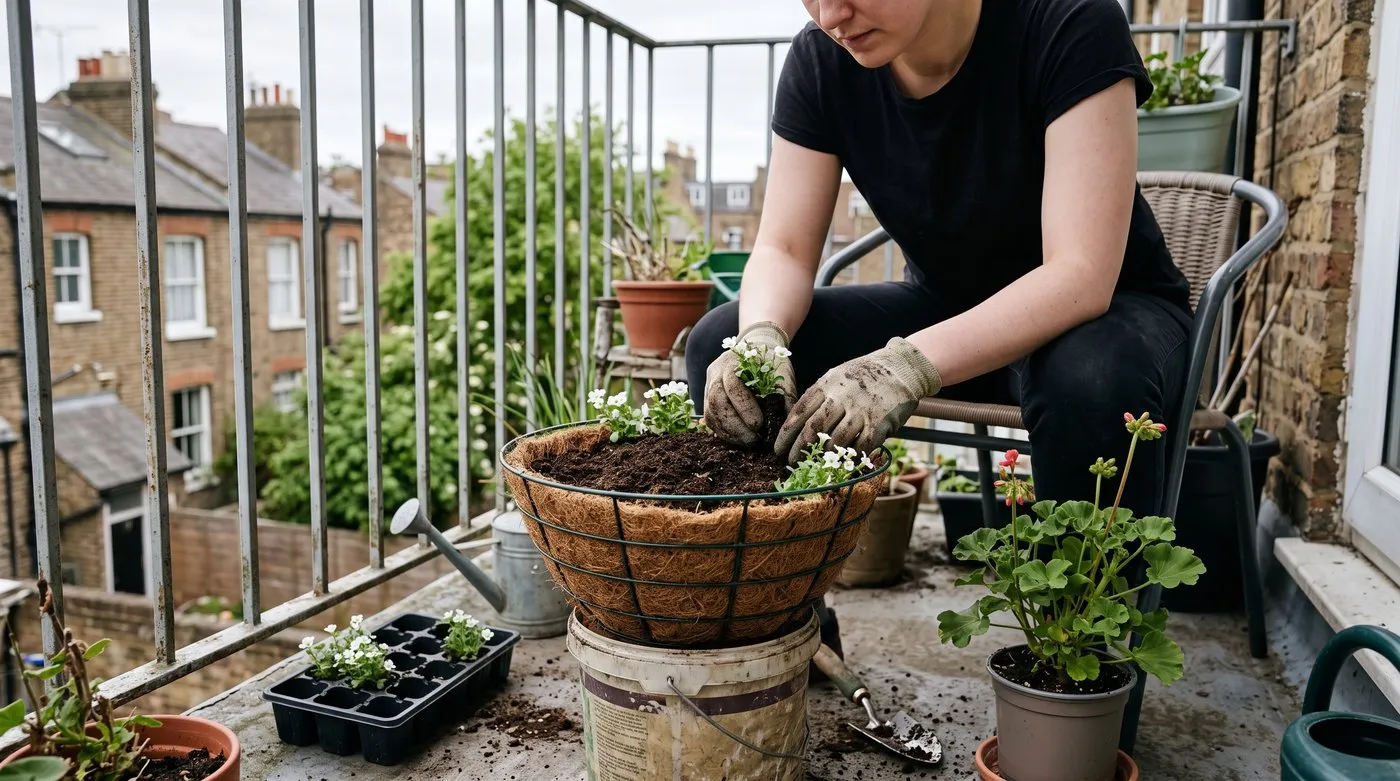
Bacopa goes round the edge of the basket, with an upright plant such as a geranium in the middle.
If you buy plugs early, pot them into 9cm pots. Grow them on somewhere bright and frost-free, such as a windowsill or greenhouse. Harden them off for a week or two before they go outside.
To plant up a basket or pot:
- Use fresh peat-free multipurpose compost.
- Mix in a slow-release fertiliser at the rate on the pack.
- Plant bacopa round the edge, where it can trail over.
- Set each plant at the same depth it was in its pot.
- Water in well.
Our guide on planting and caring for hanging baskets covers liners, compost and hanging them safely.
Why bacopa must never dry out
This is the key to growing bacopa. Let the compost dry out, even briefly, and the plant drops its open flowers and buds. It then takes a few weeks of good watering to flower again.
Baskets and window boxes dry out quickly, especially in sun and wind. Check them every day in summer by pushing a finger into the compost. If it feels dry, water until it runs from the bottom.
- Cool, cloudy weather: check daily and water when dry.
- Warm, sunny weather: expect to water every day.
- Hot or windy spells: you may need to water morning and evening.
A self-watering basket with a reservoir makes life much easier if you’re out all day.

The pot on the left dried out and dropped its flowers. The well-watered one on the right is still covered.
How to feed bacopa for non-stop flowers
The slow-release fertiliser in the compost usually runs low by midsummer. From then on, give a high-potash liquid feed, such as tomato feed, once a week.
Without feeding, bacopa keeps growing but flowers less. The plant turns into a mat of green leaves with only a few flowers. With regular feeding, it stays covered until autumn.
That’s really the whole job: water every day it needs it, and feed once a week.
Where to grow bacopa
Bacopa flowers best in sun, but full sun dries baskets fast. The easiest spot gets sun until early afternoon, then light shade. It still flowers in part shade, just a little less heavily. Deep shade is the one place it won’t do well.
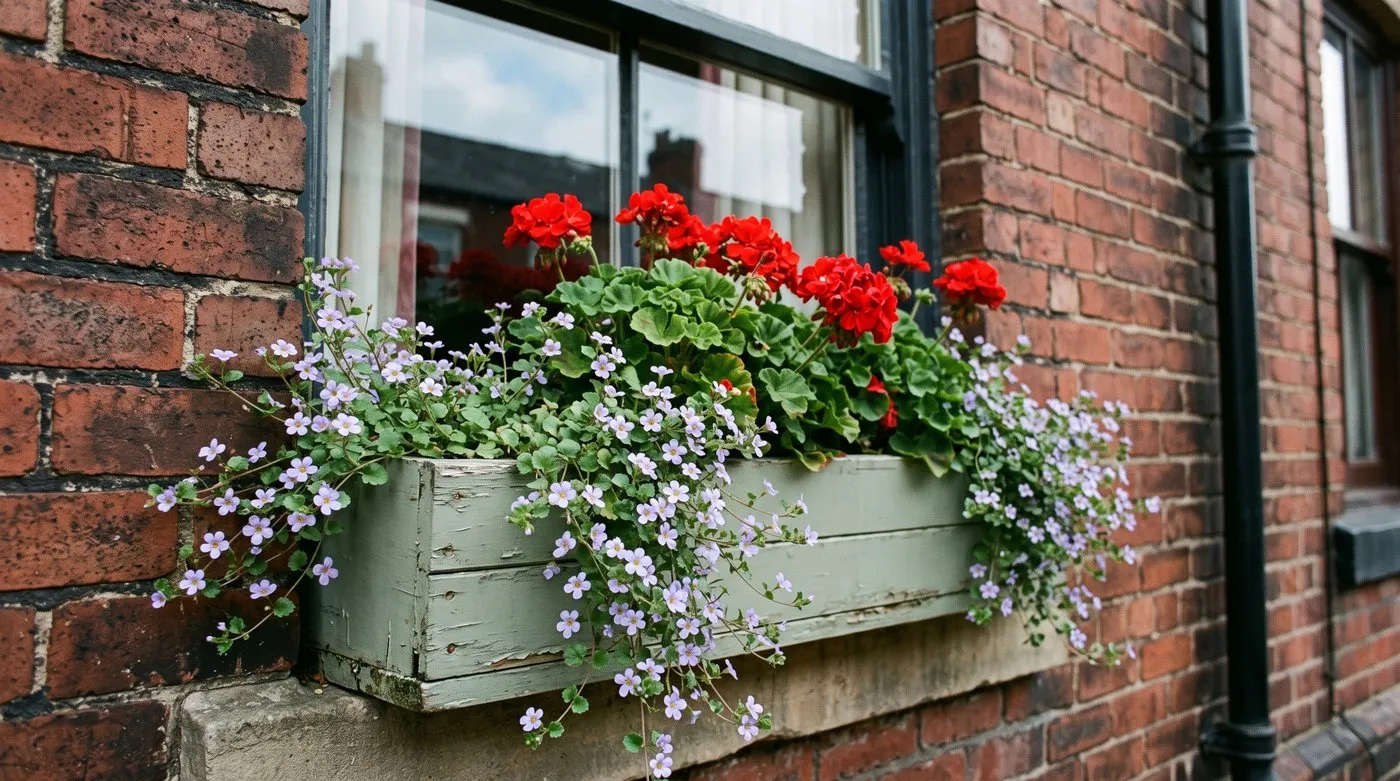
Plant bacopa along the front of a window box so it spills over the edge and softens the box.
Good homes for bacopa include:
- Hanging baskets by a door, porch or pergola
- Window boxes, planted along the front edge
- Patio pots and troughs, round the rim
- Tall pots, where the stems can trail freely
It copes well with breezy spots, including the seaside, but wind dries baskets out faster. Check those every day. Our list of the best window box plants has more ideas for boxes.

Pink bacopa copes well with sea breezes. Just check the basket daily, as wind dries it out fast.
Choosing bacopa colours and partners
White bacopa is the most popular. It goes with any colour scheme and is the one you’ll see most often. Blue, lilac and pink forms are lovely too, especially in pastel baskets.
Most bacopa is sold by colour, often under series names such as Snowtopia or Scopia. Any healthy plant from a good garden centre should do well.
Bacopa works as the soft edge of a display. Plant it with upright or bushy plants in the middle:
- Geraniums and fuchsias for bold colour
- Petunias and calibrachoa for masses of flowers. See our guides on growing petunias and growing calibrachoa.
- Silver foliage plants for a cool, classy look
- Trailing lobelia and verbena for more trailing colour
For ready-made combinations, try our summer hanging basket recipes.

White bacopa fills the gaps and trails over the rim, while petunias and silver foliage fill the middle.
Can you keep bacopa over winter?
Yes, if you have a bright, frost-free spot. Bacopa won’t survive frost outdoors.
Before the first frost, trim the plant back lightly and bring it into a cool greenhouse, porch or conservatory. Water sparingly over winter, just enough to stop the compost drying out completely. In spring, trim it again and start feeding as new growth appears.
Many people find it simpler to buy fresh plants each spring. Our guide on overwintering plants covers other tender favourites you can keep.
Common bacopa mistakes
- Letting it dry out. This is the main reason it stops flowering.
- Planting out too early. A late frost will kill it. Wait until late May or early June.
- Forgetting to feed. You’ll get leaves but few flowers.
- Planting it in the middle of a basket. It’s a trailer, so put it at the edge.
- Growing it in deep shade. It needs at least a few hours of sun.
Bacopa care calendar
| Month | What to do |
|---|---|
| March-April | Buy plug plants. Pot on and grow somewhere frost-free |
| May | Harden off. Plant out from late May if frosts are over |
| June | Plant out in colder areas. Water daily in warm weather |
| July-August | Feed weekly. Water every day, twice in hot spells |
| September | Keep feeding and watering. Flowers carry on |
| October | Flowers until the first frost. Bring in plants to overwinter |
| November-February | Keep overwintered plants frost-free and barely moist |
Bacopa is just one of many plants for summer pots. Browse our flowers and plants hub for more. Now you know how to grow bacopa, read our guide to the best annual bedding plants to plan the rest of your summer display.
Frequently asked questions
Is bacopa a perennial or an annual in the UK?
It’s a tender perennial usually grown as an annual. It can’t survive frost outdoors, so most people buy new plants each spring. You can keep it over winter in a bright, frost-free place, such as a cool greenhouse or porch.
Why has my bacopa stopped flowering?
Usually it has dried out, or it’s hungry. Bacopa drops its flowers and buds when the compost dries, then takes a few weeks to bloom again. Water it regularly and give a weekly high-potash feed and flowers should return.
Does bacopa need deadheading?
No, bacopa drops its own spent flowers. That makes it ideal for baskets you can’t easily reach. Just keep it watered and fed.
How much sun does bacopa need?
Sun or part shade, ideally with morning sun. It flowers best in sun, but full sun dries baskets fast. A spot with sun until early afternoon, then light shade, is the easiest to manage.
What plants go well with bacopa in a basket?
Upright plants such as geraniums, petunias and fuchsias suit it well. Bacopa forms the soft, trailing edge round the rim. It also mixes nicely with verbena, lobelia and calibrachoa.
Can you grow bacopa in a window box?
Yes, it’s a lovely window box plant. Plant it along the front edge so the stems trail over. Window boxes dry out quickly, so check the compost every day in warm weather.
Our team produces practical UK gardening guidance from source research, contributor records and established horticultural practice. Editorial standards are overseen by Matt W.


