
Key takeaways
- Nerine bowdenii is the hardy one to grow outdoors in the UK
- Plant in spring with the top of the bulb showing above the soil
- A sunny south-facing wall and poor, gritty soil give the most flowers
- Don't feed, water or split them. Crowded clumps flower best
- Flowers arrive in October and November, when almost everything else has finished
- The Guernsey lily (Nerine sarniensis) is tender and needs a frost-free greenhouse
Nerines flower just when the rest of the garden gives up. October arrives, frost blackens the dahlias, the last roses drop, and then up come bare stems topped with bright pink, spidery flowers that carry on into November.
Most gardeners have never tried them, and those who have tend to get hooked. The secret is that nerines love being ignored. They want poor soil, lots of sun and to be left alone for years. Resist the urge to fuss, and they’ll give you colour when you need it most.
Which nerines are hardy in the UK?
Nerine bowdenii is the one to grow outside. It copes with UK winters in free-draining soil. It comes from the mountains of South Africa, which is why it’s tougher than its cousins.
Don’t mix it up with Nerine sarniensis, the Guernsey lily. Despite the Channel Islands name, it’s tender and won’t survive frost. Keep it in a frost-free greenhouse unless you live somewhere very mild by the coast.
There are also lovely hybrids of N. bowdenii in more colours, which specialist bulb nurseries sell. The RHS has a good list of varieties.
If agapanthus does well for you, nerines will too. Both are South African, both want sun and good drainage, and both flower better when crowded. Agapanthus finishes in September, just as nerines get going.
Where to plant nerines
The perfect spot is at the foot of a south-facing wall, in poor, free-draining soil. The wall soaks up heat by day and gives it back at night, creating the warm, dry home nerines love.
Drainage matters more than richness. Rich soil just gives you leaves. On heavy clay, dig in lots of horticultural grit, roughly half and half with the soil, along the base of the wall. Our guide to improving clay soil has more tips.
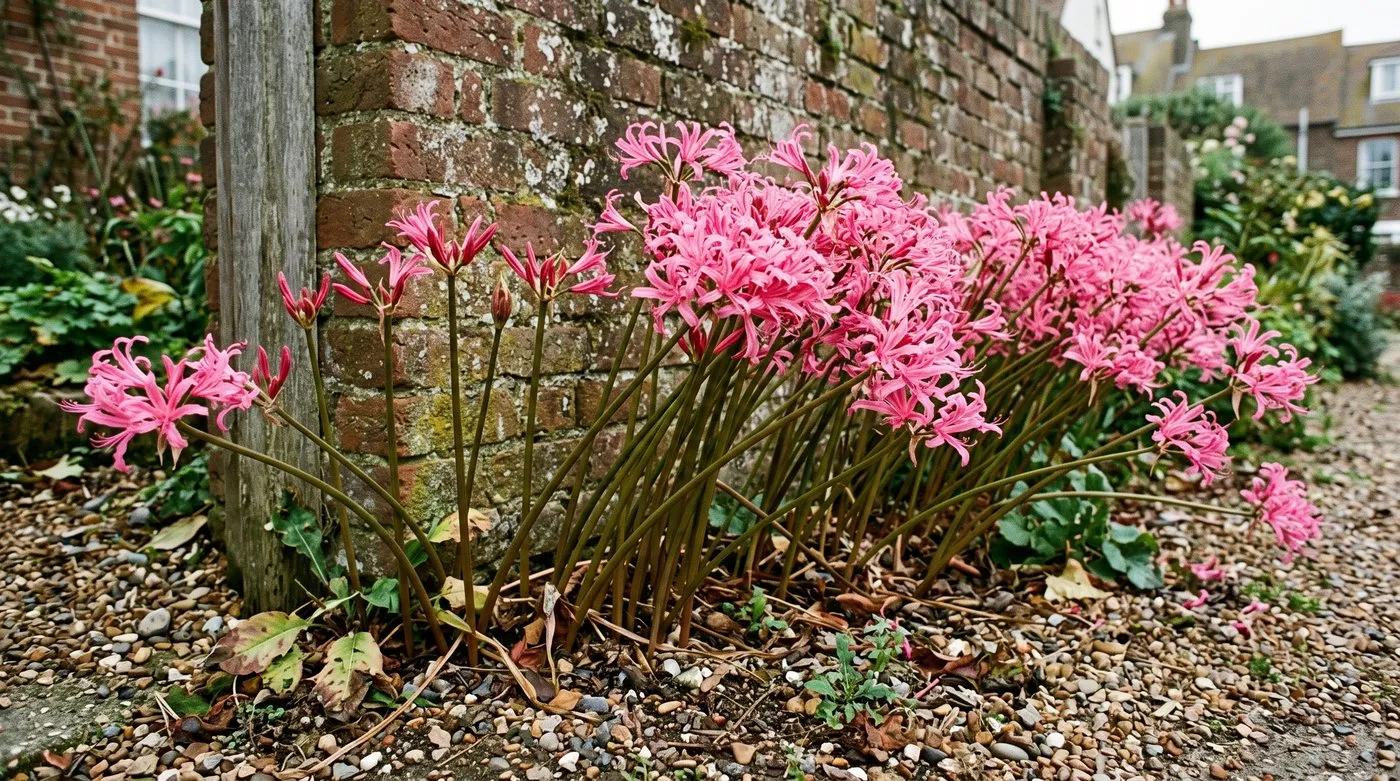
The foot of a sunny wall gives nerines the warm, dry home they love. Poor, gritty soil means more flowers and fewer leaves.
How to plant nerine bulbs
Plant in March or April, with the top third of the bulb sticking out of the soil. This is the most important rule. Unlike tulips and daffodils, nerines must not be buried. The neck needs the sun to warm it up so the bulb flowers.
Space bulbs 10-15cm apart, in groups of seven or more for a good show. Water once after planting, then leave them be. Once settled, they don’t need extra watering.
In pots, use John Innes No. 2 with plenty of grit mixed in. Terracotta pots suit them because they dry out faster than plastic. Use a pot at least 20cm deep and pack the bulbs in quite close together. Crowding helps them flower.
Mark where you planted them. The leaves die back over summer, and the flower stems pop up later from what looks like bare soil. Without a label, it’s easy to dig them up by mistake.
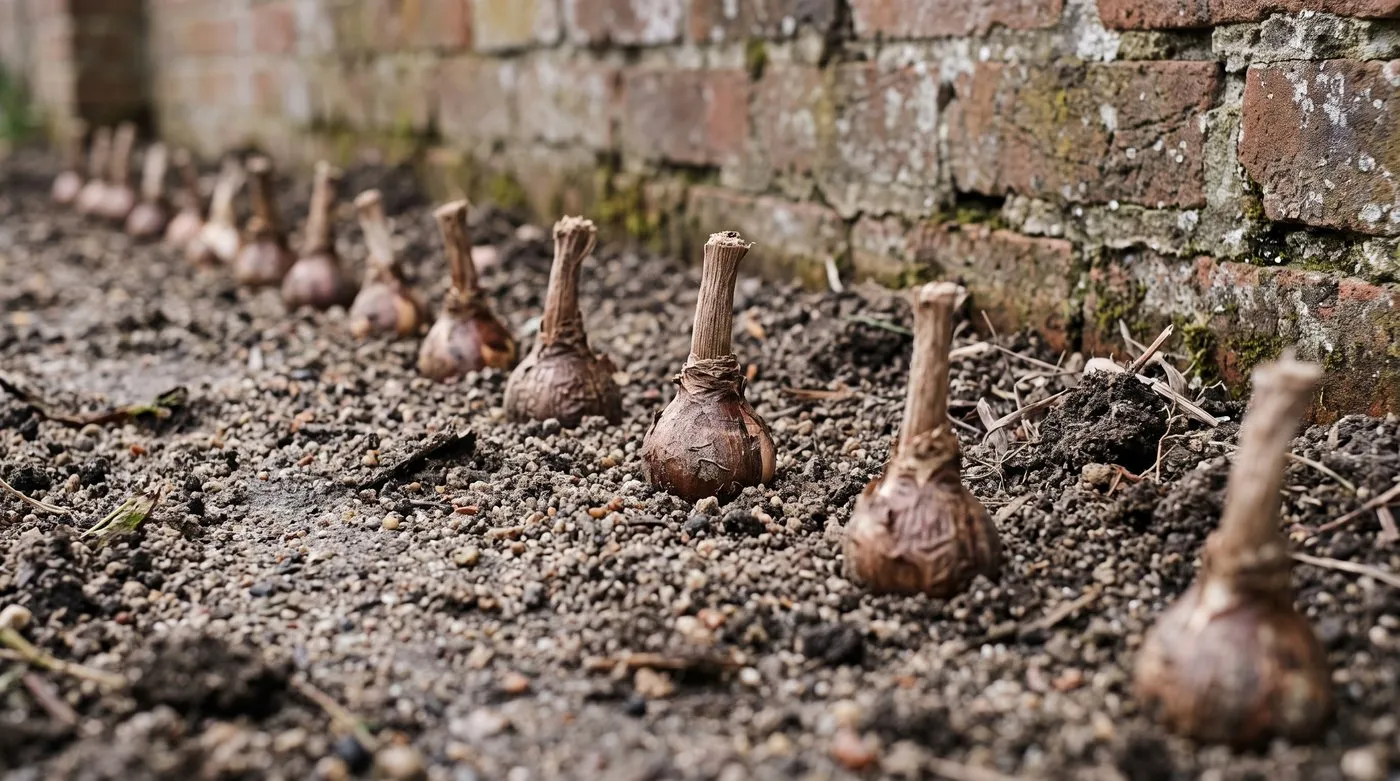
Leave the top third of the bulb showing so the sun can warm the neck. Buried nerines rarely flower.
Caring for nerines through the year
The best thing you can do for nerines is leave them alone. Don’t feed them, don’t water established plants and don’t split them up.
Spring and summer
Strap-shaped leaves appear and spend spring building up the bulb for autumn. Don’t cut or tidy them until they turn yellow and die back by themselves in early summer. If you grow spring bulbs nearby, the nerine leaves fill the gap after the early bulbs fade.
Autumn
Flower stems push up from bare ground in September. The flowers open in October and last several weeks, with lots of little flowers on each stem. They’re great for cutting and last well in a vase.
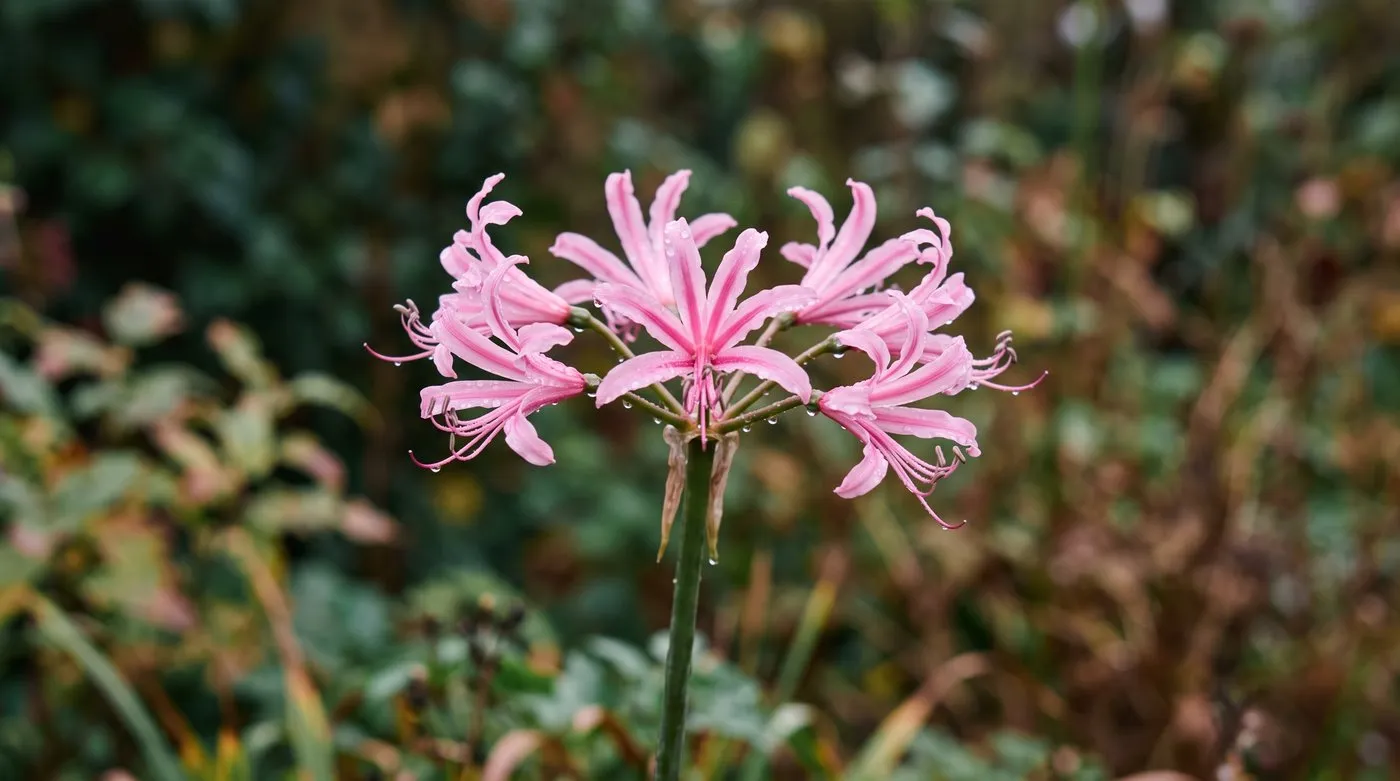
Each stem carries a whole cluster of flowers that open over several weeks. They’re lovely cut for a vase too.
Winter
Leave the old stems until they’ve dried. In a cold or exposed garden, cover the clump with a thick mulch of dry bracken or straw after flowering, and pull it back in March. In a sheltered southern garden, they don’t need any covering.
Skip the fertiliser. A light sprinkle of sulphate of potash in early spring can help a clump that’s not flowering well, but nitrogen-rich feeds mean fewer flowers.

In a cold or exposed garden, tuck a thick, dry mulch over the clump after flowering. Pull it back in March.
Best nerine varieties for UK gardens
These five are good choices for UK gardens.
| Variety | Colour | Height | Notes |
|---|---|---|---|
| Bowdenii (species) | Soft pink | Medium | The classic, and the most reliable |
| Alba | White | Medium | Lovely next to the pinks, a little less vigorous |
| Isabel | Deep pink | Medium to tall | Bigger flowers, strong stems |
| Zeal Giant | Pale pink | Tall | The tallest, great in groups |
| Stephanie | Pink | Medium | A pretty, softer pink |
Plain Bowdenii is the safest bet for beginners and colder gardens. It’s tough, flowers well and is easy to find. Add Alba for contrast. Isabel and Zeal Giant are best in a sheltered, sunny border where their height can shine.
Specialist bulb nurseries have a much wider range than garden centres. Plain Bowdenii is cheaper, especially in bigger packs.
How do nerines compare to other autumn bulbs?
Nerines fill the October and November gap that few other bulbs cover. Here’s how they sit alongside other autumn flowers.
| Bulb | Flowers | Height | Light | Soil |
|---|---|---|---|---|
| Nerine bowdenii | October to November | Tall | Sun | Poor, dry |
| Colchicum | September to October | Short | Sun or part shade | Moist, fertile |
| Autumn crocus (Crocus speciosus) | September to October | Very short | Sun or part shade | Well-drained |
| Cyclamen hederifolium | September to November | Very short | Part shade | Dry, leafy |
| Sternbergia lutea | September to October | Short | Sun | Poor, dry |
Nerines are taller than the rest, so they suit the front or middle of a border rather than carpeting the ground. They also flower later. To fill the September weeks before they open, pair them with Crinum x powellii for late-summer colour, another South African bulb that wants the same sun and drainage.
For colour all year, layer them with spring bulbs. Our bulb lasagne planting guide shows how to stack bulbs at different depths. Nerines go at the top because they sit so shallow.
Can I grow nerines from seed?
Yes, but you’ll wait several years for flowers. It’s a fun project if you enjoy the process, but slow.
Collect seed from the ripe pods in winter and sow straight away in pots of gritty compost, barely covered. Keep them frost-free over winter. Grow the seedlings on in pots for a couple of years before planting out.
Dividing a clump is quicker and more reliable. Lift a crowded clump in March, separate the bulbs and replant straight away. They usually flower again within a year or two. Our plant propagation guide explains how.
Named varieties don’t come true from seed, so seedlings may differ from the parent. Some people think that’s half the fun.
Common nerine problems
The most common problem is no flowers, nearly always because they’re planted too deep or disturbed too often. Otherwise nerines are pleasingly pest-free.
Rotting bulbs happen in soggy winter soil. Good drainage at planting time prevents it. If your soil stays wet, grow them in a raised bed or pot.
Slugs sometimes nibble the new flower stems in September. Keep an eye out and pick them off on damp evenings.
Narcissus fly prefers daffodils but can lay eggs near nerine bulbs in late spring, and the grubs eat the bulb from the inside. Covering the spot with fine mesh from May to July keeps the flies off. Our guide to lily beetle control covers other bulb pests.
Vine weevil grubs, curled and creamy white, can attack nerines in pots. Check the compost when repotting. A nematode drench, a natural biological control, in late summer helps prevent them.
Using nerines in the garden
Plant nerines in a big drift along a warm wall for the best effect. A single bulb gets lost in the autumn garden, but a bold group is a real showstopper.
They work in a mixed border as long as you don’t mind a gap while they rest in summer. Plant them among late perennials like Japanese anemones, asters and sedums. As those fade, the nerines take over.
They’re also great for cutting. If you have a cutting garden, add a row for autumn vases. They look lovely with grasses, rosehips and seed heads, and with scented tuberose lifted from the summer cutting patch.
For an easy autumn pot display, group a few pots of nerines with cyclamen and violas. It needs almost no looking after. Move the nerine pots somewhere sheltered once they finish.
Related reading: For another late bulb that loves a sunny wall, see our guide to growing pineapple lily from bulb to bloom.
Frequently asked questions
When is the best time to plant nerine bulbs in the UK?
Plant nerine bulbs in March or April. Spring planting gives them a whole growing season to root in before their first winter. Bulbs planted in autumn can rot in cold, wet soil before they settle. Nerines already growing in pots can go in any time from April to August.
Why are my nerines not flowering?
New nerines often skip flowering for a year or more. That’s normal while they settle in. Other common causes are planting too deep (the top of the bulb should show), too much shade (they want full sun) and too much feed, which gives leaves instead of flowers.
Can I grow nerines in pots?
Yes, as long as the compost is gritty and drains well. Mix John Innes No. 2 with plenty of horticultural grit. Terracotta suits them better than plastic because it dries out faster. Keep pots by a warm south-facing wall and move them somewhere frost-free in a long cold spell.
What is the difference between Nerine bowdenii and Nerine sarniensis?
Nerine bowdenii is hardy; Nerine sarniensis is not. Bowdenii has pink flowers in autumn and grows outdoors in most of the UK. Sarniensis, the Guernsey lily, has bolder flowers but needs a frost-free greenhouse or conservatory. Don’t swap one for the other.
How deep should I plant nerine bulbs?
Plant with the neck of the bulb above the soil. That’s the opposite of most bulbs. Buried too deep, they don’t flower and may rot. Leave the top third showing and space bulbs 10-15cm apart. They settle themselves at the depth they like over time.
Do nerines need winter protection?
Established clumps get through most UK winters without help. In Scotland, northern England or a cold, exposed garden, cover them with a thick mulch of dry bracken or straw after flowering. Pull it back in March. A warm wall behind them helps a lot too.
When should I divide nerine clumps?
Only split them when flowering starts to tail off. That usually takes several years. Lift the clump in March before new growth starts, gently separate the bulbs and replant straight away at the same depth. Expect them to sulk for a year or two. Leave healthy, free-flowering clumps alone.
Our team produces practical UK gardening guidance from source research, contributor records and established horticultural practice. Editorial standards are overseen by Matt W.


