
Key takeaways
- 'Hidcote' is a great all-rounder, with yellow flowers from June to October
- H. calycinum is low ground cover for dry shade, but it spreads fast
- Tutsan is a native hypericum with berries that turn red then black
- The Magical series gives big, colourful berries for cutting
- Rust, which leaves orange spots under the leaves, is the main problem
- Cut back hard in March for fresh growth and fewer rust problems
Hypericum does two jobs at once in a UK garden. From June to October, its golden-yellow flowers bring in bees and hoverflies. Then many types follow up with berries in red, pink or black that look great in borders and even better in a vase.
It copes with almost anything. Sun, part shade or full shade. Clay, sand, chalk or loam. Some types carpet dry, rooty banks where nothing else will grow, while others make neat flowering shrubs for a border. There’s a hypericum for nearly every tricky spot.
What types of hypericum grow in UK gardens?
A handful of hypericums are common in UK gardens, and they’re very different in size and use. Pick the right one for your spot and it’ll look after itself.
H. calycinum (rose of Sharon) is the ground cover one. It grows only about 30cm tall but spreads quickly by underground runners into a thick, weed-smothering mat. The flowers are big, bright yellow and full of fluffy stamens. It’s evergreen in mild winters. Use it to cover banks, fill under trees and cope with awkward ground.
‘Hidcote’ is the best all-rounder. It grows into a neat dome about 1-1.5m tall and flowers non-stop from June to October. It’s semi-evergreen in most areas.
H. androsaemum (tutsan) is a native that grows in hedgerows and woodland edges. It’s smaller, with little yellow flowers followed by berries that change from green to red to black. It’s the best one for deep shade.
The Magical series (H. × inodorum) is grown for its berries, which are big, bright and long-lasting, in red, pink, green, white and two-tone. Florists love them.
H. × moserianum is a small shrub with arching stems and golden flowers with red-tipped stamens. Good at the front of a border or in a pot.
| Type | Size | Shape | Flowers | Berries | Best for |
|---|---|---|---|---|---|
| H. calycinum | Low | Spreading carpet | Large, June to September | Few | Banks, dry shade, difficult ground |
| ’Hidcote’ | Medium to tall | Neat dome | Large, June to October | Few | Mixed borders |
| Tutsan | Small to medium | Upright, arching | Small, June to August | Showy, red to black | Woodland, shade |
| Magical series | Medium | Upright | Small, June to August | Big, many colours | Cutting and flower arranging |
| H. × moserianum | Small | Arching | Medium, July to September | Few | Front of border, pots |
How do you plant hypericum?
Plant from October to March, or pot-grown plants at any time of year. Autumn is ideal, as the roots settle while the soil is moist.
For ground cover with H. calycinum, plant 45-60cm apart. It fills the gaps within a season or two. On a steep bank, plant in staggered rows so the roots hold the soil while the runners spread.
For shrubby types like ‘Hidcote’, dig a hole twice as wide as the pot and the same depth. Mix a little compost into the soil you dug out, plant at the same depth as before, and water well. Mulch around the base with bark or compost, keeping it off the stem.
Hypericum isn’t fussy about soil. It just doesn’t like sitting in water. On heavy clay, dig in some grit to help drainage.

Plant at the same depth it sat in its pot and keep the mulch off the stems. Autumn planting lets the roots settle while the soil is still moist.
Does hypericum grow well in shade?
Yes, and this is where it really shines. Most flowering shrubs sulk in shade, but hypericum carries on.
H. calycinum is a lifesaver in dry shade under trees, one of the hardest spots in any garden. The tree roots suck up the water and the canopy blocks rain and light. H. calycinum still makes a thick, flowering carpet there. It flowers less than in sun, but the cover stays dense and weed-proof.
Tutsan grows wild in British woods and hedge bottoms, so shade suits it fine. In the dappled shade of trees it looks lush and berries well. It’s a lovely choice for shady areas where you’d like a native plant that wildlife enjoys.
‘Hidcote’ likes the most sun of the common types. It flowers best in sun or part shade and gets leggy in deep shade. For a taller shrub in a shady border, tutsan is the better pick.
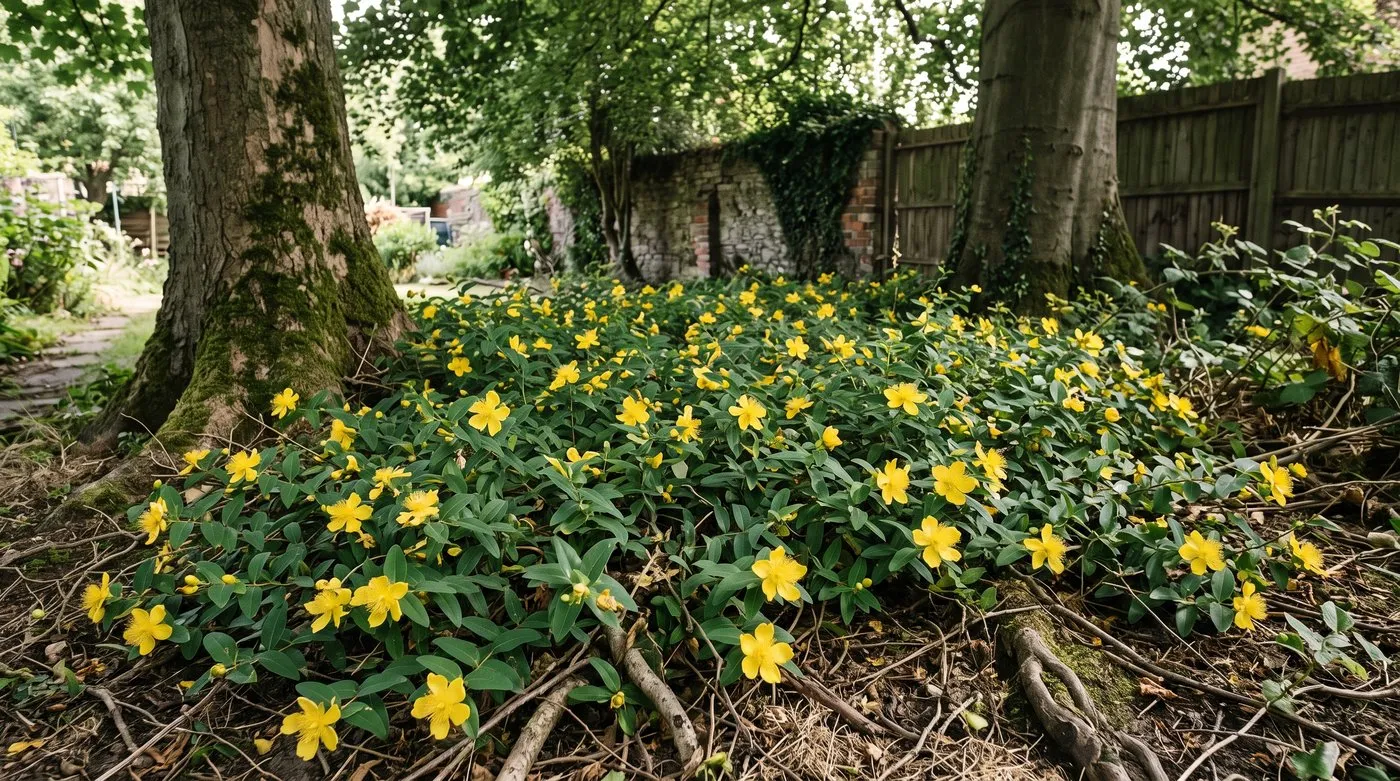
Rose of Sharon makes a thick, weed-proof carpet even under thirsty trees. You’ll get fewer flowers than in sun, but the cover stays dense.
How do you use hypericum berries in flower arranging?
The Magical series was bred for florists, and its berries are now a vase favourite. They last well in water and add colour to autumn and winter arrangements.
The berries colour up from August and often stay on the plant into winter. Cut stems when the berries are fully coloured and firm, strip any leaves below the waterline and pop them in clean water with flower food. No special treatment needed.
Look out for Magical Red, Magical Beauty (pink), Magical Green, Magical White and Magical Universe (dark purple-red). A short row of plants gives plenty of stems for flower arranging through autumn and winter. Try them with dried grasses, rose hips and late chrysanthemums.
Tutsan berries work in a vase too. They’re smaller, and they change colour from green to red to black, which is part of the fun.
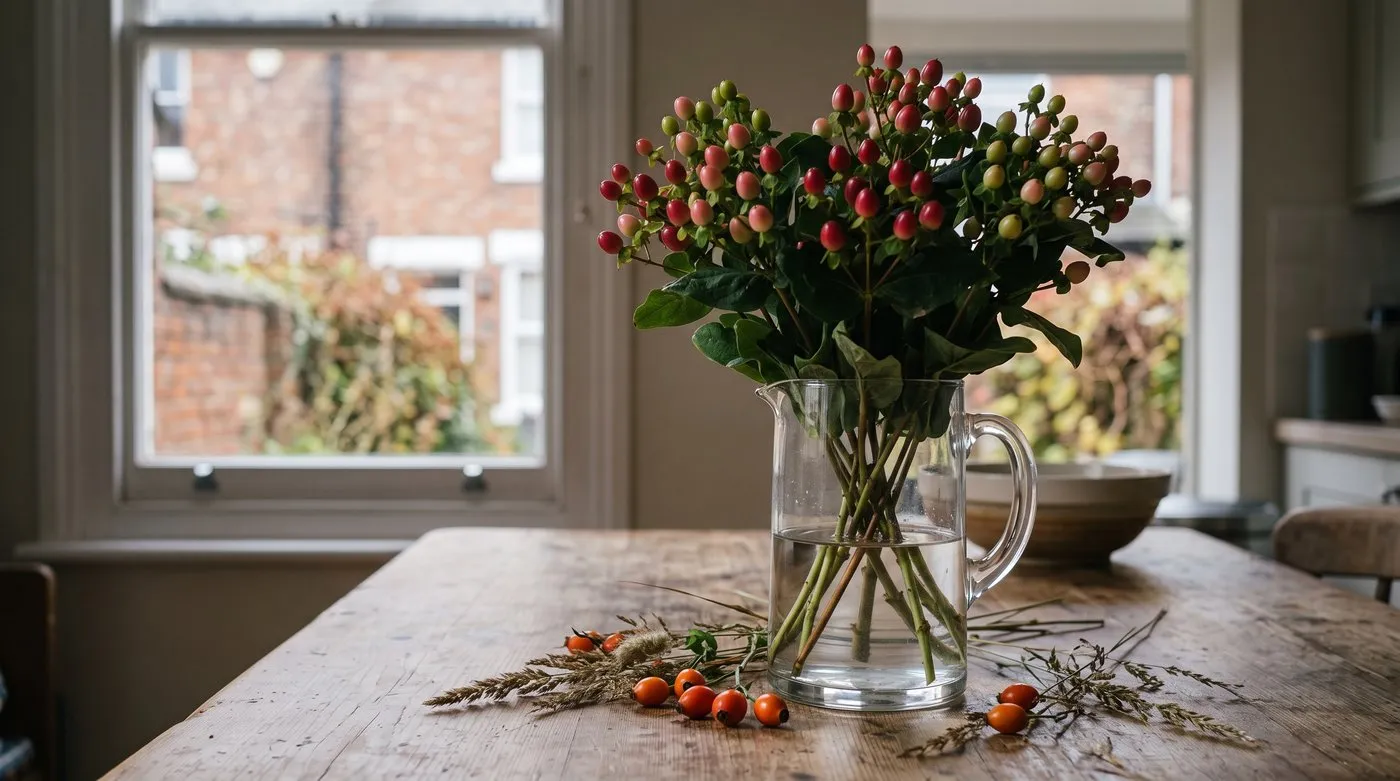
Cut stems once the berries are fully coloured and firm, and strip the leaves below the waterline. They’re for looking at only, so keep them away from little ones.
What is hypericum rust and how do you treat it?
Rust is the main disease of hypericum in UK gardens. It shows as bright orange spots under the leaves, usually from June. Badly hit leaves turn yellow and drop, and plants can be bare by late summer.
H. calycinum and ‘Hidcote’ get it most. Tutsan is less troubled, and the Magical series varies. Rust diseases are worst in damp weather with poor air flow.
The best fix is a hard prune in March. Cutting everything back clears away the old, infected leaves and gives you fresh, clean growth. For H. calycinum ground cover, strim or mow the whole patch to 5-10cm. For shrubby types, cut back by at least half.
Good habits help too. Water the soil, not the leaves. Give plants space. Rake up and bin fallen leaves in autumn.
If rust keeps coming back, swap the worst plants for tutsan. The RHS page on hypericum rust has more detail.
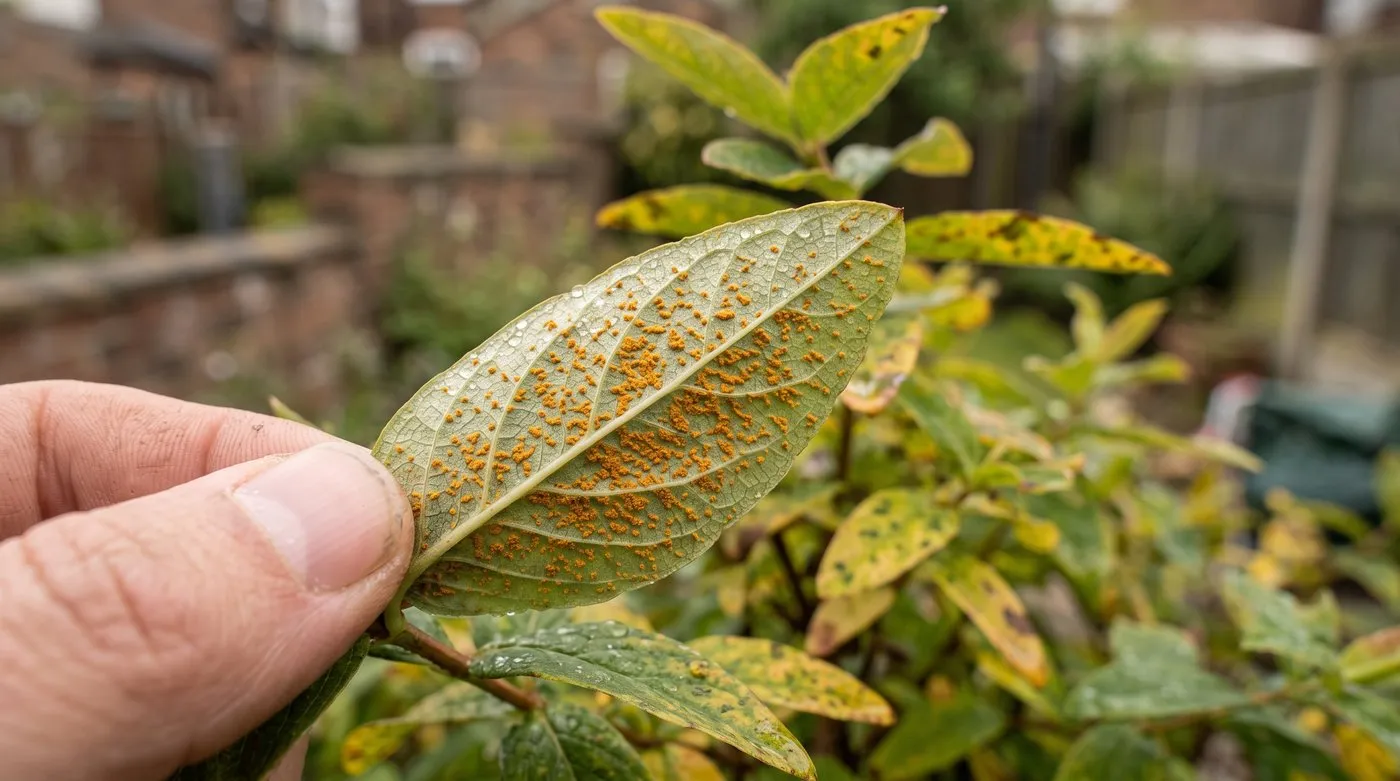
Check under the leaves from June for orange spots like these. A hard prune in March clears out the old, infected growth.
How do you prune hypericum?
Pruning is the best thing you can do for hypericum. It keeps plants flowering, tidy and healthier. How you do it depends on the type.
H. calycinum: In March, cut or strim the whole patch down to 5-10cm. This clears out the old leaves, rusty ones included. New growth comes quickly and flowers from June. Left unpruned, it turns into a woody tangle with flowers only at the tips.
‘Hidcote’ and other shrubby types: In March, take out dead, damaged and crossing branches first. Then shorten the rest by about a third, cutting to a strong outward-facing bud. This gives a bushy plant that flowers all summer. An overgrown plant can be cut back to about 15cm, though it may take a season to recover.
Tutsan: Each March, remove about one in three of the oldest stems at ground level. This keeps it fresh while leaving younger stems to flower and berry. Don’t cut the whole thing down, or you’ll lose that year’s berries.
Is hypericum calycinum invasive?
H. calycinum is the one hypericum that comes with a warning. Its underground runners spread steadily, and in good soil it’ll creep into neighbouring beds, paths and even cracks in paving.
That vigour is exactly why it’s so useful on a dry bank under trees or a slope that needs holding together. The trouble only starts when it gets where you don’t want it.
To keep it in check, sink a root barrier of rigid plastic or metal edging about 30cm deep around the patch. Or slice along the edge with a sharp spade in spring and autumn to cut off wandering runners. In a border, dig out strays once a year.
The other common hypericums behave themselves. ‘Hidcote’ stays in a neat clump. Tutsan seeds around a little, but the seedlings pull up easily. The Magical series forms tidy clumps too.
What wildlife does hypericum support?
Hypericum is better for wildlife than many people realise. The open, saucer-shaped flowers are packed with pollen and easy for insects to reach. Bees, hoverflies and beetles all visit.
Because it flowers until October, it feeds insects in late summer when many plants have finished. That’s a big help for bumblebees stocking up before winter. Late-flowering shrubs like this are a real boost to pollinator-friendly planting.
Blackbirds and thrushes sometimes eat tutsan berries, though they’re not a favourite food.
Frequently asked questions
Is hypericum evergreen in the UK?
Most are semi-evergreen in the UK. H. calycinum keeps its leaves in mild winters but may lose them in hard frosts. ‘Hidcote’ holds its leaves in sheltered spots. Tutsan loses its leaves in winter. A hard prune in March clears away tired old leaves anyway.
How do you prune hypericum?
Prune hypericum in March, before new growth starts. Cut H. calycinum down to 5-10cm. Cut ‘Hidcote’ back by a third to a half. On tutsan, remove about one in three of the oldest stems. Pruning keeps them flowering well and helps with rust.
Does hypericum grow in shade?
Yes, it’s one of the best flowering shrubs for shade. H. calycinum grows even in dry shade under trees. Tutsan copes with deep shade. ‘Hidcote’ flowers best in sun or part shade.
What is hypericum rust?
It’s a fungal disease that leaves orange spots under the leaves. It’s most common on H. calycinum and ‘Hidcote’. A hard prune in March clears out the old, infected leaves. Good air flow and watering the soil rather than the leaves help too.
Is hypericum invasive in the UK?
H. calycinum spreads fast by underground runners. It can creep into nearby borders, so edge it regularly or put in a root barrier. ‘Hidcote’ and tutsan form neat clumps and stay where you plant them.
Are hypericum berries edible?
No, don’t eat hypericum berries. They’re mildly toxic and can upset tummies. They’re grown for show and for flower arranging only. Keep children and pets from eating them.
Can I grow hypericum from cuttings?
Yes, it roots easily from cuttings taken in summer. Take 10-15cm shoots of this year’s growth, strip the lower leaves, dip in rooting powder and push into gritty compost. Roots usually form in a couple of months. You can also dig up rooted runners of H. calycinum.
Our team produces practical UK gardening guidance from source research, contributor records and established horticultural practice. Editorial standards are overseen by Matt W.


