Key takeaways
- Honeyberries ripen from mid-May, before almost any other garden fruit
- Plant two different varieties, or you won't get any berries
- They grow in most UK soils, including clay and chalk
- The bushes are very hardy, and the flowers shrug off spring frosts
- Wait a few days after berries turn blue before picking, for the best flavour
- Net the bushes from late April, as birds love the berries
Honeyberry is one of the best-kept secrets of UK fruit growing. This hardy shrub (Lonicera caerulea) gives long blue berries from mid-May, earlier than almost anything else you can grow outdoors. They taste like a cross between blueberry and raspberry, with a lovely tangy sweetness.
Unlike blueberries, honeyberries are happy in most soils, including heavy clay and chalk. They laugh at British winters and keep cropping for many years. Here’s how to choose, plant, care for and pick them.
What are honeyberries?
Honeyberry is a deciduous fruit bush in the honeysuckle family. It comes from cold parts of Russia and northern Japan, where people have picked the wild berries for centuries.
The berries look a bit like stretched blueberries, around 1-3cm long, with dark blue skin and a dusty bloom. Inside they’re deep red-purple. The seeds are so small you won’t notice them.
 Ripe honeyberries, with their long shape and dusty blue skin.
The bushes grow about 1.2-1.8m tall and 1-1.5m wide, and sit neatly in a border. Small creamy-yellow flowers open in late winter and early spring, a welcome early snack for bumblebees. The RHS honeyberry profile has more on the plant.
Although they’re related to honeysuckle, honeyberries are bushes, not climbers, and they don’t spread. Expect slow growth for the first couple of years, then they pick up.
Why grow honeyberry in the UK?
It’s the first fruit of the year. Honeyberries ripen from mid-May in the south and late May further north. That’s often before the first strawberries, when the fruit garden is otherwise bare.
It’s incredibly hardy. The bushes come from Siberia, so a British winter is nothing to them. Even the flowers cope with late frosts, so you rarely lose a crop, even in a frost pocket.
It’s not fussy about soil. Honeyberries grow in acid, neutral or chalky soil, on clay or sand. If blueberries have sulked in your garden, honeyberries are worth a go.
It’s low maintenance. Little pruning, no staking, not much feeding and very few pests. Your main job is keeping the birds off.
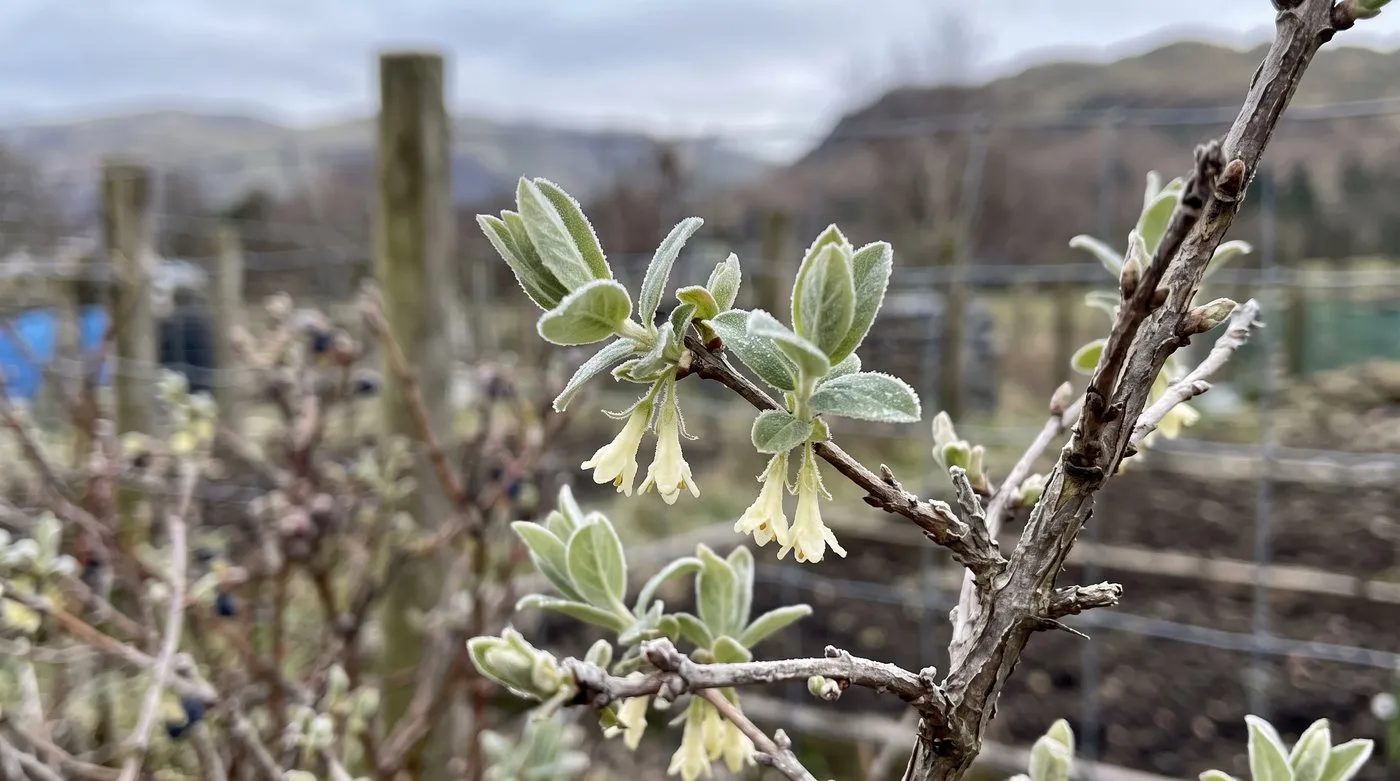
Honeyberry flowers shrug off late frosts, so you rarely lose a crop. They’re an early snack for bumblebees too.
The cross-pollination rule
This is the one thing you must get right. Plant at least two different varieties, or you’ll get flowers but no fruit.
Two plants of the same variety won’t do, because they’re clones of each other. You need two different named varieties that flower at the same time, so bees can carry pollen between them. Most varieties sold in the UK overlap, but check the supplier’s list of pollination partners when you buy.
Plant your two varieties close together. Bumblebees do most of the work, as they’re out and about in the cool weather when honeyberries flower. Avoid using pesticides in late winter and spring to keep them coming.
Best honeyberry varieties for UK gardens
Plenty of good named varieties are now available in the UK. Here are five popular ones.
Blue Velvet
A great choice for eating fresh. The berries are large, sweet and not too sharp, with a flavour close to blueberry. The bush grows to about 1.5m. It pairs well with Morena and Berry Blue.
Morena
Known for its big berries and rich sweet-sharp flavour. Bred in Russia for eating fresh, it’s often one of the first to ripen. The bush grows to about 1.7m. It pairs well with Blue Velvet and Honeybee.
Kamtschatica
A vigorous type with a sharper, tangier taste that mellows a little after picking. Lovely for jams, sauces and baking. It pairs with Berry Blue and Morena.
Berry Blue
A compact bush, about 1.2m tall, so it’s a good pick for small gardens and growing fruit in pots. The berries have a nice balance of sweet and sharp. It flowers over a long spell, so it partners most other varieties.
Honeybee
Bred to be a good pollinator, as it flowers over a long period. The berries are smaller but tasty. If you’d like a third bush to help the others crop, this is a sensible choice.
Variety comparison table
| Variety | Berry size | Flavour | Bush size | Good partners | Best for |
|---|---|---|---|---|---|
| Blue Velvet | Large | Sweet | Medium | Morena, Berry Blue | Eating fresh |
| Morena | Large | Sweet-sharp, rich | Medium to tall | Blue Velvet, Honeybee | Big berries, early crop |
| Kamtschatica | Medium | Tangy | Medium | Berry Blue, Morena | Cooking and jam |
| Berry Blue | Medium | Balanced | Compact | Most varieties | Small gardens, pots |
| Honeybee | Small to medium | Mild | Medium | Most varieties | Helping others crop |
Our pick: two varieties, not one. Blue Velvet and Morena are a popular pairing. Check the supplier’s pollination partners before you buy, and add a third variety if you have room.
How to plant honeyberry
When to plant
Plant bare-root honeyberries from November to March, while they’re dormant. Pot-grown plants can go in at any time, but October to November gives roots the longest time to settle before they flower. Don’t plant into frozen or waterlogged ground.
Choosing a site
Honeyberries like full sun or light shade. More sun means sweeter berries and a bigger crop. A little afternoon shade is fine, but avoid deep shade.
 Two different varieties planted side by side, so they can pollinate each other.
A sheltered spot helps, as bumblebees don’t like visiting flowers in a strong wind. A sunny fence or wall facing south or west is ideal.
Soil
Honeyberries are happy in:
- Heavy clay
- Sandy soil, though they’ll need more watering
- Chalky soil, unlike blueberries
- Acid soil
Planting step by step
- Dig a hole about twice the width of the root ball.
- Loosen the soil at the bottom with a fork.
- Mix a bucket of garden compost or well-rotted manure into the soil you dug out.
- Set the plant at the same depth it was growing before.
- Fill back in, firming gently with your heel.
- Water well.
- Mulch around the base with bark or compost, keeping it off the stem.
- Space bushes 1.2-1.5m apart, and remember you need two different varieties.
Growing in containers
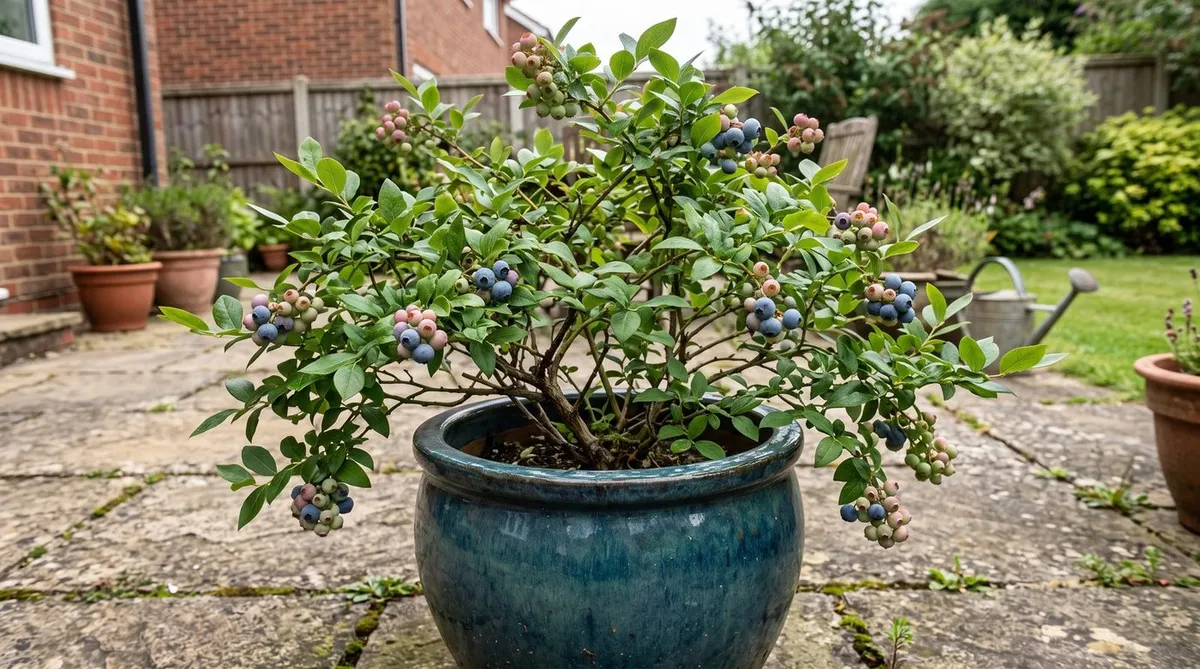
Honeyberries do well in big pots. Use peat-free multipurpose compost with some perlite or grit mixed in. Stand the two pots (still two varieties) close together on a sunny patio. Water regularly in summer and give a balanced liquid feed every fortnight from March to July.
Caring for honeyberry bushes
Watering
Once settled, honeyberries in the ground rarely need watering except in a long drought. In the first two years, water weekly in dry spells from April to September.
Pots need watering much more often. In hot weather, check daily: if the top few centimetres are dry, water until it runs out of the bottom. Tap water is fine.
Feeding
Honeyberries don’t need much. Scatter a handful of general fertiliser, such as Growmore or blood, fish and bone, around each bush in early March and water it in. That’s enough for the year.
Feed pot plants every fortnight from March to July with a balanced liquid feed. Avoid high-nitrogen feeds, which give you lots of leaves and fewer berries. If a bush is growing well but not fruiting, check its partner is close enough.
Pruning
For the first few years, leave the bush alone to build its framework. After that, prune in late winter (January to February) while it’s dormant.
Each year:
- Take out dead, damaged or crossing branches.
- Cut two or three of the oldest stems down to the ground to make room for new ones.
- Thin out a crowded middle so light and air can get in.
- Aim for an open shape with stems of different ages.
Honeyberries fruit on shoots that grew the year before. Don’t prune in autumn, or you’ll cut off next spring’s flower buds.
Harvesting honeyberries
When to pick
Berries ripen from mid-May to early June, depending on where you live and the variety.
 A bowl of freshly picked honeyberries.
Here’s the trick: they look ready before they are. Once the skin is fully blue, wait a few more days. The flavour gets much better. Ripe berries feel slightly soft and come away easily. Unripe ones cling on and taste bitter.
How to pick
Roll each berry gently between your finger and thumb until it comes off. They bruise more easily than blueberries, so use a shallow tray.
For a bigger crop, lay a clean sheet under the bush and give the branches a gentle shake. Ripe berries drop and the unripe ones stay put. You’ll just need to pick out a few leaves.
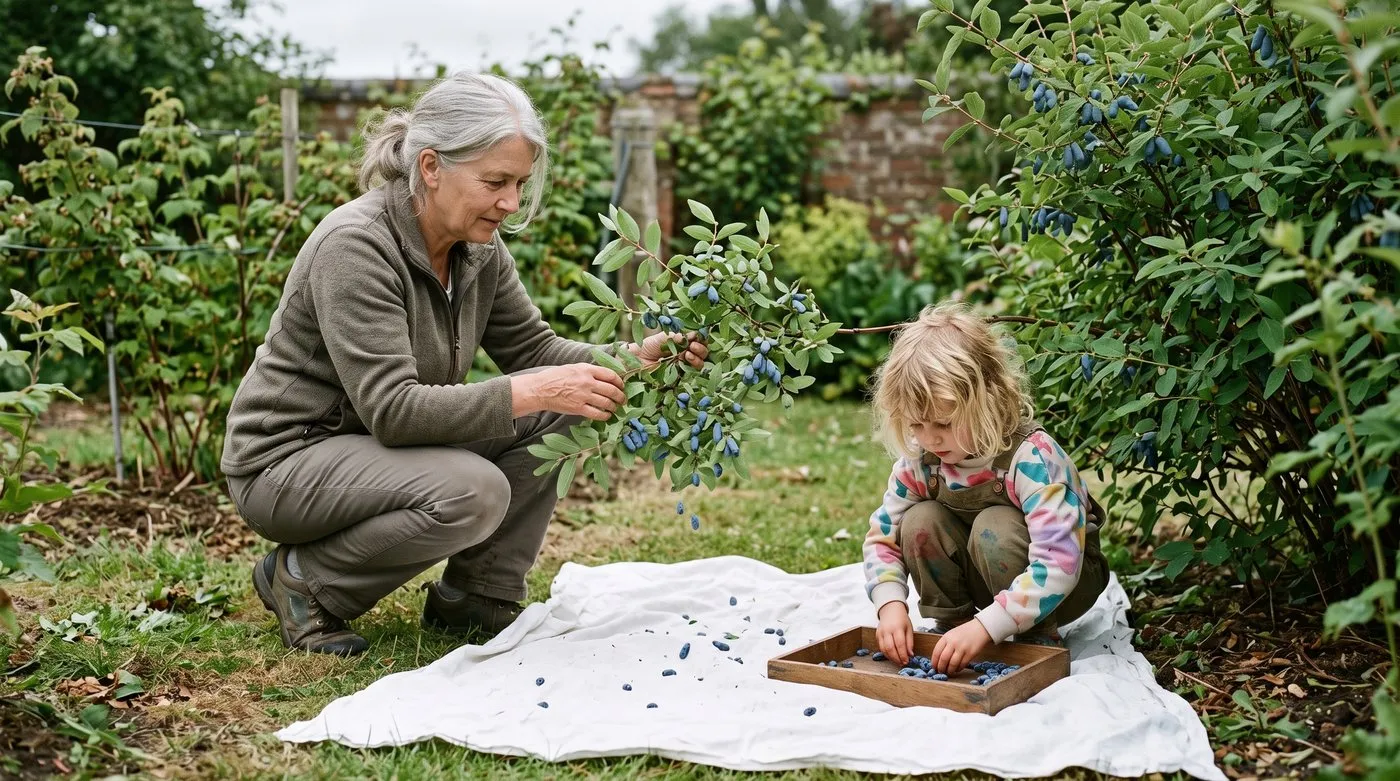
Lay a sheet under the bush and give the branches a gentle shake. The ripe berries drop and the unripe ones stay put.
How much and how to keep them
Young bushes give a small crop, which builds up nicely as they mature. Fresh berries keep for a few days in the fridge, so eat them soon. To freeze, spread them on a tray, freeze, then tip into bags.
Ways to use them
Use honeyberries anywhere you’d use blueberries:
- Straight from the bush, the best way of all
- Jam
- Smoothies, with yoghurt and banana
- Baking, in muffins, crumbles and pies
- Sauces, lovely with duck or game
- Frozen, for cooking all year
Pests, diseases, and problems
Honeyberries are refreshingly trouble-free. Here’s what to look out for.
Birds
The big one. Blackbirds, thrushes, starlings and pigeons can strip a bush in days, especially as there’s little other fruit around in May.
Net your bushes from late April. Drape fine netting over a frame of canes or hoops, never straight onto the bush, as birds can get caught. Weigh down the bottom edge so blackbirds can’t walk underneath. Take the netting off after picking.
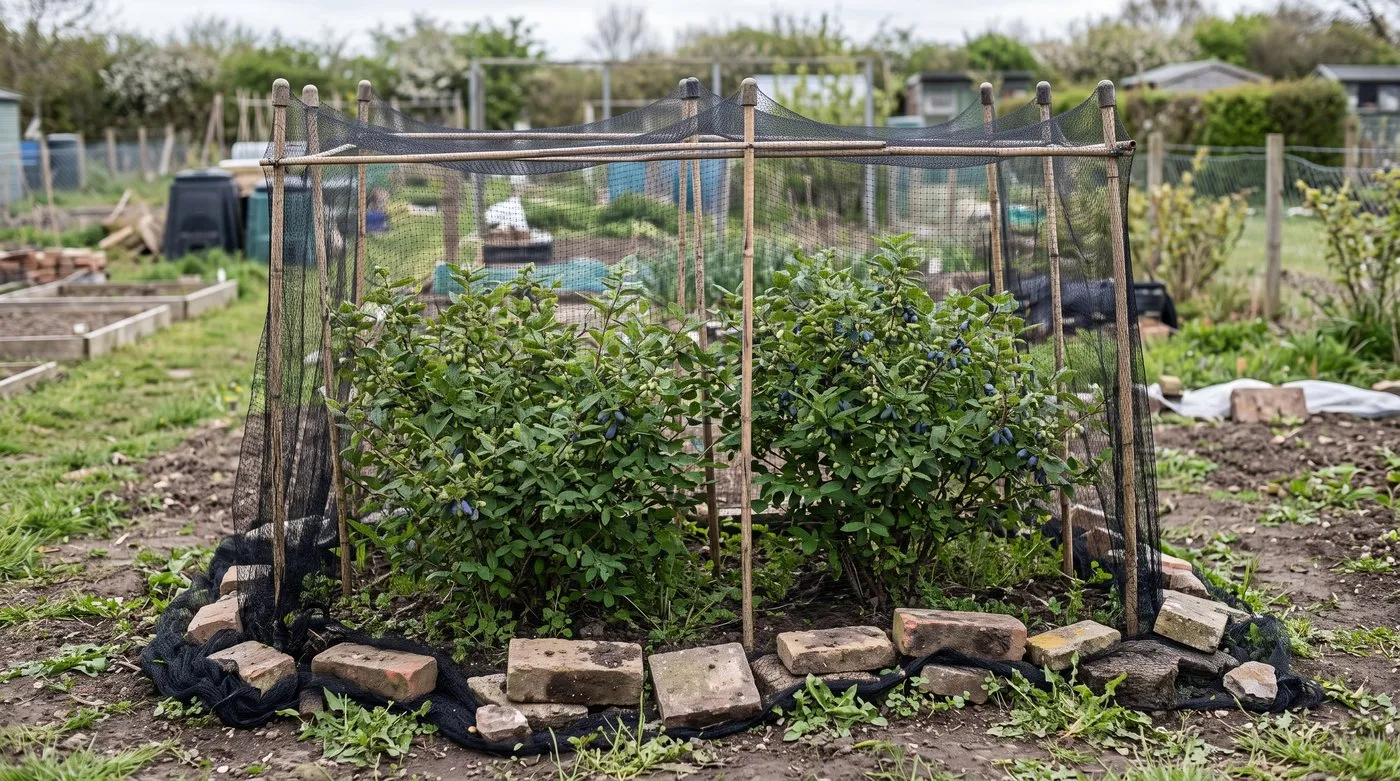
Drape netting over a frame rather than straight onto the bush, so birds can’t get tangled. Weigh the edges down too.
Aphids
Greenfly sometimes gather on young shoot tips in spring and curl the leaves a little. Squash them or wash them off with a jet of water. Ladybirds, hoverflies and blue tits will help, so skip the sprays.
Powdery mildew
In hot, dry summers older leaves may get a white dusting. Thin out crowded growth and water the soil, not the leaves. It’s cosmetic and doesn’t spoil the fruit.
Flowers but no fruit
Almost always a pollination problem. Check you have two different named varieties that flower at the same time. If you have two of the same, or two unlabelled plants, add a different named variety.
Slow early growth
Honeyberries are slow for the first couple of years while the roots settle. That’s normal. Don’t overfeed to hurry them along. They’ll get going from about year three.
Honeyberry compared to other soft fruit
How does honeyberry stack up against raspberries, blueberries and gooseberries?
| Honeyberry | Blueberry | Raspberry | Gooseberry | |
|---|---|---|---|---|
| Harvest | May to June | July to September | June to October | June to July |
| Soil | Most soils | Acid only | Slightly acid to neutral | Most soils |
| One plant enough? | No, needs two varieties | Yes, better with two | Yes | Yes |
| Effort | Very easy | Medium | Medium | Easy |
| Bird netting | Essential | Recommended | Recommended | Sometimes |
Honeyberry fills the gap before other fruit is ready, grows where blueberries won’t and needs very little looking after. If you already grow the classics, it’s a fun addition.
Where to buy honeyberry plants in the UK
Specialist fruit nurseries are the best place to look, and many send out bare-root plants from November to March. Garden centres sometimes have potted plants in spring, but the choice is smaller.
Always buy named varieties so you know you’ve got two different ones. Avoid unlabelled plants sold just as “honeyberry”.
Short on space? Honeyberries sit nicely alongside dwarf fruit trees in a small fruit garden, and they’re finished before the tree fruit begins.
Month-by-month honeyberry calendar
| Month | What to do |
|---|---|
| January to February | Prune established bushes. Order bare-root plants. |
| March | Scatter fertiliser around each bush. Start liquid feeding pots. |
| April | Check shoot tips for aphids. Put netting up before berries colour. |
| May | Start picking. Keep pots watered. |
| June | Finish picking the later varieties. Take the netting off. |
| July | Water young plants in dry spells. Stop feeding pots. |
| August to September | Very little to do. |
| October to November | Plant new bushes. Mulch with bark or compost. |
| December | Nothing to do. The bushes are dormant and frost-proof. |
Frequently asked questions
What does honeyberry taste like?
Like a mix of blueberry and raspberry. They’re tangy and sweet, with a hint of blackcurrant. Sweetness varies between varieties, with Morena and Blue Velvet among the sweetest. Berries eaten straight off the bush taste best.
Do I need two honeyberry plants to get fruit?
Yes, and they must be two different varieties. A single bush, or two of the same variety, will flower but won’t set fruit. Plant them close together so bumblebees can carry pollen between them.
When do honeyberries fruit in the UK?
From mid-May to early June in most of the UK. That makes them one of the earliest fruits you can pick. Gardens in the south pick first, and northern and Scottish gardens follow from late May.
Can I grow honeyberry in a container?
Yes, they do well in big pots. Use a large pot of peat-free compost with some grit mixed in. You still need two different varieties, so grow them in two pots side by side. Water regularly in summer and give a liquid feed every fortnight from March to July.
Are honeyberries the same as blueberries?
No, they’re quite different plants. Honeyberries are related to honeysuckle, while blueberries are related to heather. Honeyberries grow happily in ordinary or chalky soil, but blueberries need acid soil. Honeyberries are also long rather than round.
How big does a honeyberry bush get?
Most grow to about 1.2-1.8m tall and 1-1.5m wide. That’s similar to a blackcurrant bush. They grow slowly for the first couple of years, then speed up.
Do birds eat honeyberries?
Yes, birds love them. Blackbirds, thrushes and starlings can strip a bush in days. Net your plants from late April, draping fine netting over a frame of canes rather than straight onto the bush, so birds don’t get tangled.
Our team produces practical UK gardening guidance from source research, contributor records and established horticultural practice. Editorial standards are overseen by Matt W.