Key takeaways
- Sweet alyssum is Lobularia maritima, an annual; gold dust alyssum is a different, perennial plant
- Press the tiny seed onto the compost surface and barely cover it
- Plant 15cm apart in full sun on free-draining soil
- Trim back by about half in July for a second flush of flowers
- The open flowers bring in hoverflies, whose larvae eat aphids on nearby crops
Sweet alyssum is one of the easiest scented annuals you can grow. It makes a low white carpet along paths and pot edges, smells of honey on a warm evening and keeps flowering until the frosts. The trick most people miss is a quick haircut in July, which brings a second flush instead of a tired, seedy plant.
This guide covers picking the right plant, sowing the tiny seed, where to plant it, the July trim and how alyssum helps your veg beds.
Sweet alyssum or gold dust alyssum: which one have you got?
Check the botanical name before you buy, because two unrelated plants share the name. Sweet alyssum is Lobularia maritima. It is a low, spreading annual, 8-15cm tall, covered in tiny honey-scented flowers from June to the first frosts.
Gold dust alyssum is Aurinia saxatilis, still sold as Alyssum saxatile. It is a woody perennial for walls and rockeries, with grey-green leaves and bright yellow flowers in April and May. It comes back each year but only flowers in spring.
So if you want a summer-long white edging, you need Lobularia. If you want a permanent wall plant, you need Aurinia. Everything below is about sweet alyssum.
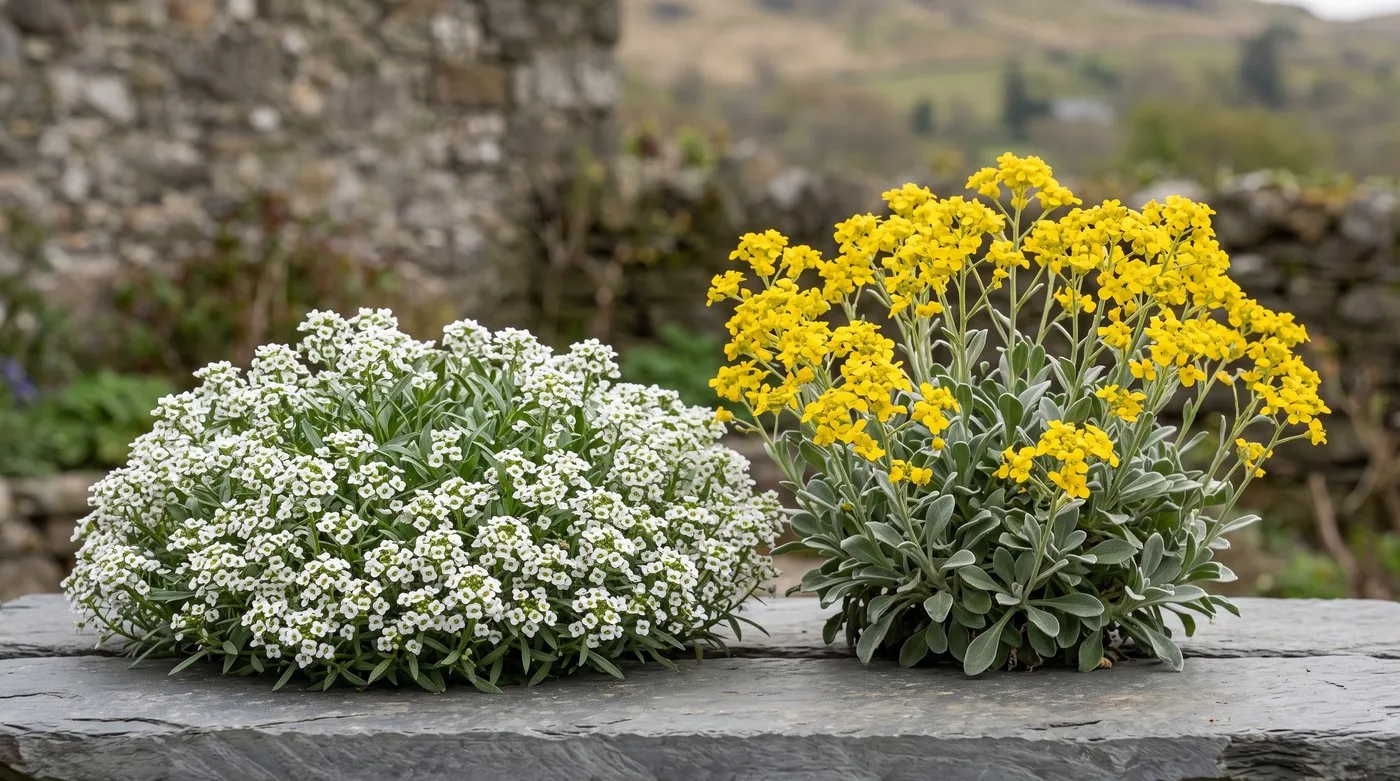
Same common name, very different plants. White sweet alyssum flowers all summer, while yellow gold dust alyssum is a spring perennial.
Which alyssum varieties grow best in the UK?
Any good white variety will do for edging, but a few stand out.
- ‘Snow Crystals’ has larger white flowers than most and keeps a neat, rounded shape. A good choice for path edges.
- ‘Carpet of Snow’ is the classic low white carpet, cheap and easy from seed.
- ‘Royal Carpet’ and ‘Oriental Night’ give deep purple flowers, lovely beside white types.
- ‘Snow Princess’ is a sterile hybrid sold as young plants, not seed. It doesn’t set seed, so it keeps flowering without a trim and fills a hanging basket on its own.
For long runs of edging, seed is far cheaper than plugs. Save bought plants like ‘Snow Princess’ for baskets and pots where one plant does a big job.
How to sow alyssum seed
Sow alyssum indoors in March or April, or straight outdoors from late April once the soil has warmed. The seed is tiny and germinates best with light, so press it onto the surface and barely cover it, if at all.
- Fill a seed tray or modules with moist, peat-free seed compost.
- Scatter seed thinly, or drop a pinch of three or four seeds into each module.
- Press it gently into the surface with a flat piece of wood.
- Water from below by standing the tray in a little water, so the seed isn’t washed into the corners.
- Keep it on a bright windowsill at around 15°C. Seedlings usually appear in one to two weeks.
There’s no need to thin modules to one seedling. A little clump of three or four plants out as one and makes a fuller carpet faster. Harden plants off for a week or two and plant out after the last frost, usually mid to late May. The guide to hardening off bedding and half-hardy plants walks through it.
For direct sowing, rake the soil fine, scatter the seed where it is to flower and thin seedlings to about 15cm apart. The direct-sowing guide for hardy annuals covers the technique.
Gardener’s tip: Sow a second small batch in early May. It comes into flower just as you trim the first plants in July, so the edge never has a gap.
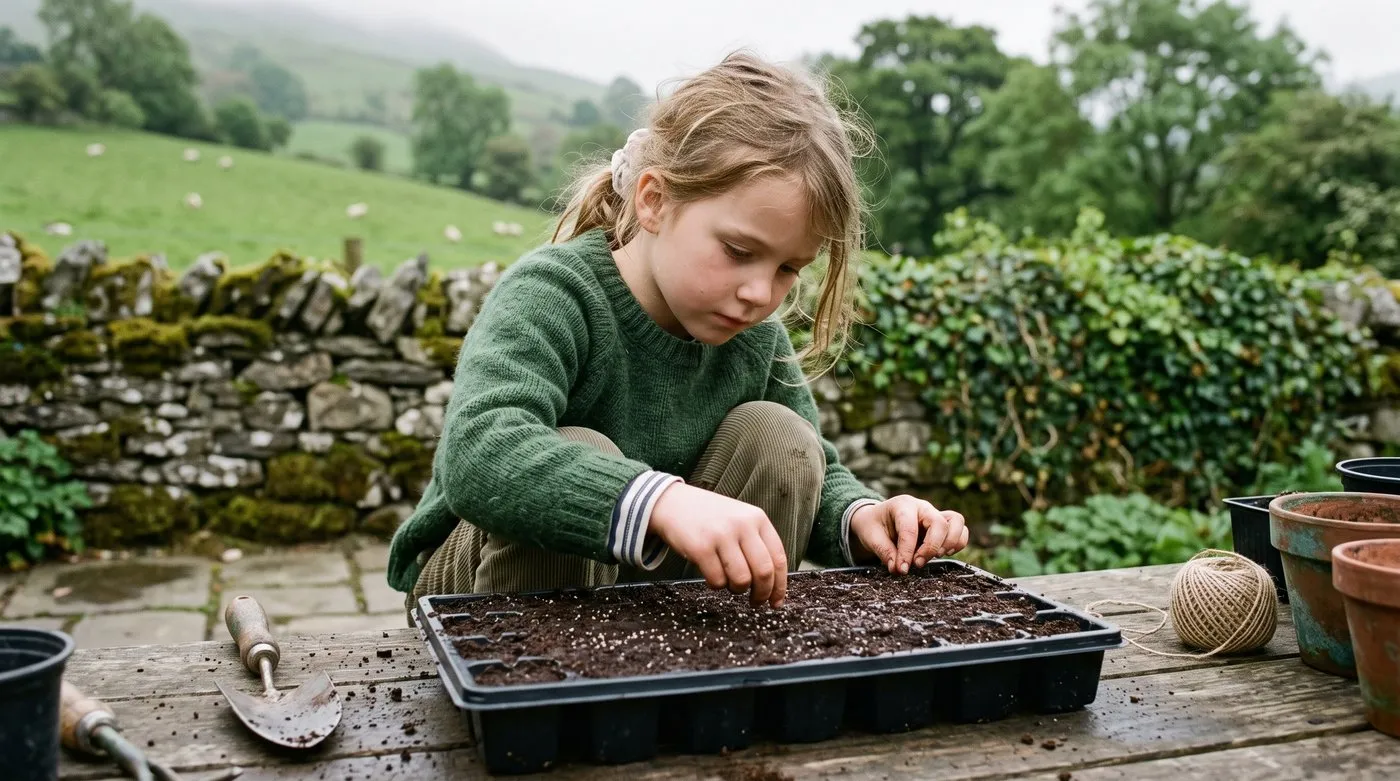
Alyssum seed is so small a pinch fills a module. Press it onto the surface rather than burying it, and little hands can do the job.
Where to plant alyssum for edging and gaps
Plant alyssum in full sun on free-draining soil, 15cm apart. It stays under 15cm tall and spreads 20-30cm, so it is perfect for the strip where a border meets a path.
A single row 15cm apart closes into a continuous edge by midsummer. Don’t cram plants closer to get a quicker result. Crowded crowns stay damp in a wet summer, which invites downy mildew, a greyish fuzz under the leaves that makes them yellow.
Alyssum is also a handy gap filler. Pop a few plants where spring bulbs have finished, or at the front of a border once early perennials fade. It likes lean soil and dislikes wet feet. On heavy clay, mix some grit into the planting strip or grow it in pots and raised edges instead.
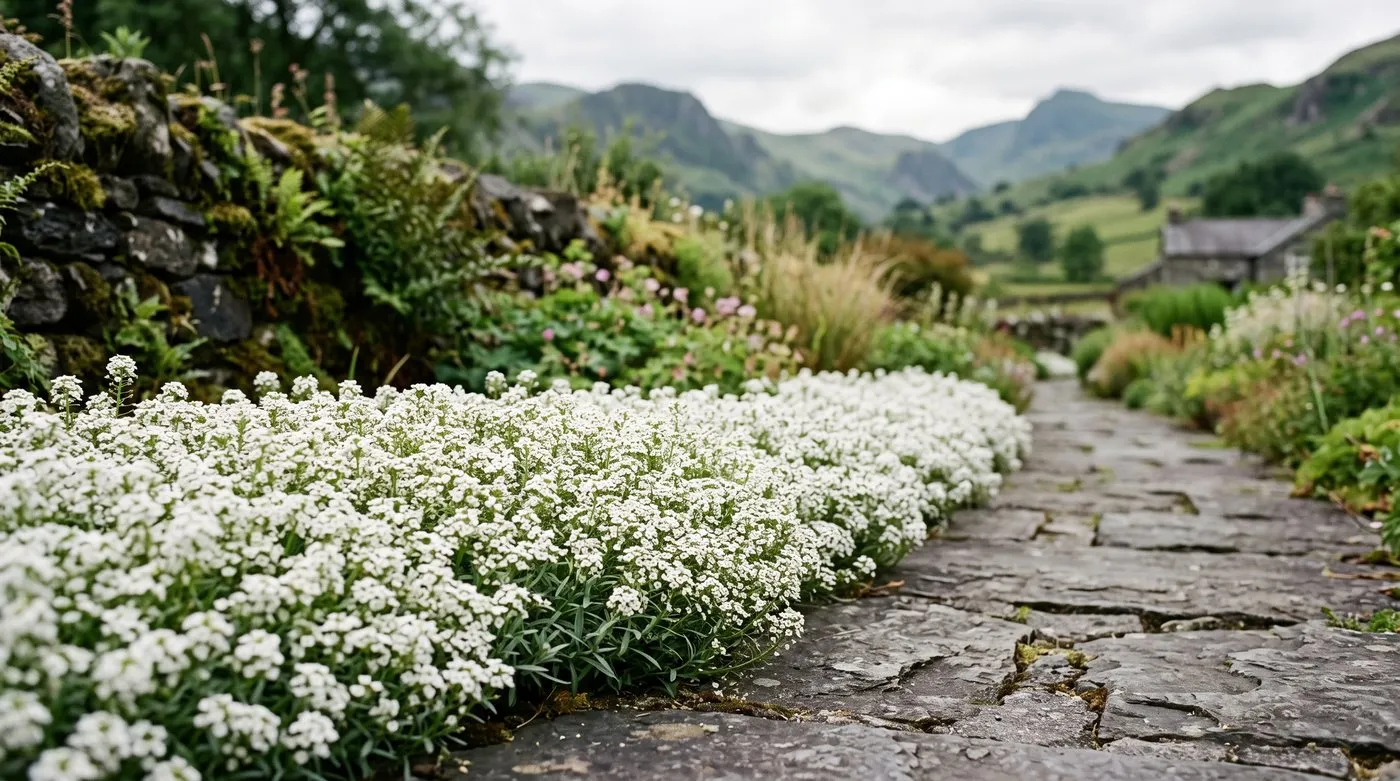
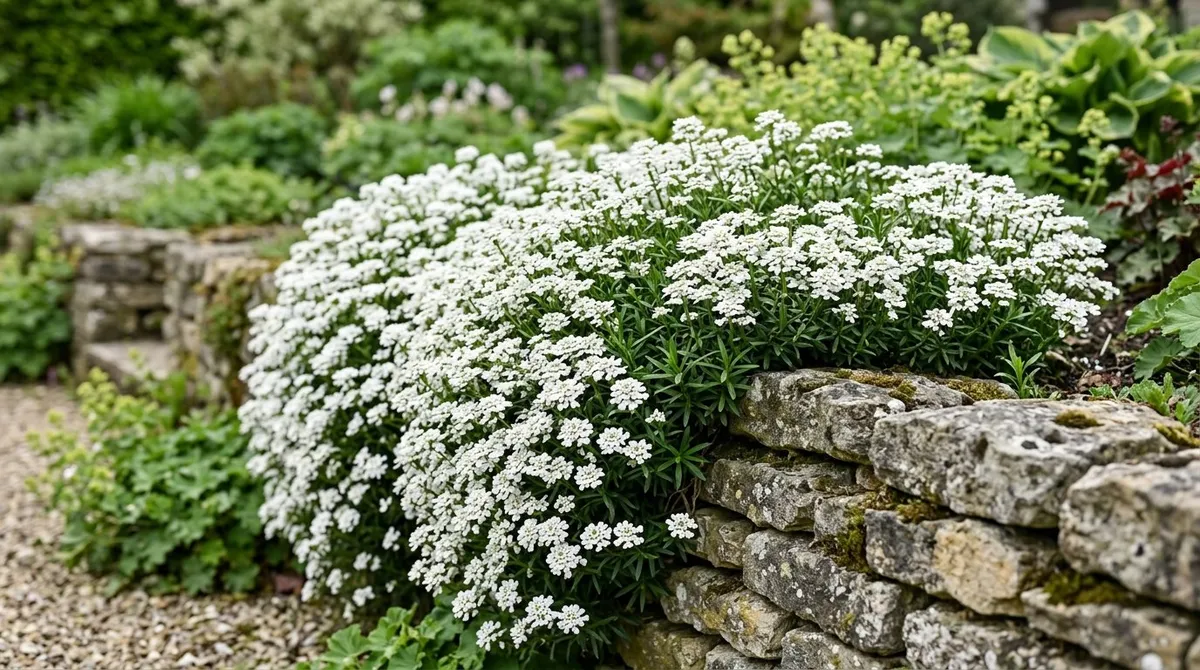
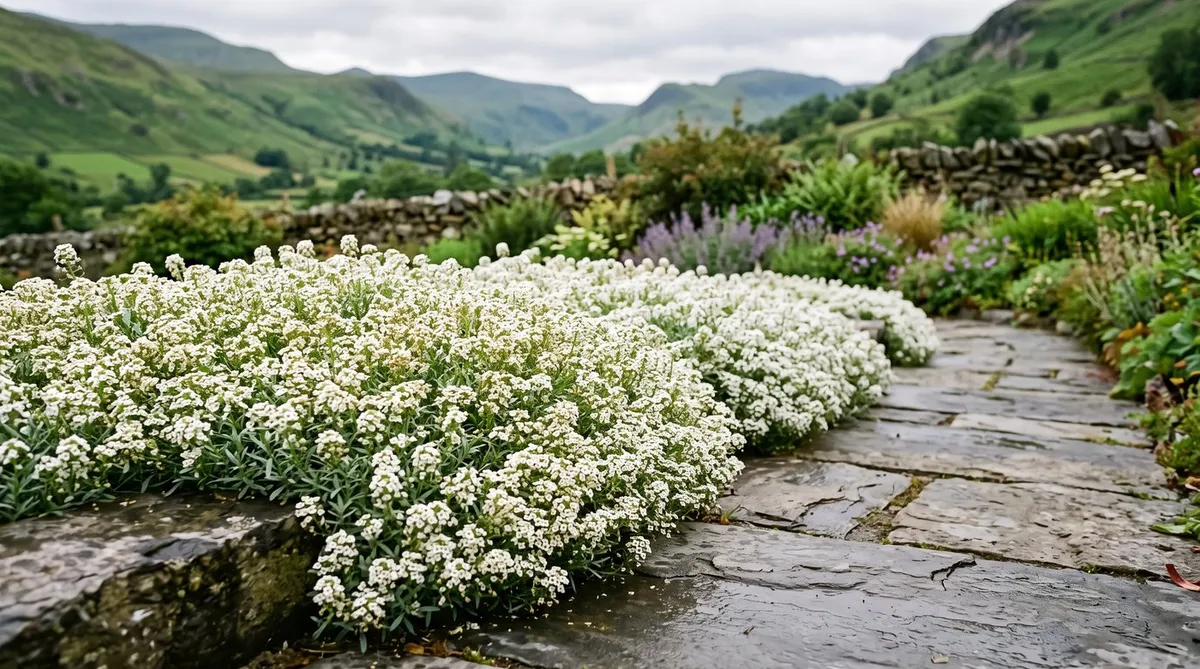
A single row planted 15cm apart soon knits into a solid white edge, softening the line between path and border.
Growing alyssum in pots and baskets
Alyssum is a great container plant. It spills over the rim, copes with drying out better than lobelia and adds scent near a door.
Plant five or so around the edge of a 30cm pot of peat-free multipurpose compost. Water when the top of the compost feels dry and give a liquid feed every couple of weeks from midsummer. Mixed with trailing blue lobelia, it makes the classic white-and-blue basket.
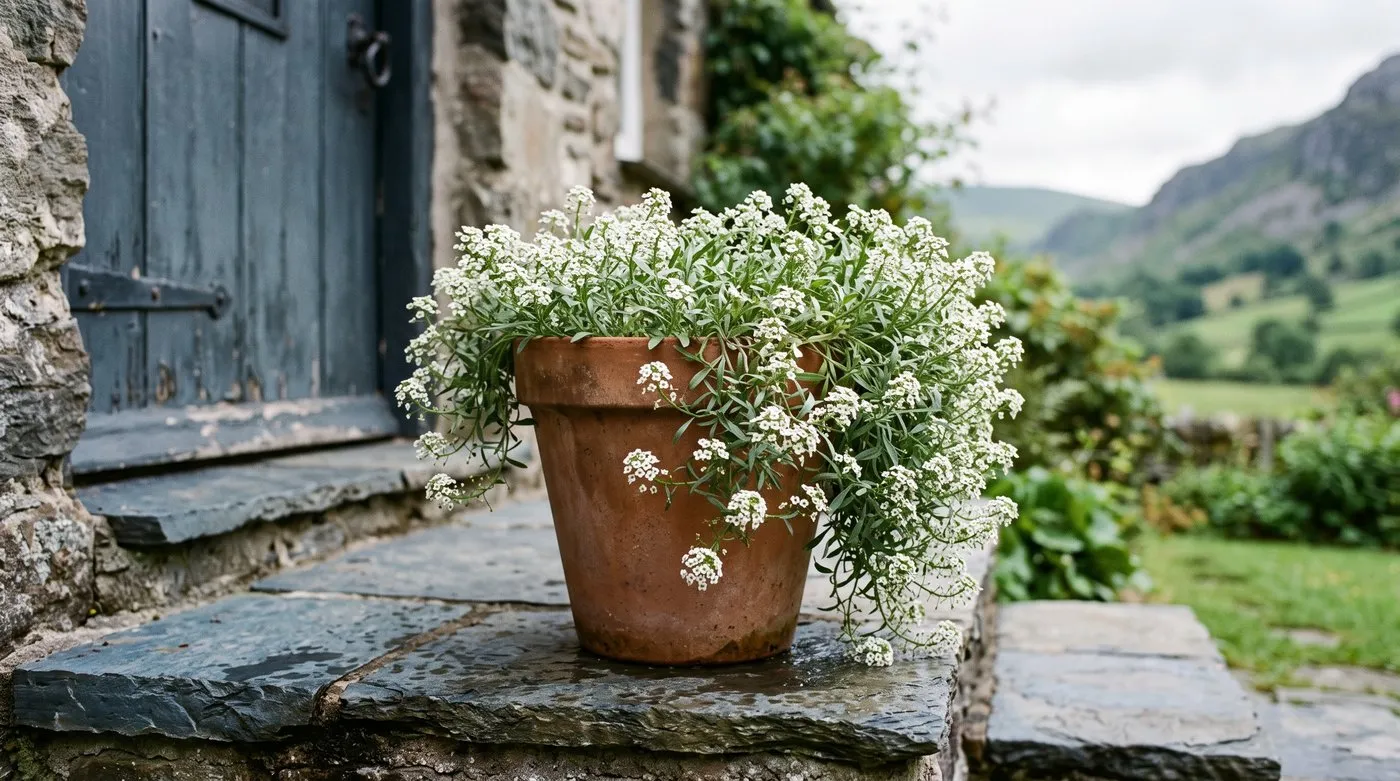
A pot of alyssum by the door gives you the honey scent every time you walk past. Trim it in July and it keeps going until autumn.
The July trim that gives you a second flush
Trim alyssum back by about half in early to mid July, as soon as it looks tired. This is the step that turns one flush into two.
By midsummer most plants start to open in the middle, flower less and show small green seed pods. Once seed sets, the plant slows down. Take a pair of hand shears and cut the whole plant back by around half. It looks brutal, but it works.
Water well afterwards and, on poor soil or in pots, give a liquid feed. New shoots soon break from the base and fresh flowers follow in a few weeks. They then carry on until the first hard frost.
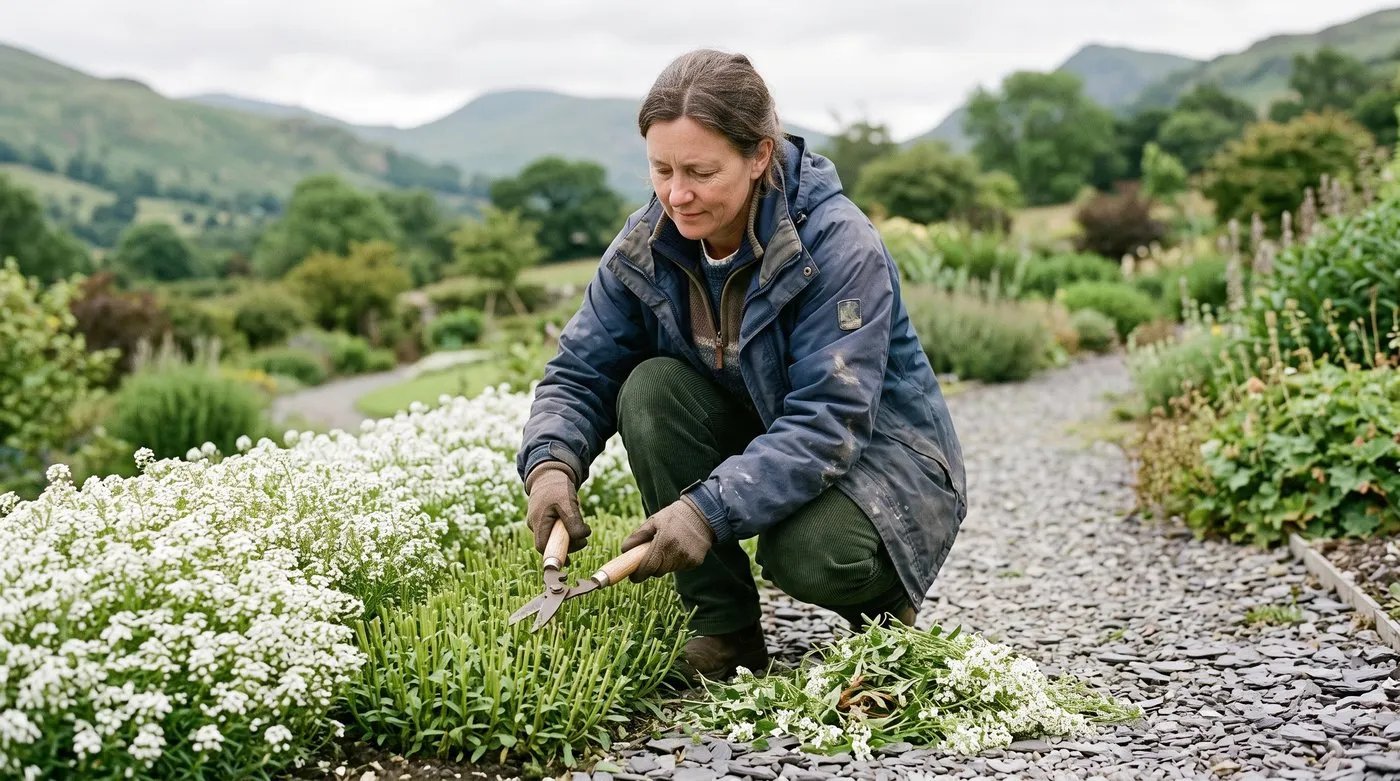
Shear the whole row at once rather than fiddling with single flowers. Fresh growth and a new flush of flowers soon follow.
Alyssum as a hoverfly magnet beside vegetables
Alyssum’s small, open flowers are easy for short-tongued insects to feed from, so it draws in hoverflies, small bees and tiny parasitic wasps. Adult hoverflies feed on the nectar, then lay eggs near aphid colonies. Their larvae eat aphids.
So a strip of alyssum along the edge of a bed of broad beans or brassicas puts helpers right where you need them. Sow it early indoors so it is flowering by late spring, when aphids start to build. The guide to companion flowers for UK veg beds suggests other good partners. Hoverflies in the garden helps you spot the adults and their larvae.
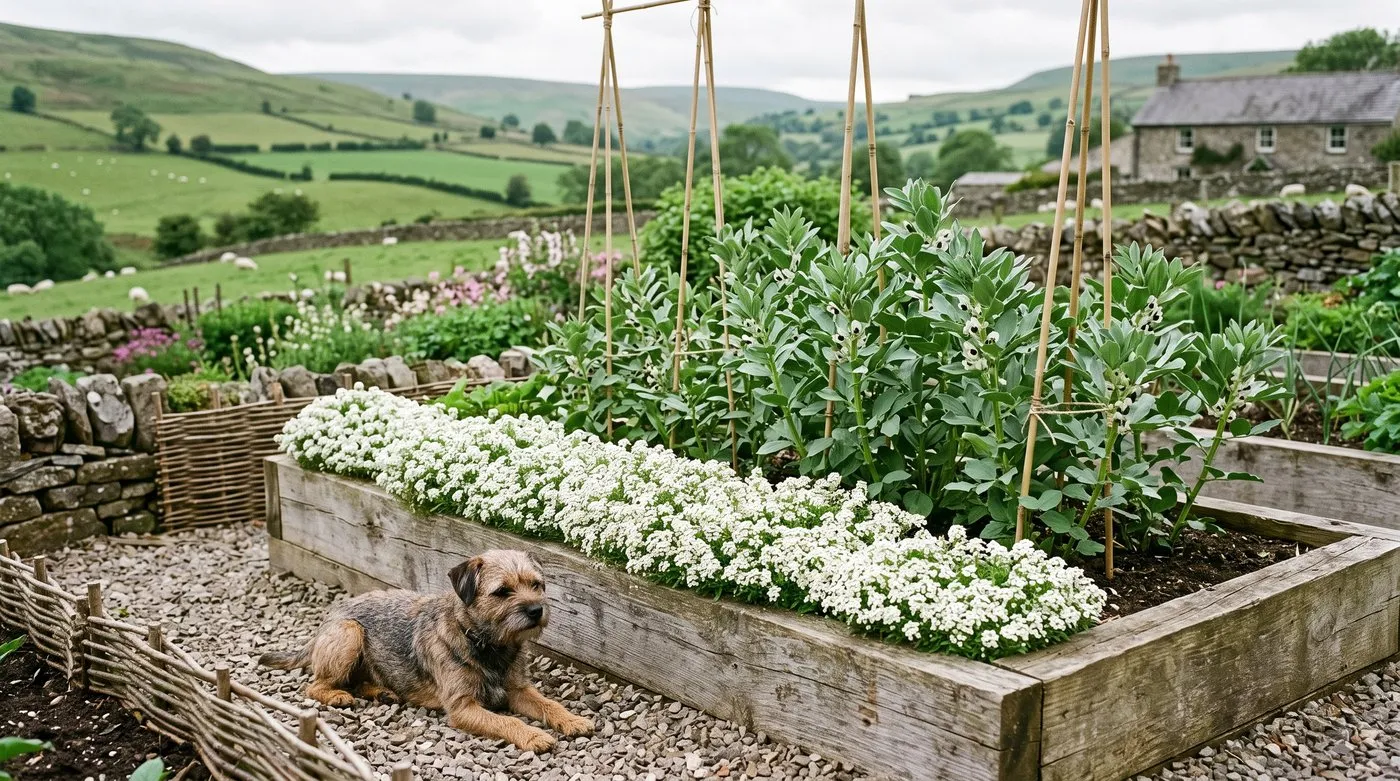
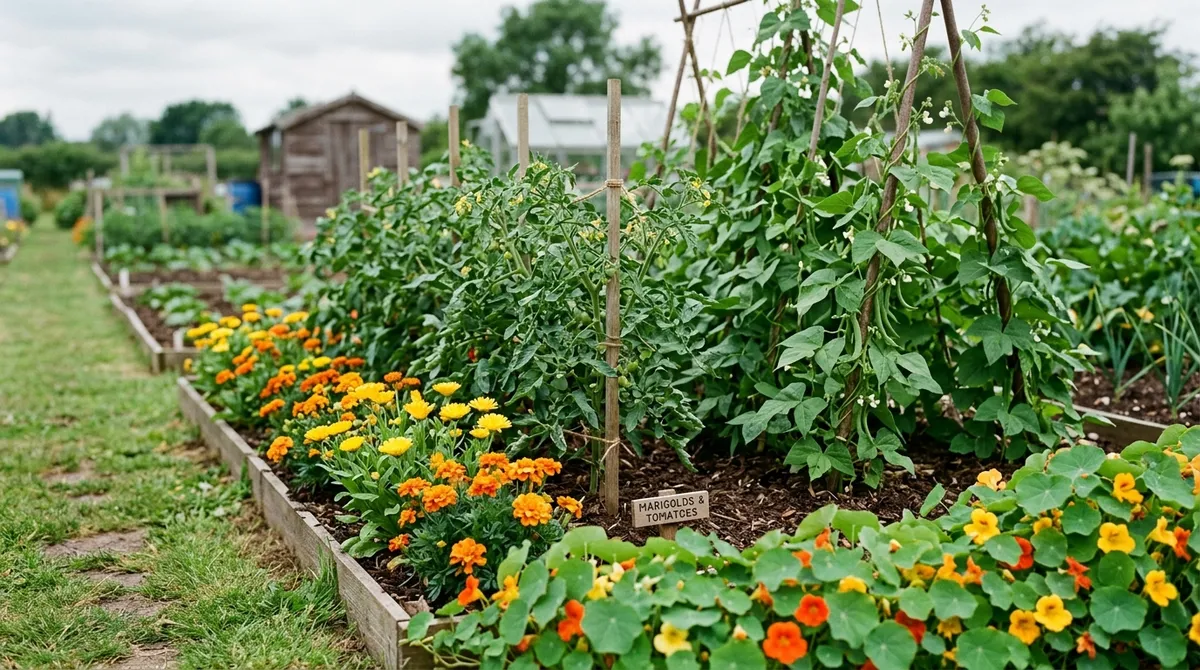
A band of alyssum along the bean bed feeds adult hoverflies. Their larvae then get to work on the aphids.
Why is my alyssum leggy and not flowering?
Leggy, patchy alyssum is almost always down to seed set, too little sun or soil that is too rich.
- Seed set: once pods form, flowering slows. Trim the plant by half in July rather than pulling it out.
- Shade: alyssum needs full sun to stay compact. Tucked behind taller plants, it stretches and flowers thinly. Move it to the front.
- Rich soil: lots of manure or high-nitrogen feed gives soft, leafy growth. Alyssum prefers lean, gritty ground. Only feed lightly after the July trim.
- Downy mildew: yellowing leaves with greyish fuzz beneath, usually in wet weather on crowded plants. Pull out the worst plants and give the rest more space.
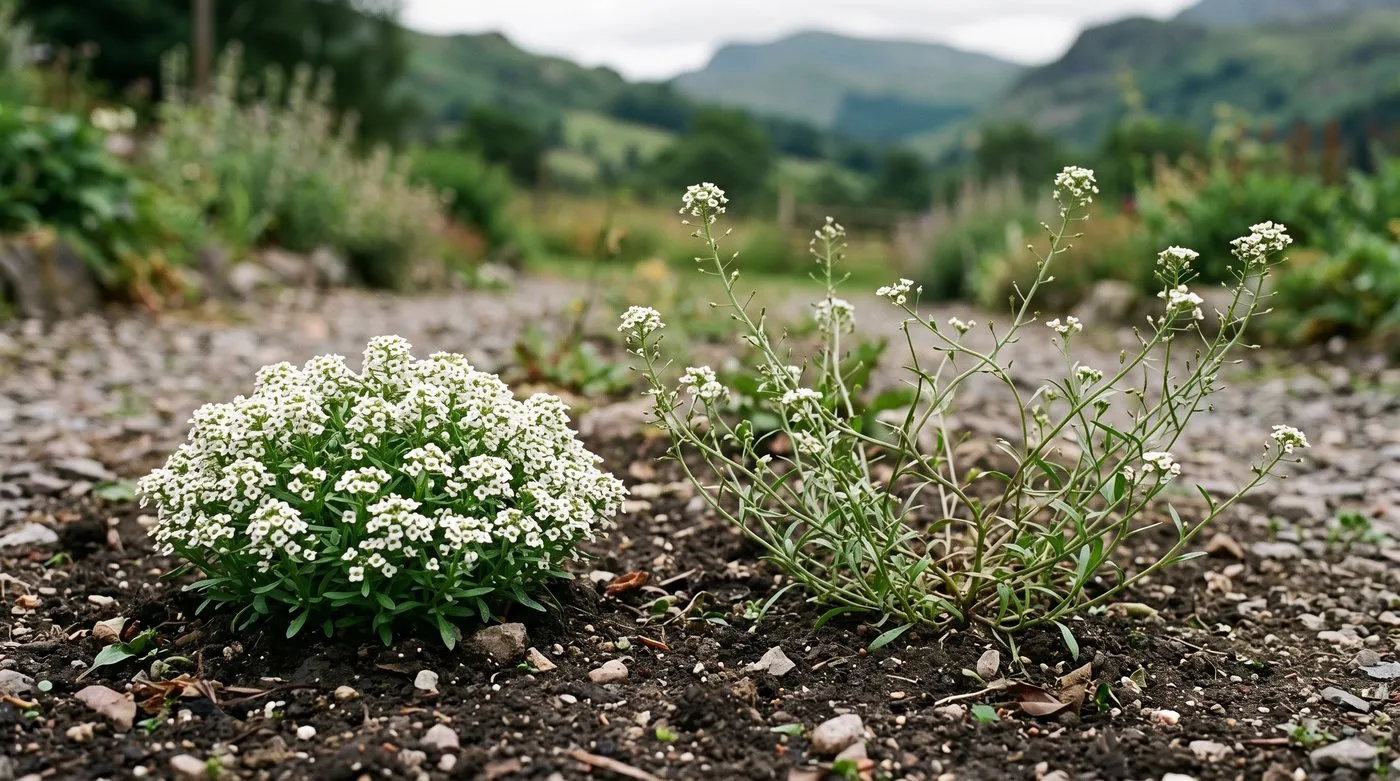
Left, a plant in full sun holding a tight dome of flowers. Right, the same plant short of light, stretched and thin.
Alyssum growing calendar
| Month | What to do |
|---|---|
| February | Order seed. Check the packet says Lobularia maritima |
| March | Sow indoors on a bright windowsill |
| April | Sow more indoors. Prick out or pot on clumps. Start hardening off late in the month |
| May | Plant out after the last frost, 15cm apart. Sow direct outdoors |
| June | First flowers. Water new plants in dry spells |
| July | Trim plants back by about half. Water and feed lightly |
| August | Second flush of flowers |
| September | Leave a few plants untrimmed if you want self-sown seedlings next year |
| October | Flowering carries on until the first hard frost |
| November | Pull out frosted plants and compost them |
Common mistakes with alyssum
- Burying the seed. The seed is tiny and likes light. Press it onto the surface instead of covering it with compost.
- Buying the wrong plant. Gold dust alyssum is a spring perennial and won’t give a summer carpet. Read the botanical name.
- Skipping the July trim. Waiting for a seedy plant to recover wastes weeks. Cut it back by half and it reflowers.
- Planting too close. Crowding keeps the crowns damp and invites mildew. Stick to about 15cm apart.
- Overfeeding. Rich soil means leaves rather than flowers. Keep it lean.
Alyssum self-seeds into gravel and paving cracks. That is charming along a path but a nuisance in a neat gravel drive. To keep it in check, trim before seed sets and clear old plants in autumn. For more plants that pop up year after year, see self-seeding plants for UK gardens.
Plant a partner for your alyssum
Alyssum does the ground-level job best, so pair it with something taller. Candytuft is a similar low edger if you want a change, and the easiest flowers to grow from seed gives you plenty of partners. Browse all our growing guides for your next sowing.
Frequently asked questions
Is alyssum an annual or a perennial?
Sweet alyssum is an annual, though it often self-seeds. Grow Lobularia maritima fresh from seed each year. The perennial sold as gold dust alyssum is a different plant, Aurinia saxatilis.
When should I sow alyssum seed in the UK?
Sow indoors in March or April, or outdoors from late April. Indoor sowings give plants ready to go out after the last frost. Direct sowings work well but flower a few weeks later.
Why has my alyssum stopped flowering in midsummer?
It has started setting seed, so it slows down flowering. Trim the whole plant back by about half, water it well, and new flowers usually follow within a few weeks.
Does alyssum need full sun?
Full sun gives the best flowering, though it copes with light shade. In shade it stretches, flops open and flowers more thinly.
How far apart should alyssum plants be spaced?
Space plants about 15cm apart. That gives a solid carpet by midsummer while leaving enough air around the crowns to keep downy mildew away.
Is alyssum good for bees and hoverflies?
Yes, its small open flowers suit hoverflies and small bees. Hoverfly larvae eat aphids, so a strip beside beans or brassicas is a handy helper.
Can alyssum survive a UK winter?
Rarely, so treat it as an annual. A plant may limp through a mild winter in a sheltered coastal garden, but self-sown seedlings usually replace it anyway.
Our team produces practical UK gardening guidance from source research, contributor records and established horticultural practice. Editorial standards are overseen by Matt W.