Key takeaways
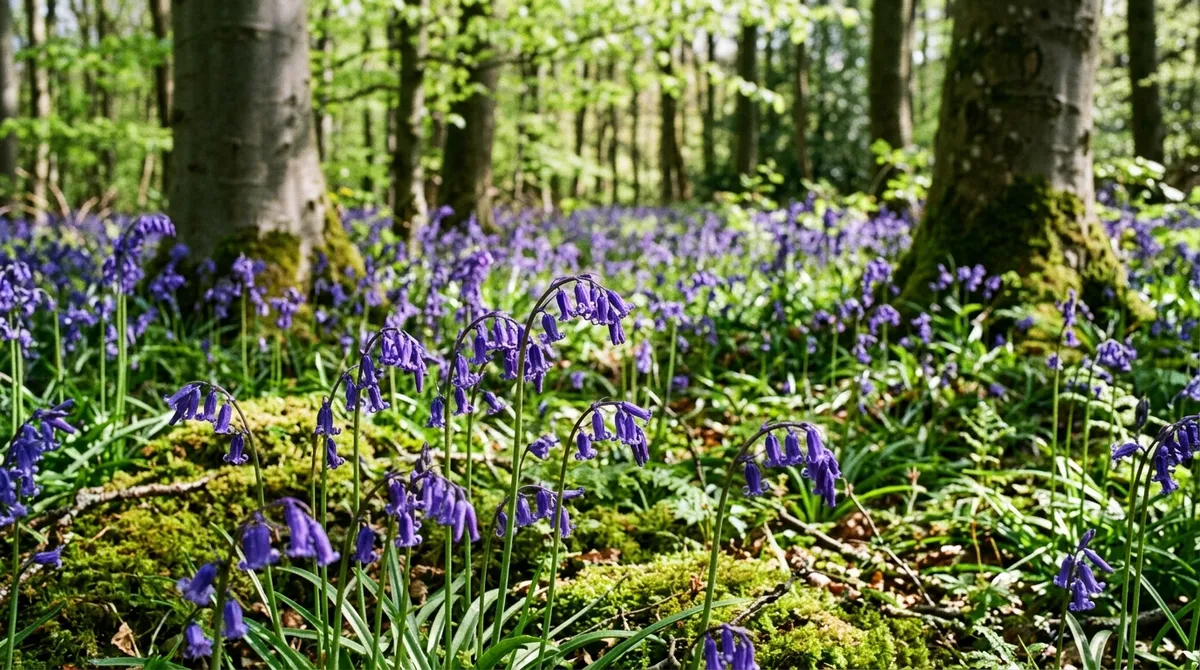
- Native bluebells nod to one side, smell sweet and have cream pollen
- Spanish bluebells stand upright, have flowers all round the stem and blue pollen
- The two cross to make a hybrid, which is why Spanish bluebells are a problem near the wild
- Dig the bulbs out about 30cm deep, spring and autumn, for three or four years
- Bin the bulbs, never compost them or dump them in the countryside
- Replant with native bulbs from a nursery selling UK-grown stock
The bluebell in your garden may not be the same as the one in your local wood. Lots of garden bluebells are Spanish (Hyacinthoides hispanica) or a cross between Spanish and native. Our native bluebell (Hyacinthoides non-scripta) is happiest in old woodland, and garden escapees crossing with it are a real worry for wild bluebell woods.
Here’s how to tell which you’ve got, how to clear the Spanish ones over a few years, and how to replant with the real thing.
How to identify a native British bluebell
The native bluebell has six easy clues when it’s in full flower in late April or early May:
- Stem: arches over at the top like a shepherd’s crook
- Flowers: all hang down one side of the stem
- Flower shape: narrow bells with the petal tips curled right back
- Pollen (anthers): cream or pale yellow inside the flower
- Leaves: narrow, about 1-1.5cm wide
- Scent: strong and sweet
The nodding stem is the quickest clue from a distance. If a bluebell stands bolt upright, it isn’t native. Cream pollen confirms it up close.
Carpets of native bluebells under beech, oak or hazel are often a sign of old, long-standing woodland, which is part of why they’re so special.
For more native wild flowers, see our wildflower identification guide for the UK.
How to identify a Spanish bluebell
Hyacinthoides hispanica looks similar at a glance, but every clue is different:
- Stem: upright and straight
- Flowers: all the way round the stem
- Flower shape: wider, more open bells with less curled tips
- Pollen (anthers): blue
- Leaves: broad and strap-like, up to about 3.5cm wide
- Scent: faint or none
The upright stem and blue pollen are the two best clues. Upright plant, flowers all round, blue pollen? It’s Spanish. The leaves are much broader than the native’s and often glossy.
Spanish bluebells were grown in gardens because they’re tough and easy. They’ve since escaped over garden fences into verges, hedges, churchyards and wood edges, spreading by seed and by bulbs dividing.
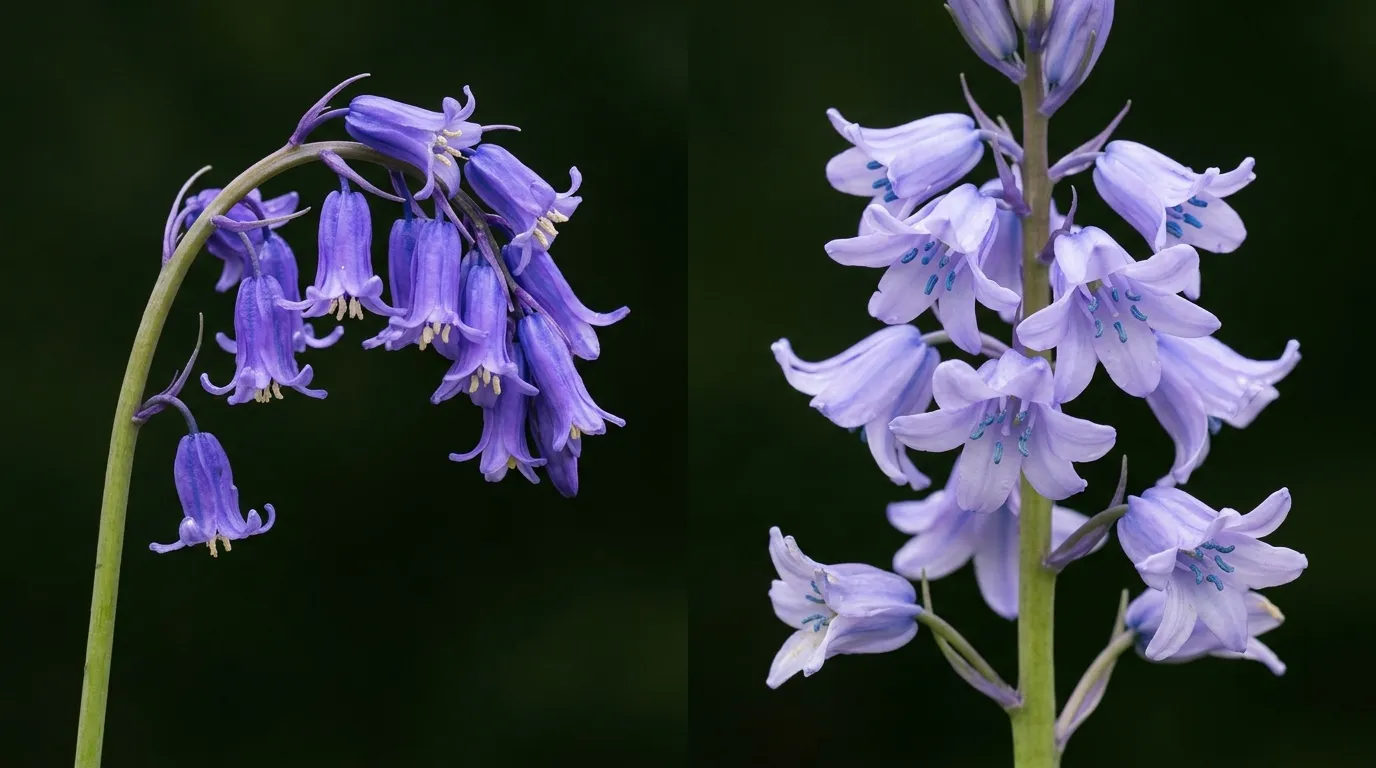 The two clues that settle most cases. Native on the left with cream pollen and a nodding, one-sided stem. Spanish on the right with blue pollen and flowers all round an upright stem.
The hybrid problem
The real issue isn’t the Spanish bluebell itself. It’s that it crosses with the native. The hybrid, Hyacinthoides x massartiana, sits in between on every clue: mid-violet flowers, a half-nodding stem, medium leaves and a faint scent.
The hybrid is fertile, so it can cross back with both parents. Bees carry the pollen from plant to plant. Near wild bluebell woods, garden Spanish bluebells and hybrids can slowly mix into the native population.
The charity Plantlife has found Spanish or hybrid bluebells in a good share of wild bluebell sites. At its worst, a patch that looks native turns out to be hybrid when you look closely at the leaves and stems.
That’s why clearing Spanish bluebells matters, especially if you live near woodland. Fewer Spanish plants means less of their pollen reaching the wild ones.
Comparison table - native vs Spanish vs hybrid
| Feature | Native | Hybrid | Spanish |
|---|---|---|---|
| Stem | Arching, nodding tip | Slightly bent | Upright and straight |
| Flowers | All on one side | Mostly one side | All the way round |
| Pollen colour | Cream | Pale lilac or cream | Blue |
| Leaves | Narrow | Medium | Broad |
| Scent | Strong and sweet | Faint | Faint or none |
| Petal tips | Curled right back | Slightly curled | Open bell |
| Where you find it | Old woodland | Gardens, roadsides | Gardens, escapees |
| Protected? | Yes in the wild | No | No |
The hybrid is the hardest to spot because it’s in the middle on everything. Leaf width is the most useful single clue. A bluebell with leaves much wider than your little finger is very likely hybrid or Spanish.
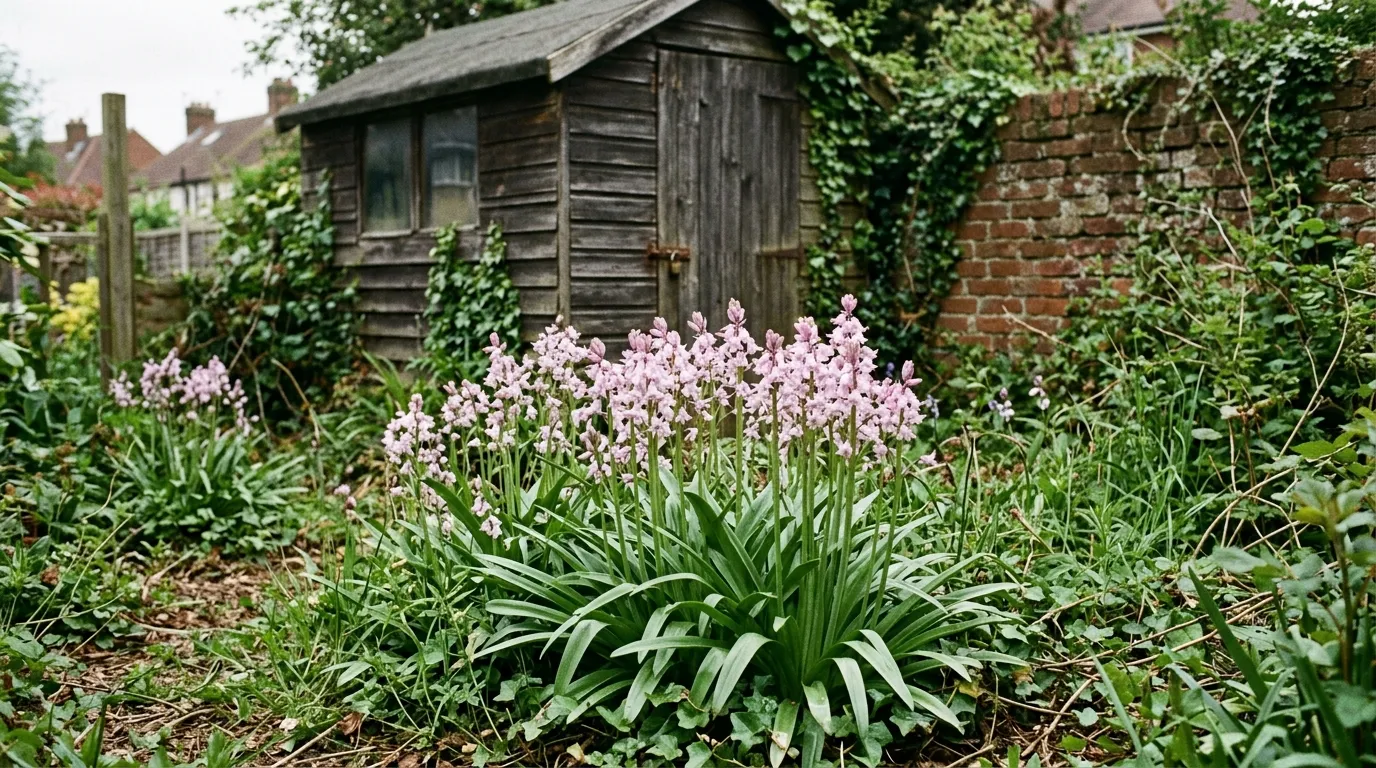 Spanish bluebells come in pink and white as well as blue, and soon fill a neglected corner.
The legal context
Our native bluebell is protected under the Wildlife and Countryside Act 1981. In practice that means:
- You mustn’t dig up bluebells from the wild
- Wild-collected bulbs can’t be sold
- Bulbs for sale have to come from cultivated stock
Spanish bluebells and the hybrid aren’t protected. You can dig them up, move them around your own garden and throw them away.
But they are on schedule 9 of the same Act in England and Wales. That makes it an offence to plant them in the wild or let them spread there. So never tip garden waste with Spanish bluebell bulbs on a verge, in a hedge or in a wood.
In short: dig up your Spanish bluebells, bin them, and replant with native bulbs from a nursery that sells UK-grown stock.
The 3 to 4 year removal protocol
Clearing Spanish bluebells takes a few years. The bulbs sit deep, multiply, and any you miss will come back. One season on its own isn’t enough.
Here’s the plan:
- October dig (year one): wait until the leaves have died down. Mark out the patch with canes. Dig the whole area about 30cm deep with a long-bladed spade. Sieve the soil if you can, and bag every bulb, big or small. Put the soil back.
- April dig (year one): when the leaves come up in spring, follow each one down to its bulb. Lift it with a hand fork and bin it.
- Repeat in October and April for years two, three and four. There’ll be fewer each time if you dig deep enough.
- Year four, April: if only a handful pop up, the patch is as good as clear.
- Year five, autumn: replant with native bulbs from a nursery that sells UK-grown native stock.
The biggest mistake is digging too shallow. The bulbs sit deeper than you’d think. A fork that only goes in 10cm leaves the deepest ones behind, and those bring the patch back. Go down about 30cm.
The second mistake is composting them. Bulbs survive a garden compost heap and pop up wherever you spread it next year. Put them in your household rubbish bin instead.
If you’re also tackling heavy ground, our no dig heavy clay soil guide has tips for working clay without wrecking it.
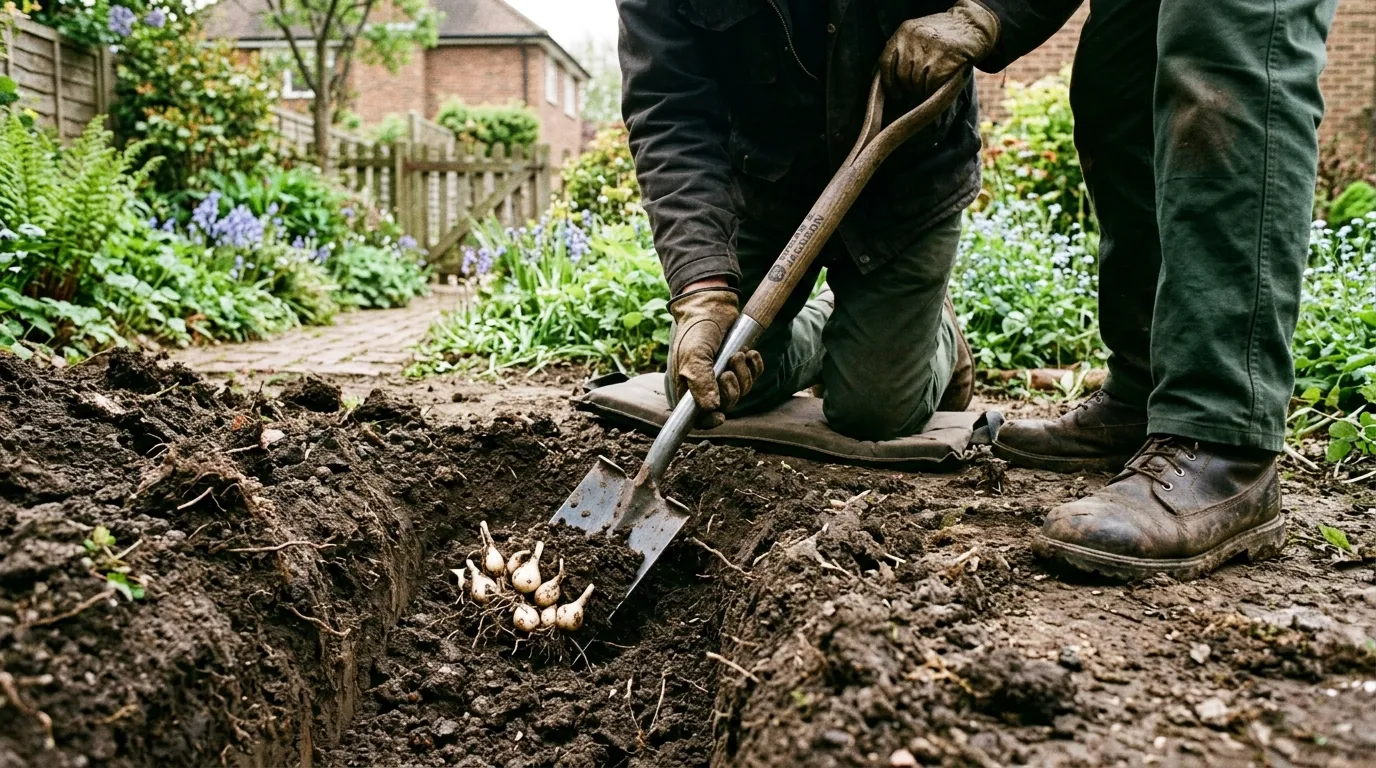 The autumn dig, lifting every bulb from about 30cm down. Go deep or the deepest bulbs will be back.
Glyphosate as a last resort
For patches you can’t dig, like under decking, against a wall or tangled in a neighbour’s plants, a glyphosate weedkiller gel is the fallback. Always follow the label.
How to do it:
- Wait until the leaves are fully out but before the flowers open, usually late April.
- Use a gel, not a spray, so nothing drifts onto other plants.
- Brush the gel onto two or three leaves per plant.
- The plant carries it down to the bulb over a few weeks, and the leaves yellow and die.
- Treat any leaves that come back the following spring.
Native bluebell as the replanting choice
Once the Spanish ones are gone, replant with our native bluebell, Hyacinthoides non-scripta. Buy bulbs from a nursery selling UK-grown native stock. Never take them from the wild.
How to plant:
- When: September to November, while the bulbs are dormant
- Depth: 10cm to the top of the bulb
- Spacing: 5-10cm apart for a natural look
- Where: dappled shade under deciduous trees, a shady border edge or a woodland-style bed
- Soil: free-draining, with plenty of leaf mould mixed in
- Mulch: about 5cm of leaf mould or composted bark after planting
- Year one: don’t expect many flowers yet. Give them time to settle.
Plant in loose groups rather than even rows to copy the way they grow in the wild. Over a few springs they’ll spread into a lovely carpet.
For more on what to plant alongside them, see how to grow bluebells in the UK.
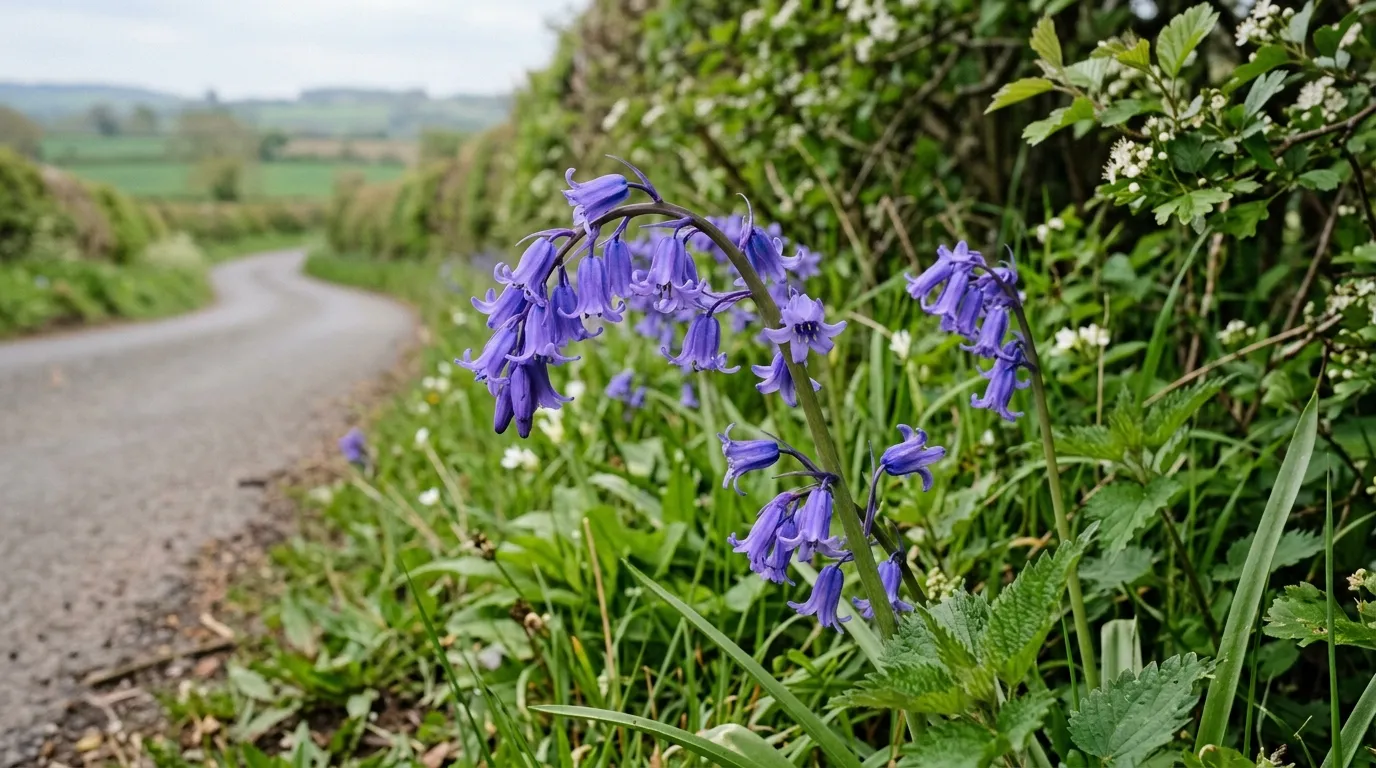 A hybrid bluebell at the edge of a country lane. Mid-violet flowers, a half-nodding stem and medium leaves make it the trickiest of the three to name.
Month-by-month removal calendar
| Month | What to do |
|---|---|
| January | Look over the patch and mark its edges with canes. |
| February | Order native bulbs for autumn from a nursery selling UK-grown stock. |
| March | Watch for the first leaves. Check the pollen colour when the flowers open. |
| April | Spring dig: follow the leaves down and lift the bulbs. Bag them for the bin. |
| May | Catch any late leaves. Use glyphosate gel on spots you can’t dig. |
| June | Let any leftover leaves die down. |
| July | Check for anything you missed. |
| August | Leave the soil be, so you don’t scatter hidden bulbs. |
| September | Order native bulbs if you haven’t already. Plan where they’ll go. |
| October | Autumn dig: lift the whole patch about 30cm deep and bag the bulbs. |
| November | Plant native bulbs in areas that are clear. Mulch with leaf mould. |
| December | Note how many bulbs you found this year, so you can see progress. |
Common mistakes to avoid
- Digging too shallow. The deepest bulbs are the ones that bring the patch back.
- Composting the bulbs. They survive a compost heap. Bin them.
- Only digging in spring. Some bulbs sit deeper than the leaves suggest. The autumn dig catches them.
- Just cutting the flowers. It stops seeds, which helps, but the bulbs are still there. Dig as well.
- Buying cheap “bluebell” mixes. Some contain Spanish or hybrid bulbs. Buy from a nursery that clearly sells UK-grown native stock.
- Stopping too soon. A few bulbs still turn up in years three and four. See it through.
Related reading: for another easy way to plant natives, see our guide to bulbs planted in the green.
Frequently asked questions
How do I tell Spanish bluebells from native bluebells?
Native bluebells nod, Spanish bluebells stand up. Look inside an open flower. The native has cream pollen and a sweet scent. The Spanish has blue pollen, broad leaves and little scent. Native flowers hang down one side of the stem, while Spanish ones go all the way round.
Are Spanish bluebells illegal in the UK?
No, you can grow them in your garden. But in England and Wales it’s an offence to plant them or let them spread in the wild, so never dump them. Wild native bluebells are protected too. It’s illegal to dig them up from the wild, and wild bulbs can’t be sold.
How do you get rid of Spanish bluebells permanently?
Dig out every bulb, about 30cm deep, for three or four years. Do it in spring and again in autumn. Bin the bulbs with your household rubbish and never compost them. Any left behind will come back. For spots you can’t dig, a glyphosate gel brushed on the leaves is a last resort.
Can I have native bluebells in my garden?
Yes, and they’re lovely. Buy bulbs from a nursery that sells UK-grown native stock. Plant them in autumn, 10cm deep, in dappled shade with some leaf mould. Never take bluebells from the wild.
Why are Spanish bluebells a problem?
They cross with our native bluebells. The hybrid that results is fertile and spreads too. Over time this blurs the native bluebell, one of Britain’s best-loved wild flowers, into something less distinct. Plantlife has found hybrid or Spanish bluebells in many wild bluebell sites.
When is the best time to plant native bluebells?
September to November, while the bulbs are dormant. Plant them 10cm deep to the top of the bulb, in dappled shade with soil improved by leaf mould. Give them a year to settle. They usually flower well from the second or third spring.
Next steps
Once you’ve cleared the Spanish bluebells, it’s time to grow a lovely patch of natives in their place. Our guide on how to grow bluebells in the UK covers planting, soil and aftercare.
Our team produces practical UK gardening guidance from source research, contributor records and established horticultural practice. Editorial standards are overseen by Matt W.