Key takeaways
- Roll the flower stem between your fingers; three-cornered garlic feels clearly three-sided
- Its white flowers are drooping bells with a thin green stripe on each petal
- It is listed on Schedule 9 in England and Wales, so never plant it or let it spread into the wild
- Fork out every bulb in March or April, before seed forms
- Bag it for household waste; keep it out of compost and green-waste bins
- Expect to lift returning plants every spring for several years
Three-cornered garlic is a pretty spring bulb that quickly takes over borders, banks and lawns. Its white bells look charming in April, but it spreads by seed and by little offset bulbs. The answer is to dig out every bulb before it seeds, and keep at it for a few springs.
This guide shows you how to identify it, how it differs from edible wild garlic, how to dig it out and how to get rid of it safely.
How to identify three-cornered garlic
Feel the stem. Three-cornered garlic (Allium triquetrum) has a flower stem that is clearly triangular in cross-section. Roll it between finger and thumb and you’ll feel three edges.
Other things to look for:
- Flowers: drooping white bells in loose clusters, from about March to May. Each petal has a thin green stripe down the middle.
- Leaves: narrow and strap-like, with a ridge underneath, a bit like bluebell leaves.
- Smell: crush a leaf and it smells of garlic or onion.
- Where it grows: shady borders, hedge bottoms, banks and lawn edges, often in big clumps.
It is common in the south and west, and especially near the coast, but it turns up across much of the UK.

Drooping white bells with a fine green stripe on each petal are a quick way to spot three-cornered garlic.
Three-cornered garlic vs wild garlic
They share a garlic smell, but they look quite different. Wild garlic (Allium ursinum), also called ramsons, is a native woodland plant.
| Feature | Three-cornered garlic | Wild garlic |
|---|---|---|
| Stem | Three-sided | Round |
| Leaves | Narrow and strap-like | Broad and flat, like lily of the valley |
| Flowers | Drooping white bells | Upright white stars in a round head |
| Where it grows | Gardens, banks, hedges, verges | Damp, shady native woodland |
| Status | Invasive, Schedule 9 in England and Wales | Native |
If you’d like the edible native in your garden instead, the wild garlic growing guide explains how to grow it in a shady corner.

Three-cornered garlic (left) has narrow leaves and drooping bells. Wild garlic (right) has broad leaves and upright starry flowers.
Is three-cornered garlic illegal?
You don’t break the law by having it in your garden. In England and Wales it is listed on Schedule 9 of the Wildlife and Countryside Act 1981. That makes it an offence to plant it, or cause it to grow, in the wild. Scotland has its own rules on releasing non-native plants.
In practice, this means:
- Don’t plant it, share it or pass on bulbs.
- Don’t dump garden waste containing it on verges, banks or wild land.
- Stop it spreading over your boundary into the wild where you can.
GOV.UK has advice on stopping invasive plants spreading, including safe disposal. The banned plants guide covers other plants with similar rules.
How does three-cornered garlic spread?
It spreads in three ways:
- Offset bulbs. Each bulb makes small new bulbs around itself, so clumps get bigger every year.
- Seed. Flowers set seed in late spring, and ants help carry it around.
- Garden waste. Bulbs thrown on the compost heap or tipped over the fence happily sprout again.
That is why pulling the leaves off doesn’t work. The bulbs stay in the soil and come back.

Each plant can have a cluster of small bulbs like this. Any you miss will grow again next spring.
How to dig out three-cornered garlic
Digging out the bulbs is the only reliable fix. Do it in March or April, while the plants are easy to see and before they set seed.
You’ll need a garden fork, a sieve or riddle, a bucket and some strong bags.
- Water the patch the day before if the soil is dry. Moist soil lets go of the bulbs more easily.
- Push the fork in about 15-20cm deep, a little way from each clump.
- Lift the whole clump with its soil.
- Shake or sieve the soil and pick out every bulb, including the tiny ones.
- Put the bulbs and leaves straight into a bag.
- Work across the whole patch, then firm and level the soil.
Check the patch every week or two for the rest of spring. Lift any new shoots straight away, while you can still see where they are.

Lift the whole clump with a fork, then sieve the soil. The small bulbs are easy to miss.
Does weedkiller work on three-cornered garlic?
Not very well. The narrow, waxy leaves don’t take up much weedkiller, and the bulbs often survive. If you use one, choose a product approved for the job and follow the label. Digging out the bulbs still does far more. For a chemical-free approach to weeds generally, see how to prevent weeds without chemicals.
How to dispose of three-cornered garlic
Keep it out of the compost heap and the green-waste bin, as the bulbs can survive and spread. Instead:
- Bag the bulbs and leaves, tie the bag tightly and put it in your household rubbish.
- Or leave the sealed bag somewhere out of the way until the contents have rotted to mush, then bin it.
Never tip it on a verge, bank or patch of wild ground.

Tie the bags tightly so no bulbs escape, and put them in household waste rather than the compost.
How long does it take to clear?
Expect to work at it for several springs. The first big dig removes most of it. In the following years, fewer plants come up from missed bulbs and seed, and you lift them as they appear.
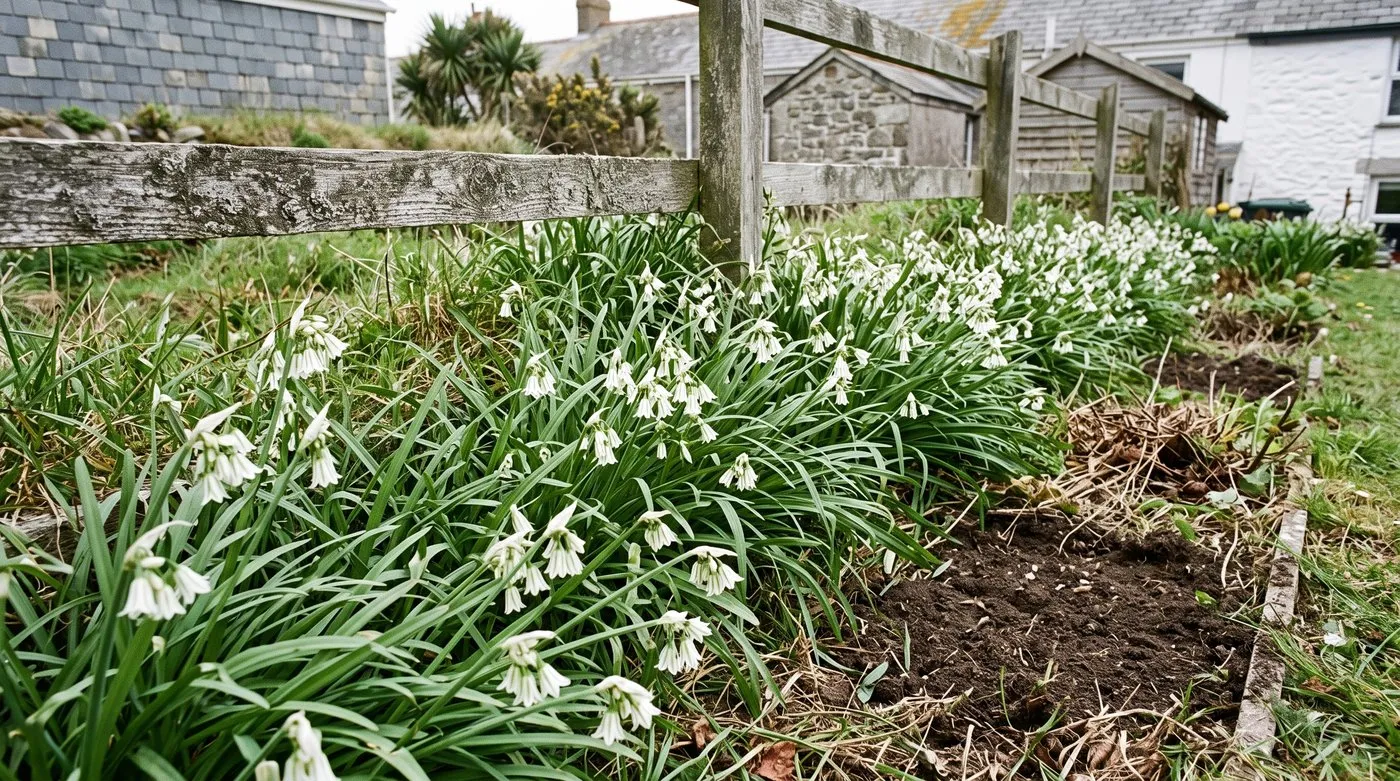
Patches next door or on a nearby bank will keep creeping in, so check along the fence every spring.
Keep a close eye on boundaries. If a neighbour’s garden or a nearby bank is full of it, you may need to lift new arrivals along your edge each spring. A friendly word with neighbours helps too.
Three-cornered garlic is not alone. Other spring invaders behave in a similar way, such as Spanish bluebells, and the garden thugs guide covers more plants that take over.
Common mistakes with three-cornered garlic
- Pulling off the leaves. The bulbs regrow within weeks. Always dig them out.
- Composting it. Bulbs survive in compost and spread wherever you use it.
- Leaving it to flower and seed. Lift it in March or April, before seed forms.
- Forking too shallow. Bulbs can sit deeper than you think. Go 15-20cm down.
- Giving up after one year. Missed bulbs and seed keep coming. Keep checking every spring.
Three-cornered garlic month by month
| Month | What to do |
|---|---|
| January-February | Leaves appear. Mark patches so you can find them later |
| March | Start digging out bulbs as plants grow |
| April | Main digging month. Finish before seed forms |
| May | Cut off any flower heads you missed before they seed |
| June-July | Plants die back. Nothing to do |
| August-October | Plants are dormant. Plan next year’s patches |
| November-December | New leaves may start to show in mild areas |
Frequently asked questions
Is three-cornered garlic the same as wild garlic?
No, they are different plants. Three-cornered garlic has narrow leaves, a three-sided stem and drooping white bells. Wild garlic (Allium ursinum) has broad leaves and starry white flowers on a round stem.
Is three-cornered garlic illegal in the UK?
It isn’t illegal to have it in your garden. In England and Wales it is listed on Schedule 9 of the Wildlife and Countryside Act, so it is an offence to plant it or cause it to grow in the wild. Scotland has its own rules on non-native plants.
Can you eat three-cornered garlic?
Yes, the leaves and flowers are edible and taste mildly of garlic. Only pick plants you are sure of, as bluebell leaves look similar and are poisonous. Never spread bulbs or seeds while foraging.
How do I get rid of three-cornered garlic in my garden?
Fork out every bulb in March or April, before it sets seed. Go about 15-20cm deep and sieve the soil for small bulbs. Bag it for household waste and repeat each spring until no more plants appear.
Does cutting three-cornered garlic stop it spreading?
Only partly. Cutting the flowers before they set seed stops that year’s seed. The bulbs survive underground and come back next spring, so you still need to dig them out.
Is three-cornered garlic poisonous to dogs and cats?
Yes, like other alliums it can harm dogs and cats if eaten. Pets rarely eat much of it, but clear it from areas where your dog likes to chew plants.
Dealing with a different invasive plant? The Himalayan balsam guide covers a summer invader with similar legal rules, and the problems hub has more weed advice. If you fancy foraging instead, read our guide to edible garden weeds next.
Our team produces practical UK gardening guidance from source research, contributor records and established horticultural practice. Editorial standards are overseen by Matt W.