
Key takeaways
- Start with what you can't change: sun, soil, size and exposure
- List how you really use the garden before you pick a look
- Match the style to your spare time: gravel and prairie need far less than cottage or formal
- Pick one main style and borrow lightly from a second, rather than splitting 50:50
- Hard landscaping costs the most, so build in phases over one to three years
The right garden style is the one that suits your plot, your life and the time you can give it. Taste matters, but it comes last. A garden full of nice plants can still feel muddled if it has no clear style tying it together.
This guide is a simple four-step way to work out which style fits you. Look at what you can’t change, how you use the garden and how much time you have. Then match yourself to one of the ten main UK garden styles.
Step 1: Start with what you can’t change
Your plot rules some styles in and others out before taste comes into it. Note these four things first.
- Sun: which way does the garden face, and how many hours of sun do the main areas get? South and west-facing gardens suit Mediterranean and prairie planting. North-facing plots suit woodland, Japanese and fern-filled courtyards.
- Soil: is it heavy clay, light sand, chalk or rich loam? Dig a hole and look. Gravel gardens love sandy, free-draining soil and struggle on wet clay.
- Size and shape: a long narrow plot, a tiny courtyard and a wide family lawn each suit different styles.
- Exposure: a windy hilltop or seaside garden needs tough, low plants. A sheltered town garden can grow almost anything.
Write these down before you look at pictures. It saves you falling for a style that your garden will fight.
Step 2: List how you actually use the garden
How you use the space shapes the layout as much as the look. Be honest about what you really do outside.

Note where the sun falls and how you really use the space before you look at a single picture.
Do you eat and entertain out there, and need a patio and seating? Do children or a dog need a tough lawn? Do you want to grow vegetables? Or do you mostly want a calm view from the kitchen window? Put these in order of importance.
A garden that doubles as a football pitch can’t also be a delicate formal parterre. Your answers decide how much space goes to planting, paving, lawn and growing.
Step 3: Be honest about time and budget
The quickest route to a disappointing garden is picking a style you have no time to look after. Styles vary hugely in how much work they need.
Formal gardens of clipped hedges and cottage gardens of staked, deadheaded flowers need the most time. Gravel, Mediterranean and prairie gardens can look their best with one big tidy a year. Choose for the hours you’ll really give it, not your good intentions in spring.
For budget, plants are the cheap part. Paving, walls and structures are where the money goes. Set a figure, then build in stages.
The main UK garden styles compared
Scan this table for the style that fits your conditions, use and time. Upkeep is a rough guide for a small to medium UK garden.
| Style | Best conditions | Upkeep | Good for wildlife | Year-round interest |
|---|---|---|---|---|
| Cottage | Sun or light shade, decent soil | High | High | Medium |
| Formal | Most, with shelter for hedges | High | Low | High |
| Modern minimalist | Most, suits small town plots | Low to medium | Low | High |
| Wildlife / naturalistic | Any, including rough ground | Low | Very high | Medium |
| Mediterranean / gravel | Dry, sunny, free-draining | Low | Medium | Medium |
| Japanese | Shade or part shade, sheltered | Medium | Low | High |
| Prairie | Open, sunny | Low | High | High |
| Coastal | Exposed, windy, sandy | Low | Medium | Medium |
| Courtyard | Small, enclosed, often shady | Low to medium | Low | Medium |
| Family | Open, sunny, room for lawn | Medium | Medium | Medium |
Step 4: Match yourself to a style
Read the short profiles below and find the one that fits your notes from steps 1 to 3.
Cottage
Full, romantic borders of roses, foxgloves, hardy geraniums and self-seeders spilling over informal paths. It suits sunny or lightly shaded gardens with reasonable soil. It’s lovely, but it’s one of the most work, with staking, deadheading and thinning all summer. Our guide to English country garden style shows how to stop it looking messy.

Cottage style is beautiful but busy, with staking and deadheading most of the summer.
Formal
Symmetry, straight lines, clipped evergreens and a strong central path. Yew and other clipped hedges set the structure, with simple planting inside. It looks calm all year but needs regular, careful clipping. Choose it if you love order and enjoy the trimming.
Modern minimalist
Clean lines, good paving, a few bold plants and a small colour range. Grasses and architectural plants suit modern houses and small town gardens. Upkeep is low to medium. Our guide to modern mixed borders shows how to keep it from feeling bare.

Modern style: pale paving, clean walls and grasses. It suits small town gardens and needs little work.
Wildlife and naturalistic
Nectar-rich flowers, longer grass, a pond and a relaxed approach to tidying. It does the most for nature and asks the least of you. Leaving seedheads and fallen leaves over winter suits both the look and the wildlife. Our guide to creating a wildlife garden covers the first steps.

A wildlife garden: nectar-rich flowers, long grass and a pond. A relaxed tidy-up suits the look and the wildlife.
Mediterranean and gravel
Drought-tolerant plants growing through gravel: lavender, cistus, euphorbia and herbs, with terracotta pots and warm stone. It’s made for dry, sunny, free-draining gardens and rarely needs watering once settled. Euphorbia sap irritates skin, so wear gloves when cutting it. See our guide to Mediterranean garden planting for plant lists.

Lavender, rock roses and euphorbia in gravel. On a dry, sunny plot this is the easiest style of all.
Japanese
Calm, green and structured, with acers, mosses, ferns, clipped evergreens, stone and water. It suits shady or part-shaded, sheltered gardens. It needs moderate, careful upkeep, such as raking gravel and light pruning. Our guide to Japanese garden design explains the key features.
Prairie
Sweeps of grasses and tough perennials planted in drifts, at their best from late summer into autumn. Open, sunny sites suit it, and it needs just one big cut-back in late winter. It’s great for pollinators and looks good for months. Our guide to prairie planting has plant lists and layouts.
Coastal
Tough, salt and wind-tolerant plants such as grasses, sea holly, hebe and sea thrift, with shingle and weathered timber. It’s built for exposed, windy, sandy gardens where softer plants get battered.
Courtyard and small urban
Small, enclosed and often shady spaces that make the most of walls with climbers, pots and a few bold plants. Good paving, lighting and a mirror do a lot of the work. It suits tiny city gardens and basements. Our courtyard garden ideas have plenty of inspiration.

A courtyard makes the most of its walls, with climbers, pots and a couple of bold plants.
Family
Tough and flexible: a hard-wearing lawn, sturdy plants at the edges, room to play and somewhere to sit. It changes as children grow. Practical needs lead, with style added around the edges. Check plants against a list of poisonous ones if you have small children.
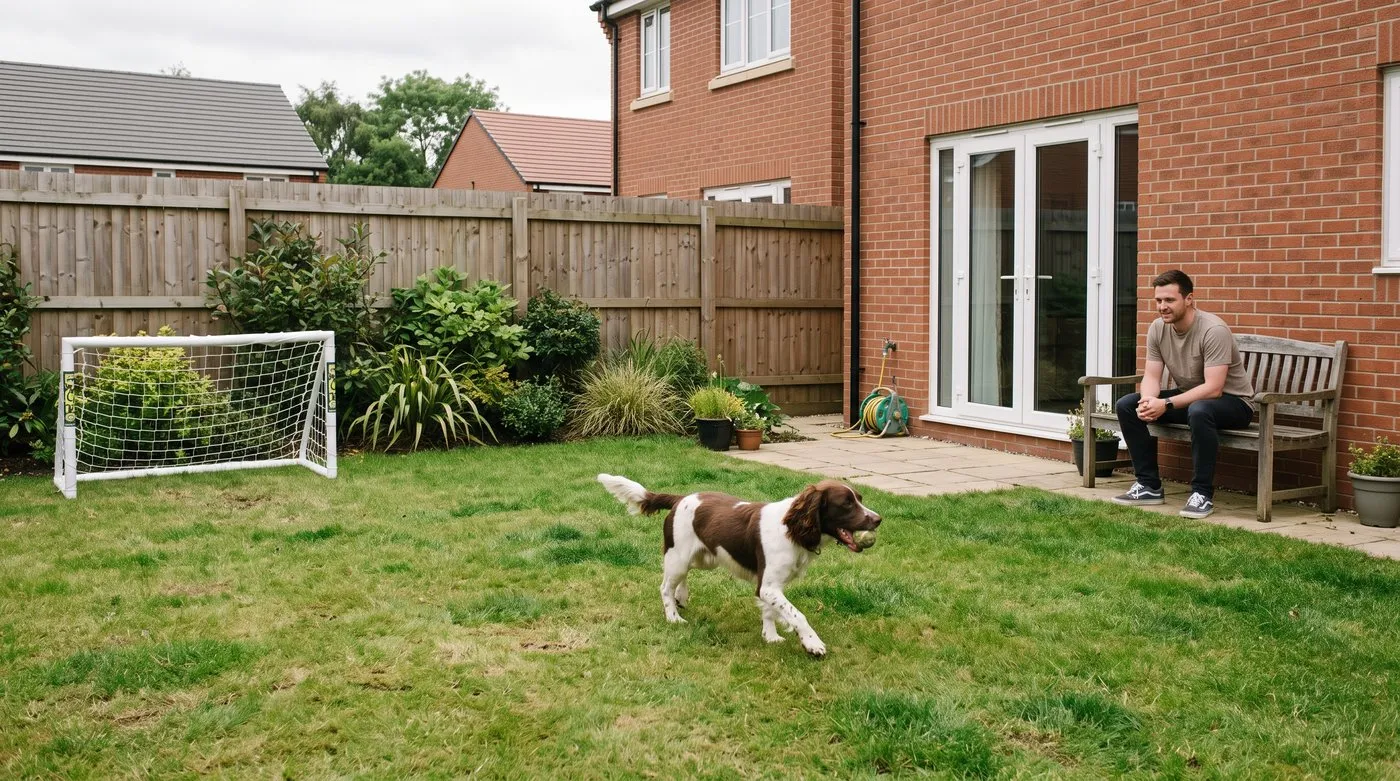
A family garden puts a tough lawn and space to play first, with sturdy plants around the edges.
A quick decision guide
Still unsure? Start from your biggest constraint and read across.
| If your plot is | And you want | Try |
|---|---|---|
| Dry, sunny, sandy | Little watering or upkeep | Mediterranean or gravel |
| Shady and damp | Calm and green | Japanese or woodland |
| Small and enclosed | Good looks all year | Modern or courtyard |
| Open and sunny | Wildlife and a long season | Prairie or wildlife |
| Exposed or by the sea | Tough and resilient | Coastal |
| Used by children | Hard-wearing and flexible | Family |
For a typical small, part-shaded UK garden with little spare time, modern, courtyard and gravel styles give the most for the least work. Cottage and formal suit people with more time.
How to build your garden in stages
You rarely need to do it all at once. Building in stages spreads the cost and gives you time to see how the garden works.
| Stage | When | What to do |
|---|---|---|
| 1 | Year 1, winter | Clear, mark out the layout, fix boundaries and main paths |
| 2 | Year 1, spring | Build the main hard area, such as the patio |
| 3 | Year 1, autumn | Plant trees, hedges and the main shrubs |
| 4 | Year 2 | Fill the borders with perennials and bulbs |
| 5 | Years 2-3 | Add extras: water, lighting, seating and pots |
Common mistakes when choosing a garden style
Picking a style that fights the site. Lush cottage planting on dry sand, or Mediterranean herbs on wet clay, will struggle every year. Let the plot lead.
Copying a show garden exactly. Show gardens are built to look perfect for a week. Borrow ideas, then adapt them to your size, weather and time.
Splitting 50:50 between two styles. With no clear lead, a garden looks confused. Pick one main style and borrow lightly from another.
Ignoring upkeep. A high-maintenance style you can’t keep up looks worse than a simple one you can.
Now you’ve picked a style, our small garden design ideas help you plan the layout. You’ll find guides to every style on our garden design hub.
Frequently asked questions
How do I decide what style of garden to have?
Start with your plot, not a picture. Note the sun, soil, size and exposure, then how you use the space and how much time you have. Match that to a style. A dry, sunny plot suits Mediterranean planting, while a shady, damp one suits a woodland or Japanese feel.
What is the lowest-maintenance garden style?
Gravel and Mediterranean gardens need the least work on a sunny, dry plot. Drought-tolerant plants in gravel rarely need watering, feeding or staking once settled. Prairie planting is also easy, with one big cut-back a year. Formal and cottage gardens need the most time.
Can I mix garden styles?
Yes, but let one style lead. A mostly cottage garden can take a modern water feature, and a modern garden can be softened with grasses. A 50:50 split with no clear lead usually looks muddled.
Does my house style affect my garden style?
It helps to echo it, especially at the front. A period cottage suits cottage planting, while a modern house suits clean lines. The garden doesn’t have to match, but borrowing the house’s materials and colours ties them together.
What garden style is best for wildlife?
A wildlife or naturalistic garden does the most for nature. Nectar-rich plants, a pond, some longer grass and a relaxed autumn tidy help the widest range of creatures. Prairie and cottage gardens are good for pollinators too.
How much does it cost to restyle a garden?
It depends mostly on the hard landscaping. Plants are the cheap part, while paving, walls and structures cost the most. Phasing the work over one to three years spreads the cost. A professional designer charges a fee but can save costly layout mistakes.
Our team produces practical UK gardening guidance from source research, contributor records and established horticultural practice. Editorial standards are overseen by Matt W.


