Key takeaways
- Caladium is a tender tuber grown indoors in the UK for its colourful, papery leaves
- Start tubers in March or April with bottom heat of around 21-25°C, knobbly side up
- Give bright, indirect light; direct summer sun through glass scorches the leaves
- Humid air stops the thin leaf edges going crisp and brown
- Let it die back in autumn and store the dry tuber somewhere warm over winter
- All parts are toxic to pets and people if eaten
Caladium, often called angel wings, is grown for its paper-thin, heart-shaped leaves splashed with pink, white, red and green. Few plants give this much colour without a single flower. In the UK it’s a tender tuber that you grow indoors, in a conservatory or in a warm greenhouse.
The trick is to work with its yearly rhythm. It wants warmth and humid air while growing, then a dry, warm rest as a bare tuber over winter. Get those two stages right and you can keep the same tubers going for years.
What kind of plant is a caladium?
Caladium is a tender tuber from tropical Central and South America. It’s in the arum family, along with monstera and peace lilies. Most plants sold are hybrids of Caladium bicolor.
Unlike most houseplants, caladium doesn’t keep its leaves all year. It grows hard through spring and summer, then dies back in autumn and rests as a tuber. That’s normal, not a sign you’ve killed it.
It’s sometimes called elephant ear, a name it shares with colocasia. If you want giant leaves outdoors in summer, colocasia is the better choice. For patterned leaves from an easy spring sowing, try coleus.
Pet safety: All parts of caladium are toxic to cats, dogs and people if eaten. Keep it out of reach and wear gloves when handling tubers, as the sap can irritate skin.
Fancy-leaf and strap-leaf caladiums
Caladiums come in two main leaf types.
- Fancy-leaf types have broad, heart-shaped leaves and the boldest colour. They make fewer, bigger leaves.
- Strap-leaf (or lance-leaf) types have narrower leaves. They stay shorter, make more leaves and cope with a little more light.
| Variety | Leaf type | Colour |
|---|---|---|
| ’Florida Sweetheart’ | Strap-leaf | Rose-pink with a green edge |
| ’White Christmas’ | Fancy-leaf | White with green veins |
| ’Red Flash’ | Fancy-leaf | Deep red centre with pink spots |
| ’Carolyn Whorton’ | Fancy-leaf | Pink with red veins |
| ’Miss Muffet’ | Dwarf fancy-leaf | Lime green with red flecks |
‘Florida Sweetheart’ is a forgiving one to start with. Bigger tubers have more growing points, or “eyes”, and give more leaves, so choose the largest you can.

Broad fancy-leaf types (left) give bold colour. Narrower leaves (right) usually mean more of them per tuber.
How to start caladium tubers
Start tubers indoors in March or April. The top of the tuber is knobbly with buds. The base is smoother.
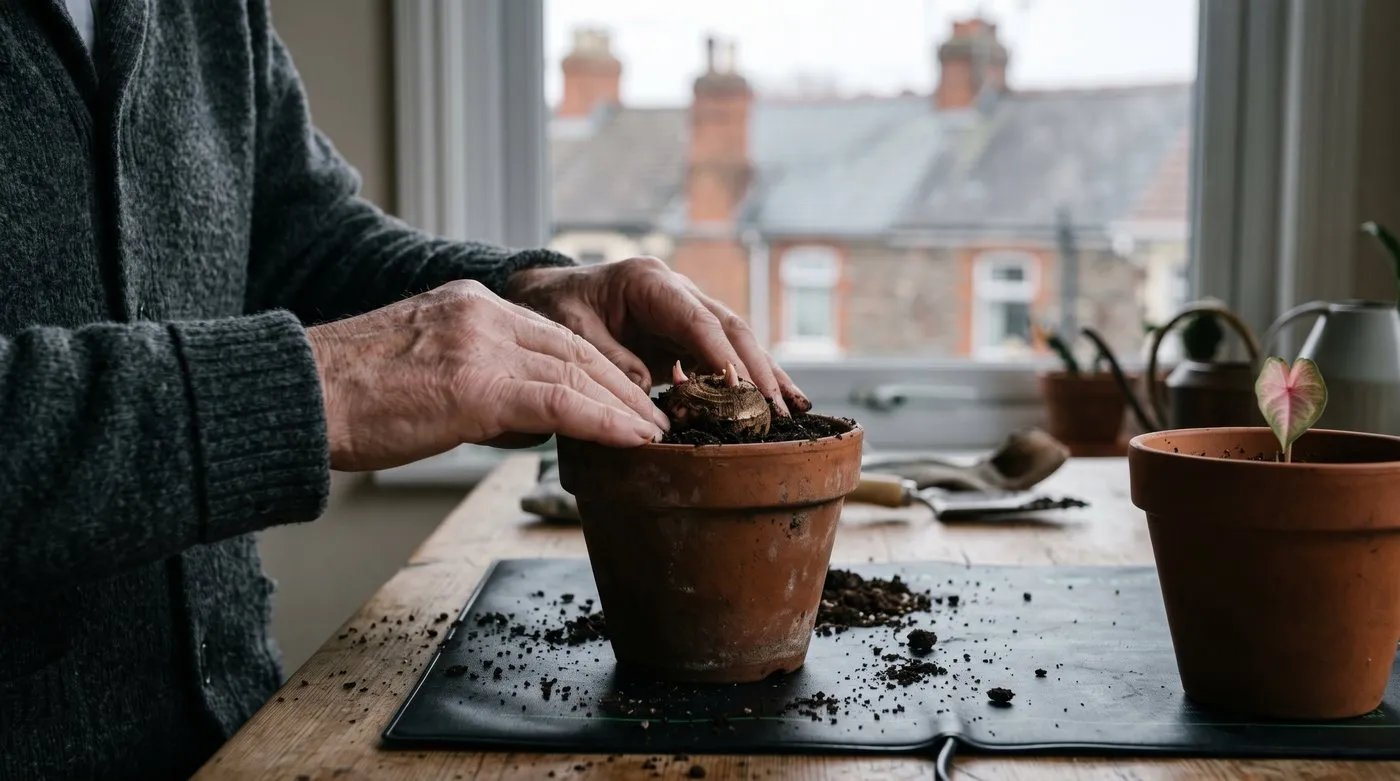
Plant tubers knobbly side up and give them bottom heat. They sprout far faster than on a cool windowsill.
- Fill a pot about 13cm across with moist peat-free compost mixed with some perlite.
- Plant the tuber knobbly side up, about 4cm deep.
- Water lightly. The compost should be just moist, never soggy.
- Put the pot on a heat mat or in a heated propagator at around 21-25°C.
- Once shoots appear, move it into bright, indirect light.
Bottom heat makes all the difference. On a cool windowsill, tubers can sit for weeks and rot before they sprout. If you can’t tell which way is up, plant the tuber on its side and the shoots will find their way.
Why humidity matters so much
Caladium leaves are very thin, so they lose water quickly. In dry air the edges go crisp and brown. Most homes are dry, especially with the heating on.
Easy ways to raise humidity:
- Stand the pot on a pebble tray: a saucer of gravel kept topped up with water, with the pot sitting above the water line.
- Group plants together.
- Use a small humidifier near a prized plant.
- Keep it away from radiators and hot windowsills.
Bathrooms and kitchens with good light often suit caladium well. The guide to plants for bathrooms has more ideas for humid rooms.

A tray of wet pebbles under the pot raises the humidity round the leaves and helps stop crispy edges.
Light, watering and feeding in summer
Give caladium bright, indirect light. Direct summer sun through glass scorches the thin leaves, while deep shade fades the colours. An east or north-facing window is ideal, or a spot back from a sunny window behind a sheer curtain.
From May to September, water when the top 2cm of compost feels dry. Keep it evenly moist but never waterlogged, and empty the saucer after watering. Feed every two weeks with a liquid houseplant feed at half strength. The guide to feeding houseplants explains how.
On warm, settled summer days you can stand pots outside in a sheltered, shady spot. Bring them back in before cool nights return. The guide to putting houseplants outside for summer explains how to do it safely.

In a warm spell, a caladium can enjoy a summer holiday in a sheltered, shady spot outside.
How to store caladium tubers over winter
In autumn, as the light fades, the leaves start to yellow. That’s your cue to let the plant rest.
- From September, water less as the leaves yellow. Stop feeding.
- Let the compost dry out over a few weeks until the leaves collapse.
- Tip out the tuber, brush off the soil and cut off the dead leaves.
- Leave it to dry in a warm room for about a week.
- Store it in a paper bag or a tub of dry vermiculite, somewhere warm and dry, not below about 13°C.
An airing cupboard or a warm spare room works well. Cold or damp storage is the main reason tubers rot. Check them every month and throw out any that go soft. Restart them in spring with warmth.
You can also leave the tuber in its dry pot in a warm room over winter, as long as you don’t water it.

Store clean, dry tubers in vermiculite somewhere warm. Label the tub so you know which variety is which.
Caladium care calendar
| Month | Task |
|---|---|
| March to April | Start tubers on bottom heat, knobbly side up |
| May | Move into bright, indirect light. Start fortnightly feeds |
| June to August | Keep humidity up, water evenly and feed. Shade from direct sun |
| September | Water less as leaves yellow. Stop feeding |
| October | Let the plant dry off. Lift and dry the tubers |
| November to February | Store tubers dry and warm. Check monthly for rot |
Common mistakes with caladium
- Starting too cold. Tubers sit and rot on a cool windowsill. Use a heat mat.
- Dry air. Leaf edges go crispy. Use a pebble tray or group plants.
- Overwatering. Wet compost rots the tuber, especially when it’s resting. Let it dry off in autumn.
- Direct sun. Thin leaves scorch fast. Give bright, indirect light.
- Cold winter storage. Tubers kept in a cold shed or garage rot. Keep them warm and dry.

A healthy leaf (left) and one scorched by direct sun (right). Bright, indirect light keeps the colour.
If your tuber outgrows its pot, the guide to root-bound houseplants explains when to move it up a size. For another tender tuber with big summer colour, read the guide to growing begonias, or browse more in the plants section.
Frequently asked questions
Why are my caladium leaves turning brown and crispy at the edges?
Usually the air is too dry. The thin leaves lose water fast, especially near radiators or sunny windows. Stand the pot on a wet pebble tray, group plants together or use a small humidifier.
Can you grow caladium outside in the UK?
Only in a warm, sheltered, shady spot in high summer. Caladium is tender and sulks in cold nights. Move pots out only once nights are reliably warm, and bring them back in before the evenings cool in late summer.
How do you start caladium tubers indoors?
Plant them knobbly side up, about 4cm deep, in moist compost. Put the pot on a heat mat or in a heated propagator at around 21-25°C. Keep the compost just moist until shoots appear, then move it into bright, indirect light.
Do caladium tubers come back every year?
Yes, if you dry them off and store them warm over winter. Cut back watering as the leaves yellow in autumn, then lift and dry the tuber. Store it somewhere dry and warm, then restart it in spring.
Why is my caladium not sprouting?
Usually the compost is too cold. Tubers need real warmth to wake up, and they can sit for weeks or rot on a cool windowsill. Use a heat mat, and check the knobbly side is facing up.
How much light does a caladium need?
Bright, indirect light, but no direct summer sun. An east or north-facing window suits it, or a spot back from a sunny window. Too little light fades the colours and makes the plant leggy.
Are caladiums poisonous to pets?
Yes, caladiums are toxic to cats, dogs and people if eaten. Chewing them causes mouth pain, drooling and swelling. Keep them out of reach of pets and children, and wear gloves when handling tubers.
Our team produces practical UK gardening guidance from source research, contributor records and established horticultural practice. Editorial standards are overseen by Matt W.