Key takeaways
- A UK jungle uses hardy exotics, not true tropicals, so it comes back every year
- Plant in three layers, from tall canopy to ground cover, so foliage fills every level
- Block the view with big leaves and a winding path, so the garden reveals itself bit by bit
- Mix huge paddle leaves with fine fronds and glossy hands for a wild, layered look
- Small, sheltered gardens and courtyards make the most convincing jungles
- Winter wet kills more exotics than cold, so plant in well-drained soil and wrap tender crowns
A jungle garden turns an ordinary UK plot into a dense, green hideaway full of big leaves and hidden corners. The secret is hardy exotics: plants that look tropical but shrug off a British winter. Plant them in layers, hide the boundary, and even a small terrace garden can feel like a jungle.
This guide is about the design: how to layer the planting, block the views, choose paths and lighting, and make it work in a small space. For a full plant-by-plant guide, see hardy exotic plants for UK gardens. If you’d like tiki torches and bamboo bars as well, the guide to tropical and tiki garden ideas adds the party touches.
What makes a garden look like a jungle?
Density, layers and big leaves. No single rare plant does it. A space reads as a jungle when foliage fills every level and you can’t see the whole garden at once.
Three design moves do most of the work:
- Plant in layers. A real jungle has a canopy, a middle layer and a forest floor. Copy that with tall plants overhead, shrubs at chest height and leafy ground cover below.
- Block the views. In a normal border you see everything at a glance. A jungle hides itself. Big leaves and a winding path reveal the garden bit by bit.
- Mix leaf shapes. Pair huge banana paddles with fine tree fern fronds and the glossy, hand-shaped leaves of Fatsia. Contrast makes planting feel wild rather than tidy.

Tree ferns, a banana and big rough leaves stacked at different heights. Every level is full, so the eye can’t see through.
The best hardy plants for a UK jungle garden
Stick to hardy exotics: plants with big, bold leaves that survive a UK winter with some help. True tropicals look the same from a metre away but die in the first frost.
| Plant | Layer | Winter care |
|---|---|---|
| Hardy banana (Musa basjoo) | Canopy | Leaves die back in frost. Wrap the stem or mulch the base |
| Chusan palm (Trachycarpus fortunei) | Canopy | Very hardy once established |
| Soft tree fern (Dicksonia antarctica) | Canopy or middle | Protect the crown in cold spells |
| Rice paper plant (Tetrapanax papyrifer) | Middle | Often regrows from the roots. Spreads by suckers |
| Fatsia japonica | Middle | Hardy evergreen, good in shade |
| Clump-forming bamboo (Fargesia) | Middle | Hardy. Avoid running bamboos, which spread |
| Canna | Middle | Tender. Lift or mulch heavily |
| Ginger lily (Hedychium) | Middle | Mulch well in winter |
| Elephant ears (Colocasia) | Ground | Tender. Lift and store in autumn |
Hardy banana is the signature plant. Frost blackens the leaves, but a well-wrapped or well-mulched plant sends up fresh paddles each summer. The guide on how to grow hardy bananas covers planting and feeding. Chusan palm is the toughest plant here and gives instant overhead fans. Tree ferns are slow and pricey, but nothing else gives that prehistoric feel.

A hardy banana clump gives instant scale, sending up big new paddle leaves each summer.
How to layer jungle planting by height
Layering is the most important technique. A flat border of similar-height plants never looks like a jungle, however exotic the plants. You need three layers that overlap.
The canopy, above head height, casts the dappled shade that defines a jungle. Use Chusan palms, hardy bananas and tall bamboo. Space them so the leaves meet overhead without crowding the stems. Three to five canopy plants is plenty for a small plot.
The middle layer, roughly waist to head height, fills the view and stops the eye travelling through the bed. Tree ferns, rice paper plant, cannas, Fatsia and ginger lilies sit here. This is the busiest layer, where most of the leaf contrast happens.
The forest floor covers the soil between stems. Use ferns, hostas, bergenia, black mondo grass and elephant ears. A planted floor is what separates a real jungle from a few exotics dotted in gravel.
Plant in groups of three or five rather than singles. One banana looks like a specimen. Three of different heights look like a stand. Raising the back of the bed slightly makes the layers even more dramatic.
Shelter: the jungle’s secret weapon
Big, soft leaves hate wind more than cold. A banana leaf shreds in a gale, and tree fern fronds brown at the edges in exposed spots. Building shelter is part of the design.
Use walls, fences and hedges you already have. A sunny wall gives off stored warmth at night, which helps borderline plants. Once established, the densest exotics shelter everything inside the planting too.
Dense planting also keeps the air damp and still, which big leaves love. That’s why a tightly planted small garden often grows better exotics than a large, open one. A small water feature adds a little extra humidity and the sound that completes the jungle mood.
Keeping a jungle garden going through winter
Winter wet kills more exotics than cold. Crowns and roots sitting in cold, waterlogged soil rot long before frost would kill them. Good drainage comes first, protection second.
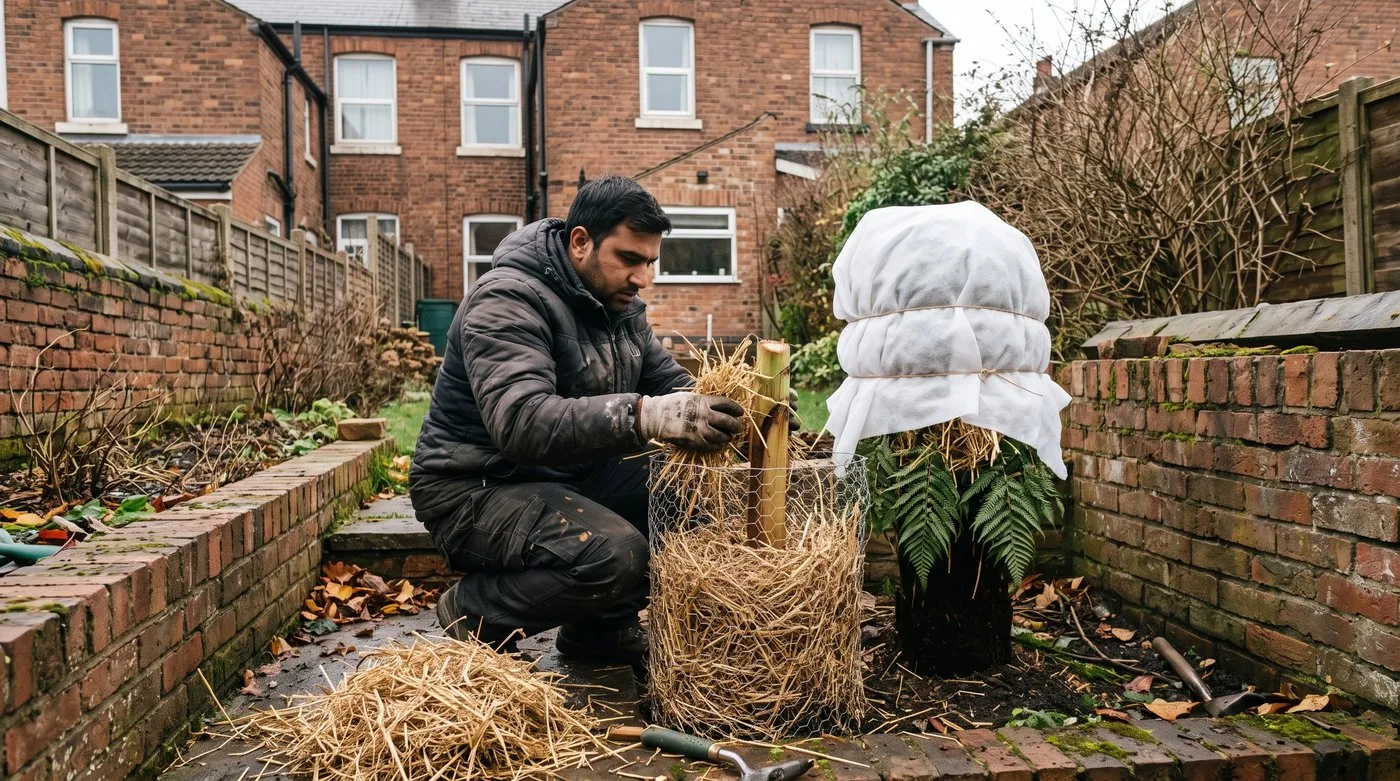
A chicken-wire cage stuffed with dry straw keeps a banana stem snug through winter. Cap it so the rain stays out.
- Improve drainage when you plant. Dig in grit on heavy soil, or raise the bed slightly.
- Wrap bananas in November. Cut collapsed stems back, then surround the stump with chicken wire packed with dry straw, with a cap to keep the rain off.
- Protect tree fern crowns with straw tucked into the centre and fronds folded over, or a wrap of fleece. The guide to tree fern winter protection explains it step by step.
- Mulch roots thickly with bark or leaf mould.
- Lift the tender ones. Cannas and elephant ears come out after the first frost blackens the leaves. Store them dry and frost-free.
The guide on how to overwinter plants covers storing tubers and protecting pots.
Paths, water and lighting for the jungle feel
A jungle path should wind, not run straight, so the garden unfolds in stages. Around 1m wide is comfortable to walk. Narrow it in places where you want leaves brushing past you.
Use soft, natural materials. Bark chips, stepping stones set in gravel or old reclaimed brick suit the look better than crisp modern paving. A path that disappears round a clump of bananas hides the boundary and makes the plot feel bigger.

A bark path that bends out of sight makes you want to explore. The leaves closing overhead hide the fence completely.
Water is the finishing touch. The sound of trickling water says jungle before you’ve seen a plant. A simple wall spout or a pebble pool is enough.
Lighting transforms the garden after dark. Uplight the trunks of palms and tree ferns so the leaves glow and cast shadows. Choose warm white rather than cold blue light, and hide the fittings low in the planting. The guide to garden lighting ideas explains the options.

Low uplights turn tree ferns into glowing silhouettes at dusk. A few well-placed spots beat a row of bollards.
Jungle gardens for small plots, courtyards and balconies
Small spaces often make better jungles than big ones, because they’re already enclosed. Walls trap warmth and block wind, and dense planting feels immersive rather than empty.
In a courtyard, plant against the walls in layers and keep a small space in the middle for a seat. Use the walls too: train climbers up trellis and stack pots to build height. Even a tiny courtyard can hold a tree fern, a hardy banana, a Fatsia and a floor of ferns, with room to sit. The guide to courtyard garden ideas has more layouts.

Fatsia, a fan palm and ferns packed round a little wall fountain. Walls on every side make a courtyard a natural jungle.
On a balcony, work in containers. A tree fern, a Chusan palm and a cluster of cannas in big pots give the layered look. Group the pots tightly so the leaves merge into one green mass. Use lightweight pots and check how much weight your balcony can take.

Pots grouped tightly against the wall merge into one green mass. That’s all a balcony jungle needs.
Jungle garden calendar: month by month
Most of the work falls in autumn and spring, with summer for watering and enjoying it. In the north and Scotland, protect plants two or three weeks earlier.
| Month | What to do |
|---|---|
| January | Plan additions. Check winter wraps after storms |
| February | Firm in plants lifted by frost. Order canna and elephant ear tubers |
| March | Start cannas and elephant ears indoors in warmth. Cut away dead fronds |
| April | Remove wraps after the last hard frost. Feed established plants |
| May | Plant hardy exotics as the soil warms. Plant out cannas once frosts have passed |
| June | Water new plants well. Mulch to hold in moisture |
| July | Peak growth. Water deeply in dry spells. Feed bananas and cannas |
| August | Full jungle effect. Note gaps to fill next year |
| September | Stop feeding. Get fleece and straw ready |
| October | Lift elephant ears and cannas after the first frost and store them dry |
| November | Wrap banana stems and tree fern crowns. Mulch root areas |
| December | Check wraps are staying dry. Clear fallen leaves off crowns |
Common jungle garden mistakes
Planting everything at one height. It looks like a normal border with a few exotics. Use all three layers.
No paths or hidden corners. If you can see the whole plot at once, the illusion breaks. Add a winding path and a screened seat.
Buying true tropicals. Most bananas and gingers sold as houseplants won’t survive outside. Stick to hardy types.
Spacing plants too far apart. Normal border spacing leaves gaps that look bare. Plant closer and let the leaves knit together.
Planting running bamboo in the ground. Some bamboos spread far and fast. Choose clump-forming types or grow runners in pots.
Frequently asked questions
Can you really grow a jungle garden in the UK climate?
Yes, using hardy exotics rather than true tropicals. Hardy banana, Chusan palm, tree ferns and Fatsia all cope with UK winters given shelter, good drainage and some protection. The jungle look comes mostly from big leaves and dense layering. You don’t need heat-loving plants to get it.
What are the best hardy plants for a jungle garden in the UK?
Hardy banana, Chusan palm and tree ferns are the core three. Add Fatsia japonica, rice paper plant, clump-forming bamboo, cannas and ginger lilies for variety. Together they give height, bold leaves and a tropical feel. In a small plot, three or four well-chosen plants do most of the work.
Will a jungle garden survive a UK winter?
Yes, if you protect tender crowns and keep the roots from sitting wet. Wrap banana stems and tree fern crowns with fleece and straw in November. Mulch thickly over the roots. Winter wet kills more exotics than cold, so improve drainage with grit. Hardy bananas regrow from the base even if the top dies.
How do I make a small garden feel like a jungle?
Plant densely in three height layers and add a winding path. Use big-leaved plants to block the view so you can’t see the whole garden at once. A hidden seat and the sound of water finish the effect. Small, enclosed gardens often feel more like a jungle than big open ones.
How long does a jungle garden take to mature?
Usually two or three summers to look established. Hardy bananas and cannas grow fast and reach full size in one summer. Tree ferns and palms are slow. Buy one or two bigger specimens for instant impact and let cheaper, faster plants fill in around them.
Do jungle gardens need a lot of maintenance?
Less than you might think once established. The main jobs are wrapping plants in autumn, tidying dead leaves in spring and watering in dry spells. Dense planting smothers weeds, and most of the big structural plants need little pruning. A few busy weekends a year covers most of it.
Now you have the design worked out, browse more garden design ideas or add bold colour to the middle layer with the guide on how to grow cannas.
Our team produces practical UK gardening guidance from source research, contributor records and established horticultural practice. Editorial standards are overseen by Matt W.