
Key takeaways
- Pot tubers flat, about 5cm deep, in March or April and start them somewhere warm
- Every part is poisonous, tubers most of all, so wear gloves and keep it from children and pets
- Put thin canes or netting in early, because the leaf-tip tendrils need something fine to grip
- Feed weekly with tomato feed once buds appear for flowers from July to September
- Let it die back in autumn and keep the tuber dry and frost-free at 10°C or above
Gloriosa, the flame lily, is a tender climber that grows from a tuber and flowers from July to September under glass. Pot the tuber in spring, keep it warm and bright, give it thin supports and store it dry over winter. Do that and the same tuber flowers year after year.
It is a showpiece for a greenhouse or conservatory, with swept-back red and gold petals that really do look like flames. It also needs one serious warning, so that comes first.
Warning: Every part of gloriosa is poisonous, and the tubers most of all. Swallowing any part can be fatal. Wear gloves when handling tubers or cut stems, wash your hands afterwards, and keep plants, fallen petals and stored tubers away from children, cats and dogs.
What is gloriosa, the flame lily?
Gloriosa superba is a tender climbing tuber from tropical Africa and Asia. It is also sold as glory lily or climbing lily. The form you’ll see most in the UK is ‘Rothschildiana’, with crimson petals edged in yellow.
It climbs in an unusual way. Each glossy, lance-shaped leaf ends in a curling tendril that hooks onto thin supports. It doesn’t twine round a pole like a runner bean. A single tuber sends up stems about 1.5-2m tall by midsummer.
The flowers are the reason to grow it. Six wavy petals sweep right back, so the long stamens stick out like the spokes of a wheel. Flowers often open greener or more yellow and deepen to red as they age.

A ‘Rothschildiana’ flower in full show. The petals sweep right back and the stamens splay out like flames.
Is gloriosa poisonous?
Yes, very. Gloriosa contains colchicine, a powerful toxin, in every part. The tubers hold the most, and they are starchy enough that people have mistaken them for yams or sweet potatoes.
It is listed as toxic to cats and dogs as well as people. Keep these habits whenever you grow it:
- Wear gloves to pot, lift, cut or tidy the plant, and wash your hands afterwards.
- Store tubers well out of reach, clearly labelled and nowhere near food.
- Sweep up fallen petals and leaves from greenhouse floors and patios.
- Keep pets out of the greenhouse or conservatory while it’s growing.
If you have small children or a curious pet, choose something gentler. The guide to poisonous plants in UK gardens covers other plants to watch for. For a tender summer flower with similar drama, calla lilies are easier to grow, though they are not pet-safe either.
Buying gloriosa tubers and spotting a good one
Gloriosa tubers are long, pale and finger-like, often forked into a V. They are brittle and snap like a dry twig. At the tip sits the growth bud, and the whole season depends on it.
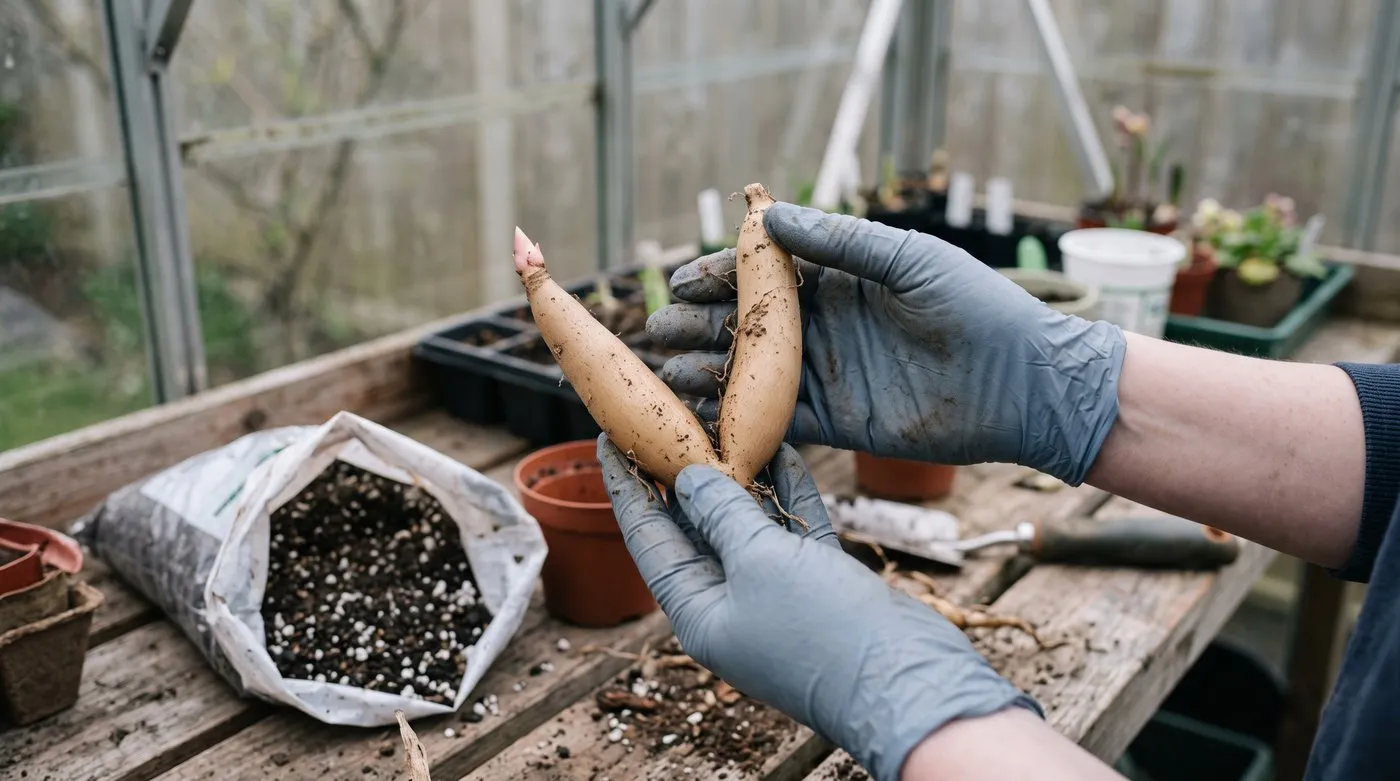
A good tuber is firm and pale with its bud intact. Gloves on, always, because every part is poisonous.
A snapped-off bud does not regrow, so a tuber without one won’t sprout. Buy tubers in late winter or early spring, and check each one:
- The flesh feels firm, not shrivelled or soft.
- The bud at the tip is intact.
- There is no black, mouldy or rotten patch.
- Bigger, plumper tubers flower more strongly in their first year.
Gloriosa often sells out by spring, so order early. Tubers behave differently from true bulbs when stored, and the guide to bulbs, corms, tubers and rhizomes explains why.
How to plant gloriosa tubers
Pot gloriosa indoors in March or April. The UK season is too short and cool to start it outside.
- Fill a 3-5 litre pot with John Innes No 2 mixed with about a third grit.
- Lay the tuber flat, about 5cm deep. Never push it in bud-first.
- Cover gently and water lightly.
- Keep it warm, ideally 18-21°C. A heated propagator, heated greenhouse bench or warm windowsill all work.
- Keep the compost barely moist until shoots appear. Cold, wet compost rots the tuber.
Shoots usually appear within a few weeks. Once the stem is growing, water a little more and move the pot to its bright, warm summer spot.

Lay the tuber flat with the bud intact, then cover it with about 5cm of gritty compost.
Where to grow gloriosa in the UK
Gloriosa needs warmth, bright light and shelter. A greenhouse or conservatory is ideal. In a warm summer, a pot can stand on a sunny, sheltered patio and come back under cover when nights cool.
It flowers poorly in shade, so give it the brightest spot you have. In a closed greenhouse, ventilate well on hot days so the leaves don’t scorch against the glass. Good airflow also helps keep red spider mite away. The guide to greenhouse ventilation and humidity covers vents, shading and damping down.
Give it thin supports early
Put supports in before the stems get tall. The leaf-tip tendrils can only hook onto something fine. A thick cane or smooth pole gives them nothing to grip. Good choices are:
- Thin canes in a wigwam, with string or netting between them
- Pea netting or trellis with a small mesh
- Wires or strings run up a greenhouse frame
Tie in the first stems loosely to get them started. After that, the tendrils do the work. Pea netting left over from the veg patch is ideal.

Thin canes plus netting, set up early. The tendrils need something fine to grab on to.
Watering and feeding gloriosa in summer
Water gloriosa moderately while it’s growing well, keeping the compost evenly damp but never soggy. A pot in a hot greenhouse may need water daily. In cool spells it needs far less.
Once flower buds appear, give a high-potash tomato feed every week at the strength on the bottle. Potash encourages flowers rather than leaves. Stop feeding in early autumn as the plant gets ready to rest.

Each leaf ends in a little coiled tendril. That’s how gloriosa climbs, so fine supports matter.
Gloriosa flowers and varieties
Gloriosa flowers from about July to September, opening a long run of blooms over several weeks. They also make striking cut flowers. Cut in the morning with gloves on, and keep vases away from children, pets and food.
| Variety | Flower colour | Good to know |
|---|---|---|
| Gloriosa superba | Red and yellow | The wild species, vigorous and reliable |
| ’Rothschildiana’ | Crimson edged with yellow | The one most UK suppliers sell |
| ’Lutea’ | Clear yellow | Less common, a striking all-yellow flame |
If you’d like the exotic look without the toxicity worry, cannas give big summer colour in a sunny spot. True lilies are another summer option, but keep them well away from cats.

The yellow form ‘Lutea’ has the same flame shape in a clear, sunny yellow.
How to overwinter gloriosa tubers
Gloriosa dies back each autumn and rests dry through winter. Getting this rest right is what carries the tuber into next year.
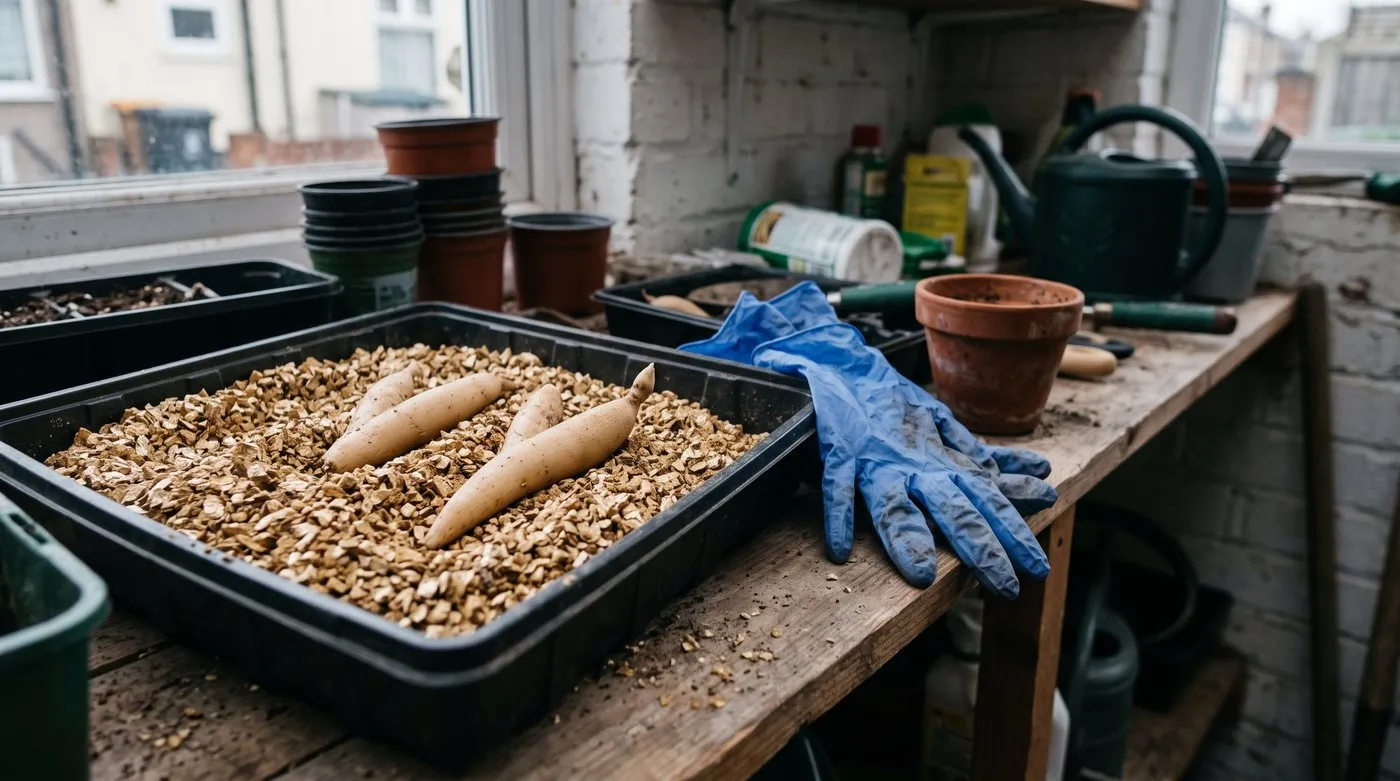
Lifted tubers rest happily in dry vermiculite. Keep them frost-free and check them once a month.
When the leaves yellow in autumn, water less and less. Let the foliage die back naturally, as it feeds the tuber while it fades. Then choose one of two routes:
- Leave it in the pot. Keep the compost completely dry and store the pot somewhere frost-free, at 10°C or above.
- Lift the tuber. With gloves on, tip out the pot and find the brittle tuber. Brush it clean, check it’s firm, and pack it in dry compost or vermiculite. Store it at 10°C or above.
Check stored tubers once a month and remove any that turn soft. Damp or cold storage is what usually kills them. The guide to storing flower bulbs covers the same dry, airy principles for other summer bulbs.
Common gloriosa problems
Tuber rots before sprouting. It was too cold or too wet at the start. Use gritty compost and keep it barely moist and warm until shoots show.
Lots of leaves, no flowers. It needs more warmth and light. Move it to the brightest, warmest spot and feed with tomato feed once buds form.
Aphids and red spider mite. Aphids cluster on soft shoots, and red spider mite loves hot, dry, still air. Rub aphids off by hand or knock them off with water, and ventilate well. If a spray is really needed, use an approved product for that use, following the label. The guide to greenhouse pest control covers biological controls too.
Tuber dies in winter. It was stored damp or too cold. Keep it dry and at 10°C or above.
Mistakes to avoid with gloriosa
- Snapping the bud. It won’t regrow, so handle tubers like something fragile.
- Planting upright or deep. Lay the tuber flat at about 5cm.
- Overwatering at the start. Barely moist until shoots appear, then more.
- Using thick canes alone. The tendrils can’t grip them, so add netting or string.
Month-by-month gloriosa calendar
| Month | What to do |
|---|---|
| January to February | Order tubers early. Keep stored tubers dry at 10°C or above |
| March to April | Pot tubers flat, 5cm deep, somewhere warm. Keep barely moist |
| May | Put supports in. Tie in first stems. Water more as growth speeds up |
| June | Train stems up the support. Start tomato feed when buds form |
| July to August | Main flowering. Feed weekly, water steadily, ventilate on hot days |
| September | Flowering tails off. Start to water less |
| October | Let the plant die back. Stop feeding and watering |
| November to December | Store the tuber dry in its pot or lifted. Check it monthly |
Frequently asked questions
Is gloriosa poisonous?
Yes, every part of gloriosa is highly poisonous. It contains colchicine, and the tubers hold the most. Swallowing any part can be fatal. Wear gloves when handling it, wash your hands afterwards, and keep it well away from children, cats and dogs.
How do you plant a gloriosa tuber?
Lay it flat, about 5cm deep, in gritty compost. The growing bud sits at the tip and snaps off easily, so handle the tuber gently. A 3-5 litre pot of John Innes No 2 mixed with grit suits one tuber. Keep it warm and barely moist until shoots appear.
Can gloriosa grow outside in the UK?
Not in the open ground, as it is tender. Grow it in a pot in a greenhouse or conservatory. In a warm summer you can stand the pot on a sunny, sheltered patio, but bring it back under cover before nights turn cool.
Why is my gloriosa not flowering?
Too little warmth or light is the usual cause. Gloriosa needs a bright, warm spot to set buds. Plants kept cool make leaves but few flowers. Move it to the warmest, brightest place you have, feed with tomato feed once buds form, and ventilate on hot days.
How do you overwinter a gloriosa tuber?
Let it die back, then keep the tuber dry and frost-free. Cut watering as the leaves yellow in autumn. Either keep the tuber in its dry pot or lift it carefully and pack it in dry compost or vermiculite. Store it at 10°C or above until spring.
When does gloriosa flower?
Usually from July to September after a spring start. A tuber potted in March or April and kept warm normally starts flowering in midsummer. A cool start pushes flowering later. Each plant opens a long run of flowers rather than all at once.
Ready for more warm-climate colour? Read the guide to hardy exotic plants for UK gardens, or browse more plant guides.
Our team produces practical UK gardening guidance from source research, contributor records and established horticultural practice. Editorial standards are overseen by Matt W.


