Key takeaways
- Plant phormium in spring, in full sun and soil that never sits wet in winter
- Plain green Phormium tenax is the hardiest; bright coloured varieties need a sheltered spot
- Phormium cookianum types have softer, arching leaves and suit smaller gardens
- Pull or cut dead leaves away at the base in spring, never by trimming leaf tips
- It shrugs off salty wind, so it's a good choice for seaside gardens
Phormium is a tough evergreen with big, sword-shaped leaves that look good all year. Give it sun and soil that drains in winter and it needs very little from you.
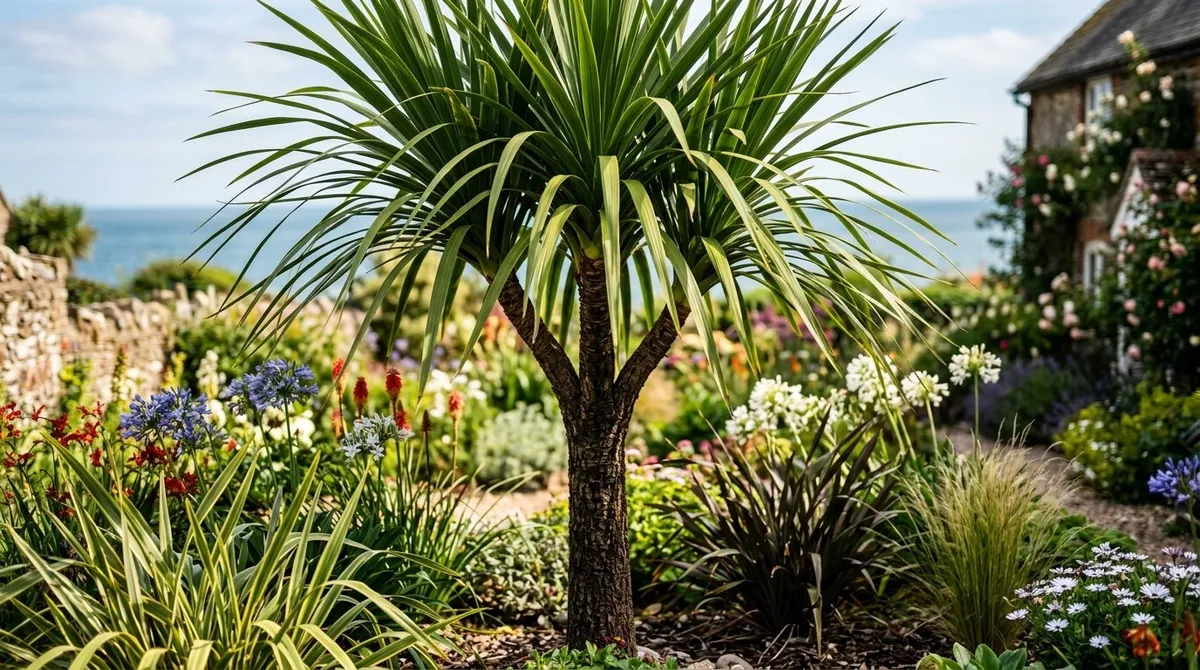
Also called New Zealand flax, it comes in plain green, bronze, near-black and striped forms in yellow, pink and red. Its spiky cousin, the cordyline, grows into a tree with a trunk. If you’re weighing up the two, see our cordyline growing guide. This guide covers phormium alone: choosing one, planting it and keeping it tidy.
What does phormium look like?
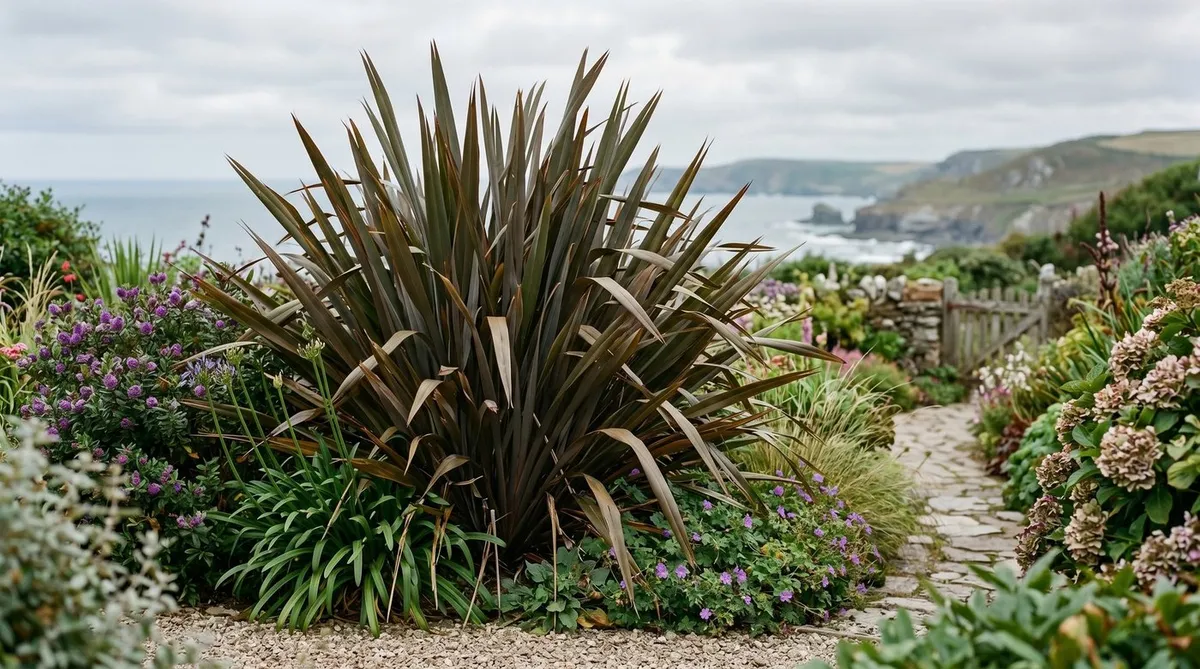
Phormium forms a clump of long, stiff, strap-like leaves that rise from the base like a fan. Big plants can be 2-3m tall, and small varieties stay under 1m.
There are two species in gardens:
- Phormium tenax is the big one. It has stiff, upright leaves and can make a bold specimen 2-3m tall.
- Phormium cookianum, sometimes called mountain flax, is smaller. Its leaves arch and droop, giving a softer look.
Many popular varieties are hybrids between the two. In summer, mature plants send up tall flower stems with dark red or yellow tubular flowers. Bees visit them, and the seed heads stand well into winter.
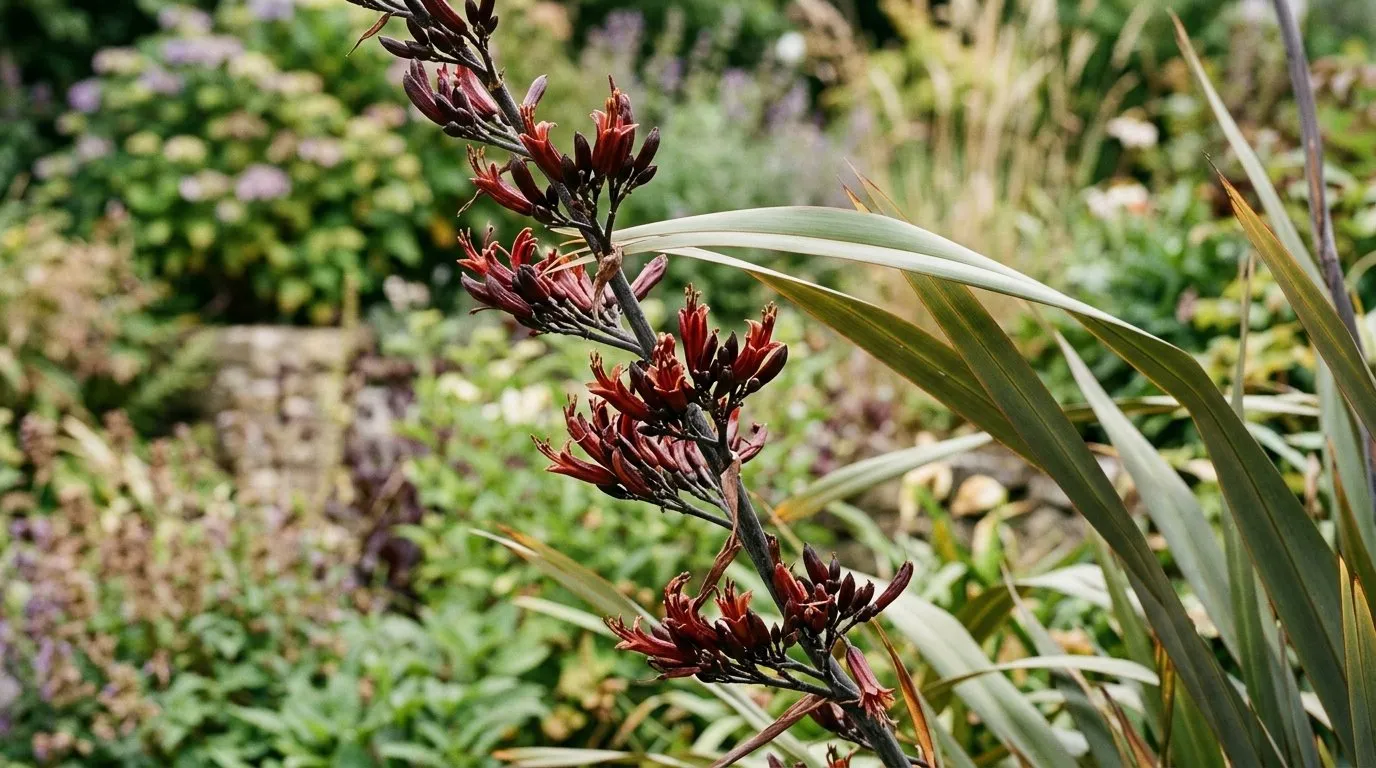
Mature phormiums send up tall stems of dark red tubular flowers in summer. Bees love to visit them.
Which phormium variety should I choose?
Pick plain green or bronze tenax for size and toughness, and a compact coloured variety for a small border or pot. Brightly striped types are usually more tender than plain ones.
| Variety | Leaf colour | Rough height | Best for |
|---|---|---|---|
| Phormium tenax | Plain green | 2-3m | Big focal point, colder gardens |
| Tenax Purpureum Group | Bronze-purple | About 2m | Dark contrast at the back of a border |
| ’Sundowner’ | Bronze, pink edges | About 1.5-2m | Warm colour schemes |
| ’Yellow Wave’ | Yellow with green stripes | About 1-1.5m | Brightening a sunny border |
| Cookianum ‘Tricolor’ | Green, cream and red edges | About 1-1.5m | Smaller gardens, arching shape |
| ’Jester’ | Pink and green | About 1m | Pots and small borders |
| ’Platt’s Black’ | Near-black | Under 1m | Pots, modern planting |
Heights are for the leaves; flower stems go higher. Coloured leaves are brightest on young growth in sun.
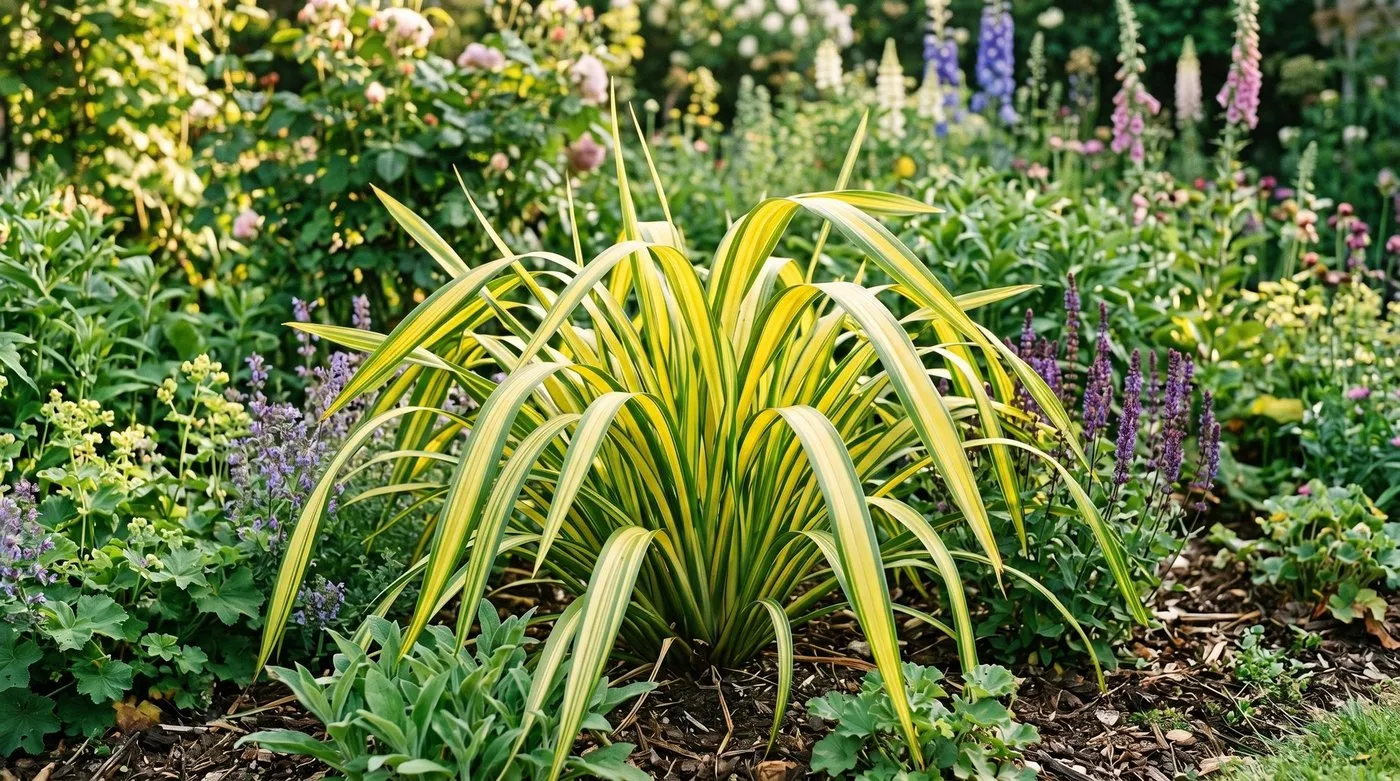
‘Yellow Wave’ lights up a sunny border. Bright striped types like this do best in a sheltered spot.
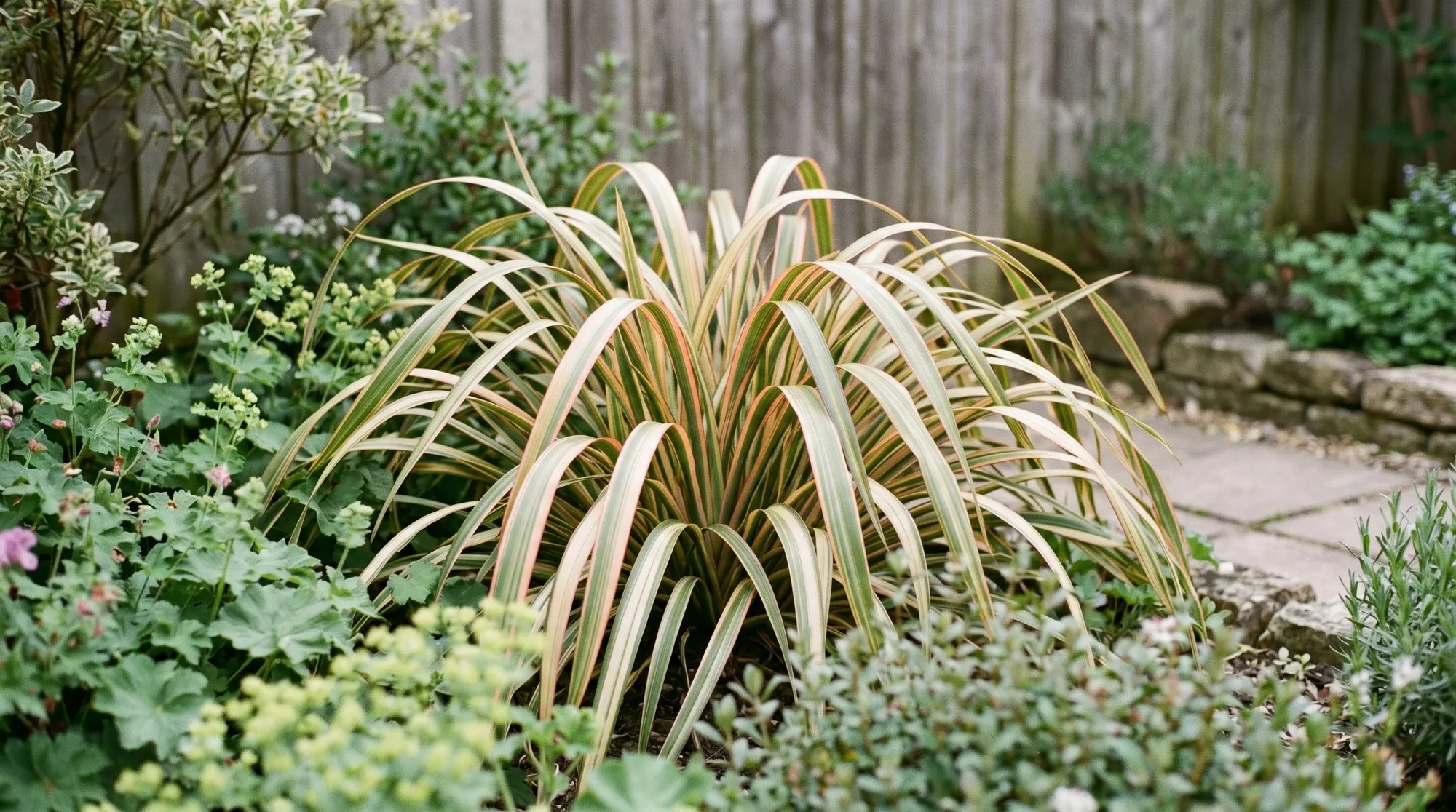
Cookianum ‘Tricolor’ has softer, arching leaves. It fits a small garden far better than a full-size tenax.
How to plant phormium
Plant phormium in spring, so it can root in before its first winter. Choose full sun and soil that holds some moisture in summer but drains in winter.
- Pick a sunny, sheltered spot with room for the plant to spread. Big tenax clumps can grow 2m wide.
- Dig a hole twice as wide as the pot and the same depth.
- On heavy clay, mix plenty of coarse grit into the soil you dug out.
- On clay, also raise the planting spot into a low mound. The crown should sit just above the soil around it.
- Plant at the same depth it was in its pot, backfill and firm gently.
- Water well and keep it watered in dry spells through its first summer.
A gravel mulch around the base looks good and keeps the crown drier in winter. Once settled, phormium copes with dry spells, though it grows best with some summer moisture. If your soil is very heavy, our list of plants for clay soil has other options for wetter spots.
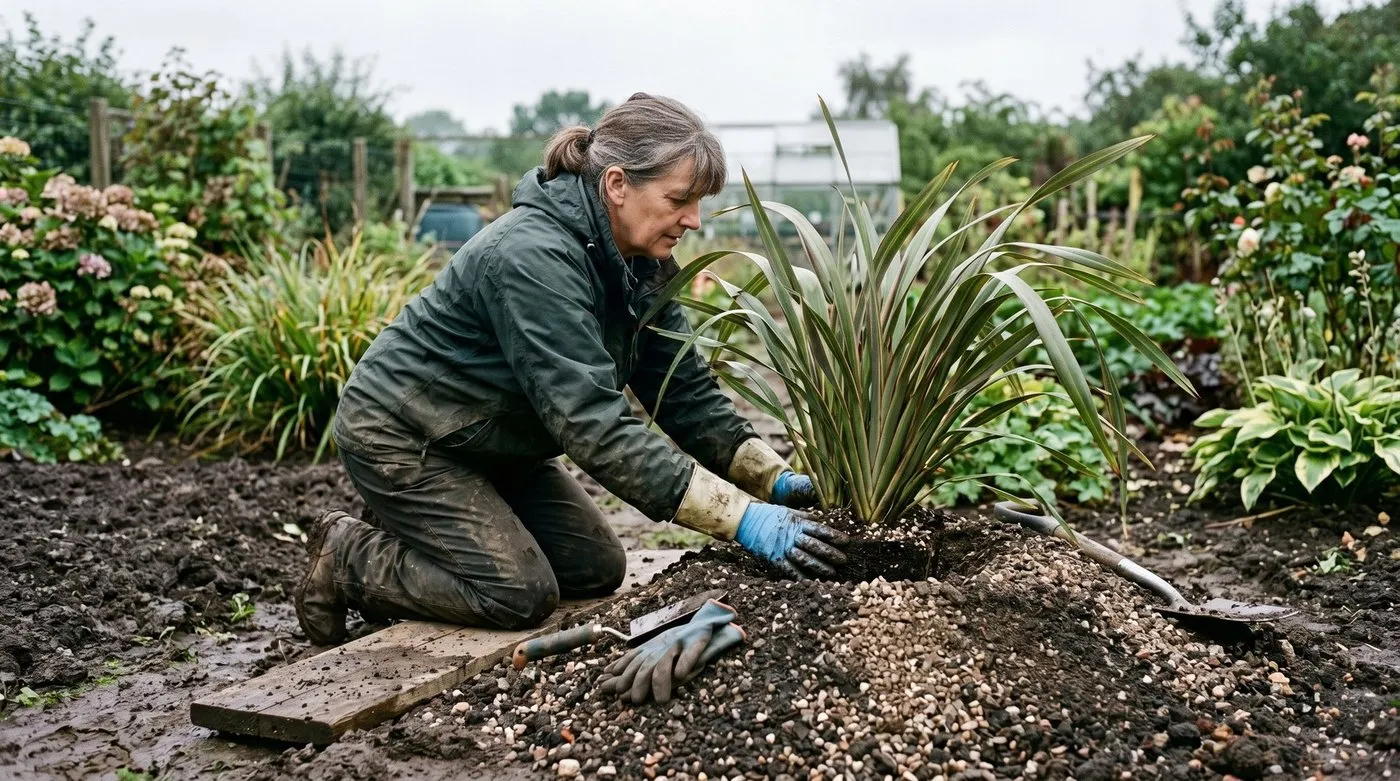
On heavy clay, plant on a low mound with grit mixed in. That keeps the crown out of the cold, wet soil that phormiums hate.
Growing phormium by the sea and in pots
Phormium copes well with salty, windy seaside air, which makes it a good backbone plant for coastal gardens. For more ideas, see our guide to salt-tolerant plants for coastal gardens.
Compact varieties make great pot plants. Use a large, heavy pot with drainage holes and loam-based compost mixed with some grit. Water in dry weather and feed in spring.
Pots are handy in cold areas. In a hard frost, move the pot against a sheltered wall or into a cold greenhouse. Wrap the pot to protect the roots, and cover the leaves with garden fleece during cold snaps.
How to look after phormium through the year
Phormium needs very little care. Most of the work is a spring tidy.
- Spring: pull away dead leaves, or cut them off low at the base. Remove frost-damaged leaves once new growth starts. Feed with a general fertiliser.
- Summer: water young plants and pots in dry spells. Cut faded flower stems at the base, or leave them for winter interest.
- Autumn: leave the plant alone. Old leaves help shelter the crown.
- Winter: protect potted and coloured varieties in hard frost.
Warning: Birds often nest deep in big phormium clumps. Check carefully before tidying in spring and summer, as damaging an active nest is an offence.
Never trim leaves part-way down. The cut end turns brown, and the leaf won’t grow back.
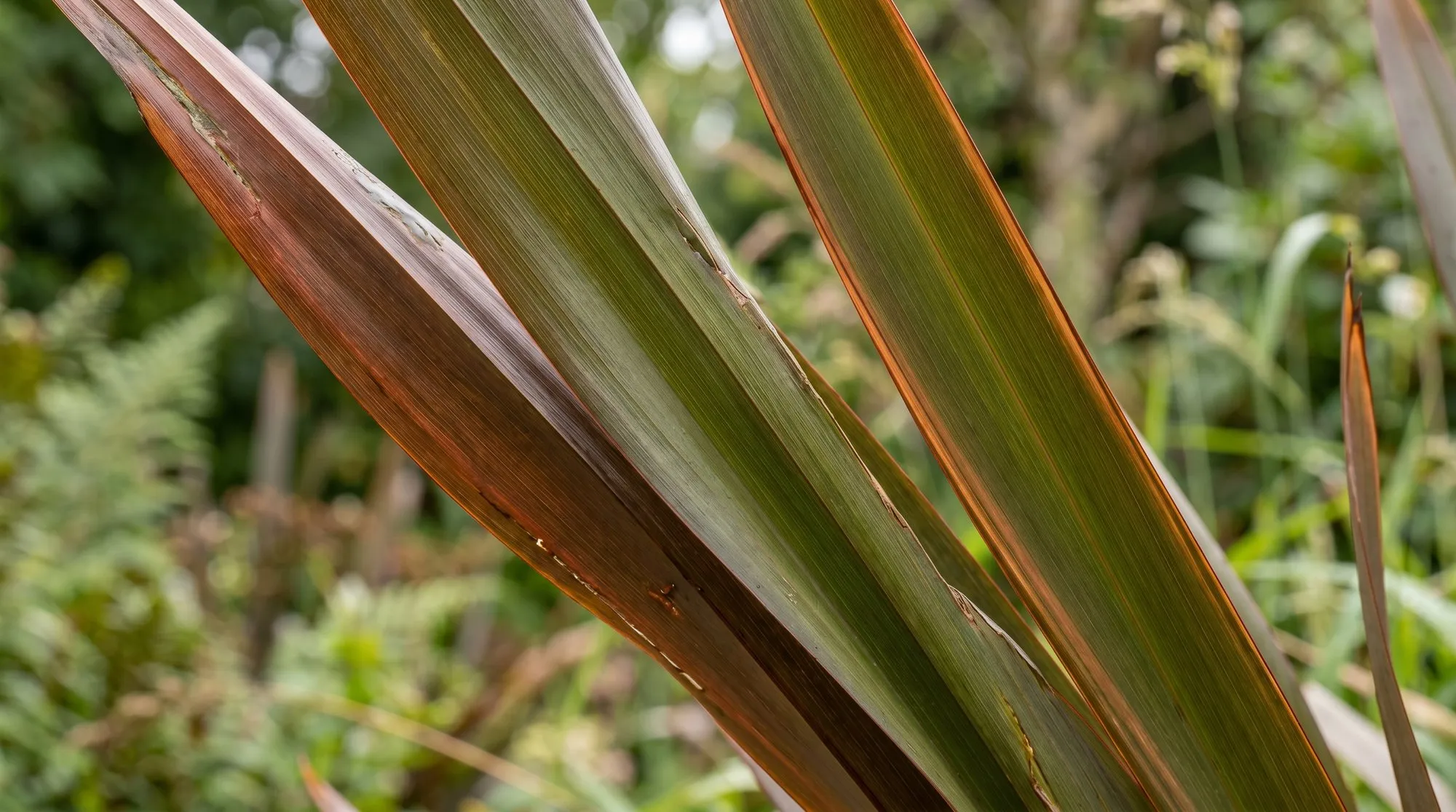
Healthy phormium leaves stay firm and smooth. A few marks on older leaves are normal; pull away any that die back.
How to divide phormium
Divide phormium in spring when a clump outgrows its space or looks bare in the middle. It’s heavy work, so take a friend.
- Water the plant the day before.
- Dig around the clump and lift it with a spade and fork. Big clumps may need cutting into sections in the ground.
- Split it with a sharp spade or old pruning saw. Each piece needs several healthy leaves and good roots.
- Throw away the old, woody centre.
- Replant straight away at the same depth, and water well.
Wear gloves, as the leaf edges and fibres are tough. Keep new divisions watered through their first summer.
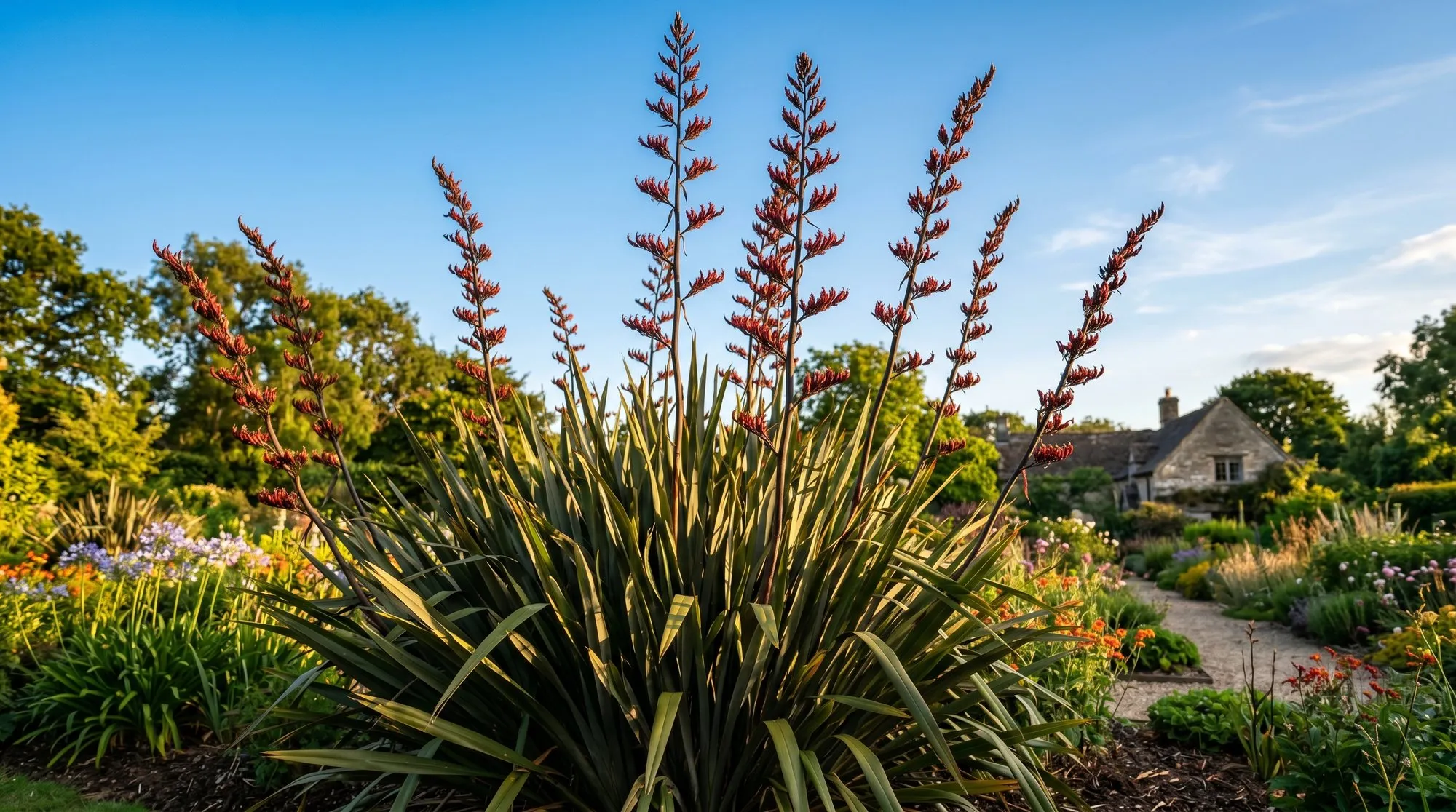
Big, established clumps flower best. If yours is crowded and bare in the middle, spring division gives it a fresh start.
Good plants to grow with phormium
Phormium looks best with plants that enjoy the same sun and drainage but have a different shape.
- Stipa gigantea has golden oat-like flowers that sway beside phormium’s stiff leaves. See our Stipa feather grass guide.
- Festuca glauca makes a low blue edging in front of the clump. Our blue fescue guide has the best varieties.
- Crocosmia ‘Lucifer’ adds bright red flowers in late summer.
- Salvia ‘Caradonna’ gives upright purple spikes that suit bronze phormiums.
For more bold, easy plants, browse our guide to architectural plants for low-maintenance gardens.
Common phormium problems and mistakes
- Wet winter roots. Cold, waterlogged soil is the biggest killer. Improve drainage before you plant.
- Choosing a tender variety for a cold garden. Bright pink and red types sulk in cold, exposed spots. Go for plain green or bronze, or grow coloured ones in pots.
- Cutting leaves part-way. Always remove leaves at the base.
- Planting too close. Big tenax clumps need plenty of room, or they swamp their neighbours.
- Mealybugs. Small, white, waxy insects can hide at the leaf bases. Check plants before you buy, and wipe off small patches.
Now you know how to grow phormium, explore more plant guides, or read our guide to hardy exotic plants to build a bold, leafy border around it.
Frequently asked questions
Are phormiums hardy in the UK?
Most are hardy in milder parts of the UK, with plain green types the toughest. Brightly coloured varieties are more tender. In cold, inland gardens, choose a sheltered, well-drained spot or grow coloured types in pots you can move.
What is the difference between Phormium tenax and Phormium cookianum?
Phormium tenax is bigger and stiffer, while cookianum is smaller with arching leaves. Tenax can reach 2-3m and makes a bold focal point. Cookianum, sometimes called mountain flax, has a softer, drooping habit and suits smaller borders.
How do you prune phormium in the UK?
Remove dead or damaged leaves at the base in spring. Pull dead leaves away or cut them off low with sharp secateurs. Don’t trim leaves part-way down, as the cut ends brown and look untidy. Cut faded flower stems at the base.
Will phormium survive in a clay garden?
Yes, if winter wet can drain away. Phormium likes moisture in summer but hates sitting in cold, waterlogged soil. On heavy clay, dig in grit and plant on a low mound so the crown sits slightly above the surrounding soil.
What is the best phormium for a small UK garden?
Choose a compact variety such as ‘Jester’, ‘Platt’s Black’ or cookianum ‘Tricolor’. These stay well under 2m, and some under 1m. They also suit large pots on a patio.
Why are my phormium leaves turning brown?
Old outer leaves naturally brown and die as the plant grows. Widespread browning after winter usually means frost damage or cold, wet roots. Remove damaged leaves in spring and new growth usually follows from the centre.
Our team produces practical UK gardening guidance from source research, contributor records and established horticultural practice. Editorial standards are overseen by Matt W.