Key takeaways
- Red campion is a native perennial that flowers well in partial shade, which few wildflowers manage
- The main flush is May to June, and shearing afterwards often brings more flowers into autumn
- Sow fresh seed on the surface in August or September, or in March and April, with no heat
- Each plant is male or female, so grow five or more if you want seed
- It self-seeds freely, but unwanted seedlings pull up easily
- Choose the single wild form, not doubles, for bees and moths
Red campion is a native wildflower that grows and flowers happily in partial shade. That makes it a gift for hedge bottoms, north-facing borders and the dim corners where meadow flowers sulk. It is easy from seed, fully hardy and loved by bumblebees.
The name is a little misleading. The flowers are rose-pink, not red, and it is a short-lived perennial rather than an annual. This guide covers sowing, siting and companions. It also explains the male-and-female quirk that puzzles seed savers, and how to keep a happy patch in check.
What is red campion and where does it grow wild?
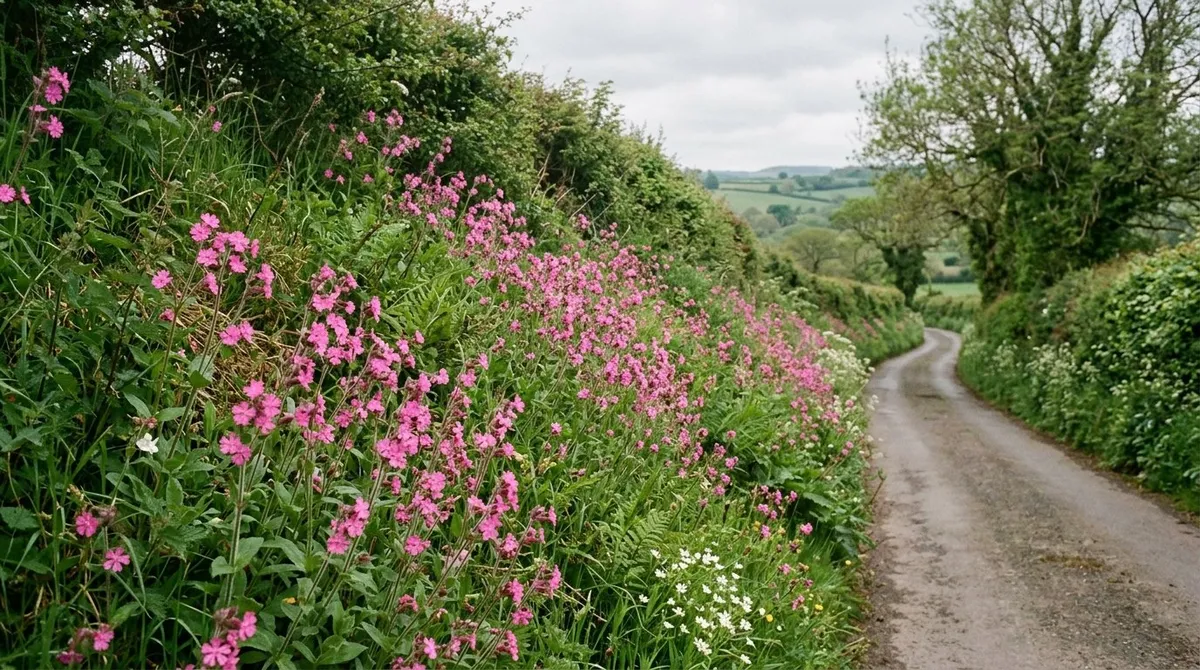
Red campion (Silene dioica) is a native perennial of hedgerows, woodland edges and shady banks across most of Britain. In late spring it turns many country lanes pink, often alongside bluebells and stitchwort.
It makes a loose clump of softly hairy leaves in opposite pairs. Branching stems reach up to about 90cm. Each flower is about 2cm across, with five deeply notched petals. The main flush runs from May to June, and plants often keep producing the odd flower into autumn.
It is fully hardy, so winter is no worry anywhere in the UK. Individual plants are fairly short-lived, but a colony keeps itself going from seed. Where it meets white campion, the two cross and produce pale pink hybrids.
Does red campion grow in shade?
Yes. Red campion grows and flowers well in partial shade, which few common British wildflowers do. Poppies and cornflowers need full sun, and ox-eye daisies lean and flop in shade. Red campion evolved on the woodland edge, so dappled light suits it.
There are two limits. Deep, dry shade under conifers beats it, and permanently waterlogged ground rots the crown. Bright shade with some morning or evening sun is ideal. It also grows in full sun, though it may finish flowering sooner on dry, light soils. For more ideas for a shady patch, see these plants that thrive in shade.
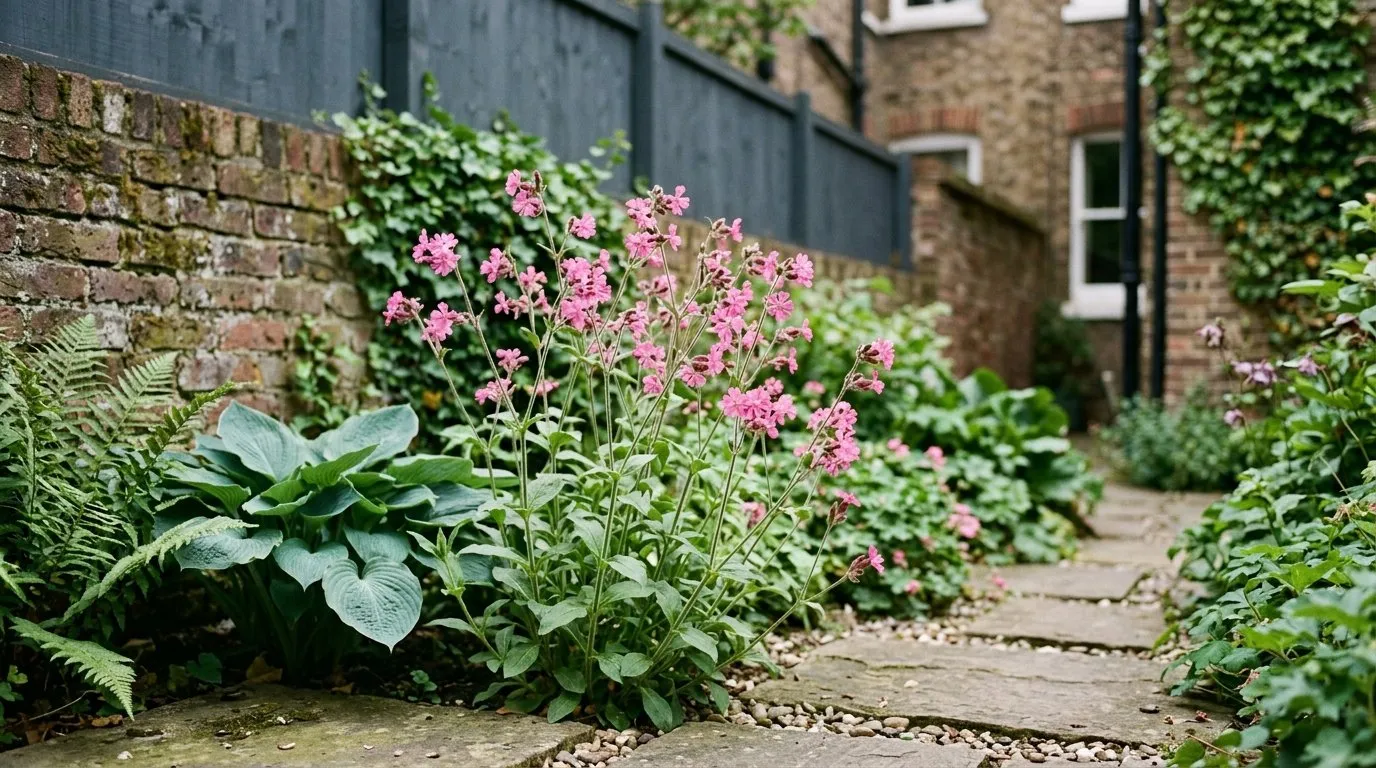
A north-facing border behind a city terrace. Red campion carries on flowering here where sun-lovers would sulk.
Why has my red campion got no seed?
A lone red campion often sets no seed because each plant is either male or female. The name dioica means “two houses”. Male flowers have ten stamens. Female flowers have five curled styles and a fatter calyx (the tube behind the petals), which swells into the seed capsule.
You can’t tell the sexes apart until they flower, and nurseries don’t label them. The answer is numbers. Plant five or more and you will very likely have both. Bees carry the pollen from male to female flowers as they work the patch.
This explains a common puzzle: one bought plant that flowers well for years but never produces a seedling. Children love spotting the difference with a hand lens, too.
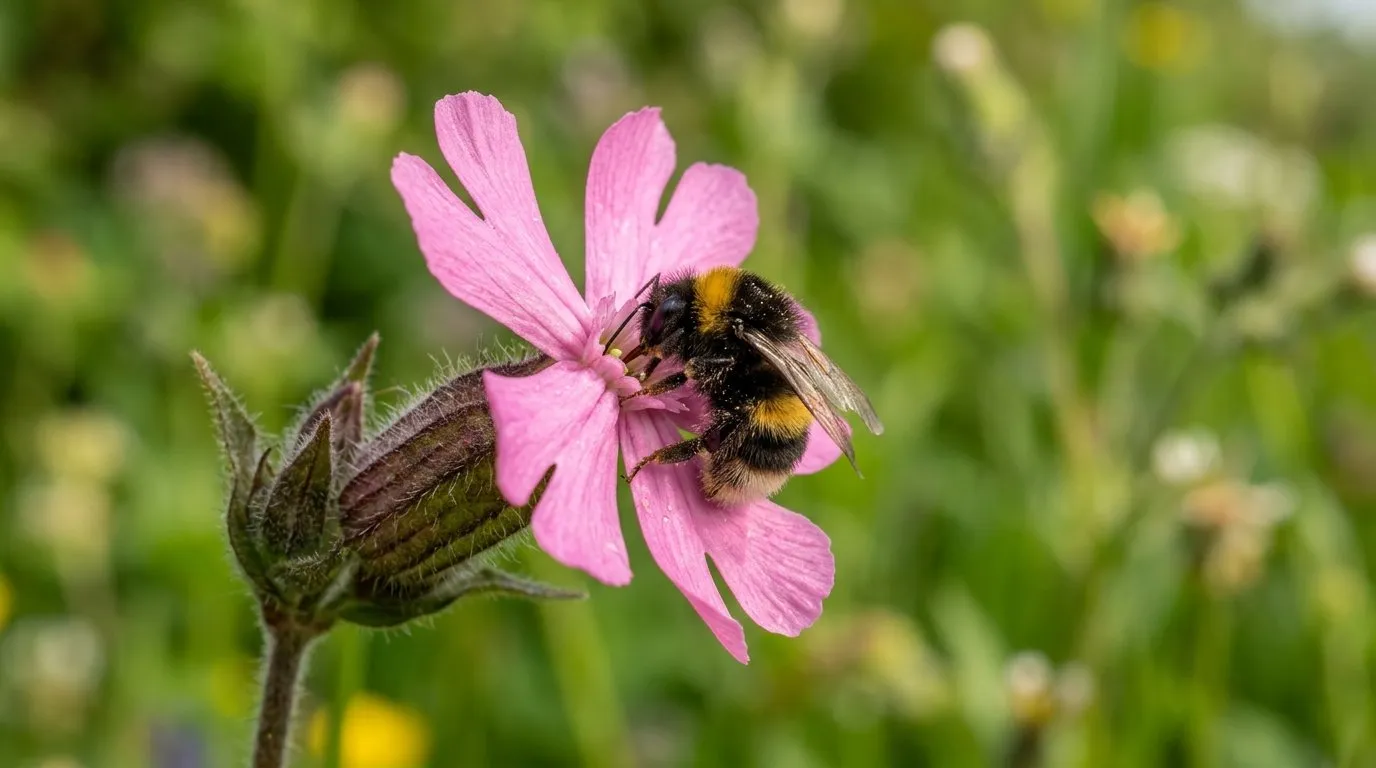
Those deeply notched pink petals are the quickest way to recognise red campion. Bumblebees with long tongues can reach the nectar easily.
When and how do you sow red campion seed?
Sow red campion in August or September, or in March and April. It is one of the simplest natives to raise:
- Rake the soil to a fine crumb and water it if it is dry.
- Scatter the seed thinly over the surface.
- Press it in with a board or your palm. Don’t bury it.
- Leave it be. No propagator, fleece or heat is needed.
Seedlings usually appear within a few weeks. In modules, sow a pinch per cell, thin to one seedling and plant out about 30cm apart once well rooted. Autumn sowings usually flower the next spring. The guide on when to sow wildflower seeds covers timings for a wider mix.
Collecting your own seed is easy. From midsummer the female capsules dry to small brown flasks with rolled-back teeth at the top. Bend a stem over an envelope and shake, and lots of small dark seeds fall out.
Gardener’s tip: Sow campion seed soon after you collect it. Fresh seed comes up well. If you must store it, keep it cool, dry and dark, and sow by the following spring.

Ripe capsules shake out their seed with no fuss. A paper envelope keeps it dry until sowing.
Where should you plant red campion in the garden?
Plant red campion where shade or rough grass defeats showier flowers. Hedge bases, north-facing beds, under thin trees and the edges of wilder lawns all suit it. It is a gap-filler rather than a centrepiece, and it looks best in loose drifts.
Soil is rarely a problem. It grows in clay, loam and sand, acid or alkaline. Only boggy ground and bone-dry conifer roots defeat it. It fits neatly into a pocket woodland in a small garden, and a front-garden strip works too.

A front-garden strip turned pink. A packet of seed and a little patience is all it takes.
The best companions for red campion
The classic pairing is bluebells: pink over blue through late April and May. The campion carries on alone once the bulbs die back. The bluebell growing guide shows how to establish the native English species alongside it.
Foxgloves and ferns enjoy the same dappled light and make a lovely woodland edge trio. Our guide to growing foxgloves covers sowing them. Foxgloves are poisonous to people and pets if eaten, so think about where they go if you have a dog that chews plants.
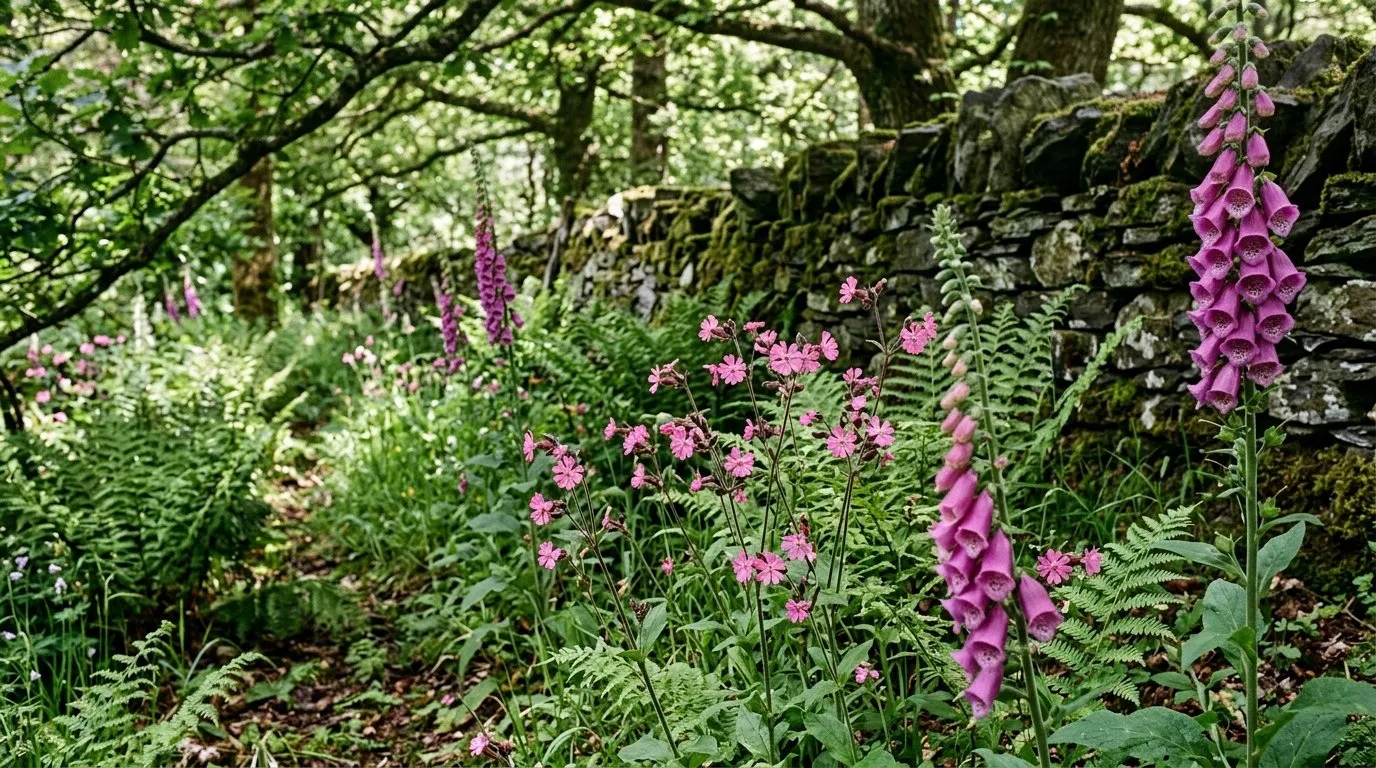
Campion, foxgloves and ferns all enjoy the same dappled light, so they make easy neighbours.
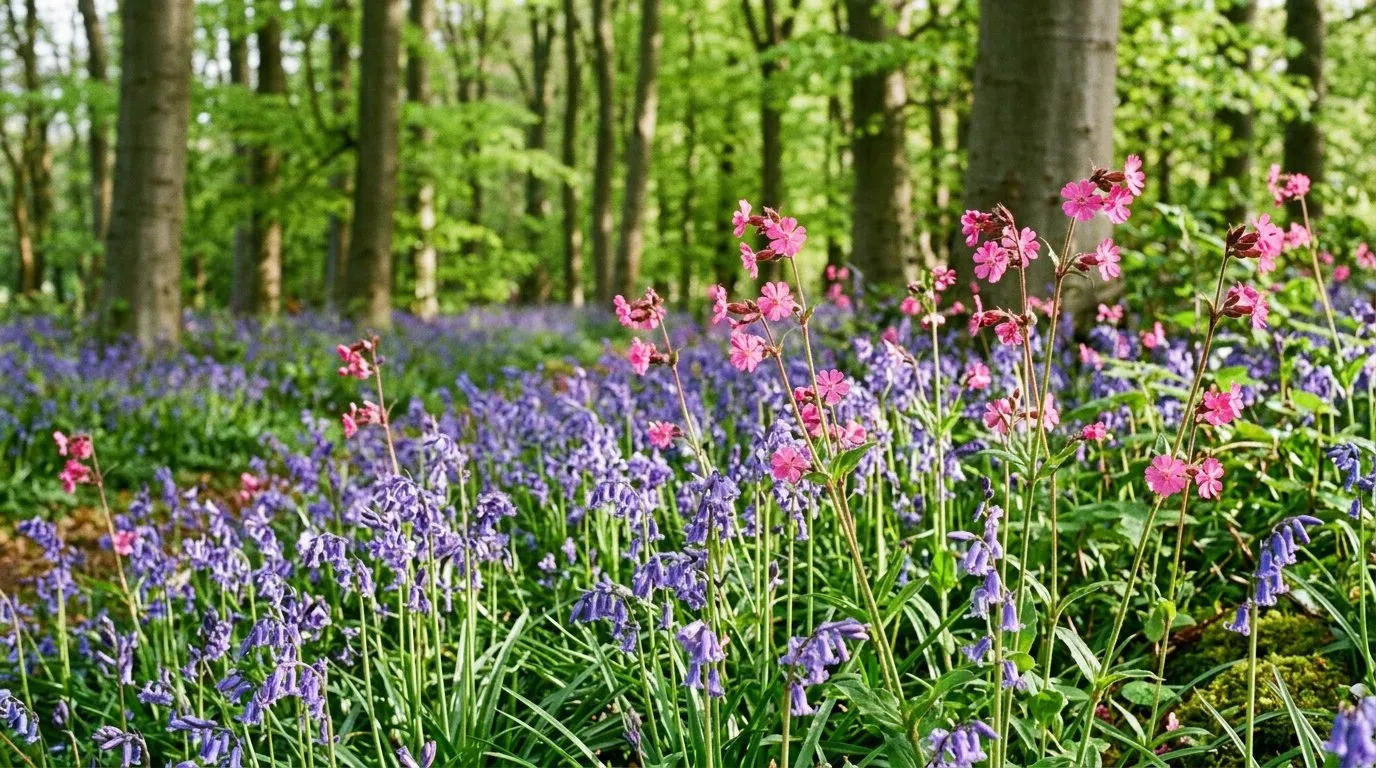
Pink over blue is the classic spring woodland pairing. Once both are settled, they come back every year.
Red campion vs white campion vs ragged robin
Red campion is the shade-tolerant one of the three, which settles most planting choices. They are close relatives and often get mixed up at plant sales.
| Species | Flowers | Natural home | Light |
|---|---|---|---|
| Red campion (Silene dioica) | Rose-pink, notched petals | Hedgerows, woodland edges, banks | Sun to part shade |
| White campion (Silene latifolia) | White, scented in the evening | Field edges, open waste ground | Full sun |
| Ragged robin (Silene flos-cuculi) | Pink, petals cut into ragged strands | Damp meadows, pond edges | Full sun, damp soil |
White campion opens and scents in the evening for moths, so it suits a sunny spot near a seat. Ragged robin is the choice for a pond edge or boggy corner. Red and white campion cross where they grow together, so a mixed patch can drift towards pale pink over the years.
How do you stop red campion taking over?
Red campion self-seeds generously, but seedlings pull out easily, so keeping it tidy takes minutes. A happy colony will drop seedlings into nearby beds, pots and gravel.
Two habits keep it in check. First, cut the whole patch back to about 10-15cm after the main flush in early summer. Plants regrow quickly, often flower again into autumn, and you remove most of the ripening seed in one go. Second, pull unwanted seedlings in spring, when they show as pairs of soft, hairy oval leaves. The guide to self-seeding plants covers other easy spreaders that behave the same way.
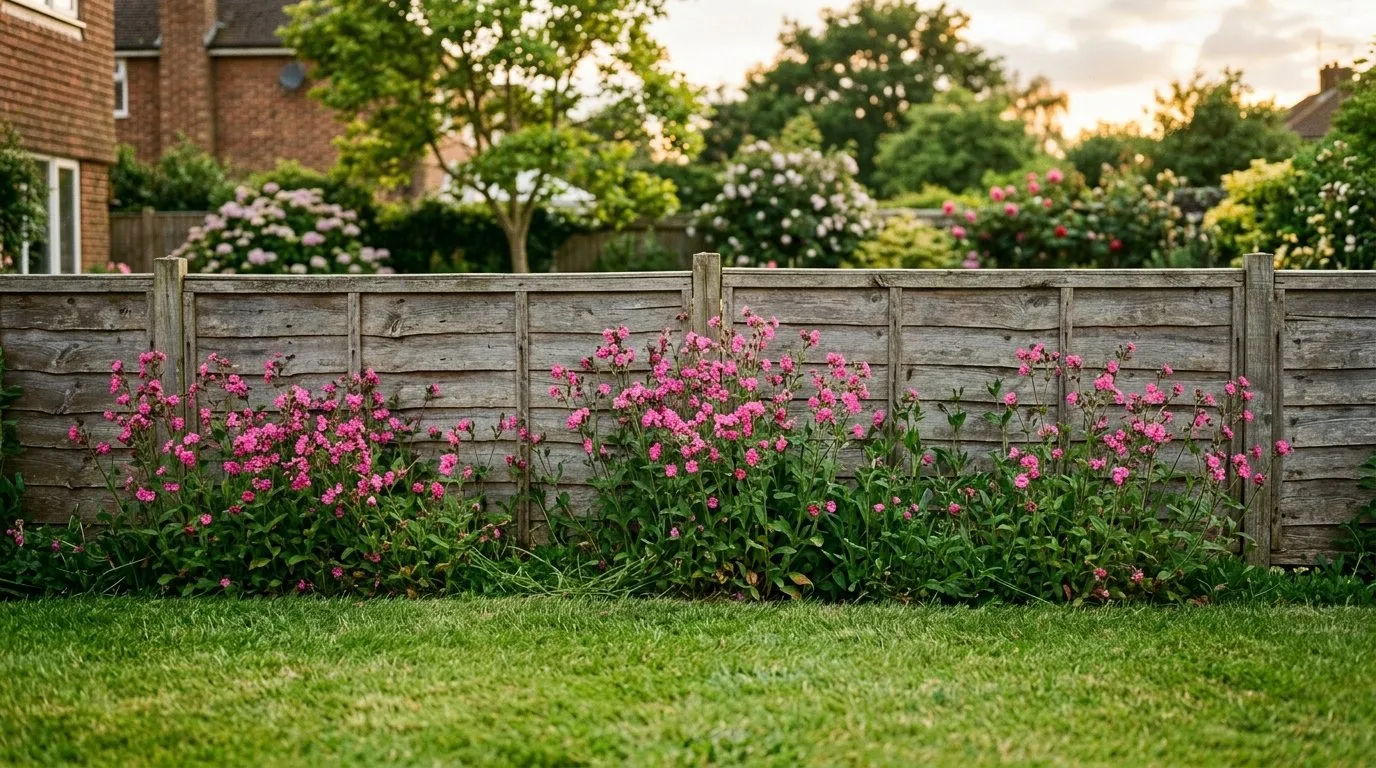
A fence line filled from one sowing. Any plant that strays where you don’t want it pulls out in seconds.
What wildlife does red campion support?
Red campion feeds bumblebees, butterflies and hoverflies, and its seed pods feed moth caterpillars. The flower tube is fairly deep, so long-tongued bumblebees and butterflies reach the nectar most easily.
The campion moth and the lychnis lay their eggs on the plant, and their caterpillars feed inside the ripening seed capsules. A patch of campion is a small nursery as well as a nectar stop. It is a good fit among other UK native plants for gardens.
Choose the single wild form, not the doubles. Double pink forms look plump in a pot, but the extra petals make it hard for insects to feed and they set little or no seed.
Should you buy red campion seed, plugs or pots?
Seed is the best value. One packet sows a good stretch of hedge base or bank, and it suits patient gardeners. Autumn sowings flower the following spring.
Plug plants close the time gap. Plugs planted in early autumn should flower well the next spring. Set them about 30cm apart. Pots are only worth buying in small numbers, say five to start a colony that seed will then spread for free.
Whichever you choose, buy from a native wildflower specialist so you get true Silene dioica of British origin rather than a garden selection.
Common mistakes with red campion
- Planting one plant and waiting for seedlings. It may be the wrong sex. Plant at least five.
- Burying the seed. Press it onto the surface instead.
- Choosing doubles for a wildlife garden. Pick the single wild form.
- Planting in dry shade under conifers. Move it to bright, dappled shade.
- Leaving it all to seed. Shear after the main flush to keep it tidy and coax more flowers.
Frequently asked questions
Is red campion actually red?
No, the flowers are rose-pink. The old name is not very accurate. Each flower is about 2cm across with five deeply notched petals. Shades run from soft pink to near magenta, and very pale plants are often hybrids with white campion.
Does red campion grow in shade?
Yes, it flowers well in partial shade. It is a woodland edge and hedge bank plant by nature, so a north-facing border or hedge bottom suits it. Deep, dry shade under conifers is the one shady spot where it struggles.
Why is my red campion not setting seed?
A single plant often can’t, because red campion plants are male or female. Only female plants carry seed capsules, and they need pollen from a male nearby. Grow five or more plants together and you will very likely have both.
When should I sow red campion seed?
Sow in August or September, or in March and April. Scatter the seed thinly on raked soil or compost and press it in without burying it. No heat is needed. Autumn sowings usually flower the next spring, while spring sowings may take a year longer to flower well.
Is red campion invasive?
No, it self-seeds freely but is easy to control. Seedlings come up near the parent plants and pull out easily. Shearing the plants after the main flush stops most of the seed being shed, and often brings a second flush of flowers.
What is the difference between red campion and ragged robin?
Ragged robin has petals split into thin, ragged strands. Red campion petals are simply notched. Ragged robin grows in damp, sunny meadows and pond edges, while red campion takes drier soil and real shade. Plant whichever matches your conditions.
Every garden has a dim corner where nothing seems to try. Give it a packet of red campion this autumn, then find more ideas in the guide to making a wildflower meadow and the wildlife gardening hub.
Our team produces practical UK gardening guidance from source research, contributor records and established horticultural practice. Editorial standards are overseen by Matt W.


