Key takeaways
- Elder grows in almost any UK soil, clay included, with very little fuss
- Pick elderflowers in June and ripe, dark berries in September
- Always cook elderberries before eating, as raw berries can make you ill
- Cut ornamental elders hard in late winter for the best leaves, or lightly for berries
- Elder is a fantastic wildlife plant, feeding insects and birds
Elder is a brilliant plant for a British garden. One shrub gives you elderflowers in June, berries in September and food for loads of wildlife. Purple-leaved kinds add gorgeous dark foliage too. Best of all, it’s happy on clay, copes with some shade and needs very little looking after.
Here’s how to grow the native elder (Sambucus nigra) and the best garden varieties, plus how to prune, pick and use the harvest.
Native elder vs ornamental varieties: which should you grow?
It depends what you want. Native elder gives the biggest harvest and the most wildlife. The ornamental kinds give stunning leaves that look good even when there are no flowers or berries.
If you’ve got room, grow both: a native elder in a hedge or back corner for picking, and a Black Lace or Black Beauty in a border.
Elder variety comparison
| Variety | Leaves | Flowers | Berries | Size | Best for |
|---|---|---|---|---|---|
| Native elder | Green | Big cream heads | Lots | Large | Picking, wildlife, hedges |
| Black Lace | Dark purple, lacy | Pink | Some | Medium | Borders |
| Black Beauty | Dark purple, broad | Pink, scented | Some | Medium | Borders, screening |
| Golden Tower | Golden, upright | Cream | Few | Medium, narrow | Small gardens |
| Sutherland Gold | Golden, lacy | Cream | Some | Medium to large | Leaves and berries |
| Laciniata | Green, deeply cut | Cream | Lots | Large | Looks and picking |
The RHS Sambucus plant selector lists even more varieties if you fancy a browse.
How to plant elder
Where. Full sun gives the most berries and the richest leaf colour. Part shade is fine too, as wild elder grows on woodland edges. Avoid deep shade.
When. Plant bare-root elder between November and March while it’s dormant. It’s the cheapest way to buy it, and elder settles in quickly. Our guide to planting bare-root trees and shrubs shows you how. Potted plants can go in any time, but autumn is best.
Spacing. In a hedge, plant 1-1.5m apart. In a border, give ornamental kinds 2-3m so they don’t look cramped.
Aftercare. Water during dry spells in the first summer. After that it looks after itself. There’s no need to feed, as rich soil just means lots of leaves and fewer flowers.
How to prune elder
How you prune depends on whether you want leaves, berries or both.
Hard pruning for foliage (ornamental varieties)
Purple and golden elders have their best leaves on fresh young stems. Each year in late February or early March, cut every stem back to about 30cm from the ground. Use loppers or a pruning saw on the thick ones.
It will shoot back fast with big, richly coloured leaves. The downside is very few flowers or berries that year. Our guide on how to prune shrubs covers the basics.
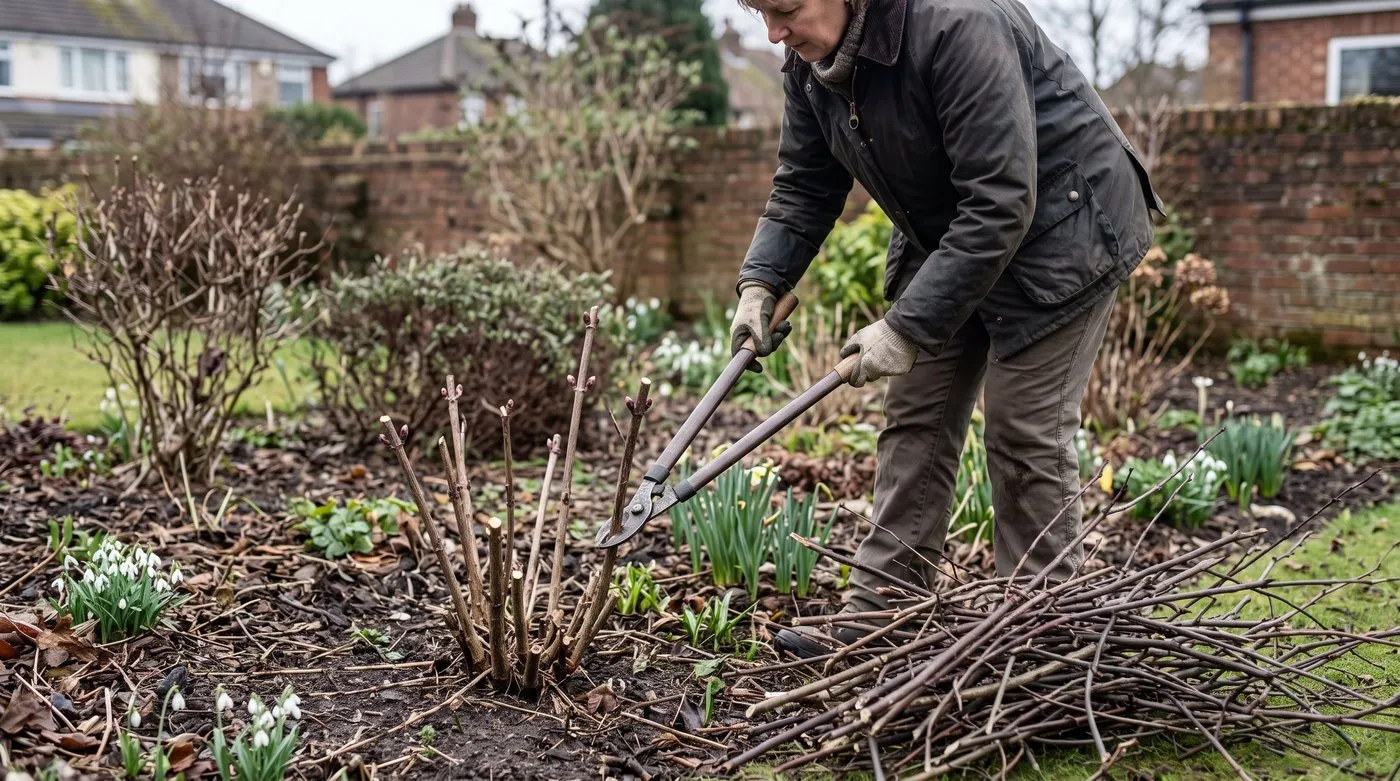
Cut ornamental elders back hard in late winter for the biggest, darkest leaves. You’ll get fewer flowers that year, so it’s a trade-off.
Light pruning for berries (native elder and larger varieties)
If you want flowers and berries, go gently. In late winter, take out any dead, damaged or crossing stems. Shorten last year’s flowered shoots by about a third.
On an older elder, cut one or two of the oldest, thickest stems right down to the base. Younger stems will take their place and keep it flowering well.
The compromise approach
Want both? Cut half the stems hard and tidy the rest lightly. Swap halves the next year.
Harvesting elderflowers in June
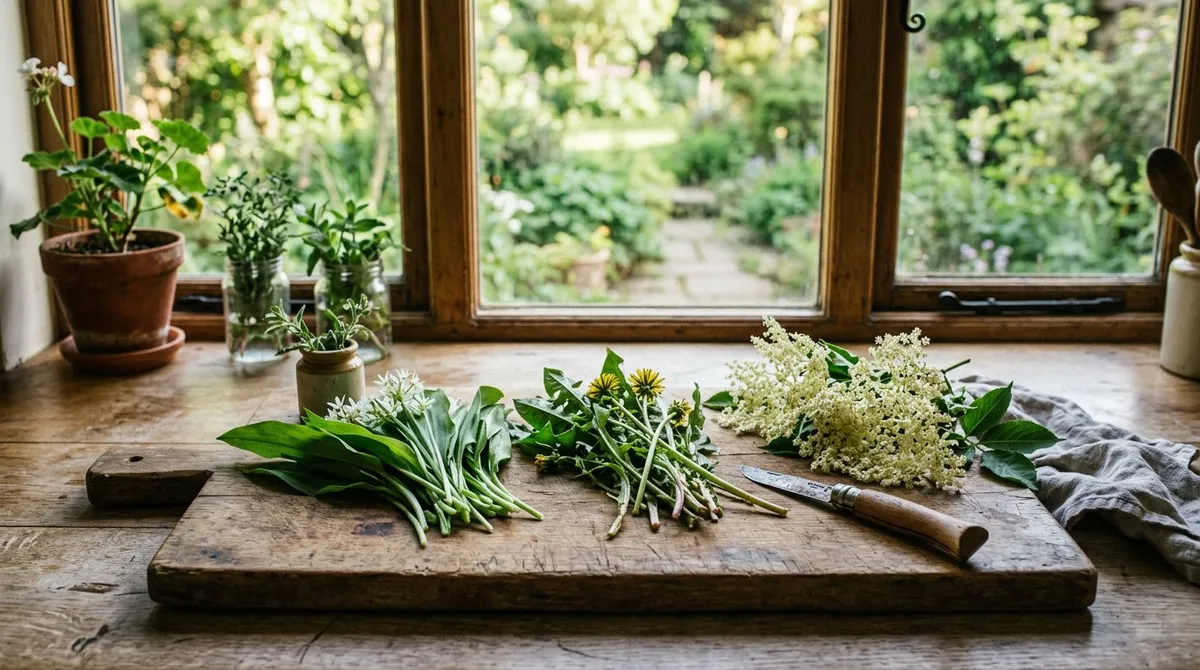
Elderflowers are ready in June. Pick when the tiny flowers in a head are fully open and smell sweet, not musty. The season lasts a few weeks, so pick little and often.
How. Snip just below the flower head and lay them in a basket so they don’t get squashed. Leave plenty on the plant for berries and for wildlife.
When. A warm, dry morning gives the best scent. Avoid picking after rain.
What to skip. Heads that are going brown or dropping. They make cordial taste musty.
Elderflower heads at their best: fully open, creamy white and sweetly scented.
Basic elderflower cordial recipe
You’ll need: 20 large elderflower heads, 1.5kg caster sugar, 1.5 litres water, 2 unwaxed lemons (zest and juice), and 50g citric acid if you like (it adds tang and helps it keep).
Method: Heat the water and stir in the sugar until it dissolves. Take it off the heat. Add the flowers, lemon zest, lemon juice and citric acid. Cover and leave for a day or two. Strain through muslin into clean, sterilised bottles. Keep it in the fridge and use within a few weeks, or freeze some in ice cube trays.
Dilute with still or fizzy water to taste. It’s lovely in lemonade or drizzled over vanilla ice cream.
Harvesting elderberries in September
Elderberries are ready in September, when they turn deep purple-black and the clusters droop. Ripe berries come away easily and stain your fingers.

Elderberries ripen in September. Strip them off the stems with a fork, and always cook them before eating.
Always cook them. Raw elderberries can make you sick. Cooking ripe berries makes them fine for jam, cordial and wine. Never eat them straight off the bush.
Picking. Snip off whole clusters. Run a fork down each cluster over a bowl to strip the berries off. Throw away any green or pale berries and every bit of stalk, then wash the rest.
How much. A mature native elder gives a good crop. Purple-leaved kinds give fewer berries, as they’re grown mainly for their leaves.
Ripe elderberries come away easily, and they stain everything they touch.
Making elderberry wine
Elderberry wine is a fun project. It makes a deep red wine that gets much better with time.
Basic elderberry wine (makes one 4.5 litre demijohn):
You’ll need: 1.5kg ripe elderberries (stalks removed), 1.2kg granulated sugar, 1 teaspoon wine yeast nutrient, 1 sachet wine yeast, 1 Campden tablet, juice of 1 lemon, and water to make 4.5 litres.
Method:
- Simmer the berries in 1 litre of water for 20 minutes. Mash and strain through muslin.
- Stir the sugar into the warm juice. Top up to 4.5 litres with cold water.
- Once it’s cooled to room temperature, add the lemon juice, yeast nutrient and crushed Campden tablet.
- Wait 24 hours, then add the yeast.
- Pour into a sterilised demijohn, fit an airlock and leave somewhere at room temperature until it stops bubbling.
- Siphon into a clean demijohn, leaving the sediment behind. Let it clear, then siphon again.
- Bottle when clear. It’s drinkable after about six months and better after a year.
For more ideas, see our guides on how to preserve fruit and vegetables and how to make jam from garden fruit.
Ornamental elder in the garden border
Dark-leaved elders are a designer’s favourite. Black Lace gives you the lacy look of a Japanese maple with the toughness of a hedgerow plant.

Black Lace pairs dark, finely cut leaves with soft pink flowers.
Treat it as a foliage plant. Cut it hard each spring for bold, dark leaves that look great next to silver plants and bright lime greens.
Lovely partners:
- Lamb’s ear (stachys) for silver against purple
- Lady’s mantle (alchemilla) for frothy lime-green
- Rosa glauca for matching red-purple tones
- White anemones for late-season contrast
As a flowering shrub, ornamental elder gives leaves from spring, flowers in June on unpruned stems and berries in autumn. It also sits nicely alongside native trees for UK gardens, bringing wildlife in without taking over a small space.
Black Lace’s lacy purple leaves look a lot like a Japanese maple.
Wildlife value: elder as a habitat plant
Native elder is one of the best wildlife plants you can grow. Insects love the flowers in June, and birds feast on the berries in autumn.
Insects. Hoverflies, bees and beetles visit the flowers. Blackfly on the young shoots feed ladybirds, lacewings and baby blue tits.
Birds. Blackbirds, robins, starlings, thrushes and wood pigeons all eat elderberries. Leave some on the bush for them.
Blackfly. It’s the most common thing you’ll see on elder, and it’s mostly harmless. Colonies appear on soft new shoots from May. Ladybirds and hoverfly larvae usually sort them out by midsummer, so there’s no need to spray.
Our guide on how to create a wildlife garden has more ideas for making your garden a haven.
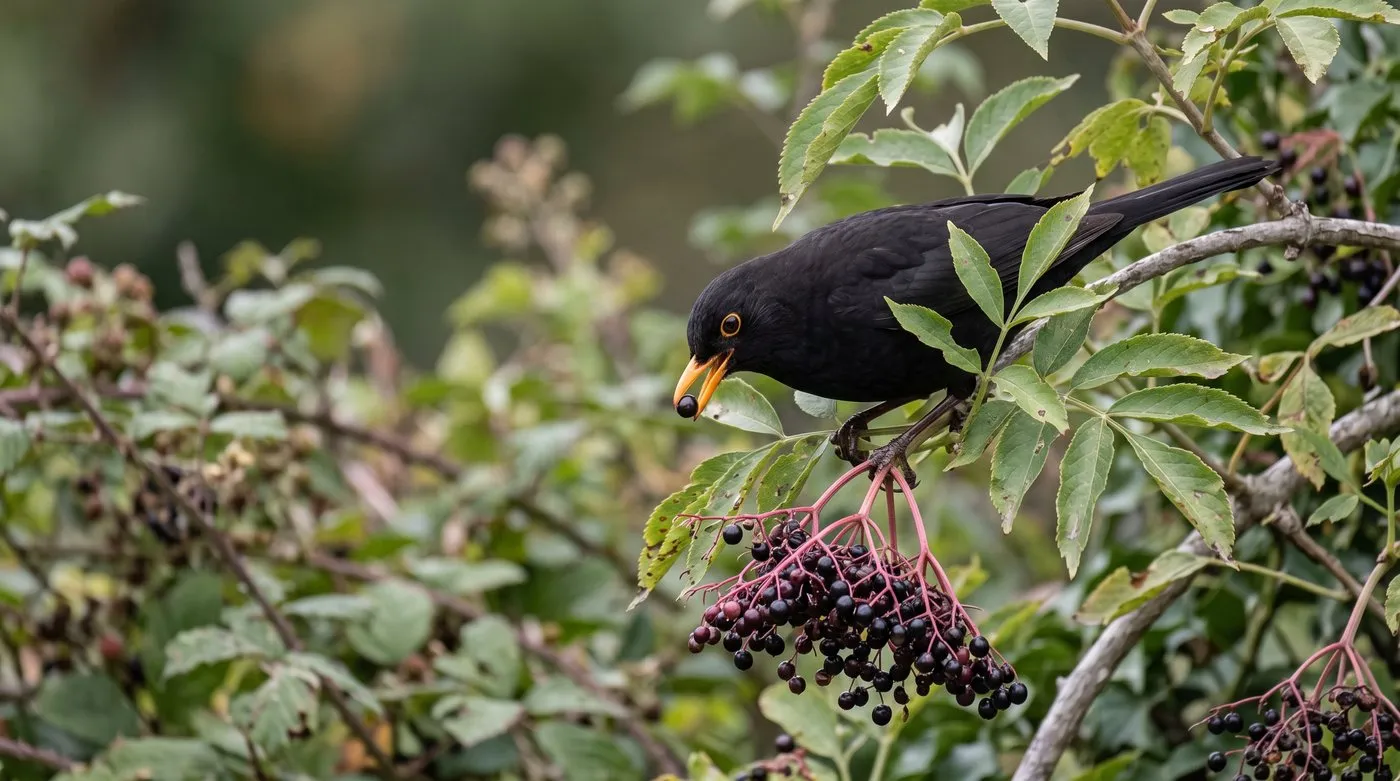
Leave some berries on the bush. Blackbirds, thrushes and robins will make short work of them in autumn.
Propagating elder from hardwood cuttings
Elder is one of the easiest shrubs to grow from cuttings, and it’s free.
Method:
- In November or December, choose pencil-thick stems from this year’s growth.
- Cut them into 20-25cm lengths, just below a bud at the bottom and just above one at the top.
- Push two-thirds of each cutting into a pot of gritty compost or a sheltered bit of ground.
- Label them and leave them alone for a year.
- By the next autumn, most will have rooted and started to grow.
- Pot them on or plant them out the following spring.
Most cuttings take, so it’s a great one for beginners.
Common problems with elder
Elder is very easy-going. Most problems are about looks rather than anything serious.
Blackfly. Clusters on soft shoot tips from May. Leave them for ladybirds. On a young plant that’s struggling, a jet of water knocks them off.
Brown leaf edges. Usually from dry or windy weather, especially on purple-leaved kinds in an open spot. Mulch and water in dry spells for the first couple of years.
Coral spot. Little orange-pink spots on dead wood. Cut out and bin affected stems, and don’t leave dead wood lying on the plant.
Wilting branches. If one branch wilts even though the soil is moist, cut it back to healthy wood and bin the prunings.
No flowers. Usually too much shade, or hard pruning on an ornamental kind. Move shaded plants, or leave some older stems unpruned.
Foraging elder safely: a summary
- Elderflowers (June): great for cordial and fritters. Use them on the day you pick them
- Elderberries (September): always cook them well before eating
- Green berries: never use them
- Leaves, stalks and bark: don’t use them in recipes
- Browning flowers: not harmful, just taste musty, so skip them

Pick elderflowers on a dry June morning for the best-tasting cordial.
Frequently asked questions
Are raw elderberries poisonous?
Yes, raw elderberries can make you ill. They can cause sickness and an upset tummy, and green berries are worse. Cooking ripe berries makes them fine for jam, cordial and wine. Take off all the stalks and leaves too. Never eat elderberries straight off the bush.
When do elderflowers bloom in the UK?
Late May and June, a little earlier in the south. Each plant flowers for a few weeks. Pick the creamy flower heads on a warm, dry morning when most of the tiny flowers are open and the scent is strong. Skip any that are turning brown, as they make cordial taste musty.
How do you prune elder for the best foliage?
Cut all the stems back to about 30cm in late winter. You’ll get strong new stems with big, richly coloured leaves. The catch is very few flowers or berries that year. For a bit of both, cut half the stems hard and just tidy the rest.
Can elder grow in clay soil?
Yes, elder is very happy on clay. In the wild it grows in hedgerows and woodland edges on heavy soil. The native kind copes with damp ground well. Purple-leaved kinds like Black Lace manage on clay too, though they prefer it not to stay soggy.
How do you propagate elder from cuttings?
Take hardwood cuttings in late autumn or winter. Wait until the leaves have dropped. Cut pencil-thick stems into 20-25cm lengths, just below a bud at the bottom and just above one at the top. Push them two-thirds into the ground in a sheltered spot, or into a deep pot of gritty compost. Most root by the next autumn.
What is the difference between Black Lace and Black Beauty elder?
Black Lace has finer, lacier leaves than Black Beauty. Both are purple-leaved elders with pink flowers in early summer. Black Lace looks a bit like a Japanese maple and has a lighter, airier feel. Black Beauty has broader leaves and makes a bolder screen.
How do I make elderberry wine?
Simmer ripe, de-stalked berries in water, then strain off the juice. Stir in sugar while it’s warm and let it cool. Add wine yeast, pour into a clean demijohn and fit an airlock. When it stops bubbling, siphon it off the sediment and let it clear before bottling. It gets better with age.
Related reading
- How to Grow Fruit Trees in the UK: apples, pears, plums and cherries for your garden
- How to Prune Shrubs: when and how to prune all kinds of shrub
- Best Flowering Shrubs for UK Gardens: shrubs that look good through the seasons
- Native Trees for UK Gardens: British natives for wildlife and structure
- How to Make Jam from Garden Fruit: using up elderberries, blackberries and more
Our team produces practical UK gardening guidance from source research, contributor records and established horticultural practice. Editorial standards are overseen by Matt W.