Key takeaways
- Most allotment theft is opportunistic, so a slower, less tempting shed is the goal
- A strong hasp bolted through the door and frame matters as much as the padlock
- Take valuable power tools and fuel home rather than leaving them on site
- Mark tools with your postcode and photograph serial numbers
- Report every break-in on 101 or online to get a crime number
- Check your home insurance covers tools kept at an allotment
Most allotment theft is opportunistic. Someone tries a few sheds, takes what’s easy and moves on. So the aim is simple: make your shed slower to get into and less tempting than the one next door.
This guide covers allotment sheds, tools and shared sites. For security around your home garden, see the guide to garden security tips.
What do thieves take from allotments?
Mostly things that are easy to carry and easy to sell. Power tools, strimmers, mowers, good hand tools and petrol are the usual targets. Produce goes missing too, usually picked by passers-by rather than planned theft.
Heavy, fixed or worthless-looking items rarely go. The quickest win is to leave nothing valuable on site. Take cordless tools, batteries and fuel home after each visit if you can.
How to secure an allotment shed
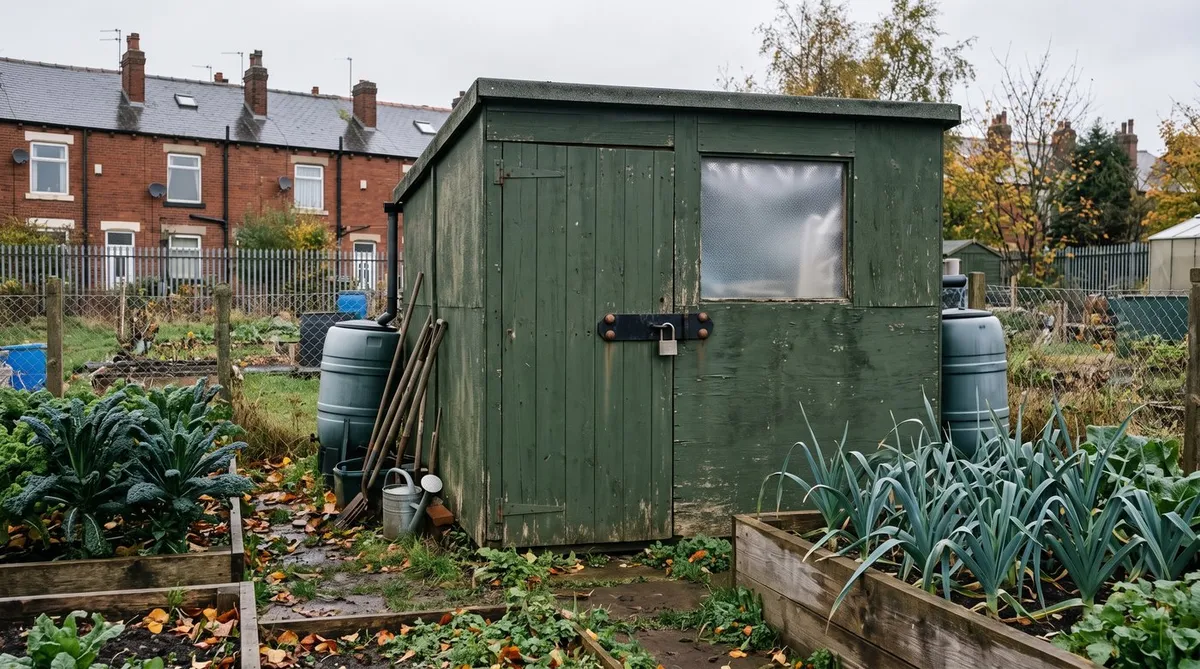
Most break-ins come through the door, the hinges or a window. Check all three.
Padlock and hasp
A padlock is only as strong as the hasp it hangs on. A good lock on a flimsy hasp held by short screws can be levered off in seconds.
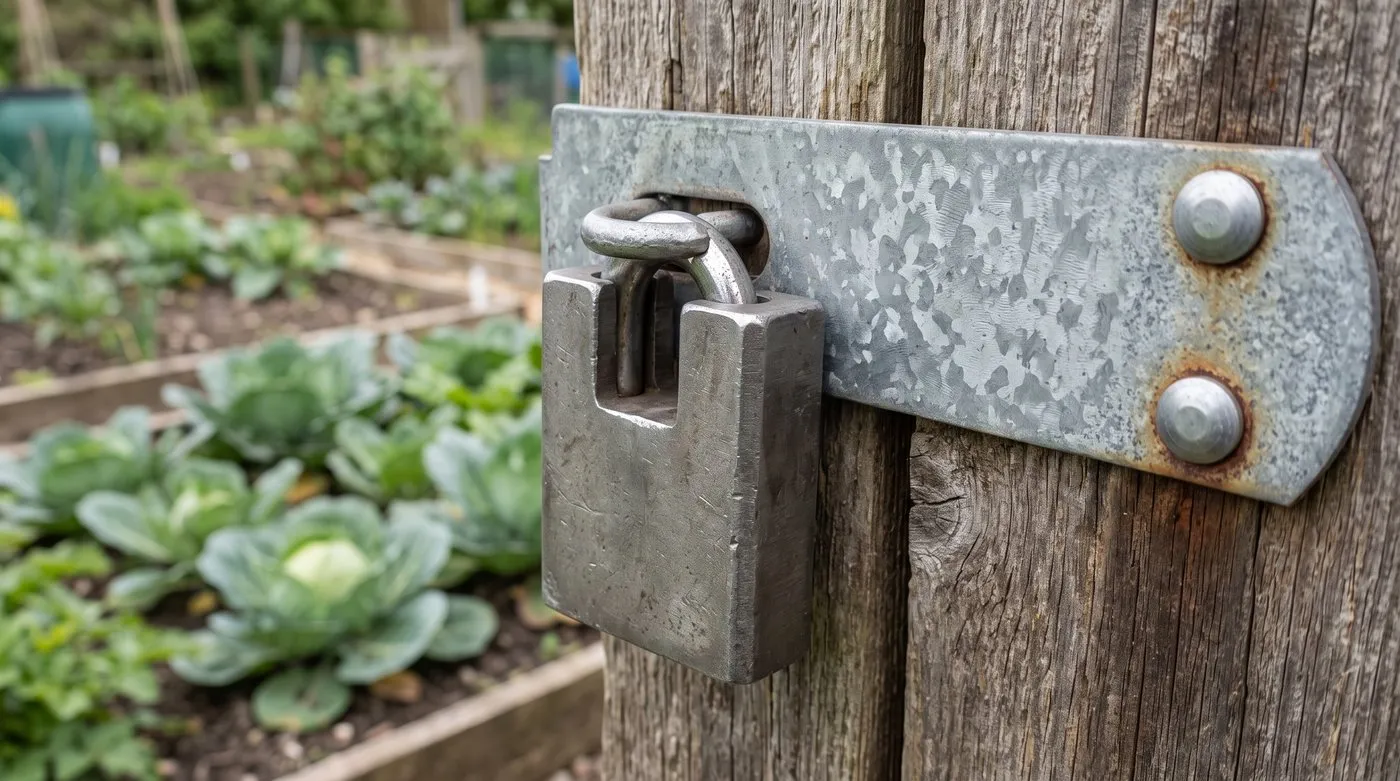
See how little of the shackle shows? That leaves bolt cutters almost nothing to grip, and the coach bolts can’t be unscrewed from outside.
- Choose a closed-shackle padlock, where the body shields most of the loop from bolt cutters.
- Look for an independent rating such as Sold Secure or an EN 12320 grade on the pack.
- Fit a heavy hasp with hidden fixings, or coach bolts going right through the door and frame.
- Use washers and nuts on the inside, so the hasp can’t be unscrewed from outside.
Hinges and door
If you can see hinge screws from the outside, they can be undone. Swap them for one-way security screws or coach bolts, or fit hinge bolts. Thin door boards can be kicked through, so screw exterior plywood to the inside to stiffen them.
Windows
A shed window is an easy way in and lets thieves see what’s inside. Replace glass with polycarbonate, fit a grille inside, or board it if you don’t need the light. A net curtain or frosted film hides your tools from view.
Anchor kit inside
Chain larger tools to a strong eye bolt fixed into the shed frame. A lockable steel tool chest bolted down adds another layer. It all adds time, and time is what puts opportunists off.
The guide to choosing an allotment shed covers sturdier shed options if you’re starting from scratch.
How to mark allotment tools
Marked tools are harder to sell and easier to return. Use two layers.
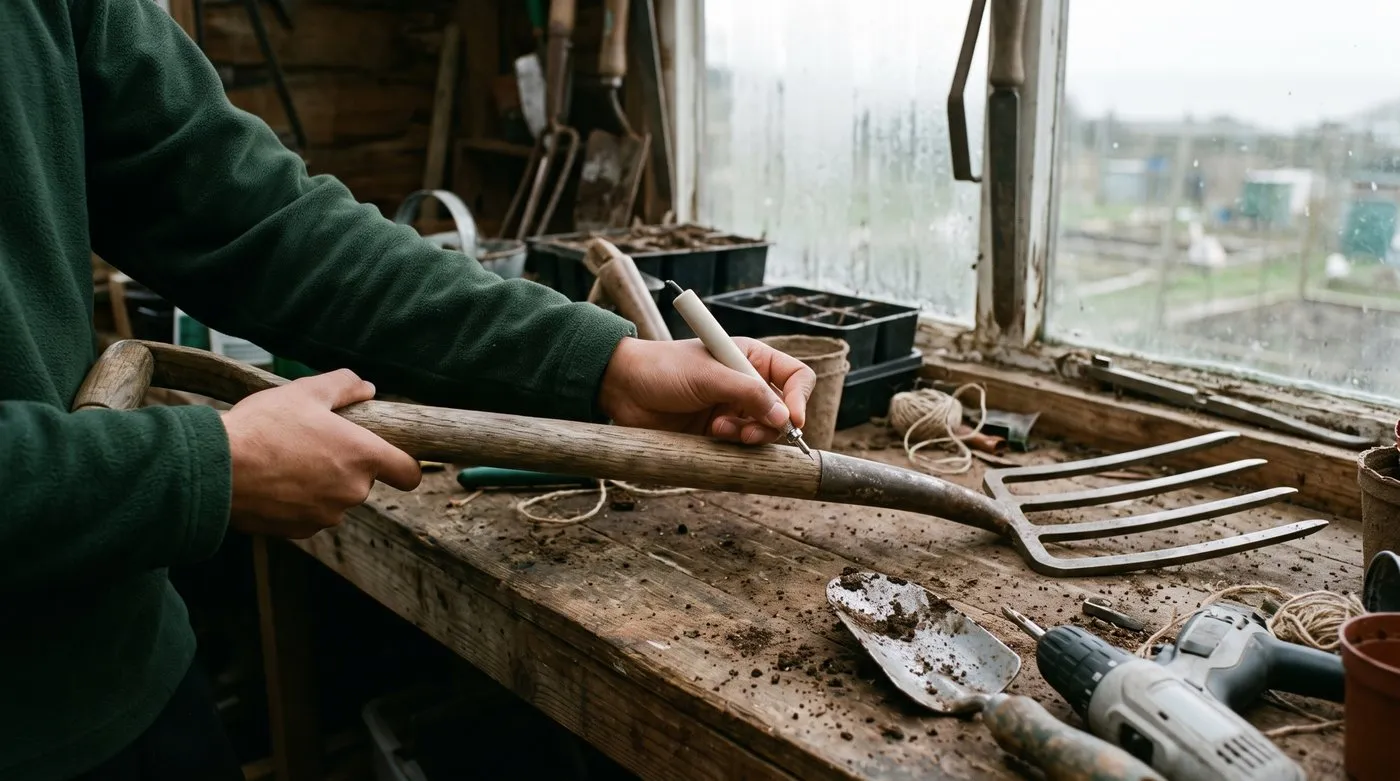
A postcode on every handle tells a thief the tool can be traced. Ten minutes on a wet afternoon does the lot.
- Visible marking: write or engrave your postcode on handles and casings. It tells a thief the tool can be traced.
- Hidden marking: add a UV or forensic marking in a less obvious place, such as under a handle or inside a battery compartment.
- Photos and serial numbers: photograph each tool and note any serial numbers. Keep them somewhere safe online.
You can register valuable items free on Immobilise, the national property register police use to trace recovered goods.
Lighting and cameras on allotments
A solar PIR light over the shed door needs no wiring and switches on when someone moves nearby. It won’t stop a determined thief, but it puts off casual ones. Mount it high enough to be out of easy reach.
Cameras need more care. Ask your committee first. Cameras that film shared paths or other plots bring in data protection rules, so keep any personal camera pointed at your own plot only. Site-wide CCTV is a committee decision.

A solar security light needs no cables and clicks on when someone walks up. Point it at the door, not the neighbours.
Site-wide allotment security
Your own shed only goes so far. The whole site matters, so work with your committee.
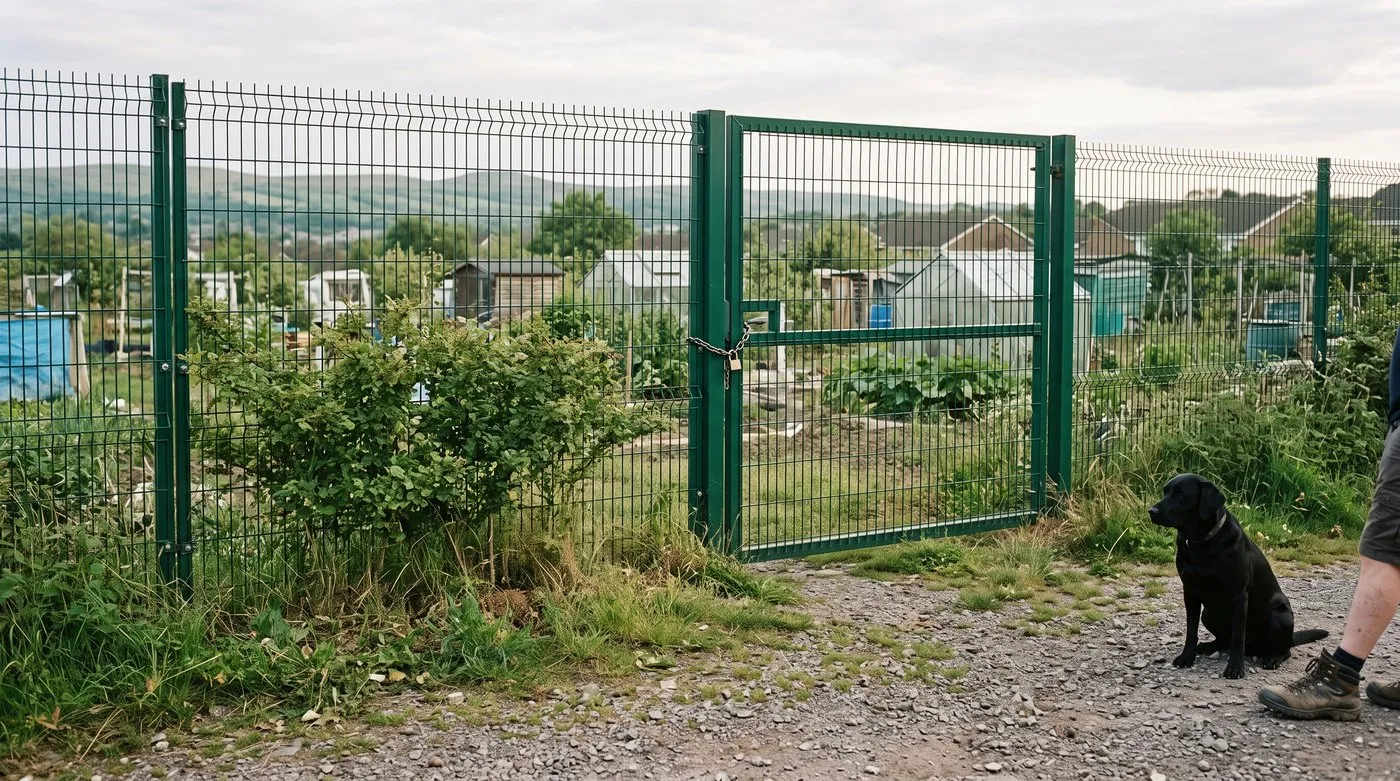
A sound fence and a locked gate make the whole site less inviting. That protects every plot at once.
- Fencing: a sound perimeter fence and gate are the biggest deterrent. Report gaps and damage straight away.
- Gate locks: keep gates locked. If a combination code is used, change it regularly so it doesn’t spread too widely.
- Thorny hedging: hawthorn, blackthorn or pyracantha along a boundary makes a prickly barrier. Agree any planting with the committee first.
- A plot-holders’ group chat: share sightings, new faces and break-ins quickly. It’s free and very effective.
- Activity: busy sites are safer. Working parties and open days mean more eyes on the site.
Getting to know your neighbours helps in every way. The guide to community gardening has ideas for building that spirit.
What to do after an allotment break-in
- Photograph everything before you tidy up: the damaged lock, the door and anything moved.
- Report it to the police online or on 101 and get a crime number. Only call 999 if the crime is happening now.
- Tell your committee or council the same day, so they can warn others and log it.
- Claim on your insurance, with the crime number, photos and serial numbers.
- Check local selling sites for your tools. If you spot one, tell the police rather than contacting the seller.
- Repair and upgrade the lock and hasp before you leave anything on site again.

Photograph the damage exactly as you find it. Then report it and fix the weak spot before restocking the shed.
Does home insurance cover allotment tools?
Often not as standard. Many home contents policies limit or exclude items kept away from home, and items on land you don’t own. Some insurers offer cover for outbuildings away from home as an add-on.
Ask your insurer in writing what’s covered. Your allotment society may also arrange group cover for members. Either way, keep photos and receipts, as proof of ownership speeds up claims.
Allotment security mistakes to avoid
- A cheap open-shackle padlock. Bolt cutters make short work of it.
- A strong lock on a weak hasp. Thieves go for the screws instead.
- Hiding a spare key on the plot. Under a pot or stone is the first place they look.
- Leaving fuel and power tools on site. They’re the most tempting targets.
- Sharing the gate code too freely. Once friends of friends know it, it isn’t security any more.
- Not reporting thefts. Unreported crime doesn’t get patterns spotted or fences fixed.
Once your shed is secure, read our guide to allotment shed ideas and storage to make the most of the space inside. It’s also worth knowing your site’s allotment rules before fitting lights, cameras or hedging. More practical guides are on our how-to hub.
Frequently asked questions
Are allotments often broken into?
Yes, shed break-ins are a common problem on allotment sites. Sites sit empty overnight and sheds are lightly built. Sites with poor fencing and no overlooking houses tend to suffer most.
What is the best padlock for an allotment shed?
A closed-shackle padlock with an independent security rating. Look for a Sold Secure or EN 12320 grade on the packaging. Fit it to a strong hasp bolted right through the door and frame.
Does home insurance cover allotment tools?
Often not as standard. Many policies limit cover for items kept away from home. Ask your insurer directly, and ask your allotment society whether it arranges group cover.
How do I mark allotment tools?
Write or engrave your postcode on each tool. Add a hidden UV or forensic marking as well. Photograph tools and note serial numbers so they can be identified if found.
Should I report allotment theft to the police?
Yes, always report it. You’ll usually need a crime number for an insurance claim. Report online or call 101, and only call 999 if a crime is happening now.
Can I put a security camera on my allotment?
Ask your committee first, as site rules vary. Cameras that film shared paths or other plots bring in data protection rules. Keep any camera pointed at your own plot only.
Our team produces practical UK gardening guidance from source research, contributor records and established horticultural practice. Editorial standards are overseen by Matt W.