Key takeaways
- A lean-to store about 60cm deep fits a mower and tools into a narrow side return
- Wall racks get long-handled tools off the ground and take no floor space
- Deck boxes and storage benches hold cushions and tools and double as seats
- Bike stores and bin screens tidy away the bulkiest everyday clutter
- Stand any store on a level, hard base and lock anything valuable
- Bring cushions and tender kit in for winter and air your stores to stop mould
You don’t need a full-size shed to keep a garden tidy. Wall racks, slim lean-to stores, deck boxes and bike stores can hold a surprising amount of kit in a small space. Some even double as somewhere to sit.
This guide covers garden storage solutions for gardens where a shed won’t fit, or where the shed’s already full. The right choice depends on what you need to store and how much room you have. If you do have space for a shed, our guide to garden shed ideas and organisation covers choosing, siting and fitting one out.
What are the best garden storage options without a shed?
For most small gardens, a mix of wall storage and one compact store works best. Wall racks take long tools, and a lean-to store or storage bench takes the rest.
| Storage | Holds | Space needed | Lockable? | Best for |
|---|---|---|---|---|
| Wall rack and hooks | Long-handled tools, hoses | No floor space | No | Any garden |
| Lean-to store | Mower, tools, compost bags | About 60cm deep | Yes | Narrow side returns |
| Deck box | Cushions, toys, hand tools | A small patch of patio | Often | Patios and decks |
| Storage bench | Gloves, hand tools, cushions | Bench-sized | Sometimes | Seating areas |
| Bike store | Bikes, scooters | Floor space by a wall | Yes | Front or side gardens |
| Bin screen | Wheelie bins, recycling | Beside the bins | No | Front gardens, drives |
Before buying anything, have a clear-out. You’ll be amazed how much space broken pots and old bags of compost take up.
Wall racks, hooks and magnetic strips
A wall rack on a fence or house wall holds spades, forks, rakes and hoes off the ground. The tools dry faster, last longer and take up no floor space at all.
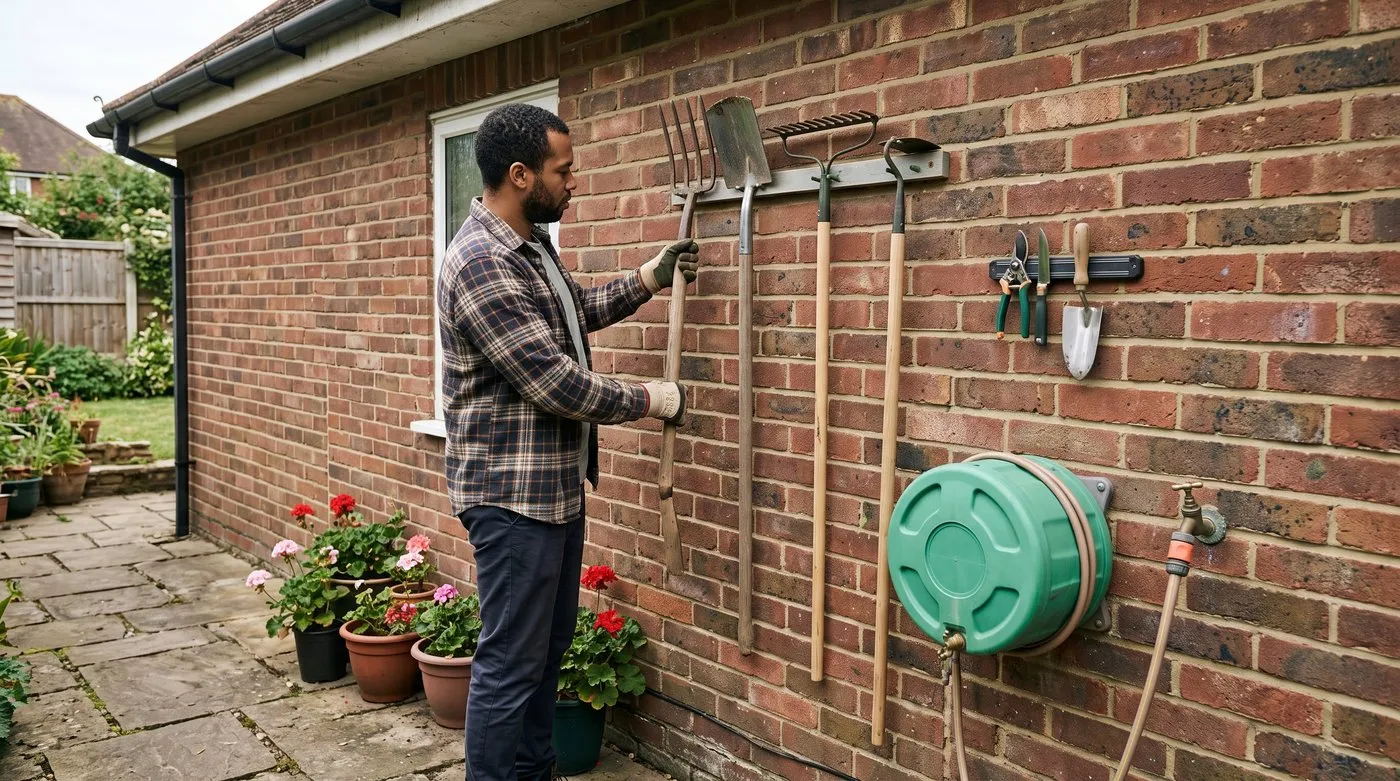
A rack under the eaves keeps long tools dry and off the ground, and takes up no floor space at all.
- Fix racks to a house wall rather than a thin fence panel if you can. It’s stronger, and the eaves help keep the rain off.
- Hang tools head-up or head-down so the blades are clear of the ground and of passing legs.
- Use a magnetic strip for secateurs, trowels and hand forks, and a hook rail for gloves, twine and labels.
- Put a hose reel on the wall next to the tap so the hose never ends up in a tangle on the path.
Clean and dry tools before you hang them up. Our guide to garden tool storage covers oiling and sharpening so they stay rust-free.
Lean-to stores for narrow spaces
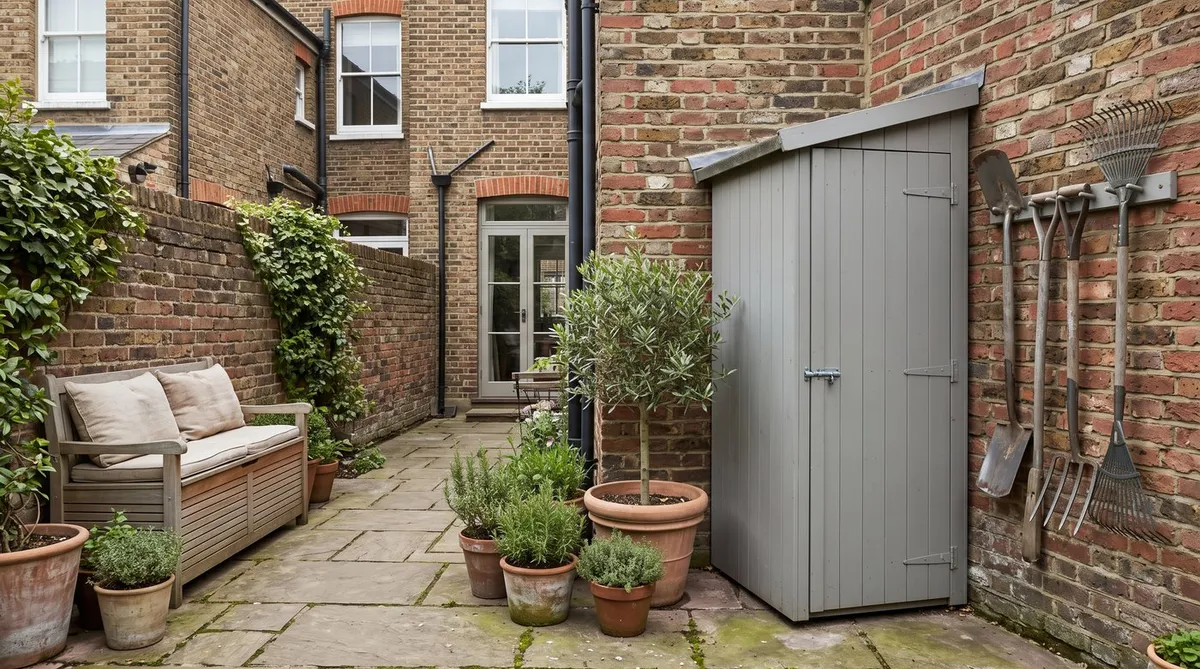
A lean-to store stands flat against a house wall, fence or garage. Most are about 60cm deep, so they fit into a side return or along a passage that’s usually dead space. A good one takes a small mower, a strimmer, long-handled tools and a couple of bags of compost.
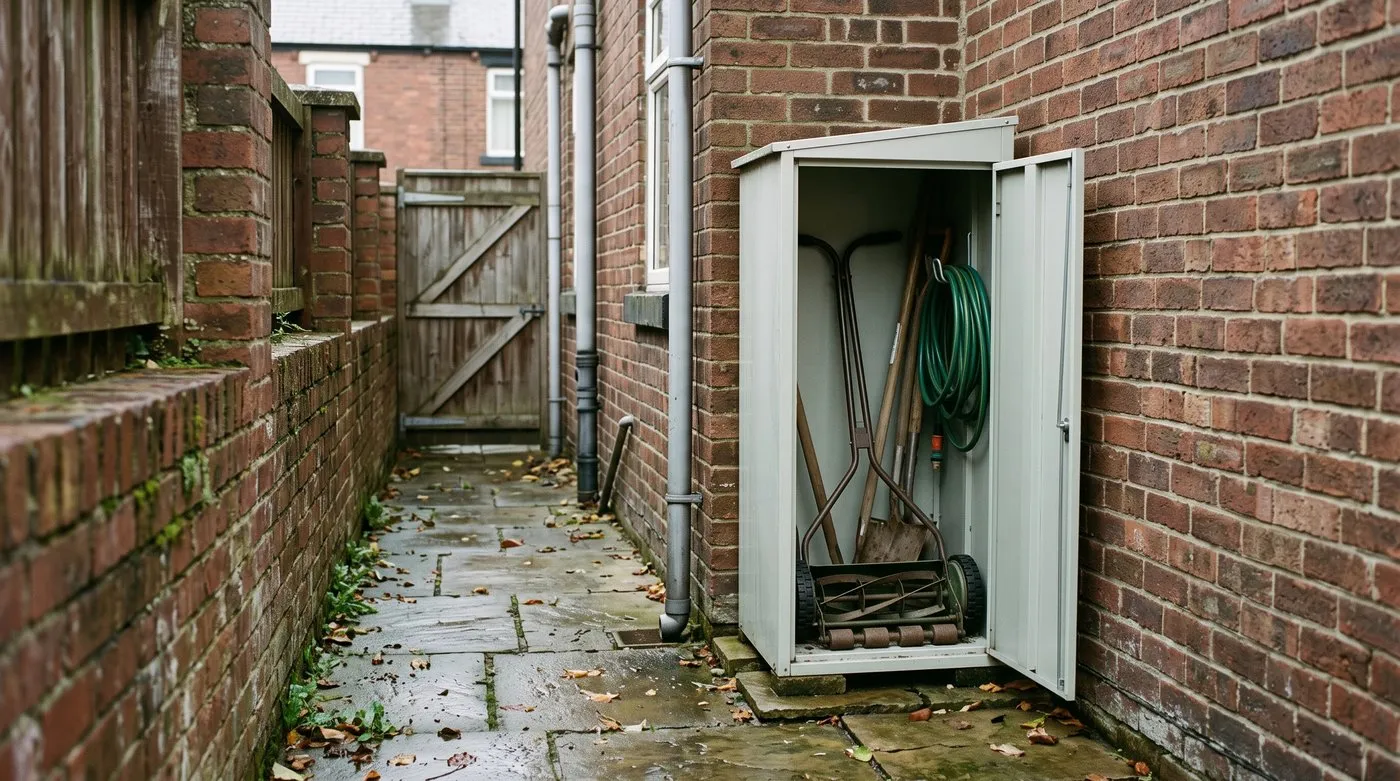
A slim lean-to store turns a dead side passage into somewhere for the mower and tools, with room to walk past.
Look for a sloping roof that sheds rain away from the wall, a lockable door and a solid floor. Stand it on paving slabs or a concrete base, not bare soil, so the floor stays dry. Leave a small gap between the store and the house wall so air can move and damp doesn’t build up.
Gardener’s tip: Measure the width of your side passage, including the door when it’s open. Make sure you can still get a wheelie bin or a bike past.
Deck boxes and storage benches
A deck box is a large lidded box for cushions, toys and garden bits, with a lid strong enough to sit on. A storage bench looks like a garden bench but hides a compartment under the seat. Both are perfect for patios and small gardens where space has to work twice.
- Plastic or resin boxes are the lowest-maintenance choice. They don’t rot and wipe clean.
- Timber looks more natural but needs treating every year or two.
- Metal is strong, but condensation can form inside, which isn’t good for cushions.
Only pack cushions away when they’re bone dry, or they’ll go mouldy. Our guide to cleaning and protecting garden furniture has tips for keeping cushions and seats in good shape.

A storage bench gives you a seat and somewhere to stash gloves and hand tools, right where you need them.
Bike stores and bin screens
Bikes and wheelie bins are often the bulkiest things in a small garden. Giving them a proper home clears a lot of space.
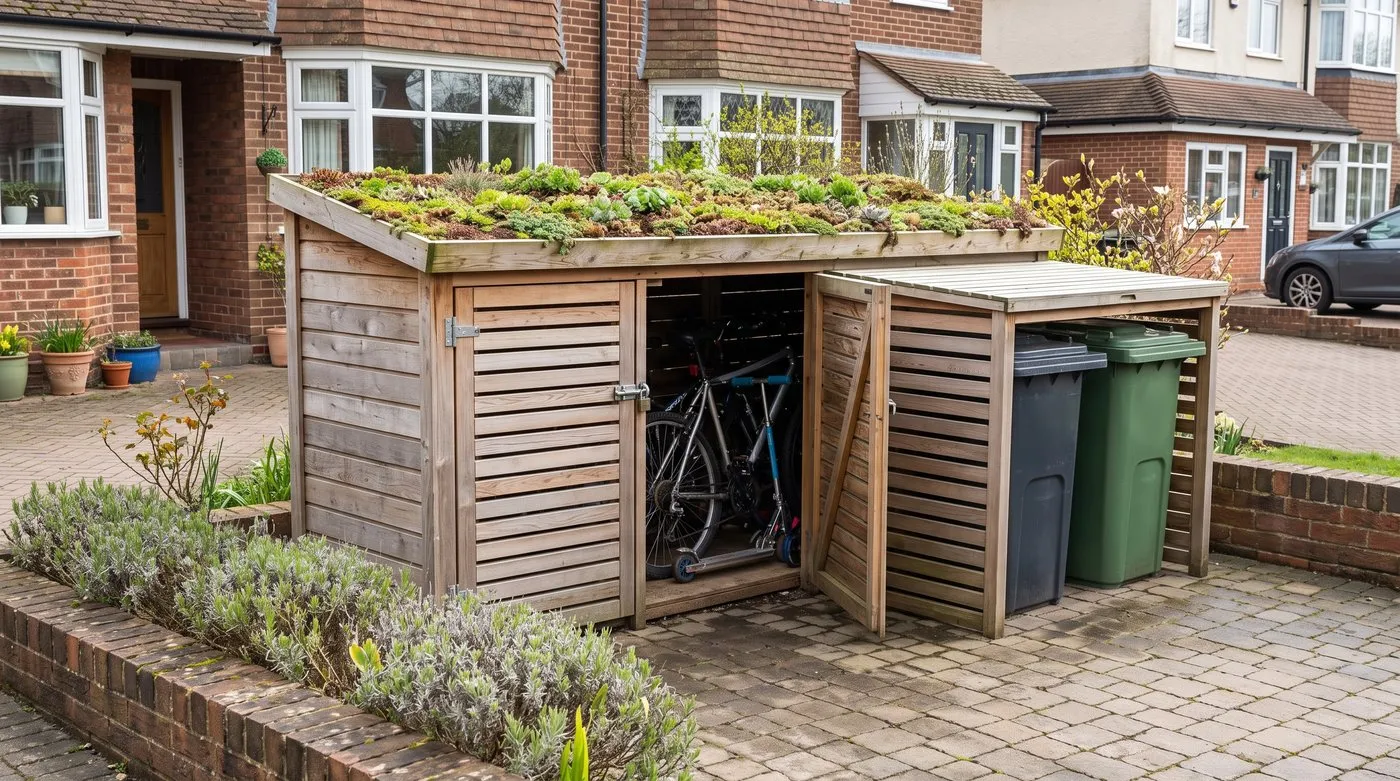
A bike store and bin screen in matching timber tidy away the two bulkiest things in many front gardens.
A bike store keeps bikes dry and out of sight. Choose a lockable metal or timber store, and bolt it to a hard base. For extra security, fit a ground anchor and lock bikes to it. A wall hook inside a lean-to store works for one bike.
A bin screen hides wheelie bins behind timber slats or a planted screen. Stand it on a hard surface near where the bins go out on collection day, and leave enough room to open the lids. Our ideas for how to hide wheelie bins include stores, screens and planting.
A tidy compost bay helps too. Slatted timber bays keep the heap neat while letting air in. Our guide to compost bin ideas compares the different types.
Storage ideas for very small gardens and balconies
In a courtyard or on a balcony, every bit of space counts, so look up and under.
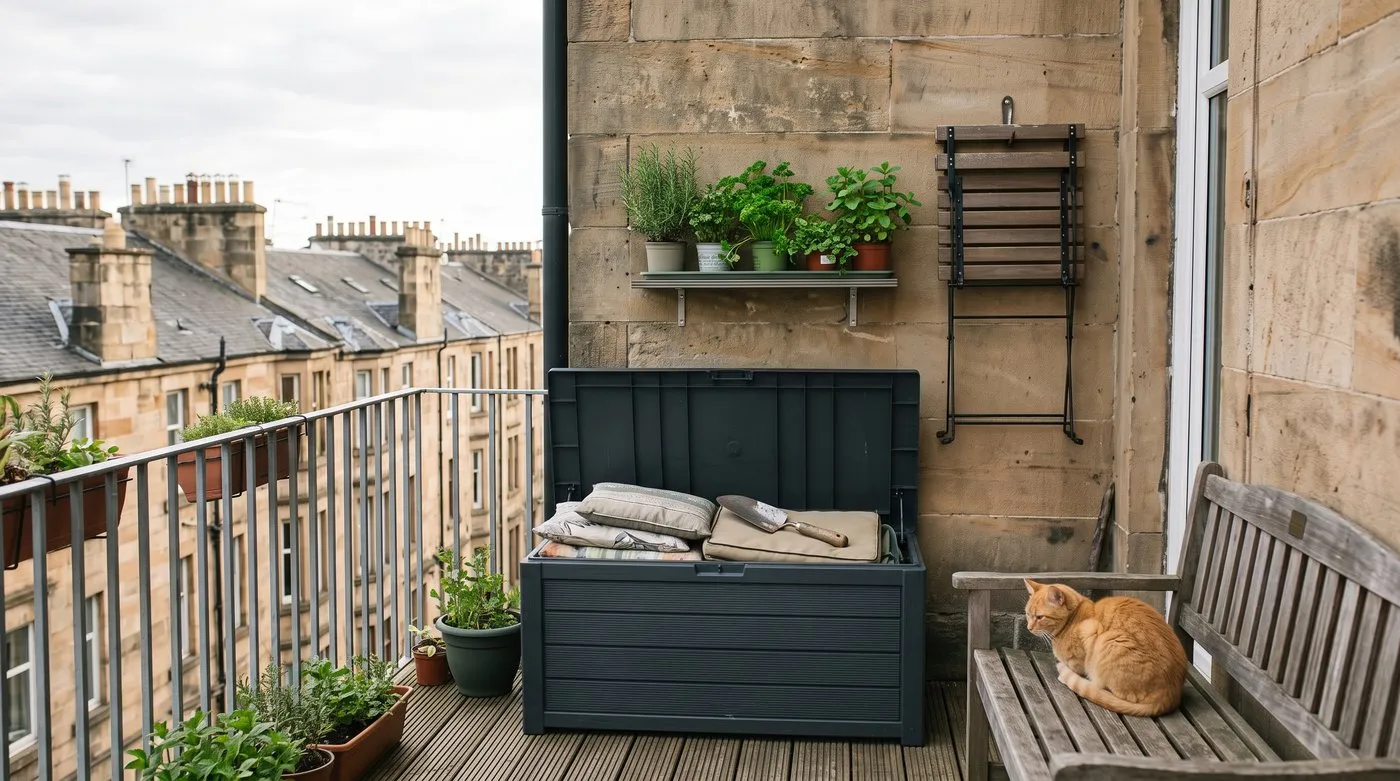
On a balcony, a deck box, a wall shelf and a hook for a folding chair keep the floor clear.
- Go vertical. Shelves, hooks and racks on walls and fences hold far more than the floor.
- Use the space under seats. Lidded boxes under a bench or a built-in seat hide compost, feed and pots.
- Choose things that fold. Folding chairs and a collapsible watering can hang on a hook when not in use.
- Pick one store and make it count. A single slim lean-to store is better than several small boxes scattered about.
Keep weight in mind on a balcony, and check your lease or building rules before fixing anything to walls. Our balcony gardening ideas and small garden design ideas show how to fit storage around planting and seating.
If you have room for a shed
If you need to store a lot, a shed still holds the most for the space it takes up. The trick is to organise it well: pegboard for hand tools, shelves above head height and hooks in the roof for long tools.

Pegboard and high shelves get everything off the floor, which makes even a small shed hold far more.
Most small sheds don’t need planning permission in England. Within 2m of a boundary, keep it no taller than 2.5m, and don’t put it in front of the house. The shed guide linked at the top of this page covers sizes, bases and the full planning rules.
How to keep garden storage dry and secure
Raise it up. Stand every store on a level, hard base of slabs or concrete. Anything sitting on soil gets damp from below.
Let the air in. A small vent or gap helps stop condensation and mould. Metal and plastic stores are the most prone to it.
Pack things away dry. Wet cushions, tools and bags of compost go mouldy or rusty in a closed box.
Lock it. Fit a sturdy padlock to anything holding tools, bikes or a mower. Tools left out can be used to break into your house, so never leave them lying around.
Treat timber. Give wooden stores a coat of preservative or paint every year or two in dry weather.
Seasonal storage calendar
| Month | Storage task |
|---|---|
| March | Clean and oil tools before the growing season. Move stored pots and seed trays out |
| April | Bring out cushions and garden furniture from winter storage |
| May | Store fleece and cloches once the risk of frost has passed |
| June | Tidy stores and reorganise shelves for summer tools |
| August | Make space for autumn kit such as nets, canes and fruit trays |
| October | Clean, dry and put away summer tools. Bring in tender pot plants |
| November | Bring cushions indoors or into a dry store. Treat timber stores before winter |
| December | Check roofs and doors on stores and fix leaks before the worst of the rain |
Common garden storage mistakes
- Standing stores on soil or grass. Damp gets in from below. Use a hard, level base.
- Buying before measuring. A store that blocks the side passage or bin route is a daily nuisance. Measure first.
- Packing things away wet. Cushions go mouldy and tools rust. Let everything dry first.
- No ventilation. Sealed boxes trap condensation. Choose stores with a vent or leave a gap.
- Leaving tools out. They rust, and they can be used to break into your home. Hang them up and lock them away.
For more ideas for small spaces, browse our garden design guides. Storage works best after a clear-out, so read our guide on how to declutter your garden in a weekend for the next step.
Frequently asked questions
How can I store garden tools without a shed?
Use a wall rack, a lean-to store or a storage bench. Wall racks hold long-handled tools on a fence or house wall. A slim lean-to store fits a mower and tools against the house, and a storage bench hides hand tools under the seat.
What is the cheapest garden storage option?
Wall hooks and a simple tool rack are the cheapest. They need only a few screws and keep spades, forks and rakes off the ground. A basic plastic deck box is another low-cost choice for cushions and small tools.
What is the best storage for a small garden?
A slim lean-to store against a house wall is usually best. It uses a strip of space that’s often wasted. Add wall racks for long tools and a storage bench that gives you a seat as well.
What is the best material for a garden storage box?
Plastic or resin boxes need the least care and won’t rot. Timber looks nicer but needs treating every year or two. Metal is strong but can get condensation inside, which isn’t good for cushions.
How do I stop things going mouldy in garden storage?
Keep air moving and keep the store off the ground. Raise it on a hard base, leave a small vent or gap for air, and only pack things away when they’re dry. Bring cushions indoors in winter if you can.
Do I need planning permission for garden storage?
Usually not for small stores, boxes and racks. Bigger outbuildings follow the shed rules. In England, keep them to 2.5m tall within 2m of a boundary and not in front of the house. Check with your council if you’re unsure.
Our team produces practical UK gardening guidance from source research, contributor records and established horticultural practice. Editorial standards are overseen by Matt W.