Key takeaways
- Decluttering edits the plot down to what you actually use, so it is calmer and easier to maintain
- Work zone by zone over a weekend rather than tackling everything at once
- Sort everything into four piles: keep, fix, donate and recycle
- Empty plastic pots, dead tools and broken furniture are the usual hidden hoard
- Proper storage is what stops the clutter creeping back within a month
- Reuse and recycle where you can; much garden clutter has a second life
Most gardens are quietly cluttered. Behind the shed sits a teetering stack of cracked pots, a dead strimmer leans in a corner, and a rotten bench slowly returns to the earth where it stands. None of it gets used, all of it gets in the way, and over time it makes the whole garden feel like a job rather than a pleasure. Decluttering fixes that, and you can do the bulk of it in a single weekend. This guide gives you a zone-by-zone plan to edit the plot down to what you actually use, set up storage that lasts, and clear the rest responsibly.
The reward is more than tidiness. A decluttered garden reclaims space you forgot you had, cuts the time every job takes, and turns the plot back into somewhere you want to spend time.
Why decluttering a garden is worth it
Before the work, it helps to see what you actually gain, because tidiness is only part of it. Decluttering edits the garden down to what you use, which reclaims space, cuts maintenance time, and makes the whole plot calmer to be in. Clutter is not just untidy; it costs you ground and effort.
Every unused item takes up room. A stack of dead pots, a broken cold frame, or a pile of offcuts behind the shed can swallow several square metres you could be growing in or sitting in. Clearing them often feels like gaining a small extra patch of garden for free.
It also saves time. When tools have a home and paths are clear, every job is quicker, from mowing to fetching a trowel. And a clear garden simply feels better, with fewer hiding places for slugs and weeds. The idea sits close to the low-maintenance garden approach: less stuff means less to manage.
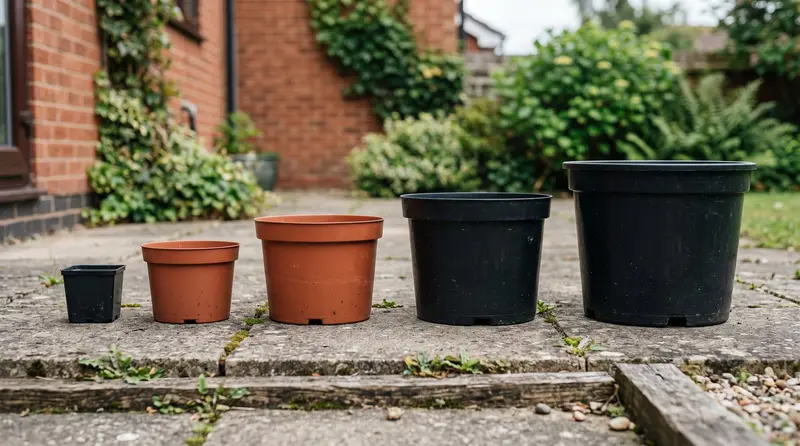
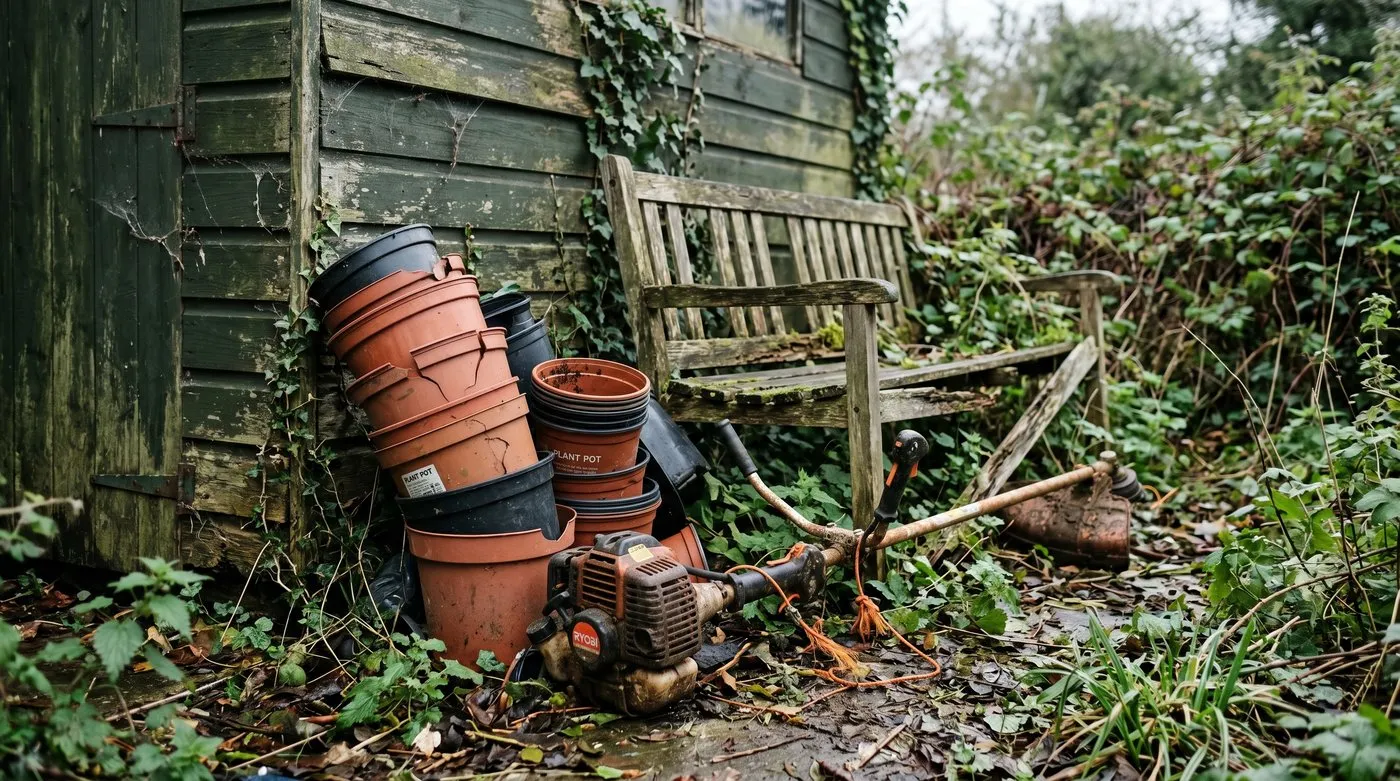 The usual hidden hoard: stacked pots, a dead tool, a tired bench. None of it gets used, and all of it quietly steals space and time.
A weekend plan, zone by zone
The trick to clearing a garden without burning out is to break it up, not blitz it. Work zone by zone over a weekend, tackling one area at a time, rather than emptying the whole garden onto the lawn at once. Small, finished zones keep you motivated and stop the job sprawling.
Split the garden into manageable areas: the shed or store, the seating and furniture, the pots and containers, the tools, and the borders. Give each a slot. Aim to fully finish one before moving to the next, so you always have somewhere tidy to put the keepers.
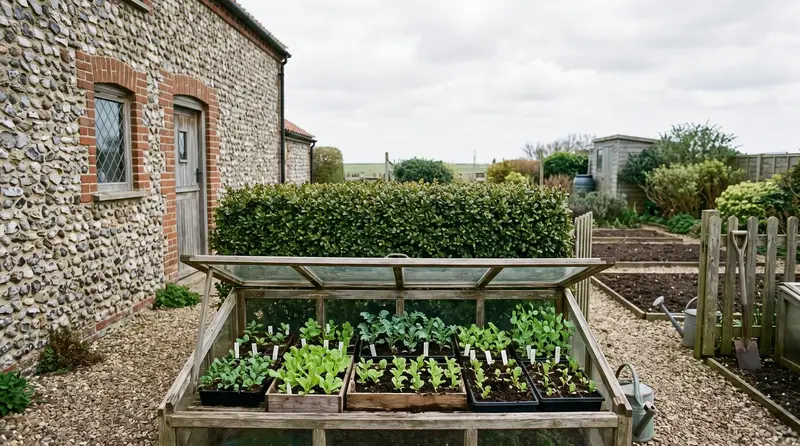
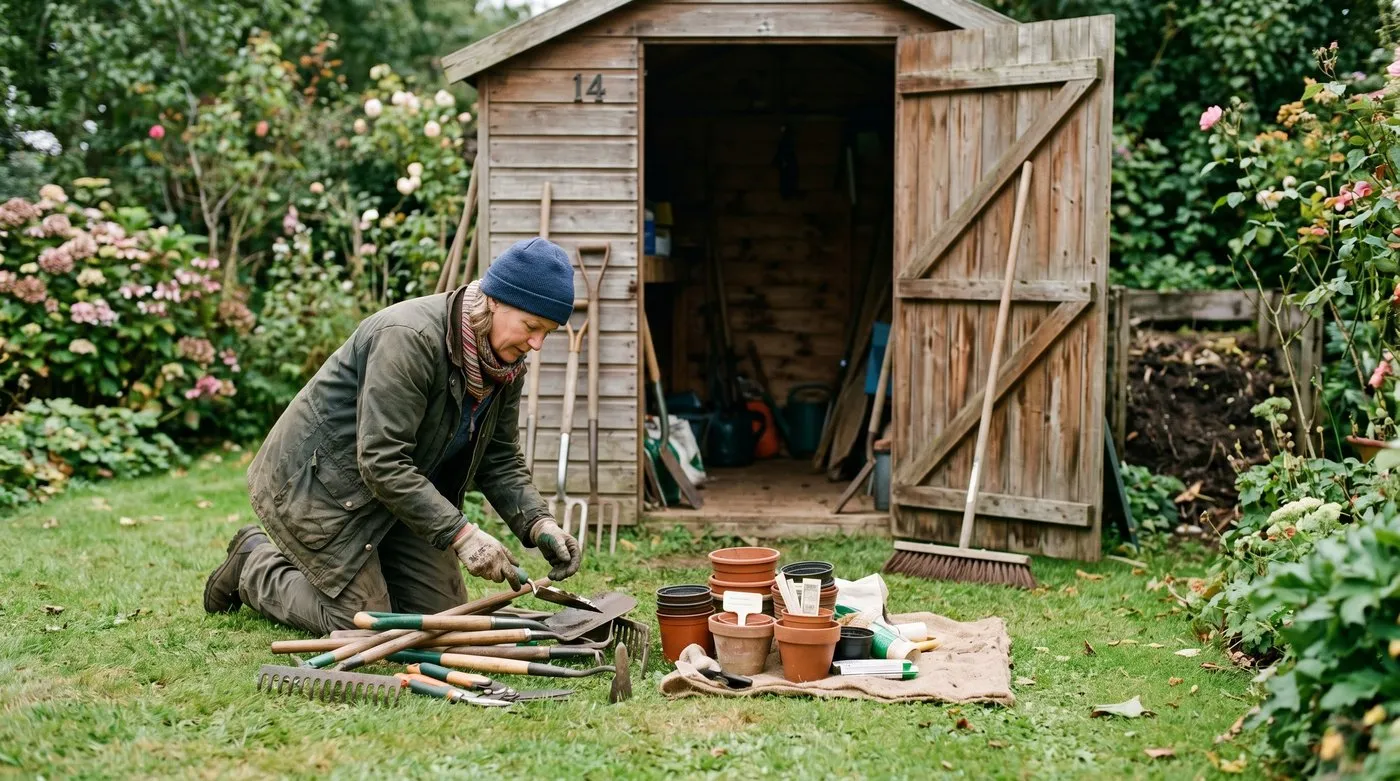 Finish one zone before starting the next. A part-cleared garden with the shed emptied first gives you somewhere tidy to put everything worth keeping.
Gardener’s tip: Start with the shed, even though it is the worst job. Once you have a clean, organised store, every other zone becomes easier, because you finally have somewhere proper to put the things worth keeping.
The four-pile sorting method
A clear sorting system is what stops a declutter stalling into indecision. Sort everything into four piles as you go: keep, fix, donate and recycle, and be honest about which pile each thing really belongs in. The honesty is the hard part.
Keep is for things you use and that work. Fix is for good items that need a repair, a sharpen, or a clean, but set a deadline or they become clutter again. Donate covers usable tools, pots and furniture that a charity shop, neighbour or community garden would welcome. Recycle and dispose is for the genuinely dead.
Be ruthless with the keep pile. The test is simple: have you used it in the last two years, and would you buy it again today? If not, it goes. Empty plastic pots are the classic trap; keep a useful range of sizes and move the rest on. Our guide to reusing broken pots and crockery shows clever second lives for the ones worth saving.
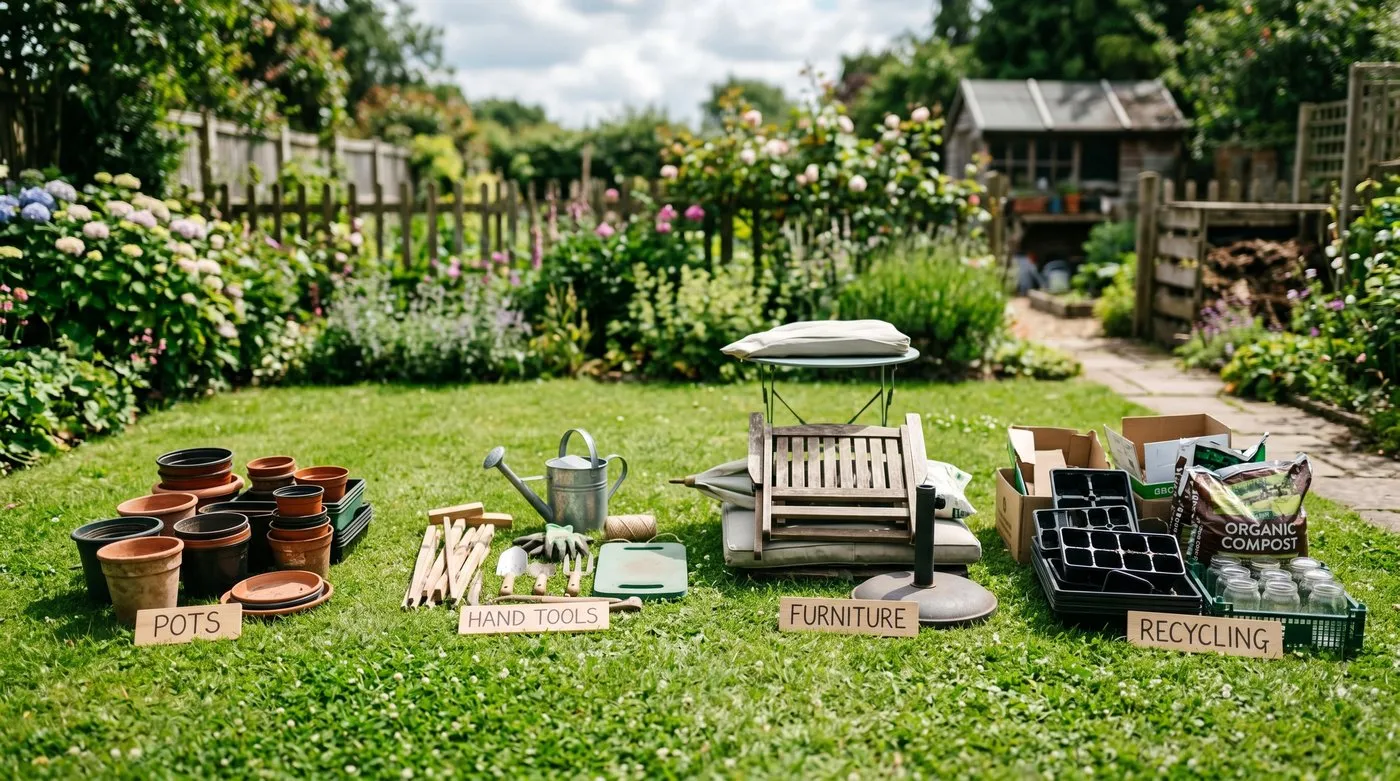 The four-pile method keeps a declutter moving. Be ruthless with the keep pile: if you have not used it in two years, it goes to fix, donate or recycle.
Decluttering decisions compared
Knowing where each type of item should go saves a lot of dithering. This table sets out the usual garden clutter and the smartest home for each.
| Item | Usual problem | Best destination |
|---|---|---|
| Empty plastic pots | Hoarded in huge numbers | Keep a few sizes, recycle the rest |
| Old hand tools | Rusty but repairable | Clean and keep, or donate |
| Broken power tools | Dead, taking up space | Electrical recycling |
| Tired furniture | Rotten or wobbly | Repair, donate, or tip if dead |
| Bags of old compost | Spent and heavy | Spread on beds as a mulch |
| Offcuts and timber | Kept just in case | Keep a small store, recycle excess |
| Chemicals and paints | Old, part-used, unsafe | Council hazardous waste point |
The pattern is clear: very little needs to go to landfill. Most garden clutter can be recycled, donated, or reused, and the heavy items like spent compost can go straight back onto the beds. Knowing the destination before you start means you sort once and move it on, rather than shuffling the same pile around the garden.
Storage that stops clutter coming back
Clearing the garden is only half the job; keeping it clear is the other half. Good storage is what stops clutter creeping back, by giving everything you keep a proper home. Without it, the same hoard rebuilds within a month.
The golden rule is one home for everything. If an item has no obvious place to live, you either need storage for it or you do not need the item. Keep a little spare capacity so tidying back is effortless, because the easier it is to put things away, the longer the garden stays clear.
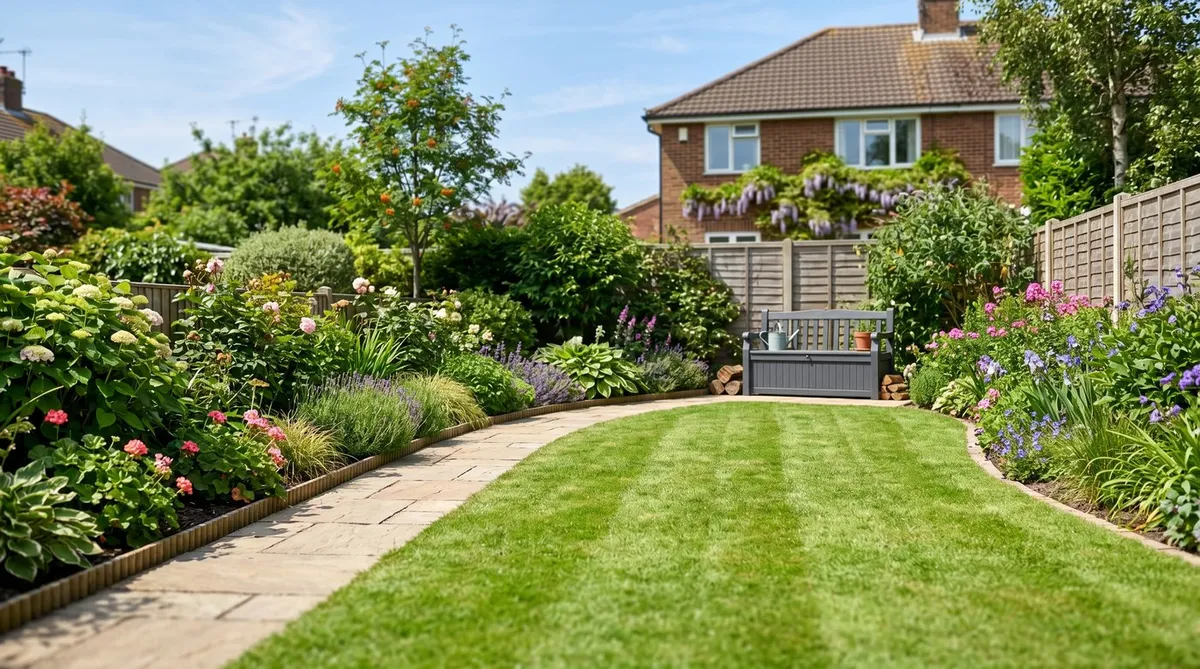
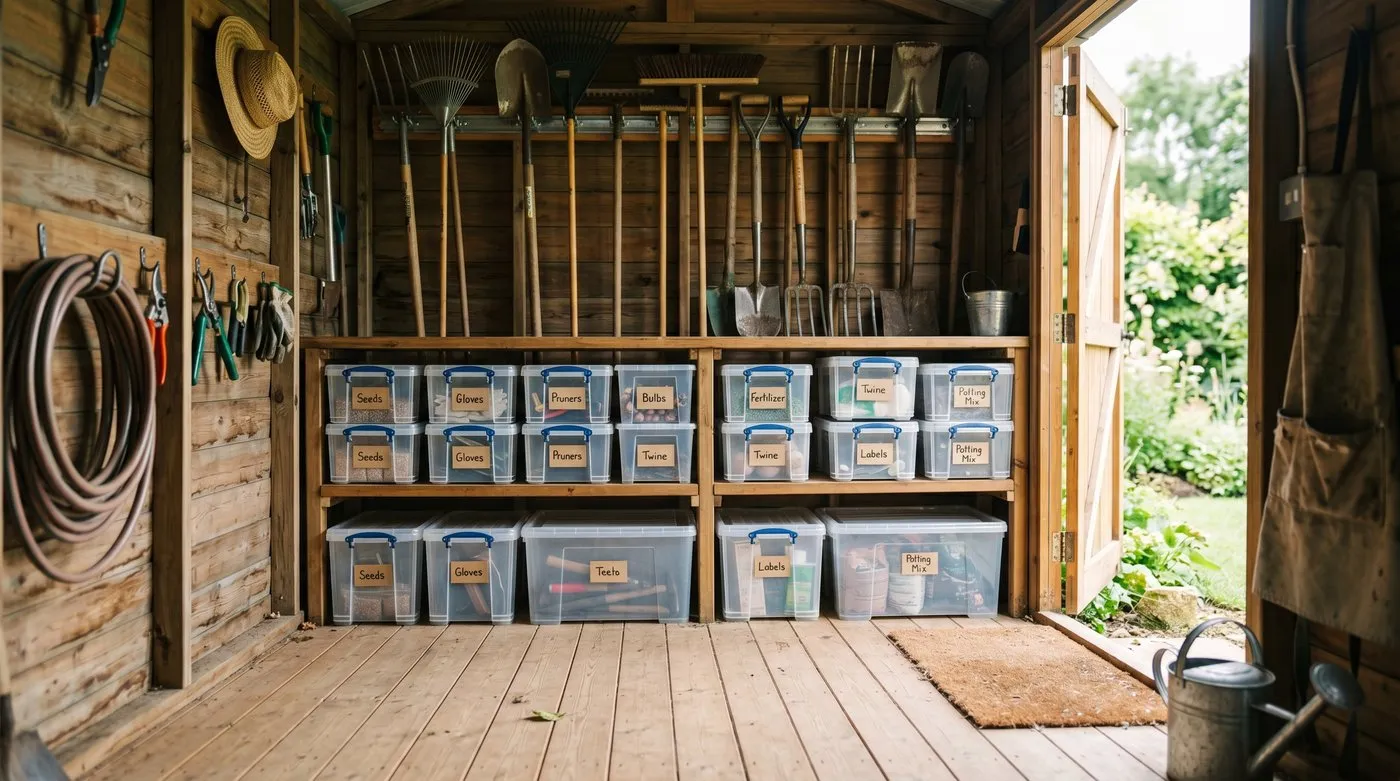 Match storage to what you kept. Wall racks, labelled boxes and one home for every item are what stop the clutter rebuilding within a month.
Clearing green waste responsibly
A declutter throws up a lot of garden waste, and most of it need not leave the plot. Compost what you can, reuse spent material on the beds, and only take genuinely unusable items to the tip. Much of the bulk turns back into something useful.
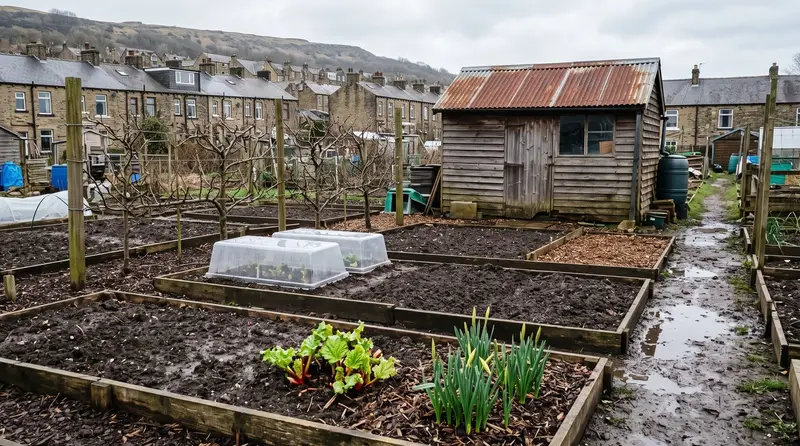
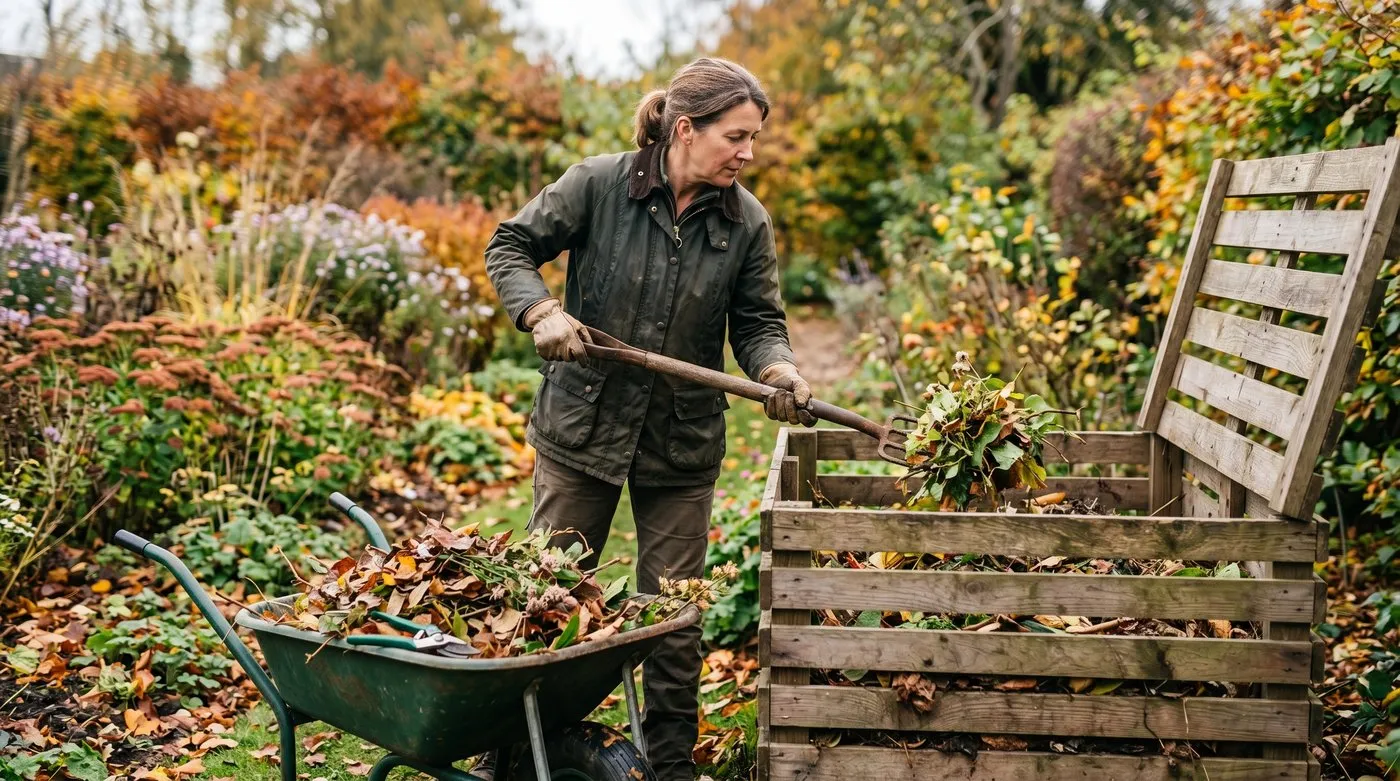 Most of the bulk need not leave the plot. Soft prunings and old plants go on the compost heap, ready to feed the garden again in a year.
Frequently asked questions
How do I declutter my garden?
Work through the garden zone by zone, sorting everything into keep, fix, donate and recycle. Start with the shed, then furniture, pots and tools, then the borders. Be honest about what you actually use. Once you have cleared the excess, set up proper storage so the remaining items each have a home and the clutter does not creep back.
Where do you start when tidying a garden?
Start with the shed or main storage area, because that is usually where the worst hoard hides. Empty it completely, sort the contents, and clean the space before putting back only what you use. Clearing the store first gives you somewhere tidy to keep the keepers, which makes the rest of the garden far quicker to sort.
What should I do with old garden pots and tools?
Keep a useful range of sizes and recycle or donate the rest. Many garden centres take back clean plastic pots for recycling, and charity shops or community gardens often want spare tools. Repair good tools rather than binning them, and pass on usable furniture. Only broken, unusable items should go to the tip or general waste.
How often should you declutter a garden?
A full declutter once a year, ideally in early spring or autumn, keeps a garden in good order. Add a quick ten-minute tidy of the shed and storage every few weeks to stop clutter building up. Linking the big sort to a seasonal job like the autumn clear-up makes it a habit rather than an occasional overhaul.
Does a tidy garden need less maintenance?
Yes, a decluttered garden is quicker and easier to look after. When tools have a home and surfaces are clear, every job from mowing to watering takes less time. Removing tired pots and overgrown odds and ends also cuts hiding places for slugs and weeds. Editing the plot down to what you use is one of the simplest ways to cut garden chores.
Our team produces practical UK gardening guidance from source research, contributor records and established horticultural practice. Editorial standards are overseen by Matt W.