Key takeaways
- Clear paths, hazards and access first, then watch the garden for a year before removing plants
- Check for Japanese knotweed and giant hogweed before strimming anything
- Look for nesting birds and hedgehogs before cutting brambles, hedges or long grass
- Rough grass often turns back into lawn with regular mowing, starting on the highest setting
- Dig out bramble, bindweed and ground elder roots while the soil is open
- Bank quick wins first, such as a clean lawn edge, a clear path and a mulched border
A neglected garden looks daunting on day one. Long grass, brambles over the path, a fence you can’t reach. The urge is to clear the lot in a weekend, but a slow, ordered rescue works far better. You’ll keep the good plants and save a lot of effort.
This guide is for the new homeowner or tenant facing a garden nobody has touched for years. It covers what to do first, what to leave, and what to tackle in each season. If it’s an allotment rather than a garden, see the guide to clearing an overgrown allotment plot, which focuses on getting beds ready for veg.
What should you do first in a neglected garden?
Make it safe and walkable, then stop and watch. Don’t remove plants yet.
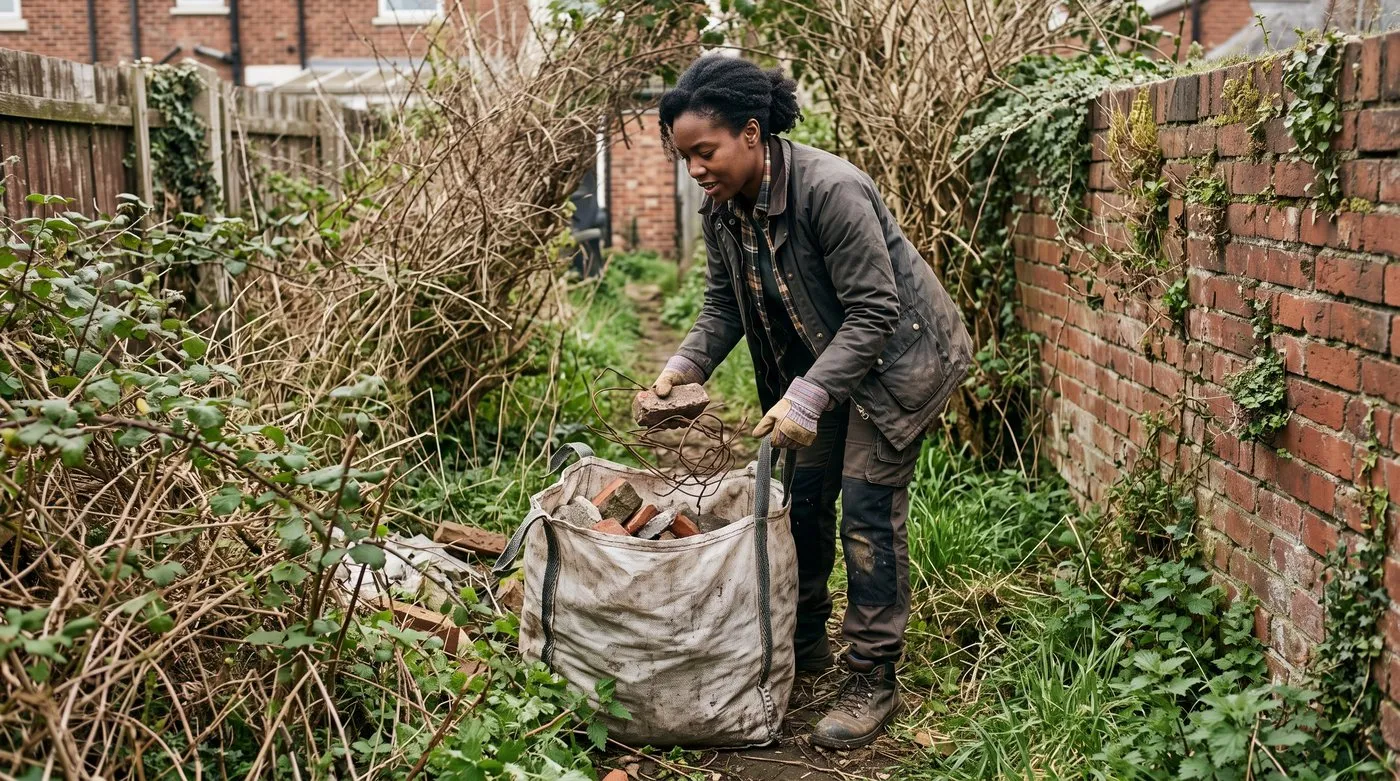
Clearing a safe path and bagging up hidden rubbish is the first job, long before any plants come out.
A long-ignored garden can hide broken glass, rusty wire, old ponds and wobbly steps. You also need to find the things you’ll want later: drain covers, the outside tap and the real boundaries.
First-week checklist:
- Cut back growth blocking paths, gates and the back door
- Find where your boundaries actually run
- Locate drain covers, the outside tap and any meters
- Bag up glass, sharp metal and rubbish
- Look for hidden ponds, wells or steps under growth
- Check for problem plants before you strim anything (see below)
Wear gloves, long sleeves and sturdy boots. Brambles and hidden rubbish make short work of bare skin.
Check for problem plants before you cut
Two plants change the whole plan. Find out if you have them before you start strimming.
Japanese knotweed has hollow, bamboo-like stems speckled with purple, shield-shaped leaves and zigzag stems. In winter it dies back to brown canes. Don’t cut, dig or compost it, because small pieces regrow. Compare it with the Japanese knotweed identification guide and the GOV.UK knotweed guidance, then get a specialist in.
Giant hogweed has huge umbrella-shaped white flower heads on thick, purple-blotched stems. Its sap can cause bad burns on skin in sunlight. Don’t touch it. The giant hogweed guide shows how to tell it from harmless cow parsley.
Look out for wildlife
Birds nest in brambles, shrubs and hedges from March to August. Damaging or destroying an active nest is an offence, so save heavy cutting for September to February. Hedgehogs, frogs and toads shelter in long grass and piles of rubbish. Walk through first and check before you strim.
Why wait a year before removing plants?
Because a neglected garden shows you very little in one visit. Bulbs sleep underground, perennials die back, and a scruffy shrub might flower beautifully in June.
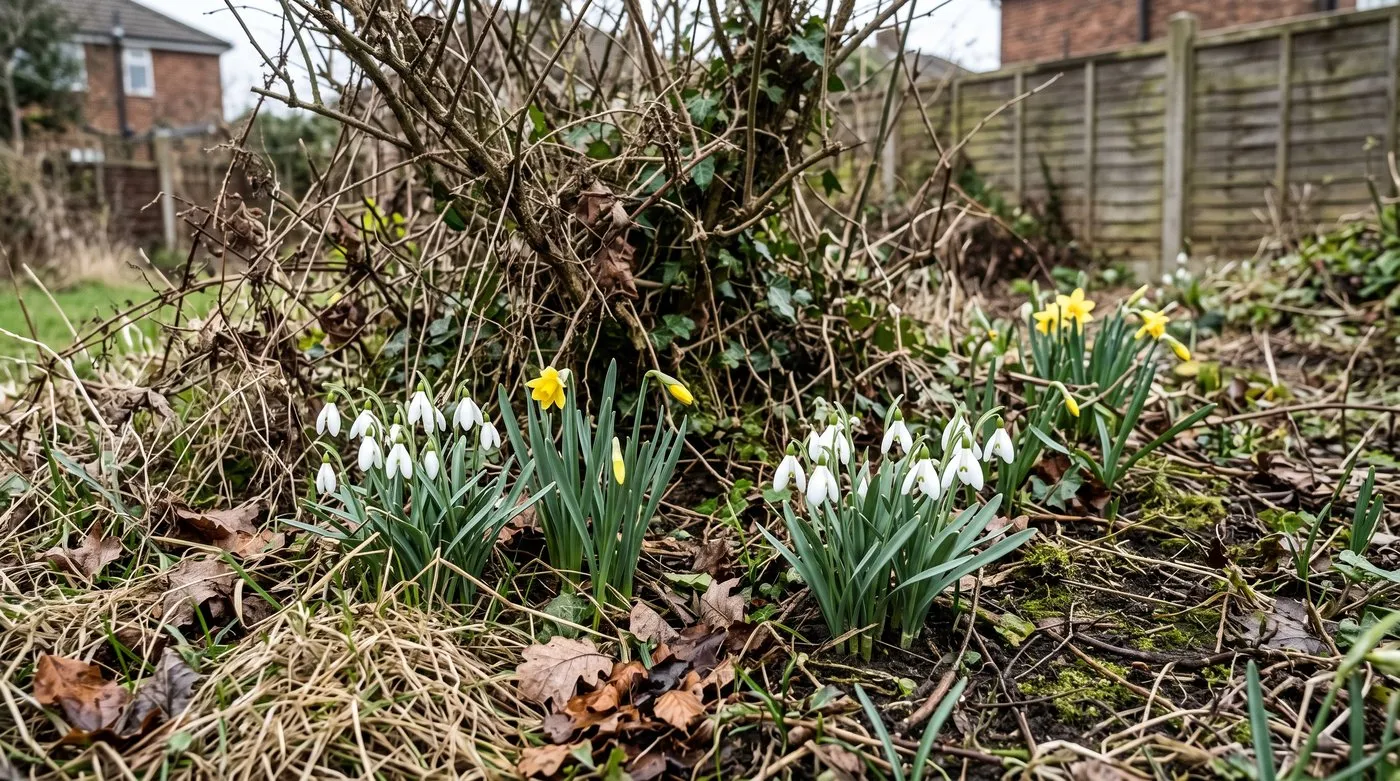
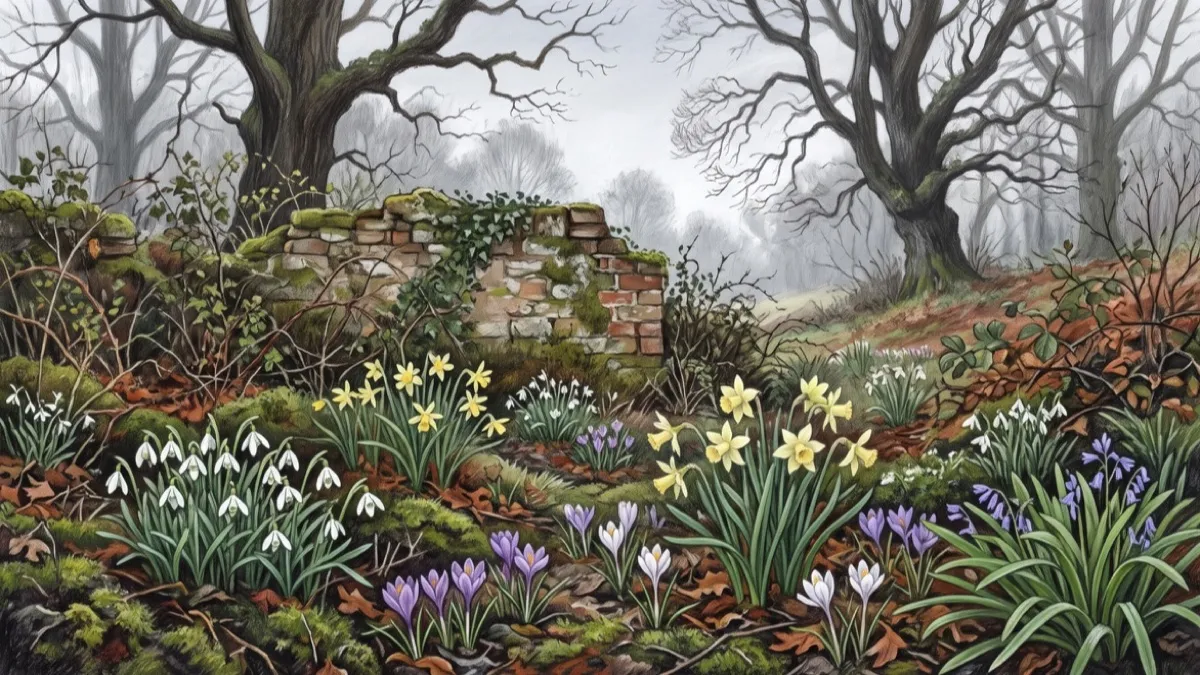
Bulbs like these are invisible in autumn and winter. Watching for a year means you won’t dig them up by mistake.
What a year of watching shows you:
- Spring bulbs: snowdrops, daffodils and bluebells
- Hidden perennials such as peonies, hardy geraniums and rhubarb pushing up in spring
- Good trees and shrubs worth keeping, and self-sown saplings that aren’t
- Where the sun falls in summer, and where it never reaches
- Which corners stay wet after rain and which dry out fast
Take a photo from the same spot once a month. After a year you have a free survey of the garden. You can still mow, weed and tidy during this time. Just don’t dig out or fell anything you can’t name.
How to tackle rough grass, shrubs and trees
Once you know what you have, the big cut-back can start. This is the satisfying bit, where the garden starts to look loved again.
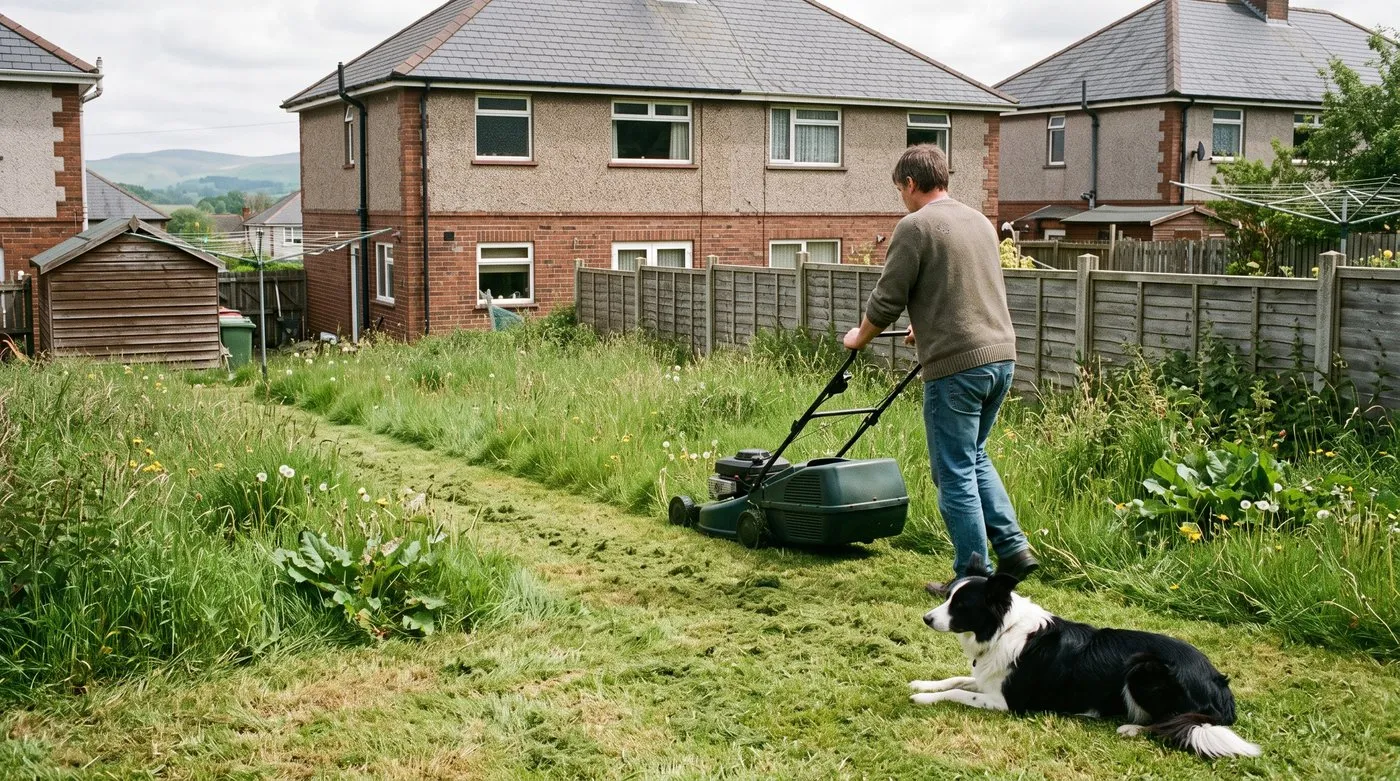
Start on the highest setting and lower it gradually. Rough grass often turns back into a usable lawn this way.
Rough grass often comes back as a usable lawn with regular mowing. Strim very long grass down to about 10cm first, after checking for wildlife. Then mow on the highest setting and lower it a notch every week or two. Rake off clippings so they don’t smother the grass. Sow seed on bare patches in early autumn, using the guide to sowing grass seed.
Overgrown shrubs such as laurel, dogwood, forsythia and philadelphus usually cope with hard renovation pruning. Do it in winter while they’re dormant, and spread very hard cuts over two or three years. Not every shrub recovers from hard cutting. Lavender, cistus and most conifers won’t regrow from old bare wood. The guide to pruning shrubs explains which is which.
Trees may need their lowest branches removed to let light down to the ground. Small jobs from the ground are fine. Large limbs, anything near power lines or buildings, and trees over a boundary are a job for a qualified tree surgeon. Check whether the tree has a preservation order or you live in a conservation area before any major work.
How to clear perennial weeds in a neglected garden
Dig them out while the ground is open. Bramble, bindweed, ground elder, couch grass and nettles all regrow from bits of root, so follow the roots and get as much as you can.
| Weed | How it spreads | How to clear it |
|---|---|---|
| Bramble | Arching canes that root at the tips | Cut canes low, then dig out the woody crown |
| Bindweed | Brittle white roots, often deep | Fork out every piece you can, and keep pulling regrowth |
| Ground elder | Spreading white roots | Fork through and lift all the roots you find |
| Couch grass | Wiry underground runners | Fork out runners before they knit together |
| Nettle | Shallow yellow roots | Dig out the mat; easy on open soil |
Expect regrowth for a season. Pull it while it’s small and the roots weaken each time. The bramble removal guide and the bindweed guide go deeper on the two toughest. Cover cleared ground with mulch or cardboard if you’re not planting straight away.

Bramble, bindweed and ground elder side by side. All three regrow from root pieces, so dig while the soil is open.
Keep or go? Keep healthy shrubs, good trees, established fruit and any perennial you like. Lose self-sown saplings, diseased plants and anything in a spot where it will fight you every year.
Quick wins that make a neglected garden feel cared for
A few simple jobs change how the garden feels far more than new plants. Do these before any big planting plans.
- Edge the lawn with a half-moon edging iron
- Mulch cleared borders to smother weeds and feed the soil
- Uncover and sweep old paths and patios
- Repair or paint the fence now you can reach it
- Put one good seat in the sunniest spot
You need surprisingly little kit: a sharp spade, a fork, a bow saw, long-handled loppers, gloves and a wheelbarrow. Hire a skip, chipper or mini-digger only if the job really needs it.

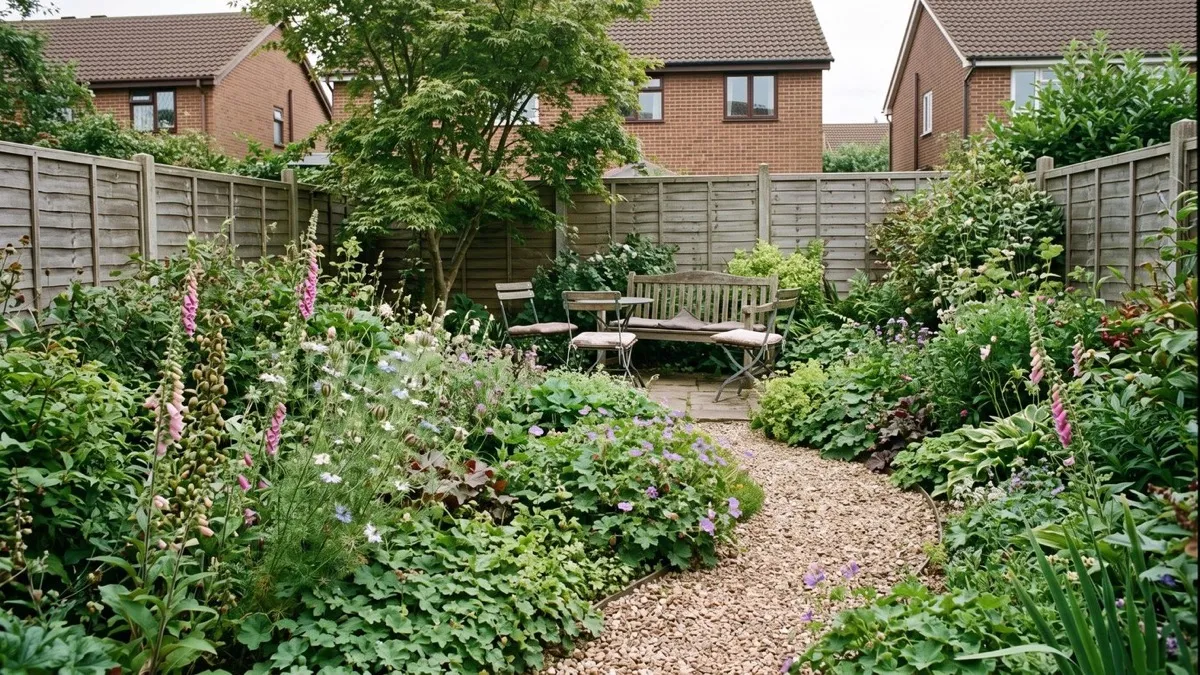
Uncovering an old path and cutting a crisp lawn edge are cheap jobs that make the whole garden look cared for.
What to do in each season of a garden rescue
Work with the seasons and every job gets easier. Here’s a rough plan for the year after your watching year.
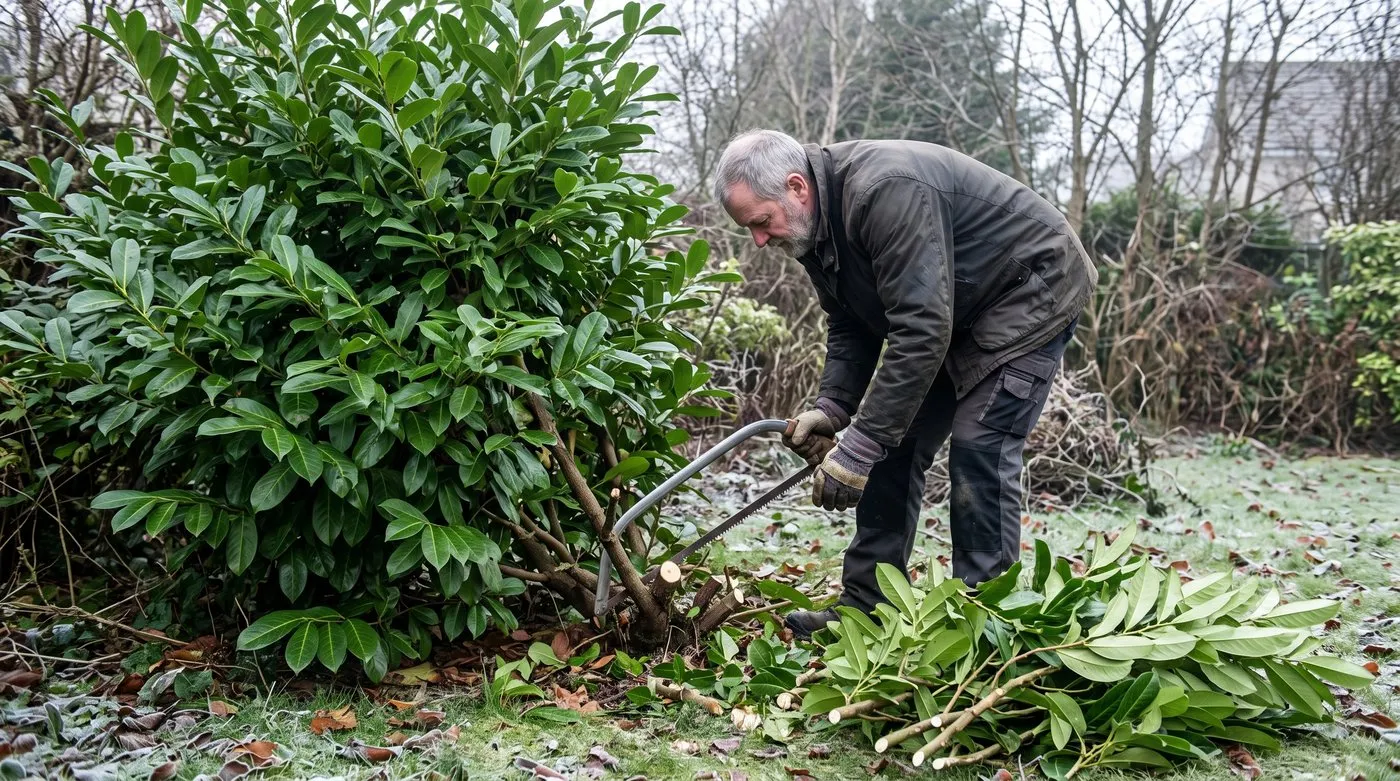
Winter is the time for hard pruning, when shrubs are dormant and birds aren’t nesting.
| Season | Main rescue jobs |
|---|---|
| Winter (Nov to Feb) | Hard-prune shrubs, cut back hedges and brambles, clear rubbish while growth is down |
| Spring (Mar to May) | Dig out weed roots on open soil, watch for emerging bulbs, start mowing rough grass |
| Summer (Jun to Aug) | Keep mowing and weeding, edge lawns, mulch borders. Leave hedges alone while birds nest |
| Autumn (Sep to Nov) | Reseed bare lawn, plant new shrubs and perennials, move plants you want to keep |
Common mistakes when clearing an overgrown garden
- Clearing everything in one go. You lose bulbs, perennials and good shrubs you didn’t know you had.
- Strimming before checking. Knotweed spreads from fragments, and strimmers injure hedgehogs and frogs in long grass.
- Cutting hedges in spring and summer. That’s nesting season, and damaging an active nest is an offence.
- Hard-pruning the wrong shrubs. Lavender and most conifers won’t regrow from old wood.
- Leaving cleared soil bare. Weeds seed straight back in. Mulch it or plant it.
Frequently asked questions
Should I clear a neglected garden straight away?
Clear paths and hazards now, but wait a year before removing plants. Bulbs and perennials are invisible in winter, and a shrub that looks scruffy in January may be lovely in June. Take a photo from the same spot each month. By next spring you will know what is worth keeping.
How do I turn long grass back into a lawn?
Mow it regularly, starting high and lowering the blades over a few weeks. Strim very long grass down first, after checking for hedgehogs and other wildlife. Rough grass and many lawn weeds dislike regular cutting. Rake off the clippings, then reseed bare patches in early autumn.
How do I spot Japanese knotweed before clearing?
Look for hollow, bamboo-like stems with purple speckles and shield-shaped leaves. The stems zigzag from leaf to leaf and die back to brown canes in winter. Don’t strim, dig or compost it, as small pieces regrow. Get a specialist to confirm and treat it before other work.
What is the cheapest way to rescue an overgrown garden?
Hand tools, regular mowing and keeping the plants you already have. A spade, bow saw, loppers, gloves and a wheelbarrow handle most jobs. Borrow or hire bigger kit only when you need it. Keeping good existing shrubs saves far more than any bargain on new plants.
When should I call a professional for an overgrown garden?
Call one for large trees, Japanese knotweed or giant hogweed. Tree work near power lines, buildings or over a boundary needs a qualified tree surgeon. If you’re selling or remortgaging, lenders often want knotweed treated under a professional management plan. Most other clearing is doable yourself over a season.
When can I cut back overgrown hedges and brambles?
Do the heavy cutting between September and February. Birds nest in hedges and brambles from March to August, and damaging an active nest is an offence. If you must trim in summer, check carefully first and leave any section with a nest alone.
Once the garden is clear and you know what you’re keeping, read the guide on how to design a garden from scratch to plan the next stage. There are more ideas in the garden design hub.
Our team produces practical UK gardening guidance from source research, contributor records and established horticultural practice. Editorial standards are overseen by Matt W.