Key takeaways
- Feng shui uses five elements and a nine-square bagua grid laid over the garden from the back door
- Curved paths feel calmer than a straight line rushing from gate to door
- Put your main seat with a wall or hedge behind it and water in view in front
- Balance soft planting with hard paving so neither takes over
- Soften sharp corners pointing at a seat with a pot, shrub or curved bed
- Clearing dead plants and clutter is the quickest way to make a garden feel calmer
Feng shui garden design is a traditional Chinese way of arranging a garden so it feels balanced and calm. It works with five elements and a nine-square map called the bagua. In a UK garden it’s most useful as a simple layout guide: where paths curve, where you sit, where water goes and how much planting to have.
You don’t need imported plants or special ornaments. Hardy British plants and everyday materials cover every element. If you’d like a wider look at Chinese garden traditions, from framed views to rockwork, see our guide to Chinese garden design.
What are the five elements in a feng shui garden?
The five elements are wood, fire, earth, metal and water. A balanced garden includes all five, through plants, colours and materials.
| Element | Colours | Materials | Hardy UK plants |
|---|---|---|---|
| Wood | Green, blue, purple | Timber sleepers, trellis, living willow | Silver birch, Fargesia bamboo, climbing hydrangea |
| Fire | Red, orange | Fire pit, lanterns, red brick | Crocosmia ‘Lucifer’, red hot poker, Japanese maple in autumn |
| Earth | Yellow, brown, terracotta | Terracotta pots, sandstone | Lavender ‘Hidcote’, sedum, Achillea ‘Terracotta’ |
| Metal | White, grey, silver | Pale gravel, steel planters, round stones | White roses, santolina, silver artemisia |
| Water | Black, deep blue | Water bowl, pebble pool, dark glazed pots | Black mondo grass, dark irises, water lily |
Wood is the easiest element to overdo in a leafy British garden. Most UK gardens are already mostly green, so look for gaps in the other four. A red crocosmia, a terracotta pot, a patch of pale gravel and a water bowl may be all you need.
How do you map the bagua across a garden?
Stand at your back door, look out, and split the garden into a three-by-three grid. That grid is the bagua. Each square links to an area of life, an element and a colour.
- Nearest row (by the house): knowledge on the left, career in the centre (water), helpful people on the right (metal)
- Middle row: family on the left (wood), health in the centre (earth), children and creativity on the right (metal)
- Far row (back of the garden): wealth on the far left (wood, purple tones), fame in the far centre (fire, reds), relationships on the far right (earth, pinks)
You don’t need to follow it square by square. Most people use it to decide where to put colour, water and a seat. Note where your shed, compost and any untidy corner fall, as those are the first spots to sort out.

A garden split into nine squares, like the bagua grid. You can follow the idea far more loosely in an ordinary plot.
Why are curved paths better in feng shui?
Curved paths feel calmer. In feng shui, energy (called chi) should wander, not rush. A straight path aimed at a door or seat is called a poison arrow, and it hurries you through.
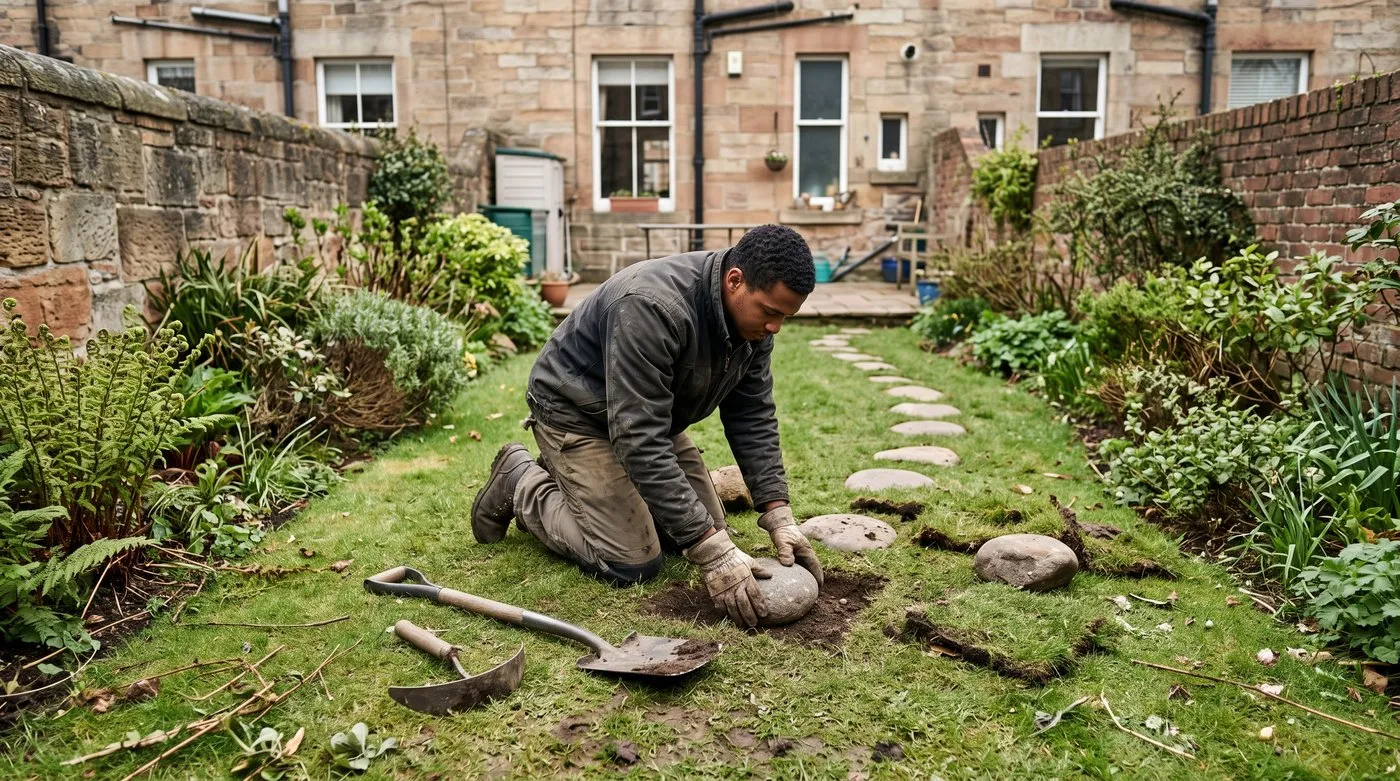
Moving stepping stones into a gentle curve is the simplest way to slow a straight route down.
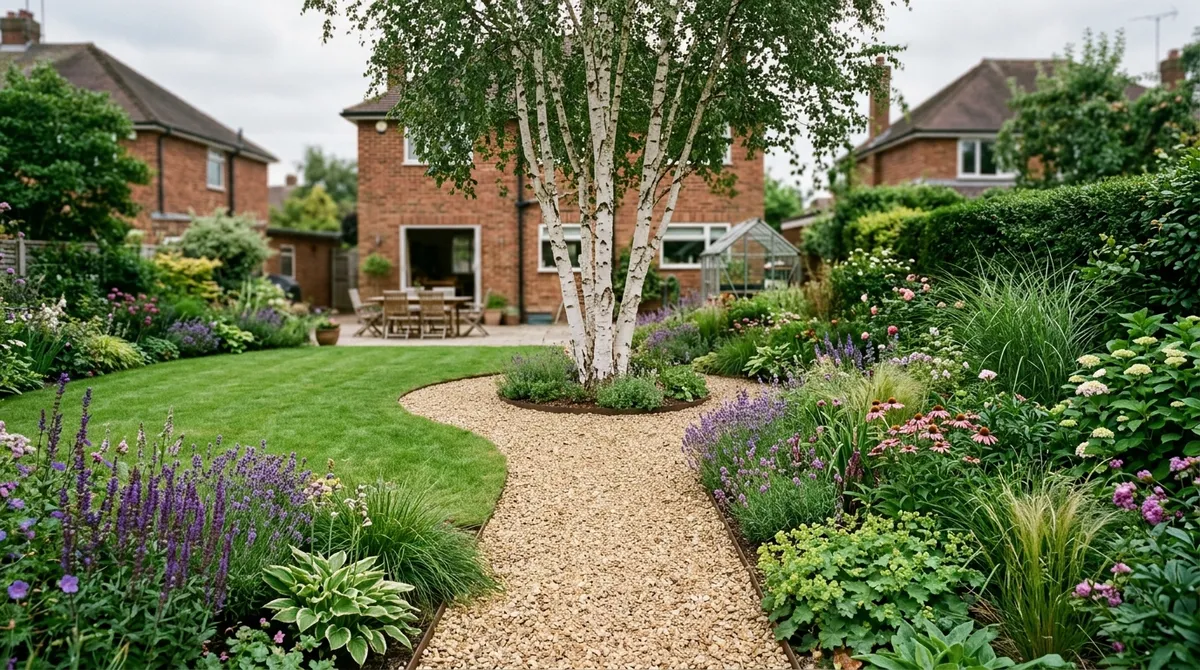
A gently curving path slows you down. Each bend hides part of the garden, so it reveals itself bit by bit and feels bigger. Make it at least 60cm wide so it’s comfortable to walk. Self-binding gravel or brick laid in a soft S-curve both work well. Our garden path ideas cover materials and costs.
In a small garden, simply moving stepping stones into a gentle curve does the job.
How do you apply feng shui to a front garden?
The front door is the mouth of chi, where energy enters the home. A tidy, welcoming approach matters a lot in feng shui.
Make sure the door is easy to see from the street and well lit at night. If the path runs dead straight at the door, soften it. Add a curve, or break the line with a pair of pots either side of the door. Clipped bay trees or Ilex crenata balls work well, and avoid box blight problems. A freshly painted door in a strong colour finishes the job.

Clipped bay trees either side of a freshly painted door make the entrance feel cared for.
Where should water and seating go?
Put your main seat with a solid wall, fence or hedge behind it, and any water in front of it, where you can see it. Feng shui calls this the command position: supported from behind, with a clear view out.
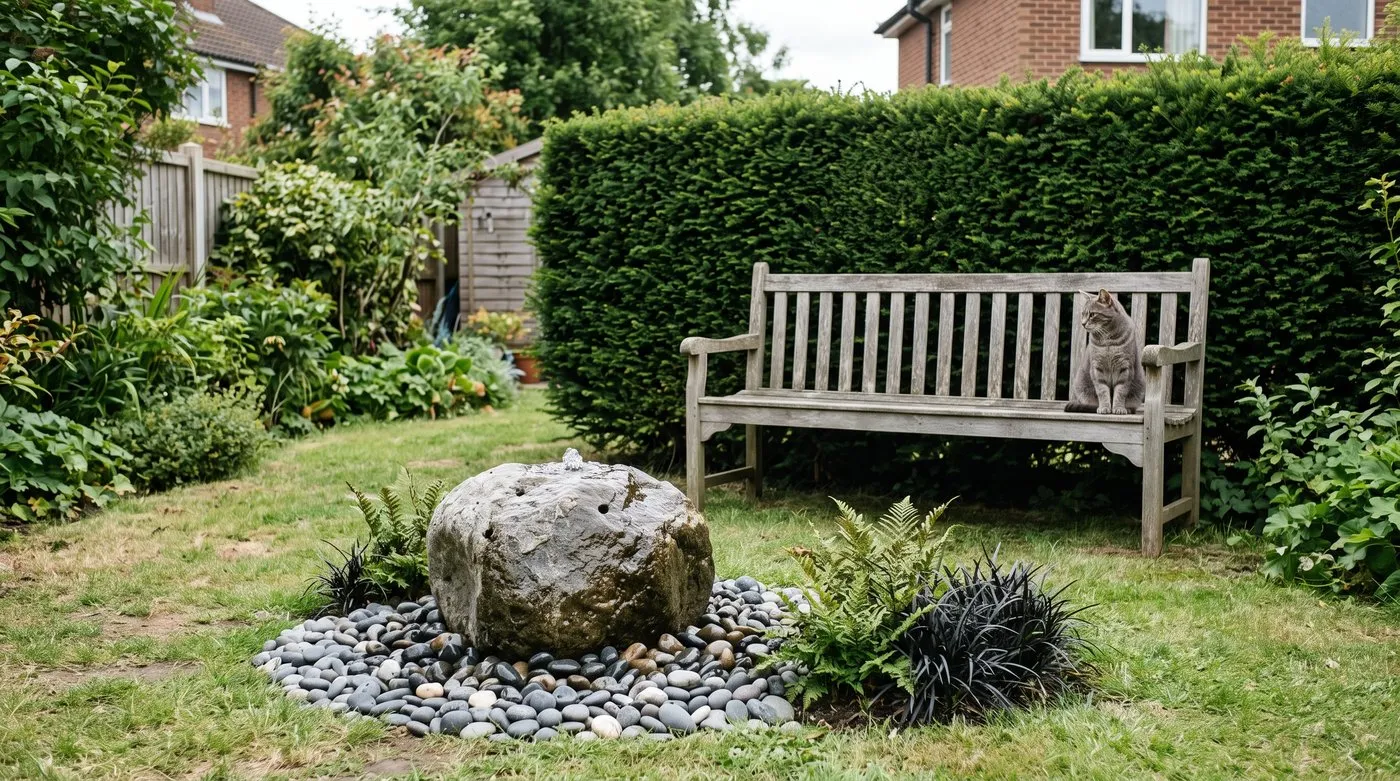
Hedge behind, water in front. That’s the seat feng shui calls the command position.
Water behind a seat is the thing to avoid. Moving water near the front door, or in the wealth corner at the far left of the garden, is seen as lucky. Still water reflects the sky and suits a calm centre.
Place a small water feature where you’ll hear it as you step outside. A bubbling stone or a solar fountain bowl is enough. Our low-maintenance water feature ideas suit small gardens. If you have young children, choose a bubbler over pebbles rather than open water.
How do you use feng shui colours in a garden?
Match the colour to the bagua zone and its element. Colour is the quickest way to balance a garden without rebuilding anything.
- Greens and soft blues (wood): the family zone on the left and the wealth corner at the far left. Also a safe choice anywhere.
- Reds and oranges (fire): the fame zone at the far centre. Try Crocosmia ‘Lucifer’, Dahlia ‘Bishop of Llandaff’ or red pelargoniums.
- Yellows, browns and soft pinks (earth): the centre and the relationships corner at the far right. Achillea ‘Terracotta’ and rudbeckia work well.
- Whites and greys (metal): the right-hand zones. White roses, santolina and pale gravel.
- Blacks and deep blues (water): near real water or the career zone by the house. Black mondo grass looks great next to a water bowl.
How do you balance yin and yang in a garden?
Yin and yang means balancing opposites: soft and hard, shade and sun, still and busy. A garden that’s all paving feels harsh. One that’s all dense planting can feel heavy and dark.
Aim for a bit more planting than paving. Soft, yin features include lawn, borders, ferns, hostas and swaying grasses. Hard, yang features are paving, gravel, walls and decking. Many new-build gardens have a big patio and thin borders, so deepening the beds is often the best fix. For a shadier, quieter take on the same idea, see our guide to Japanese garden design.

Shady planting on one side, an open seating area on the other, and a still water bowl linking the two.
Focal points and garden ornaments
A focal point gives the eye somewhere to settle. Put it at the end of a path, where a path turns, or in the main view from the house. A specimen tree, a large pot, a bench, a water feature or a statue all work.
In feng shui, calm shapes suit a restful garden. A seated figure, a pair of stone spheres or a smooth round pot all fit. Avoid spiky or aggressive ornaments. One good piece looks deliberate, while lots of small ones look like clutter. You’ll find garden ornaments and statues in stone, bronze and terracotta to suit each element. Frame it with planting so you come upon it, rather than plonking it in the middle of the lawn. Our guide to creating a garden focal point has more ideas.

One calm figure at the end of a path, framed by grasses and a clipped hedge, gives the eye somewhere to rest.
Why does clutter matter in feng shui?
In feng shui, clutter and dead plants hold energy back. You don’t need to believe in chi to notice the difference, though. A garden full of broken pots and collapsed plants just feels stuck.
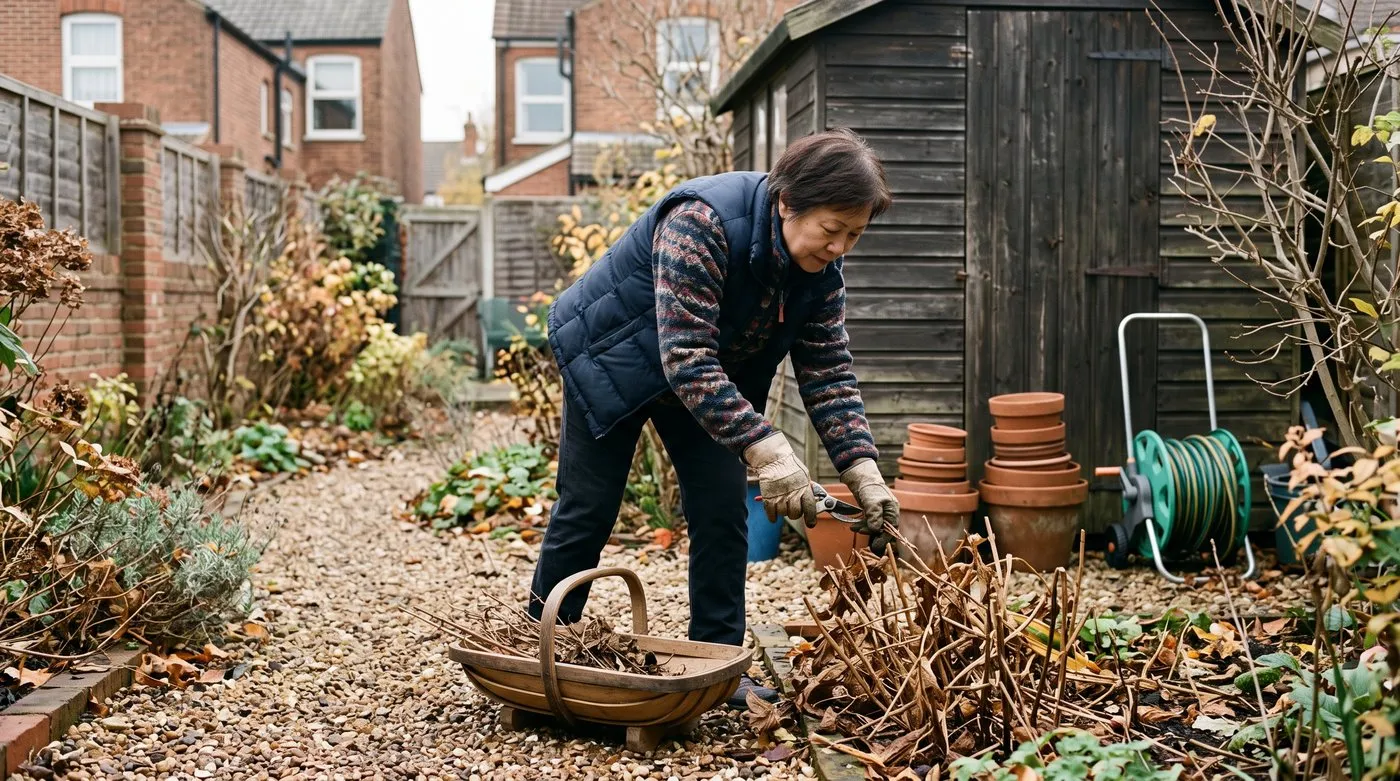
Clearing dead stems and stacking pots takes minutes, and the whole garden feels calmer for it.
Start with dead and dying plants. Cut them back and compost them. Then tackle broken pots, snapped canes, split compost bags and tangled hoses. Keep the paths clear, because an overgrown shrub blocking a path makes the whole garden feel cramped. A regular 20-minute tidy beats a big blitz twice a year.
How to apply feng shui to a UK garden step by step
You don’t need to rebuild anything. Work through these steps in order.
- Map the bagua. Stand at the back door and divide the garden into a nine-square grid.
- Curve a straight path. Even moving stepping stones into a gentle S helps.
- Fix your seat. Put a wall, fence or hedge behind it, with a clear view out.
- Place water in view. Put it in front of the seat, near the entrance or in the wealth corner.
- Check all five elements. Look for green planting, something red, a terracotta pot, something white or pale, and a water bowl.
- Soften sharp corners. Screen fence ends, shed corners and wall edges that point at your seat with a pot or shrub.
- Add one focal point. Put it where a path turns or a view ends.
- Declutter. Clear dead plants, broken pots and blocked paths.
Common feng shui garden mistakes
A straight path rushing at the door. Curve it, or break the line with pots and planting.
Clutter and dead plants. These are the easiest things to fix and the ones people put off longest.
Sharp corners pointing at a seat. A shed corner aimed at your bench feels uncomfortable. Hide it with a shrub or a big pot.
Water behind the main seat. Turn the bench so a hedge or wall is at your back and the water is in front.
All paving and no planting. Deepen thin borders and add planted pots to soften a big patio.
Now you’ve got the principles, our small garden design ideas show how to fit them into a compact plot. Browse more styles on our garden design hub.
Frequently asked questions
What is feng shui garden design?
It’s a traditional Chinese way of arranging a space to feel balanced and calm. It splits the garden into nine zones called the bagua and links each to an element, colour and material. In a UK garden it works well as a practical guide to paths, seating, water and planting.
Where should water go in a feng shui garden?
In front of your main seat or near the entrance, never behind the seat. Feng shui favours moving water near the front door or in the wealth corner, the far left of the garden seen from the back door. Behind a seat, you want a solid wall or hedge instead.
Why are curved paths better in feng shui?
They slow you down and make the garden feel calmer. A straight path from gate to door hurries people through and shows everything at once. A gentle curve reveals the garden bit by bit, which feels more restful and makes it seem bigger.
What colours are used in feng shui garden design?
Each element has its own colours. Green and blue are wood, red and orange are fire, yellow and brown are earth, white and grey are metal, and black and deep blue are water. You place each colour in the matching bagua zone.
How do I start applying feng shui to my garden?
Map the bagua, then make three small changes. Stand at your back door and divide the garden into a nine-square grid. Then curve a straight path, put a solid backing behind your seat and clear out dead plants and broken pots.
Can feng shui work in a small UK garden?
Yes, the ideas scale down well. A curving line of stepping stones, a bench against the fence, a water bowl and a few pots in element colours cover the basics. Keeping a small space tidy matters even more.
Our team produces practical UK gardening guidance from source research, contributor records and established horticultural practice. Editorial standards are overseen by Matt W.