Key takeaways
- Salad leaves, radishes, spring onions and herbs are the easiest crops for small pots
- Tumbling tomatoes like Tumbling Tom are bred for pots and hanging baskets
- Courgettes, cordon tomatoes, runner beans and potatoes need big containers of 30-50 litres
- Choose compact varieties, such as Patio Star courgette and dwarf French beans
- Parsnips, maincrop carrots, sprouting broccoli and asparagus are better in the ground
- Pots dry out fast, so check them every day in summer and feed fruiting crops weekly
The best vegetables to grow in pots are salad leaves, radishes, herbs, tumbling tomatoes and dwarf French beans. They’re compact, quick and forgiving. Bigger crops like courgettes and potatoes work too, as long as you give them a big enough container.
This guide goes crop by crop, with the pot size each needs and the varieties to look for. The basics of pots, compost and watering are in the container growing guide linked at the end.
Pot sizes for container vegetables
The bigger the pot, the easier your life. More compost holds more water and food, so plants don’t dry out or go hungry as fast. Use this table as a minimum.
| Crop | Pot size | Depth |
|---|---|---|
| Salad leaves, rocket, radishes | 5-10 litres | 15cm |
| Spring onions, most herbs | 5-10 litres | 15cm |
| Lettuce, pak choi, spinach | 10-15 litres | 20cm |
| Strawberries | About 10 litres per plant | 20cm |
| Garlic | 10-15 litres for a few cloves | 20cm |
| Tumbling tomatoes | 15-20 litres | 20-25cm |
| Beetroot, chard | 15-25 litres | 25cm |
| Dwarf French beans, dwarf peas | 20-30 litres | 25-30cm |
| Short carrots | 20-30 litres | 30cm |
| Peppers, chillies, dwarf cucumbers | 20-30 litres | 30cm |
| Cordon tomatoes, aubergines | 30-40 litres | 35cm |
| Courgettes | 40-50 litres | 35cm |
| Runner beans (small wigwam) | 40-50 litres | 35cm |
| Potatoes | About 40 litres (2-3 seed potatoes) | 35cm |

From a small pot of salad leaves to a big grow bag for a courgette. Match the pot to the size of the plant.
Easiest vegetables for pots
These crops are quick, small and happy in modest pots. They’re perfect if you’re new to growing.
- Salad leaves. Sow a cut-and-come-again mix in a wide bowl. Cut at about 8-10cm, leaving a stub to regrow. They cope with a bit of shade. The guide to the best lettuce varieties picks out compact types like Little Gem and Tom Thumb.
- Radishes. Ready in about four weeks from sowing. Sow a pinch every couple of weeks.
- Spring onions. Sow a short row in a 5-10 litre pot and pull as needed.
- Rocket and pak choi. Quick and leafy. Sow in spring or late summer, as both bolt in hot weather.
- Herbs. Basil, parsley, chives, thyme and mint all grow well in pots. Mint is best kept in its own pot, as it spreads fast.

Herb pots by the back door are easy to pick from while you cook. Keep mint in its own pot so it doesn’t swamp its neighbours.
Best fruiting crops for pots
Fruiting crops need more sun, bigger pots and weekly feeding once they flower. They’re very rewarding on a sunny patio.
- Tomatoes. Tumbling varieties like Tumbling Tom Red and Tumbling Tom Yellow are bred for pots and hanging baskets. Cordon types need a bigger pot and a cane.
- Peppers and chillies. Need a warm, sunny spot. Apache is a compact chilli that suits pots, and Hungarian Hot Wax is another easy choice.
- Courgettes. One plant per large pot or grow bag. Compact types like Patio Star suit containers best.
- Cucumbers. Outdoor types like La Diva or snack cucumbers like Mini Munch grow in a large pot with a small trellis.
- Strawberries. Easy in pots, troughs or strawberry planters, and the fruit stays clean off the ground. Mara des Bois fruits into autumn.

Tumbling tomatoes cascade over the edge of the pot, so they need no staking. A sunny wall helps them ripen.
For more ideas, see the guides to growing in grow bags and vegetables in hanging baskets.
Best beans and peas for pots
Dwarf French beans are one of the best pot crops. They’re bushy, need no canes and crop for several weeks. Tendergreen is a reliable variety.
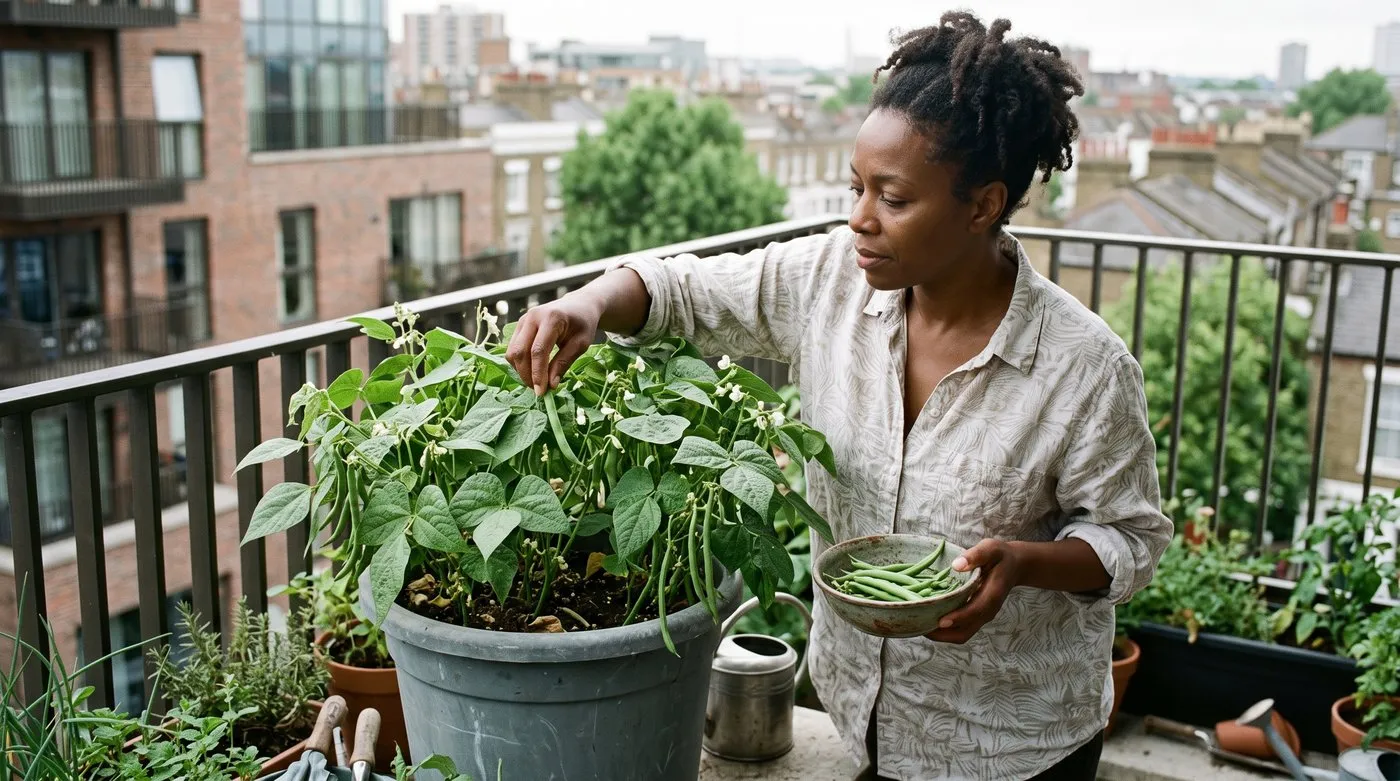
Dwarf French beans need no canes and crop for weeks in a big pot, which makes them perfect for a balcony.
Runner beans grow in a big pot with a wigwam of canes. Plant one bean per cane. They need plenty of water once they flower. The dwarf runner bean Hestia needs only short canes.
Dwarf peas, such as Tom Thumb, grow to about knee height in a pot. Give them a few twiggy sticks to scramble up.
Root crops and potatoes in pots
Beetroot grows well in a 15-20 litre pot. Round types like Boltardy suit pots best.
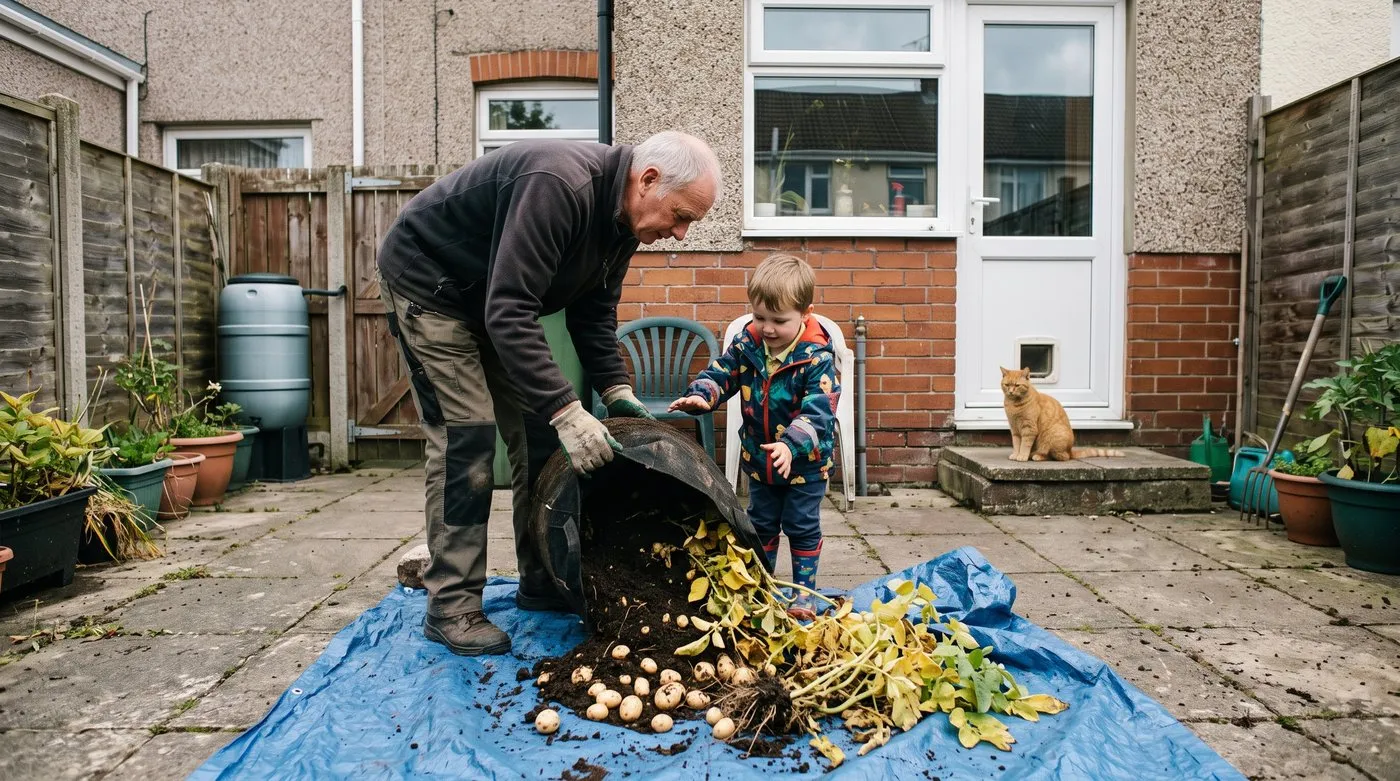
Tipping out a potato bag is the fun part. First earlies in a big bag are usually ready in early summer.
Carrots work if you choose short or round varieties, such as Paris Market or Atlas. A tall pot also helps keep carrot fly away, as the flies fly low.
Potatoes are great fun in a bag or tub. Grow first earlies like Pentland Javelin or second earlies like Charlotte. Plant in March or April and tip out the bag in early summer.
Garlic grows in a 10-15 litre pot. Plant cloves in October or November and harvest the following summer.
Winter vegetables for containers
Pots can keep cropping through the colder months. Dwarf Green Curled kale, chard and hardy salads such as corn salad and mizuna all do well in pots over winter. Move pots to a sheltered spot by the house and raise them on pot feet so they drain. The guide to winter salad leaves has more ideas.
Vegetables that don’t suit pots
Some crops need more root room or time than a pot can give. Grow them in the ground or a raised bed instead.
| Crop | Why it’s hard in a pot |
|---|---|
| Parsnips | Long roots that fork in shallow compost |
| Maincrop carrots | Need deep soil for long roots |
| Sprouting broccoli | Tall, slow and hungry |
| Brussels sprouts | Tall, slow, need firm ground |
| Asparagus | Long-lived, needs years in one spot |
| Globe artichokes | Big plants with deep roots |
| Rhubarb | Long-lived and deep-rooted |
Compost, watering and feeding in brief
Use a peat-free multipurpose compost, or mix in some loam-based compost for big pots. Loam holds water better and adds weight so tall plants don’t blow over. The guide to peat-free potting compost recipes has mixes to try.
In summer, check pots every day and water when the compost feels dry. A drip kit on a timer saves a lot of time if you have plenty of pots. After about six weeks, start feeding. Use a high-potash feed weekly for fruiting crops once they flower, and a general liquid feed for leafy crops.

A simple drip system on a tap timer keeps lots of pots watered evenly, which is a big help in a heatwave or when you’re away.
Slugs and snails climb into pots too. Check under rims and pot feet on damp evenings. The guide to getting rid of slugs covers the safest controls.
A five-pot starter plan
If you’re trying container veg for the first time, start with these five:
- Tumbling tomato in a 20 litre pot in your sunniest spot
- Salad leaves in a wide bowl, sown every few weeks
- Basil and chives in two small pots by the door
- Dwarf French beans in a 30 litre pot
- First early potatoes in a 40 litre bag
That gives you salads from spring, beans and tomatoes in summer and a bag of new potatoes in June or July. For layout ideas, see patio garden ideas for small spaces.
Common mistakes with container vegetables
- Pots that are too small. They dry out in hours on a hot day. Go bigger than you think.
- No drainage holes. Waterlogged roots rot. Every pot needs holes.
- Forgetting to feed. Potting compost runs out of food after about six weeks.
- Choosing big varieties. Look for words like “patio”, “compact” or “dwarf” on the packet.
- Putting sun-lovers in shade. Tomatoes, peppers and courgettes need your sunniest spot. Leafy crops can go in the shadier corners.
Now you’ve picked your crops, read the guide to container vegetable gardening for pots, compost and a watering routine, or browse more crops on the growing veg hub.
Frequently asked questions
What is the easiest vegetable to grow in pots in the UK?
Cut-and-come-again salad leaves are the easiest vegetables for pots. They grow in a wide, shallow pot and are ready in a few weeks. Sow a pinch every few weeks for a steady supply, and keep slugs off.
What size pot do tomato plants need?
Tumbling tomatoes need about 15-20 litres, and cordon tomatoes about 30-40 litres. Bigger pots dry out less and give better crops. Make sure every pot has drainage holes, and give cordons a cane.
Can you grow potatoes in a container?
Yes, potatoes grow well in large bags or pots. First earlies are best because they crop quickly. Plant two or three seed potatoes in a bag of about 40 litres and keep the compost evenly moist.
How often should you water container vegetables?
Check pots every day in summer and water whenever the compost feels dry. In hot or windy weather that often means daily, and twice a day for small pots. In cool spring and autumn weather, every few days is usually enough.
Do container vegetables need feeding?
Yes, because potting compost runs low on food after about six weeks. Feed fruiting crops like tomatoes and courgettes weekly with a high-potash feed once they flower. Give leafy crops a general liquid feed every couple of weeks.
Which vegetables should not be grown in pots?
Deep-rooted, large or slow crops are better in the ground. Parsnips, maincrop carrots, sprouting broccoli, asparagus and globe artichokes are the main ones. They need more root room and time than a pot can give.
Our team produces practical UK gardening guidance from source research, contributor records and established horticultural practice. Editorial standards are overseen by Matt W.