
Key takeaways
- Use a basket at least 35-40cm across for vegetables; smaller ones dry out in hours
- Tumbling tomatoes, strawberries, salad leaves and herbs are the most reliable basket crops
- Plant tender crops in late May, once the risk of frost has passed
- Water daily from June and twice a day in hot weather
- Feed fruiting crops weekly with high-potash tomato food from the first flowers
- A wet basket is heavy, so fix a sturdy bracket into brick or block, not a fence panel
Hanging baskets turn a bare wall, porch or balcony railing into a little kitchen garden. Tumbling tomatoes, strawberries, salad leaves and herbs all crop well in a basket. Fruit hangs clear of slugs and soil, and picking happens at eye level.
The catch is water. Baskets dry out faster than any other container, so the right size, compost and routine matter. This guide covers what to grow, how to plant up and how to keep a vegetable basket cropping from June to autumn. For pots, troughs and tubs on the ground, see the guide to container vegetable gardening.
Which vegetables grow best in hanging baskets?
The best basket crops have shallow roots, a compact or trailing habit and a quick harvest. Tumbling tomatoes top the list because they spill over the rim without staking. Strawberries follow close behind, with fruit hanging clear of slugs.
Salad leaves and herbs are the easy middle ground. They crop within weeks and forgive a missed watering better than fruiting crops. Radishes and spring onions work in a deep basket. Dwarf beans, compact chillies and small cucumbers are possible, but they need the largest baskets and the most care.
| Crop | Plants per 40cm basket | Sun | Notes |
|---|---|---|---|
| Tumbling tomato | 1 | Full sun | Most productive basket crop |
| Strawberry | 3 | Full sun | Choose everbearers for a long season |
| Salad leaves | Sow a pinch | Sun or light shade | Cut and come again |
| Herbs | 3-4 | Sun | Keep mint in its own pot |
| Compact chilli | 1 | Full sun, sheltered | Needs warmth to ripen |
| Dwarf bean | 2-3 | Full sun | Pick often to keep it cropping |
For bigger pots, the list of vegetables that thrive in pots has many more options.

Three baskets on one sunny wall give tomatoes, strawberries and salad all summer, with no beds needed.
Tumbling tomatoes: the star basket crop
Tumbling tomatoes are bred to trail, so the stems cascade over the rim and carry fruit clear of the compost. One plant fills a 40cm basket.
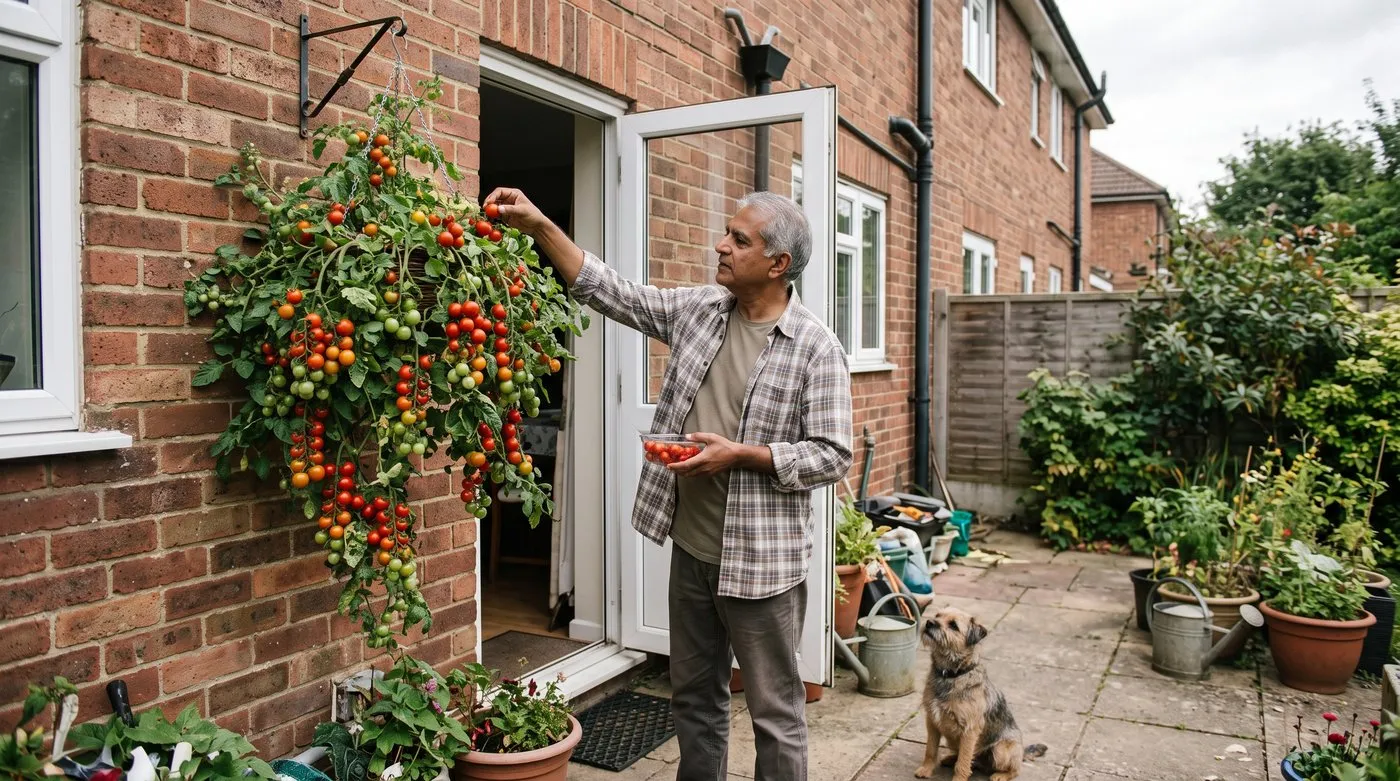
Trailing tomatoes put the fruit right at hand height, so picking takes seconds.
Two reliable varieties are ‘Tumbling Tom’, in red or yellow, and ‘Hundreds and Thousands’, which bears masses of tiny sweet fruit. Both are bush types, so there is no need to pinch out side shoots. Plant one per basket in late May, after the last frost. The guide to the best tomato varieties for UK gardens has more cherry and bush types.
Gardener’s tip: Water tomato baskets at the compost, not over the leaves. Dry foliage is less prone to disease, and a long-spout can makes it easy.
Strawberries, salad and herbs in baskets
Strawberries suit baskets perfectly. Their runners drape over the edge and the berries stay clean. Plant three young plants per 40cm basket in spring. Everbearing varieties crop in flushes from early summer into autumn, so they give the longest season.
Salad leaves are the quickest crop. Sow a loose-leaf mix such as ‘Salad Bowl’ and start cutting in about four to six weeks. Snip the outer leaves and let the centre regrow. Sow a fresh basket every few weeks for a steady supply. Rocket and oriental leaves tend to bolt in midsummer heat, so sow them from late summer for autumn picking. A basket on a shadier wall keeps salad sweet through July.
Herbs such as basil, parsley, chives and trailing thyme make a handy basket by the kitchen door. Basil wants sun and warm nights, so plant it out in June. Parsley copes with a little shade. Keep mint in a basket of its own, as it soon crowds out its neighbours.

Berries hang clear of slugs and soil splash, so nearly every one reaches the kitchen clean.
Beans, chillies and cucumbers in a large basket
These are step-up crops once you’ve had success with tomatoes and salad. All need a 40cm basket and a sunny, sheltered spot.
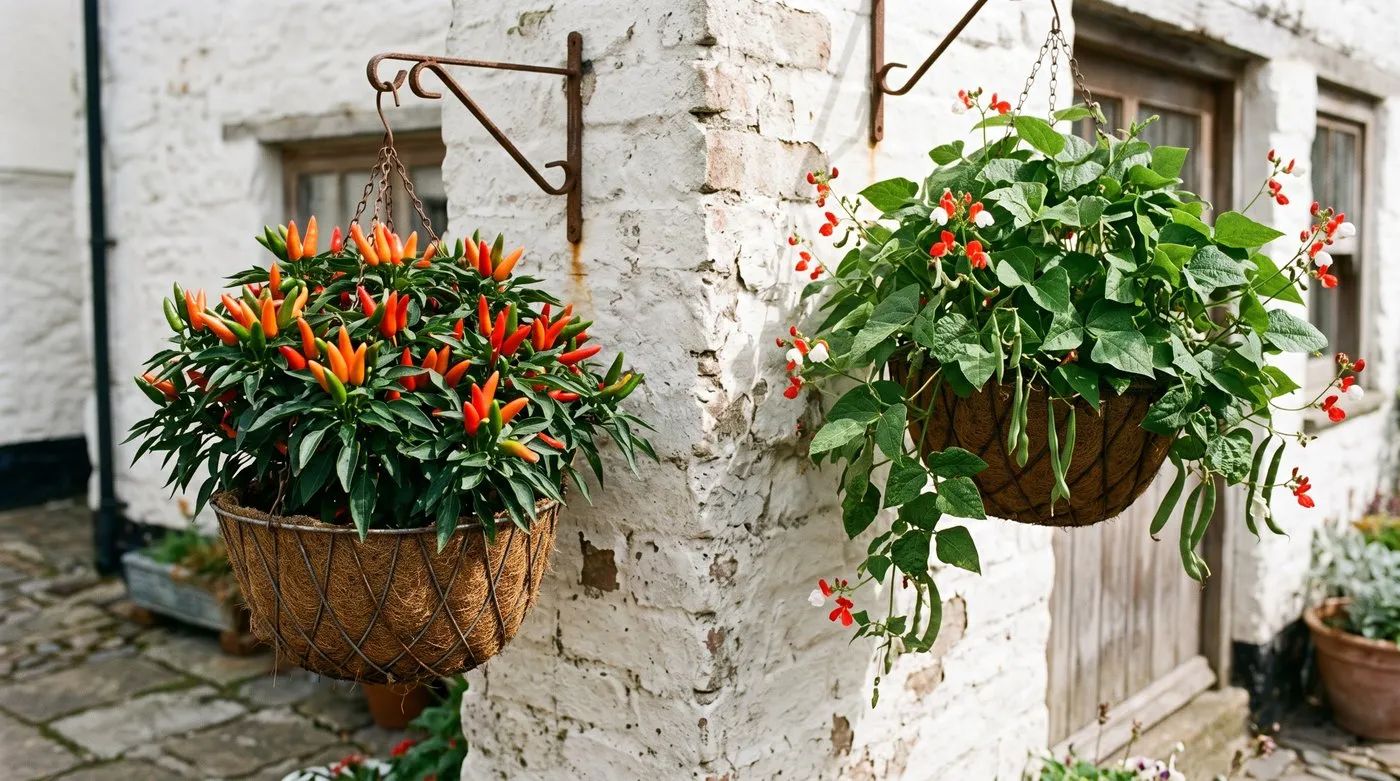
Compact chillies and dwarf beans love a sunny, sheltered wall. Keep picking and they keep cropping.
- Dwarf runner bean ‘Hestia’ is bred for pots, stays around 45cm tall and has red and white flowers. Pick the pods every few days to keep it going.
- Compact chillies such as ‘Basket of Fire’ and ‘Apache’ love the warmth of a sunny wall. The chilli growing guide covers sowing and ripening.
- Small cucumbers such as ‘Patio Snacker’ will trail, but they drink heavily and wilt fast if a watering is missed.
- Radishes and spring onions need a basket with a good depth of compost. Sow thinly and resow every few weeks.
How big should a vegetable hanging basket be?
Use a basket at least 35-40cm across. Anything smaller holds too little compost, dries out in hours on a hot day and gives roots no room. Save small baskets for a single herb or a few salad leaves.
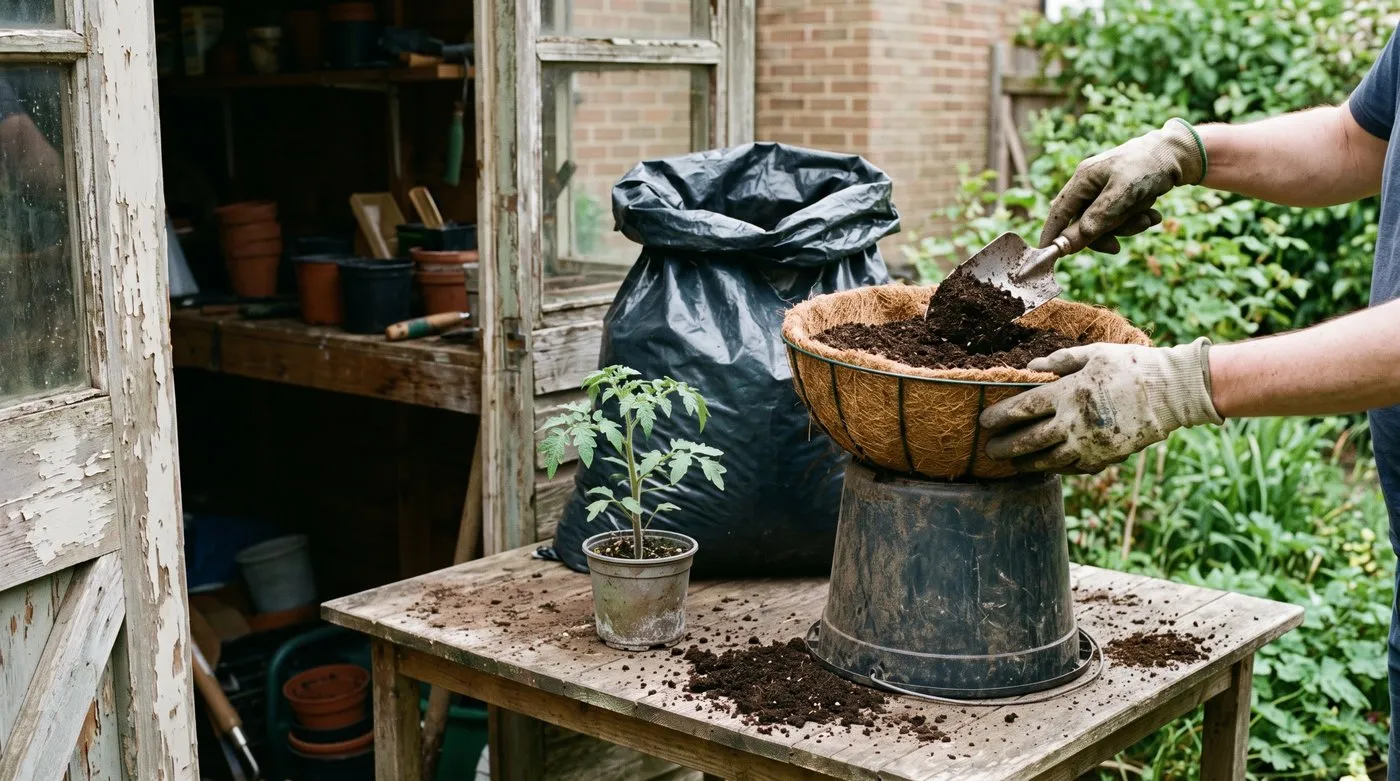
Rest the basket on a bucket while you plant up. It keeps it steady and level.
The type of basket matters too. Lined or solid-sided baskets hold moisture much better than open wire frames. If you use a wire basket, choose a thick liner and put a circle of plastic in the base to slow drainage. A water-reservoir disc in the bottom helps on hot days.
Fill with peat-free multipurpose compost, mixed with some loam-based compost such as John Innes No. 2 if you have it. Add water-retaining granules at the rate on the pack. Leave a few centimetres at the top so water can soak in rather than run off. Planting up in a greenhouse or shed, with the basket resting on a bucket, keeps it steady.
Watering: the job that makes or breaks a basket
Water every day from June, and twice a day in hot or windy weather. Baskets lose water from the top, sides and base all at once. Drought is the main reason basket crops fail.
Water in the morning until it runs out of the base. Check again in the evening on hot days by pushing a finger into the compost. Tomato flowers drop and fruit splits if a basket dries out and is then soaked. If you’re often away, a self-watering basket or a simple drip kit makes life easier. A hose lance or a pulley lets you reach high baskets without a stepladder.

A long spout gets water straight onto the compost. Little and often keeps fruiting crops happy.
Feeding and finding the right spot
Feed fruiting crops weekly with a high-potash tomato food from the first flowers until the last pick. Daily watering washes nutrients out of a basket within a few weeks, and crops stall without a top-up. Leafy salad and herbs need only a half-strength general feed now and then.
Tomatoes, strawberries, chillies and beans want full sun, ideally on a south- or west-facing wall. Salad and parsley prefer a little shade in summer. Shelter every basket from strong wind, which batters stems and dries the compost far faster. A sunny balcony is perfect if it isn’t too windy: the guide to balcony gardening ideas has more on that.
Hanging a heavy basket safely
A watered basket of cropping plants is much heavier than it looks, so fix it properly. Use a heavy-duty bracket screwed into solid brick or block with wall plugs. Avoid fence panels, which flex in the wind and let fixings pull out.
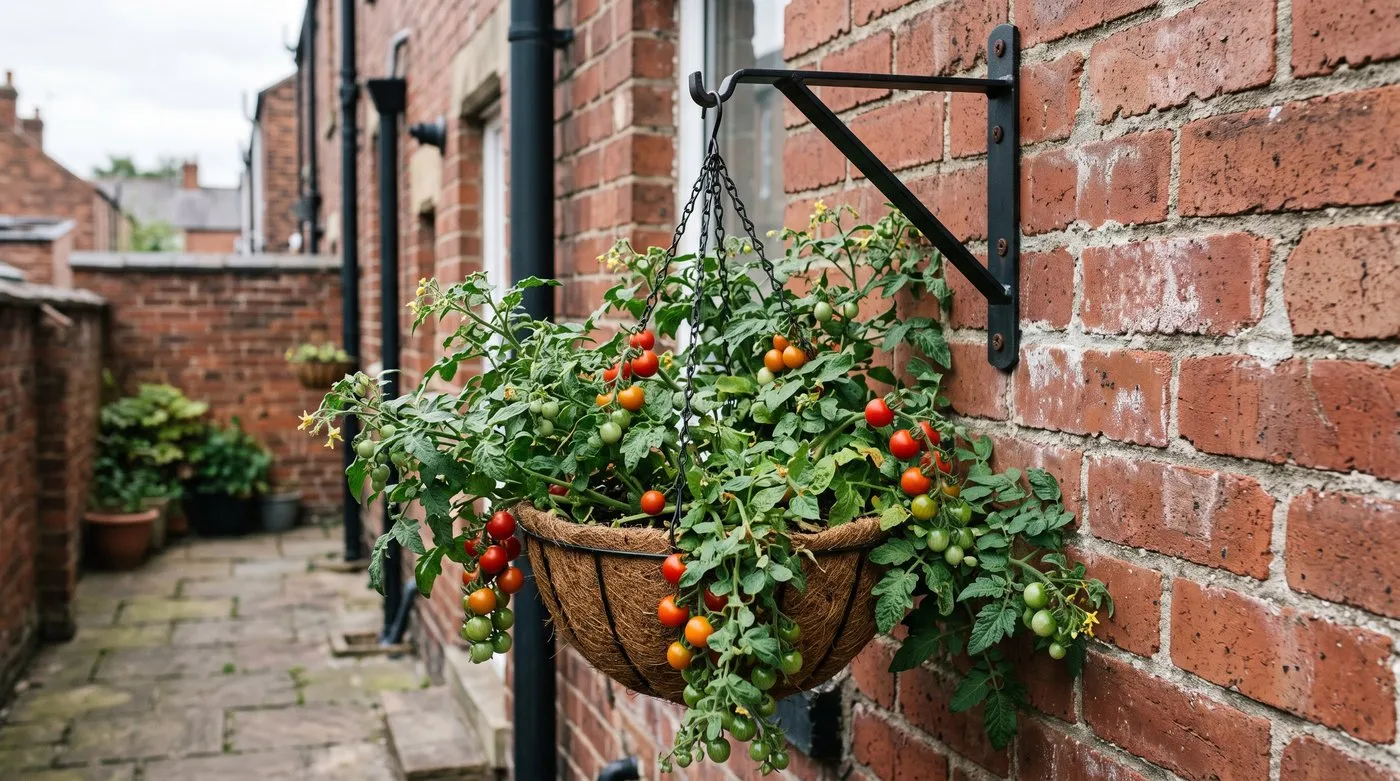
A solid bracket fixed into brick takes the weight of a wet, cropping basket all summer.
Hang baskets where you can reach to water and pick without a ladder. Give a new bracket a firm tug before you hang a full basket. Check the fixings each spring, as wind and weather can loosen them over winter.
Common mistakes with vegetable hanging baskets
- Using a small basket. It dries out within hours and starves roots. Go for 35-40cm for vegetables.
- Missing waterings. Even one dry day in a heatwave can drop flowers and split fruit. Set a daily routine from June.
- Forgetting to feed. Fruiting crops fade by August without weekly tomato food.
- A windy corner. Wind dries baskets and knocks off flowers. Pick a sheltered wall.
- Planting out too early. Tomatoes, chillies, beans and basil are tender. Wait until late May.
Month-by-month vegetable basket calendar
Adjust timings a week or two later in northern England and Scotland.
| Month | Task |
|---|---|
| February | Sow chillies indoors in warmth |
| March | Sow tomatoes indoors. Order strawberry plants |
| April | Plant strawberry baskets. Sow salad under cover. Pot on tomatoes |
| May | Harden off tender plants. Plant up tomato, chilli and bean baskets in late May |
| June | First salad and strawberries. Water daily. Start weekly tomato feed |
| July | Peak picking. Water twice on hot days. Resow salad |
| August | Main tomato and chilli harvest. Keep feeding and picking |
| September | Sow autumn salad leaves. Late chillies ripen |
| October | Last pick of tomatoes and chillies. Clear spent plants |
| November | Compost old plants. Clean and store baskets dry |
The ornamental side of things, from summer bedding to liners, is covered in the guide to planting and caring for hanging baskets. If you’d rather keep crops at ground level, growing in grow bags is another easy small-space option. More ideas live on the growing hub.
Frequently asked questions
What vegetables grow best in hanging baskets?
Tumbling tomatoes, strawberries, salad leaves and herbs grow best. They have shallow roots and a compact or trailing habit that suits a basket. Dwarf beans, compact chillies, radishes and spring onions also work in a large basket. Deep-rooted or tall crops, such as sweetcorn or cordon tomatoes, are a poor fit.
How often should I water a vegetable hanging basket?
Every day from June, and twice a day in hot weather. Baskets dry out faster than other containers because air reaches them on every side. Water in the morning until it runs from the base. Check again in the evening on hot or windy days.
Can you grow tomatoes in hanging baskets?
Yes, trailing tomatoes bred for baskets grow very well. Choose a variety such as ‘Tumbling Tom’ or ‘Hundreds and Thousands’. One plant fills a 40cm basket. Avoid tall cordon tomatoes, which need staking and far more root room than a basket can give.
Do I need to feed vegetables in hanging baskets?
Yes, feed fruiting crops weekly from the first flowers. Daily watering washes nutrients out of the compost within a few weeks. Use a high-potash tomato food for tomatoes, strawberries, chillies and beans. Salad and herbs need only an occasional half-strength feed.
How big should a hanging basket be for vegetables?
At least 35-40cm across. Bigger baskets hold more compost, so they hold more water and feed. Small baskets dry out very fast on hot days. Lined or solid-sided baskets hold moisture better than open wire frames.
What is the best compost for vegetable hanging baskets?
A good peat-free multipurpose compost. Mixing in some loam-based compost, such as John Innes No. 2, helps hold water and nutrients. Water-retaining granules can help in hot spells. Avoid garden soil, which packs down and drains poorly in a basket.
How do I hang a heavy vegetable basket safely?
Use a heavy-duty bracket screwed firmly into brick or block. A wet basket full of cropping plants is much heavier than it looks. Avoid fence panels and flimsy hooks. Hang it where you can water and pick without a ladder, and check the fixing each spring.
Fancy a basket of berries next? The guide to growing strawberries in the UK covers the everbearing types that crop best in baskets.
Our team produces practical UK gardening guidance from source research, contributor records and established horticultural practice. Editorial standards are overseen by Matt W.


