
Key takeaways
- Chives are tough, hardy perennials that grow almost anywhere in the UK
- Sow seed from March to May, or start with a small plant
- Cut leaves with scissors a few centimetres above the soil and they soon regrow
- The purple flowers are edible and bees love them
- Split clumps every three years or so to keep them leafy
- Garlic chives have flat leaves, white flowers and a gentle garlic taste
Chives are about the easiest herb you can grow. They’re happy in almost any soil, in sun or part shade, and they sail through freezing winters. If you can grow grass, you can grow chives.
You can snip the mild, oniony leaves from March to November. In early summer you get pretty purple pompom flowers, which are edible too. Here’s how to grow them well.
How to grow chives from seed
Seed is cheap and one packet gives you plenty of plants for beds and pots.
When to sow
Sow indoors from March, or straight outside in April and May once the soil has warmed up. Indoor sowing just gives you a head start.
Sowing method
Fill 9cm pots with multipurpose compost and water them first. Scatter 8-10 seeds on top of each pot and cover with about 5mm of compost. Keep them somewhere warm, like a windowsill. Seedlings usually appear in two to three weeks.
When the seedlings are about 10cm tall, get outdoor plants used to the outside for a week. Then plant each potful as one clump, without splitting them up. Chives grow best in clusters. Leave 20-25cm between clumps. Our seed sowing calendar shows when to sow other herbs and veg too.
Chives vs garlic chives
These two get mixed up a lot. Both are tough and easy, so it’s really down to taste.
Common chives (Allium schoenoprasum) have hollow, round leaves and a mild onion flavour. Their purple flowers come in May and June, and they grow about 25-30cm tall.
Garlic chives (Allium tuberosum) have flat leaves, a bit like tiny leeks. They taste gently of garlic. Their white starry flowers open later, in August and September.
| Feature | Common chives | Garlic chives |
|---|---|---|
| Leaves | Hollow and round | Flat |
| Height | 25-30cm | 30-45cm |
| Flavour | Mild onion | Mild garlic |
| Flowers | Purple, early summer | White, late summer |
| Self-seeding | A little | Lots |
| Best for | Salads, jacket potatoes, soups | Stir-fries, dumplings, eggs |
Garlic chives seed themselves freely, so snip off the flowers before the seeds ripen if you want to keep them in check. For more kitchen herbs, see how to grow herbs in the UK.
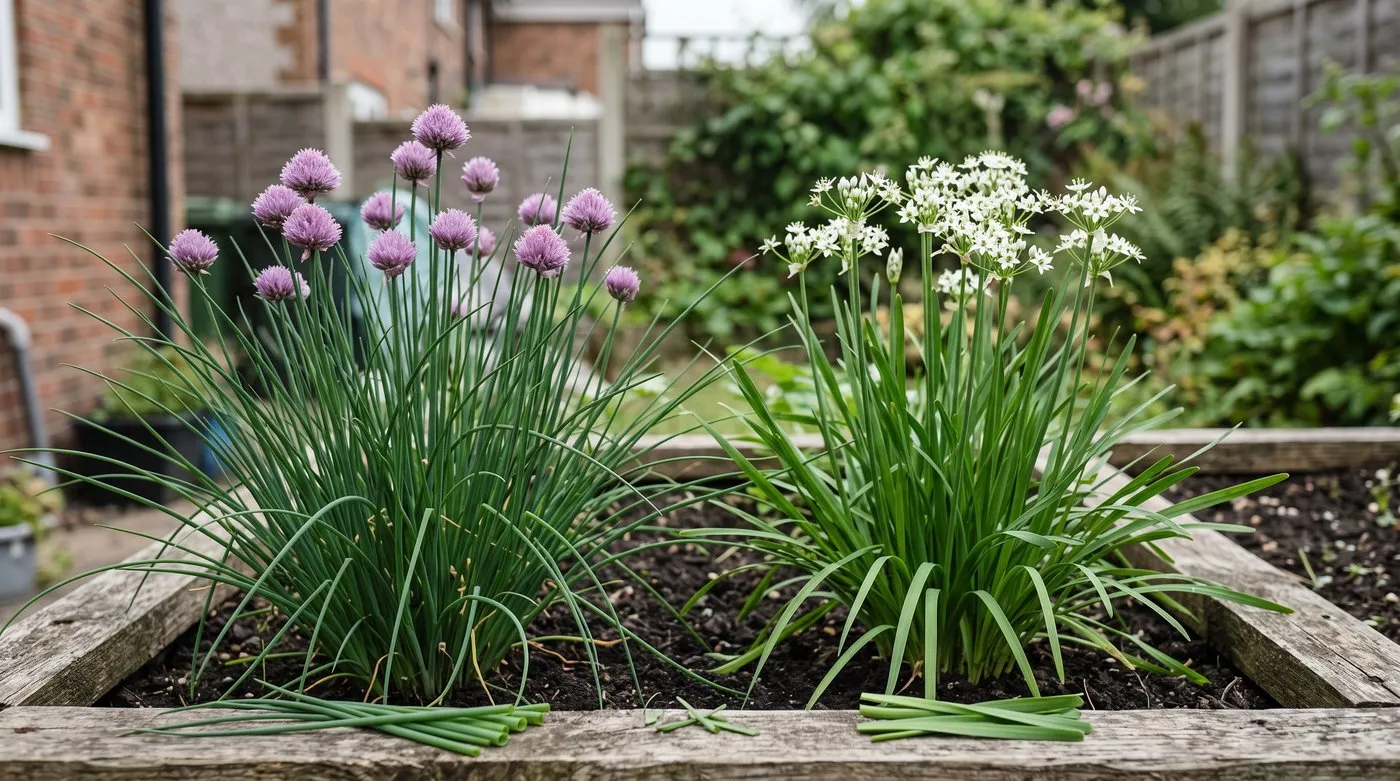
Common chives have hollow round leaves and purple flowers, while garlic chives have flat leaves and white starry flowers later in summer.
Growing chives in pots
Chives love life in a pot. Keep one by the kitchen door and you’ll use it all the time.
Choosing the right container
Pick a pot at least 15cm wide and 15cm deep, with drainage holes. Terracotta or glazed pots are both fine. Unlike sage or thyme, chives like their compost to stay moist.
Compost and feeding
Ordinary multipurpose compost is perfect. Chives aren’t fussy. From April to September, give pot-grown plants a liquid feed at half strength once a month.
Watering
Keep the compost moist but not soggy. In warm weather that may mean watering every two or three days. Chives droop when thirsty but perk up quickly after a drink. A saucer under the pot is fine for chives.
A pot on a bright windowsill will keep giving leaves through winter. They’ll be thinner and paler, but still tasty.
Dividing chive clumps
Splitting old clumps keeps chives leafy. Left alone, they get crowded, flower less and go bare in the middle.
When to divide
Split clumps every three years or so. Early spring is best, just as new growth shows. Early autumn works too, while the soil is still warm.
How to divide
Dig up the clump with a fork and shake off the soil. Pull it apart into chunks of about 8-10 little bulbs. Throw away the old, woody middle bit.
Replant the pieces 20-25cm apart and water well. Keep them moist for a couple of weeks. One old clump can give you several new plants, which are handy as companion plants around the veg patch.
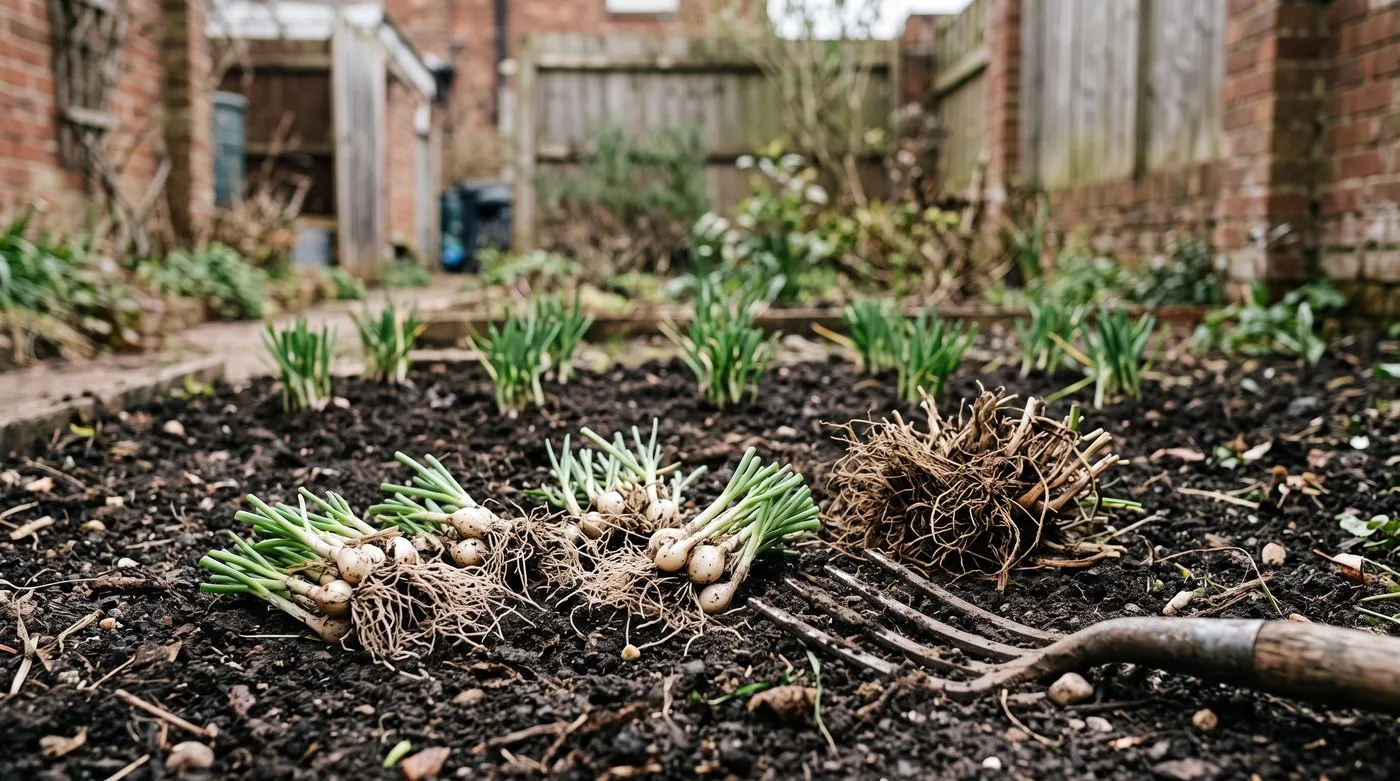
Split old clumps into chunks of eight to ten little bulbs and throw away the woody middle. The young pieces soon fill out into leafy new clumps.
Chives as companion plants
Gardeners have grown chives next to other plants for generations. The strong oniony smell is thought to put some pests off, though it’s a tradition rather than a sure thing.
Pest deterrence
Many people plant chives around rose bushes to help with greenfly. Some also dot them between carrots, hoping the smell hides the carrots from carrot fly. It might help a little, so treat it as a bonus. For growing carrots in pots, see our container vegetable gardening guide.
Fruit tree companions
A ring of chives under apple trees and other fruit trees looks lovely and keeps the ground covered. Old cottage-garden lore says they help against disease, but don’t rely on that.
Pollinator attraction
Here chives really earn their keep. Bees, hoverflies and butterflies love the flowers. They bloom in May and June, a handy gap between spring and summer flowers. That makes them a great choice for bee-friendly gardens. Leave at least half the flower heads for the bees.
Harvesting and storing chives
The more you cut, the more you get.
How to harvest
Snip leaves with scissors about 3cm above the soil. Don’t pull them, as that damages the plant. Start from the outside of the clump. The cut leaves regrow in a few weeks.
Start picking once leaves are about 15cm tall, and keep going until they die back in November.
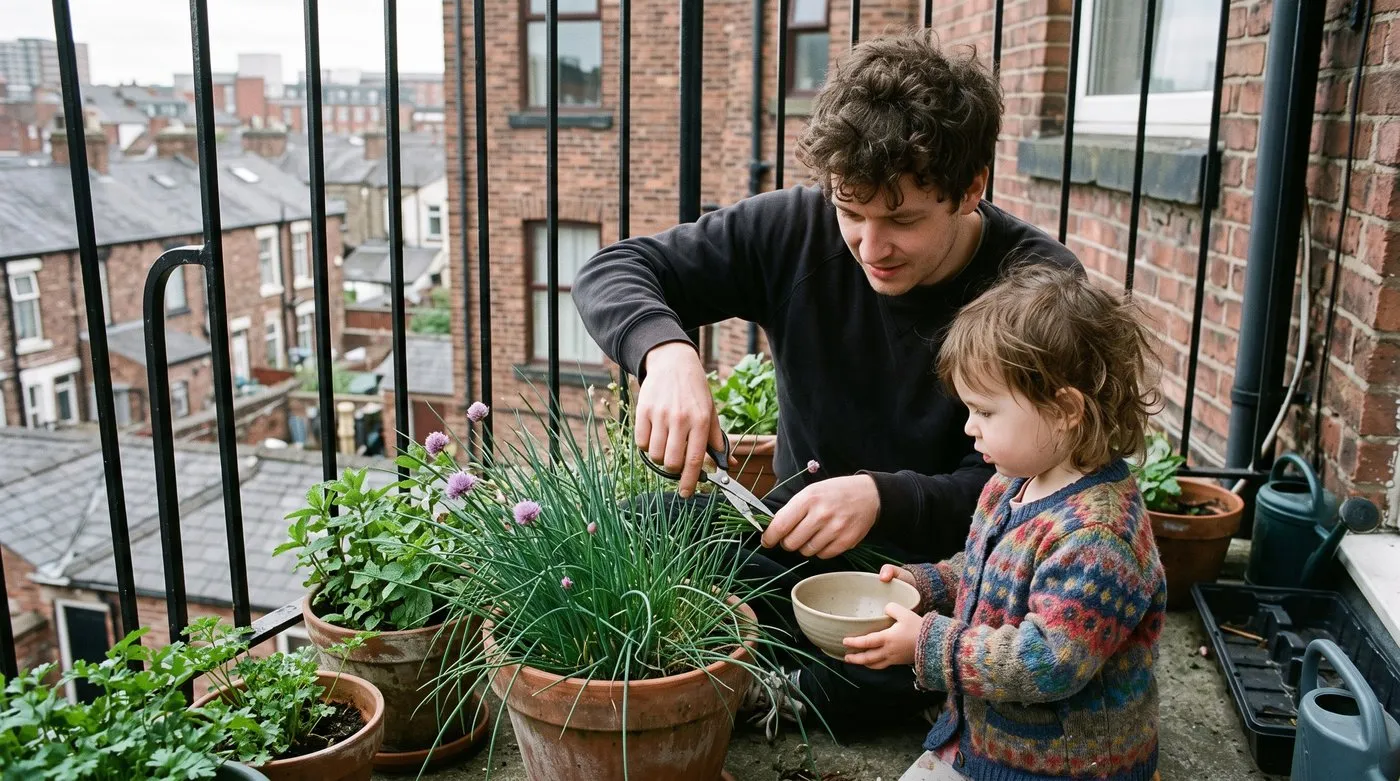
Snip from the outside of the clump about 3cm above the soil, and the leaves regrow in a few weeks. The more you cut, the more you get.
Storing fresh chives
Fresh chives keep for about a week in the fridge, wrapped in damp kitchen paper in a box. To keep them longer, freeze them. Chop finely, pack into ice cube trays, top up with water and freeze. Each cube is a ready-made portion.
Don’t bother drying chives. They lose nearly all their flavour. Freezing is much better.
Edible flowers
Pick flowers just as they open. Pull apart the florets and sprinkle them over salads or soups. For a fun extra, steep whole flower heads in white wine vinegar for two weeks. You get a pretty pink vinegar for dressings.
Month-by-month chive care
A simple routine keeps your chives going year after year.
March: New shoots appear. Start picking once leaves reach 15cm. Split crowded clumps and sow seed indoors.
April-May: Sow seed outside once the soil warms. Water pots often. If you’re making a list of spring gardening jobs, add dividing chives.
May-June: Flowers open. Leave some for bees and pick some for the kitchen.
July-August: Cut back flowered stems for fresh leaves. Feed pots monthly. Garlic chives flower in August, so deadhead them if you don’t want seedlings.
September-October: Last pickings. Split crowded clumps. Pot up a small piece for the kitchen windowsill.
November-February: Leaves die down and the plants rest. No winter protection needed. Spread some home-made compost around them in spring to freshen the soil.
Frequently asked questions
Are chives easy to grow in the UK?
Yes, they’re one of the easiest herbs there is. They cope with most soils and grow in sun or part shade. They shrug off cold winters with no protection. Keep picking, cut back flowered stems, and split the clump every few years.
Do chives come back every year?
Yes, they’re perennials that return every spring. They die down in late autumn and pop back up in early spring. A clump will keep going for years, especially if you split it every three years or so.
Can I eat chive flowers?
Yes, and they taste mildly of onion. Pull the little purple florets apart and scatter them over salads, soups, eggs or soft cheese. Pick them just as they open for the best flavour.
What is the difference between chives and garlic chives?
Mainly the leaves, flavour and flowers. Common chives have hollow round leaves, an onion taste and purple flowers in early summer. Garlic chives have flat leaves, a garlicky taste and white flowers in late summer.
How often should I water chives?
Water whenever the soil starts to dry out. Unlike Mediterranean herbs, chives like steady moisture. Pots may need a drink every few days in warm weather. Plants in the ground only need help in long dry spells.
Do chives keep aphids away?
They might help a little, but don’t count on it. It’s an old gardening tradition rather than a sure fix. Their flowers do bring in hoverflies, whose young eat aphids, so they’re a handy neighbour anyway.
Can I grow chives in a pot?
Yes, they’re perfect for pots. Use one at least 15cm wide and deep with drainage holes. Fill with multipurpose compost, keep it moist, and feed every few weeks in summer.
Are chives safe for dogs and cats?
No, chives can upset cats and dogs if they eat them. Like onions and garlic, they belong to a plant family that is toxic to pets. A quick sniff is fine, but don’t let pets graze on them. Call your vet if a pet eats a lot.
Our team produces practical UK gardening guidance from source research, contributor records and established horticultural practice. Editorial standards are overseen by Matt W.


