Key takeaways
- Prune apples and pears while they're dormant, but leave plums and cherries until summer
- Cut wisteria side shoots back to two or three buds by the end of February
- Plant bare-root trees, hedges and roses when the soil isn't frozen or soggy
- Cover an established rhubarb crown with a forcer for an early, tender crop
- Keep off wet soil, as treading on it squashes the structure
- Feed birds and keep their water free of ice
January is the month for dormant jobs. Prune apples, pears and wisteria, plant bare-root trees and hedges, force rhubarb and get your tools ready for spring. Most outdoor sowing can wait, because the soil is too cold and wet.
It’s also a month to know what to leave alone. Plums and cherries, spring-flowering shrubs and wet soil all need a hands-off approach for now. This guide covers the jobs worth doing, the ones to hold back on, and a simple week-by-week plan. For winter tasks across the whole season, see our winter gardening jobs checklist.
Why most January jobs start with the soil
In most of the UK, January soil is cold and wet. Very few seeds germinate in it, so outdoor sowing is mostly wasted seed.
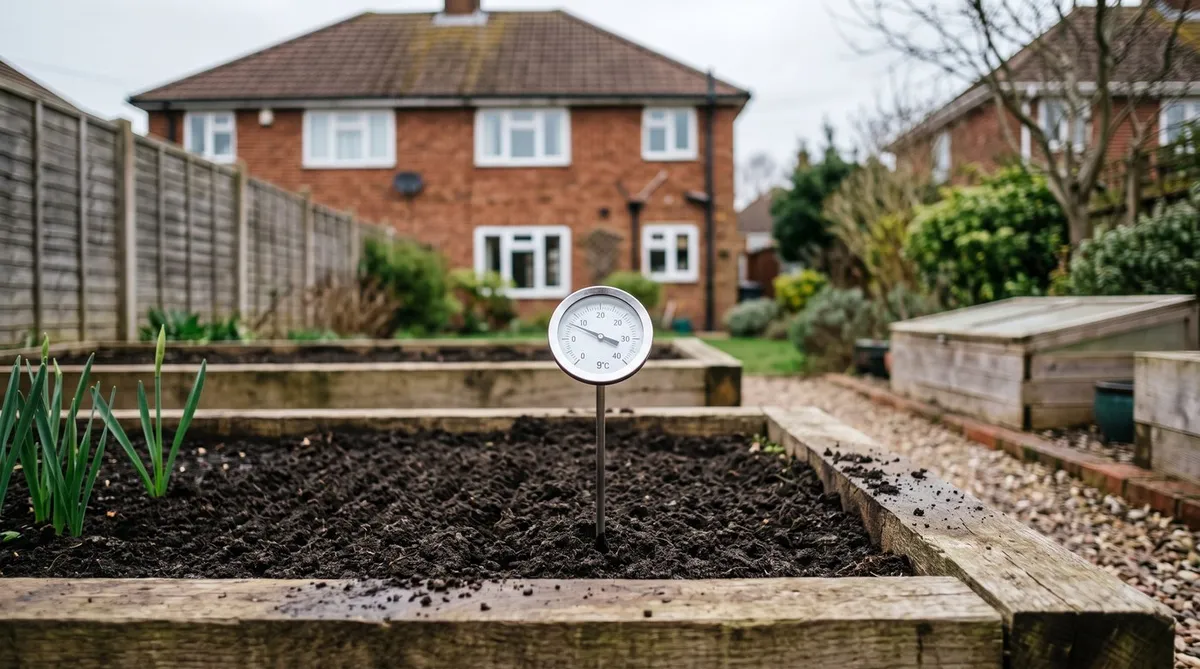
Wet soil is also easily damaged. Treading or digging squashes out the air, and the bed can drain badly for months afterwards. Before you work a bed, pick up a handful. If it smears like plasticine, keep off. If it crumbles, you’re fine. Put down a plank to spread your weight if you have to step on a bed.
That leaves plenty to do above ground: pruning, planting dormant plants, and jobs in the shed and greenhouse.
Winter pruning apples and pears
Apples and pears are the main January job. They’re dormant from leaf fall until the buds break in spring, which makes it the right time to prune.
Work in three steps:
- Cut out anything dead, diseased or damaged, back to healthy wood.
- Remove branches that cross or rub, and any growing into the centre.
- Thin the crown so light and air reach every branch.
Don’t take off more than about a fifth of the tree in one winter. Harder pruning triggers a mass of upright shoots the next summer. Cut just outside the slight swelling where a branch joins another (the branch collar), not flush. For a neglected tree, spread the work over several winters.
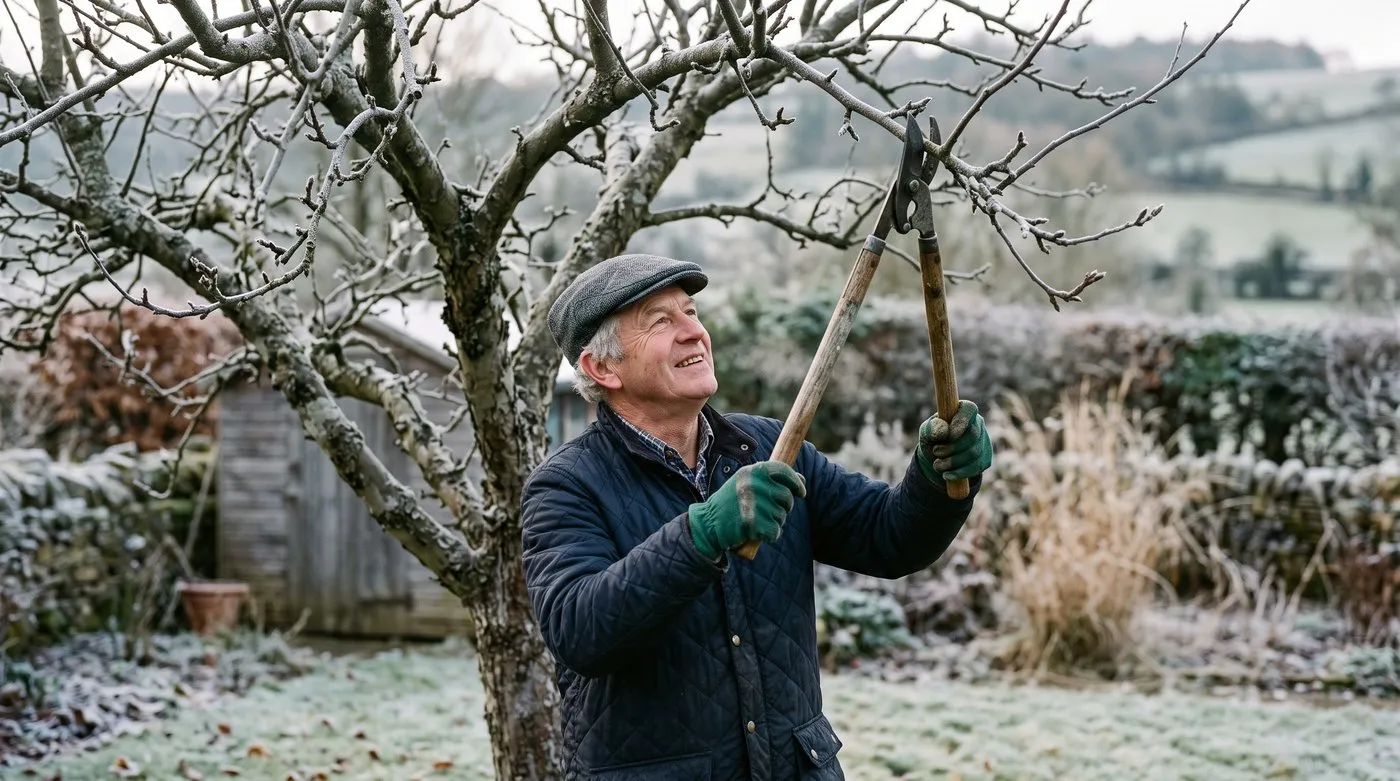
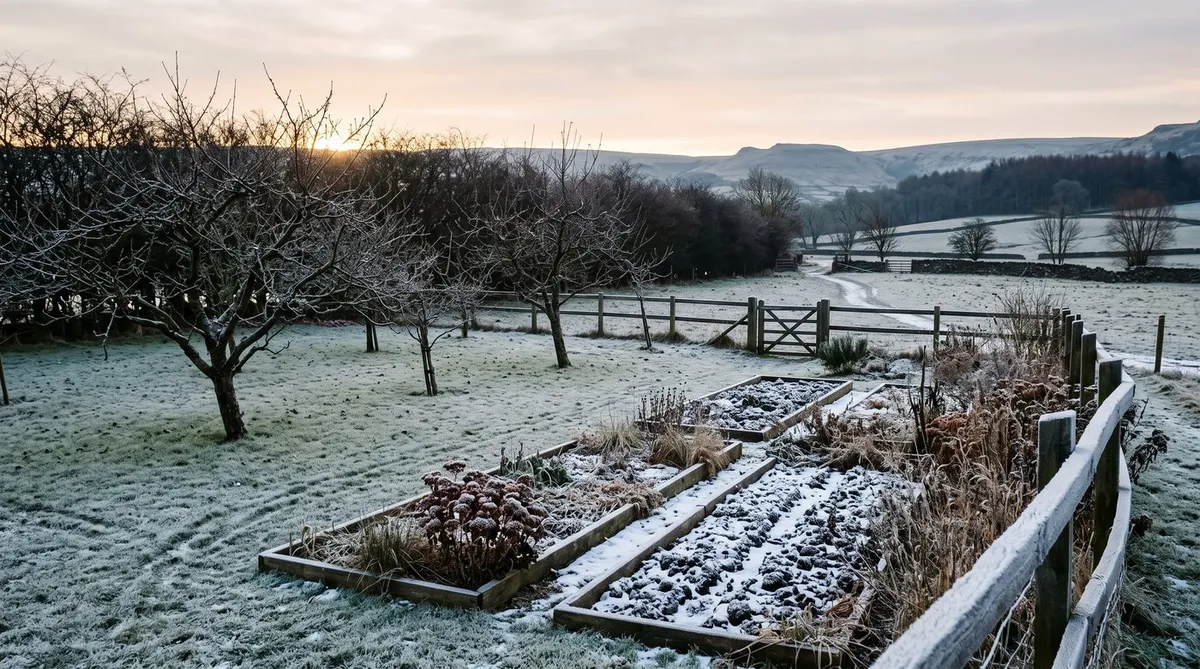
A frosty January morning is perfect for pruning apples. The bare branches make it easy to see what needs to go.
What not to prune in January
Knowing what to leave is just as useful. Three groups should wait.
Plums, cherries and other stone fruit. Gages, damsons, apricots and peaches too. Winter cuts let in silver leaf, a fungal disease that spreads in damp weather. Prune these in summer, on a dry day.
Spring-flowering shrubs. Forsythia, flowering currant, philadelphus and weigela flower on last year’s growth. Prune them now and you cut off the flowers. Prune just after flowering instead.
Evergreens and slightly tender shrubs. Cutting hebe, choisya, pittosporum or bay now exposes soft growth to frost. Wait until spring. Leave the old flower heads on hydrangeas too, as they help shelter the buds below.
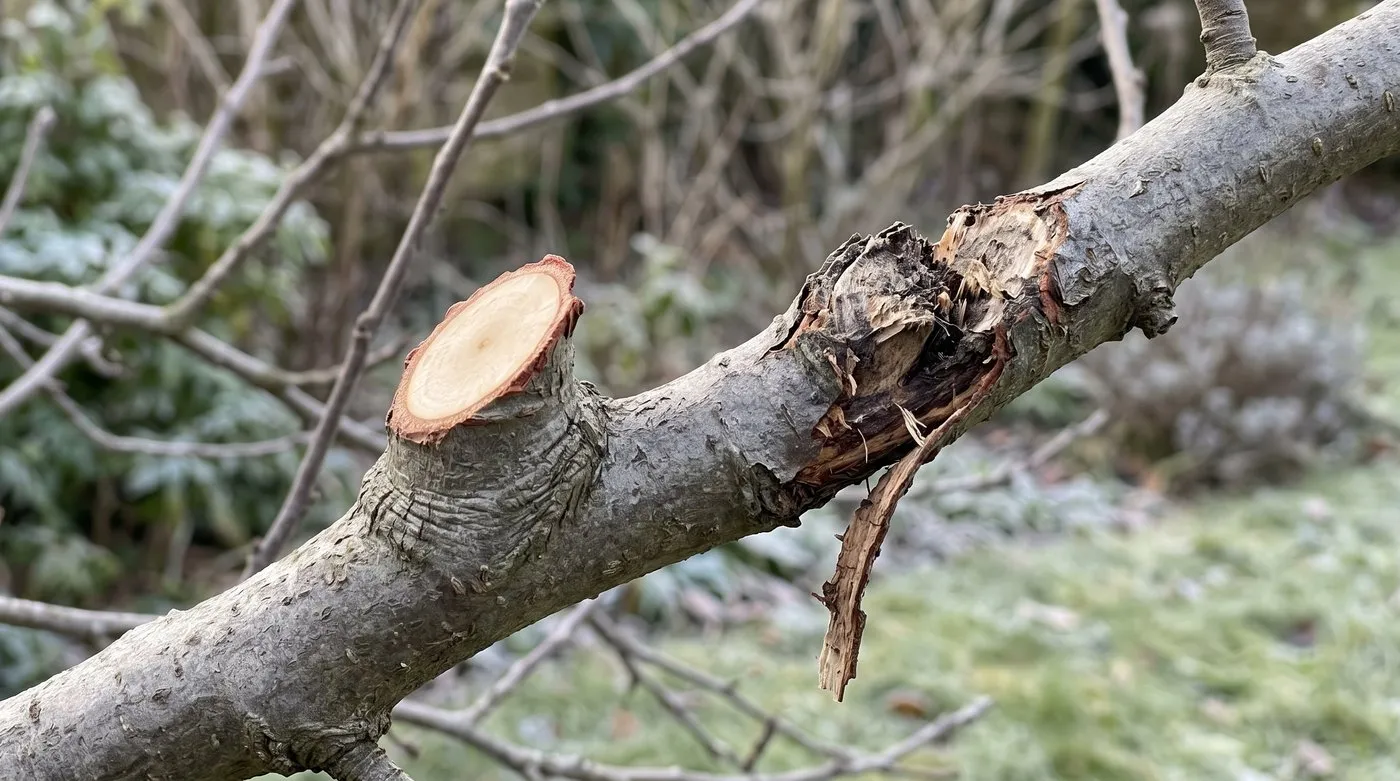
A clean cut (left) heals well. A torn, ragged stub (right) is slow to heal and lets disease in. Sharp tools make all the difference.
How to prune wisteria in winter
Wisteria gets its second cut of the year in January or February. It’s the job that makes the biggest difference to flowering. Finish by the end of February, before the buds swell.
In summer you shortened the long whippy shoots to about five or six leaves. Now cut those same shoots back further, to two or three fat buds from the main framework.
You can tell the buds apart. Flower buds are round and plump. Leaf buds are slimmer and flatter. Cutting back keeps the flower buds close to the framework, where they get plenty of light. Miss a year and you’ll get a tangle of long shoots and fewer flowers. Our wisteria pruning guide walks through both cuts.
Planting bare-root trees, hedges and roses
January is in the middle of the bare-root season, which runs from about November to March. Bare-root plants are dug up while dormant and sold without soil or a pot. They’re the cheapest way to buy trees, hedging, roses and fruit bushes, and they settle in well.
Plant when the ground is neither frozen nor waterlogged. If a cold snap arrives with your delivery, heel them in. Lay the plants in a shallow trench, cover the roots with soil or compost and keep them damp. They’ll be fine for a few weeks until you can plant properly.
When you plant, set trees at the depth they grew in the nursery. Don’t add compost or fertiliser to the planting hole, just firm the soil back around the roots. Plant roses with the graft union (the knobbly bit where stems join the root) at soil level. Our bare-root tree planting guide covers staking and aftercare.
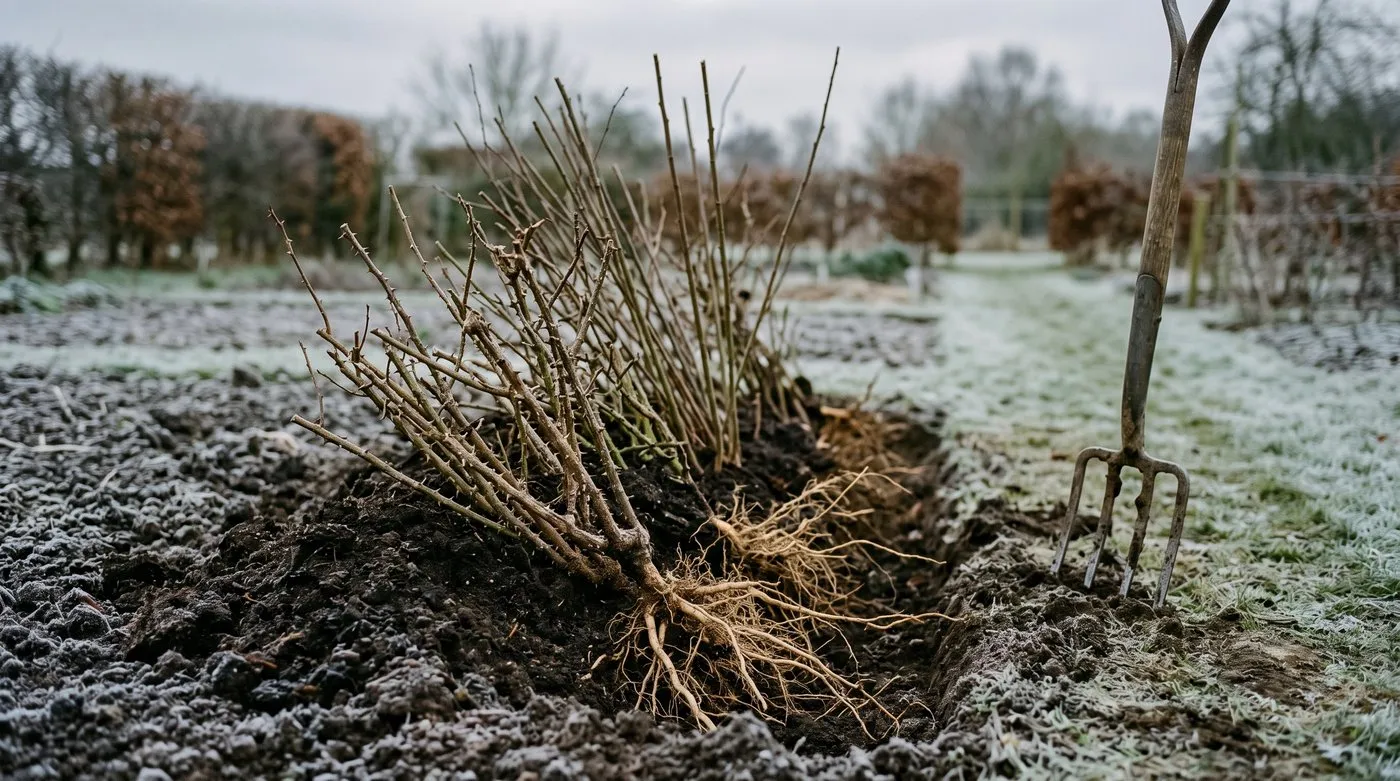
Heeling in keeps bare-root plants happy until the ground thaws. Just keep the roots covered and damp.
Roses in January: plant now, prune later
Bare-root roses can go in any time the ground allows. The main prune comes later, from late winter in the south to early spring in the north and Scotland.
The one rose job for January is a wind-rock trim. Shorten very tall stems on bush roses by about a third. This stops them rocking in winter gales and loosening the roots. It isn’t the main prune, just a tidy to keep them steady.
Forcing rhubarb for an early crop
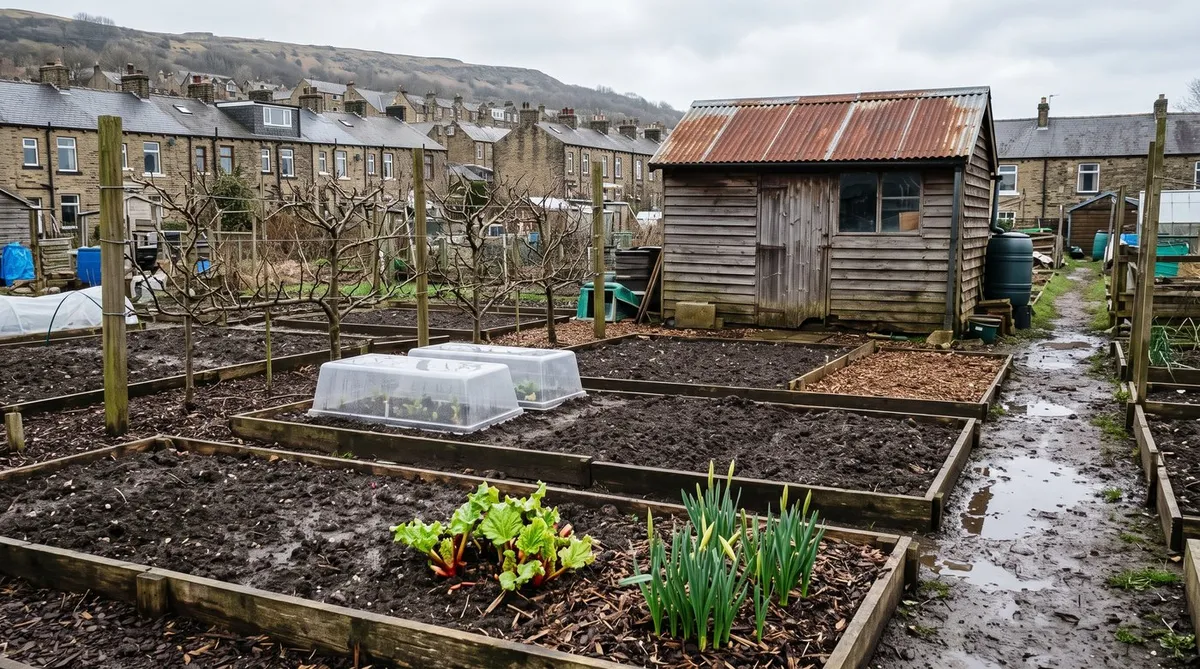
Forcing rhubarb is one of the few January jobs that gives you food early. Cover an established crown with a lightproof forcer. A terracotta forcer looks lovely, but an upturned bucket or dustbin works just as well.
In the dark, the plant sends up long, pale pink stems that are sweeter and more tender than normal. They’re ready to pull several weeks earlier than uncovered plants.
- Only force crowns that are well established, usually three years old or more.
- Pack straw around the forcer for a little extra warmth.
- Don’t force the same crown again next year. Let it recover for a couple of seasons.
Remember that rhubarb leaves are poisonous, so only eat the stems. Our rhubarb growing guide covers crown care and picking.
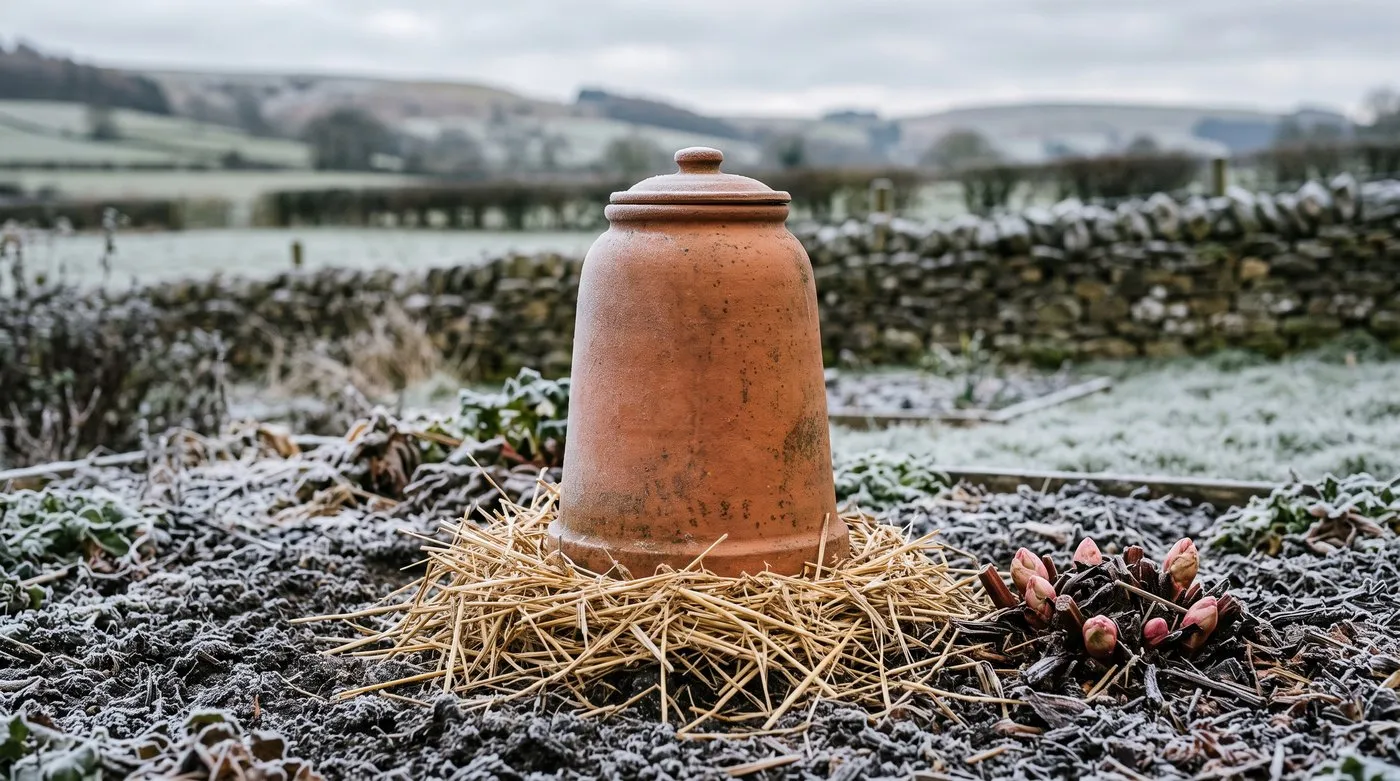
A forcer keeps out the light, so the crown sends up sweet, pale stems weeks ahead of the rest.
Why January is too early to chit potatoes
Chitting means standing seed potatoes, eyes up, in a cool, bright place so they grow short shoots before planting. It takes about four to six weeks.
Most first early potatoes go out from March in the south and April further north. Start chitting in January and the shoots get long, pale and break off by planting time. Begin in early February in the south and late February in the north. Our February garden jobs cover chitting in detail.
Ordering seeds and planning the year
January is the month to order seed and make a plan, while you have the time. Popular varieties can sell out later on.
Plan around sowing dates rather than a wish list. Write down each crop with three things: when to sow, when to plant out and when to harvest. This shows up two common mistakes. One is sowing everything in one weekend. The other is sowing too much of one thing at once, so it all needs picking in the same week.
Check old packets too. Parsnip seed doesn’t keep well, so buy it fresh each year. Many other seeds, such as beans and squash, keep for a few years in a cool, dry tin.
Greenhouse and cold frame checks
Use January to check your greenhouse while it’s quiet.
- Glass: replace cracked or slipped panes and check the glazing clips.
- Gutters: clear leaves so rain doesn’t pour down the sides.
- Doors and vents: make sure they close properly.
- Cleaning: wash the glass inside and out to let in as much winter light as possible.
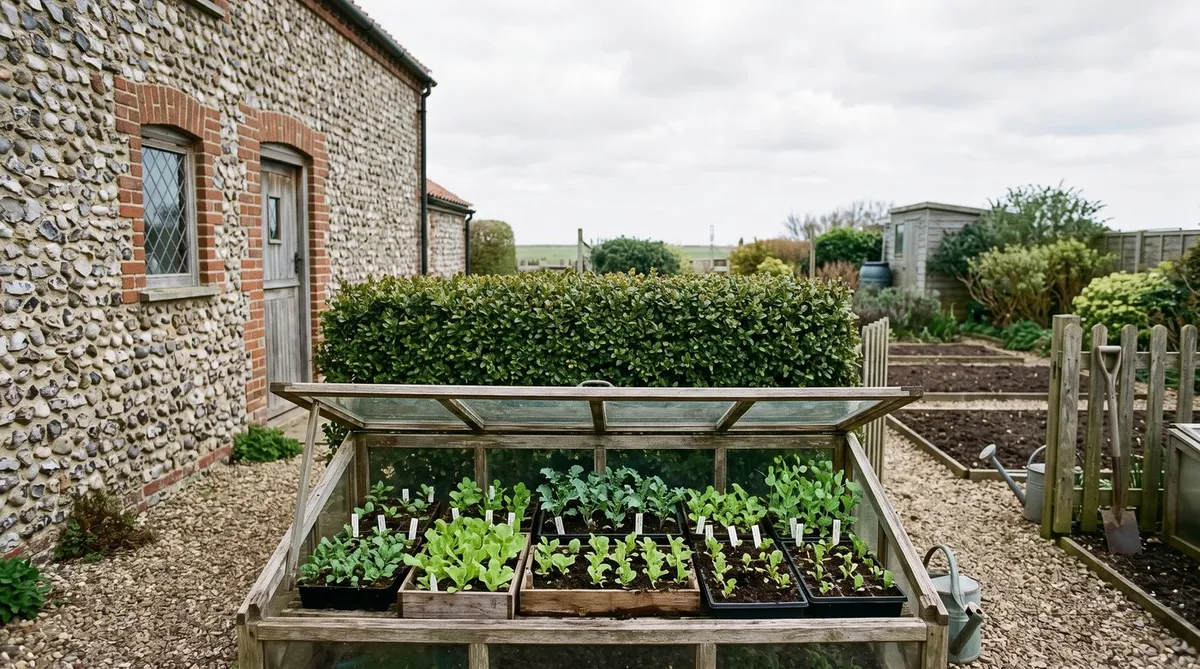
Open a vent for a couple of hours on mild, dry days. Still, damp air causes grey mould on overwintering plants. Keep pelargoniums and fuchsias barely moist, as wet compost in cold weather rots the roots.
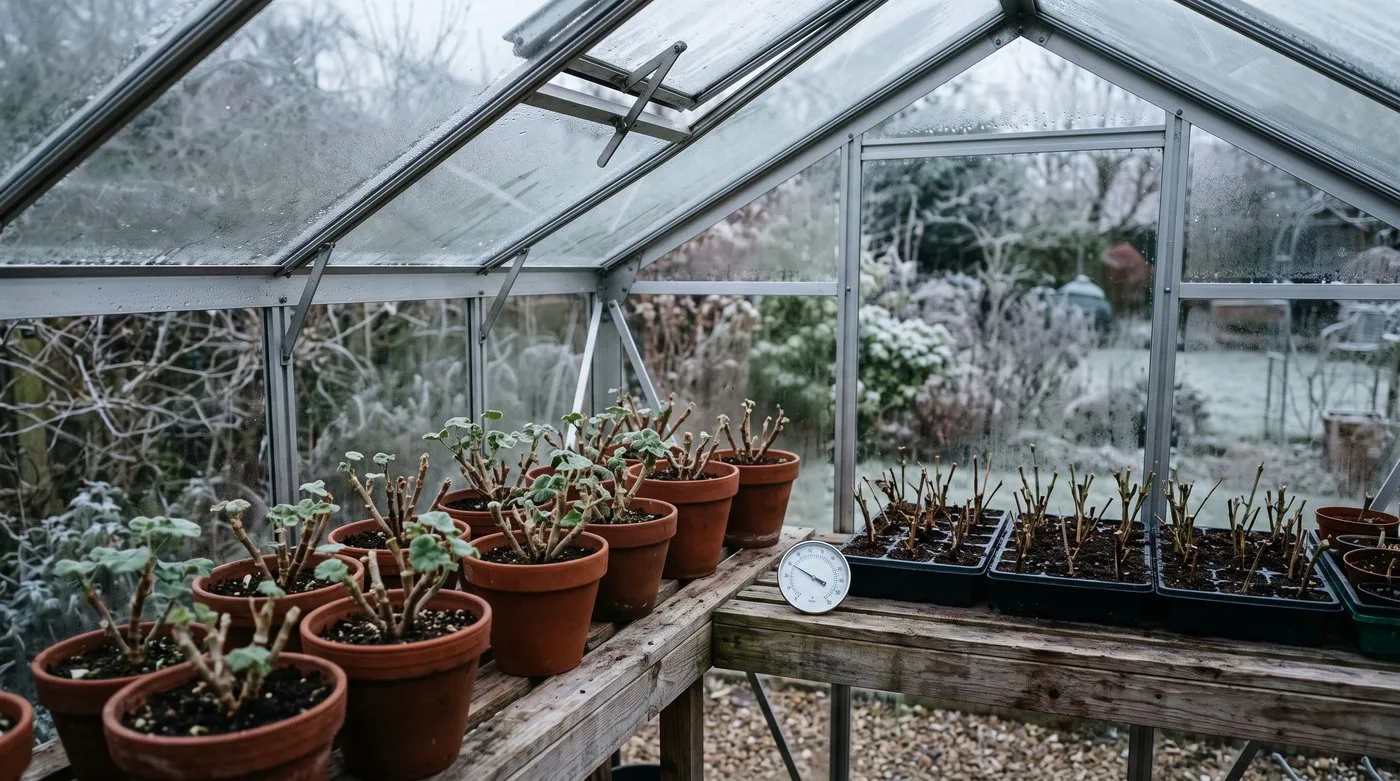
An open vent on a mild afternoon and barely damp compost keep overwintering plants healthy without any heating.
Cleaning and sharpening your tools
Wet January days are perfect for shed jobs.
- Scrape off soil and dried sap.
- Rub rust off with wire wool.
- Sharpen the cutting edges.
- Wipe metal with a little oil, and oil wooden handles.
Sharp secateurs make clean cuts that heal well. Our guide on how to sharpen garden tools shows how, tool by tool.
Checking tree ties, stakes and storm damage
Winter gales can loosen trees and structures, so take a walk round and look up.
Tree ties should be firm but not tight. A tie that has cut into the bark can damage the trunk, so loosen or replace it. Newly planted trees sometimes rock and open a hole around the base. Firm the soil back with your heel.
Check fences, arches and trellis too, especially under heavy climbers. Take stakes off young trees once they’re well established, usually after a couple of years. A tree that’s never allowed to flex builds a weaker trunk.
Protecting pots from frost and wet
Pots suffer more than beds in winter. Water in the compost freezes and expands, which can damage roots and crack pots.
- Raise pots on pot feet or bricks so water drains away. A pot sitting in a saucer of water is a common winter killer.
- Wrap the pots in hessian, bubble wrap or fleece to protect the roots.
- Group pots together against a house wall, where it’s a little warmer.
Ordinary terracotta can crack when wet compost freezes, so choose frost-resistant pots for plants that stay out. Move tender plants such as citrus into a frost-free porch or greenhouse. Stop feeding pot plants until spring.

Lifting pots onto feet so they drain matters more than the wrapping. The dog is keeping a close eye on things.
Helping garden birds in January
Winter is hard for garden birds. Natural food is scarce and the nights are long.
Put out high-energy food such as sunflower hearts, fat balls and peanuts. Peanuts go in a mesh feeder, never loose, as whole nuts can choke chicks later in the year. Avoid fat balls in plastic mesh bags, which can trap feet.
Fresh water matters just as much. Break the ice on bird baths every morning, or top up with warm water. Never add salt or antifreeze.
Clean feeders and baths regularly. Dirty feeders spread diseases such as trichomonosis, which has hit greenfinches hard. The BTO garden bird advice has more, and our seasonal bird feeding guide covers what to put out through the year.
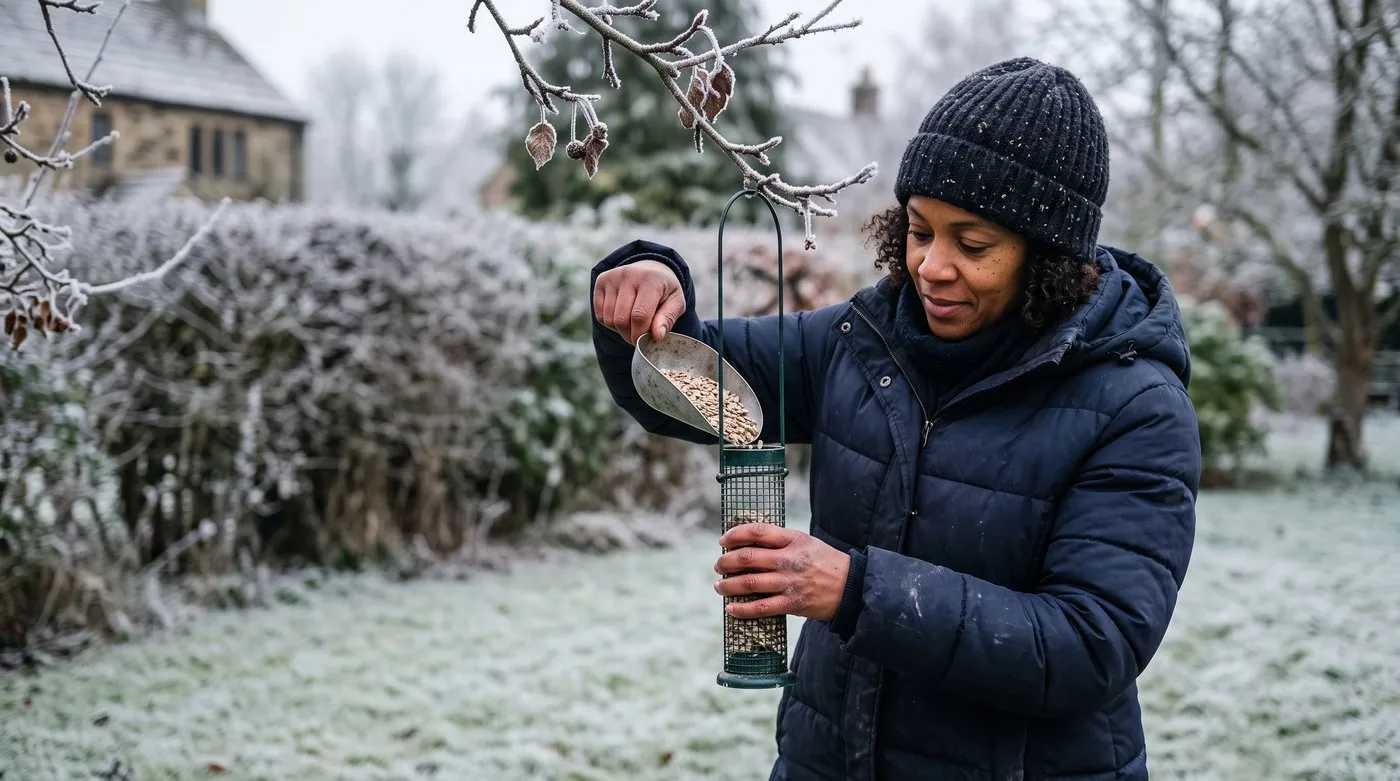
A full feeder makes a real difference on a frosty morning. Give feeders a proper clean, not just a top-up.
Dealing with snow on hedges and shrubs
Heavy snow can bend and split branches. Brush it off conifer hedges, upright evergreens and greenhouse roofs while it’s still fresh and light. Push upwards from underneath with a soft broom, as frozen branches snap easily.
Leave snow lying on beds and lawns. It actually insulates the soil. Don’t use salt near beds or lawns, as it damages soil and roots.
January week by week
| Week | Focus | Jobs |
|---|---|---|
| Week 1 | Plan | Order seeds, make a sowing plan, check old seed packets |
| Week 2 | Prune | Start on apples and pears. Begin the wisteria winter cut. Wind-rock trim roses |
| Week 3 | Plant and force | Plant bare-root stock if the ground allows. Put rhubarb forcers on. Heel in late deliveries |
| Week 4 | Tidy and check | Clean the greenhouse. Sharpen tools. Check tree ties and stakes. Order seed potatoes |
| All month | Wildlife | Feed birds, break ice on water, clean feeders |
| All month | Avoid | Digging wet soil, sowing outdoors, pruning plums and cherries, chitting potatoes |
Common January mistakes
- Digging wet ground. It squashes the soil and leaves it poorly drained for months. Wait until a handful crumbles.
- Pruning plums and cherries with the apples. Winter cuts let in silver leaf. Prune stone fruit in summer.
- Chitting potatoes too early. You’ll get long, brittle shoots. Start in February.
- Sowing outdoors in a mild spell. The soil is still cold and the seed rots.
- Leaving pots in saucers. Water sits and freezes around the roots. Empty saucers and raise the pots.
Frequently asked questions
What should I do in the garden in January in the UK?
Prune apples and pears, plant bare-root stock and force rhubarb. It’s also a good month to sharpen tools, check the greenhouse and order seed. Outdoor sowing is best left, as the soil is too cold for most seeds.
Is it too cold to dig the garden in January?
Usually, yes, as the soil is too cold and wet. Digging or walking on wet soil squashes it and spoils its structure for months. Wait for a dry spell when a handful crumbles rather than smears. Work from a plank if you must get on a bed.
Can I prune fruit trees in January?
Yes, prune apples and pears in January while they’re dormant. Finish before the buds start to break in spring. Don’t prune plums, cherries, gages or apricots now. Winter cuts let in silver leaf disease, so prune those in summer.
Should I chit potatoes in January?
No, January is too early for most of the UK. Chitting takes about four to six weeks. Start in early February in the south and later in February further north, ready for spring planting.
When should I prune wisteria in winter?
Prune wisteria in January or February. Cut the side shoots you shortened in summer back to two or three fat buds. That keeps the flower buds close to the main framework, where they flower best.
Is January a good time to plant bare-root roses and trees?
Yes, as long as the ground isn’t frozen or waterlogged. Bare-root plants are dormant from about November to March. They’re cheaper than potted plants and settle in well. If the ground is frozen when they arrive, heel them in until it thaws.
What should I feed birds in January?
High-energy foods such as sunflower hearts, fat balls and peanuts. Put peanuts in a mesh feeder, never loose. Keep fresh water out and break the ice each morning. Clean feeders and baths regularly to stop disease spreading.
Once January’s jobs are done, check what can go in the ground with our guide to what to plant in January, or browse more how-to guides.
Our team produces practical UK gardening guidance from source research, contributor records and established horticultural practice. Editorial standards are overseen by Matt W.