Key takeaways
- Herb Robert is a native geranium with pink flowers, ferny red-tinged leaves and a strong smell
- It's an annual or biennial that spreads by flinging seed from its pods
- Pull young rosettes in autumn or early spring, before any flowers or pods appear
- The roots are shallow, so plants lift easily by hand
- Mulch bare soil and keep pulling for a few years to run down the seed in the soil
- Bees and hoverflies visit the flowers, so a small contained patch is fine to keep
Herb Robert is easy to pull and easy to love, but it self-seeds like mad. Herb Robert (Geranium robertianum) is a native geranium with small pink flowers, lacy red-tinged leaves and a strong smell when crushed. Pull it as a small rosette in autumn or spring, before it can flick out its seeds. If you like it, keep a small patch in a wild corner and pull it from everywhere else.
This guide shows you how to identify it, when to pull it and how to stop it coming back. It works much like another seed-flinging weed, hairy bittercress: catch it before it seeds and the job gets smaller each year.
How to identify herb Robert
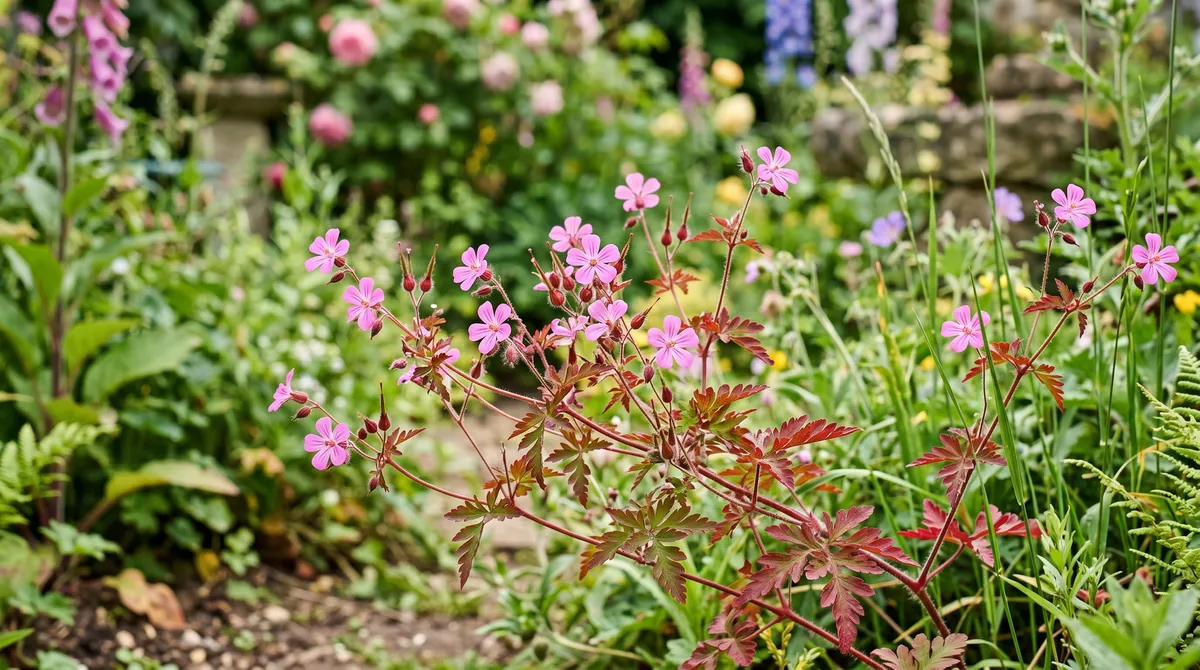
Look for pink flowers, ferny red-tinged leaves and a strong smell. Each leaf is deeply divided into lacy segments. The stems are often bright red, and the whole plant can blush red in sun or cool weather.
The flowers are small, pink and five-petalled, often with pale stripes. They appear from spring to autumn. After flowering, each one forms a long, pointed seed pod shaped like a bird’s beak, which is where cranesbills get their name.
The surest test is the smell. Crush a leaf and it gives off a strong, slightly unpleasant scent, which is why one old name is “stinking Bob”.
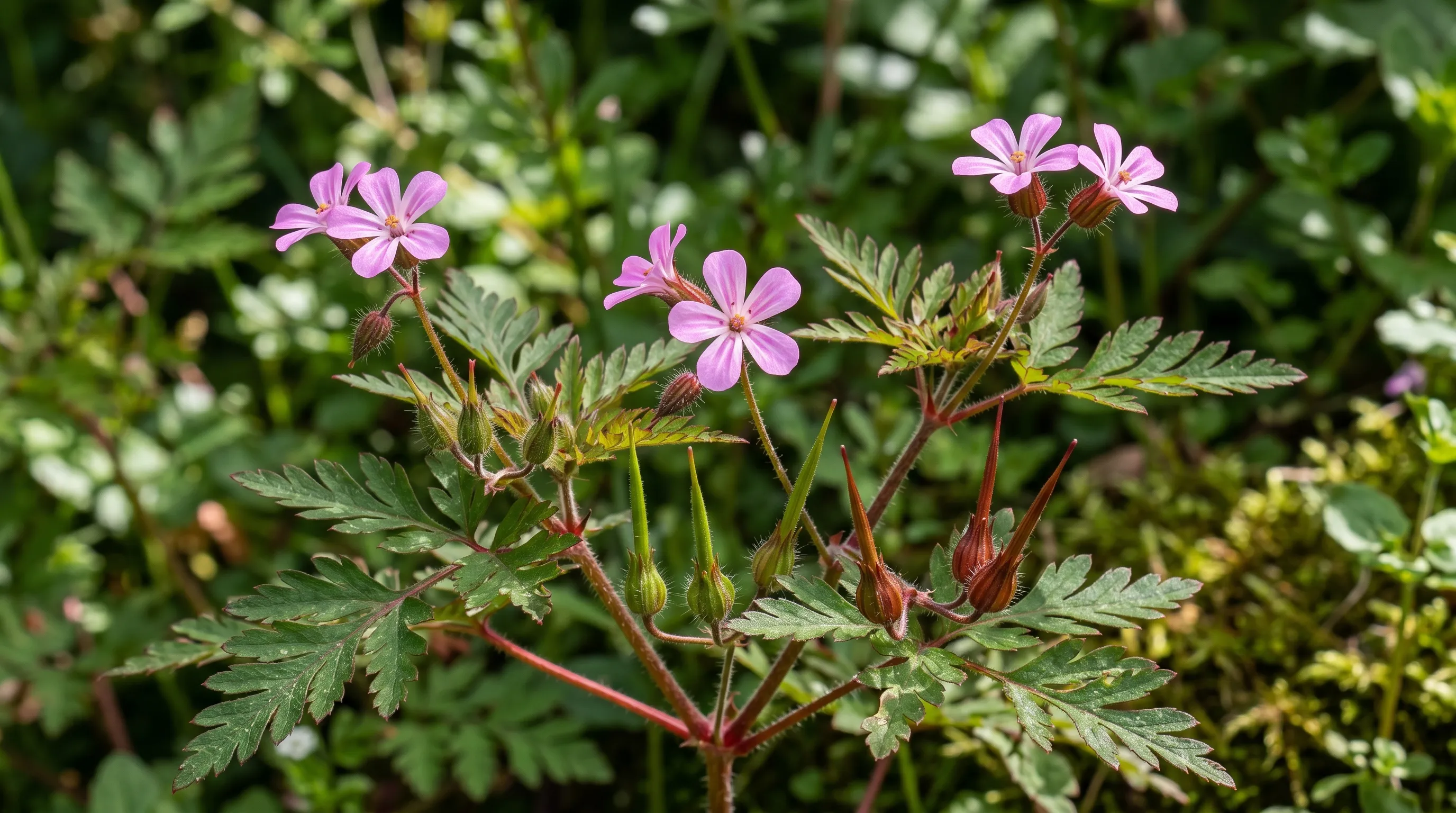
Ferny leaves, red stems and little pink flowers. Those pointed “beaks” are the seed pods that fling the seeds.
A few other small wild geraniums look similar. Here’s how to tell them apart:
| Plant | How it differs from herb Robert |
|---|---|
| Cut-leaved cranesbill | Leaves cut into narrow fingers, smaller purplish-pink flowers |
| Dove’s-foot cranesbill | Soft, hairy, rounded leaves with shallow lobes |
| Shining cranesbill | Glossy, rounded leaves |
All of them come out the same way, so don’t worry too much about which you have. The visual guide to common garden weeds helps with other seedlings that turn up alongside it.
Why herb Robert spreads so well
It flings its seed. When a pod ripens, it splits suddenly and the seeds are thrown several metres. Brushing past a ripe plant can set the pods off.
It’s an annual or biennial, so each plant lives for a year or so, then dies. Seeds sprout mostly in autumn and spring. It loves shady spots: hedge bottoms, walls, the base of fences and under shrubs. Once a few plants seed in a border, the next year you’ll find dozens.
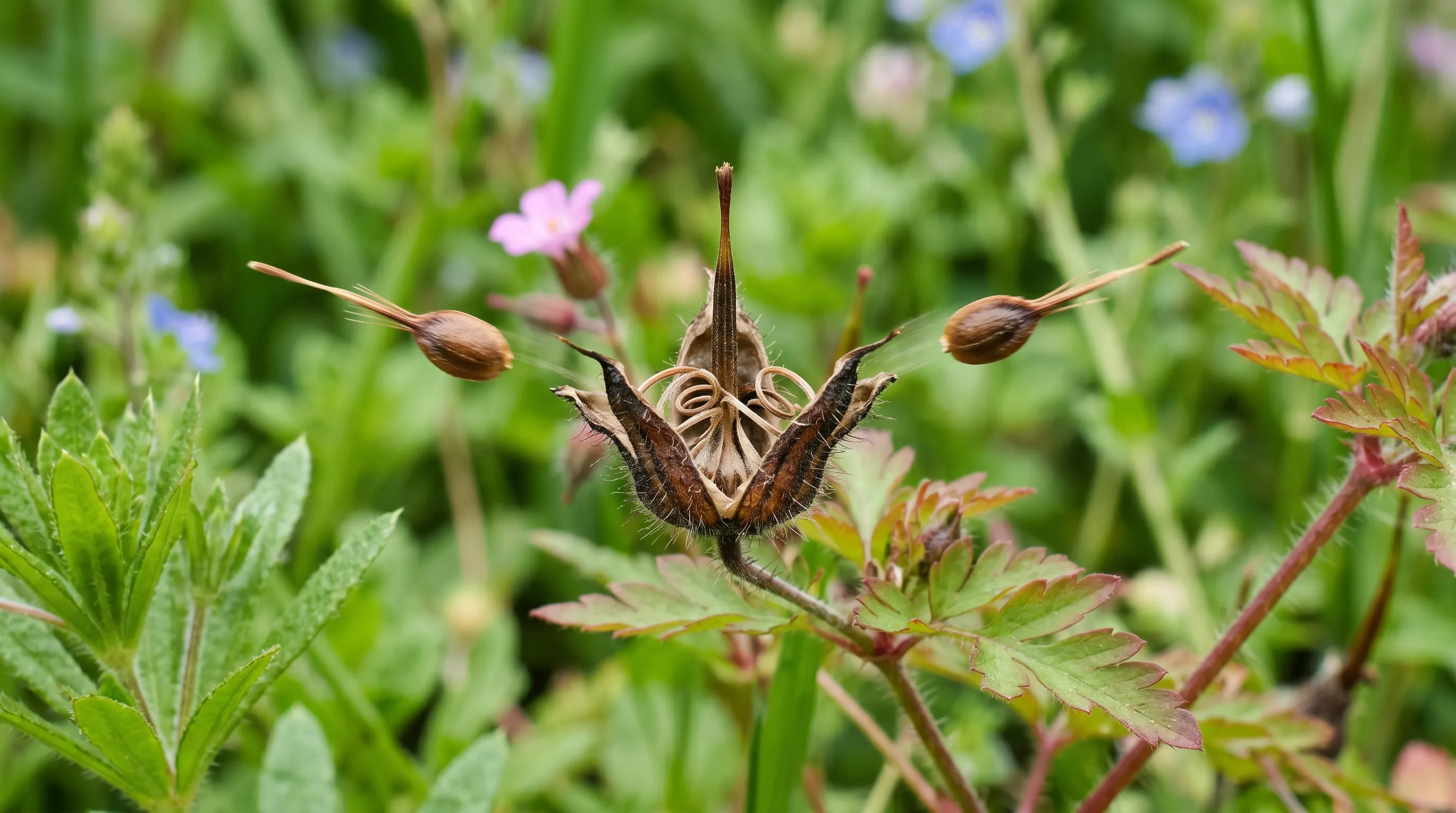
When the pod splits, the curled sections flick the seeds out. Catch plants before they get to this stage.
When and how to pull herb Robert
Pull it as a small rosette in autumn or early spring. It has no seed pods then, and the shallow roots lift easily. October to November and March to April are the easiest windows.
- Look for small rosettes of red-tinged, ferny leaves. Sniff a crushed leaf if you’re unsure.
- Hold the plant at the base and pull gently. Use a hand fork in hard or dry soil.
- Shake off the soil and drop the plant into a bucket.
- Work across the bed, checking under shrubs and along fences.
Young plants with no flowers can go on the compost heap. Plants that already have seed pods are better in the green waste bin, as a cool heap may not kill the seeds.
Be gentle in late spring and summer. If you must pull plants with pods, cup them with your hand and lift them straight into a bag. That keeps most seed from scattering. A hoe also works well on seedlings in open soil, and the guide to hoeing borders covers the technique.
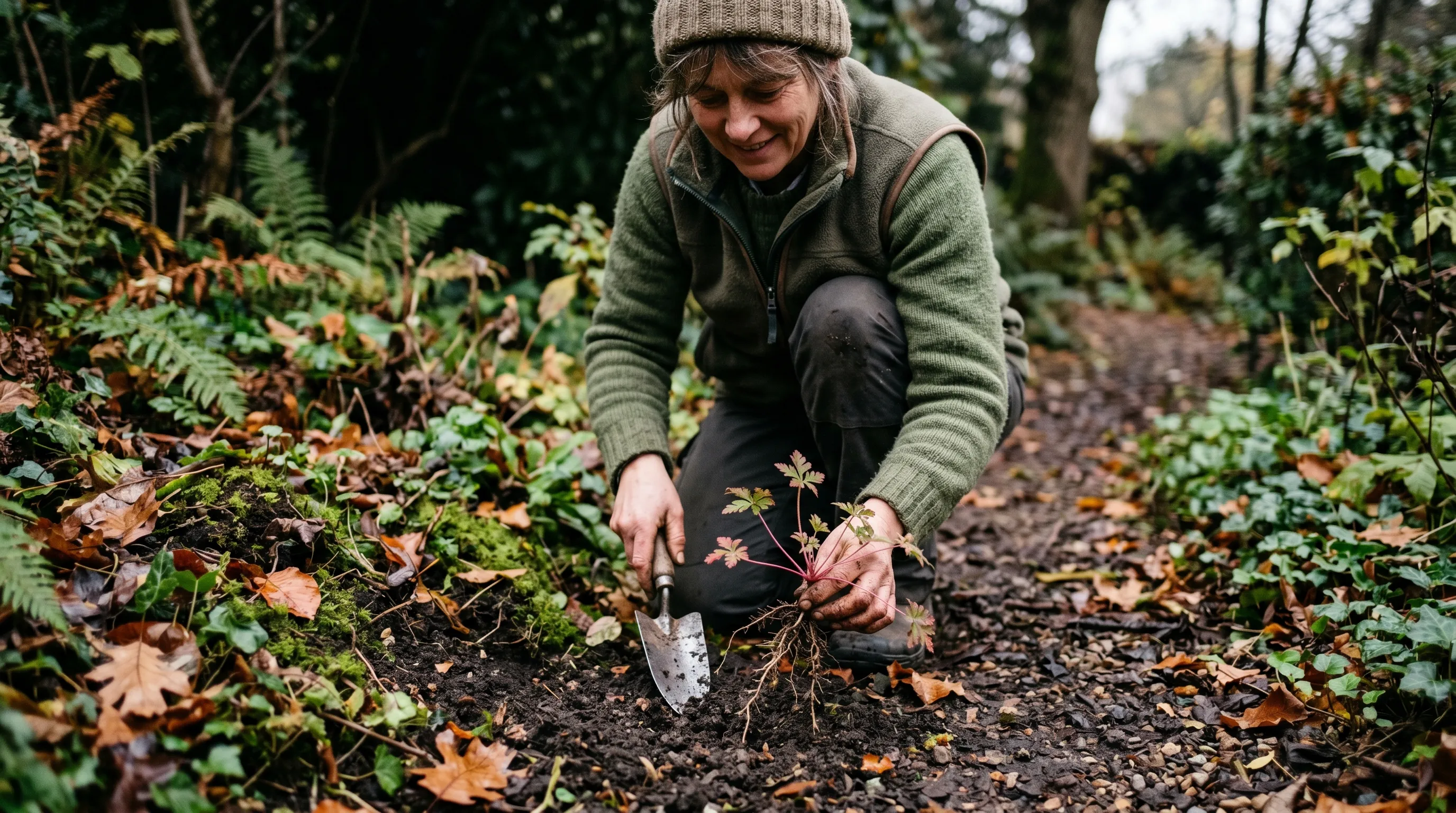
Autumn is the easiest time. Young plants lift out cleanly with a trowel, long before they can set seed.
How to stop herb Robert coming back
Mulch bare soil and keep pulling for a few years. Seeds already in the soil will keep sprouting for a while. Each year you stop new plants seeding, there’s less to deal with.
A 5-8cm layer of bark, leaf mould or garden compost on bare soil in early autumn smothers many seedlings. Top it up as it thins. For bigger areas, cardboard topped with grass clippings works well, as the guide to cardboard and grass mulch explains.
Filling gaps with plants you do want helps too. Herb Robert loves bare, shady ground, so cover it with shade-tolerant ground cover. If you like the look of herb Robert, many hardy garden geraniums give a similar feel without the seeding.
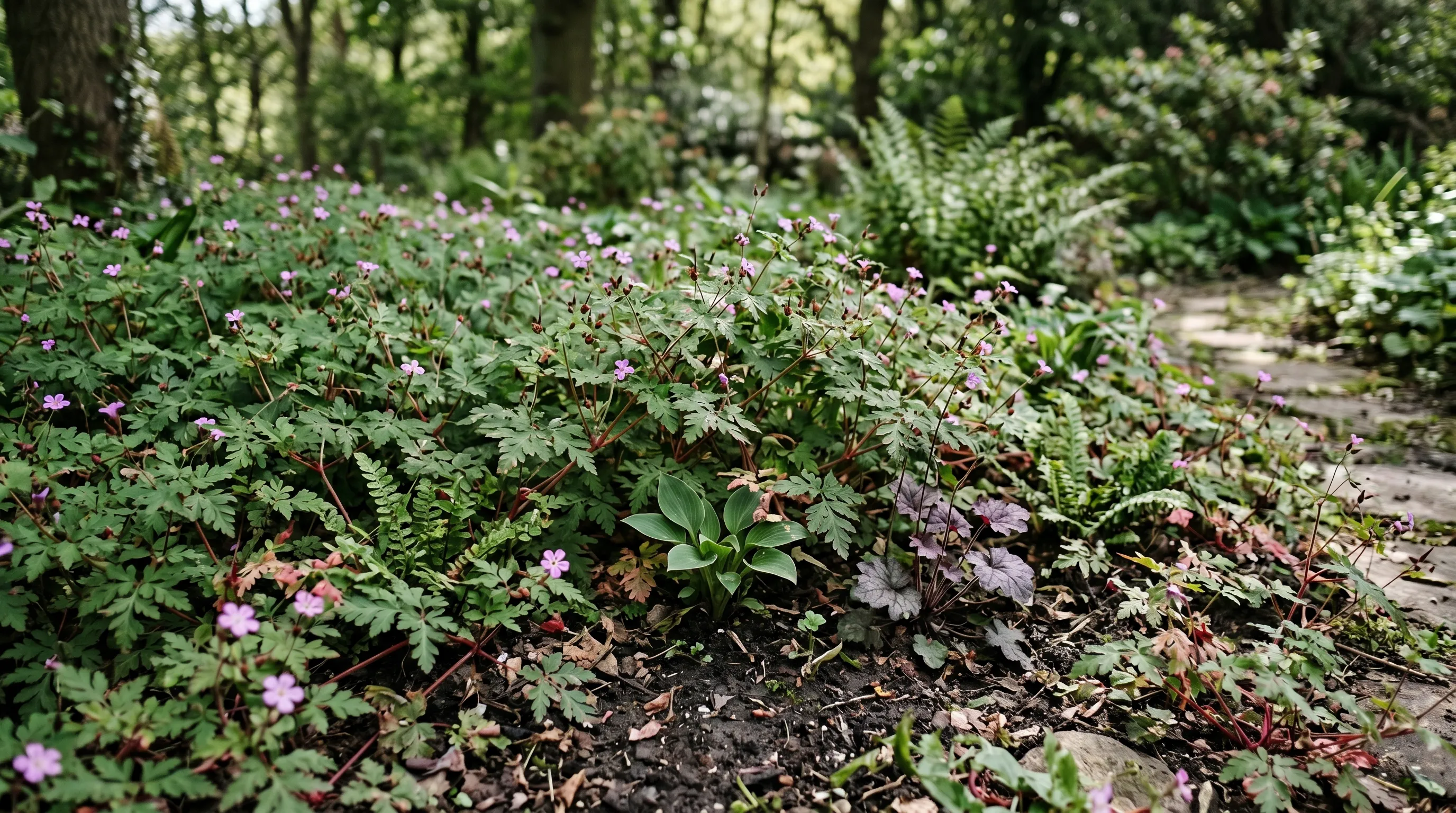
Left alone for a couple of years, a few plants can carpet a whole shady border like this.
Keeping a small patch for wildlife
Herb Robert is a native wildflower, and bees and hoverflies visit its flowers. You don’t have to remove every plant. Many wildlife gardeners keep a small patch in a wild corner.
Choose a spot away from your best borders, such as along a hedge or in a log-pile corner. Pull any plants that pop up elsewhere, ideally as rosettes in autumn. If seedlings are escaping, trim the patch back after the first flush of flowers, before most pods ripen. The guide to creating a wildlife garden has more ideas for wild corners.
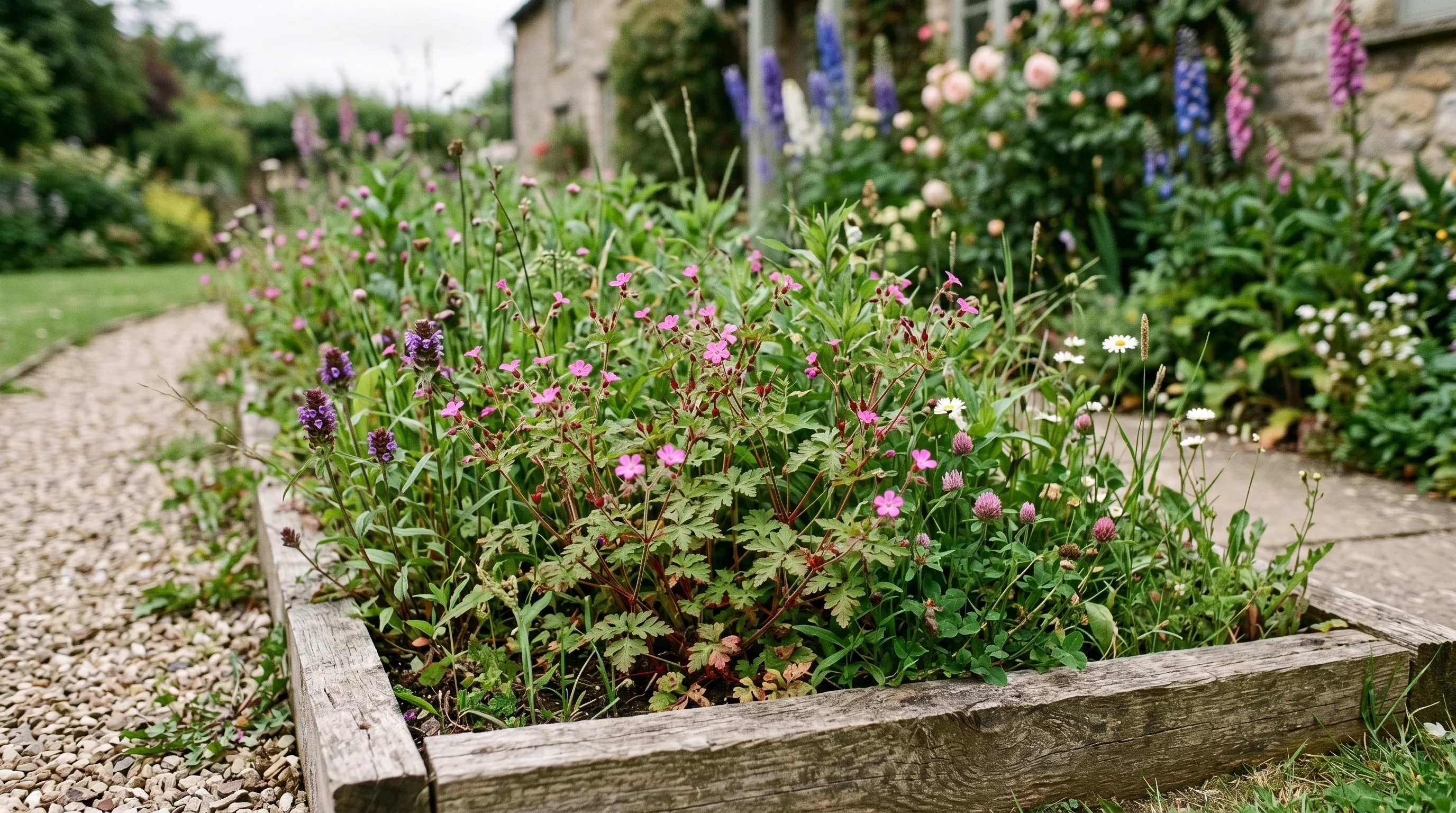
A contained wild patch like this gives the bees their flowers. Just pull the escapees from the rest of the garden.
Month-by-month herb Robert calendar
| Month | What to do |
|---|---|
| January to February | Pull any overwintering rosettes on mild days |
| March to April | Main spring pulling window, before flowers appear |
| May to June | Flowering starts. Lift plants gently into a bag |
| July to August | Pods ripening. Bag plants rather than pulling roughly |
| September | Mulch bare soil. New seedlings start to appear |
| October to November | Main autumn pulling window for rosettes |
| December | Last pulls before hard frost |
Common mistakes with herb Robert
- Waiting until it’s in full flower. By then, pods are forming. Pull rosettes in autumn and spring instead.
- Yanking out plants with ripe pods. That sets them off. Cup the plant and lift it into a bag.
- Composting seeding plants. Seeds can survive a cool heap. Bin plants with pods.
- Leaving bare, shady soil. That’s exactly where herb Robert moves in. Mulch it or plant it up.
- Giving up after one year. Seeds in the soil keep coming for a while. Keep going and it gets easier each year.
Frequently asked questions
How do I identify herb Robert in the UK?
Look for small pink five-petalled flowers and ferny, red-tinged leaves. The stems are often red and a bit hairy. Crush a leaf and it gives off a strong, slightly unpleasant smell, which is the clincher.
Is herb Robert a wildflower or a weed?
It’s both, depending on where it grows. It’s a native wildflower that bees and hoverflies visit. In a tidy border or veg bed it self-seeds so freely that most gardeners treat it as a weed.
When should I pull herb Robert?
Pull it as a small rosette in autumn or early spring. At that stage there are no seed pods to scatter. Once pods form in late spring and summer, lift plants gently straight into a bag.
How far do herb Robert seeds travel?
Ripe pods can fling seed several metres. The pods split suddenly when ripe or touched, flicking the seeds out. That’s why one plant can seed a whole bed within a couple of years.
Does herb Robert have any benefits?
Yes, its flowers feed bees and hoverflies. It also covers bare shady ground where little else grows. A small patch in a wild corner is a nice compromise if you like it.
Should I compost herb Robert?
Compost young plants with no flowers or pods. Plants carrying seed pods are better in the green waste bin, as the seeds can survive a cool compost heap.
Browse more weed fixes in the garden problems hub. Once your borders are clear, read our guide to preventing weeds without chemicals to keep them that way.
Our team produces practical UK gardening guidance from source research, contributor records and established horticultural practice. Editorial standards are overseen by Matt W.