Key takeaways
- Cross two hardy fuchsias if you want a new plant that survives UK winters outdoors
- Remove all eight stamens from the seed parent before its flower opens
- Dab pollen on once the stigma looks shiny and sticky, then bag and label the flower
- Pick the berry when it's soft and dark, and clean the seed well
- Sow in spring at about 18-20°C and expect patchy, slow germination
- Grow seedlings for two or three years before you decide which one to keep
Hybridising fuchsias means crossing two plants on purpose to grow something new. You take pollen from one fuchsia, put it on the flower of another, then sow the seed. It’s fiddly but fun, and every seedling is a little surprise.
This guide walks you through a home cross from start to finish. It’s aimed at anyone who already grows fuchsias and fancies breeding their own. For everyday care of the plants themselves, see our guide on how to grow fuchsias.
What you need to know about the fuchsia flower
A fuchsia flower has both male and female parts, so it can pollinate itself. Your job is to stop that and choose the father yourself.
Look closely at an open bloom. The flared outer parts are the sepals. The inner skirt of petals is the corolla. Hanging from the middle are eight stamens, each tipped with a pollen-bearing anther. The single long style in the centre ends in the stigma, the sticky tip that receives pollen.
Because the anthers and stigma hang close together, fuchsias often fertilise themselves. Everything in this method is about controlling which pollen reaches the stigma.

The long central style ends in the stigma. The shorter stamens around it carry the pollen you need to control.
Choosing parent plants for a hardy cross
Pick two healthy fuchsias you like, and make both of them hardy if you want a new plant for the garden. A hardy fuchsia crossed with a tender one often gives seedlings that won’t survive a cold winter outdoors.
Well-known hardy fuchsias include ‘Mrs Popple’, ‘Hawkshead’ (white flowers), ‘Genii’ (golden leaves) and forms of Fuchsia magellanica. Choose parents that each bring something you want, such as flower colour, compact habit or leaf colour.
- Seed parent (mother): the plant that will carry the berry. Pick one that sets berries freely.
- Pollen parent (father): the plant you take pollen from. It needs plenty of open flowers with dusty anthers.
Note down which is which before you start. Some fuchsias are shy seeders, so try a few different pairs in your first summer.
How to remove the stamens from the seed parent
Remove the stamens just before the flower opens, before its own pollen is released. This is called emasculation, and it’s the most important step.
- Pick a plump bud that’s about to open, with its sepals still closed or just parting.
- Gently ease the sepals and petals apart with clean fine tweezers.
- Pull out all eight stamens, one at a time, anthers and all.
- Count them. A single missed anther can pollinate the flower with the wrong pollen.
- Leave the style and stigma untouched.
Cover the flower with a small organza or fine mesh bag straight away. That keeps bees from bringing in stray pollen.

Fine tweezers and steady hands are all you need. Take out every stamen before the flower opens.
How to transfer the pollen
Wait a day or two after removing the stamens, until the stigma looks shiny and sticky. That’s when it’s ready to take pollen.
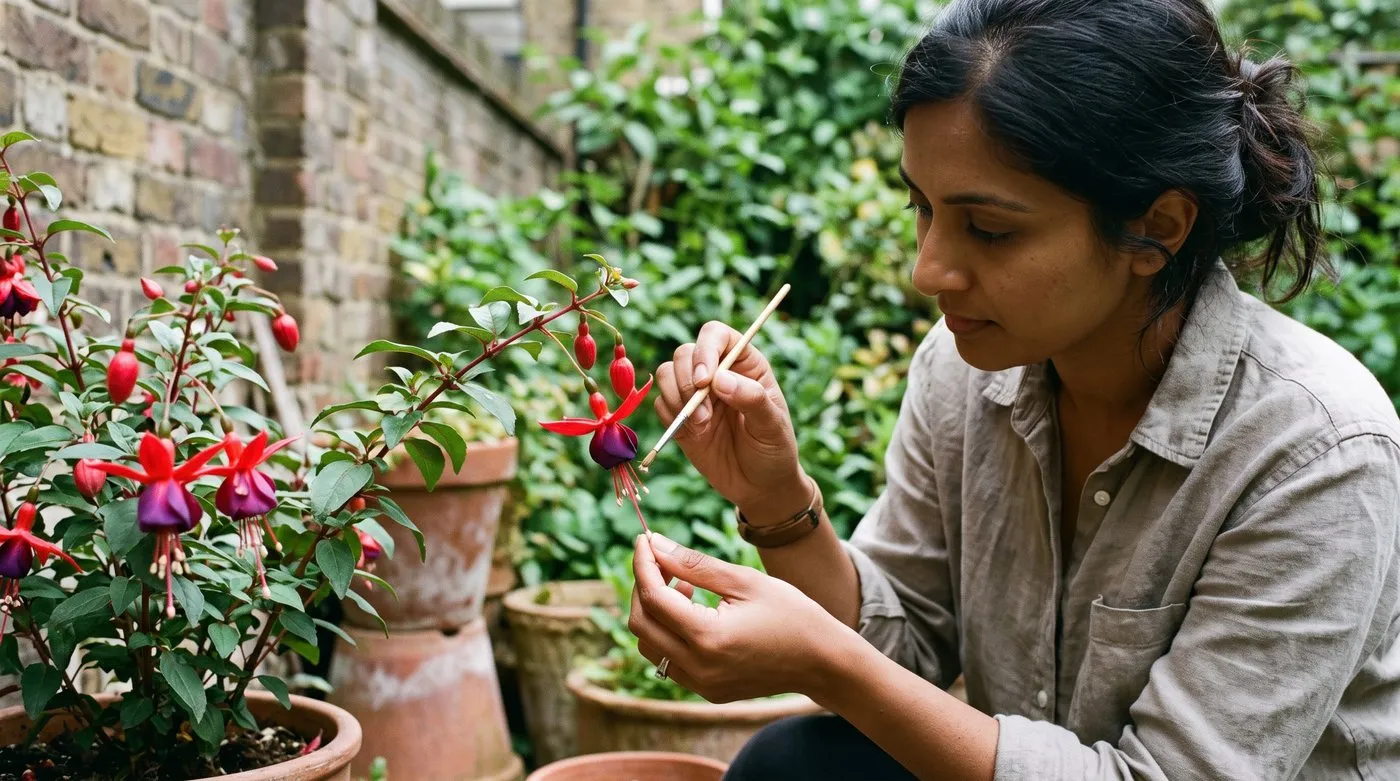
Dab pollen on once the stigma looks shiny and sticky, then pop the bag straight back on.
Pick a freshly opened flower from the pollen parent. Check the anthers are dry and dusty. Fuchsia pollen is often held together by fine sticky threads, so it may not look like loose powder.
Either touch the anthers straight onto the stigma, or pick up pollen with a small clean paintbrush and dab it on. Coat the stigma well. Clean the brush between different crosses so you don’t mix pollen. Then put the bag straight back over the flower.
Bagging, labelling and recording the cross
Bag and label every flower the moment you pollinate it. An unlabelled cross is a lovely mystery, but no use to a breeder.
Write the seed parent first, then the pollen parent, with an “x” between them, for example ‘Mrs Popple’ x ‘Hawkshead’. Add the date. Tie the label to the stem just below the flower.
Keep a notebook too, as labels fade and fall off. Note each cross, the date, and later what happened to the berry and seeds. Take the bag off once the flower has faded and a small berry starts to swell.

The bag keeps bees away while the cross sets. The label records which plants you crossed.
Harvesting and cleaning fuchsia seed
Pick the berry once it’s dark, soft and plump. This usually takes several weeks, so crosses made early in summer have the best chance of ripening before autumn.
Open the berry onto kitchen paper and tease the seeds out of the pulp with a cocktail stick. Good seeds are plump and firm. Flat, papery seeds usually mean the cross didn’t work. Don’t worry if some berries hold few seeds or none. It happens.
Rinse off the sticky pulp, because leftover pulp goes mouldy. Dry the seed on kitchen paper for a day or two. If you’re not sowing straight away, keep it in a labelled paper envelope somewhere cool and dark. The same steps work for saving seed from other garden plants.

Plump, firm seeds are a good sign. Flat or papery ones usually mean the cross didn’t take.
How to sow fuchsia seed and grow on the seedlings
Sow in early spring at about 18-20°C, on the surface of moist seed compost. A heated propagator or a warm windowsill works well.
- Fill a small pot or tray with fine seed compost and firm it level.
- Scatter the seeds thinly on top and press them in lightly.
- Cover with a propagator lid or clear bag to keep it humid.
- Air it each day to stop mould.
Germination is patchy and can take weeks, so don’t give up early. A tidy tray and fresh compost help avoid damping off, which can flatten tiny seedlings overnight. When seedlings have their first true leaves, prick them out into modules or small pots, holding them by a leaf. Grow them on somewhere cool and bright. Pinch the tips to make bushy plants, as our guide on pinching out fuchsias explains.

Prick seedlings out once they have true leaves and grow them on cool and bright.
How to pick a seedling worth keeping
Grow every seedling for at least a full season before deciding anything. First flowers can be smaller or paler than the plant’s later ones.
- First summer: let seedlings flower. Note colour, shape and habit. Keep anything that looks promising.
- First winter: for a hardy fuchsia, plant your best seedlings outside and see which come through. Take softwood or semi-ripe cuttings first as a backup.
- Second and third years: compare them side by side with their parents. Look for health, plenty of flowers and something genuinely different.
- Check it comes true: take cuttings and make sure the young plants match the original.
Most seedlings won’t beat their parents, and that’s normal. Each seedling is a new mix of its parents, which is why they vary so much. Our guide to F1 hybrid and open-pollinated seed explains the idea. The fun is in the hunt. Keep a few you love even if they’re not show-stoppers.

A promising seedling proving itself in the border. Give it a few seasons outdoors before you decide.
Naming and registering a new fuchsia
Only register a fuchsia that is stable, distinct and genuinely good. International registration of fuchsia names is handled by the American Fuchsia Society.
Before you apply, grow the plant for several years and check cuttings come true. The British Fuchsia Society is a good place to show it, get honest opinions and ask for advice. Keep your notebook, as you’ll need the parentage.
Common mistakes when hybridising fuchsias
Missing an anther. One left behind can self-pollinate the flower. Count all eight out every time.
Pollinating too soon. A dry stigma won’t hold pollen. Wait until it looks shiny and sticky.
Forgetting to label. Even a successful cross is no use if you don’t know the parents. Label it the moment you pollinate.
Crossing too late in the year. Late crosses may not ripen before the cold. Start in early or midsummer.
Judging seedlings too fast. First flowers mislead. Give each seedling at least a season.
Frequently asked questions
Can you cross any two fuchsias together?
Many garden fuchsias will cross, but not every pair sets seed. Some cultivars are shy seeders or give few good seeds. Cross a hardy parent with a tender one and the seedlings may not survive UK winters outdoors.
Why should I cross two hardy fuchsias rather than a hardy and a tender one?
Two hardy parents give the best chance of hardy seedlings. Seedlings from a hardy and tender cross often struggle to come through a cold winter. If you want a new garden fuchsia, start with two that already thrive outdoors.
How long does a fuchsia berry take to ripen after pollination?
Usually several weeks, often into late summer or autumn. The berry swells, darkens and turns soft when it’s ready. Crosses made early in summer have the best chance of ripening before the cold arrives.
At what temperature do fuchsia seeds germinate?
Fuchsia seed germinates best at about 18-20°C. Sow on the surface of moist seed compost and press it in lightly. Keep it humid under a propagator lid. Germination is patchy and can take weeks, so be patient.
How long until a fuchsia seedling flowers?
Many seedlings sown in early spring flower in their first summer. Others wait until year two. First flowers don’t always show a seedling’s true quality, so don’t judge too soon.
How do I know if my cross worked?
A swelling berry is a good sign, but seeds are the proof. Open the ripe berry and look for plump seeds. Flat, empty-looking seeds usually mean the cross didn’t take.
How do I register a new fuchsia I have bred?
International fuchsia registration is handled by the American Fuchsia Society. Before you apply, grow your plant for several years, check cuttings come true and make sure it’s distinct. The British Fuchsia Society is a friendly place for advice and opinions first.
Can I save fuchsia seed and sow it next year?
Yes, if you clean and dry it well first. Store it in a labelled paper envelope somewhere cool and dark. Fresh seed comes up best, so sow it the following spring.
Once your seedlings are growing, read our guide to hand pollinating fruit and veg to put your new skills to work elsewhere, or browse more projects on the how-to hub.
Our team produces practical UK gardening guidance from source research, contributor records and established horticultural practice. Editorial standards are overseen by Matt W.