Key takeaways
- F1 = controlled cross of two parents; vigorous, uniform, costs more
- Open-pollinated breeds true; you can save free seed each year
- F1 'Sungold' for reliability; OP 'Gardener's Delight' for saving seed
- Saved F1 seed gives random, often poor offspring; do not bother
- F1 seed runs £3-£5 for 8-10 tomato seeds; OP often half that
- Grow both: F1 for the banker crops, OP for flavour and saving
F1 hybrid seed is a controlled cross of two parent lines, bred for vigour and uniformity. Open-pollinated seed breeds true, so you can save your own seed year after year. Both have a place in a UK garden, and the right pick depends on the crop and what you want from it.
What F1 Hybrid Seeds Actually Are
An F1 hybrid is the first-generation offspring of two carefully chosen parent lines.
Breeders keep two pure parent strains stable for years. Each parent is inbred until it is genetically uniform. They then cross the two by hand, often pollinating flowers one by one. The seed from that cross is the F1.
What the cross gives you:
- Hybrid vigour (heterosis): stronger, faster growth than either parent
- Uniformity: nearly every plant looks and crops the same
- Predictable timing: fruit or harvest arrives in a tight window
- Often built-in disease resistance bred from the parents
The catch sits in that hand-pollination. It is labour-heavy, so F1 seed costs more. A packet of 8-10 F1 tomato seeds runs £3-£5. The same money buys 30-50 open-pollinated seeds of many varieties.
What Open-Pollinated and Heirloom Seeds Are
Open-pollinated plants are pollinated naturally by insects, wind or self-pollination.
Saved seed from an open-pollinated plant grows the same variety again, as long as it has not crossed with a different one nearby. That is the whole point. You buy a packet once, then save your own free seed each season.
Heirloom is a sub-set of open-pollinated. The term usually means a variety handed down for 50 years or more. ‘Gardener’s Delight’, a reliable UK cordon tomato, is open-pollinated and now treated as an heirloom too.
What open-pollinated gives you:
- Free seed you save yourself, year after year
- More variation between plants, which spreads weather risk
- A wider, older choice of flavours and colours
- Local adaptation if you save from your best plants each year
The downside is variability. Plants are less uniform, so a few may crop earlier, smaller or weaker than the rest. For a market grower that is a problem. For a home plot it rarely matters.
F1 vs Open-Pollinated: The Trade-Off In One Table
The decision comes down to six factors. This table sums up 9 seasons of side-by-side notes.
| Factor | F1 hybrid | Open-pollinated |
|---|---|---|
| Cost per packet | Higher (£3-£5, 8-10 tomato seeds) | Lower (often half, more seeds) |
| Save your own seed | No; does not breed true | Yes; breeds true if isolated |
| Uniformity | High; plants match closely | Lower; natural variation |
| Vigour | Strong hybrid vigour | Variable, variety dependent |
| Variety choice | Modern, fewer per crop | Huge, including old and rare |
| Disease resistance | Often bred in (good) | Variety dependent |
Read it as a job sheet, not a winner’s list. F1 earns its keep where you need an even, reliable crop. Open-pollinated earns its keep where you want to save seed, save money or grow something unusual.
When To Choose F1 Hybrid Seeds
Pick F1 when reliability and disease resistance matter more than saving seed.
Strong cases for F1:
- Tomatoes where blight or splitting is a risk
- Courgettes and cucumbers prone to mosaic virus
- Brassicas where clubroot resistance is available
- Brussels sprouts, where even buttons up the stem matter
- Any crop you sell or show, where uniformity counts
When To Choose Open-Pollinated Seeds
Pick open-pollinated when you want to save seed, save money or grow heritage flavour.
Strong cases for open-pollinated:
- Tomatoes, beans, peas and lettuce, the easy seed-savers
- Any crop where you want to bank free seed long term
- Heritage and rare varieties not sold as F1
- Crops where flavour beats uniformity (many heirloom tomatoes)
- Tight budgets, where one packet lasts many seasons
Cross-pollinators such as squash, sweetcorn and brassicas need isolation to save true seed. Keep different varieties apart, or hand-pollinate and bag the flowers. The Garden Organic Heritage Seed Library preserves hundreds of UK open-pollinated varieties you cannot buy elsewhere, which is worth knowing if you want something with history.
Why You Cannot Save F1 Seed
Saved F1 seed does not give you the same plant again. This trips up more new gardeners than anything else.
An F1 plant is a uniform cross of two parents. When it sets seed, those genes shuffle and split back towards the grandparents. The result is the F2 generation, and it is a lottery. Some plants resemble one parent, some the other, most neither.
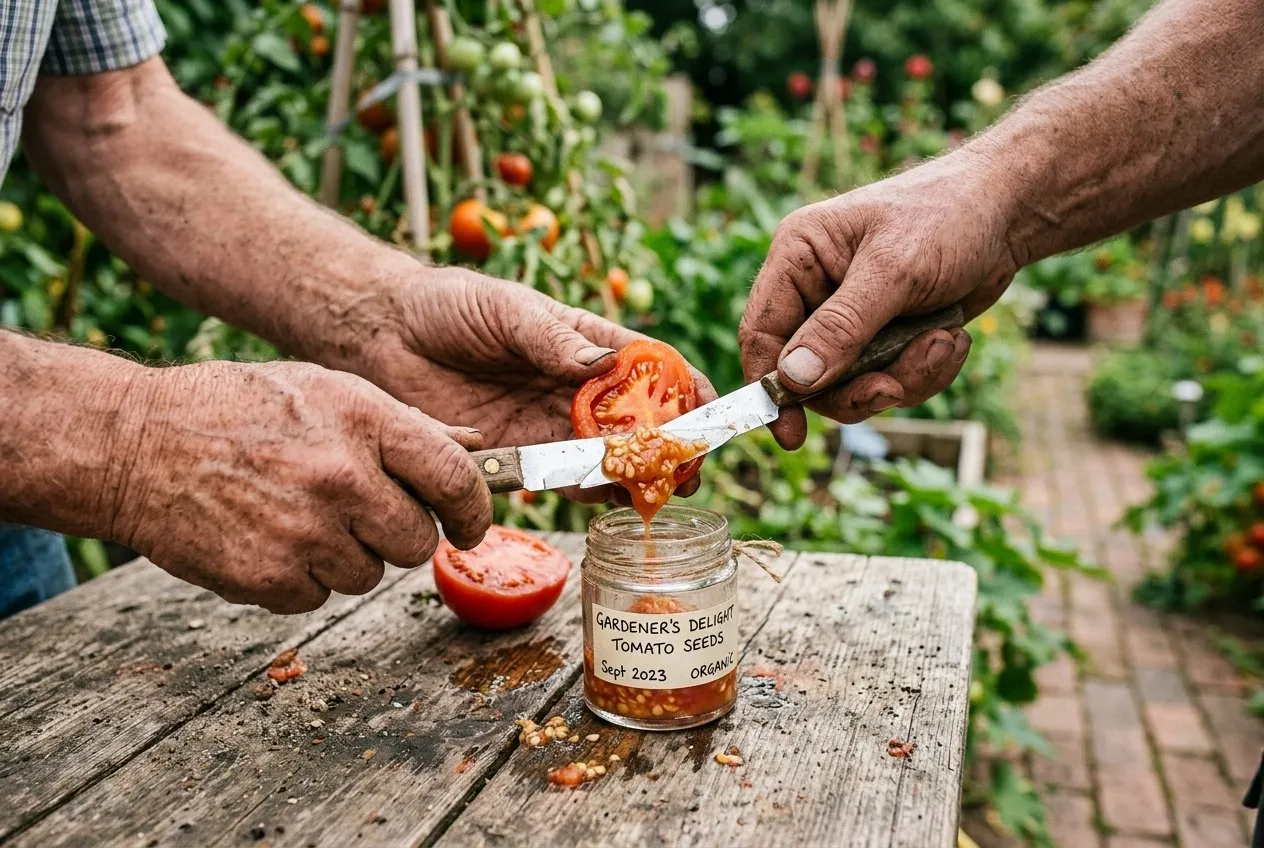 Saving seed from an open-pollinated ‘Gardener’s Delight’ at Staffordshire in September. Scrape the seed and pulp into a jar, ferment for three days, rinse and dry. Only open-pollinated seed is worth this effort.
Cost Over Time: The Long Game
Open-pollinated seed wins on cost once you save your own. F1 wins on cost per usable plant in a hard year.
- Self-pollinating crops you want to keep: buy open-pollinated once, save forever
- High-risk or disease-prone crops: buy F1 fresh each year, accept the cost
- Trial something new: open-pollinated, so a flop costs little
Set your seed budget by job, not by price tag. The cheapest seed that fails is the most expensive seed you can buy.
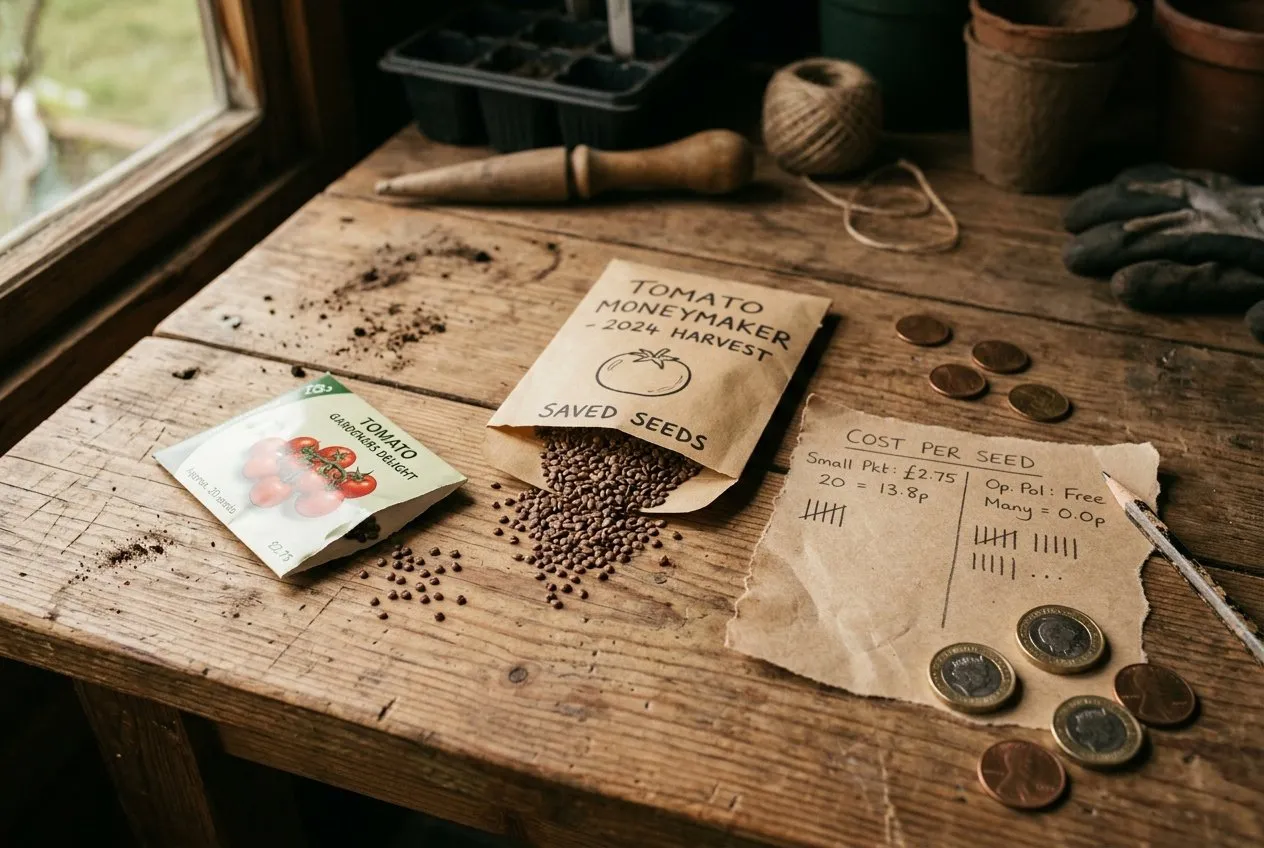 The real cost picture at Staffordshire. A pricey F1 packet holds a handful of seeds; the cheaper open-pollinated packet holds many more. But in a disease year the F1 plant that survives is the better value per crop.
How To Read A UK Seed Packet
The packet tells you which type you are buying if you know where to look.
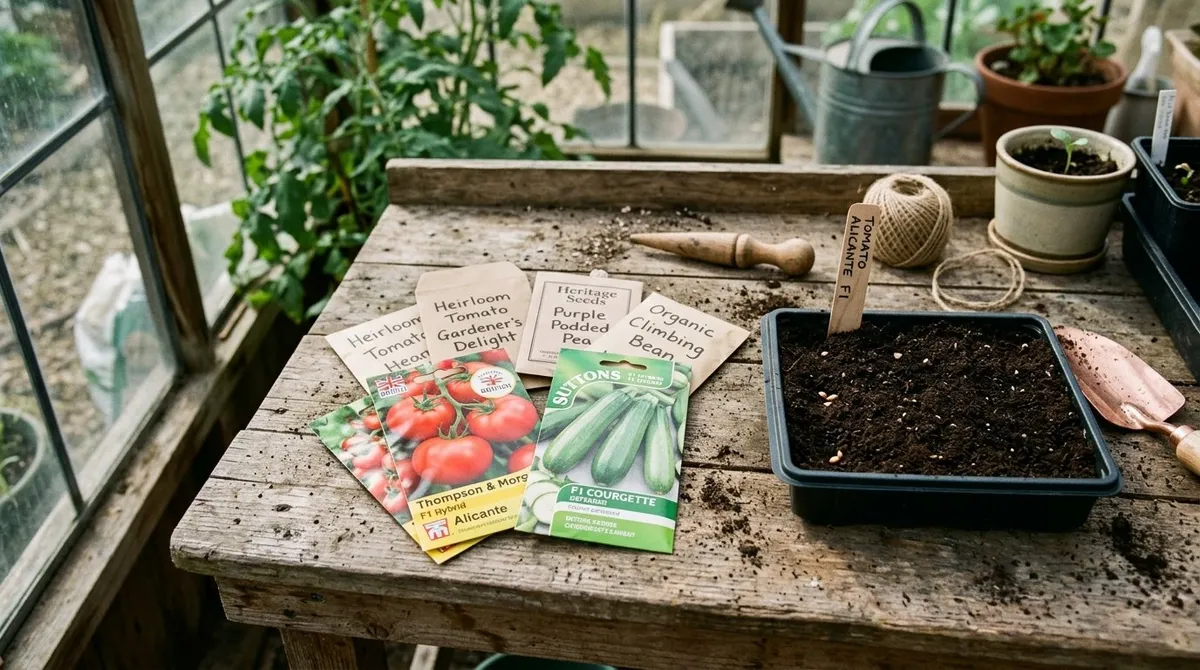
Look for “F1” or “F1 hybrid” printed after the variety name. If it is there, it is a hybrid and the seed will not breed true. No “F1” almost always means open-pollinated. The word “heirloom” or “heritage” confirms an old open-pollinated variety.
Frequently asked questions
What is the difference between F1 and open-pollinated seeds?
F1 seed is a controlled cross of two parent lines; open-pollinated seed breeds true. F1 plants are uniform and vigorous but you cannot save useful seed. Open-pollinated plants vary more, yet their saved seed grows the same variety again. The choice is reliability versus free seed.
Can you save seed from F1 hybrid plants?
Are F1 hybrid seeds worth the extra money?
Yes, for crops where reliability and disease resistance matter most. F1 tomatoes, courgettes and brassicas crop evenly and resist common UK diseases. They cost £3-£5 for 8-10 seeds versus half that for open-pollinated. For seed-saving or flavour, open-pollinated wins.
Is open-pollinated the same as heirloom?
All heirloom seeds are open-pollinated, but not all open-pollinated seeds are heirloom. Heirloom usually means a variety passed down for 50 years or more. Open-pollinated simply means the plant breeds true from saved seed. ‘Gardener’s Delight’ is open-pollinated and now treated as heirloom.
Do F1 or open-pollinated seeds taste better?
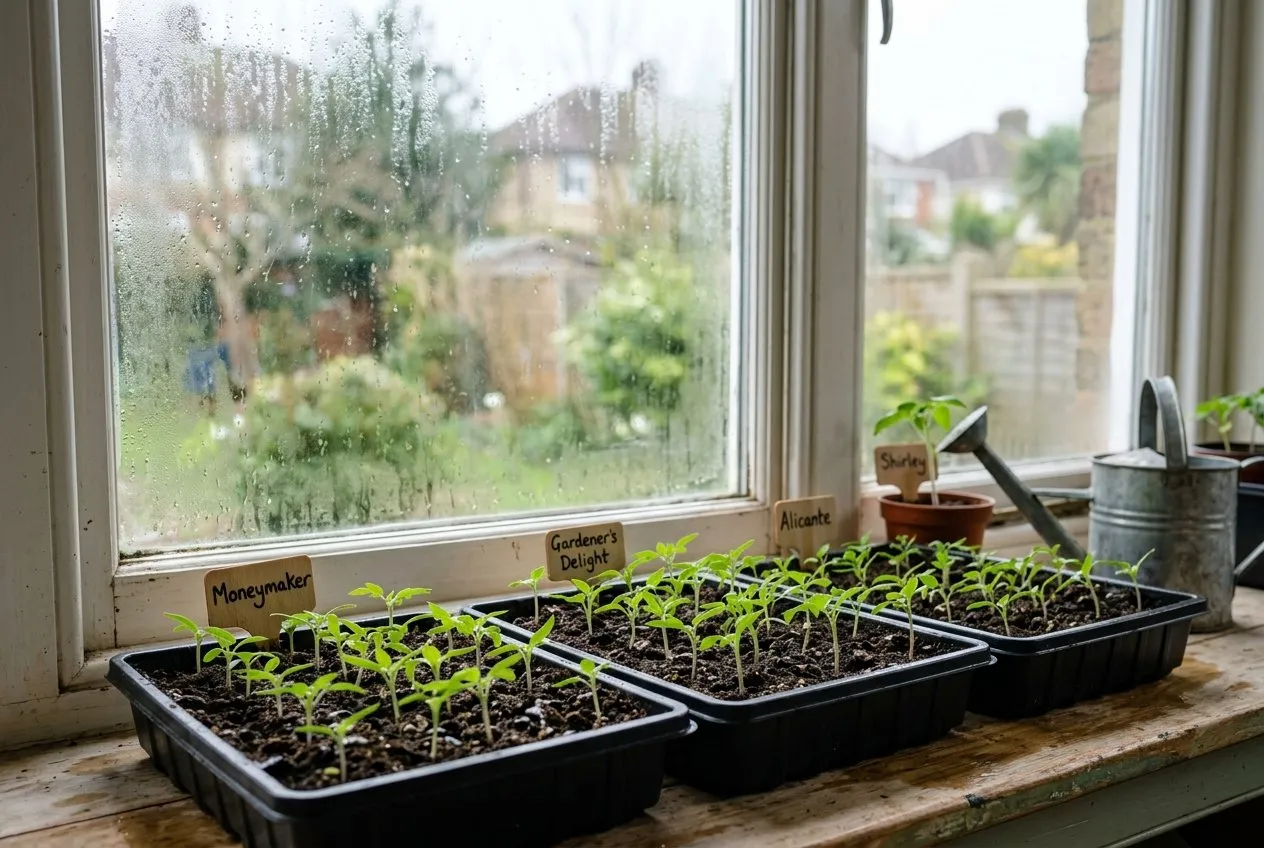 F1 and open-pollinated tomato seedlings raised together on a Staffordshire windowsill in April. Both germinate just as well; the difference shows later in uniformity and in whether the saved seed comes true.
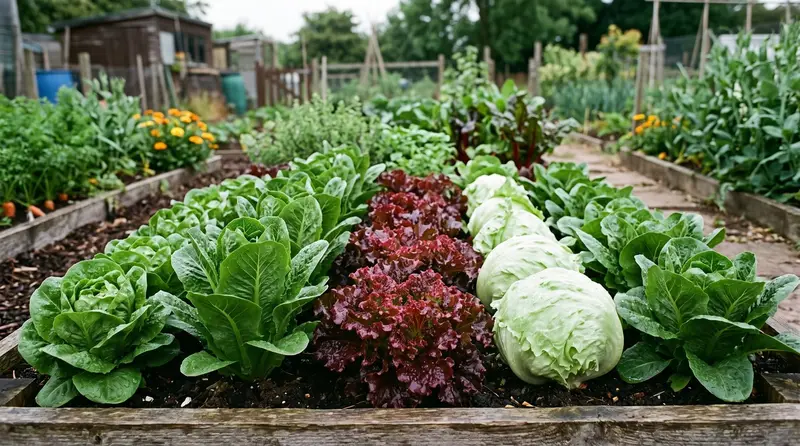
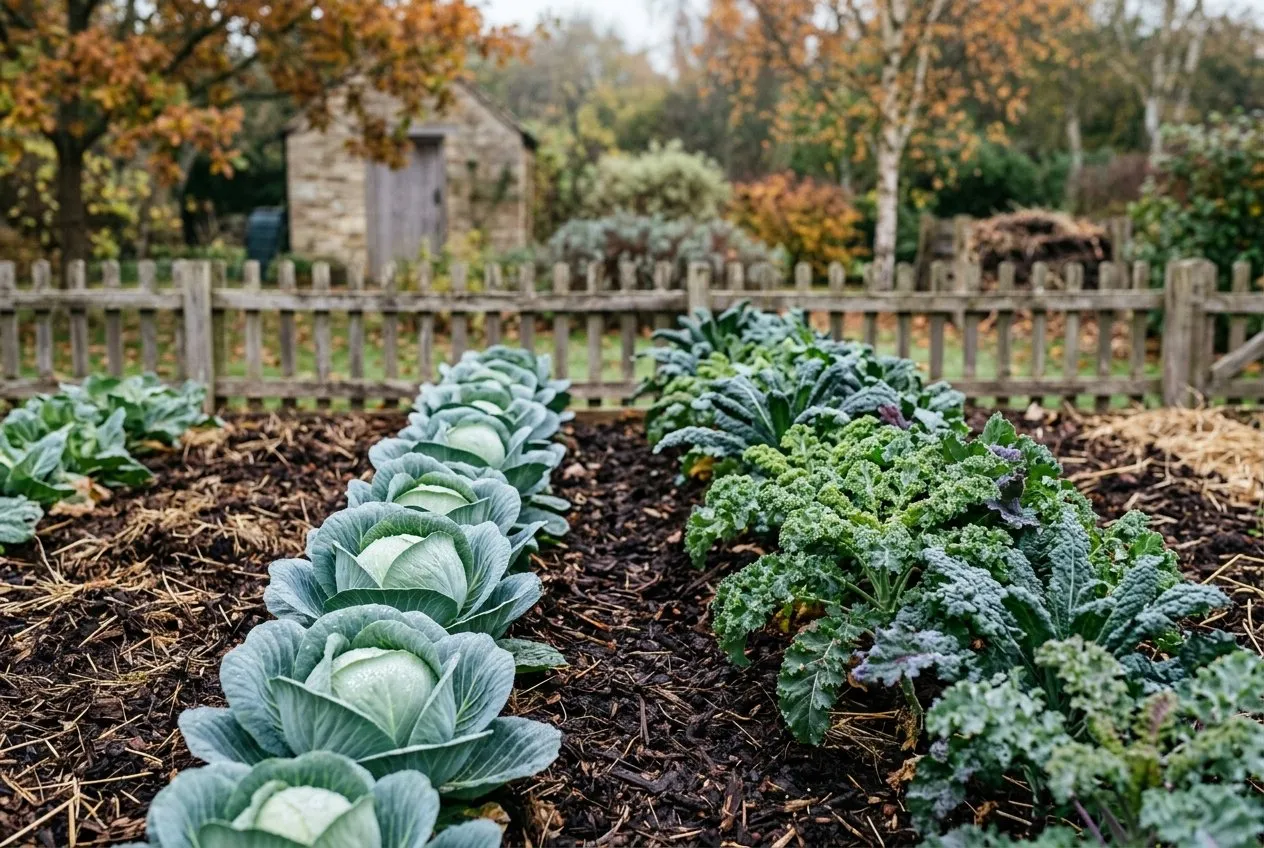 F1 cabbages with matched, clubroot-resistant heads next to variable open-pollinated kale at Staffordshire in autumn. Brassicas are the crop where F1 disease resistance earns its higher price most clearly.
Now plan your seed buying for the year
Our team produces practical UK gardening guidance from source research, contributor records and established horticultural practice. Editorial standards are overseen by Matt W.