Key takeaways
- Blind daffodils make leaves but no flowers, or buds that dry up
- Cutting, knotting or mowing leaves too soon is the most common cause
- Leave the leaves for at least six weeks after flowering
- Crowded clumps and shallow planting both stop bulbs reaching flowering size
- Give a high-potash feed after flowering and avoid lawn feeds near bulbs
- Lift and divide crowded clumps once the leaves have yellowed
Blind daffodils come up full of healthy green leaves every spring and then give you nothing. There’s no flower at all, or just a papery bud that browns before it opens. It’s one of the most common spring bulb complaints, and the good news is that it can nearly always be fixed.
The flower you see each spring forms inside the bulb the summer before. So a blind daffodil this April is usually a sign of what went wrong last May and June. This guide covers the main causes, how to get your daffodils flowering again, and a simple year-round routine. For planting and general care, see the main guide to growing daffodils.
What causes daffodil blindness?
Most blind daffodils come down to one of six causes. Often two or three work together.
| Cause | What happens | The fix |
|---|---|---|
| Leaves cut, tied or mown too early | Bulb can’t store enough food to make a flower | Leave leaves at least 6 weeks after flowering |
| Crowded clumps | Bulbs compete and stay too small to flower | Lift and divide once the leaves yellow |
| Planted too shallow | Bulbs split into small offsets | Replant about 10-15cm deep |
| Dry spring, no feed | Bulb runs short while building next year’s bud | Water in dry spells, feed after flowering |
| Too much nitrogen | Leafy growth instead of flowers | Switch to a high-potash feed |
| Deep shade | Leaves can’t make enough food | Move bulbs somewhere sunnier |
Why cutting the leaves early stops daffodils flowering
The leaves aren’t just untidy. They are how the bulb feeds itself.
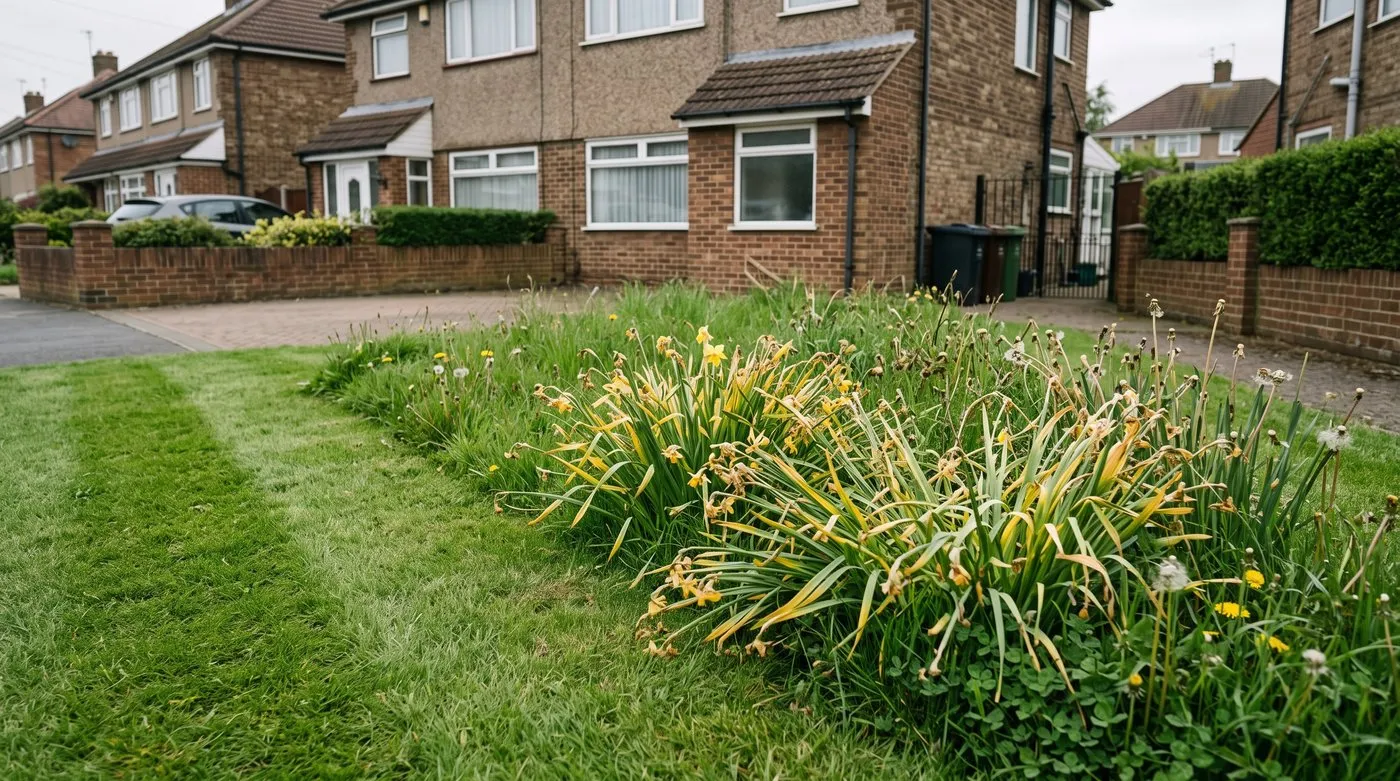
Mow around daffodils in grass until their leaves have yellowed. The leaves are feeding next year’s flowers.
For at least six weeks after flowering, the green leaves use sunlight to make food. That food goes down into the bulb and builds next year’s flower. Cut the leaves off, fold them over or tie them in knots, and the supply stops. Next spring you get leaves but no flowers.
Mowing too soon is the classic version of this mistake. Daffodils in grass get cut along with the lawn in late April, and after a few years the whole drift goes blind. Leave the grass round them unmown until the leaves have yellowed. The guide to naturalising bulbs in grass explains how to manage this.
The rule is simple. Leave every leaf until it turns yellow and pulls away easily, at least six weeks after the last flower.
Should you knot or tie daffodil leaves?
No. Folding the leaves over and tying them with string or bands looks tidy, but it cuts down the leaf area catching light. The bulb gets less food and can drift towards blindness.
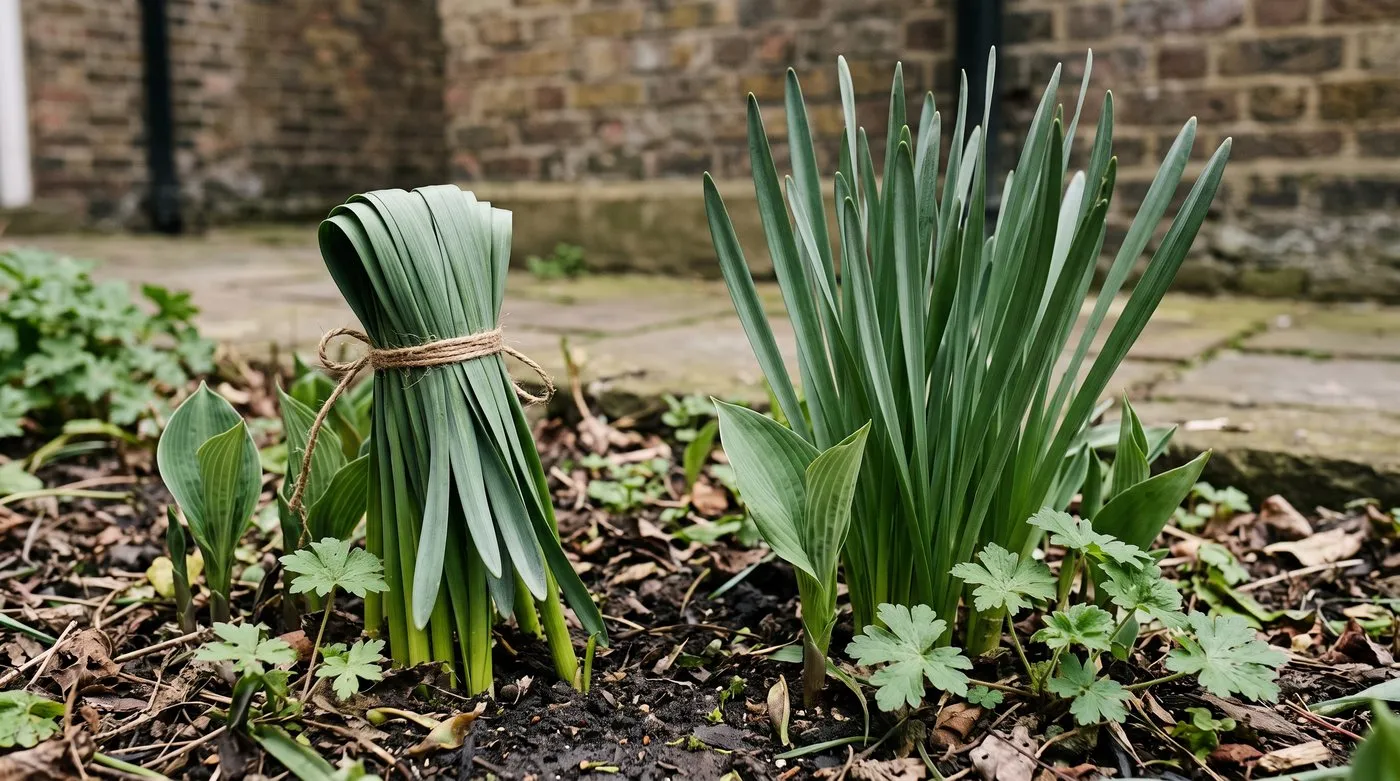
Tied leaves look tidy but catch far less light. Let perennials grow up and hide the foliage instead.
If dying leaves bother you, hide them instead. Plant daffodils among perennials such as hardy geraniums, hostas or daylilies. Their fresh leaves grow up and cover the daffodil foliage while it finishes its job. The guide to layering bulbs in perennial borders has planting ideas.
How to feed and deadhead daffodils for next year
Two quick jobs after flowering help bulbs build up again.

Snap off the old flower head but leave the stem and leaves. A high-potash feed now helps next year’s bud.
Deadhead as the flowers fade. Snap off the old flower head just behind the swollen seed pod, leaving the stem and all the leaves. This stops the plant putting energy into seed. In large drifts in grass, this isn’t essential.
Feed with a high-potash liquid feed, such as tomato feed, as the flowers fade. Follow the dilution on the bottle. Repeat every week or two while the leaves are still green. Potash helps flower buds form.
Avoid high-nitrogen feeds and lawn fertiliser near daffodils. Nitrogen pushes leafy growth instead of flowers. Water in dry spring weather too, as dry soil while the bud is forming is another cause of blindness. The guide to spring bulb care after flowering covers the full routine.
How to lift and divide crowded daffodils
After several years in one spot, clumps can get so crowded that few bulbs reach flowering size. You’ll see a dense thicket of leaves with few or no flowers.
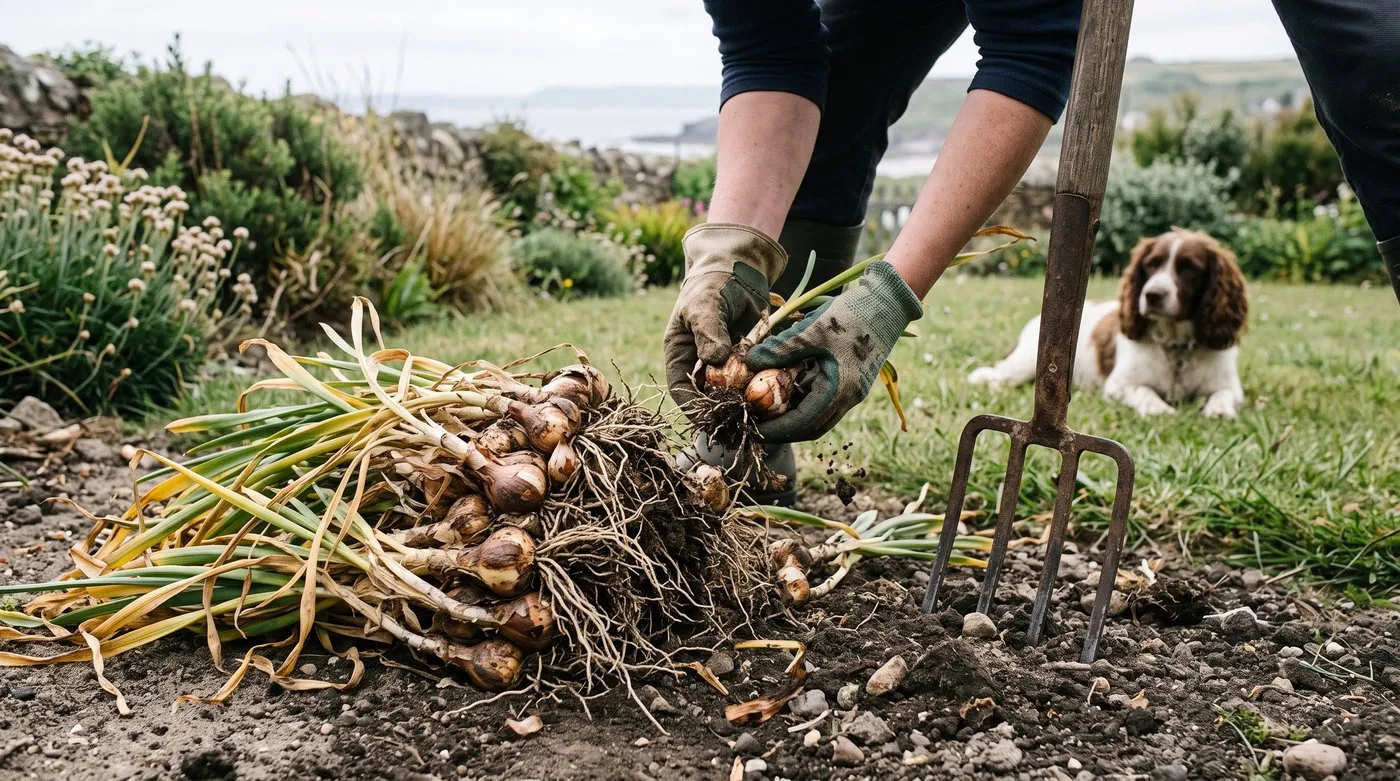
A crowded clump like this is a common reason for blind daffodils. Split it up and replant the biggest bulbs.
Lift and divide them in early summer, once the leaves have yellowed but you can still see where the clump is:
- Dig up the whole clump with a fork, working well away from the bulbs.
- Gently pull the bulbs apart into single bulbs and larger offsets.
- Throw away any that are soft, rotten or smell bad.
- Replant the firm, good-sized bulbs straight away, about 10-15cm deep.
- Space them a couple of bulb-widths apart.
Small offsets can go in a spare corner to grow on for a year or two. You can also lift and replant in autumn if you’ve marked where the clump is. For spare bulbs, the guide to storing flower bulbs explains how to keep them sound.
Plant daffodils deep enough
Shallow planting is a slow-burn cause of blindness. Bulbs near the surface tend to split into clusters of small offsets instead of fattening up, and small bulbs don’t flower.
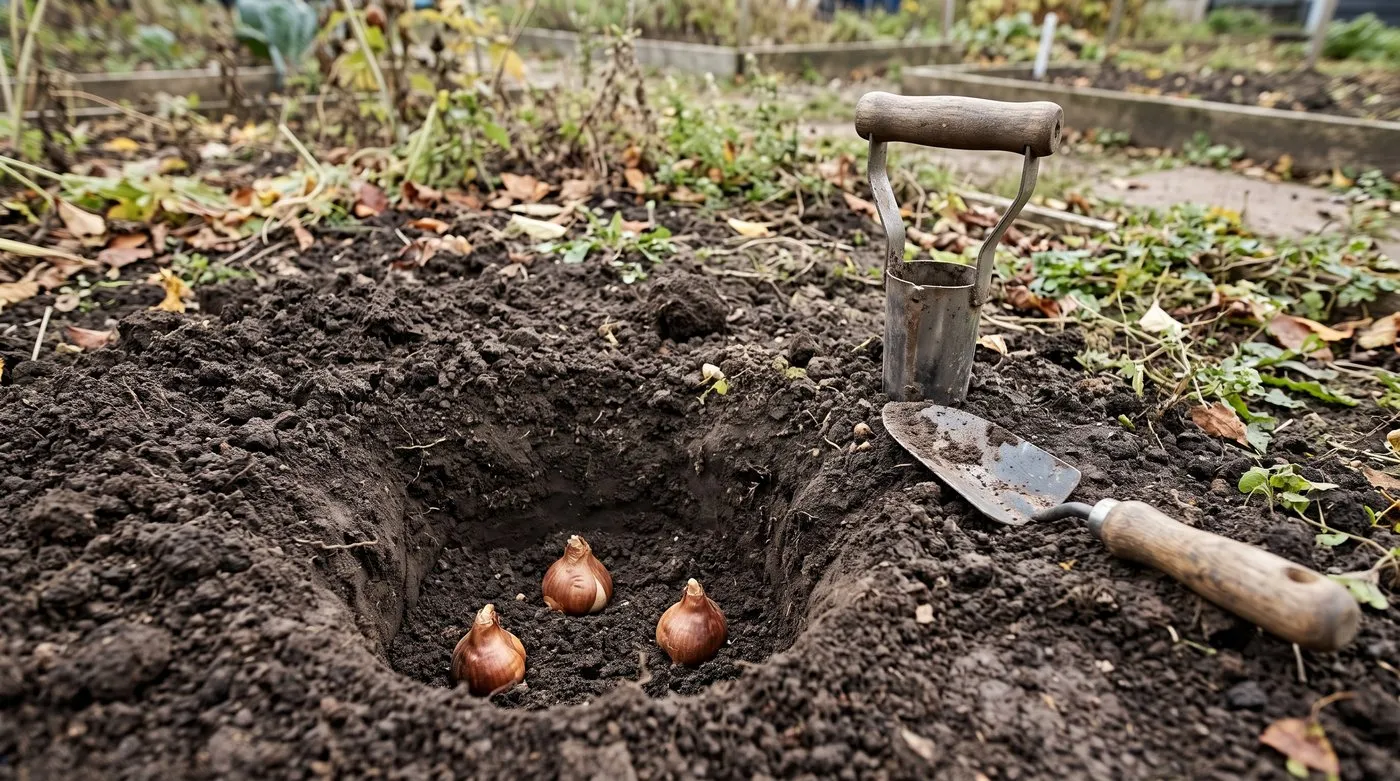
Plant at two to three times the bulb’s height. Deeper bulbs fatten up instead of splitting into small offsets.
Plant daffodils at two to three times the bulb’s own height. For most that means about 10-15cm deep, a little deeper for big bulbs. Space them a couple of bulb-widths apart so they don’t crowd too soon. The guide to bulb planting density helps with drifts and pots.
Shade, small bulbs and pests
A few less common causes are worth checking:
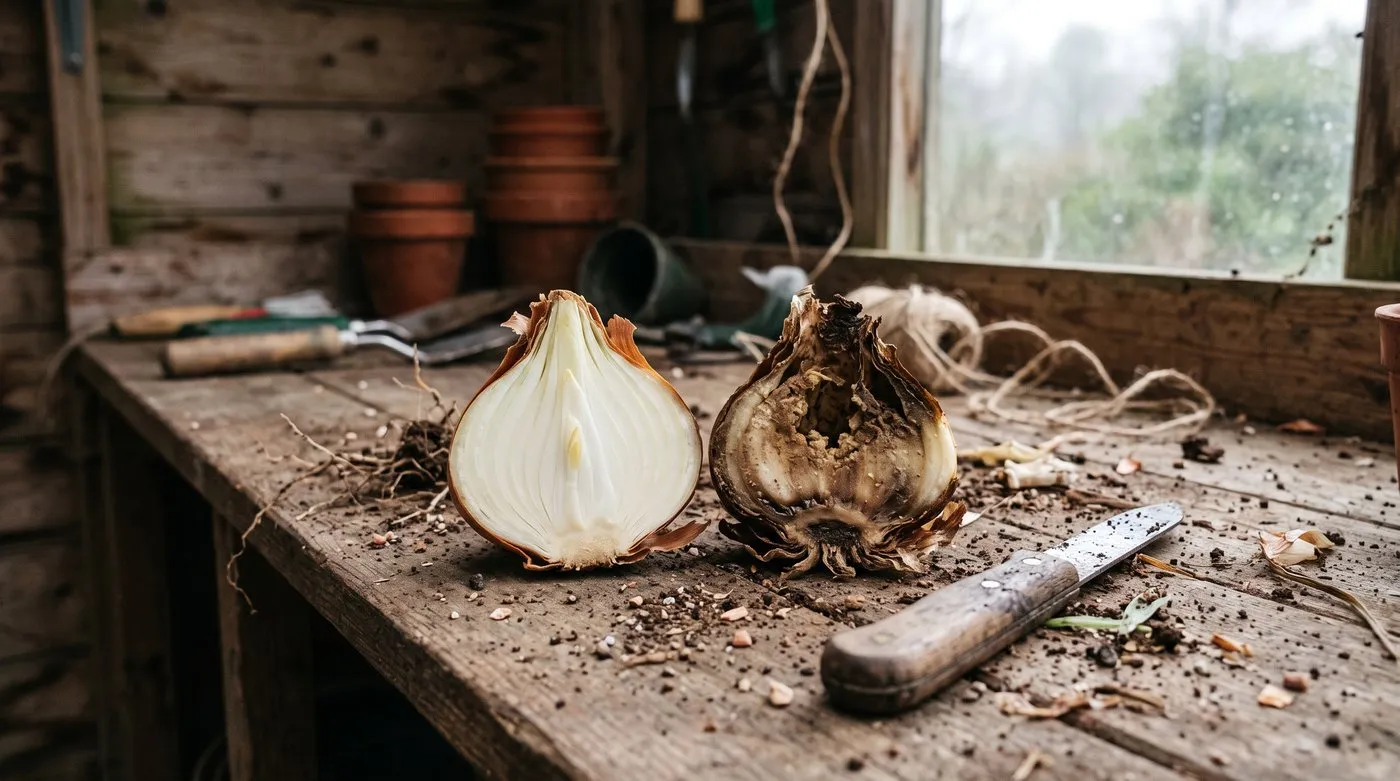
Cut a suspect bulb in half. A firm, white inside is healthy, but a soft, brown or hollow one belongs in the bin.
- Deep shade. Daffodils need good spring light. If a tree or hedge has grown over them, move the bulbs to a sunnier spot once the leaves die down.
- Small or new bulbs. Undersized bulbs and young offsets may need a season or two before they flower. Feed them and be patient.
- Pests and disease. Narcissus bulb fly grubs, stem and bulb eelworm, and basal rot can all damage bulbs. Lift a suspect bulb and cut it in half. If it is soft, rotten or has a maggot inside, bin it rather than replanting.
Daffodils are toxic if eaten, so keep bulbs away from pets and children while you work. The piece on daffodil growing myths clears up other common confusions.
Daffodil care calendar to prevent blindness
| Month | Task |
|---|---|
| February to March | Shoots and buds appear. Note any clumps with no buds |
| March to April | Flowering. Deadhead as flowers fade and start a high-potash feed |
| April to May | Keep feeding while leaves are green. Water in dry spells. Don’t cut or tie leaves |
| June | Leaves yellow and die back. Lift and divide crowded or blind clumps |
| July to August | Move bulbs out of shade. Store spare bulbs cool and dry |
| September to October | Plant new and stored bulbs about 10-15cm deep |
| November to January | Bulbs rooting. Nothing to do |
Common mistakes that make daffodils go blind
- Mowing daffodils in grass too soon. Wait until the leaves have yellowed.
- Tying leaves in knots. It looks neat but starves the bulb.
- Leaving clumps undivided for years. Crowded bulbs stay too small to flower.
- Using lawn feed near bulbs. Nitrogen gives leaves, not flowers.
- Planting too shallow. Shallow bulbs split into small offsets.
Frequently asked questions
Why do my daffodils have leaves but no flowers?
They have gone blind, usually because last year’s leaves were cut too soon. The leaves feed the bulb after flowering, and that builds next year’s flower. Crowded clumps, shallow planting, dry springs and shade can also cause it.
Will blind daffodils flower again?
Usually, once you fix the cause. Leave the leaves to die down naturally, feed after flowering and water in dry springs. Lift and divide crowded clumps. It can take a season or two for the bulbs to build up again.
When can I cut down daffodil leaves?
Wait at least six weeks after the flowers fade. Ideally, leave them until they turn yellow and come away easily. Cutting green leaves in spring is the most common cause of blind daffodils.
Should I feed daffodils to stop blindness?
Yes, give a high-potash feed as the flowers fade. A liquid tomato feed works well. Avoid high-nitrogen lawn feeds near daffodils, as they push leaves rather than flowers. Water in dry spring weather too.
How deep should I plant daffodil bulbs?
Plant at two to three times the bulb’s height, usually about 10-15cm deep. Shallow bulbs tend to split into small offsets that are too young to flower. Space bulbs a couple of bulb-widths apart.
Can pests cause daffodils to go blind?
Sometimes, but it’s less common. Narcissus bulb fly grubs, stem and bulb eelworm and basal rot can all weaken or kill bulbs. Lift a suspect bulb and cut it in half. If it is soft, rotten or has a maggot inside, bin it.
Ready to plant more? Read the guide on when to plant daffodil bulbs to get the timing right. For more garden troubles, browse the problems hub.
Our team produces practical UK gardening guidance from source research, contributor records and established horticultural practice. Editorial standards are overseen by Matt W.