Key takeaways
- Bulbs give a perennial border colour from February to June, before summer perennials peak
- Plant daffodils and alliums in September or October, and tulips in November
- Plant bulbs about three times their height deep, so 15-20cm for tulips and big alliums
- Plant in groups of 5-15 between perennial clumps, never dotted singly
- Hardy geraniums, peonies, hostas and lady's mantle hide the fading bulb leaves
- Let bulb leaves die down naturally for at least six weeks after flowering
Bulbs are the easiest way to give a perennial border colour in spring, before the summer flowers get going. Snowdrops, daffodils, tulips, camassias and alliums can take you from February to June in the same patch of ground. The trick is to plant them between perennials whose leaves will hide the bulbs’ untidy foliage later.
This guide covers which bulbs to choose, when and how deep to plant them, and the best perennial partners. For layering bulbs in pots, the guide to bulb lasagne planting has the details.
Why add bulbs to a perennial border?
A border of herbaceous perennials looks bare from late autumn until about May. Bulbs fill that gap. They flower while the perennials are still just leaves, then disappear underground as the perennials take over.
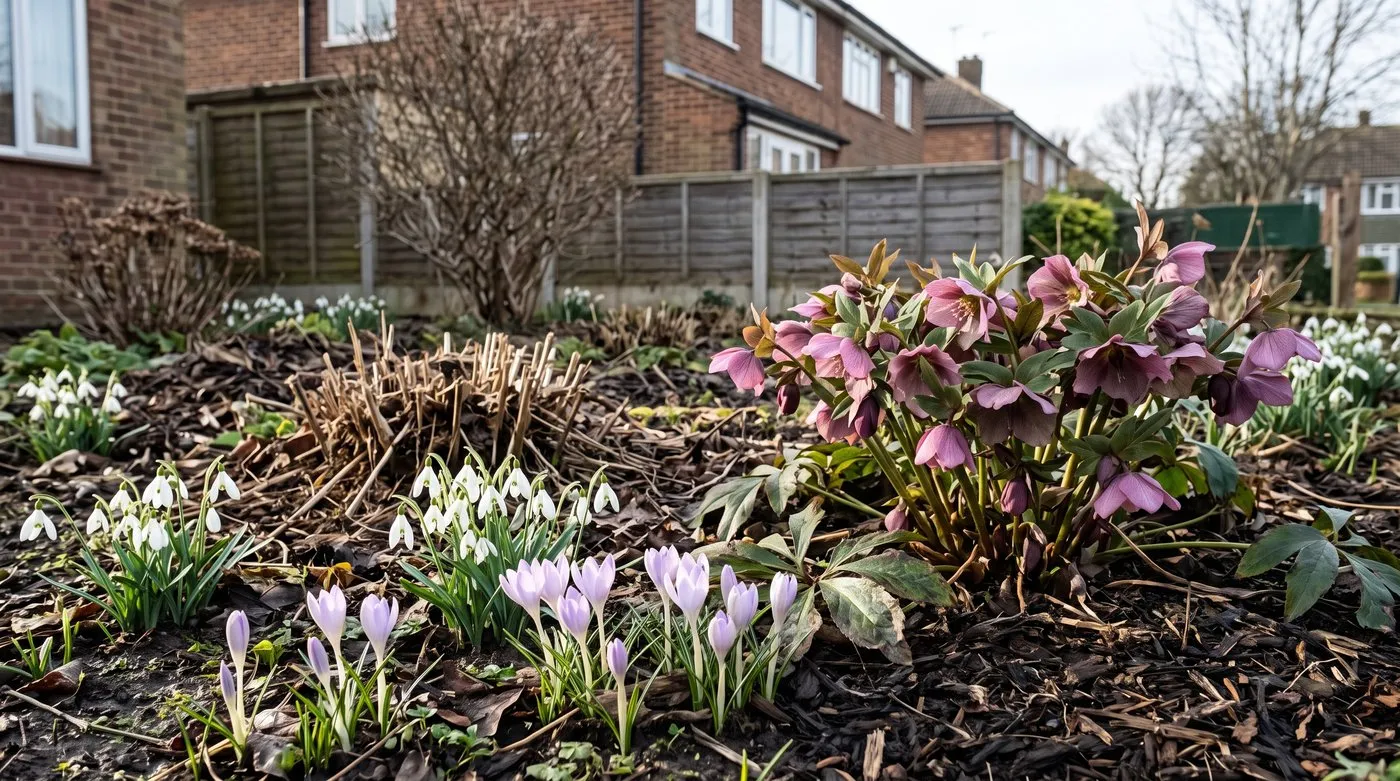
In February the perennials are just stubs, but snowdrops and crocus already fill the front of the border with flowers.
That means two shows from the same ground, and no extra space needed. Bulbs also suit perennial borders because they like to be left alone, and so do most border plants.
The one catch is the leaves. Bulb foliage needs about six weeks after flowering to feed next year’s flowers, and it looks scruffy as it yellows. Choose the right perennial neighbours and you’ll hardly notice it.
Best bulbs for a perennial border, month by month
Choose a few bulbs that flower one after another for a long season. These are reliable in most UK gardens.
| Bulb | Flowers | Height | Plant | Stays for years? |
|---|---|---|---|---|
| Snowdrop (Galanthus nivalis) | February to March | 10-15cm | Autumn, or “in the green” in spring | Yes, spreads |
| Crocus tommasinianus | February to March | About 10cm | September to October | Yes, spreads |
| Narcissus ‘February Gold’ | February to March | About 30cm | September to October | Yes |
| Narcissus ‘Geranium’ | April | About 35cm | September to October | Yes |
| Tulip ‘Queen of Night’ | Late April to May | About 60cm | November | Often fades on heavy soil |
| Camassia leichtlinii | May | 60-100cm | September to October | Yes, clumps up |
| Allium ‘Purple Sensation’ | Late May to June | 80-90cm | September to October | Yes |
| Allium ‘Globemaster’ | June | About 1m | September to October | Yes |
Snowdrops and crocus start the show. They sit happily around hellebores at the front of a border. The guide to growing snowdrops explains planting “in the green”.
Daffodils are tough and come back every year. Smaller types such as ‘February Gold’ and ‘Jetfire’ suit borders better than big ones, as their leaves are less floppy.
Tulips give the strongest colour in late spring. Many large hybrids fade after the first year, especially on heavy, wet soil. Species tulips and Darwin hybrids are the most reliable at coming back.
Camassia is a star for heavy clay and damp soil. Its tall spikes of blue or white stars bridge the gap between tulips and alliums. The camassia guide has more on varieties.
Alliums are the late-spring highlight. Their purple drumsticks float above perennials just coming into leaf, and the seedheads stay smart for weeks. The guide to growing alliums covers the best types.
Pet note: Daffodil, tulip and allium bulbs are all toxic to cats and dogs. Keep bulbs out of reach while you plant, and watch dogs that like to dig.

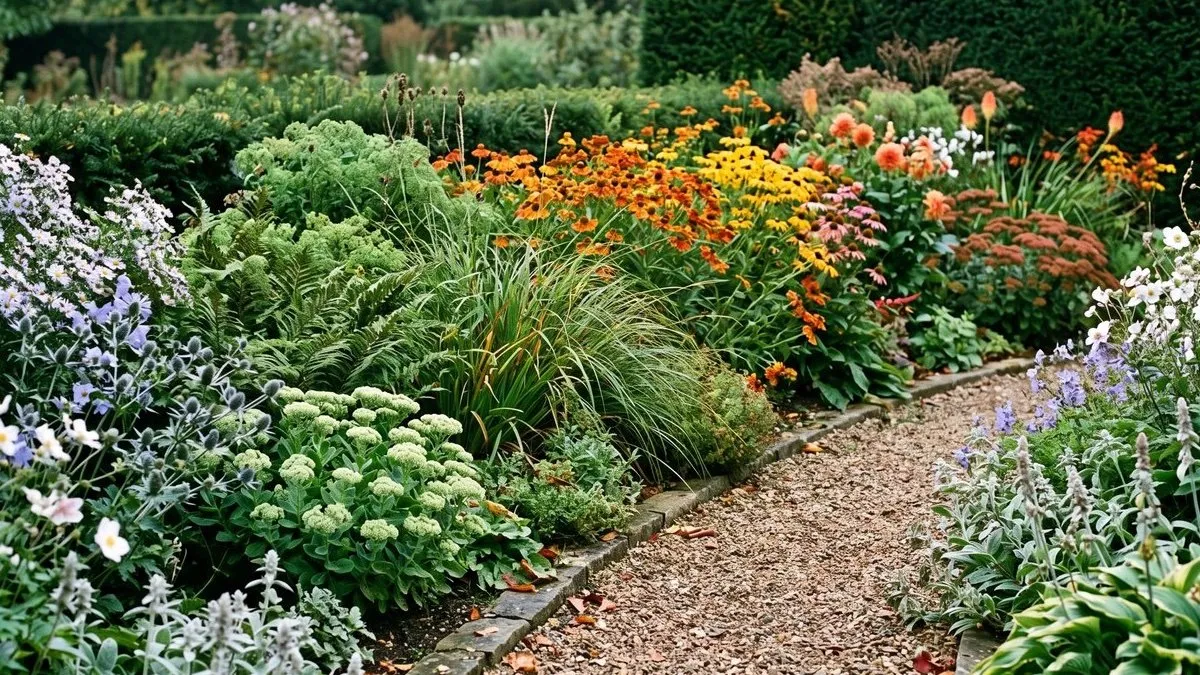
In late May the last tulips and first alliums overlap. Perennial leaves are filling in around them, ready to take over.
Which perennials hide fading bulb foliage?
The best partners grow quickly in late spring and spread sideways. These four do the job well:
- Hardy geraniums, such as ‘Rozanne’ or Geranium phaeum, spread low and wide. Their leaves cover yellowing tulip and allium foliage.
- Peonies shoot up fast from March and are full-sized by late May, just as daffodil leaves flop.
- Hostas unfurl in April and May into a dense leafy canopy. Large-leaved types hide the most.
- Lady’s mantle (Alchemilla mollis) makes a soft skirt of leaves over anything below. Cut it back after flowering for fresh leaves.
Plant the bulb group just in front of the perennial, rather than through its crown. The perennial grows forward over the bulbs as it fills out. It also saves damaging the perennial’s roots when you plant.
Avoid planting bulbs next to perennials that only wake up in early summer, such as Eupatorium. The bulbs finish long before there are any leaves to hide them.
Gardener’s tip: Don’t tie, plait or cut bulb leaves while they’re still green. They need about six weeks to feed the bulb for next year. Let your perennials hide them instead.

The geranium’s leaves are already spreading over the fading bulb foliage. In a couple of weeks you won’t see it at all.
The guide to growing hardy geraniums has more on the best types to pair with bulbs.

By early summer, geraniums, catmint and lady’s mantle have filled every gap. The bulbs are resting underneath, ready for next spring.
When and how deep to plant bulbs in a border
Timing: plant daffodils, crocus, camassias and alliums in September or October. Plant tulips in November, as colder soil helps avoid tulip fire disease. The guide to when to plant spring bulbs has more on timings.
Depth: plant most bulbs at about three times their own height. In a border, go a little deeper rather than shallower. Deeper bulbs are safer from forks and hoes, and tulips are more likely to come back.
| Bulb | Rough planting depth |
|---|---|
| Tulips | 15-20cm |
| Large alliums | 15-20cm |
| Daffodils | 10-15cm |
| Camassia | About 10-15cm |
| Crocus, snowdrops | 5-10cm |
You can also plant two layers in one hole, like a bulb lasagne. Put tulips or daffodils at the bottom and smaller bulbs such as crocus or grape hyacinths above. Each layer flowers in turn.
Step-by-step: planting bulbs between perennials
- Mark the spots. Walk the border and push in a cane wherever a group should go. Aim for the gaps in front of hardy geraniums, peonies and hostas.
- Dig a wide hole. Use a narrow trowel, a spade or a long-handled bulb planter. Make it wide enough for a group of 5-15 bulbs.
- Add grit on heavy clay. A handful of coarse grit in the base helps tulips and alliums drain.
- Place the bulbs. Set them pointy end up, about two bulb widths apart. Spread them unevenly for a natural look.
- Backfill and firm gently. Mix in a little garden compost if the soil is poor.
- Mark the group. Leave a short stick or label so you don’t dig into the bulbs when you tidy the border.
Plant in groups, not single bulbs. A loose drift of seven alliums looks far better than seven dotted about.

Autumn, with perennials dying back, is the time to slip bulbs into the gaps. Kneel on a pad and plant each group in one wide hole.
Caring for bulbs after flowering
Deadhead tulips and daffodils once the flowers fade, so the plant puts energy into the bulb rather than seed. Leave allium heads on, as the seedheads look great for weeks.
Leave the leaves for at least six weeks, until they yellow and flop. Then pull or cut them away.
Tulips: if they fade on your soil, you can lift them once the leaves yellow, dry them somewhere airy and replant in November. Or just treat them as annuals and plant fresh bulbs each autumn.
Feeding: a light sprinkle of a general fertiliser, or a liquid feed after flowering, helps daffodils and alliums flower well the next year.

By June the peonies and geraniums have taken over. Allium seedheads still stand tall above them, adding shape to the border.
Month-by-month bulb and border calendar
| Month | Bulbs | Border jobs |
|---|---|---|
| January | Snowdrop shoots appear | Cut old hellebore leaves to show flowers |
| February | Snowdrops, crocus, early daffodils | Plant snowdrops in the green after flowering |
| March | Daffodils at their best | Peony and geranium shoots appear; mulch the border |
| April | Late daffodils, early tulips | Deadhead daffodils, leave the leaves |
| May | Tulips, camassias, first alliums | Perennials fill out and start hiding bulb leaves |
| June | Alliums | Clear yellowed bulb leaves; lift tulips if you want |
| July to August | Bulbs resting | Enjoy the perennials. Order next year’s bulbs |
| September | Plant daffodils, crocus, alliums, camassias | Note the gaps where groups would fit |
| October | Finish planting most bulbs | Cut back tatty perennials, leaving seedheads |
| November | Plant tulips | Mark bulb groups with sticks |
| December | Bulbs rooting underground | Keep off wet soil |
Common mistakes with bulbs in borders
Planting single bulbs. One tulip here and there looks lost. Plant in groups of 5-15.
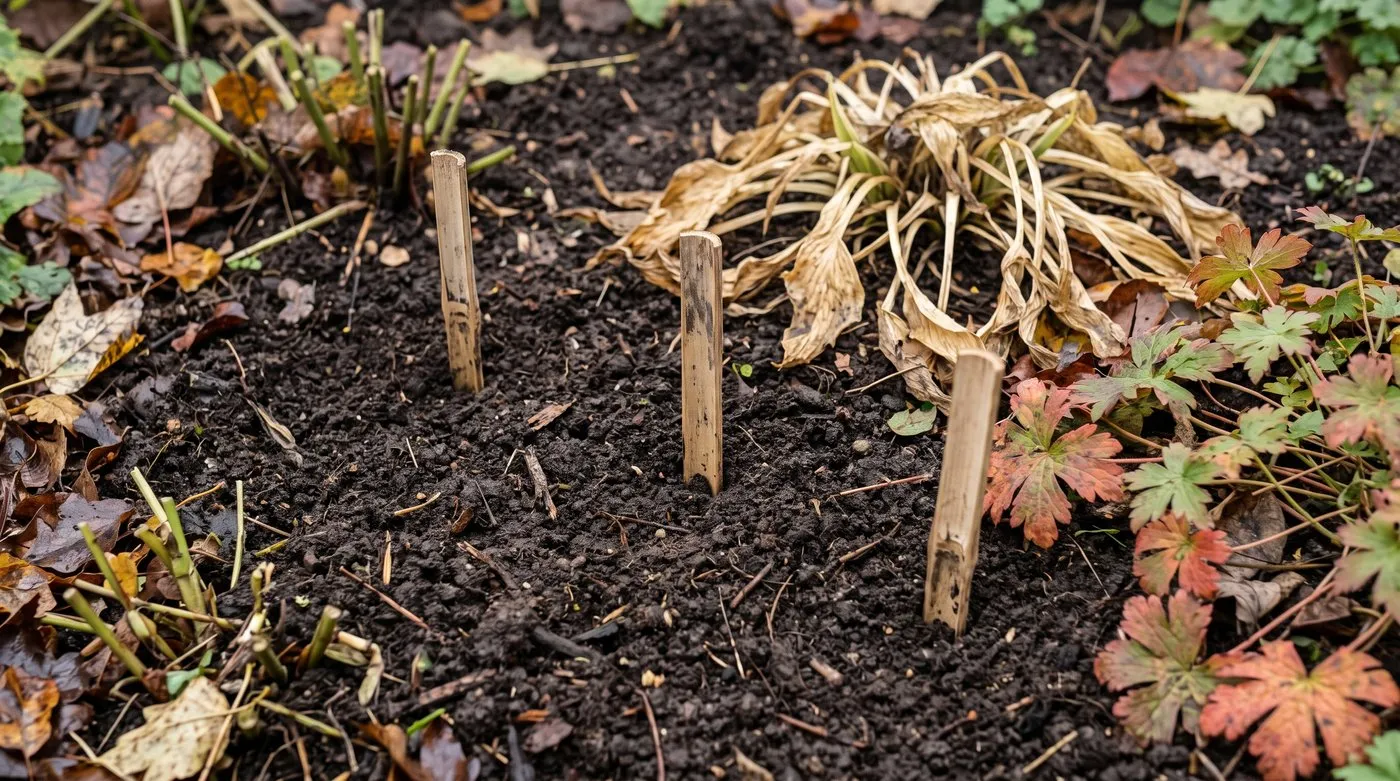
A few simple markers stop you digging into bulb groups when you tidy the border in winter.
Planting too shallow. Shallow bulbs get speared by forks and hoes, and tulips flower less well. Go about three times the bulb’s height.
Choosing the wrong neighbours. Bulbs next to late-waking perennials leave bare, yellowing leaves on show. Pair them with early growers such as geraniums and peonies.
Cutting leaves too soon. Bulbs need their leaves for about six weeks to build up next year’s flowers.
Forgetting where they are. Unmarked groups get dug up in autumn. A stick or label saves a lot of bulbs.
Frequently asked questions
Can you plant bulbs in established perennial borders?
Yes, autumn is the time, while perennials are dying back. Use a narrow trowel or bulb planter to plant in the gaps between clumps. Plant in groups rather than single bulbs. Mark where they go so you don’t dig into them later.
How deep do you plant bulbs in a mixed border?
About three times the bulb’s own height. That means roughly 15-20cm for tulips and large alliums, 10-15cm for daffodils and 5-10cm for small bulbs such as crocus and snowdrops. Planting on the deep side helps protect bulbs from forks and hoes.
What perennials hide dying bulb foliage?
Hardy geraniums, peonies, hostas and lady’s mantle are the best. They grow quickly in late spring and cover the yellowing bulb leaves. Plant bulbs just in front of the clump so the perennial leans over them as it grows.
Should I lift tulips after flowering in a perennial border?
It depends on your soil and the variety. Many large hybrid tulips fade after their first year in cool, damp gardens. On free-draining soil, leaving them in is often fine. Species tulips and Darwin hybrids are the most likely to come back.
Which alliums work best in herbaceous borders?
Allium ‘Purple Sensation’ is a reliable, affordable choice. It has purple drumsticks on tall stems in late May and June. ‘Globemaster’ has much bigger heads, and Allium christophii has silvery-lilac starry balls on shorter stems.
How many bulbs do I need per square metre of border?
In a mixed border, fewer than you’d plant in a solid block. Plant loose groups of 5-15 bulbs between perennials rather than covering every inch. A solid block of tulips needs around 50 per square metre, and small bulbs need more.
Can bulbs be planted with hostas and peonies?
Yes, plant around the edge of the clump, not through the crown. Use a hand trowel to avoid damaging the dormant roots. As the peony or hosta leaves open in May, they cover the bulb foliage nicely.
Now your bulbs are planned, read the guide to bulb planting density to work out how many to order, or browse the best perennial plants to partner them. For more border ideas, visit the garden design section.
Our team produces practical UK gardening guidance from source research, contributor records and established horticultural practice. Editorial standards are overseen by Matt W.