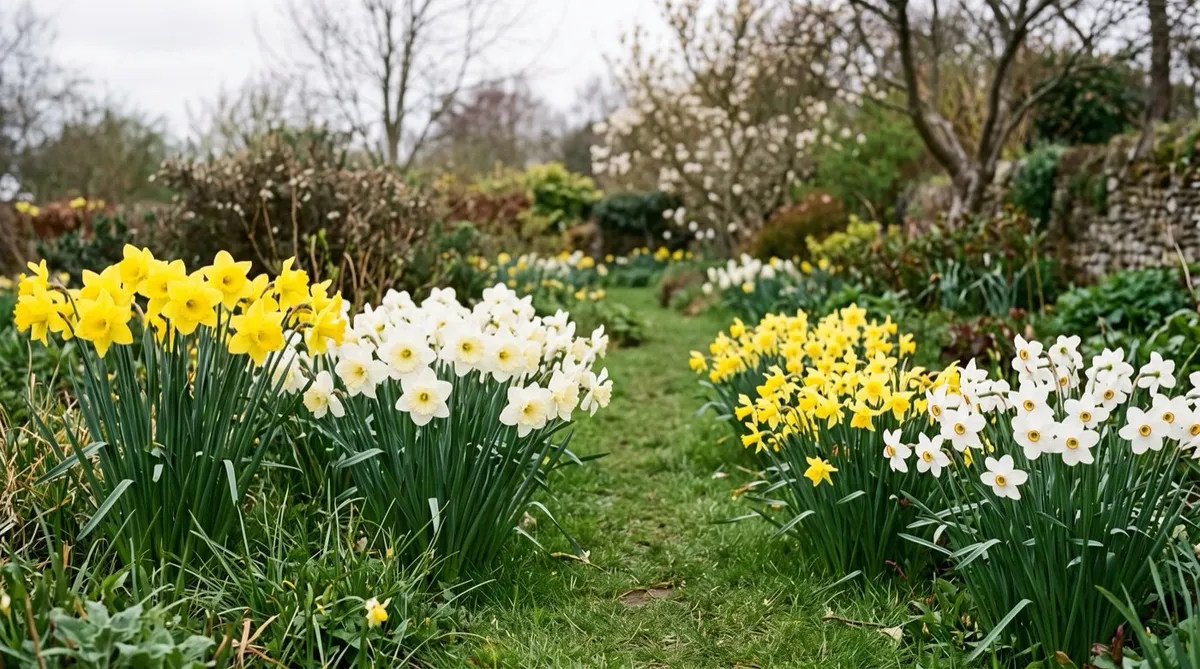
Key takeaways
- Never tie, knot or plait daffodil leaves, as they feed next year's flower
- Leave the leaves for at least six weeks after flowering, until they turn yellow
- Plant bulbs about three times their own height deep, usually 10-15cm
- A high-potash feed such as tomato feed after flowering helps bulbs flower again
- Not every daffodil comes back reliably, so choose varieties known for naturalising
Most daffodil myths come from wanting a tidy garden, and they cost you flowers the next spring. The good news is the fixes are easy. Leave the leaves alone, plant deep enough, feed after flowering and pick varieties that like to come back.
This guide busts the eight most common myths. For the full growing basics, see the guide on how to grow daffodils.
Myth 1: Tie or knot the leaves to tidy the bed
This is the most damaging daffodil myth. The green leaves keep working for weeks after the flowers fade. They make the food that builds next year’s flower inside the bulb.
Tying, knotting or plaiting the leaves cuts that work short, so the bulb goes into summer hungry. The result is fewer, smaller flowers, or none at all.
Leave the leaves loose and upright. If the look bothers you, plant later perennials such as hardy geraniums or lady’s mantle in front. They grow up and hide the fading leaves. The guide to spring bulb care after flowering covers what else to do once the show is over.

Leaves left loose like this are feeding the bulb for next spring. Lady’s mantle growing alongside soon hides them.
Myth 2: Cut the leaves back after four weeks
Four weeks isn’t long enough. Leave daffodil leaves for at least six weeks after the flowers fade, and longer if they’re still green.
Early dwarfs such as ‘Tete-a-Tete’ finish first. Late varieties such as Pheasant’s Eye can stay green well into summer.
The easy test is the leaves themselves. Wait until they’ve turned yellow and come away with a gentle tug. Then you can cut or pull them off.
Myth 3: Daffodil bulbs only need planting shallow
Shallow planting is a common cause of blind daffodils, ones that make leaves but no flowers. Plant bulbs at about three times their own height, usually 10-15cm deep.
Measure from the base of the bulb to the soil surface. Shallow bulbs tend to split into lots of small bulbs that take a few years to reach flowering size. They also dry out faster in summer, and a deeper bulb sits safely below a mower or a hoe.
The best time to plant is September to early October. The guide to when to plant daffodil bulbs has more on timing.

Measure from the bottom of the hole. Around three times the bulb’s height, roughly 10-15cm, is about right.
Myth 4: Any compost will do for daffodils in pots
Daffodils hate sitting wet, and some peat-free multipurpose composts stay soggy through a wet winter. Bulbs can then rot.
For pots, mix peat-free multipurpose compost with some John Innes No. 2 (a loam-based compost) and a few handfuls of horticultural grit. Make sure the pot has drainage holes, and raise it on pot feet over winter.
Keep the compost just moist in autumn and winter, as the bulbs grow roots long before shoots show. Water more once the shoots appear and while they flower.

Dwarf daffodils like Tete-a-Tete are some of the most reliable in pots. A gritty mix stops them rotting over winter.
Myth 5: Daffodils don’t need feeding
Daffodils in rich border soil can manage without, but a feed helps most clumps flower well year after year. Pots need it most.
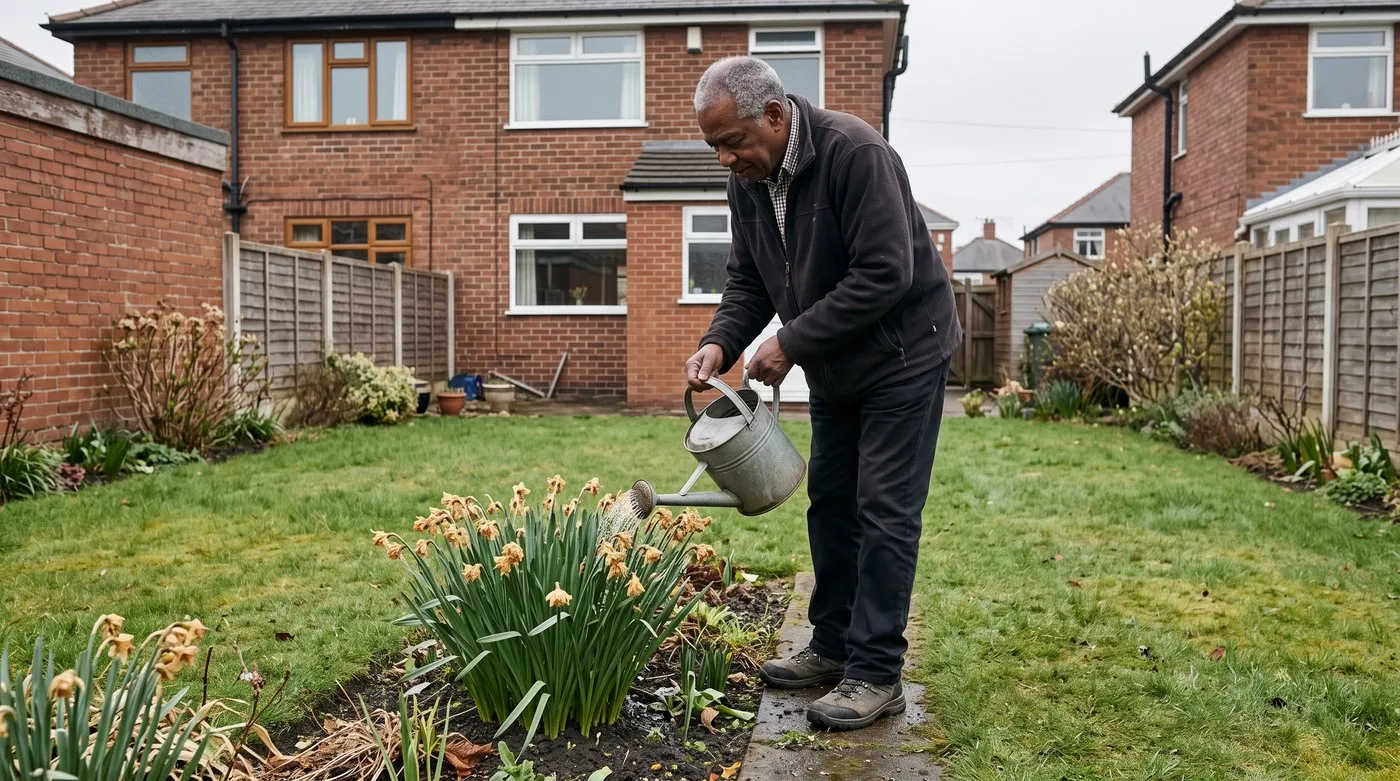
A liquid tomato feed after flowering helps the bulb build next year’s flower while the leaves are still green.
The key is potash, not nitrogen. After flowering, give a liquid tomato feed every week or two until the leaves start to yellow. This helps build next year’s flower inside the bulb. High-nitrogen feeds such as lawn feed push leafy growth instead.
Myth 6: Pack bulbs in tightly for instant impact
Tightly packed bulbs look great in the first spring. Within a few years they’re crowded, short of water and food, and the flowers dwindle.
A good rule is about two bulb widths apart. This table gives rough spacings.
| Daffodil type | Spacing |
|---|---|
| Large varieties (Carlton, Dutch Master) | 12-15cm |
| Medium varieties (Ice Follies, Thalia) | 10-12cm |
| Dwarf varieties (Tete-a-Tete, Hawera) | 5-8cm |
| Naturalising in grass | 15-20cm, in loose drifts |
For a natural look in a border, plant in a few loose groups of seven to eleven bulbs rather than one dense block. The guide to bulb planting density helps you work out how many to buy.
Myth 7: All daffodils come back every year
Some daffodils come back reliably for years, and others fade after a season or two. Look for varieties sold as good for naturalising, and those with the RHS Award of Garden Merit (AGM).
Reliable choices for UK gardens include:
- ‘Tete-a-Tete’: dwarf and yellow, great in pots and borders
- ‘Ice Follies’: white with a pale lemon cup, bulks up well
- ‘February Gold’: early, yellow, good in grass as well as borders
- Narcissus poeticus var. recurvus (Pheasant’s Eye): late, white and scented, naturalises well
- ‘Thalia’: white and graceful, happy in light shade
Bulbs forced for indoor flowering at Christmas often take a year or two to recover once planted out. Cheap mixed nets can be less predictable than named varieties. The guide to daffodil types explains the different groups.

Pheasant’s Eye is one of the best for naturalising. Once settled, a drift like this spreads slowly by itself.
For more on drifts in lawns, see the guide to naturalising bulbs in grass.
Myth 8: Potted bulbs keep going on the same compost
After a season, pot compost is short of food and full of roots. Left alone, the pot usually flowers less the next year.
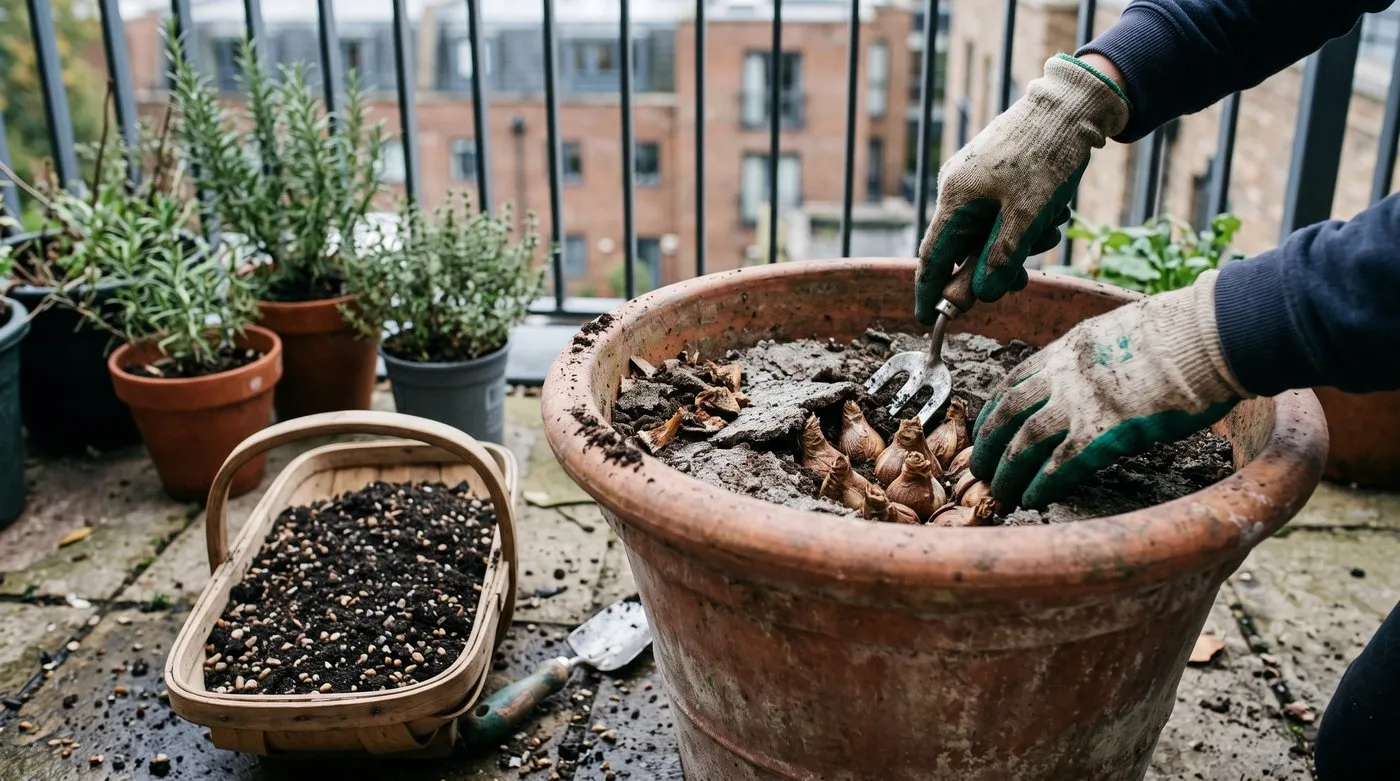
Swapping the top few centimetres of compost each September gives potted daffodils a fresh start without disturbing the bulbs.
Give it a simple refresh each September:
- Scrape off the top few centimetres of old compost without disturbing the bulbs
- Replace it with fresh gritty compost
- Every two or three years, tip the pot out, separate the bulbs and replant the biggest in fresh compost
- Feed after flowering each spring with a high-potash feed
Common daffodil mistakes to avoid
- Planting late. Daffodils root early, so plant from September to early October for the best flowers.
- Lifting bulbs while the leaves are green. Wait until the leaves have yellowed and come away cleanly.
- Letting pots dry out completely. Roots grow all through autumn and winter, so keep the compost just moist.
- Mowing naturalised daffodils too soon. Leave the grass uncut for at least six weeks after flowering.
- Storing bulbs near onions. Daffodil bulbs are poisonous and can be mistaken for onions. Keep them labelled and well away from food. Daffodils are also toxic to dogs and cats, so keep pets from digging up or chewing the bulbs.
If your clumps have stopped flowering altogether, the guide to daffodil blindness works through the causes and fixes. For more spring bulbs, browse the plants section.
Frequently asked questions
Should you tie up daffodil leaves after flowering?
No, leave daffodil leaves loose until they yellow. The green leaves make food that builds next year’s flower inside the bulb. Tying or knotting them cuts that short, so you often get fewer flowers or none the next spring.
When can I cut back daffodil leaves in the UK?
At least six weeks after the flowers fade, once the leaves yellow. That’s usually around June. Watch the leaves rather than the calendar. When they’re yellow and come away with a gentle tug, they’ve done their job.
How deep should I plant daffodil bulbs?
About three times the bulb’s height, usually 10-15cm deep. Measure from the base of the bulb to the soil surface. Bulbs planted too shallow tend to split into lots of small bulbs that take a few years to flower.
Do daffodils need feeding?
A high-potash feed after flowering helps them flower well next year. Use a liquid tomato feed every week or two until the leaves start to yellow. Avoid high-nitrogen feeds, which push leaves rather than flowers. Daffodils in pots need feeding most.
Why do daffodils come up blind?
Usually from crowding, shallow planting or leaves cut too soon. Hungry or dry bulbs in summer are another cause. Lift and divide crowded clumps once the leaves die down, replant at the right depth and feed after flowering.
Do daffodils come back every year in containers?
Often, but they flower less each year without care. Pot compost runs short of food and space. Replace the top few centimetres of compost each autumn, feed after flowering, and replant into fresh compost every two or three years.
How far apart should I plant daffodils?
About two bulb widths apart, roughly 10-15cm for large varieties. Dwarf types like Tete-a-Tete can go 5-8cm apart. Planting too tightly makes clumps crowded and short of flowers within a few years.
Now you’ve busted the daffodil myths, plan a pot packed with spring colour using the guide to bulb lasagne planting.
Our team produces practical UK gardening guidance from source research, contributor records and established horticultural practice. Editorial standards are overseen by Matt W.