Key takeaways
- Scilla siberica gives intense blue flowers in March and April
- Plant bulbs in autumn, about 8cm deep and 5cm apart, in groups of 25 or more
- They grow well under deciduous trees, in grass and in gravel
- Let the leaves die back naturally, and don't mow over them until they yellow
- Scilla siberica has nodding bells; chionodoxa has upward-facing stars with a white eye
- All parts are poisonous if eaten, so keep bulbs away from pets and children
Scilla are tiny bulbs that turn the ground blue in early spring. A drift under a tree looks like a puddle of sky. Plant them in autumn and they come back every year, slowly spreading into carpets.
They’re among the easiest bulbs you can grow. Their closest lookalike is glory of the snow, which has its own guide on growing chionodoxa. This guide is all about scilla.
Which scilla grow best in the UK?
Four scilla are easy to find and grow well across the UK. Planting a few types spreads the flowers from February to spring.
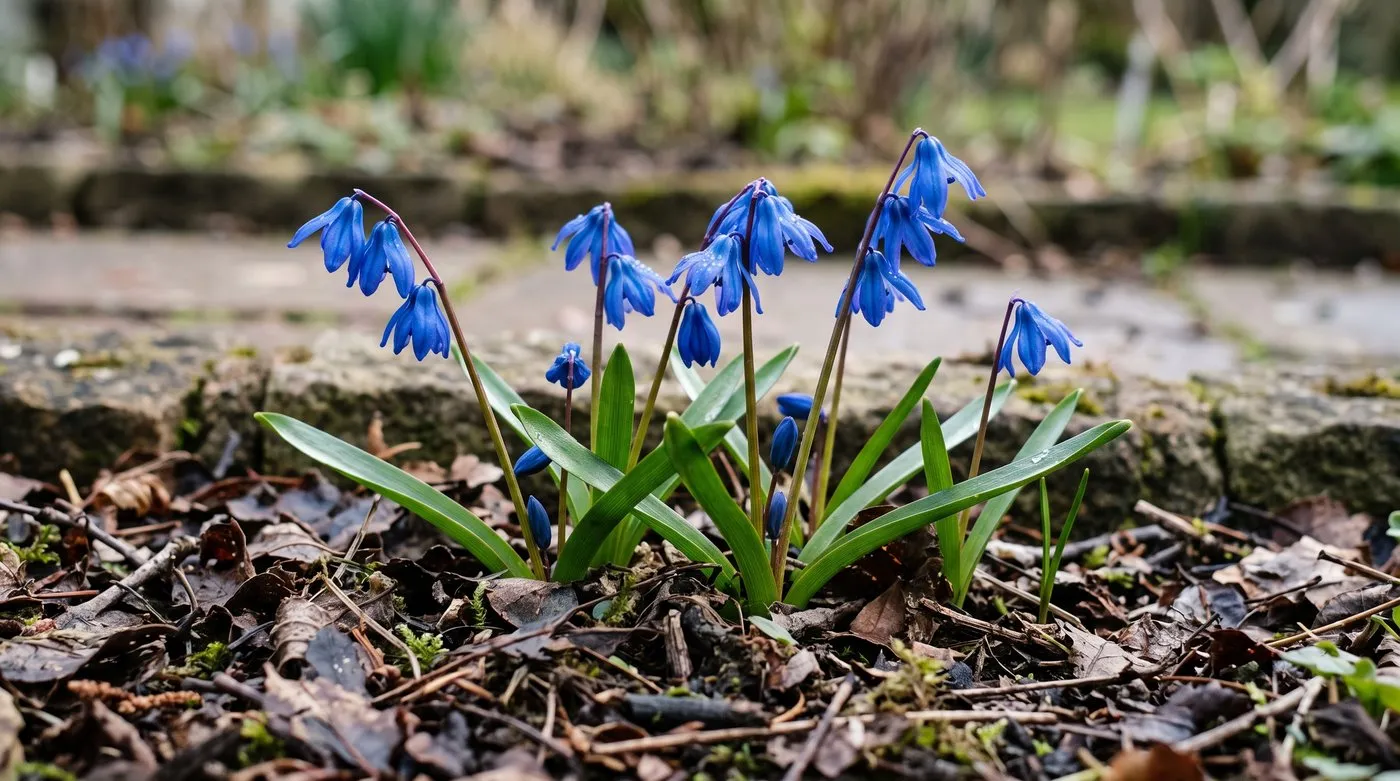
Scilla siberica’s little blue bells hang downwards. That’s the easiest way to spot it.
- Scilla siberica (Siberian squill) is the most popular. Nodding, bell-shaped flowers of intense blue appear in March and April on 10-15cm stems. ‘Spring Beauty’ has bigger, deeper blue flowers and spreads by offsets rather than seed.
- Scilla bifolia (two-leaved squill) flowers earlier, from February. Its small, starry flowers are a softer violet-blue.
- Scilla mischtschenkoana opens from February, sometimes earlier in a sheltered spot. Its pale blue-white flowers have a darker stripe down each petal.
- Scilla lilio-hyacinthus (Pyrenean squill) is the biggest, at 15-25cm. It flowers later in spring, with clusters of lilac-blue flowers. It likes moist, leafy soil in shade.
| Species | Height | Flower colour | Flowers | Best spot |
|---|---|---|---|---|
| S. siberica | 10-15cm | Intense blue | March to April | Sun or part shade, grass |
| S. bifolia | 10-15cm | Violet-blue | February to March | Part shade, under trees |
| S. mischtschenkoana | 10-15cm | Pale blue, striped | February to March | Sheltered, front of a border |
| S. lilio-hyacinthus | 15-25cm | Lilac-blue | Mid to late spring | Moist shade |
How to plant scilla bulbs
Plant scilla bulbs in autumn, from September to November. The bulbs are small and dry out quickly, so plant them soon after buying.

Scilla bulbs are tiny, so a narrow trowel or dibber makes planting quick work.
- Make holes about 8cm deep and 5cm apart with a narrow trowel or dibber.
- On heavy clay, drop a little grit into the bottom of each hole.
- Set the bulb pointy end up. If you can’t tell, plant it on its side.
- Cover with soil and firm gently.
Plant at least 25 bulbs together. One scilla is easy to miss, but a group makes a real splash. For bigger areas, our guide to how many bulbs to plant per square metre helps you work out numbers.
Squirrels sometimes dig up newly planted bulbs. A piece of wire mesh over the area for the first winter usually stops them. See our guide to stopping squirrels digging up bulbs for more ideas.
Where is the best place to grow scilla?
Scilla grow best in light shade under deciduous trees or in grass in sun or part shade. In the wild many grow in woodland, flowering before the trees leaf up.
- Under trees: birch, cherry and other deciduous trees are ideal. The bulbs get spring light and then rest in summer shade. They cope well with tree roots.
- In grass: scatter bulbs through rough grass or a lawn edge. Leave the area unmown until the leaves have died back.
- Gravel and borders: they look lovely at the front of a border, in gravel or in a rockery.
- Soil: they’re not fussy, but avoid soil that stays waterlogged.
Naturalising scilla in grass
Scilla are one of the best small bulbs for naturalising, which means letting them spread and settle as if they grew there naturally. They spread in two ways: by dropping seed and by making small offset bulbs around the parent.
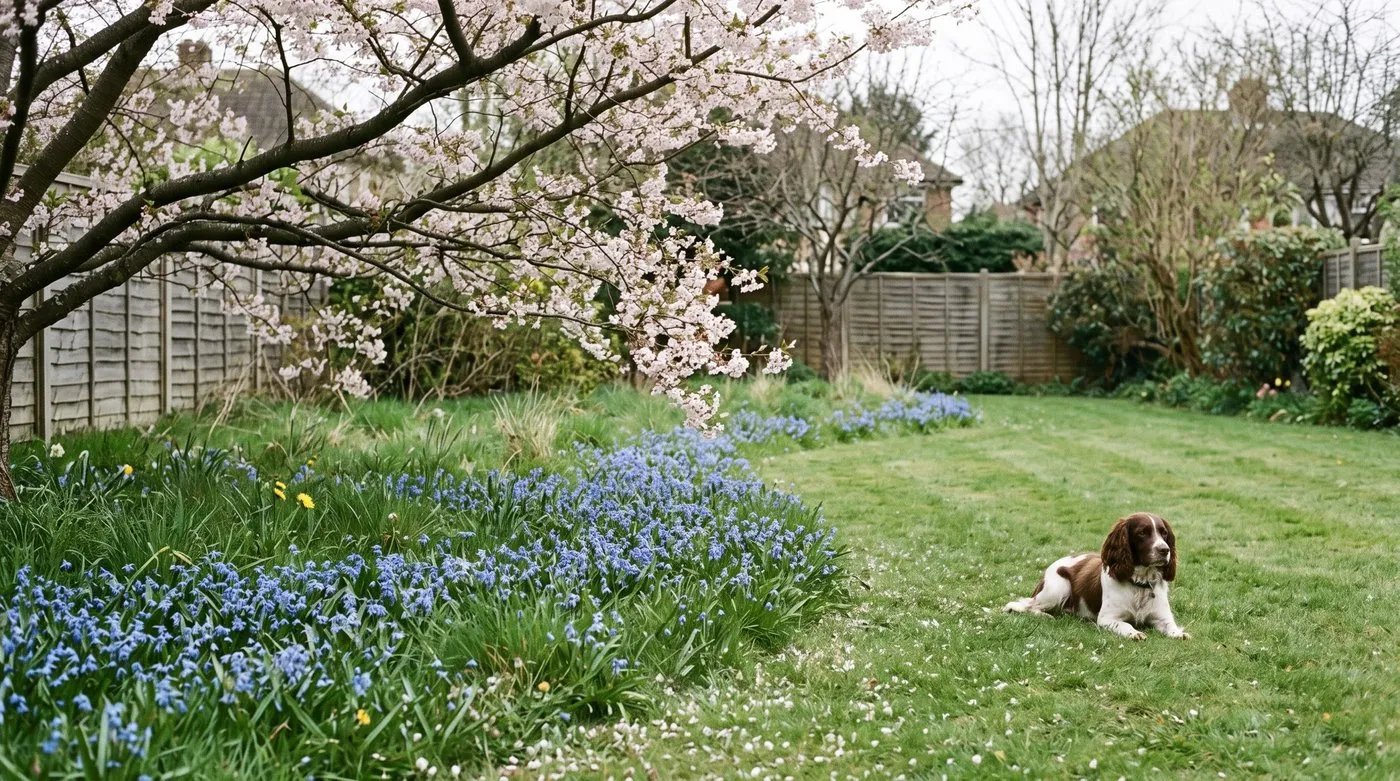
Leave the grass uncut until the scilla leaves turn yellow, and the patch will spread a little more each year.
To plant in grass, toss a handful of bulbs across the area and plant each one where it lands. That gives a natural, random look. Lift a small plug of turf with a trowel or bulb planter, pop the bulb in at about 8cm deep and replace the turf.
The one rule is no mowing until the leaves turn yellow, usually by late May or June. Mark the patch with short canes so you remember. Our guide to naturalising bulbs in grass covers other bulbs that work the same way.
Scilla or chionodoxa: how to tell them apart
The quickest way is to look at the flowers.
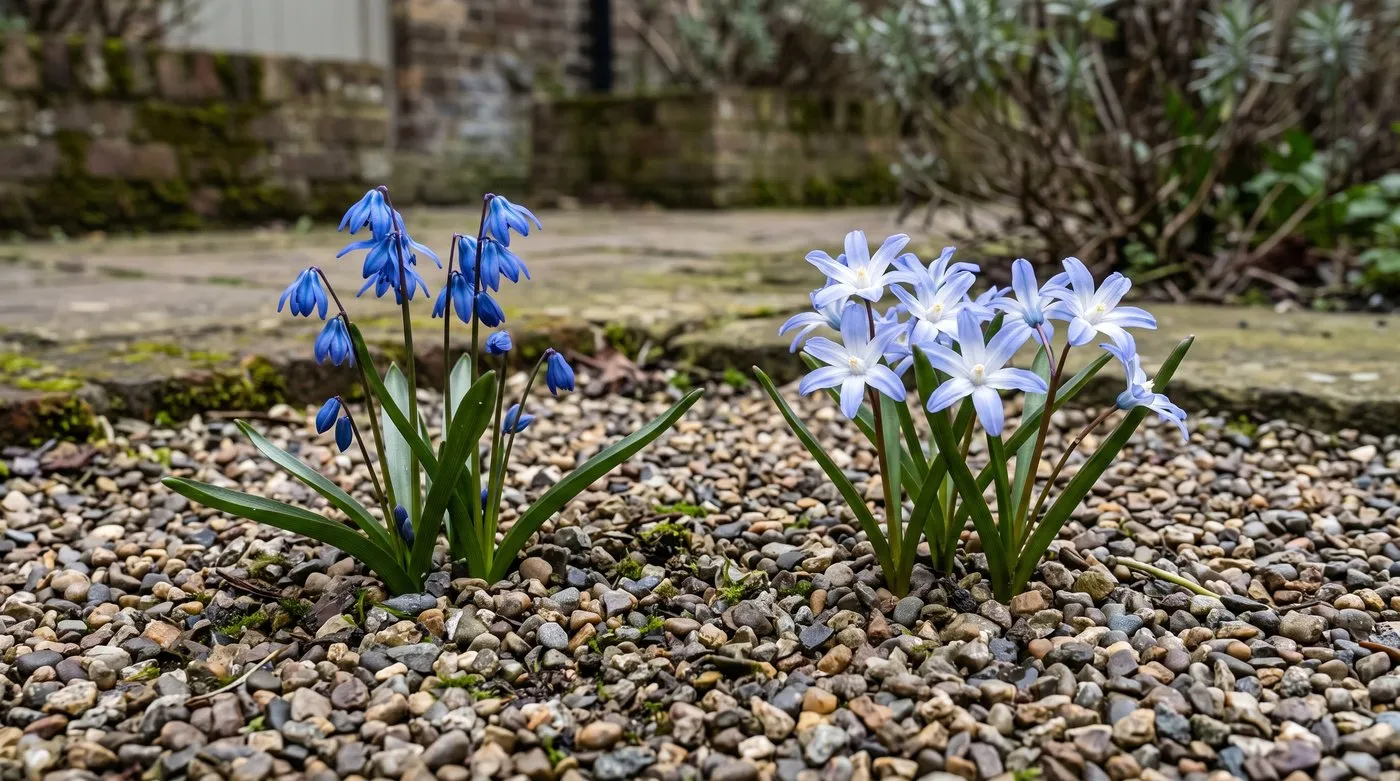
Scilla on the left hangs its head; chionodoxa on the right looks up with a white eye.
- Scilla siberica has nodding bells that hang down, all one shade of blue.
- Chionodoxa has upward-facing, star-shaped flowers, usually with a white eye in the middle.
Botanists now group the two together, but they’re still sold separately. They need exactly the same care and look great planted together. Where they grow side by side, they sometimes cross.
How to look after scilla after flowering
The main job is to leave the leaves alone until they turn yellow and flop. The leaves feed the bulb for next year’s flowers.
- Don’t cut, tie or mow the leaves early.
- Feeding isn’t usually needed.
- Watering is rarely needed, as they grow through the wettest months.
- Pests and diseases are rarely a problem.
For more on this, see our guide to spring bulb care after flowering.
Growing scilla in pots
Scilla look sweet in small pots and troughs by the door. Plant in autumn in peat-free multipurpose compost mixed with some grit.
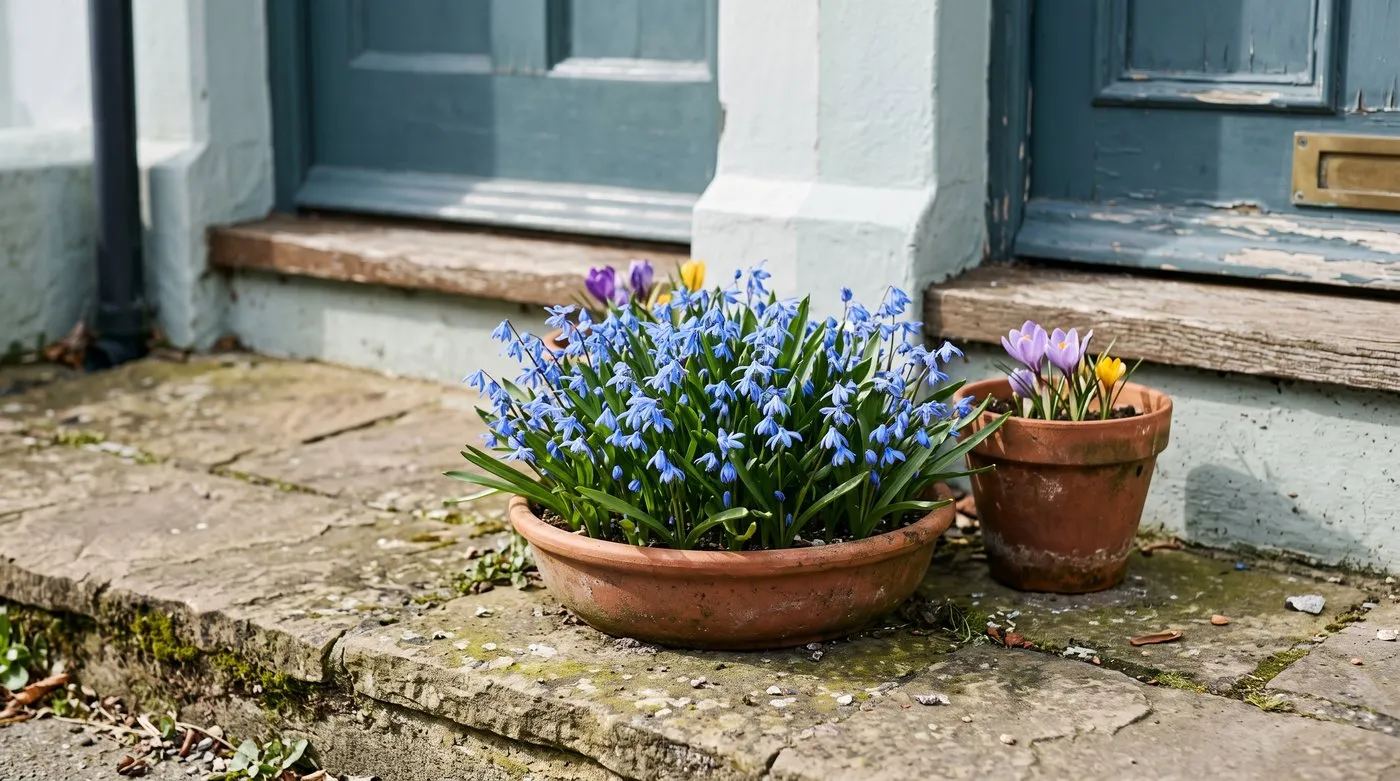
Planted closely in a shallow pan, scilla make a cheerful doorstep display in early spring.
Use a pot or pan at least 15cm deep. Plant bulbs closer than in the ground, about 2-3cm apart, for a full display. Keep the compost just moist through winter.
After flowering, keep watering until the leaves yellow, then let the pot dry out. You can also plant the whole potful out in the garden, at the same depth, to start a new colony.
Plants to grow with scilla
Scilla’s blue looks wonderful with yellow, white and purple spring flowers.
- Snowdrops and winter aconites start the show earlier. See our guide to growing snowdrops.
- Crocus and Anemone blanda flower at a similar time.
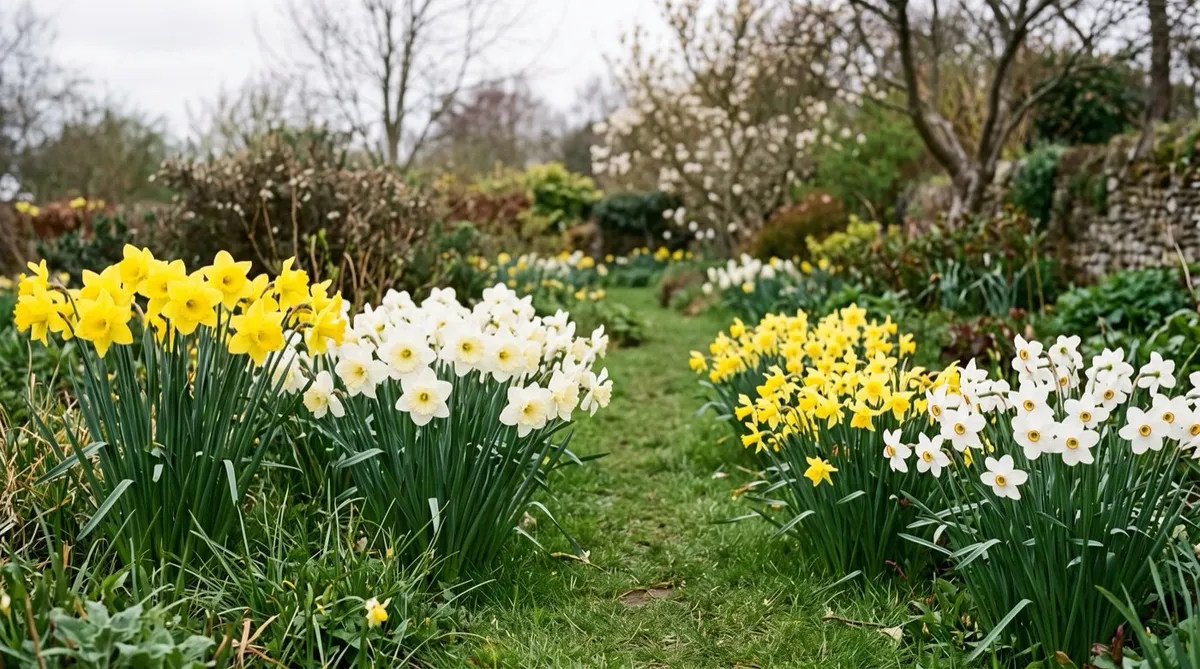
- Daffodils look great rising through a blue carpet of scilla.
For a pot or a small bed, try layering scilla over daffodils or tulips. Our guide to bulb lasagne planting shows how to stack bulbs at different depths.
Common mistakes with scilla
- Planting too few. A handful of bulbs barely shows. Plant at least 25 together.
- Mowing too soon. Cutting the leaves before they yellow weakens the bulbs.
- Planting in soggy ground. The bulbs can rot in waterlogged soil.
- Leaving bulbs in the bag. Small bulbs dry out fast, so plant them soon after buying.
Ready to plan more spring colour? Browse our plant guides, or see our guide to when to plant spring bulbs to time the rest of your planting.
Frequently asked questions
When do scilla flower in the UK?
Between February and April, depending on the species. S. mischtschenkoana and S. bifolia open first, from February. S. siberica, the most popular, flowers in March and April. Gardens in the north usually flower a little later.
How deep do you plant scilla bulbs?
Plant them about 8cm deep and 5cm apart. Plant from September to November. On heavy clay, add a little grit under each bulb. Plant at least 25 together, as single bulbs are easy to miss.
Will scilla naturalise in grass?
Yes, scilla naturalise well in grass. They spread by seed and by small offset bulbs. Don’t mow until the leaves have yellowed, usually by late May or June, or the bulbs will weaken.
What is the difference between scilla and Chionodoxa?
Scilla siberica has nodding bells, while chionodoxa has upward-facing stars. Chionodoxa flowers usually have a clear white eye in the centre. The two are close relatives, and you grow them in exactly the same way.
Do scilla grow in shade?
Yes, they do well in light shade under deciduous trees. They flower and grow their leaves before the trees come into full leaf. They also grow in full sun, especially in grass.
Are scilla poisonous?
Yes, all parts of scilla are poisonous if eaten. Keep bulbs away from children and pets while you’re planting. Wear gloves if handling bulbs irritates your skin.
Our team produces practical UK gardening guidance from source research, contributor records and established horticultural practice. Editorial standards are overseen by Matt W.