Key takeaways
- Jacob's ladder flowers from late May to early July and grows 45-90cm tall
- It likes moist soil in dappled shade or part sun, and hates hot, dry spots
- Plant about 40cm apart in March or September, and mulch each spring
- Cut back hard in early to mid July, before seed pods turn brown, to stop self-seeding
- Divide clumps every three years in early spring to keep them flowering
- Powdery mildew mostly hits plants with dry roots, so water in dry spells and mulch
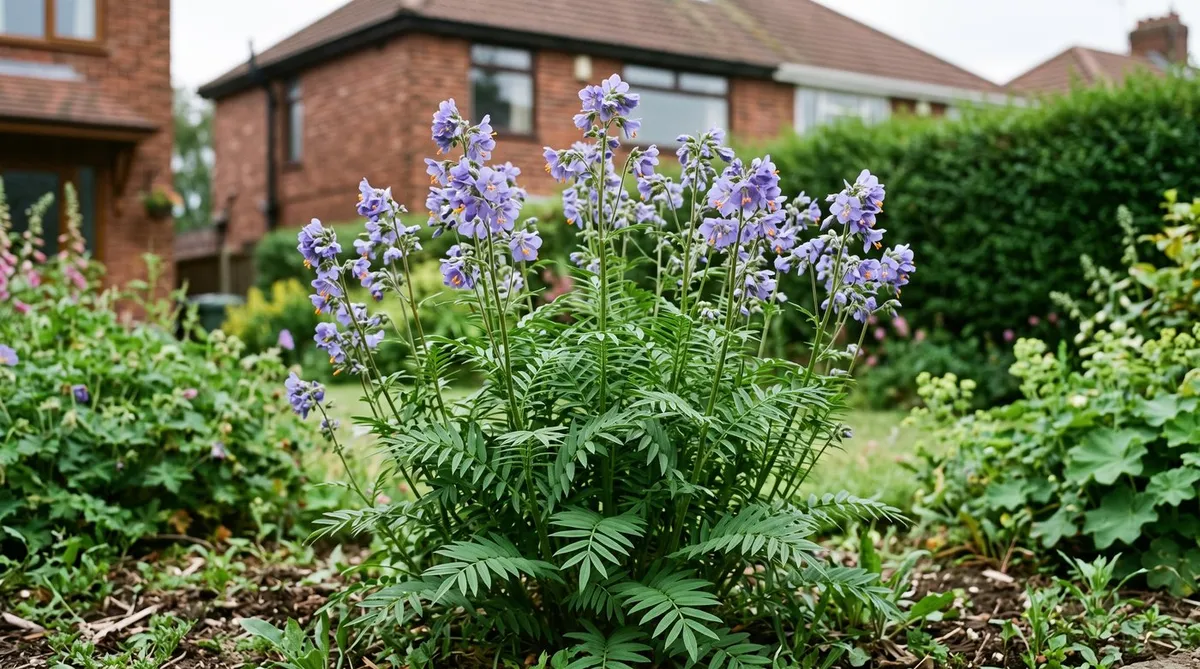
Polemonium, better known as Jacob’s ladder, is a cottage-garden perennial that flowers well in light shade. The name comes from its leaves: neat pairs of leaflets climbing a stem like the rungs of a ladder. Clusters of blue, cup-shaped flowers follow from late May.
Growing it well comes down to two things. Stop the common species from seeding everywhere, and keep its roots moist so the leaves stay clean. This guide covers both, plus the best varieties, planting and dividing.
What does Jacob’s ladder look like?
Polemonium caeruleum makes a low clump of leaves, each made of many narrow leaflets in opposite pairs. That ladder pattern is the easiest way to spot it. It’s also a rare British native, found wild in a few limestone areas of northern England.
Flower stems rise to 45-90cm, depending on how rich the soil is. Each carries a loose head of lavender-blue, cup-shaped flowers with orange anthers, from late May to early July. After flowering, the seed pods turn straw-brown and split. Later in the year the plant dies back to a small rosette of leaves for winter.
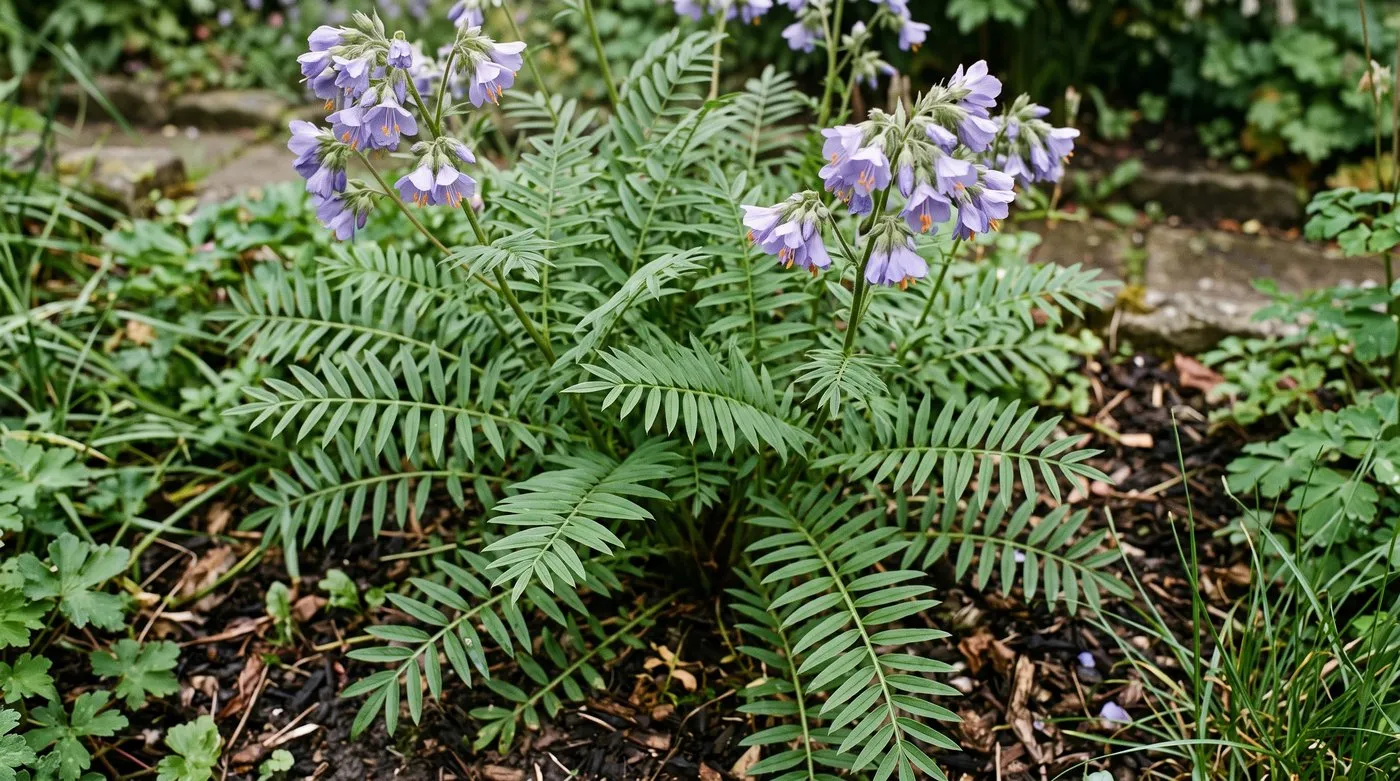
Look at the leaves and you’ll see why it’s called Jacob’s ladder: pairs of leaflets climbing every stem.
The best Polemonium varieties for UK gardens
The common species is lovely but seeds freely. Named varieties give you different leaf colours, and some seed much less.
| Variety | Height | Flowers | Why grow it |
|---|---|---|---|
| P. caeruleum | 45-90cm | Lavender-blue (also a white form) | Classic look, but seeds freely |
| ’Bressingham Purple’ | About 45-60cm | Lavender-blue | Purple-tinted leaves, compact |
| ’Lambrook Mauve’ | About 45cm | Soft lilac | Low mound, seeds far less |
| ’Brise d’Anjou’ | About 60cm | Blue | Cream-edged leaves, needs moisture |
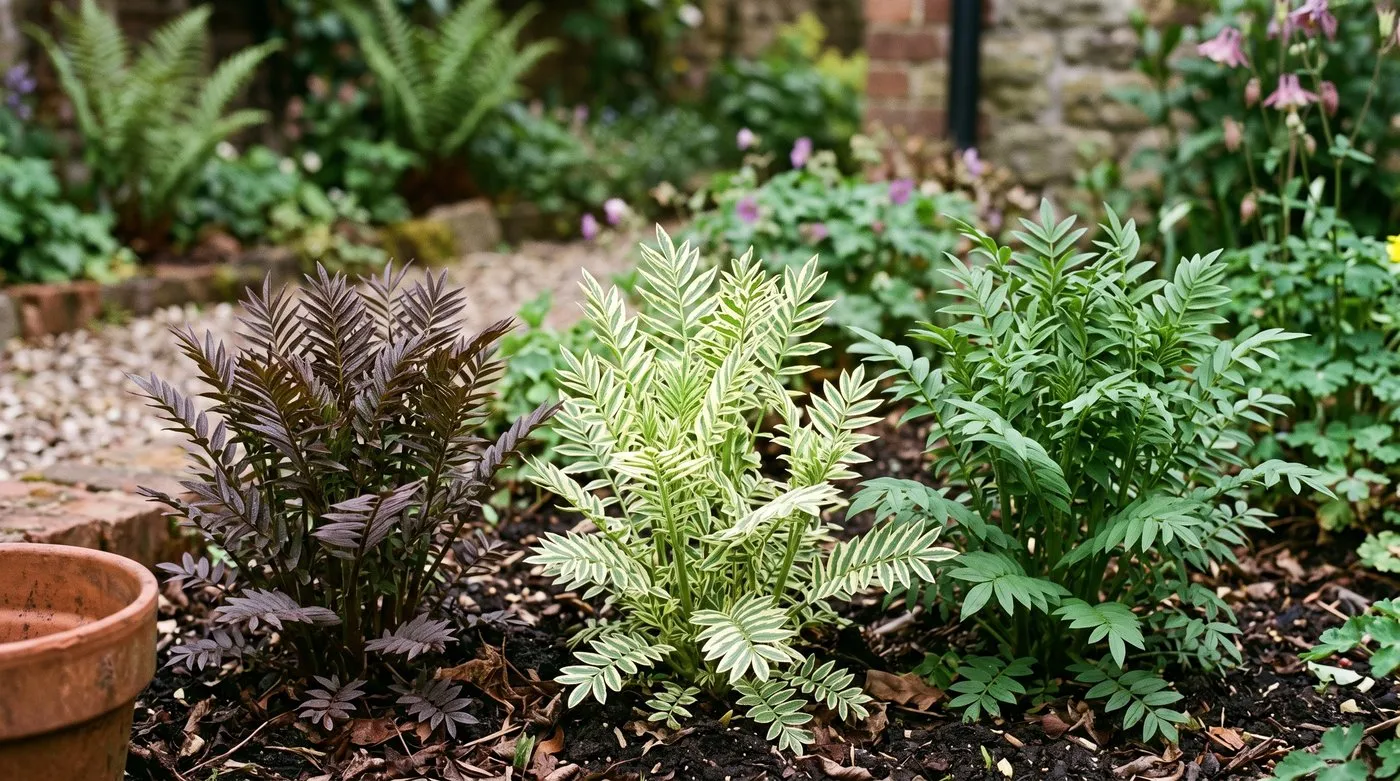
Leaf colour tells the varieties apart long before they flower: purple-tinted, cream-edged and plain green.
Where to plant Jacob’s ladder
Plant it in dappled shade or part sun, in soil that stays moist. It copes with a few hours of direct sun but sulks in a hot, dry border. Heavy clay is fine if it doesn’t sit waterlogged in winter.
Space plants about 40cm apart. Crowded clumps get mildew, flower less and are harder to divide. Three plants at 40cm soon look better than five squeezed together.
Gardener’s tip: Plant something that peaks in late summer just behind it, such as a Japanese anemone or a late hardy geranium. Jacob’s ladder leaves look tired by August, and a taller neighbour hides them without shading the crown.
For partners that like the same moist, part-shaded spot, Brunnera ‘Jack Frost’ flowers just before Jacob’s ladder. Our guide to the best plants for shade has more ideas.
How to plant Polemonium
Plant in March or September, when the soil is moist and workable. Avoid the middle of summer, when the shallow roots dry out before they can spread.
- Water the pot well and let it drain.
- Dig a hole twice the width of the pot and the same depth.
- On heavy clay, mix some grit into the soil you dug out.
- Gently tease out any circling roots.
- Plant with the crown level with the soil, not buried. Firm in and water well.
- Mulch about 5cm deep with garden compost or leaf mould, keeping it off the crown.

Keep the crown level with the soil and the mulch just clear of it, then water in well.
How to divide Jacob’s ladder
Divide clumps every three years or so in early spring, as new growth appears. Older clumps go woody and bare in the middle, and flowering drops off. Don’t wait for it to decline: divide while it still looks good.
- Lift the whole clump with a fork.
- Shake off loose soil.
- Pull or cut it into fist-sized pieces, each with several shoots and plenty of roots.
- Throw away the old woody centre.
- Replant straight away about 40cm apart and water in.
Divisions usually flower the same summer, just with fewer stems. On light, free-draining soil you can also divide in early autumn.
How to stop Polemonium self-seeding
Left alone, Polemonium caeruleum self-seeds freely. Seedlings pop up in gravel, paving cracks and the middle of other plants, and they can be fiddly to weed out.
The fix is a hard cut, not a quick deadhead. In early to mid July, as flowering finishes and before the seed pods turn brown, cut every flower stem and most of the leaves back to a low mound. This removes the seed, and you get a fresh flush of clean leaves a few weeks later. Once pods are brown they split at a touch, so don’t wait.
Bag up the seedheads or put them in your green waste bin. A cool garden compost heap may not kill the seed.
If you’d rather not bother, grow a named variety that seeds less, such as ‘Lambrook Mauve’. If you like a border that self-sows, our guide to self-seeding plants shows how to make the most of it. Aquilegia is a good partner with the same habit.
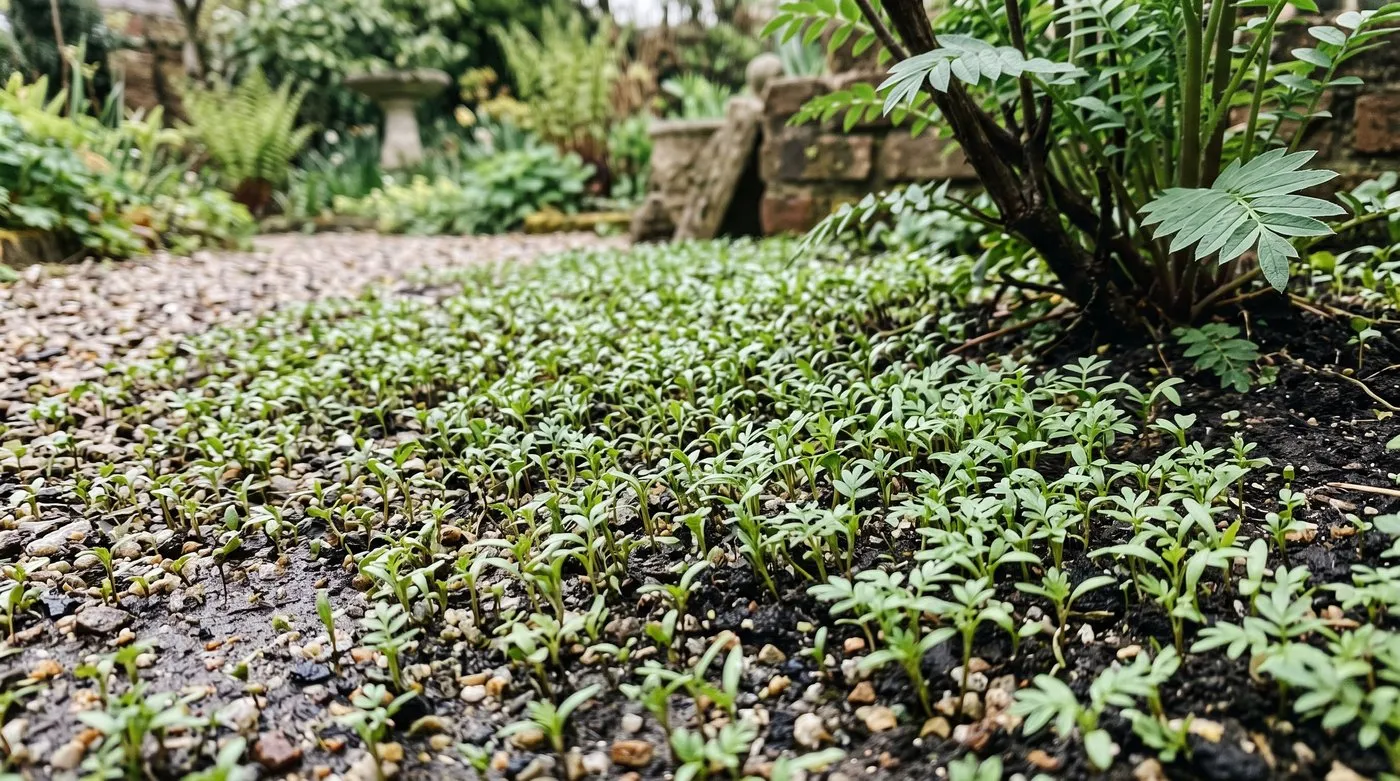
This is what one uncut summer can leave behind. A hard cut in July saves a lot of weeding.
Why Jacob’s ladder gets powdery mildew
Powdery mildew shows as grey-white patches on the leaves in summer. On Jacob’s ladder it’s mostly linked to dry roots, made worse by crowded growth and still air. Shade alone isn’t the cause.
The patches often appear a couple of weeks after a dry spell, so it’s easy to miss the link. To prevent it:
- Mulch 5cm deep each spring to keep roots moist.
- Water deeply once a week in dry spells, especially in June.
- Space plants about 40cm apart so air moves through.
If mildew does take hold, cutting the plant back in July removes the worst of it and the new leaves usually come up clean. Our powdery mildew guide covers the problem on other plants.
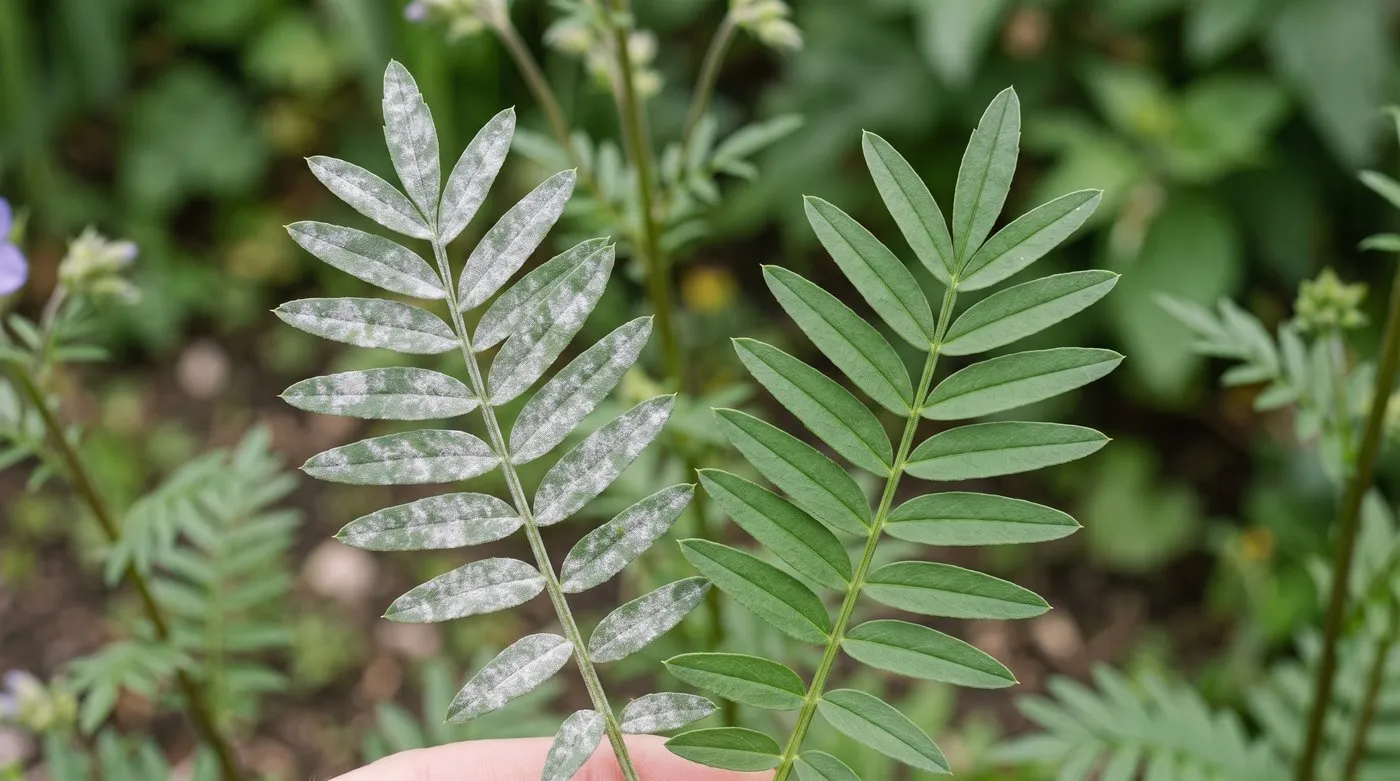
The leaf on the left came from a plant that went short of water. Mulch and steady watering keep leaves like the one on the right.
Is Jacob’s ladder safe for pets?
Yes. Jacob’s ladder is listed as non-toxic to cats and dogs by the ASPCA, so it’s a good choice for family and pet-friendly borders. It’s also a favourite with bees, which makes it a handy plant for bee-friendly gardens.
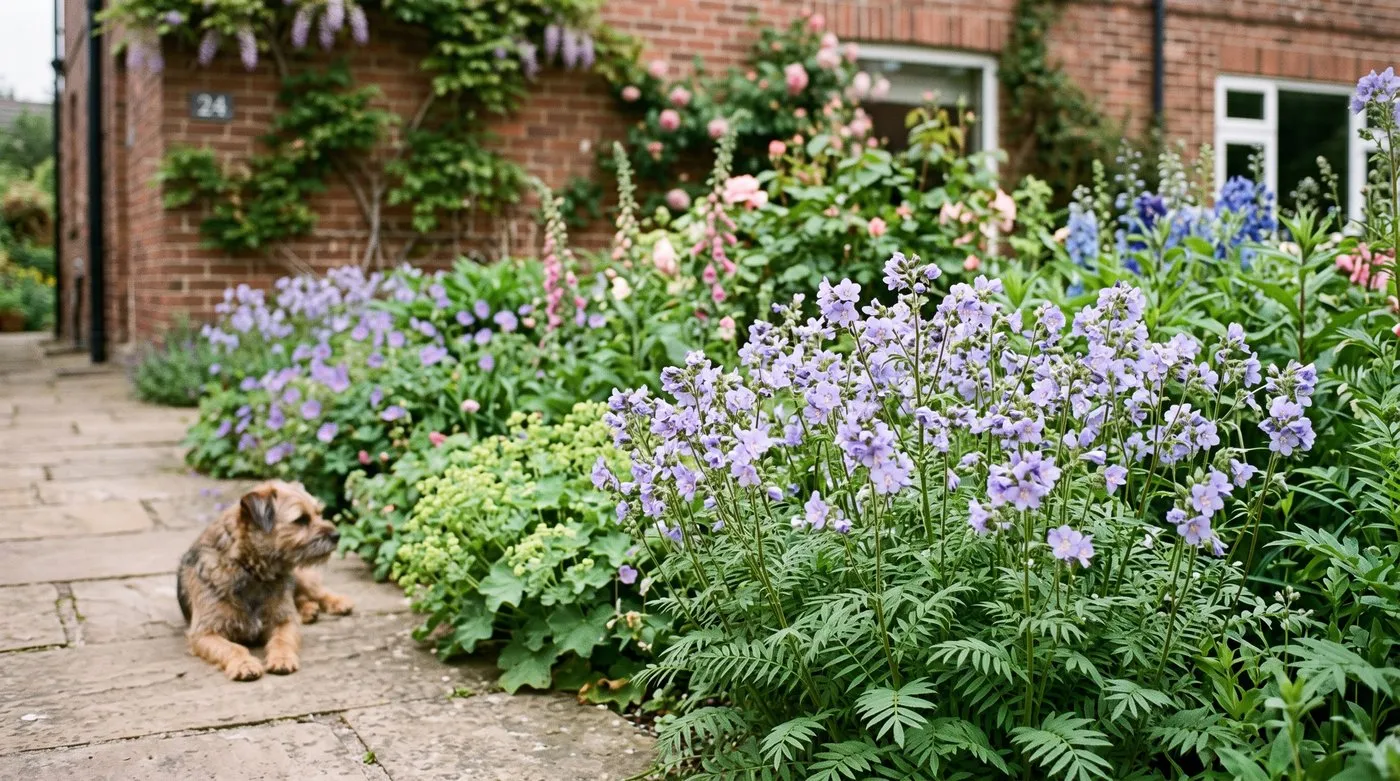
Jacob’s ladder is a safe pick for borders where dogs like to lounge.
Jacob’s ladder through the year
| Month | What to do |
|---|---|
| January | Check crowns aren’t sitting in water on heavy clay |
| February | Clear old leaves from around the rosettes |
| March | Divide older clumps. Plant new ones. Mulch 5cm deep |
| April | Watch for slugs on new shoots. Water new plants in dry spells |
| May | Support tall plants with twiggy sticks. Flowering begins |
| June | Peak flowering. Water deeply in dry spells |
| July | Cut back hard before seed pods turn brown |
| August | Fresh leaves grow. Water if it’s very dry |
| September | Plant new clumps |
| October | Leaves die back. Leave the rosette alone |
| November | Pull up any seedlings while they’re small |
| December | Nothing to do |
Common Jacob’s ladder mistakes
- Planting in a hot, dry spot. It scorches, flowers less and gets mildew.
- Cutting back too late. Once pods are brown, the seed is already scattering.
- Planting too close. Crowded clumps get mildew and need dividing sooner.
- Never dividing. Old clumps go woody and bare in the middle.
- Burying the crown. Plant level with the soil and keep mulch clear of it.
For the other half of a shady border, read our guide to growing hostas, or browse more perennials in the growing hub.
Frequently asked questions
Where is the best place to plant Polemonium?
Dappled shade or part sun, in moist soil that doesn’t dry out. It copes with quite a lot of shade and a few hours of direct sun. What it dislikes is a hot, dry spot against a sunny wall. North and east-facing borders often suit it well.
Does Jacob’s ladder come back every year?
Yes, it is a fully hardy perennial. It dies back to a low rosette of leaves in winter and grows again in spring. Dividing it every few years keeps it going strongly for many years.
How do you stop Polemonium self-seeding everywhere?
Cut the whole plant back hard straight after flowering. Do it in early to mid July, before the seed pods turn brown and split. Named varieties such as ‘Lambrook Mauve’ seed far less than the common species, if at all.
When should you divide Polemonium?
Early spring is best, as new growth appears. Lift the clump, split it into fist-sized pieces with several shoots each, and replant at the same depth about 40cm apart. Autumn division works on light soil but can rot on wet clay.
Why does my Jacob’s ladder get white powder on the leaves?
That is powdery mildew, usually brought on by dry roots. It shows up most in summer on crowded plants that went short of water. Water deeply in dry spells, mulch each spring and space plants about 40cm apart so air moves through.
Which Polemonium is best for a small garden?
‘Bressingham Purple’ is a good choice for a small garden. It is fairly compact, with dark purple-tinted leaves that look good when it’s not in flower. ‘Brise d’Anjou’ has pretty cream-edged leaves but needs steady moisture.
Is Polemonium good for bees?
Yes, bees love the open blue flowers. Bumblebees and solitary bees visit them often. It flowers in late spring and early summer, filling the gap between spring bulbs and midsummer perennials.
Our team produces practical UK gardening guidance from source research, contributor records and established horticultural practice. Editorial standards are overseen by Matt W.