Key takeaways
- The classic look is soft, romantic planting held inside firm green structure
- Plant hedges and lay the main path first, as everything else hangs off them
- Yew is the classic hedge; consider yew or Ilex crenata instead of box, which suffers from blight and caterpillar
- Make the main path at least 1.2m wide so plants can spill over the edges
- A small garden can borrow five or six of the twelve features and still look English
- Prune wisteria twice a year, in July or August and again in January or February
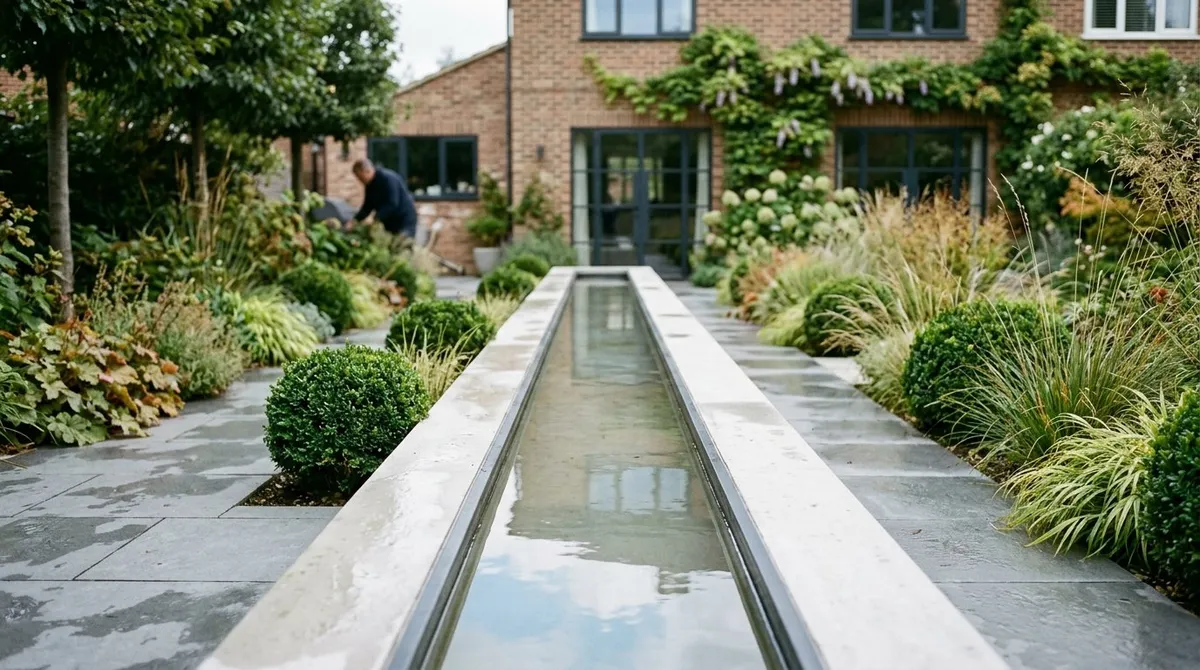
A classic English garden is soft, romantic planting held inside firm green structure. Clipped hedges, a straight path and a focal point give it shape. Roses, lavender and deep borders give it the flowers everyone remembers.
The same dozen features turn up again and again in the famous gardens, such as Sissinghurst in Kent and Hidcote in Gloucestershire. You don’t need acres to use them. Pick the ones that fit your plot and lay them out in the right order. If you’re after the looser, more relaxed planting style, our guide to English country garden style covers drifts, colour and self-seeders.
What makes a garden look classically English?
Structure plus abundance. The structure is evergreen hedging, straight paths and a clear focal point. The abundance is roses, lavender and tall perennials spilling over the edges.
Without the structure, the flowers look messy. Without the flowers, the structure looks like a park. The magic is in having both.
Sissinghurst and Hidcote are famous for garden rooms: areas divided by tall hedges, each with its own planting. Great Dixter in East Sussex shows bold, mixed colour inside old hedges and walls. All three are worth a visit if you want ideas to borrow.
The 12 elements of a classic English garden
Here are the twelve features, roughly in order of importance. Most gardens use only some of them.
1. Clipped yew hedging
Yew (Taxus baccata) is the classic hedge for tall divisions and garden room walls. It clips into crisp lines, grows back from hard cuts and stays dark green all year. Plant young yews about 50-60cm apart in autumn or winter.
Low edging was traditionally box. Box blight and box tree caterpillar now damage many hedges, so many gardeners use yew or Ilex crenata instead. Our guide to box hedge alternatives compares the options.
Warning: Yew is poisonous to people, pets and livestock, apart from the red flesh of the berry. Clear up clippings, and avoid planting it where animals graze.
2. A long central path
The main path is the spine of the design. It runs straight from the house or terrace to a focal point at the far end, such as a seat, sundial or urn.
Gravel, stone, brick or bound hoggin all suit the style. Make it at least 1.2m wide, because plants will spill over both edges. A narrow path soon feels pinched.
3. A lavender walk
A double row of lavender along the path is the most loved English garden feature. Lavandula angustifolia varieties such as ‘Hidcote’ and ‘Munstead’ are compact and hardy. Plant them about 30-40cm apart in full sun and well-drained soil.
Trim lavender straight after flowering in late summer, just above the woody stems. Never cut into old, bare wood, as it rarely regrows. The lavender pruning guide shows where to cut.

A lavender-lined path leading to a sundial: two classic features doing one job, pulling you down the garden.
4. A rose arch or pergola
A rose-covered arch or pergola adds height and a scented walkway in early summer. Climbing roses such as ‘New Dawn’ and ‘Madame Alfred Carrière’ are reliable. Add a clematis like ‘Etoile Violette’ or ‘Perle d’Azur’ for later colour.
Plant bare-root roses in late autumn or winter, with the graft union at soil level. Tie stems in sideways as they grow, which makes them flower more.
5. A deep mixed border
The deep border is the romantic showpiece. Make it as deep as you can, ideally 2m or more, backed by a hedge or wall.
Put tall plants at the back, such as delphiniums and hollyhocks. Medium plants go in the middle, such as phlox and salvias. Low spillers like hardy geraniums, catmint and lady’s mantle go at the front. The classic colours are blue, purple, pink and white. Gertrude Jekyll’s colour-graded borders are the model, and our Gertrude Jekyll border lessons explain how she planned them.

The dark yew hedge behind makes every flower in front stand out, and keeps the border looking smart in winter.
6. A sundial or other focal point
A focal point gives the eye somewhere to rest. Classic choices are a stone sundial, an armillary sphere or a large urn. Place it at the end of the main path, at the centre of a parterre or where two paths cross.
Set it on a solid, level base. One good focal point is better than several small ones competing for attention.
7. A strip of meadow
A strip of longer grass and wildflowers softens the formal parts and brings in wildlife. Ox-eye daisy, field scabious, knapweed and yellow rattle suit most soils. Yellow rattle weakens the grass, giving the flowers room.
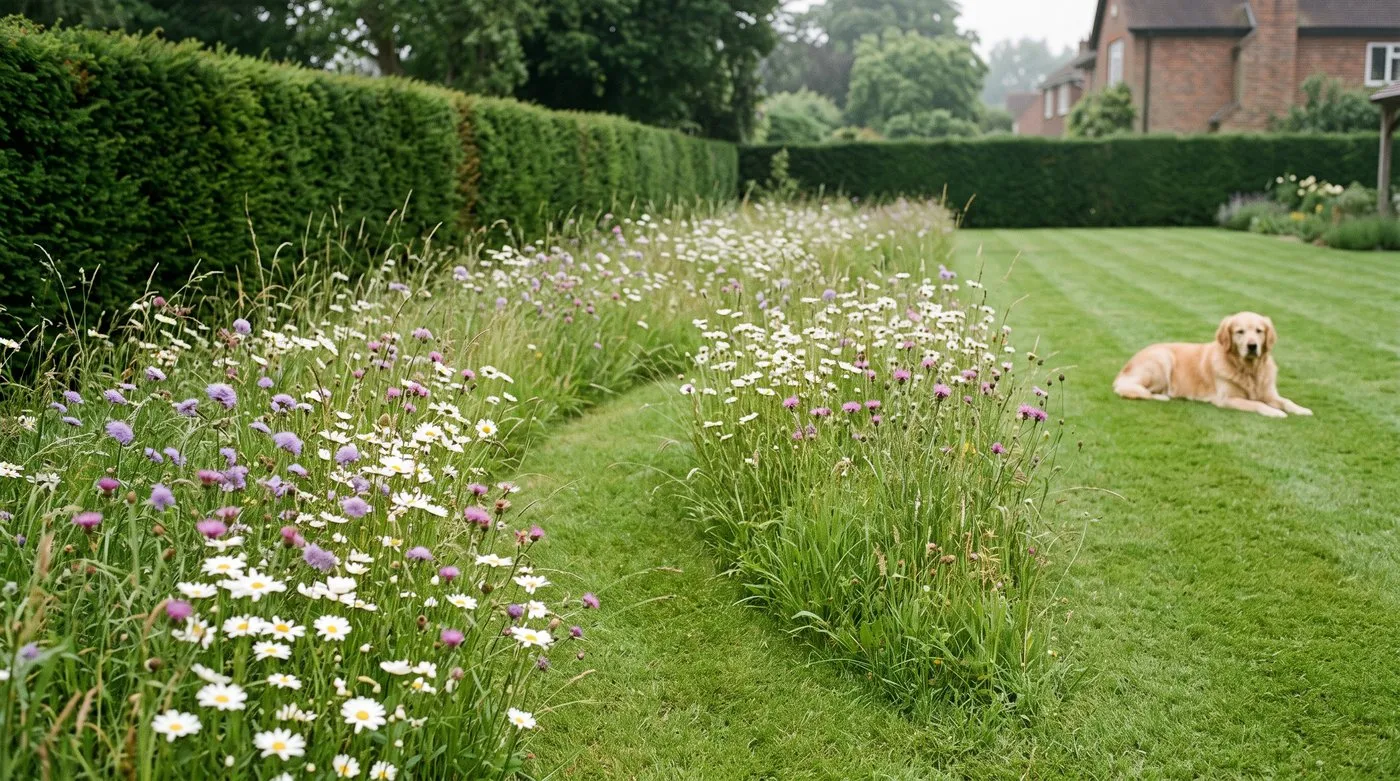
A strip of long grass and wildflowers softens the formal lines and brings in bees and butterflies.
Cut it once a year in late summer, after the seeds have dropped, and take the cuttings away. Our guide to yellow rattle explains how to get it started.
8. Trained fruit
Apples and pears trained flat against a wall or wires were a kitchen garden classic. An espalier has tiers of horizontal branches. A step-over is a single low tier, about knee high, used to edge a path or bed.
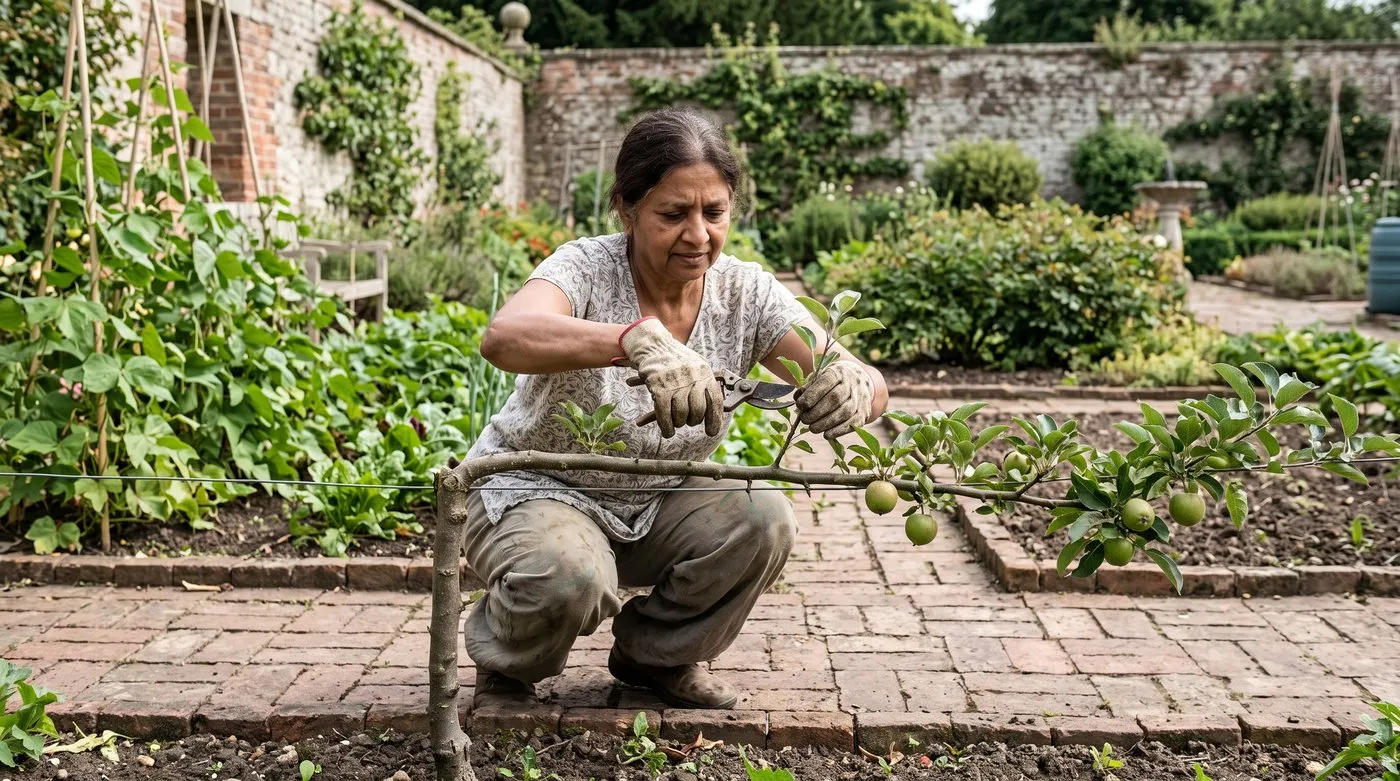
A step-over apple edges a path and gives you fruit too. A quick summer trim keeps it neat.
Buy a part-trained tree, or train a young one yourself. Summer pruning in late July or August keeps the shape tidy.
9. A climber on the house wall
Wisteria on a brick wall says “English garden” like nothing else. Grow it on strong horizontal wires on a sunny wall. Buy a grafted plant, as seed-raised wisterias can take many years to flower.
Prune it twice a year. In July or August, cut the long green shoots back to five or six leaves. In January or February, shorten those same shoots to two or three buds. Our wisteria growing guide has more on training.

Trained along wires and pruned twice a year, wisteria will cover a whole house front in time.
10. A parterre
A parterre is a pattern of low hedges, often around a central feature, with roses or flowers inside the beds. Traditionally made in box, it can be planted with Ilex crenata or dwarf yew instead.
Keep the pattern simple in a small garden: four squares around a sundial works well. Clip the hedges once or twice in summer to keep the lines sharp.

Low clipped hedges give a simple rose bed a formal pattern that looks good even in winter.
11. Topiary
A single clipped shape, such as a cone, ball or spiral, acts as an exclamation mark. Use a pair either side of a door, or one at a path junction. Yew, holly, bay and Ilex crenata all clip well. The topiary guide for beginners covers simple shapes to start with.
12. A seat at the end of the path
A bench at the end of the main path is the reward for the walk. Put it under a rose arch or against a hedge, facing back towards the house. It doubles as the focal point when you look down the garden.
In what order should you build an English garden?
Lay the path and plant the hedges first. They take the longest to mature, and everything else hangs off them.
- Mark out and lay the main path.
- Plant yew hedges in the first autumn or winter.
- Add the wall climber and trained fruit early, as they need years of training.
- Plant the lavender walk and any low hedging.
- Dig and plant the main border once the hedge is in.
- Add arches, the focal point, topiary and a seat.
- Sow or plant a meadow strip last, once the main areas are settled.
How to get the look in a small garden
Pick five or six features and keep them simple. A small garden can’t fit garden rooms, but it can have the same bones.
Try a straight gravel path edged with lavender, leading to a rose arch over the back gate. Add a narrow border along one fence, a few clipped balls and a sundial at the centre. A wisteria or climbing rose on the house wall finishes the look.

Five or six features are plenty in a small plot. Low hedges, a path, lavender and a rose arch already read as English.
Month-by-month English garden calendar
| Month | Key tasks |
|---|---|
| January | Winter-prune wisteria, prune apples and pears |
| February | Cut back old perennial stems, mulch borders |
| March | Divide perennials, check stakes and ties |
| April | Stake tall perennials, edge lawns and paths |
| May | Plant tender flowers after the last frost, enjoy the wisteria |
| June | Deadhead roses, give yew a first light trim if needed |
| July | Summer-prune wisteria, deadhead borders |
| August | Trim lavender after flowering, cut the meadow, clip yew hedges |
| September | Plant spring bulbs, take lavender cuttings |
| October | Plant hedging, mulch borders |
| November | Plant bare-root roses and fruit trees |
| December | Plan changes, check tree ties |
Common mistakes when making an English garden
- Buying plants before planning the bones. Mark out paths, hedges and the focal point first. The flowers come after.
- Making the path too narrow. Lavender and catmint spill a good way over each edge. Go wider than feels right on paper.
- Planting box without a plan. Box blight and caterpillar are widespread. Choose yew or Ilex crenata, or be ready to check box often.
- Pruning wisteria only once. It needs a summer and a winter cut, or it makes leaves instead of flowers.
- Cutting hedges in nesting season. Check for active nests before you trim, and save hard cuts for autumn or winter.
Frequently asked questions
What defines a classic English garden?
Clipped hedges, a strong central path and generous flowering borders define it. Roses, lavender, topiary and a focal point such as a sundial complete the look. The planting is romantic, but the bones underneath are formal.
How long does a classic English garden take to establish?
Allow around five years for it to look settled. Borders and lavender fill out within two or three summers. Yew hedges and topiary take longer to reach full height, so plant them first.
Can I create an English garden in a small space?
Yes, pick five or six features that suit the size. A short lavender-edged path, a rose arch, a narrow border, a few box or yew balls and a sundial are plenty. Keep the path straight and leading to something.
What is the difference between an English garden and a cottage garden?
A classic English garden has formal bones; a cottage garden is looser. The English country-house style frames billowing borders with clipped hedges and straight paths. Cottage gardens mix flowers, herbs and veg with little formal structure.
What plants are essential in an English garden?
Roses, lavender, delphiniums, foxgloves, hardy geraniums and catmint are the classics. Add peonies, alliums and phlox for the summer border. Yew, holly or hornbeam provide the green walls.
Do English gardens need a lot of maintenance?
They need regular, but not constant, care once established. Clip hedges once or twice a year, trim lavender after flowering and cut back borders in late winter. Deadheading roses through summer keeps them flowering.
Ready to plan the flowers? Our cottage garden planting plan gives you a border to copy, and there’s more inspiration in the garden design hub.
Our team produces practical UK gardening guidance from source research, contributor records and established horticultural practice. Editorial standards are overseen by Matt W.